量子计算

Search documents
【招商电子】英伟达GTC华盛顿跟踪报告:Black-Rubin营收规模大超预期,VR内部结构持续升级
招商电子· 2025-10-31 11:21
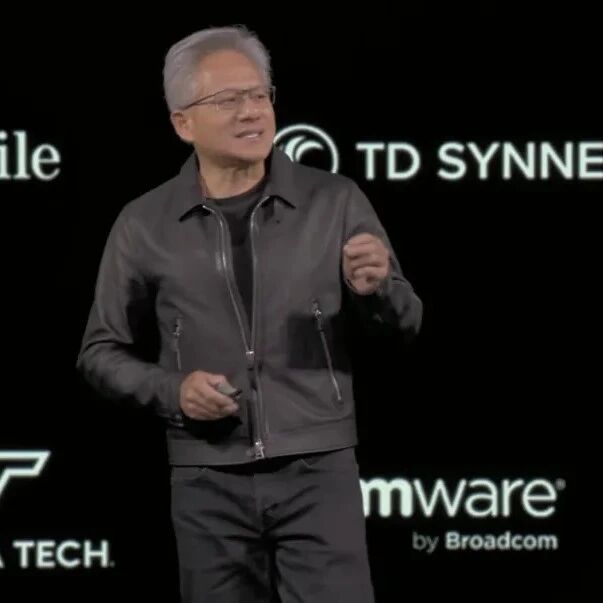
Core Insights - Nvidia's CEO Jensen Huang highlighted significant advancements in AI infrastructure and technology during his keynote speech, including the introduction of the Rubin NVL144 platform and the Blackwell chip, which is expected to achieve total shipments of 20 million units [3][4]. Group 1: Revenue and Shipment Guidance - The revenue guidance for the B and R series exceeded expectations, with Blackwell showing explosive growth, having shipped 6 million units over the past four quarters and projected to reach 20 million units, five times the previous generation Hopper architecture [3]. - Blackwell and the upcoming Rubin chip, set to launch in 2026, are expected to contribute $500 billion in GPU sales over the next five quarters, indicating strong demand and potential for market expansion [3]. Group 2: Technological Breakthroughs - The Vera Rubin computing architecture features a fully cable-free and 100% liquid-cooled design, significantly enhancing performance, scalability, and hardware integration efficiency [4]. - The NVL144 platform achieves a peak FP4 inference performance of 3.6 Exaflops and FP8 training capability of 1.2 Exaflops, representing a 3.3 times improvement over the previous generation [4]. Group 3: Strategic Partnerships - Nvidia has partnered with Nokia to develop the Aerial RAN Computer platform, aiming to transform 6G networks and integrate AI capabilities, with a projected market size exceeding $200 billion by 2030 [5]. - Collaborations with Oracle and other companies in AI supercomputing and autonomous driving are set to enhance capabilities in various sectors, including pharmaceuticals and cloud computing [7][8]. Group 4: Quantum Computing Integration - The introduction of NVQLink technology enables seamless integration between quantum processors and GPU/CPU systems, facilitating quantum-classical collaborative computing [6]. - This technology has garnered support from 17 quantum computing companies and nine national laboratories under the U.S. Department of Energy, indicating strong industry backing [6]. Group 5: AI Factory and Infrastructure Development - Nvidia's BlueField-4 data processing unit supports AI factory infrastructure, with a throughput of 800 Gb/s and six times the computing power of its predecessor, enabling significant scaling of AI operations [8]. - The company is developing AI factories designed for high-efficiency token data generation, which are distinct from traditional data centers [45][48]. Group 6: Market Trends and Future Outlook - Nvidia anticipates a cumulative order size of $500 billion for the Blackwell series and Rubin early production orders by 2026, reflecting a robust growth trajectory [65]. - The company is positioned to lead in the AI era, with Blackwell serving as a key driver for future advancements in computing technology [66].


中国银河(601881):业务全线增长,扩表趋势延续
HTSC· 2025-10-31 10:52
Investment Rating - The report maintains an "Accumulate" rating for A-shares and a "Buy" rating for H-shares of the company [7]. Core Views - The company reported a significant increase in revenue and net profit for Q3, achieving revenue of 9.004 billion RMB (up 55.94% year-on-year and up 45.50% quarter-on-quarter) and a net profit of 4.48 billion RMB (up 73.94% year-on-year and up 29.05% quarter-on-quarter) [1]. - The overall performance is driven by a favorable capital market environment, with all business lines showing growth and an expanding balance sheet [1][2]. - The company is expected to maintain high growth in net profit, with projections of 14.7 billion RMB, 17 billion RMB, and 19.5 billion RMB for 2025, 2026, and 2027 respectively [5]. Summary by Sections Financial Performance - As of Q3 2025, total assets reached 861.1 billion RMB, reflecting a 17% increase year-to-date and a 10% increase quarter-on-quarter [2]. - The net profit for the first three quarters of 2025 was 11 billion RMB, a year-on-year increase of 58% [2]. - The company’s investment and brokerage revenues grew by 38% and 71% respectively, contributing significantly to overall revenue [2][4]. Business Segments - Investment business revenue was a key driver of growth, with Q3 investment income reaching 4.7 billion RMB, up 22% year-on-year [3]. - Brokerage business net income for the first three quarters was 6.3 billion RMB, a 71% increase year-on-year, with Q3 showing a 125% increase [4]. - The investment banking segment also saw a 30% increase in net income year-on-year, indicating a recovery in business activity [4]. Valuation and Forecast - The report adjusts profit forecasts upwards, with expected EPS of 1.35 RMB, 1.56 RMB, and 1.78 RMB for 2025, 2026, and 2027 respectively [5]. - The target price for A-shares is set at 21.54 RMB and for H-shares at 15.35 HKD, reflecting a valuation of 2.0x PB for A-shares and 1.3x PB for H-shares [5].

盯紧!量子科技风口来袭,神州信息6天3板成A股“人气王”|掘金百分百
Hua Xia Shi Bao· 2025-10-31 10:37
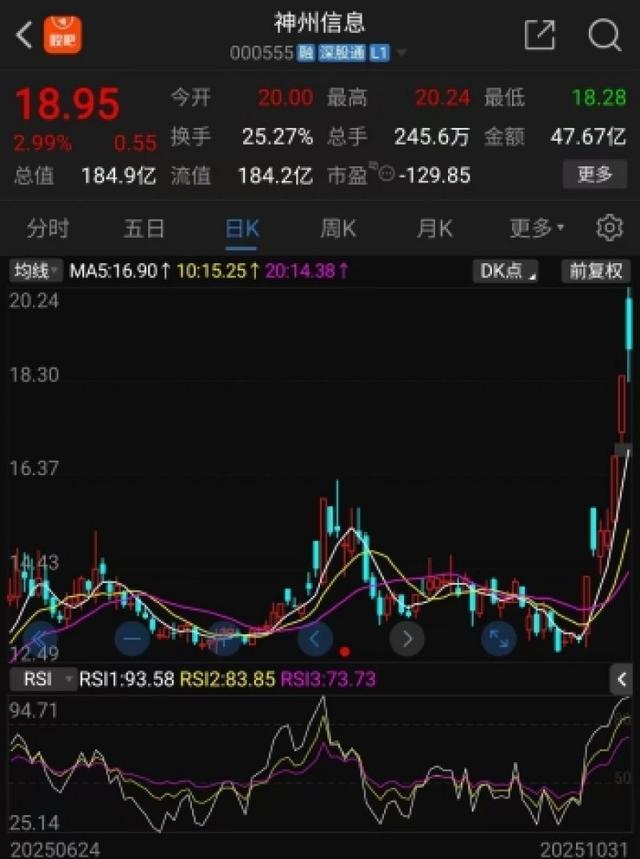
Core Insights - The quantum technology sector is experiencing rapid growth due to favorable policies and technological advancements, making it a focal point for capital markets [2][4][10] - Shenzhou Information has seen a significant increase in stock price, achieving three trading halts within six days, indicating strong market interest [3][5][8] Industry Overview - Quantum technology has been included in China's 14th Five-Year Plan as a key development area, alongside other emerging industries, highlighting its strategic importance for economic growth [4][10] - International collaboration in quantum technology is advancing, with NVIDIA showcasing systems that connect traditional GPUs with quantum computers, enhancing computational capabilities [4] Company Performance - Shenzhou Information's stock price surged approximately 34% in October, with a year-to-date increase exceeding 60% [8] - The company reported a decline in revenue and net profit for 2024, with expected revenue of 100.03 billion and a net loss of 5.24 billion, attributed to a significant drop in system integration revenue and goodwill impairment [6] Research and Development - Shenzhou Information maintains a leading position in R&D, with expenditures of 6.32 billion in 2022 and 7.29 billion in 2023, and a total of 2,420 software copyrights and patents as of mid-2025 [7] Market Sentiment - Analysts view quantum computing as a disruptive technology with substantial future potential, particularly in quantum security and its applications in AI and other fields [9][10] - The recent surge in interest in quantum technology is driven by a combination of supportive policies, technological breakthroughs, and market expectations for future applications [10]

中航光电:目前公司在量子通讯、量子计算、量子测量方面正与相关头部客户进行科研阶段合作
Zheng Quan Ri Bao Wang· 2025-10-31 09:11
Core Viewpoint - The company is currently collaborating with leading clients in the research phase of quantum communication, quantum computing, and quantum measurement, focusing on radio frequency and optical technology directions [1] Group 1 - The company announced its involvement in quantum technology research [1] - The collaboration is with head clients in the industry [1] - The focus areas include radio frequency and optical technology [1]

科瑞思:目前没有量子计算领域的相关技术储备
Zheng Quan Shi Bao Wang· 2025-10-31 07:11
Group 1 - The company, 科瑞思 (301314), stated on October 31 that it currently has no technological reserves in the field of quantum computing [1]

科瑞思(301314.SZ):关于量子计算领域,公司目前没有相关技术储备
Ge Long Hui· 2025-10-31 07:09
Core Viewpoint - The company, Keresys (301314.SZ), primarily focuses on the production services of magnetic components and fully automated production equipment for magnetic components, serving various industries including telecommunications, consumer electronics, automotive electronics, security electronics, new energy, smart home, and smart instruments [1] Company Overview - Keresys's business encompasses the production of magnetic components and the provision of fully automated production equipment for these components [1] - The company's downstream products are mainly used in network transformers and inductors [1] Industry Applications - The applications of Keresys's products are widespread across several sectors, including: - Telecommunications - Consumer Electronics - Automotive Electronics - Security Electronics - New Energy - Smart Home - Smart Instruments [1] Clientele - The primary customers of Keresys are downstream component manufacturers [1] Technology Capabilities - Currently, the company does not possess any technological reserves related to quantum computing [1]
调研速递|中航光电接待创金合信基金等超80家机构调研 前三季营收增12% 新能源汽车与数据中心业务增速超50%
Xin Lang Cai Jing· 2025-10-31 03:03
Core Insights - The company reported a revenue of 15.838 billion yuan for the first three quarters of 2025, representing a year-on-year growth of 12.36%, while net profit decreased by 30.89% due to declining gross margins [3][15] - The civil business, particularly in the fields of new energy vehicles and data centers, has shown significant growth, with both sectors exceeding 50% year-on-year revenue growth [4][17] - The company aims to enhance internal resource allocation and focus on cost reduction and efficiency improvement in the fourth quarter to improve overall performance [5][18] Investor Relations Activity - The investor relations activity was an earnings briefing held at the company's facility, utilizing a combination of live streaming and conference call formats [1] - Over 80 institutional investors participated, including well-known funds and asset management companies [2][14] Financial Performance - For Q3 alone, the company achieved a sales revenue of 4.654 billion yuan, with a net profit of 290 million yuan, indicating significant declines in profitability due to fluctuations in defense business [3][16] - The overall gross margin for the first three quarters was 29.70%, down approximately 6.9 percentage points from the previous year, influenced by changes in business structure and rising raw material costs [3][15] Business Highlights - The civil sector has become a key growth driver, with the new energy vehicle and data center businesses showing robust performance [4][17] - The defense sector continues to see growth in orders and planned volumes, with inventory levels increasing by over 20% compared to the beginning of the year [4][17] Future Outlook - The company plans to capitalize on growth opportunities in the automotive sector and maintain high growth in the new energy vehicle business [5][18] - There is an expectation for improvement in the defense business in Q4, with a focus on resource allocation and efficiency [6][19] Key Questions Addressed - The primary drivers for expected Q4 performance improvements include strong civil business performance and a recovery trend in defense business orders [6][19] - The fluctuations in Q3 profitability were attributed to changes in business and product structures, along with cost pressures from rising raw material prices [7][20] - The company is actively addressing the impact of rising gold prices on gross margins, which is estimated to affect defense business margins by about 1%-2% [11][22] - The new energy vehicle business is expected to continue its rapid growth, supported by established partnerships with major automotive manufacturers [12][23]
中航光电(002179) - 2025年10月30日中航光电投资者关系活动记录表
2025-10-31 02:28
Financial Performance - The company achieved a sales revenue of 15.838 billion CNY in the first three quarters, representing a year-on-year growth of 12.36% [3] - Net profit decreased by 30.89% due to a decline in gross margin, which was 29.70%, down approximately 6.9 percentage points year-on-year [3] - In Q3 alone, sales revenue was 4.654 billion CNY, with a net profit of only 290 million CNY, indicating significant declines compared to previous periods [3] Business Segments - The civil sector showed significant contributions, with revenue growth rates exceeding 50% in both the new energy vehicle and data center businesses [3] - The defense sector's orders and planned volumes increased year-on-year, with inventory reaching 5.7 billion CNY, a growth of over 20% since the beginning of the year [3] Strategic Outlook - The company plans to enhance internal resource allocation to capitalize on growth opportunities in the automotive sector, particularly in new energy vehicles [3] - There will be a focus on accelerating cash flow from defense sector clients and improving overall performance through cost reduction and efficiency enhancement measures [3] Accounting Policy Changes - The company is changing its accounting policy for cost allocation and product valuation methods to improve precision in cost management and support better pricing strategies [4] - The new accounting policies will take effect on January 1, 2026, in response to the need for more accurate cost accounting due to a complex external environment [4] Future Business Prospects - The civil business is expected to perform strongly, while the defense business is showing signs of recovery in planned volumes and orders [5] - The company anticipates continued growth in the new energy vehicle sector, with a year-on-year growth rate exceeding 50% [12] Impact of Material Costs - The rise in gold prices is estimated to impact the defense business's gross margin by approximately 1%-2% [10] - The company is actively managing the effects of commodity price fluctuations through cost control initiatives and process optimizations [10] International Expansion - The company aims to become a global leader in interconnection solutions, facing challenges in international business expansion due to current geopolitical and supply chain dynamics [13] - Efforts will be made to enhance global resource allocation and integrate into the global supply chain while promoting local strategies in key regions [13]
中经评论:为何要再造一个高技术产业
Jing Ji Ri Bao· 2025-10-31 00:09
Core Insights - The Chinese government aims to recreate a high-tech industry over the next decade, which is expected to inject new momentum into the economy and support high-quality development [1][4] - The initiative addresses the current economic challenges of weakening traditional growth drivers and the slow emergence of new ones, aiming for a dual growth model that combines traditional industry upgrades with high-tech industry expansion [1][2] Industry Transformation - The move to recreate a high-tech industry is crucial for enhancing industrial competitiveness, as China has been a manufacturing giant but lacks strength in core components and high-end materials [2] - High-tech manufacturing currently accounts for less than 20% of the industrial value added, indicating a significant gap compared to developed countries [2] - The strategy aims to solidify China's leading position in advantageous sectors while seizing opportunities in future industries, ultimately transitioning from a manufacturing powerhouse to a manufacturing stronghold [2] Technological Advancement - The initiative is a strategic choice to capitalize on the ongoing technological revolution, particularly in areas like artificial intelligence, which is reshaping production processes and industry models [2][3] - The rapid emergence of new technologies presents both opportunities and uncertainties, making it essential to build a robust high-tech industry to mitigate risks and ensure sustainable economic growth [2][3] Economic Foundation - China's industrial foundation is strong, with the "three new" economies projected to contribute 24.29 trillion yuan to GDP in 2024, representing over 18% of the total [3] - The country has the largest and most comprehensive industrial system globally, with leading positions in sectors like new energy vehicles, photovoltaics, and 5G [3] - Continuous increases in R&D investment, with China ranking second globally in total R&D expenditure, support the potential for breakthroughs in cutting-edge fields [3] Future Industry Development - The focus will be on nurturing emerging and future industries, with strategic clusters in new energy, new materials, aerospace, and low-altitude economy expected to create significant market opportunities [3] - Future industries such as quantum technology, biomanufacturing, and sixth-generation mobile communications are targeted for development, transitioning from technological reserves to market applications [3] - The synergistic development of both emerging and future industries is anticipated to strengthen current economic foundations while expanding future growth avenues [3][4]
再创历史!英伟达市值一夜突破5万亿美元!
具身智能之心· 2025-10-31 00:04
Core Viewpoint - Nvidia has become the first company in history to surpass a market valuation of $5 trillion, marking a significant milestone in the tech industry [2][4][11]. Group 1: Market Performance - On October 29, Nvidia's stock price rose by 5.44%, reaching an intraday high of $212.19 per share, and closing at $207.04 per share, resulting in a market capitalization of $5.03 trillion [3][11]. - Since the beginning of 2025, Nvidia's stock has surged by 56%, showcasing its rapid growth compared to other major tech companies [6][40]. - Nvidia's market value now exceeds the combined market capitalizations of major competitors such as AMD, Intel, and Qualcomm, as well as entire sectors within the S&P 500 [6][7]. Group 2: Growth Trajectory - Nvidia's market value has skyrocketed from $1 trillion to $5 trillion in just two and a half years, a feat unmatched by other tech giants [10][24]. - The company achieved its first $1 trillion valuation in May 2023, followed by reaching $3 trillion in June 2024, and then $4 trillion in just over a year [23][24]. - In contrast, Microsoft took nearly six years to grow from $1 trillion to $4 trillion, while Apple took over seven years for the same growth [17][20]. Group 3: Strategic Developments - The recent surge in Nvidia's market value is attributed to announcements made during the GTC developer conference, where CEO Jensen Huang unveiled several technological advancements and partnerships [26][40]. - Key highlights from the conference included plans to collaborate with the U.S. Department of Energy to build new supercomputers and the introduction of the Blackwell chip series, which is expected to significantly increase production [27][28]. - Nvidia's new open system architecture, Nvidia NVQLink, aims to accelerate the development of quantum supercomputers, further positioning the company at the forefront of technological innovation [29][32]. Group 4: Future Outlook - Nvidia anticipates that the cumulative revenue from its upcoming products, including the Blackwell and Rubin chip platforms, could reach $500 billion by the end of next year [32][34]. - The company is also set to invest up to $100 billion in building AI data centers in collaboration with OpenAI, indicating a strong commitment to expanding its AI infrastructure [40][41]. - Nvidia's growth is closely tied to the increasing demand for computational power driven by AI advancements, with its GPUs being integral to the infrastructure of leading AI companies [40].