智能网联汽车

Search documents
广汽集团董事长:全面进入“战时状态”!
中国基金报· 2025-07-11 16:04
Core Viewpoint - GAC Group has entered a "wartime state" to tackle the challenges of the automotive industry's transformation, focusing on three major battles to reinvent itself [2]. Group 1: User Demand Battle - User demand is identified as the core variable in the evolution of the automotive industry, with a shift towards vehicles that serve as personalized and emotional companions [4]. - GAC Group is enhancing its customer insight capabilities and restructuring its user operation system to meet core user needs and create emotional value [4]. - The company aims to achieve an acceleration performance of under 3 seconds for household products and a target of 12 kilometers per kilowatt-hour for energy efficiency [4]. - GAC Group plans to introduce multiple range-extended and plug-in hybrid models starting in 2025, with the GAC Haobo HL range-extended version set to launch in August 2025 [5]. Group 2: Product Value Battle - GAC Group has developed leading technologies in the electric vehicle sector, including high-safety battery systems and advanced hybrid systems, through sustained R&D investment [7]. - The company is focusing on intelligent driving technologies, aiming to launch its first mass-produced L4 autonomous vehicle by 2025 [7]. - GAC Group emphasizes safety with the "GAC Starling Safety Guardian System," which includes dual redundancy designs for eight critical systems [7]. - Collaborations with tech companies like Huawei and CATL are ongoing to enhance product value and meet personalized user demands [7]. Group 3: Service Experience Battle - GAC Group is implementing an Integrated Product Marketing and Sales (IPMS) system to enhance customer experience and satisfaction [9]. - The company has restructured its service processes and introduced a Net Promoter Score (NPS) management system to focus on customer experience [9]. - GAC Group aims to resolve 93% of customer issues within two hours and is expanding its service network in lower-tier cities [9][10]. - A regular Over-The-Air (OTA) update system for vehicle software will be fully implemented by 2025 to provide users with a continuously updated technology experience [9].


卡倍亿: 民生证券股份有限公司关于宁波卡倍亿电气技术股份有限公司向不特定对象发行可转换公司债券之上市保荐书
Zheng Quan Zhi Xing· 2025-07-11 09:15
Company Overview - Ningbo KBE Electrical Technology Co., Ltd. is a company established from the transformation of a limited liability company into a joint-stock company, with its establishment date on March 5, 2004 [1][2] - The company specializes in the research, production, and sales of automotive cables, serving as a secondary supplier in the automotive supply chain [2][3] - The company has a total share capital of 134,951,140 shares and is listed on the Shenzhen Stock Exchange under the stock code 300863 [1][2] Business Operations - The main products include various types of automotive cables such as conventional cables, aluminum cables, twisted pair cables, shielded cables, new energy cables, and multi-core sheathed cables [2][3] - The company has obtained certifications from major automotive manufacturers and is recognized as a high-tech enterprise, holding 52 patents as of March 31, 2025 [2][3] Financial Performance - The total assets of the company for the years 2022, 2023, and 2024 were 358,912.47 million, 374,696.60 million, and 281,635.52 million respectively [5] - The company reported operating revenues of 294,840.82 million in 2022, 345,193.07 million in 2023, and 364,801.63 million in 2024 [5] - The net profit attributable to shareholders was 14,005.17 million in 2022, 16,594.46 million in 2023, and 16,165.45 million in 2024 [5] Market Position - The automotive wiring harness market is highly concentrated, with the top five companies holding approximately 60%-70% of the market share [11] - The company has established long-term stable supply relationships with major automotive wiring harness manufacturers, including Volkswagen, BMW, and Toyota [2][11] Risks and Challenges - The company faces risks related to high customer concentration, with over 60% of sales coming from the top five customers [11] - Fluctuations in copper prices can significantly impact the company's profit margins and working capital requirements [10][11] - The company must continuously innovate and adapt to meet the evolving technical requirements of automotive manufacturers [12][19]

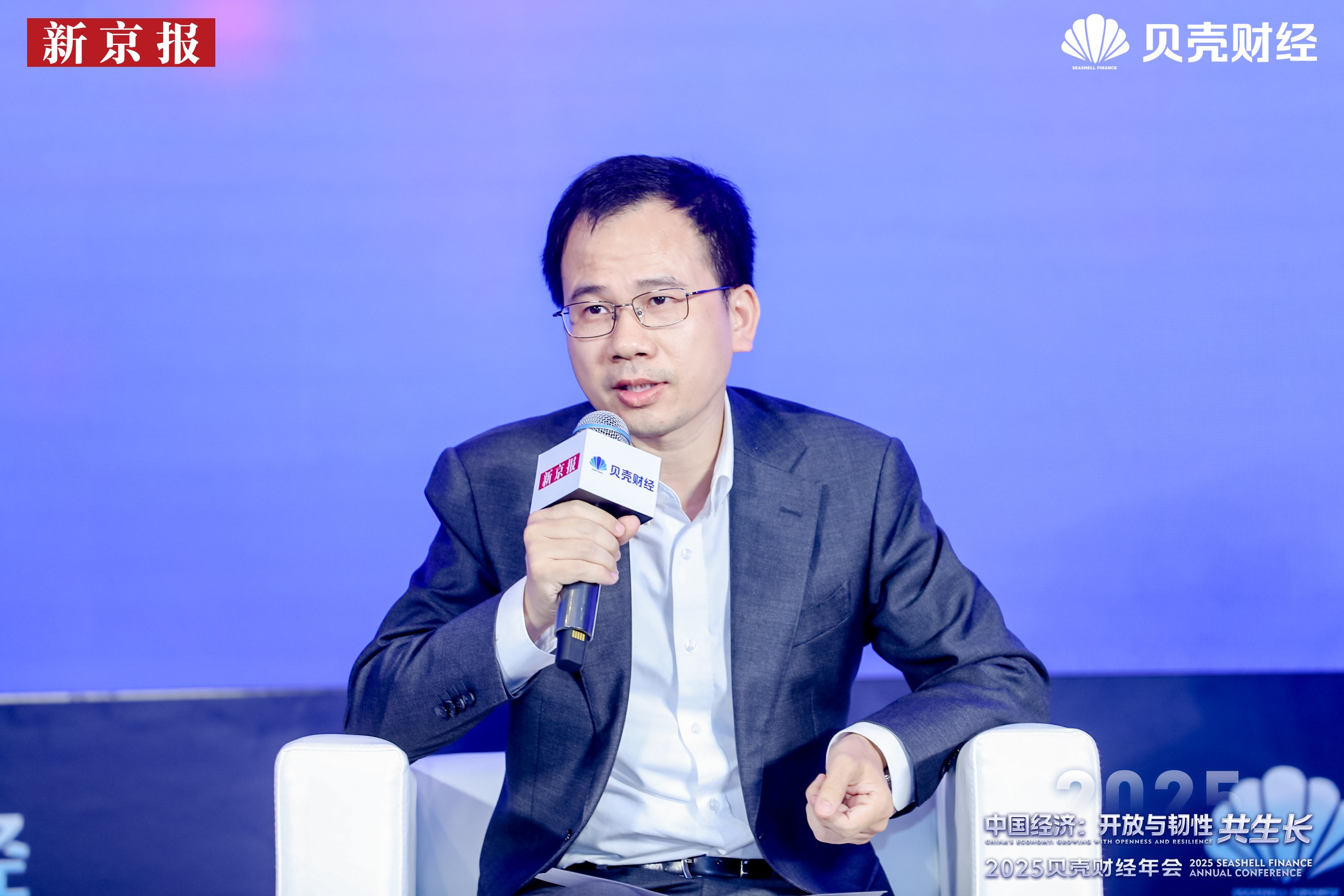
北汽研究总院郑新芬:AI大模型推动车企与供应商合作多元化
Bei Ke Cai Jing· 2025-07-11 07:56
Group 1 - The theme of the 2025 Beike Finance Annual Conference is "The Co-Growth of Openness and Resilience in the Chinese Economy" [1] - Zheng Xinfeng, Vice President of Beijing Automotive Research Institute, emphasized that the integration of AI large models with the automotive industry will introduce more cross-industry suppliers, enhancing collaboration between manufacturers and suppliers [1][5] - The development of technology is driven by demand, and understanding user needs can significantly aid in the technological advancement of intelligent connected vehicles [1][5] Group 2 - Intelligent driving assistance systems are not equivalent to highly automated driving, and human factors remain crucial for safety [4] - Zheng Xinfeng highlighted that each manufacturer defines a series of operational limits for their driving assistance systems, known as ODD (Operational Design Domain), which users must understand [4] - Beijing Automotive has adopted platform-based, modular, and universal technical solutions for its driving assistance systems, and is involved in various levels of automated driving projects [4][5] Group 3 - The rapid development of AI technology has made large models a significant driver of industrial transformation, impacting vehicle research, production, and user experience [5] - The integration of large models into automotive software development has significantly increased efficiency, allowing for automated code generation and testing [5][6] - The introduction of large models will diversify the collaboration models between manufacturers and suppliers, as valuable data generated during vehicle operation can enhance the entire industry chain [5][6] Group 4 - The intelligent connected ecosystem can both challenge and empower traditional fuel vehicles, enhancing their intelligence and extending their lifecycle [6] - Fuel vehicles can be integrated into the intelligent connected ecosystem, providing added value and smart features to users [6]
欧洲车企联手发力智能化转型
Zhong Guo Chan Ye Jing Ji Xin Xi Wang· 2025-07-10 22:49
Core Insights - European automotive companies are collaborating to develop an open-source automotive software platform, seen as a self-rescue measure amid industry transformation [1][2] - The global automotive industry is rapidly transitioning towards intelligence and connectivity, with software becoming a core competitive factor [1] - European automakers are lagging in software development compared to American companies like Tesla and Waymo, despite their strong technical foundation in traditional fuel vehicles [1] Group 1: Strategic Collaboration - Eleven European companies across the automotive supply chain have signed a memorandum of understanding to jointly develop the software platform [1][2] - The initiative is supported by the German Automotive Industry Association, highlighting its strategic importance [1] - The platform aims to reduce development costs by avoiding redundant investments in basic software and enhancing development speed through a "code-first" approach [2] Group 2: Market Potential and Goals - The automotive software market is projected to reach $84 billion by 2030, with a compound annual growth rate of 9% [1] - The first vehicles based on the new platform are expected to enter mass production by 2030, with a target to deliver the platform by 2026 [2] - Volkswagen's CEO stated that the collaboration could improve software development efficiency by 50% before 2026 [2] Group 3: Challenges Ahead - The collaboration faces challenges such as aligning different corporate interests and commercial goals, which may complicate resource allocation and profit-sharing [3] - Technical integration is complex due to varying software development focuses, architectures, and standards among the companies involved [3] - Data security and privacy protection are critical issues, as the platform will handle significant amounts of data, necessitating a unified approach to data management [3]
大众集团上半年全球纯电销量增长47% 中国市场燃油车稳守基本盘
Zhong Guo Jing Ying Bao· 2025-07-10 10:56
Group 1: Overall Performance - Volkswagen Group reported global vehicle deliveries of 4.41 million units in the first half of 2025, representing a year-on-year growth of 1.3% [1] - The sales of electric vehicles (EVs) surged by 47% year-on-year, reaching 465,500 units, which accounted for 11% of the total sales, up from 7% in the same period last year [1] Group 2: Market Performance in China - In the Chinese market, Volkswagen Group delivered 1.31 million vehicles, a slight decline of 2.3% year-on-year, but June sales showed a recovery with 247,000 units sold, marking a 9% increase [1] - Volkswagen brand (including Jetta) delivered 996,000 units in the first half of 2025, a year-on-year increase of 1.1%, with significant contributions from the Sagitar and Passat models [2] Group 3: Strategic Initiatives - Volkswagen Group plans to launch approximately 30 new energy vehicles by 2027 and increase this number to 50 by 2030, covering a range from A-class to C-class products [1][3] - The company is set to initiate its largest-ever new energy product offensive in China at the 2025 Shanghai International Auto Show, with new intelligent connected vehicles scheduled for delivery starting in the second half of 2025 [3] Group 4: Future Strategy - Volkswagen aims to implement the "In China, For the World" strategy, leveraging China's production capacity and technological advantages to expand its overseas market presence [4]
云内动力复牌:积极整改 新兴业务有望改善经营被动局面
Zheng Quan Ri Bao Wang· 2025-07-10 08:42
Core Viewpoint - Yunnei Power has faced regulatory penalties due to false financial reporting, leading to a fine of 6 million yuan and additional fines for its chairman and other executives, which has prompted the company to enhance its internal governance and operational standards [1][2]. Group 1: Regulatory Actions and Company Response - The company received an administrative penalty notice from the Yunnan Securities Regulatory Bureau for false records in its 2021 and 2022 annual reports, resulting in a total fine of 6.5 million yuan for the chairman and other executives [1]. - Following the regulatory actions, the Shenzhen Stock Exchange has implemented risk warnings on the company's stock, which was suspended for one day and subsequently renamed to "ST Yundong" [1]. - The board of directors has acknowledged the negative impact of these issues and is committed to correcting the financial reports and improving internal controls [1][2]. Group 2: Business Operations and Future Plans - Despite the regulatory challenges, the company's production and operational activities are continuing normally, with a focus on traditional and emerging business areas, including smart manufacturing and green manufacturing [2]. - The company has received 200 road testing licenses for intelligent connected vehicles from the Kunming Municipal Government, indicating a strategic move towards expanding its market in unmanned delivery vehicles [4]. - The company is also advancing its smart agricultural machinery projects, with the installation of production lines for intelligent rubber tapping robots now complete [4]. Group 3: Market Expansion and Strategic Initiatives - Yunnei Power is actively exploring overseas markets, particularly in Southeast Asia, Africa, South America, and the Middle East, to enhance its export capabilities [5]. - The company is refining its marketing strategies for traditional diesel engines and aims to increase its market share in non-road diesel engines while expanding into new markets and business segments [4].

中国汽研朱云尧:汽车价值重心正向软件、数据和运营服务转移
Bei Ke Cai Jing· 2025-07-10 08:23
Core Viewpoint - The automotive industry in China is undergoing a four-stage evolution, with a significant shift towards smart connected vehicles expected post-2025, leading to a rapid development of new ecosystems and a focus on software, data, and operational services [1][7]. Group 1: Industry Evolution - The automotive industry is predicted to experience a major transformation, with the smart connected vehicle explosion phase starting after 2025, where the value focus will shift towards software, data, and operational services [1][7]. - By 2028, China's automotive market share is expected to reach 45% of the global market [1][7]. - The industry will transition from a linear production relationship to a networked one, with data assets and information technology becoming key production factors [8]. Group 2: Technological Transformation - The future of the automotive industry is closely tied to three revolutions: energy, intelligence, and connectivity, which will drive the transition from energy-consuming tools to energy storage carriers and intelligent terminals [3]. - By 2025, the penetration rate of new energy vehicles is expected to reach 50%, with sales around 16.5 million units [3]. - The automotive technology will improve across six layers: mechanical structure, energy supply, electrical architecture, operating system, software application, and cloud data [3][4]. Group 3: Software and Data Ecosystem - The software application layer is becoming a key area of innovation, with the software value in vehicles currently accounting for 10%-30%, projected to rise to 60% in the future [5]. - The automotive industry has entered a data-defined era since 2022, where computing power and data will be the core of competition in intelligent driving [6]. - The software system ecosystem will act as the "brain" of smart connected vehicles, integrating with smart traffic and smart cities to gather vast amounts of data [10]. Group 4: Energy and Digital Operation Ecosystem - The energy system ecosystem is expected to give rise to industry giants, with a new energy system scale projected to reach several trillion yuan by 2030 [9][10]. - The digital operation ecosystem will enhance new productive forces, supporting data from "people, vehicles, and roads" in various sectors including smart automotive manufacturing and smart cities [11]. - A collaborative model will emerge, involving hardware integration, software system supply, energy system supply, and transportation service enterprises to drive the global expansion of China's smart connected new energy vehicle industry [11].

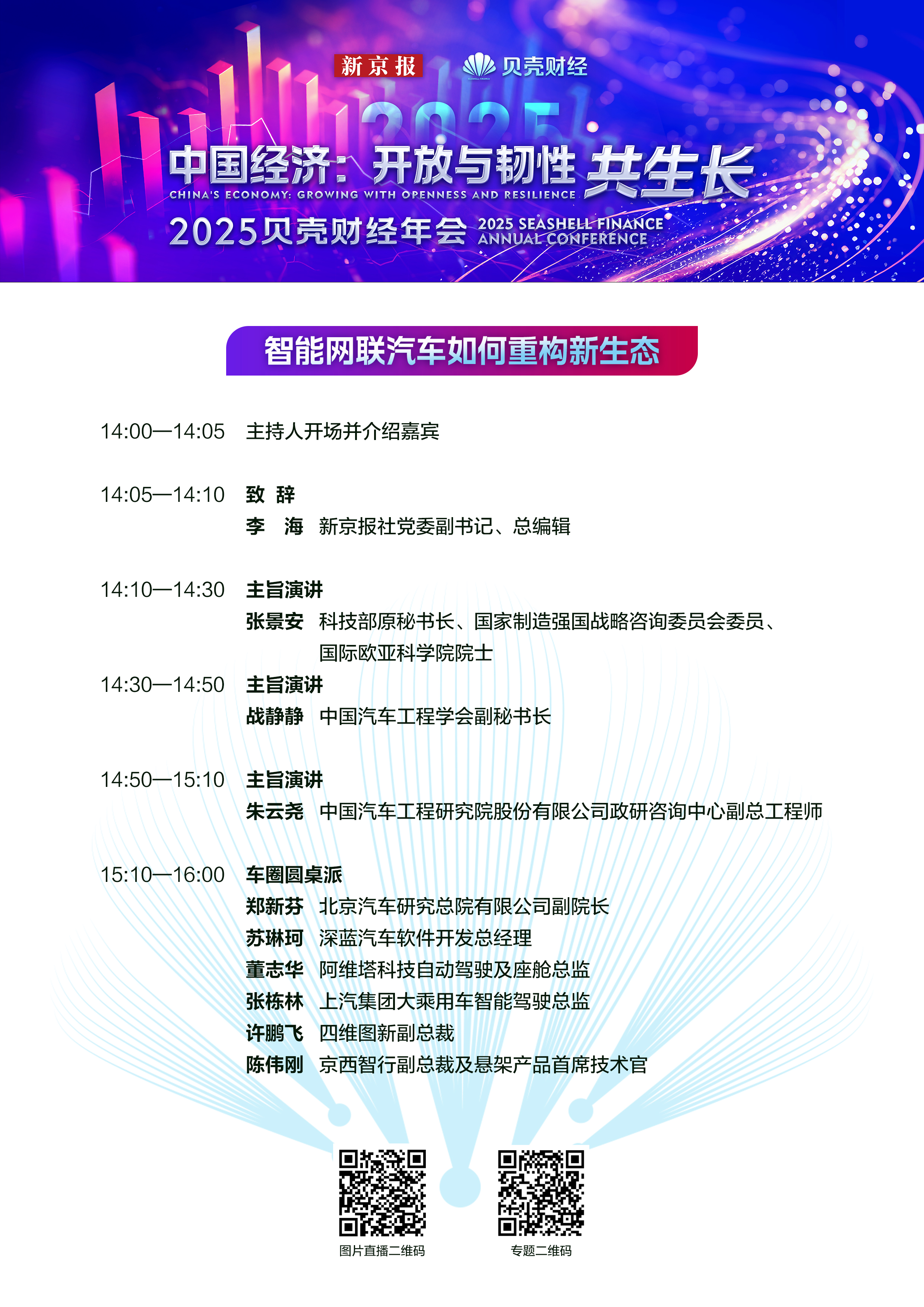
2025贝壳财经年会“智能网联汽车论坛”即将举办
Bei Ke Cai Jing· 2025-07-09 11:39
Group 1 - The 2025 Beike Finance Annual Conference, themed "China's Economy: Co-Growth of Openness and Resilience," will take place on July 10, gathering government officials, experts, and industry leaders to discuss new trends, opportunities, and challenges in the Chinese economy [5] - The automotive industry is a crucial pillar of the national economy, characterized by a long industrial chain and high interconnectivity, making it a key area for strengthening domestic circulation [5] - In 2024, China's automotive manufacturing industry is projected to achieve a revenue of 10.65 trillion yuan, representing a year-on-year growth of 4%, with production and sales exceeding 31 million vehicles for the 16th consecutive year, maintaining its position as the world's largest market [5] Group 2 - The government work report for 2025 emphasizes the continuous promotion of the "Artificial Intelligence +" initiative and the development of smart connected new energy vehicles, AI smartphones and computers, intelligent robots, and smart manufacturing equipment, clarifying the direction for the automotive industry's development [6] - In the first half of this year, the rapid adoption of intelligent driving assistance technology and the deep integration of AI models into the automotive industry have highlighted the trend of "software-defined vehicles," with scenarios like autonomous taxis and delivery services accelerating towards large-scale implementation [7] - The Beike Finance Annual Conference will host a sub-forum on "How Smart Connected Vehicles Reshape the New Ecosystem," focusing on how China can consolidate and expand its advantages in smart connected vehicles and accelerate the construction of a new industrial ecosystem [8] Group 3 - Notable speakers at the conference include Zhang Jing'an, former Secretary-General of the Ministry of Science and Technology, and Zhu Yunyao, Deputy Secretary-General of the China Automotive Engineering Society, who will share their visions for smart connected vehicles [9] - The "Car Circle Roundtable" will feature key industry figures discussing core development issues and collaborating on the transformation towards a new industrial future [9] - Beike Finance, an independent financial brand under the Beijing News, has established itself as a significant platform for deep communication and cooperation in the economic field, having hosted five annual conferences and numerous thematic forums [9]
大众公布上半年销量业绩:全球交付441万辆,中国市场微降2.3%
Mei Ri Jing Ji Xin Wen· 2025-07-09 11:19
Group 1 - The core viewpoint of the articles highlights Volkswagen Group's strong performance in the first half of 2025, with global vehicle deliveries reaching 4.41 million units, a year-on-year increase of 1.3% [1] - The delivery of pure electric vehicles (EVs) significantly increased to 465,500 units, representing a substantial growth of 47% compared to the previous year, and their share of total sales rose from 7% to 11% [1] - In the European market, Volkswagen's EV sales surged by 89%, maintaining its position as the leading player in the European EV market [1] Group 2 - Volkswagen is accelerating its localization strategy in China, planning to launch over 11 new models for the Chinese market starting in 2026, in collaboration with FAW [2] - The company aims to introduce new electric platforms and electronic architectures to enhance its smart electric vehicle transformation [2] - By the end of 2027, Volkswagen plans to expand its lineup of new energy vehicles to approximately 30 models, with a target of 50 models by 2030, including 30 pure electric models [2]
汽车产业要筑牢“软件安全”防线
第一财经· 2025-07-09 01:16
Core Viewpoint - The article highlights the increasing trend of vehicle recalls in China, particularly due to software-related issues in the automotive industry, emphasizing the need for improved safety measures and regulations in the context of the rapid development of smart vehicles [1][3]. Group 1: Recall Statistics - In the first half of this year, China implemented 60 vehicle recalls, involving 5.0688 million defective vehicles, marking an increase of over 1 million vehicles compared to the same period last year [1]. - Since the implementation of the "Defective Automobile Product Recall Management Regulations" in October 2004, over 3,000 recalls have been conducted, affecting more than 100 million vehicles [1]. Group 2: Shift in Recall Reasons - The reasons for vehicle recalls are shifting from traditional mechanical failures to software algorithm and electronic architecture defects, reflecting the industry's transition into the "new four modernizations" era of electrification, connectivity, intelligence, and sharing [1][2]. - Notable recalls this year include a well-known brand recalling 1.2068 million vehicles due to electronic power steering system software issues and another brand recalling vehicles due to battery management system software design flaws that could lead to thermal runaway and fire hazards [2]. Group 3: Regulatory Measures - In February, the Ministry of Industry and Information Technology and the State Administration for Market Regulation jointly issued a notice to strengthen the management of smart connected vehicle product access, recalls, and software online upgrades, aiming to enhance vehicle safety and product quality [3]. - The regulatory body plans to enhance inter-departmental collaboration to promote the standardized application of new technologies in smart connected vehicles, thereby improving overall safety levels in the industry [3]. Group 4: Industry Challenges - The increase in software safety risks is attributed not only to the rapid development of smart vehicles but also to low-cost competition, where some manufacturers opt for lower-performance hardware to cut costs, leading to increased accident risks [4]. - The industry is facing a trend of rapid product development, which has led to various issues, including insufficient stability testing of new features, resulting in frequent system failures [4]. - Recent statements from industry bodies emphasize the need to oppose "involution-style" competition and price wars, highlighting the importance of safety and consumer rights in the healthy development of the automotive industry [4].