量子计算

Search documents
黄仁勋演讲引爆英伟达5万亿美元市值
Bei Jing Shang Bao· 2025-10-30 16:56
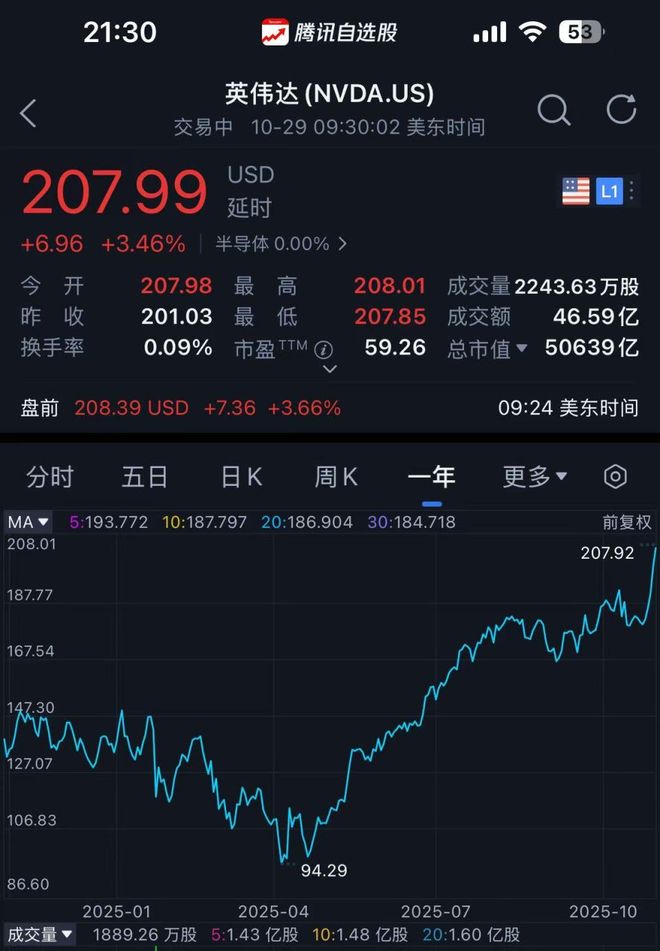
Core Insights - Nvidia has emerged as a key player in the AI era since the launch of ChatGPT at the end of 2022, with its stock price rising significantly and market capitalization reaching $5.03 trillion as of October 29, 2023 [1] - Nvidia's market value has seen exponential growth, surpassing $1 trillion in June 2023, $2 trillion in March 2024, and reaching $3 trillion within three months, indicating a rapid increase in investor confidence and demand for AI technologies [1] - CEO Jensen Huang emphasized the end of Moore's Law and the beginning of a new era characterized by exponential growth in AI computing power during his keynote at the GTC conference [1] Financial Performance - Nvidia's upcoming Blackwell and Rubin GPU chips are projected to generate over $500 billion in revenue over the next five quarters, with current orders reaching 20 million units, five times the total shipments of the previous Hopper architecture [2] - Major cloud computing companies, including Amazon, Meta, Google, Microsoft, Oracle, and CoreWeave, are expected to increase their capital expenditures to $632 billion by 2027, highlighting the growing importance of cloud computing in the tech landscape [2] Strategic Initiatives - Nvidia has invested $1 billion in Nokia to develop an AI-native 6G wireless protocol stack, NVIDIA ARC, which will be compatible with Nokia's existing AirScale architecture [3] - The company aims to enhance wireless communication efficiency through AI technology, enabling telecom operators to launch new AI services on existing infrastructure [3] - Nvidia introduced NVQLink, a new interconnect architecture that connects quantum processors directly to Nvidia GPUs, showcasing its commitment to advancing quantum computing [3] Market Context - Huang refuted claims of an AI bubble, asserting that companies are willing to pay for diverse AI models, indicating a strong market demand for AI solutions [4] - As Nvidia's market value surpassed $5 trillion, it positioned itself ahead of other tech giants like Microsoft and Apple, which have also seen significant market capitalization growth [4] Future Outlook - Nvidia's focus on "accelerated computing" remains central to its strategy, with Bank of America raising its target price for Nvidia shares from $235 to $275, suggesting a potential market capitalization of $6.68 trillion [5]

国网信通20251030
2025-10-30 15:21
Summary of the Conference Call for State Grid Information Communication Co., Ltd. Company Overview - **Company**: State Grid Information Communication Co., Ltd. - **Industry**: Digital Infrastructure and Communication Services Key Financial Metrics - **Q3 Revenue**: 21.63 billion CNY, a year-on-year increase of 29.24% [2][9] - **Year-to-Date Revenue**: 56.87 billion CNY, a year-on-year increase of 5.98% [2][9] - **Net Profit**: 0.85 billion CNY for Q3, with a year-to-date net profit of 3.51 billion CNY [3][9] - **Total Assets**: 139.98 billion CNY, a year-on-year decrease of 15.91% [2][10] - **Profit Margin**: Net profit decreased by 8.62% due to delayed tax refunds and increased taxes from restructuring [2][9] Business Performance - **Cash Flow**: Net cash flow from operating activities was 13.47 billion CNY, an increase of 13.66 billion CNY year-on-year, primarily due to the acquisition of Yili Technology [2][11] - **Investment Activities**: Net cash flow from investment activities was negative 1.46 billion CNY, mainly due to cash dividends [2][12] - **Contract Status**: New contracts signed amounted to 75-80 billion CNY, with over 50 billion CNY in unrecognized revenue contracts [2][15] Digital Infrastructure Developments - **Digital Infrastructure Enhancements**: Improved capabilities in ultra-high voltage communication engineering and green low-carbon data center construction [4] - **Integration of Technologies**: Development of integrated communication networks and focus on artificial intelligence and quantum computing [4][21] Innovations and Technology - **Cloud Platform Development**: Completed planning and deployment for cloud platforms to support marketing and smart IoT systems [5] - **Financial Digital Services**: Strengthened financial digital services and expanded digital education and training [6] Energy Innovation - **Carbon Emission Monitoring**: Enhanced carbon emission monitoring services and supported the establishment of a green electricity certificate trading platform [8] - **Hydropower Digitalization**: Progress in digitalizing hydropower operations [8] Future Outlook and Strategies - **Profit Margin Improvement**: Plans to enhance profit margins through resource integration, management optimization, and increasing the proportion of high-margin products [17] - **Investment in Digitalization**: Anticipated steady growth in digital investment during the 15th Five-Year Plan period, with a focus on artificial intelligence and quantum technologies [18][21] - **Collaboration with Research Institutions**: Continued partnerships with leading research firms and universities to develop new technologies and applications [27][28] Additional Insights - **Challenges in Profitability**: The integration of Yili Technology has impacted overall profitability due to its lower margin hardware products [16] - **Market Positioning**: The company aims to leverage its experience in information technology to capture new market opportunities, particularly in collaboration with the Yajiang Group [26][28]

Q3业绩接近翻倍,增长可持续么?| 1030 张博划重点
Hu Xiu· 2025-10-30 13:41
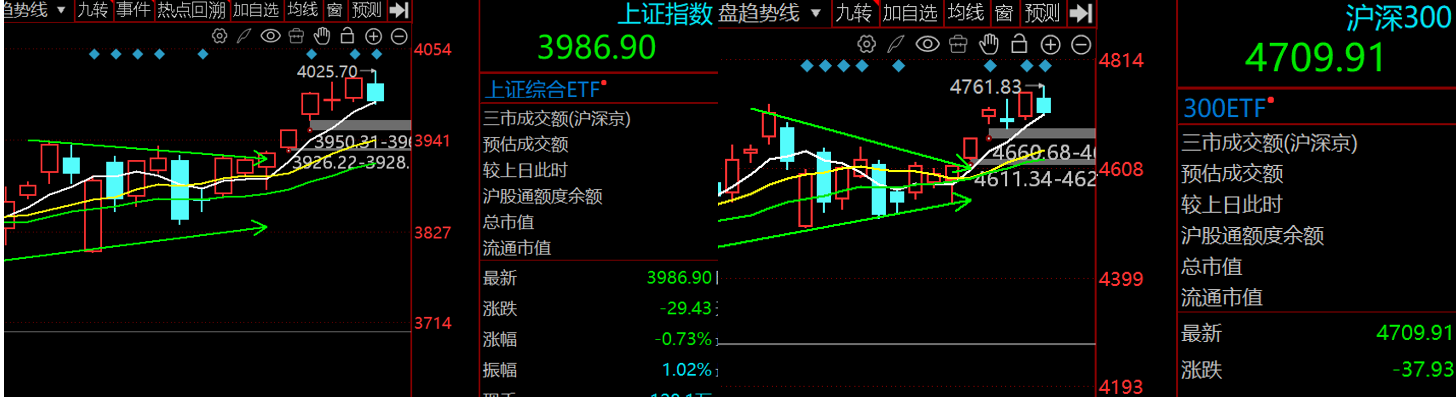
Market Overview - The market experienced a significant drop in the afternoon, with high-dividend sectors like banks unable to support the decline in technology stocks [2] - Major indices fell close to their 5-day moving averages, with the ChiNext Index dropping nearly 2% and the Shanghai Composite Index falling below 4000 points [2] - The total trading volume in the Shanghai and Shenzhen markets reached 2.42 trillion yuan, an increase of 165.6 billion yuan compared to the previous trading day [2] Stock Performance - Approximately 4100 stocks declined today, with nearly 10 stocks hitting the daily limit down, primarily those with poor Q3 earnings reports [2] - The sectors that saw gains included lithium batteries, quantum computing, and performance growth stocks, indicating some resilience in specific areas despite the overall market downturn [3] Sector Analysis - Lithium battery sector showed a notable increase with 14 stocks gaining, while quantum computing had 5 stocks up [3] - Performance growth stocks also had 17 stocks increasing, suggesting a focus on companies with strong earnings potential [3] - The shipping and non-ferrous metals sectors had minor gains, indicating mixed performance across different industries [3]

“十五五”,中国量子科技开启新周期
2 1 Shi Ji Jing Ji Bao Dao· 2025-10-30 12:36
Core Insights - The United Nations has officially designated 2025 as the "International Year of Quantum Science and Technology," coinciding with the centenary of quantum mechanics [1] - The recent Nobel Prize in Physics awarded to scientists in superconducting quantum circuits highlights the significant advancements in quantum technology, indicating a transformative era for the industry [2] Industry Developments - Quantum technology is expected to address complex problems that classical computers cannot solve, with potential applications in drug development, materials science, and financial modeling, potentially creating trillions of dollars in economic value [2] - Major tech companies like Microsoft and Google are making significant strides in quantum computing, with Microsoft announcing a new topology quantum processor and Google achieving a milestone in running verifiable algorithms on hardware [2] - China is emerging as a key player in the quantum technology sector, with substantial government support and a growing number of companies like GuoDun Quantum and Benyuan Quantum making progress [2][3] Market Trends - The Chinese quantum computing market is experiencing explosive growth, with the market size projected to increase from RMB 0.24 billion in 2019 to RMB 50.21 billion in 2023, reflecting a compound annual growth rate of 281.79% [6] - A strategic fund led by China Guoxin Holdings has been established with an initial fundraising target of RMB 51 billion, emphasizing quantum technology as a key investment area alongside AI and high-end equipment [4] Challenges and Opportunities - Despite the high growth potential, the quantum computing sector faces challenges in commercializing research outcomes, with many companies struggling to generate sustainable revenue [7][8] - The integration of quantum computing with classical computing is seen as a promising path forward, with companies like NVIDIA exploring hybrid computing solutions [10][11] Future Outlook - The industry is shifting focus from achieving "quantum supremacy" to delivering practical value to customers, with ongoing collaborations between quantum startups and academic institutions to tackle real-world problems [12][13] - The success of quantum computing will depend on building a robust software and application ecosystem, with expectations for significant breakthroughs in the near future [14]


【研选行业+公司】AI Agent正重塑万亿级商业逻辑,4大赛道标的值得布局
第一财经· 2025-10-30 12:14
①企业支出结构剧变:从"买工具"转向"买结果",AI Agent正在重塑万亿级商业逻辑!4大赛道标 的值得布局; ②卡位215亿低温存储赛道,这家北交所公司实现全链条布局,国资委背景中标协和、清华,受益基 层医疗设备更新订单提速在即。 点击付费阅读,解锁市场最强音,把握投资机会! 【今日速览】 前言 券商研报信息复杂?机构调研数据过时?屡屡错失投资机会?那是你不会挖!想知道哪份研报有用?什 么时候该看?《研报金选》满足你!每日拆解热门产业链或核心公司,快市场一步的投研思维+严苛的 研报选择标准+几近偏执的超预期挖掘,游资私募都在用! 【金选回顾】 量子计算产业化持续加速,10月13日【研报金选·行业】再次提示量子计算产业投资机会,截至目 前板块整体涨幅已超过10%,相关个股如国盾量子涨幅超70%、禾信仪器上涨接近40%。 ...

把握资本市场新机遇——专访中金公司董事总经理、全球股票业务执行负责人张一鸣
Zheng Quan Ri Bao Wang· 2025-10-30 12:04
Core Insights - The article discusses the opportunities and challenges facing China's capital market as outlined in the "15th Five-Year Plan" and emphasizes the need for a more inclusive and adaptive capital market system [1][4]. Group 1: Capital Market Development - The capital market in China is expected to play a crucial role in achieving high-quality economic development during the "15th Five-Year" period and by 2035 [4]. - The valuation advantage of Chinese assets is becoming more prominent, with foreign capital increasingly focusing on China's innovation-driven industries [2][3]. - The recent optimization of the Qualified Foreign Institutional Investor (QFII) system is seen as a significant step towards enhancing the openness of China's capital market, which is expected to attract more long-term foreign capital [3]. Group 2: Financial Support for Innovation - The article highlights the importance of long-term capital in supporting disruptive technologies and new industries, which require substantial investment and a flexible financing environment [6]. - Investment banks are positioned as a bridge between real enterprises and capital markets, providing stable long-term capital for quality companies and facilitating policy improvements for technological innovation [5][6]. - The capital market must provide precise and inclusive financial services to support new industries and technologies throughout their lifecycle [6]. Group 3: Policy Recommendations - The capital market should prioritize serving the real economy by directing financial resources towards key areas such as technological innovation, green economy, and digital economy [7]. - Recommendations include enhancing the quality of listed companies, improving dividend stability, and deepening delisting reforms to create a more efficient market [7]. - There is a call for the continuous improvement of risk management tools to provide diverse hedging options for various market participants [7].

AI日报丨英伟达推出新系统NVQLink,亚马逊开设 $11B Rainier 数据中心项目
美股研究社· 2025-10-30 10:16
Core Insights - The article discusses the rapid development of artificial intelligence (AI) technology and its potential to create significant opportunities in various sectors [3]. Group 1: NVIDIA Developments - NVIDIA has launched a new system called NVQLink, which connects quantum computers with its AI chips, aiming to enhance computational power and drive breakthroughs in fields like medicine and materials science [5]. - NVIDIA plans to invest $1 billion in Nokia, acquiring a 2.9% stake, to leverage its chips for accelerating Nokia's 5G and 6G network software development [7][8]. Group 2: Amazon's Data Center Project - Amazon has officially launched its $11 billion Rainier data center project in Indiana, which will train and run models for the generative AI company Anthropic [9]. - The Rainier project spans 1,200 acres and will eventually house nearly 1 million Trainium2 chips, supporting updates for Anthropic's generative AI chatbot, Claude [9].

算力霸权松动,AI硬件的“群雄时代”到来?
科尔尼管理咨询· 2025-10-30 09:40
Core Insights - The article discusses the significant impact of AI hardware, particularly GPUs, on the market, highlighting NVIDIA's rise to become one of the highest-valued companies globally due to its dominance in AI chip technology [1][3]. - It raises questions about the future of AI hardware, the trends shaping its development, and the emergence of new players in the market [1][3]. AI Hardware Market Dynamics - The AI boom continues despite fluctuations, with substantial investments from the U.S. government and the EU aimed at enhancing AI capabilities [3][4]. - NVIDIA holds approximately 90% of the global gaming GPU and data center GPU market, with a projected revenue growth of over 50% in 2025 compared to 2024, which already saw a record revenue of $130.4 billion [4][3]. GPU Demand and Alternatives - The demand for GPUs in AI is driven by their parallel processing architecture, which allows for rapid handling of large datasets, crucial during the AI training phase [6][7]. - Alternatives to GPUs include Application-Specific Integrated Circuits (ASICs) and Field-Programmable Gate Arrays (FPGAs), each with distinct advantages and limitations [7][8]. Competitive Landscape - The competitive landscape is evolving, with AMD and Intel as key competitors to NVIDIA, though NVIDIA's CUDA programming environment offers significant advantages over AMD's ROCm [10][11]. - Intel's Gaudi 3 chip, aimed at competing with NVIDIA, has faced challenges in gaining market traction due to NVIDIA's established dominance [12]. Emerging Players and Innovations - Companies like Google are developing their own chips, such as TPUs, to reduce reliance on NVIDIA, indicating a shift in the competitive dynamics of the AI hardware market [12][13]. - Startups like Cerebras, SambaNova, and Groq are emerging with innovative solutions that could challenge NVIDIA's position in the long term [14][15]. Future Trends in AI Hardware - The future of AI hardware may involve a hybrid model combining GPUs, ASICs, FPGAs, and new chip architectures, driven by the need for differentiation based on workload types [18]. - Key technological advancements such as silicon photonics, neuromorphic computing, and quantum computing are expected to influence the AI chip market, although their specific impacts remain uncertain [17][18].
英伟达,狂飙!
Xin Lang Cai Jing· 2025-10-30 09:09
Group 1 - The core viewpoint of the article is that Nvidia is not in an AI bubble, as stated by CEO Jensen Huang, and the company has reached a market capitalization of $5 trillion, making it the first company to achieve this milestone [1][31][40] - Nvidia's market cap surpasses that of entire countries like Germany and Japan, ranking it as the third-largest economy globally, behind only the US and China [2] - The rapid growth of Nvidia's market value is unprecedented in business history, with the company reaching $1 trillion in 16 years, $2 trillion in less than 200 days, and $3 trillion in just over two months [4][5] Group 2 - The immediate catalyst for Nvidia's market surge was the GTC conference held on October 28, where Huang announced significant partnerships and technological advancements [6][12] - Nvidia's investment of $1 billion in Nokia aims to develop an AI-native 6G network platform, positioning the company as a key player in future communication infrastructure [9][10] - The introduction of NVQLink technology connects traditional GPU supercomputers with quantum processors, indicating Nvidia's commitment to being a leader in both classical and quantum computing [11][12] Group 3 - Nvidia's revenue for the first half of the year exceeded $100 billion, with projections of $500 billion in GPU sales by the end of 2026, representing an 8 to 9-fold increase in just two years [12][12] - The company has built a nearly unreplicable ecosystem through its CUDA platform, which allows GPUs to perform complex calculations beyond graphics processing, making it essential for AI and deep learning applications [14][15][17] - Over 400,000 developers use CUDA, and the platform has been downloaded 40 million times, creating a strong path dependency that makes it difficult for competitors to lure developers away [17][18] Group 4 - Nvidia is strategically investing in key partnerships, including a $10 billion investment in OpenAI to support AI applications and a $5 billion stake in Intel to secure AI-specific CPU access [20][21] - The vision of Nvidia extends beyond being a chip manufacturer to becoming the architect of "AI factories," where data serves as raw material and GPUs form the production line [22][27][29] - Huang's statement that "AI is the main productive force" reflects a shift in perspective, positioning AI as a core component of future economic productivity [27][40] Group 5 - Despite the optimism, there are concerns about competition from companies like AMD and the self-development of AI chips by major cloud providers such as Google, Amazon, and Microsoft [42][44] - Geopolitical risks, particularly US export controls affecting sales in China, have led to a 24% year-over-year decline in Nvidia's revenue from that market [46] - The potential for disruptive changes in computing paradigms, such as quantum and neuromorphic computing, poses long-term risks to Nvidia's market position [49][50] Group 6 - The debate over whether Nvidia's $5 trillion valuation represents a genuine industrial leap or a bubble continues, with arguments on both sides regarding the sustainability of AI-driven growth [52][53] - Supporters argue that Nvidia's valuation is justified by its technological advancements and strong financial performance, while skeptics caution about the potential for a market correction similar to the dot-com bubble [38][39][41]
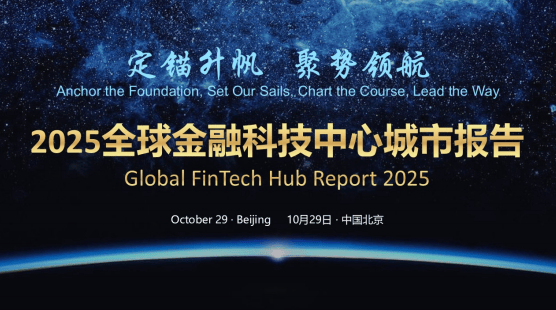
2025全球金融科技中心城市报告发布,中国5城跻身TOP10丨直击金融街论坛
Sou Hu Cai Jing· 2025-10-30 08:42
Core Insights - The report titled "Global FinTech Hub Report 2025" reveals that Beijing retains its position as the top global fintech city, with significant advancements in various Chinese cities [1][3]. Trend Summaries Trend 1: Intensifying Global Competition - The competition in the global fintech sector is intensifying, with the top 10 cities showing a reduced gap in rankings over the past six years. The index gap between the first and tenth ranked cities is now 22.8, down from 29.7 in 2020, indicating a narrowing disparity in fintech capabilities [4]. - Notable movements include Hong Kong rising one position and Paris entering the top 10 for the first time, replacing Sydney [4]. Trend 2: Asia's Leading Position - Asia continues to dominate the global fintech landscape, with 60% of the top 10 cities located in the region. China has five cities in the top 10, contributing to a total of 25 Asian cities in the top 50, significantly outpacing other regions [5][6]. Trend 3: Emergence of New Centers - New fintech centers are rapidly emerging, with 14 cities in the top 50 showing consistent upward movement over the past three years. This growth is driven by "industry/technology-driven" and "ecosystem/regulatory-driven" models [7][8]. Trend 4: Breakthroughs in Ecosystem and Industry Rankings - In the ecosystem rankings, China has made significant strides, with four cities in the top 10. Hong Kong's financial institutions saw a market value increase from $216.9 billion to $363.9 billion, a growth rate of 67.8% [9]. - The industry rankings remain led by China and the U.S., with Chinese cities collectively housing 121 fintech listed companies valued at $375.4 billion [10]. Trend 5: Enhanced Index System - The report introduces an upgraded Financial Development Index (FDI) that evaluates fintech development through over 50 indicators, aiming to foster international collaboration and a robust global fintech ecosystem [11][12].