
关税

Search documents
沃尔玛(WMT.US)Q2盈利罕见不及预期 预警关税成本下半年将上升
Zhi Tong Cai Jing· 2025-08-21 13:07
Core Viewpoint - Walmart's Q2 earnings fell short of expectations due to increased insurance claims and one-time costs, despite a revenue increase of 4.8% year-over-year to $177.4 billion, which exceeded market forecasts [1] Financial Performance - Q2 revenue rose 4.8% to $177.4 billion, surpassing market expectations [1] - Non-GAAP EPS was $0.68, below market expectations due to increased insurance claims [1] - Operating profit decreased by 8.2% due to special legal and restructuring costs, while adjusted operating profit grew by 0.4% due to strong sales performance [1] - Walmart raised its full-year sales guidance to a growth of 3.75% to 4.75%, up from a previous forecast of 3% to 4% [1] Business Segments and Growth Drivers - Global e-commerce sales increased by 25%, driven by in-store pickup and delivery services [2] - Advertising revenue grew by 46%, with Walmart Connect in the U.S. increasing by 31% [2] - Membership and other profits rose by 5.4%, with global membership profits up by 15.3% [2] - Same-store sales at Sam's Club, excluding fuel, grew by 5.9%, exceeding analyst expectations of 5.2% [2] Pricing and Cost Management - Walmart noted that tariff costs are expected to rise in the second half of the year, although the impact has been limited so far, with U.S. goods prices only increasing by 1% this quarter [3] - The company has slightly raised prices on some items while absorbing costs on others, managing price adjustments on a per-item basis [3][5] - Walmart's strategy includes stocking up on inventory to prepare for the second half of the fiscal year and the holiday season, with inventory growth of 2.2% in the U.S. [5] Consumer Behavior and Market Position - Despite economic pressures, Walmart has not observed significant changes in consumer spending, with private label sales remaining stable compared to last year [4] - The company aims to expand market share by leveraging its global supply chain for efficient procurement and favorable supplier agreements [6] - Q2 same-store sales in the U.S. grew by 4.6%, surpassing market expectations of 4.1%, with transaction numbers increasing by 1.5% and average transaction amounts rising by 3.1% [6] Challenges and Outlook - Increased claims and restructuring costs have impacted profitability, with rising costs associated with general liability and workers' compensation claims [7] - The retail environment remains stable, supported by a relatively stable job market and promotional activities [7] - Competitors like Home Depot and Target have reported optimistic demand forecasts, indicating a mixed retail landscape [7]

摩根士丹利重磅!亚洲宏观展望十大关键问题之答案
Zhi Tong Cai Jing· 2025-08-21 12:06
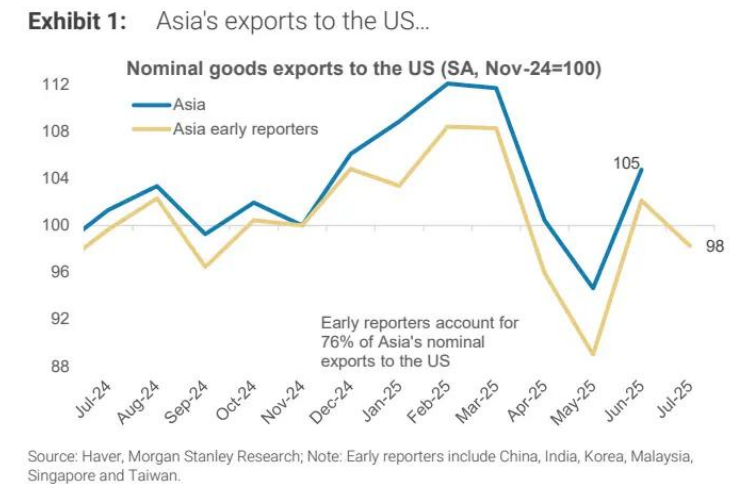
Group 1 - Investors are focusing on the impacts of tariffs, the effectiveness of China's antitrust policies, US-India trade tensions, and whether the Bank of Japan is lagging behind [1] - Morgan Stanley's latest report indicates that investors are more optimistic about the macro outlook for the US and Asia compared to the bank's baseline scenario [1] Group 2 - The current tariff on Asian goods has increased significantly to 25% from 5% at the beginning of the year, with expectations of a notable slowdown in exports by the second half of 2025 [2] - Despite the tariff increases, investors believe that growth in the US and Asia will not show significant deceleration in the latter half of 2025 [2][4] - Non-tech exports from Asia have stabilized after a decline in April and May, with a focus on non-tech exports due to tech products being largely exempt from tariffs [2][5] Group 3 - Exporters have not borne much of the tariff burden, as the prices of goods imported from Asia to the US remain higher than levels seen in February 2025 [7] - The effective tariff rate on Asian imports has risen by 20 percentage points, yet the prices of these goods are only slightly lower than in February 2025 [10] Group 4 - Capital expenditure momentum in Asia appears to be stabilizing, with evidence suggesting a slowdown in capital goods imports since May 2025 [12] - South Korea has committed $350 billion in investments, with actual equity commitments expected to be lower than $17.5 billion, while Japan has announced $550 billion in loans and guarantees, with only 12% expected to be actual investments [13] Group 5 - The increase in tariffs is expected to enhance the transmission of price increases to core goods, with indications that tariffs are driving prices higher in categories such as automobiles and household goods [16] - The US core PCE is projected to peak at 0.39% monthly by August 2025, with core CPI expected to reach a higher peak of 0.45% [16] Group 6 - Asian central banks are currently in a wait-and-see mode, with expectations of further rate cuts as trade policy uncertainties decrease [17] - The report anticipates additional rate cuts in the remaining months of 2025 and into 2026 across various Asian central banks [17] Group 7 - The effectiveness of China's antitrust efforts faces challenges, with recent signals from policymakers indicating potential follow-up actions to address deflationary pressures [18] - The current macroeconomic environment is less favorable for addressing deflation compared to previous years, with a need for a rebalancing from investment to consumption [18][24] Group 8 - The impact of tariffs on India's growth is expected to be mitigated, with only 2% of India's GDP affected by direct and indirect channels from tariffs [19] - The Indian government estimates that only 55% of its exports to the US will be impacted by tariffs, allowing for some exemptions [19] Group 9 - There is a growing divergence between macroeconomic indicators and micro-level data in India, with corporate revenue growth slowing while nominal GDP growth remains high [21] - Factors such as recent monetary easing by the Reserve Bank of India are expected to support economic re-inflation in the coming quarters [21] Group 10 - The Bank of Japan maintains a dovish stance due to moderate demand-side inflation pressures, with expectations of no rate hikes in the near term [22] - The Japanese economy is still recovering from the pandemic, with private consumption and capital expenditure below pre-COVID levels [22] Group 11 - Asian investors are reducing net purchases of US stocks, indicating a shift in focus towards European equities and increased foreign exchange hedging on US positions [23] - The ongoing concerns about the US macro outlook are prompting Asian investors to reconsider their asset allocations [23]


欧盟与美国敲定贸易协议 汽车等商品将被征收15%关税
Di Yi Cai Jing· 2025-08-21 11:25
据报道,欧盟与美国正式敲定上月达成的框架性贸易协议,美国将对大多数欧盟进口商品征收15%的关 税,包括汽车、药品等。 (文章来源:第一财经) ...
瑞达期货贵金属产业日报-20250821
Rui Da Qi Huo· 2025-08-21 09:02
1. Report Industry Investment Rating - Not provided in the content 2. Core Viewpoints of the Report - Shanghai gold and silver main contracts closed slightly higher, maintaining a narrow - range oscillation during the session. Trump pressured Fed officials again, which may marginally affect the US dollar's credit and support the safe - haven demand for gold. The precious metals market was pressured by the spill - over effect of steel and aluminum tariffs, mainly driven by market sentiment. The market is currently focused on the cease - fire expectation between Russia and Ukraine and the expected trading around the Fed's interest - rate cut at the Jackson Hole meeting on Friday. If Powell further releases hawkish signals, the US dollar index and US Treasury yields may continue to rebound, putting pressure on the upward movement of gold prices. In the short term, if there is no significant progress in the geopolitical situation, the precious metals market is expected to continue to oscillate within a range. In the medium term, interest - rate cuts will provide strong bottom support for gold prices. If the Russia - Ukraine negotiations make substantial progress, it may further release the callback pressure on gold prices; otherwise, it may increase the demand for safe - haven buying. Operationally, it is recommended to stay on the sidelines for gold in the short term and focus on short - term rebound trading opportunities for silver. The focus range for the Shanghai gold 2510 contract is 770 - 800 yuan/gram, and for the Shanghai silver 2510 contract is 9000 - 9200 yuan/kilogram [3] 3. Summary by Relevant Catalogs 3.1 Futures Market - Shanghai gold main contract closing price (daily, yuan/gram): 775.12, up 2.44; Shanghai silver main contract closing price (daily, yuan/kilogram): 9162, up 120 - Main contract positions: Shanghai gold (daily, lots): 183215, down 8259; Shanghai silver (daily, lots): 307098, down 11580 - Net positions of the top 20 in the Shanghai gold main contract (daily, lots): 162201, up 1447; Net positions of the top 20 in the Shanghai silver main contract (daily, lots): 116447, up 2105 - Warehouse receipt quantity: Gold (daily, kilograms): 36642, up 60; Silver (daily, kilograms): 1115055, down 25144 [3] 3.2 Spot Market - Shanghai Non - ferrous Metals Network gold spot price (daily, yuan/gram): 773.25, up 4.55; Shanghai Non - ferrous Metals Network silver spot price (daily, yuan/kilogram): 9143, up 117 - Basis of Shanghai gold main contract (daily, yuan/gram): - 1.87, up 2.11; Basis of Shanghai silver main contract (daily, yuan/kilogram): - 19, down 3 [3] 3.3 Supply - Demand Situation - Gold ETF holdings (daily, tons): 962.21, down 3.15; Silver ETF holdings (daily, tons): 15339.66, down 16.94 - Gold CFTC non - commercial net positions (weekly, contracts): 229485, down 7565; Silver CTFC non - commercial net positions (weekly, contracts): 44268, down 6390 - Total gold supply (quarterly, tons): 1313.01, up 54.84; Total silver supply (annually, million troy ounces): 987.8, down 21.4 - Total gold demand (quarterly, tons): 1313.01, up 54.83; Total global silver demand (annually, million ounces): 1195, down 47.4 [3] 3.4 Option Market - Historical volatility: 20 - day for gold (daily, %): 10.17, down 0.53; 40 - day for gold (daily, %): 10.6, up 0.12 - Implied volatility of at - the - money call options for gold (daily, %): 16.54, down 0.82; Implied volatility of at - the - money put options for gold (daily, %): 16.55, down 0.81 [3] 3.5 Industry News - The Fed's July meeting minutes showed that almost all policymakers supported not cutting interest rates in July, with only two opposing. There were differences among Fed officials regarding inflation, employment risks, and the impact of tariffs on inflation, but most believed the risk of rising inflation was higher than the risk of falling employment. - US President Trump called on Fed Governor Cook to resign immediately, increasing pressure on the Fed. The FHFA Director Pult accused Cook of fraud in two mortgages and called on the Justice Department to investigate. - The CRFB's latest forecast showed that due to tax, spending legislation, and tariff policies, the US federal budget deficit will reach $22.7 trillion in the next decade, nearly $1 trillion higher than the CBO's January forecast. - ECB President Lagarde said that the euro - zone economic growth may slow down this quarter. Although the recent agreement with the US reduced uncertainty, the global trade situation remains unclear [3]
关税风云下的铜铝
Minmetals Securities· 2025-08-21 08:44
Investment Rating - The investment rating for the non-ferrous metals industry is optimistic [3] Core Insights - The report highlights the impact of tariffs on the copper and aluminum markets, indicating that the copper market is experiencing a "split" due to tariff policies, which could lead to a potential return of copper processing to the U.S. [18][31] - The aluminum market is facing tight supply conditions, with fluctuations in alumina prices significantly affecting profitability [49][50] - The report anticipates that the copper supply-demand gap will support long-term price stability, with projected deficits in the coming years [44][46] Summary by Sections Copper and Aluminum Price Trends - The report reviews the price trends of copper and aluminum, noting significant fluctuations influenced by tariff expectations and supply chain disruptions [12][15] - Copper prices have been affected by U.S. tariff announcements, leading to a drop in both LME and domestic copper prices [19][31] Tariff Impacts on Copper Market - The U.S. has imposed a 50% tariff on imported copper products, which is expected to impact the domestic copper processing industry significantly [19][31] - The report suggests that the tariff policy may lead to a return of copper processing to the U.S., with potential increases in domestic processing costs [31] Supply Constraints in the Aluminum Market - The aluminum market is experiencing supply constraints, with alumina prices being a core factor affecting profitability [50][54] - The report notes that while there are disruptions in alumina supply from Guinea, overall imports have increased, indicating a gradual recovery [50][51] Long-term Supply-Demand Outlook for Copper - The report projects a supply-demand gap for copper, with deficits expected in 2025 and 2026, which could support higher price levels in the long term [44][46] - The global refined copper production is expected to increase, but the growth rate may be limited due to declining ore grades and production challenges [44][46]
黄金ETF持仓量报告解读(2025-8-21)美联储会议纪要 提振金价
Sou Hu Cai Jing· 2025-08-21 06:54
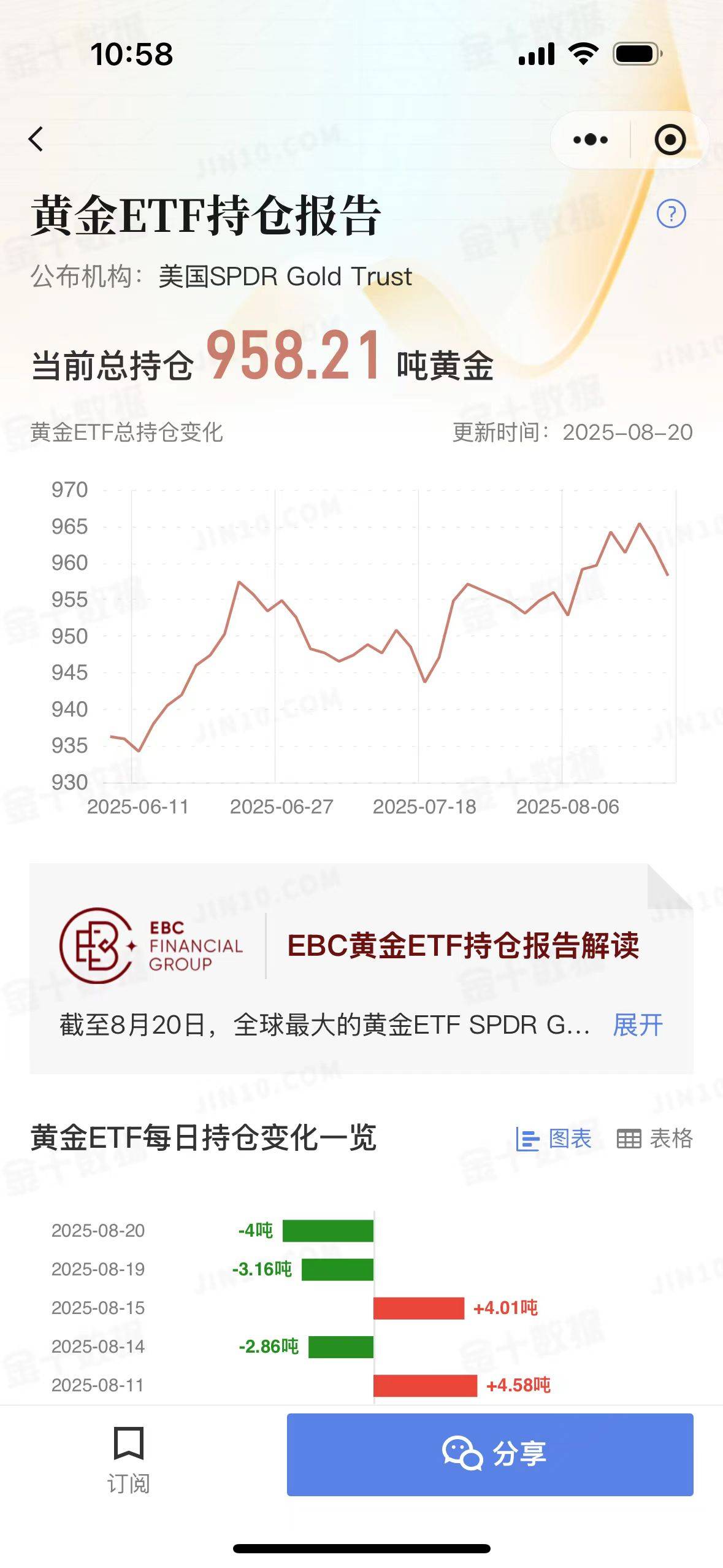
黄金ETF总持合变化 更新时间:2025-08-2 970 965 960 955 950 945 940 935 930 2025-06-27 2025-06-11 2025-07-18 2025-08-06 10:58 黄金ETF持仓报告 公布机构:美国SPDR Gold Trust 当前总持仓 958.21 吨黄金 EBC黄金ETF持仓报告解读 截至8月20日,全球最大的黄金ETF SPDR Gold Trust持仓量为958.21吨,较前一个交易日减少4吨。8月20日,现货黄金终于迎来反弹,盘中最高升至3350.27 美元/盎司,收于3348.24美元/盎司,涨32.69美元或0.91%。在金价反弹之际,黄金ETF持仓量连续第二个交易日减少。 基本面消息,由于市场担忧科技股的高估值,尤其是芯片股等板块的大幅下挫,美股遭遇持续抛售,再加上美联储会议纪要释放"多数决策者认为,通胀上 行风险超过就业下行风险",进一步加剧了美股的抛售情绪。 首先,科技股抛售背后,缘于麻省理工学院(MIT)某研究分支机构在一份报告中称,高达"95%的组织在生成式AI投资中获得的回报为零",并且"只有5% 的集成AI试点项目获得 ...
张尧浠:百日线支撑如期看涨反弹、日内回落仍可低多
Sou Hu Cai Jing· 2025-08-21 03:58
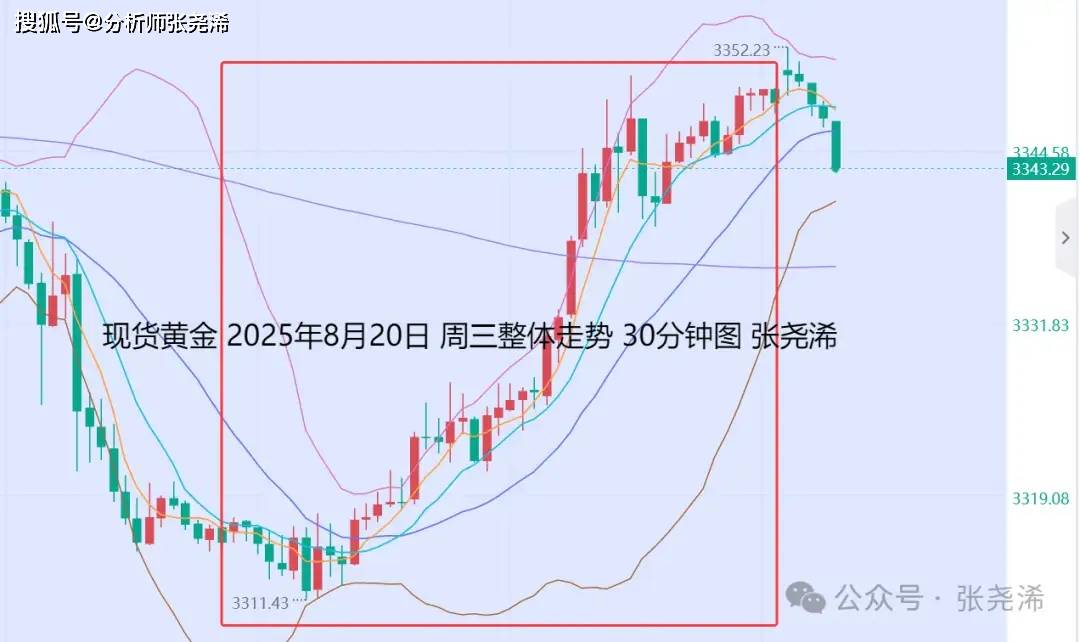
Core Viewpoint - International gold prices have rebounded after touching the 100-day moving average support, indicating a bullish sentiment in the market [1][9]. Group 1: Market Performance - On August 20, gold opened at $3,315.88 per ounce, dipped to a low of $3,311.56, and then rose to a high of $3,350.21 before closing at $3,348.00, marking a daily increase of $32.12 or 0.97% [1]. - The daily trading range was $38.65, reflecting significant volatility in the market [1]. Group 2: Influencing Factors - The rebound in gold prices was supported by buying interest and the exhaustion of negative factors, alongside geopolitical tensions in the Middle East and potential tariff increases announced by Trump [3]. - The market is currently facing uncertainty due to potential tariff hikes on steel and chips, which could reach as high as 300% [3]. Group 3: Future Outlook - The market is expected to maintain a bullish or oscillating trend above the 100-day moving average, with key support levels at $3,337 and $3,330, and resistance levels at $3,355 and $3,370 [9]. - The upcoming Jackson Hole meeting may provide further insights, but any hawkish comments from Powell are expected to have limited impact on gold prices in the short term [5].
国泰君安期货商品研究晨报-20250821
Guo Tai Jun An Qi Huo· 2025-08-21 02:44
Report Summary 1. Industry Investment Ratings No industry investment ratings are provided in the report. 2. Core Views - The report presents the market trends and outlooks for various commodities, including precious metals, base metals, energy products, agricultural products, and chemical products. Each commodity's trend is described as high - level shock, small decline, range shock, etc., based on their respective fundamentals and market news [2][4]. 3. Summary by Commodity Precious Metals - **Gold**: Expected to experience high - level shock. Yesterday, the closing price of Shanghai Gold 2510 was 772.68, with a daily decline of 0.31%. Comex Gold 2510 rose by 0.99% to 3392.20. The trend strength is 1 [2][5][6]. - **Silver**: Forecasted to have a small decline. The closing price of Shanghai Silver 2510 was 9042, down 1.57%. The trend strength is - 1 [2][5][6]. Base Metals - **Copper**: Lacks a clear driving force, and the price will fluctuate. The closing price of Shanghai Copper's main contract was 78,630, down 0.30%. The trend strength is 0 [2][12]. - **Zinc**: Will trade in a range. The closing price of Shanghai Zinc's main contract was 22,265, up 0.27%. The trend strength is 0 [2][15]. - **Lead**: Inventory reduction supports the price. The closing price of Shanghai Lead's main contract was 16,725, down 0.59%. The trend strength is 0 [2][18]. - **Tin**: Will trade in a range. The closing price of Shanghai Tin's main contract was 267,840, down 0.09%. The trend strength is - 1 [2][21]. - **Aluminum**: Expected to experience high - level shock. The closing price of Shanghai Aluminum's main contract was 20,535, down 10. The trend strength is 0 [2][26]. - **Nickel**: The fundamentals will cause narrow - range fluctuations, and beware of news - based risks. The closing price of Shanghai Nickel's main contract was 119,930, down 400. The trend strength is 0 [2][28]. - **Stainless Steel**: The steel price will fluctuate due to the game between macro - expectations and reality. The closing price of the stainless - steel main contract was 12,820, down 65. The trend strength is 0 [2][28]. Energy and Chemical Products - **Carbonate Lithium**: The game between reality and expectations intensifies, and the market volatility will increase. The closing price of the 2509 contract was 81,040, down 6,540. The trend strength is 0 [2][34]. - **Industrial Silicon**: Market sentiment is boosted. The Si2511 closing price was 8,390, down 235. The trend strength is 1 [2][37]. - **Polysilicon**: Quotes are rising, and sentiment continues to be boosted. The PS2511 closing price was 51,875, down 385. The trend strength is 1 [2][38]. - **Iron Ore**: Macro - risk appetite has not significantly reversed, and support remains. The trend strength is 1 [2][41]. - **Rebar and Hot - Rolled Coil**: Both will experience wide - range fluctuations. The closing price of RB2510 was 3,132, down 12; HC2510 was 3,402, down 21. The trend strength for both is 0 [2][43][44]. - **Silicon Ferroalloy and Manganese Ferroalloy**: Market sentiment is cold, and both will experience weak - side fluctuations. The closing price of Silicon Ferroalloy 2511 was 5622, down 56; Manganese Ferroalloy 2511 was 5818, down 80. The trend strength for both is - 1 [2][47]. - **Coke and Coking Coal**: Both will experience wide - range fluctuations. The closing price of JM2601 was 1162.5, down 32; J2601 was 1678, down 30.5. The trend strength for both is 0 [2][50]. - **Log**: The price will fluctuate repeatedly. The closing price of the 2509 contract was 805.5, down 0.6%. The trend strength is 0 [2][53]. - **Para - Xylene**: Crude oil rebounds, demand improves, and it is unilaterally strong. The closing price of the PX main contract was 6844, up 1.03%. - **PTA**: Cost provides support, and it is strong in the short - term. The closing price of the PTA main contract was 4778, up 0.93%. - **MEG**: There is an expectation of overseas supply contraction, and it is strong in the short - term. The closing price of the MEG main contract was 4477, up 1.20% [2][57]. Agricultural Products - **Palm Oil**: Fundamentals provide strong support, and go long on macro - pullbacks. - **Soybean Oil**: Driven by US soybeans is insufficient, and it will experience high - level shock consolidation. - **Soybean Meal**: Overnight US soybeans rose slightly, rapeseed meal was weak, and Dalian soybean meal may fluctuate. - **Soybean No.1**: Will experience weak - side fluctuations. - **Corn**: Will operate weakly. - **Sugar**: Will be strong with fluctuations. - **Cotton**: Pay attention to the listing situation of new cotton. - **Egg**: Pay attention to the culling rhythm of old hens. - **Live Pig**: Wait for the end - of - month spot verification. - **Peanut**: Near - term contracts are strong, and far - term contracts are weak [2][4].
见证历史!全球最大纤维水泥产品制造商暴跌超34%!
Zheng Quan Shi Bao Wang· 2025-08-21 02:37
Group 1: James Hardie (JHX) - James Hardie's stock price plummeted over 34%, marking the largest drop since 1973, closing at $18.64 per share with a market capitalization of $8 billion [1][2] - For Q1 of FY2026, the company reported a net sales figure of $900 million, a 9% year-over-year decline, and an adjusted net profit of $127 million, down 29% year-over-year [2] - The CEO highlighted uncertainty in the market, attributing the decline to high borrowing costs and a bleak outlook for North American operations, particularly in single-family home construction [2][3] Group 2: Home Improvement Retailers - Home improvement retailers Lowe's and Home Depot expressed similar concerns regarding the impact of high interest rates on consumer spending and large renovation projects [3] - Lowe's projected a stable overall home improvement market for the year, while acknowledging short-term challenges such as rising mortgage rates and consumer affordability issues [3] Group 3: Palantir Technologies - Palantir's stock fell 1.1% to $156, marking the sixth consecutive day of decline, with a total drop of over 16% during this period [1][4] - The stock has dropped 18% from its recent intraday high, causing it to fall out of the list of the 20 most valuable companies in the U.S. [5] - A short report from Andrew Left of Citron Research claimed Palantir's stock is disconnected from its fundamentals, suggesting a fair value of $40 compared to its current valuation [6]
