
技术创新

Search documents
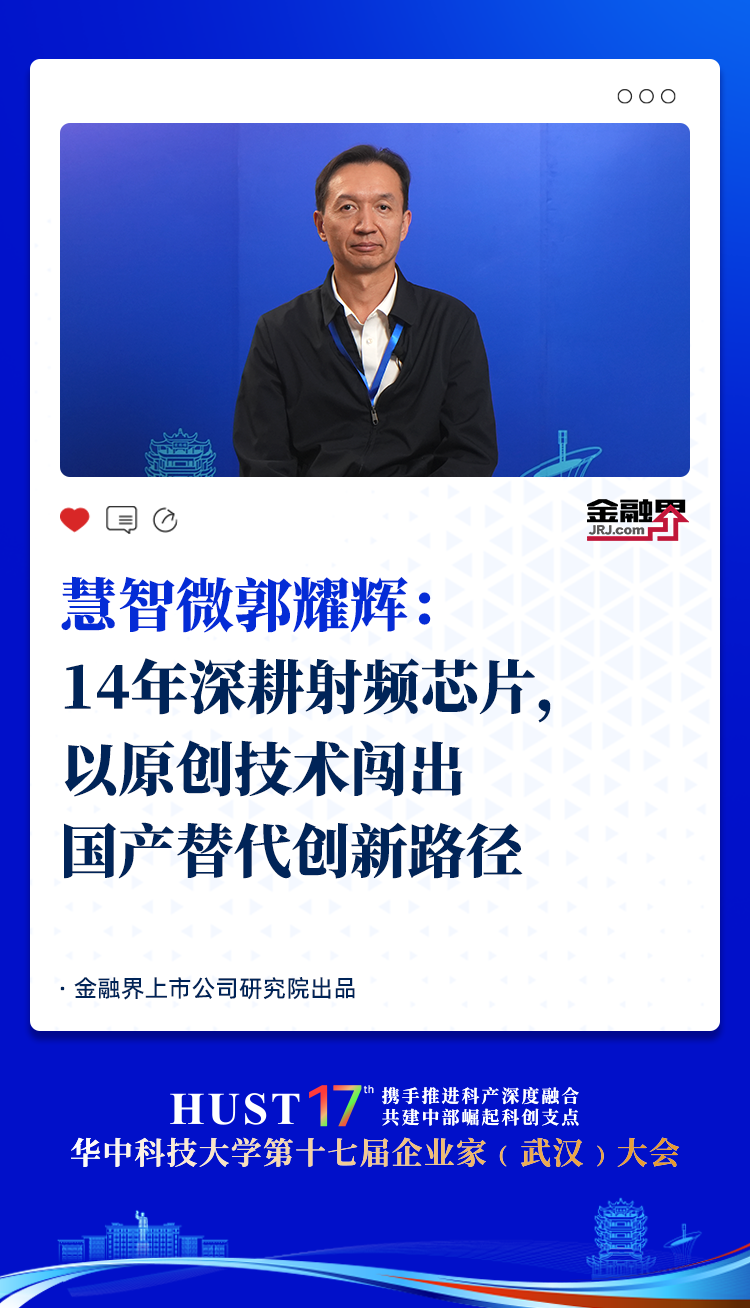
慧智微郭耀辉:14年深耕射频芯片,以原创技术闯出国产替代创新路径
Jin Rong Jie· 2025-11-25 03:27
Core Insights - The chip industry is considered a foundational sector for technological power, with the radio frequency front-end being a core area that combines technical barriers and market value [1] - The rise of domestic chips is attributed to persistent efforts and practical actions, as demonstrated by the journey of the company Huizhiwei and its co-founder Guo Yaohui [1] Company Background - Huizhiwei, founded in 2011, specializes in the design of radio frequency front-end chips for smartphones and IoT, emerging during the transition from 3G to 4G when the market was dominated by foreign firms [3][5] - The company focuses on innovative technology, specifically targeting "reconfigurable power amplifiers" to differentiate itself from competitors [3] Entrepreneurial Journey - The company faced significant challenges in its early years, including funding issues and customer trust, taking three years to launch its first product and achieving mass production in the fourth year [5] - The explosion of 5G technology in 2020 provided a breakthrough opportunity, leading to partnerships with major smartphone brands like Samsung, Vivo, Xiaomi, and OPPO [5] Industry Dynamics - Huizhiwei has prepared to navigate the competitive landscape of the chip industry by adopting a "dual-drive" strategy, focusing on R&D investment and expanding into overseas markets and high-end chip segments [6] - The company views the radio frequency chip sector as a long-term growth area, with applications extending from 2G to 6G and across various domains such as IoT and automotive [7] Entrepreneurial Philosophy - Guo Yaohui emphasizes the importance of a pragmatic approach to entrepreneurship, advising future entrepreneurs to set clear goals, prepare thoroughly, and maintain passion for technology development [8] - The company embodies the spirit of its alma mater, advocating for original contributions to the industry rather than merely imitating existing technologies [8]


特种建筑化学品市场重塑增长格局
Zhong Guo Hua Gong Bao· 2025-11-25 03:11
Core Insights - The global specialty construction chemicals market is undergoing significant structural changes driven by rapid urbanization, sustainability requirements, and technological innovation [1] - The compound annual growth rate (CAGR) for the global construction industry is projected to reach 2.7% from 2025 to 2030, while the demand for specialty construction chemicals is expected to grow at an annual rate of 1.9% during the same period [1] Market Overview - By 2025, the specialty construction chemicals market size is expected to reach $46 billion, and if general products like waterproof asphalt membranes and grouts are included, the total market size could rise to $74 billion, indicating strong industry resilience [1] - Emerging regions such as India, the Middle East, Africa, and Latin America are becoming key growth engines due to rapid urbanization and major infrastructure projects [2] Regional Dynamics - China remains the dominant market for specialty construction chemicals, accounting for 61% of global consumption by volume and 28% by market value in 2025, with a projected consumption of 8.65 million tons and a market size of approximately $12.9 billion [2] - India is expected to be the fastest-growing core market with a CAGR of 4.3% from 2025 to 2030, driven by the "Make in India" initiative and significant infrastructure projects [2] - North America and Western Europe exhibit a "stable volume, high price" characteristic, with North America benefiting from economic resilience and land availability, while Western Europe faces challenges from high interest rates and cost pressures [2][3] Market Trends - The Asia-Pacific region is supported by large-scale infrastructure projects and a growing middle-class demand for high-end housing, while North America's growth is driven by the need for large-scale infrastructure renovations [3] - The European market focuses on sustainability, with policies promoting low volatile organic compounds (VOCs) and recyclable products becoming mainstream [3] Segment Analysis - Concrete admixtures represent the largest category of specialty construction chemicals, expected to account for 65% of consumption and 32.4% of value by 2025, with a shift towards high-efficiency agents and sustainable formulations [4] - The specialty coatings market is projected to maintain steady growth, with consumption expected to reach 11% by 2025, driven by renovation demands in mature markets [4] - Specialty adhesives and sealants are anticipated to account for 10% of the market by 2025, with high-performance bonding needs arising from the use of large panels and tiles [4] Future Outlook - The industry is expected to continue evolving towards high-end and green solutions driven by technological advancements and sustainability constraints, further enhancing overall growth resilience [4]
CEO们不再为了流量吹牛,挺好的
3 6 Ke· 2025-11-25 02:24
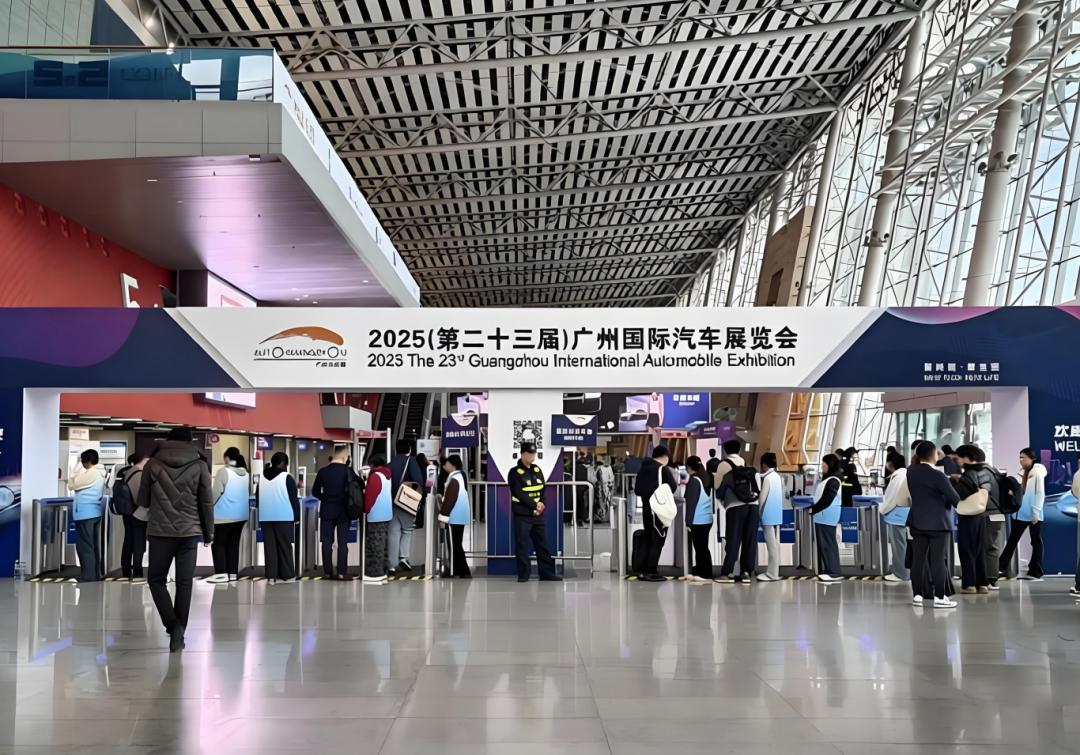
Core Viewpoint - The 2025 Guangzhou Auto Show is described as the "coldest" edition in history, marked by a significant reduction in the number of vehicles and exhibition halls, reflecting broader changes in the automotive industry and marketing strategies [1][3][5]. Group 1: Event Overview - The 2025 Guangzhou Auto Show featured 1,085 vehicles, a decrease of 86 from 1,171 in 2024, and reduced the number of exhibition halls from 16 to 14 by canceling the commercial vehicle hall [3][5]. - The show has seen a decline in the presence of high-profile executives promoting their brands, indicating a shift away from a focus on celebrity-driven marketing [5][12]. Group 2: Industry Trends - The automotive industry is experiencing a transformation as regulatory pressures increase and companies reflect on their practices, leading to a decrease in the emphasis on "traffic-driven" marketing strategies [5][12]. - There is a growing consensus among industry leaders to return to technology innovation and product quality, moving away from aggressive marketing tactics that prioritize hype over substance [14][16]. Group 3: Changes in Marketing Strategies - The previous trend of executives engaging in high-profile marketing stunts has diminished, with a focus now on product demonstrations and technical discussions during presentations [14][16]. - Exhibition designs have shifted to prioritize vehicle features and technology over flashy displays, indicating a maturation of the industry [16].
动力电池:生态协同方能行稳致远
Zhong Guo Hua Gong Bao· 2025-11-25 02:12
Core Insights - The 10th International Summit on Power Battery Applications (CBIS 2025) held in Shanghai focused on the theme of "The New Era of Global Supply Chain Regionalization," attracting major industry players like Yiwei Lithium Energy, Ganfeng Lithium, and others [1] - Innovation is identified as the core driving force for the development of the new energy battery industry, with ongoing breakthroughs in solid-state battery technology and a focus on addressing resource constraints, safety challenges, and cost pressures [2] Industry Challenges - The power battery industry faces multiple challenges including performance, cost, safety, and environmental concerns [2] - The high lifecycle cost of power batteries in electric vehicles is a significant issue, necessitating continuous cost reduction for healthy industry development [2] - The ultimate safety concerns, particularly regarding thermal runaway incidents, are critical pain points that need to be addressed [2] Solid-State Battery Development - The release of the "2025 China Solid-State Battery Industry Development White Paper" indicates a stable growth trend in global solid-state battery shipments, projected to reach 6.8 GWh in 2024, a year-on-year increase of over 280% [3] - Breakthroughs in material technology are essential for the development of solid-state batteries, with significant advancements in sulfide electrolyte materials already achieved [3] - Ganfeng Lithium has established pilot lines for solid-state batteries, targeting energy densities above 450 Wh for applications in high-end sectors [3] Manufacturing and Ecosystem Collaboration - The transition of solid-state batteries from laboratory to production is challenging, requiring stable systems and advanced manufacturing processes [4] - Experts emphasize the importance of ecological collaboration alongside technological breakthroughs, as the industry evolves from single automotive applications to multi-scenario energy carriers [5] - Continuous micro-innovations in safety, cost reduction, and efficiency improvements are deemed more critical than the hype surrounding solid-state batteries [5] Global Market Position - Chinese battery companies have transitioned from being followers to strong competitors in the global market, with a shift in focus from cost and speed to product quality, supply chain resilience, and carbon footprint management [6] - The overall capacity of the new energy battery industry is increasing, leading downstream customers to prioritize cost and quality, making lean manufacturing a focal point [6]
中金岭南拟7.42亿全资控股中金铜业 创新驱动近三年研发费累超12.6亿
Chang Jiang Shang Bao· 2025-11-25 00:16
Core Viewpoint - Company Zhongjin Lingnan is enhancing its control over the copper smelting sector through a cash acquisition of minority shareholder equity, aiming for 100% ownership of Zhongjin Copper Industry [1][2][3] Group 1: Acquisition Details - The company plans to use its own funds of 742 million yuan to acquire minority shareholder equity, achieving full control over Zhongjin Copper Industry [1][2] - The acquisition is part of a strategic move initiated in 2023 to enter the core copper smelting sector through the bankruptcy reorganization of related enterprises [2] - The acquisition will occur in two phases, with the first phase involving the purchase of 4.2095% and 10.3333% equity from China Cinda and Zhongjin Rongsheng, respectively [2] Group 2: Financial Performance - For the first three quarters of 2025, the company reported revenue of 48.51 billion yuan, an increase of 11.81% year-on-year, and a net profit attributable to shareholders of 841 million yuan, up 5.18% [1][4] - The company has shown steady revenue growth over the past five years, with revenues nearly doubling from 30.25 billion yuan in 2020 to 65.65 billion yuan in 2024 [4] - As of September 30, 2025, total assets reached 50.48 billion yuan, marking a 10.13% increase from the end of 2024 [5] Group 3: Innovation and R&D - The company has significantly increased its R&D investment, with cumulative R&D expenses reaching 1.266 billion yuan over the past three years [1][5] - As of mid-2025, Zhongjin Lingnan holds a total of 527 patents, including 198 invention patents, and has been involved in numerous national and provincial key technology projects [5] Group 4: Market Position and Strategy - Zhongjin Lingnan operates as a comprehensive player in the non-ferrous metal industry, with core businesses in lead, zinc, and copper mining, smelting, and processing [4] - The company’s diversified product matrix, including precious metals and rare metals, helps mitigate risks associated with price fluctuations of individual products [5] - The acquisition aligns with the company's "one body, two wings" development strategy, aimed at enhancing management efficiency and resource allocation [3]

元鼎证券|如何挖掘上市后具备长期投资价值的“潜力股”
Sou Hu Cai Jing· 2025-11-25 00:01
Group 1 - The core investment logic focuses on identifying sustainable value anchors in companies' growth trajectories rather than chasing hot concepts, emphasizing deep analysis of industry trends, business models, and management capabilities [1] - Potential companies often emerge at critical points of industrial transformation, where technological innovation resonates with social demand, leading to a restructuring of industry dynamics [1] - In the electric vehicle sector, early competition among battery companies centered on energy density breakthroughs, while the industrialization of solid-state battery technology is set to redefine competition rules for the next decade [1] Group 2 - The sustainability of a business model serves as a moat for companies to navigate through economic cycles, with some emerging consumer brands rapidly rising due to traffic benefits but revealing true profitability when marketing costs erode margins [3] - High-quality business models often exhibit self-reinforcing characteristics, such as cloud service providers building user stickiness through continuously iterated API ecosystems [3] - Key metrics for evaluating these models include user retention rates, which reflect customer value retention, and unit economics, which reveal changes in marginal benefits during expansion [3] Group 3 - Financial statements act as a health report for companies, requiring a nuanced interpretation of key indicators, where the ratio of operating cash flow to net profit better reflects profit quality than revenue growth alone [4] - The stability of gross margins is more indicative of a company's pricing power within the industry than short-term fluctuations [4] - Changes in the capitalization rate of R&D expenses may signal management's intent to manipulate profit statements, highlighting the importance of understanding the underlying operational health of a business [4] Group 4 - Market sentiment oscillates between greed and fear, providing rational investors with opportunities to position themselves strategically [4] - For instance, a semiconductor equipment company may experience a drop in P/E ratio due to industry cycle fluctuations, while simultaneously seeing a 40% year-over-year increase in orders, indicating a divergence between fundamentals and valuation that presents a value recovery opportunity [4] - The essence of investing lies in discovering undervalued growth certainty in overlooked corners of the market [4] Group 5 - The process of identifying potential stocks is a practice of cognitive ability and patience, requiring investors to possess both industry insight and financial analysis skills while maintaining independent thinking amidst market noise [5] - Quality companies that successfully navigate bull and bear markets often exhibit unique genetic codes early in their public offerings, awaiting long-term investors who can recognize their potential [5]

日本经济难突重围
Sou Hu Cai Jing· 2025-11-24 22:29
Economic Overview - Japan's economy has entered a negative growth phase again, with a GDP decline of 1.8% year-on-year in Q3, primarily due to a sharp contraction in external demand [2] - The contribution of external demand to Japan's economic growth in Q3 was -0.2 percentage points, exacerbated by increased tariffs on Japanese goods, particularly automobiles [2] - Domestic demand remains weak, with personal consumption showing only a slight increase of 0.1% quarter-on-quarter, while residential investment fell by 9.4% [2] Government Response - The Japanese government, led by Prime Minister Fumio Kishida, has approved an economic stimulus plan worth 21.3 trillion yen (approximately 135.4 billion USD) to address rising prices and boost investment in sectors like semiconductors and AI [3] - The stimulus plan relies heavily on fiscal expansion and monetary easing, without addressing necessary structural reforms in the economy [3][4] Structural Challenges - Japan's government debt has reached approximately 263% of GDP, limiting the effectiveness of further spending and increasing long-term interest rates [4] - The aging population, with 29% aged 65 and above, is contributing to labor shortages and a shrinking consumer market [4] - Japan's automotive industry is struggling to adapt to the global shift towards electric vehicles, missing opportunities in the transition to new energy sources [4] Market Impact - Tensions in Sino-Japanese relations, exacerbated by controversial statements from the Japanese Prime Minister, have led to a significant decline in tourism revenue, estimated to be between 11.5 billion to 14 billion USD, impacting GDP growth by 0.29 to 0.36 percentage points [3] - The stock market has reacted negatively, particularly in the retail and transportation sectors, as civil exchanges between China and Japan are postponed or canceled [3] Long-term Outlook - Analysts suggest that Japan's economy may continue to fluctuate around the growth line without achieving effective growth, as the current fiscal stimulus may only provide short-term relief [5] - A genuine recovery will require institutional reforms and technological innovation rather than reliance on short-sighted policies or external confrontations [5]

调研速递|比亚迪接受美银美林等60家机构调研 海外销量同比增155.5% 储能装机超230GWh
Xin Lang Cai Jing· 2025-11-24 11:44
Core Viewpoint - BYD's overseas business is becoming a significant growth engine, with a focus on localizing operations, technological innovation, and advancements in energy storage solutions [1][2][4]. Group 1: Overseas Business - BYD's overseas sales surged by 155.5% year-on-year, with 83,524 vehicles sold in October and a cumulative total of 785,103 vehicles from January to October [2]. - The company has expanded its presence in over 110 countries and regions across six continents, enhancing the penetration rate of electric vehicles in Europe, Latin America, and Asia-Pacific [2]. - BYD is accelerating its localization efforts in research, design, and operations, with plans to launch 7 to 8 electric and hybrid models in Japan by 2027 [2]. Group 2: Technological Innovation - BYD emphasizes "technology as king and innovation as fundamental," with R&D investments ranking among the top in A-share listed companies [3]. - The company has introduced technologies such as the "blade battery" for safety, "DM-i super hybrid" for efficiency, and "Tian Shen Zhi Yan" for intelligent driving, further solidifying its technological edge [3]. - The "Tian Shen Zhi Yan" system has been installed in over 2 million vehicles, generating more than 130 million kilometers of data daily, and offers advanced parking capabilities comparable to L4 level [3]. Group 3: Energy Storage Business - BYD's energy storage business has expanded globally, covering over 110 countries and providing solutions for hundreds of projects [4]. - As of October 2025, the total installed capacity of BYD's power batteries and energy storage batteries exceeded 230 GWh, representing a year-on-year increase of over 55% [4]. - The company launched the "Haohan" energy storage product featuring the world's largest dedicated blade battery, improving energy density by over 300% compared to conventional products [4].

普华永道:2030年全球基金规模迈向200万亿美元,私募将贡献过半收入
Hua Er Jie Jian Wen· 2025-11-24 10:58
Core Insights - The global asset management industry is projected to grow from $139 trillion in 2024 to $200 trillion by 2030, with private equity becoming a significant revenue contributor, expected to account for over half of the industry's income within five years [1][2]. Group 1: Private Equity Market Growth - The private equity market is anticipated to generate $432 billion in revenue by 2030, surpassing the combined revenue of traditional active and passive investment products [1]. - Factors driving the rapid expansion of the private equity market include investor demand for higher returns, increased accessibility for retail investors, and a decline in public market IPOs [2][3]. Group 2: Traditional Asset Management Challenges - Despite the growth in asset size, the profitability of the asset management industry is under pressure, with 89% of firms experiencing profit challenges over the past five years [4]. - Profit margins have decreased by 19% since 2018 and are expected to decline by an additional 9% by 2030, primarily due to rising costs and the growth of low-fee passive funds [4]. - The rapid growth of passive funds is projected to increase from approximately $40 trillion to $70 trillion by 2030, further compressing overall fee levels in the industry [4]. Group 3: Strategic Shifts in the Industry - Companies are encouraged to innovate and restructure their business models to remain competitive, as the winners will be those that adapt quickly rather than those that simply accumulate assets [5].

顺络电子:公司通过与供应链长期合作可以相对实现平抑由于原材料价格高波动带来的影响
Zheng Quan Ri Bao Zhi Sheng· 2025-11-24 09:35
Core Viewpoint - The company emphasizes that precious metals constitute a small portion of raw material costs, and as electronic components trend towards being "light, thin, short, and small," the consumption of raw materials per product is decreasing, leading to a limited impact on production costs and gross margin [1] Group 1: Raw Material Costs - Precious metals have a minor share in the overall raw material costs [1] - The trend towards smaller electronic components results in reduced raw material consumption per unit [1] - The impact of raw material costs on gross margin is becoming increasingly negligible [1] Group 2: Supply Chain Management - The company has established long-term partnerships with suppliers, particularly within the domestic supply chain, which helps mitigate the effects of raw material price volatility [1] - Strong supply chain management capabilities are highlighted as a competitive advantage [1] Group 3: Innovation and Efficiency - Continuous technological, process, and equipment innovations are being pursued to enhance production efficiency [1] - The company engages in early-stage research and design with key clients, ensuring high automation levels and ongoing improvements in technology and processes [1] - These innovations significantly contribute to maintaining the company's gross margin levels [1]
