AI大模型

Search documents
山东日照东港区:“服务温度”提升“发展热度”
Zhong Guo Jing Ji Wang· 2025-11-26 06:35
Core Insights - The article highlights the growth and innovation of companies like Lishan Special Intelligent Equipment Manufacturing and Bit Intelligent Technology in the Donggang District of Rizhao, Shandong, emphasizing their strategic advantages and contributions to the local economy [1][2] Company Overview - Lishan Special Intelligent Technology Co., Ltd. is expanding its high-end intelligent equipment manufacturing capabilities, benefiting from the advantageous location and supportive business environment in the Donggang area [1] - Bit Intelligent Technology Co., Ltd. has successfully penetrated the global market, providing smart hotel products to over 180,000 hotel clients across more than 70 countries, showcasing its innovative journey from a local enterprise to a high-tech company listed on the New Third Board [1] - The company has integrated AI large models into its hotel IoT platform, proposing a dual-directional full model concept that combines "smart manufacturing + hotel management" and "software + hardware" innovations [1] Industry Development - The Donggang District has been proactive in fostering a conducive environment for high-quality development, focusing on strategic industries such as high-end equipment, new materials, low-altitude economy, and next-generation information technology [2] - The district's initiatives have led to the recognition of Bit and Lishan as "specialized, refined, and innovative" small giant enterprises by the Shandong Provincial Department of Industry and Information Technology [2]
为什么我判断90%的中国ToB公司不需要GEO
Tai Mei Ti A P P· 2025-11-26 02:24
Core Viewpoint - The article discusses the current trends in the ToB (business-to-business) sector, particularly focusing on the concepts of GEO (Generative Engine Optimization) and AI Agents, arguing that while GEO is a trend, it is not yet a viable or effective strategy for most ToB companies [1][20]. Summary by Sections GEO vs. AI Agents - The author opposes the idea that GEO is the future of traffic acquisition, stating that 90% of Chinese ToB companies do not need to invest in GEO at this time [2][3]. - GEO is seen as a potential trend but lacks a mature product and commercial model, making it difficult to establish a stable profit loop [3][8]. Current State of GEO - The current form of GEO resembles a "next-generation SEO," but it has not yet developed a solid commercial framework [4][5]. - The effectiveness of GEO in driving traffic is questioned, as it does not significantly outperform traditional search engines like Baidu in terms of user acquisition [6][10]. User Behavior and Market Dynamics - User behavior in the ToB sector remains stable, with search engines still being the primary source of traffic, despite the rise of AI models [11][12]. - The article emphasizes that the decline in traffic is a macro issue rather than a result of competitors using GEO to steal market share [12][13]. Challenges in Implementing GEO - Many ToB companies lack a solid foundation in SEO, which hampers their ability to leverage GEO effectively [17][19]. - The article suggests that companies should focus on strengthening their SEO and content strategies across various platforms before attempting to implement GEO [19][20]. Future Outlook - The author posits that the future of traffic acquisition lies in AI Agents, which will integrate more seamlessly into user experiences and business needs [21][22]. - Companies should aim to become part of the AI ecosystem, transforming their products into "callable capabilities" within AI models, rather than relying solely on traditional traffic sources [22].
供销大集(000564.SZ):暂无自研AI大模型等计划
Ge Long Hui A P P· 2025-11-25 13:39
Core Insights - The company has made progress in the digital transformation of its subsidiary, Shunke Long, focusing on the implementation of AI-driven unmanned stores as a key exploration in smart retail [1] Group 1: Digital Transformation - The unmanned AI stores utilize technologies such as smart recognition, contactless payment, and digital management to enhance store operational efficiency and customer shopping experience [1] - The revenue contribution from this initiative remains relatively small at present [1] Group 2: Business Strategy - The company emphasizes practical business effectiveness as the core evaluation standard for its operations [1] - There are currently no plans for self-developed AI large models [1]

企业如何控制AI大模型的应用风险
经济观察报· 2025-11-25 13:11
Core Viewpoint - The invention of AI large models presents unprecedented opportunities and risks for enterprises, necessitating a collaborative approach between humans and AI to leverage strengths and mitigate weaknesses [3][17][18]. Group 1: AI Development and Adoption Challenges - The rapid development of AI large models has led to capabilities that match or exceed human intelligence, yet over 95% of enterprises fail in pilot applications of AI [3][4]. - The difficulty in utilizing AI large models stems from the need to balance the benefits of efficiency with the costs and risks associated with their application [4]. Group 2: Types of Risks - AI risks can be categorized into macro risks, which involve broader societal implications, and micro risks, which are specific to enterprise deployment [4]. - Micro risks include: - Hallucination issues, where models generate plausible but incorrect or fabricated content due to inherent characteristics of their statistical mechanisms [5]. - Output safety and value alignment challenges, where models may produce inappropriate or harmful content that could damage brand reputation [6]. - Privacy and data compliance risks, where sensitive information may be inadvertently shared or leaked during interactions with third-party models [6]. - Explainability challenges, as the decision-making processes of large models are often opaque, complicating accountability in high-stakes environments [6]. Group 3: Mitigation Strategies - Enterprises can address these risks through two main approaches: - Developers should enhance model performance to reduce hallucinations, ensure value alignment, protect privacy, and improve explainability [8]. - Enterprises should implement governance at the application level, utilizing tools like prompt engineering, retrieval-augmented generation (RAG), content filters, and explainable AI (XAI) [8]. Group 4: Practical Applications and Management - Enterprises can treat AI models as new digital employees, applying management strategies similar to those used for human staff to mitigate risks [11]. - For hallucination issues, enterprises should ensure that AI has access to reliable data and establish clear task boundaries [12]. - To manage output safety, enterprises can create guidelines and training for AI, similar to employee handbooks, and implement content filters [12]. - For privacy risks, enterprises should enforce strict data access protocols and consider private deployment options for sensitive data [13]. - To enhance explainability, enterprises can require models to outline their reasoning processes, aiding in understanding decision-making [14]. Group 5: Accountability and Responsibility - Unlike human employees, AI models cannot be held accountable for errors, placing responsibility on human operators and decision-makers [16]. - Clear accountability frameworks should be established to ensure that the deployment and outcomes of AI applications are linked to specific individuals or teams [16].


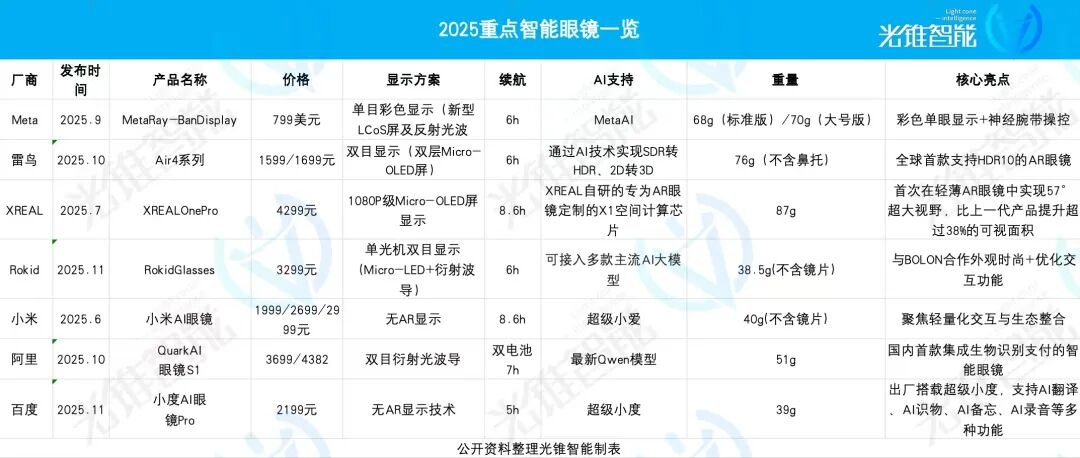
百镜大战,Rokid能扛得住吗?
3 6 Ke· 2025-11-25 10:21
Core Insights - The smart glasses industry is experiencing a significant surge in demand, with Rokid founder Zhu Mingming acknowledging underestimating the market potential for 2025, as the company has already received 200,000 orders this year, far exceeding initial expectations of 100,000 to 150,000 units [1][5][10] - The global smart glasses market saw a shipment of 4.065 million units in the first half of 2025, representing a year-on-year growth of 64.2%, with major sales events like Tmall's Double 11 showing a staggering 25-fold increase in transaction volume [1][10][11] - Rokid's strategic shift towards consumer-grade products is evident, focusing on enhancing the functionality of Rokid Glasses, which has become the company's primary product amid fierce competition from tech giants like Xiaomi, Alibaba, and Baidu [4][6][8] Market Dynamics - The smart glasses market is becoming increasingly competitive, with dozens of new products launched this year, leading to a crowded landscape [2][4] - Major brands are releasing products with similar features, resulting in a high degree of homogeneity in the market, particularly in AI capabilities and basic functionalities [3][4][16] - Rokid's market share remains relatively low despite the overall industry growth, with the company facing challenges from emerging competitors and the prevalence of less sophisticated products dominating sales [10][13][16] Product Development and Strategy - Rokid has shifted its focus to consumer applications, moving away from a mixed B2B and B2C approach, and is now prioritizing features that cater to entertainment and daily use [6][8] - The company has launched Rokid Glasses with a strong emphasis on an open ecosystem, allowing developers to create diverse applications, which has attracted nearly 30,000 developers and 5,000 enterprises [9][8] - Despite the positive reception of Rokid Glasses, the company is currently facing production capacity constraints, leading to delays in fulfilling orders and a halt on new product launches for the remainder of the year [5][6] Future Outlook - Rokid aims to achieve ambitious sales targets of 1 million units in the next year and 2 to 3 million units in the following year, but these goals may be overly optimistic given current market conditions [10][11] - The company is at a critical juncture, needing to differentiate its products significantly to avoid further commoditization in a rapidly evolving market [18][20] - The overall smart glasses market is projected to grow substantially, with IDC forecasting shipments to exceed 40 million units by 2029, indicating a robust future for the industry despite Rokid's current challenges [10][11][15]
2026年6款新能源产品待发 上汽大众“油电同进”战略步入密集兑现期
Zhong Guo Jing Ying Bao· 2025-11-25 09:12
Core Insights - SAIC Volkswagen aims to maintain annual sales above 1 million units, with a focus on product upgrades and stable pricing in the fuel vehicle segment [1] - The company plans to launch 6 new energy models by 2026, with at least 20% of its product line being new energy vehicles [1][3] - The ID. ERA series, representing a new era in mobility, will include various electric, hybrid, and range-extended products to meet diverse user needs [1][2] Product Strategy - The ID. ERA series will cover three technology routes: pure electric, hybrid, and range-extended, emphasizing a comprehensive approach to new energy vehicles [2] - The first product in the ID. ERA series is positioned as a flagship 6-seat SUV, featuring advanced technology and high comfort levels [4][5] - The company is committed to integrating German engineering standards with Chinese smart technology to enhance product quality and user experience [4][6] Market Positioning - SAIC Volkswagen's "oil-electric dual advancement" strategy has led to steady sales growth in the Pro family, maintaining a strong presence in the fuel vehicle market [5][6] - The company emphasizes that quality remains a core commitment, with plans for lifetime warranties on new models to assure customers [6] - The competitive landscape in China is challenging, but SAIC Volkswagen aims to leverage its strengths in quality and technology to differentiate itself from competitors [6]

搭载“五恒”大健康座舱,别克至境世家亮相
Guan Cha Zhe Wang· 2025-11-25 09:05
Core Viewpoint - Buick's new flagship MPV, the "至境世家" (Zhijing Shijia), was unveiled at the 23rd Guangzhou Auto Show, featuring a "Five Constants" health cabin and set to launch on December 5 [1][3][5] Group 1: Product Features - The vehicle dimensions are 5260mm in length, 2023mm in width, and 1820mm in height, with a wheelbase of 3160mm [1] - The design is inspired by private jets, featuring a low drag coefficient of 0.258Cd and a premium 12-layer two-tone paint process [1] - The cabin length exceeds 3.6 meters and height exceeds 1.3 meters, with an 80% utilization of width [3] - It includes a unique zero-gravity seat in the second row that adapts to passenger positions for maximum comfort [3] - The trunk space ranges from 630L to 2056L, accommodating multiple pieces of luggage [3] Group 2: Technology and Performance - The vehicle is equipped with the Qualcomm SA8775P chip, providing AI computing power of 72 TOPS and features an 8-screen digital interface [5] - It utilizes a dual-motor hybrid system, delivering 775N·m of torque and achieving 0-100 km/h in just 5.8 seconds [5] - The electric range is 224 km under CLTC standards, with fast charging capabilities [5] - Advanced driver assistance systems include "无断点" (no interruption) city NOA and "不停车一键泊入" (one-click parking without stopping) [5] Group 3: Strategic Vision - Buick's high-end electric sub-brand "至境" was announced in April, with plans to launch six new models based on the "逍遥" (Xiaoyao) architecture by April next year [7] - The company aims for 50% of its new energy vehicle sales to come from this segment by 2026, increasing to 60% by 2027, with a focus on profitability [7]


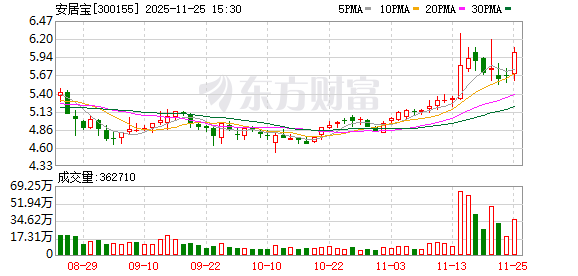
安居宝:未接入阿里千问、灵光大模型
Mei Ri Jing Ji Xin Wen· 2025-11-25 07:30
Group 1 - The company has not integrated with Alibaba's Qianwen and Lingguang AI models [2]

全新魏牌蓝山试驾体验:“大块头”也有大智慧
Nan Fang Du Shi Bao· 2025-11-25 06:07
Core Insights - The Wei brand Lanshan is a new luxury SUV that attracts family users with its spaciousness, intelligent technology, and strong hybrid power system [1][4] Group 1: Product Features - The Lanshan features a "2+2+2" seating arrangement with second-row zero-gravity seats that offer heating, ventilation, and massage functions, ensuring comfort for passengers of various sizes [1] - The vehicle includes a 15.6-inch rear entertainment screen that can be controlled via voice or gesture, enhancing the travel experience for families [2] - The Hi4 intelligent four-wheel drive hybrid system delivers a maximum torque of 822 N·m and a total power of 422 kW, achieving 0-100 km/h in 4.9 seconds, with a comprehensive range exceeding 1300 km [3] Group 2: Driving Experience - The Lanshan's intelligent driving assistance system (NOA) performs reliably, with accurate road condition perception and smooth lane changes, significantly reducing driving fatigue [2] - The vehicle's electric shock absorbers effectively filter road bumps, providing a comfortable ride even on uneven surfaces, while the iTVC intelligent torque vectoring system enhances stability on slippery roads [3] - The overall driving dynamics are tuned for comfort, allowing passengers to experience minimal harshness from road impacts [3] Group 3: Market Positioning - The Lanshan is positioned as a balanced luxury SUV that meets the core needs of multi-person family users with its powerful and smooth performance, long range, spacious layout, and effective smart technology [4]

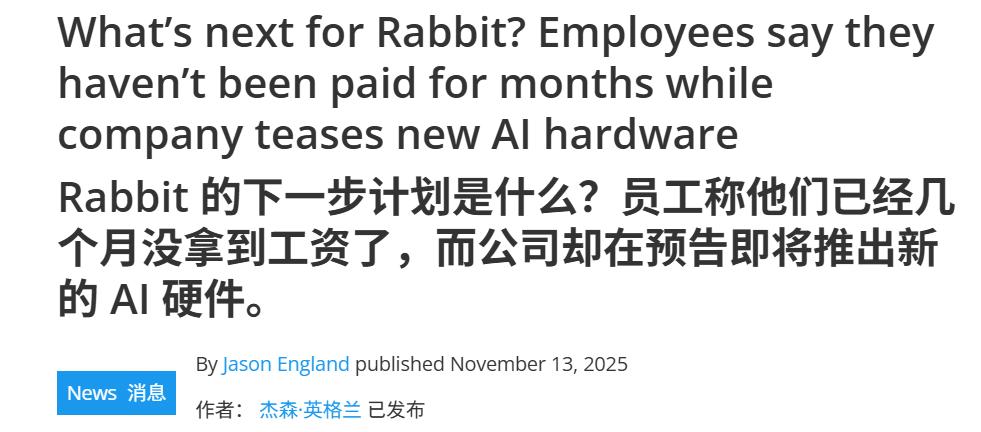
AI硬件先驱要凉了?CES明星Rabbit被爆欠薪,只因步子迈得太大?
3 6 Ke· 2025-11-25 04:35
Core Insights - Rabbit r1 has gained significant attention as an AI hardware product but is currently facing financial difficulties and operational challenges [1][2][3] - The company has acknowledged severe financial pressure, particularly due to obstacles in entering the Indian market [2][3] - Despite its initial success, Rabbit's ambitious goals and product execution have led to a decline in user satisfaction and market performance [5][9] Company Performance - Rabbit r1 was initially successful, claiming over 100,000 units sold by August 2024, making it the highest-selling AI hardware at that time [5] - The product's early popularity was driven by impressive demonstrations, but actual user experience fell short of expectations, leading to criticism [6][9] - The company is currently offering discounts on Rabbit r1, now priced at $159, indicating a need to boost sales amid financial strain [2] Market Challenges - Rabbit's attempt to create a "phone replacement" product in an immature market has been criticized as overly ambitious [6][9] - The product's design flaws, such as a small screen and limited functionality, have contributed to its inability to compete effectively with smartphones [8][12] - The reliance on commercial AI models has resulted in high operational costs, further straining the company's finances [8] Industry Trends - The AI hardware market is still in its early stages, and the failure of Rabbit does not necessarily indicate a lack of potential for AI hardware overall [10] - Domestic manufacturers are exploring AI hardware that complements existing smartphone ecosystems rather than attempting to replace them [11][12] - Future AI hardware developments may focus on specific use cases and user needs, rather than broad, ambitious goals [11][12]