
全国统一大市场

Search documents
8 亿收入群体在路上,从换技术到育技术,中国市场激活创新动能
Sou Hu Cai Jing· 2025-11-24 10:14
Group 1 - The global competition for markets is intensifying, with China's vast market being a cornerstone for its modernization efforts [1][3] - The recent China International Import Expo showcased record participation, with 36.7 million square meters of exhibition space and 4,108 exhibiting companies, including 290 Fortune 500 firms [3][5] - The shift from "market for technology" to "market nurturing technology" positions China as a source of innovation [3][7] Group 2 - China's market is characterized by its ability to lead trends, stability, and future potential, which are crucial for maintaining its position in a complex international environment [5][10] - The market is no longer just a buyer of technology but is now generating new technologies and industries driven by consumer demand [7][9] - The growth of the photovoltaic industry and the export of over 2 million new energy vehicles highlight China's ability to turn new technologies into large-scale industries [9][10] Group 3 - The scale of China's market is impressive, with significant metrics such as nearly 30 new energy vehicles produced every minute and a retail sales total of 48.3 trillion yuan, reflecting a 5.5% annual growth [10][11] - The internal circulation capability, supported by a large population and a complete industrial system, serves as a protective barrier against risks [13][15] - The ongoing reforms to improve the business environment and reduce market entry barriers are essential for unlocking the market's full potential [17][19] Group 4 - The anticipated growth of the middle-income group to over 800 million people presents substantial market opportunities in housing, education, and healthcare [15][19] - The characteristics of China's large-scale market—leadership, stability, and growth—are interconnected and essential for global competitiveness [17][19]

期货标准助力全国统一大市场建设
Ren Min Ri Bao· 2025-11-24 10:11
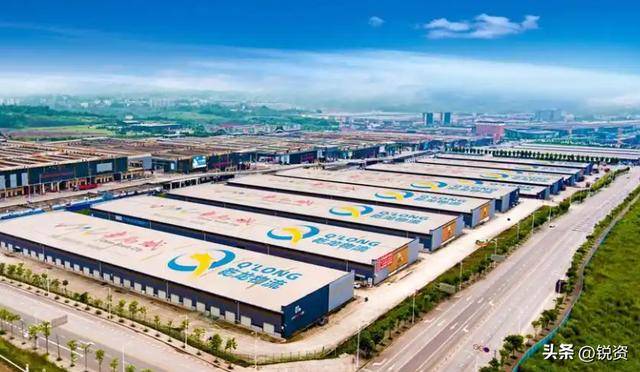
Core Insights - The signing of a procurement contract for 2 million cubic meters of radiata pine logs worth $22.8 million marks a significant collaboration between Jiangsu Suhao Zhongjin Development Co., Ltd. and New Zealand's Fuchun Na Forestry Co., Ltd. [1] - The introduction of a new futures product for logs in November 2024 is expected to benefit trading companies like Suhao Zhongjin by addressing long-standing issues in the domestic log market, such as inconsistent measurement standards and operational irregularities [1][2] - The successful launch of log futures is anticipated to standardize measurement practices across regions, reducing trade disputes and enhancing market efficiency [2] Company Developments - Suhao Zhongjin has expanded its operations beyond being a log trader to becoming a log futures delivery warehouse, completing 85 contracts in the first delivery month after the futures launch [2] - The company has reported a year-on-year increase in import volume, attributed to improved market circulation and collaborations with countries like Russia, Belarus, and Kazakhstan, achieving an annual trade volume of $50 million [1] Industry Trends - The introduction of log futures is seen as a catalyst for the standardization of measurement practices in the log industry, which has historically faced discrepancies of up to 10% in log measurement [2] - The Dalian Commodity Exchange's involvement in standardizing the quality of log futures is expected to enhance the overall efficiency and transparency of the log trading market [2] - The broader push for a unified national market is supported by the integration of futures contracts, which can help eliminate barriers to trade and improve the overall market structure [3]
显微镜下的中国经济(2025年第44期):明年再通胀的需求动力来自于哪儿?
CMS· 2025-11-24 07:03
证券研究报告 | 宏观定期报告 2025 年 11 月 24 日 明年再通胀的需求动力来自于哪儿? 显微镜下的中国经济(2025 年第 44 期) 频率:每周 中小学生放春秋假就是创造消费场景,拉动居民消费的新尝试。 风险提示:地缘政治风险、国内政策落地不及预期、全球衰退及主要经济体货 币政策超预期。 定期报告 相关报告 1、《静待花开——宏观与大类 资产周报》2025-11-23 2、《俄乌和谈再次启动?—— —国际时政周评》2025-11-23 3、《中小学生春秋假的政策意 义 — 显 微 镜 下 的 中 国 经 济 (2025 年第 43 期)》2025-11- 18 张一平 S1090513080007 zhangyiping@cmschina.com.cn 张静静 S1090522050003 zhangjingjing@cmschina.com.cn 敬请阅读末页的重要说明 再通胀是明年国内经济和资本市场的核心逻辑。如果明年确能结束 2023 年 2 季度以来的价格弱势,那么当前股强债弱的格局将继续演绎。市场对于再 通胀的主要质疑在于,如果没有需求配合,仅靠反内卷在供给侧做文章,价 格回升并不能持 ...
金灿荣:从“美攻我守”到“互有攻守”,统一的可能性在增大
Guan Cha Zhe Wang· 2025-11-24 05:47
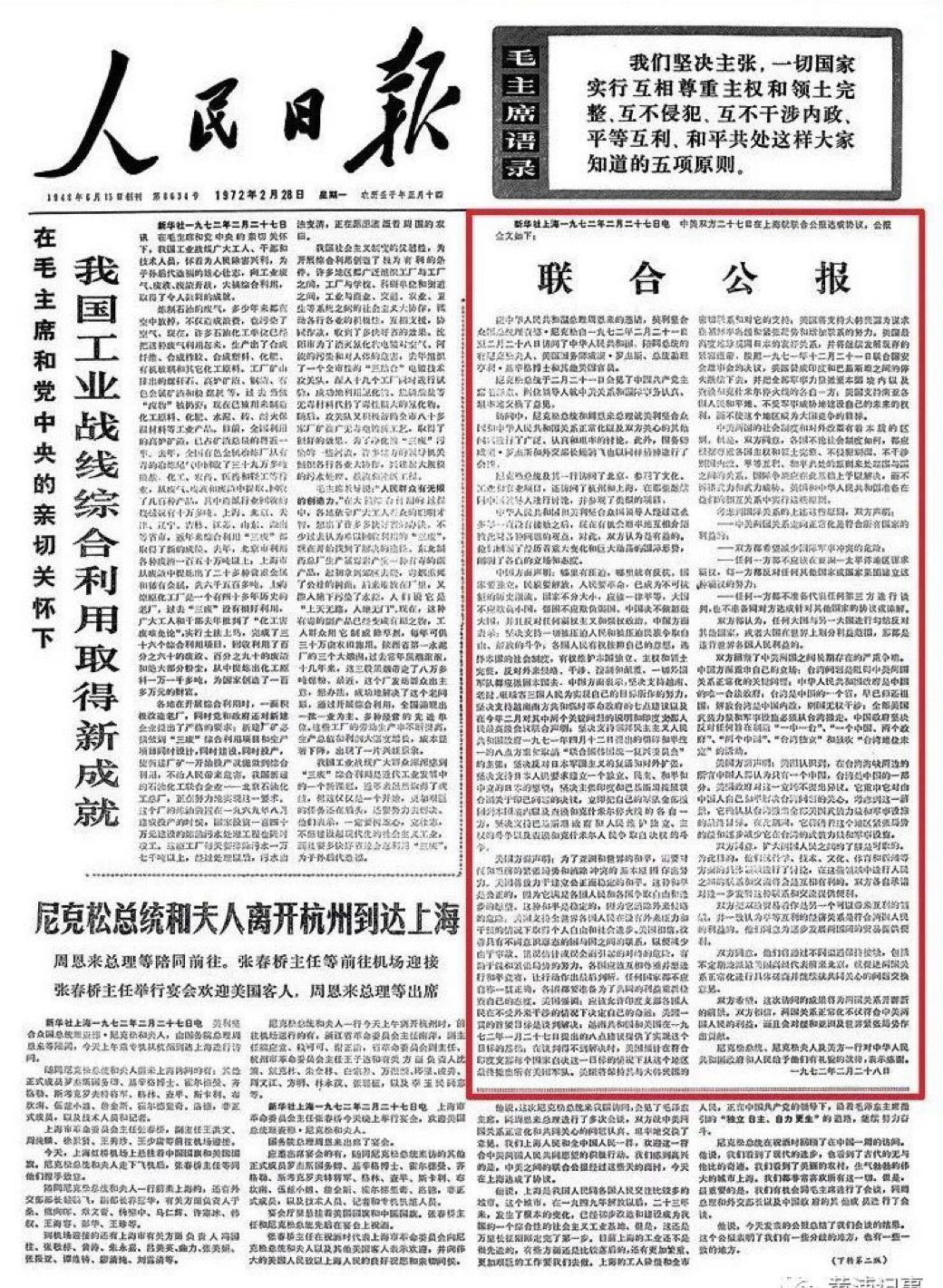
Group 1 - The core viewpoint of the article is that the relationship between China and the United States has entered a phase of structural tension, with both parties viewing each other as the "only" competitor, leading to a comprehensive competitive relationship [1][2][5] - The historical context of China-U.S. relations is divided into several stages, with the first stage being absolute hostility from 1949 to 1972, followed by a period of strategic cooperation against the Soviet Union after the Shanghai Communiqué [2][4] - The Trump administration marked a turning point in U.S.-China relations, officially designating China as the "only strategic competitor" in its national security strategy, leading to a phase of comprehensive strategic competition [5][6] Group 2 - The article discusses the mixed warfare strategy employed by the U.S. against China, which includes trade wars, technology restrictions, and financial pressures, indicating a shift from a defensive to a more aggressive stance by China [6][10] - The recent trade war has seen China adopting a more assertive response, with significant retaliatory tariffs that demonstrate a shift in strategy from previous years [8][10] - The U.S. has faced supply shortages as a result of the trade conflict, leading to a reconsideration of its approach, which highlights the interdependence of the two economies [10][11] Group 3 - The article emphasizes the importance of domestic stability for both China and the U.S., noting that internal challenges such as economic downturns and social issues could impact their international standing [15][16] - China's foreign policy is evolving, moving away from "keeping a low profile" to a more assertive stance, particularly in military capabilities and regional influence [19][20] - The article outlines China's strategic focus on building a unified domestic market and enhancing its international relationships, particularly through initiatives like the Belt and Road [32][34]
钢材周报:供需边际增加,期价震荡偏弱-20251124
Tong Guan Jin Yuan Qi Huo· 2025-11-24 02:56
钢材周报 2025 年 11 月 24 日 供需边际增加 期价震荡偏弱 核心观点及策略 投资咨询业务资格 沪证监许可【2015】84 号 李婷 从业资格号:F0297587 投资咨询号:Z0011509 黄蕾 从业资格号:F0307990 投资咨询号:Z0011692 高慧 从业资格号:F03099478 投资咨询号:Z0017785 王工建 从业资格号:F3084165 投资咨询号:Z0016301 赵凯熙 从业资格号:F03112296 投资咨询号:Z0021040 何天 从业资格号:F03120615 投资咨询号:Z0022965 焦鹏飞 从业资格号:F03122184 投资咨询号:Z0023260 敬请参阅最后一页免责声明 1/8 ⚫ 宏观面:国务院副总理何立峰在湖北、湖南调研时强调, 要持续推动外贸提质增效,完善高标准物流体系建设, 加力支持制造业高质量发展,加快构建全国统一大市 场,进一步畅通国内国际双循环。要完善法律与政策体 系,综合整治"内卷式"竞争。国家统计局最新数据显 示,2025年10月份,中国钢筋产量为1434.0万吨,同比 下降18.6%;1-10月累计产量为15801.0万吨,同比 ...
专家表示:提升百姓生活水平和消费能力,这是必须解决的后顾之忧
Sou Hu Cai Jing· 2025-11-22 14:08
Group 1 - China's economy is undergoing a profound transformation, shifting from high-speed growth to a focus on high-quality and sustainable development by 2025, with challenges such as insufficient consumer spending and low economic expectations [1] - The Chinese Communist Party's 20th Central Committee meeting has outlined reform directions, emphasizing the need to activate consumer spending and address inefficiencies in resource allocation [1] - The transition from the 1B model (local government-led market) to a more mature 2B model (market economy with macroeconomic regulation) is a core task for China's economic reform [7][9] Group 2 - The 1B model's over-reliance on local government intervention has led to market failures and inefficiencies, restricting the normal functioning of market mechanisms [7] - The 2B model emphasizes the market's leading role in resource allocation, with the government acting as a referee to ensure stable economic growth [9] - The government is encouraged to ensure fair competition for private enterprises and address financing and approval obstacles they face [11] Group 3 - China's historical focus on infrastructure and industrial investment has neglected consumer spending, which remains low and is a significant constraint on healthy economic growth [13] - Over-investment in industries like real estate and infrastructure has not effectively improved the living standards and consumption capacity of the general public [15] - Reforming the economic structure to shift focus from industrial investment to consumption-driven growth is crucial for China's economic transition [17] Group 4 - Increasing investment in social security, particularly in areas like elderly care and healthcare, is essential to enhance consumer confidence and purchasing power [19] - Tax and financial policies need to support consumer spending while ensuring fiscal revenue, presenting a challenge for the government [19] - Technological innovation is a vital component of China's economic transformation, requiring a shift from imitative to disruptive innovation to enhance core competitiveness [21] Group 5 - The government should promote reforms in the technology innovation system, providing more freedom for researchers and encouraging original and breakthrough innovations [23] - Current research evaluation systems need reform to support deep innovation and long-term investment, with more support for innovative enterprises and research institutions [23] - China's future economic growth will rely on promoting consumption and innovation, transitioning from a high-investment, low-consumption model to a consumption-driven model [25]

新华鲜报·规划建议新看点丨准入又准营!塑造吸引外资新优势
Xin Hua Wang· 2025-11-22 07:33
Group 1 - The core viewpoint emphasizes the importance of implementing "access and operation" to attract foreign investment, highlighting measures such as reducing the negative list for foreign investment access and promoting efficient and secure cross-border data flow [1][3]. - The article discusses the need to address specific issues in market access, such as localizing licensing and certification, ensuring compliance in cross-border data flow, and maintaining fairness in government procurement and market competition [3]. - Recent improvements in the approval process for qualified foreign investors have been noted, with the China Securities Regulatory Commission approving applications in record time, indicating a potential new norm for foreign investment entry [4]. Group 2 - There is a seamless transition from "access" to "operation" for an increasing number of foreign enterprises, with the removal of restrictions in the manufacturing sector and the expansion of pilot programs in the service industry [5]. - The article highlights the importance of shifting from a government supply-oriented approach to an enterprise demand-oriented approach, enhancing governance transparency and precision [6]. - Various localities are simplifying processes for foreign enterprises, such as business registration and work permits for foreign employees, to create a conducive environment for foreign investment [6].
金观平:充分发挥超大规模市场独特优势
Jing Ji Ri Bao· 2025-11-22 01:30
Core Insights - The article emphasizes the significance of China's super-large market as a crucial resource for economic growth and resilience, highlighting its potential for development and innovation [1][2][3] - It discusses the strategic importance of a unified national market in enhancing economic stability and fostering internal growth, particularly in the context of global uncertainties [2][3] Group 1: Market Size and Growth Potential - China's vast population creates a super-large market, leading to substantial and diverse market demand, which helps mitigate external demand fluctuations [1] - The super-large market facilitates the formation of a complete industrial system, enhancing the security and stability of supply chains [1] - The market's scale allows for more innovation opportunities, lower costs, and higher returns, accelerating the transformation of new products and technologies into productive forces [1] Group 2: Economic Resilience and Strategy - The article describes the strong domestic market as a stabilizer against external shocks and an accelerator for internal economic dynamics, supporting China's modernization strategy [2] - It highlights the ongoing reforms aimed at transitioning from a "large market" to a "strong market," which includes improving market rules and fostering a unified market environment [2][3] - The "14th Five-Year Plan" is positioned as a framework to enhance the efficiency of the market and improve resource allocation, contributing to high-quality economic development [3]
充分发挥超大规模市场独特优势
Sou Hu Cai Jing· 2025-11-21 23:27
Group 1 - The core viewpoint emphasizes that China's super-large-scale market is a significant comparative advantage, providing a solid foundation for economic growth and resilience against external shocks [1][2] - The continuous growth and upgrading of the Chinese market are highlighted by the success of the China International Import Expo, which reflects the increasing number of exhibitors and intended transaction amounts [2] - The strategic asset of the super-large-scale market is being actively planned and strengthened through reforms aimed at transitioning from a "large market" to a "strong market" [2][3] Group 2 - The construction of a unified national market is described as a dialectical unity of breaking down barriers and building robust systems to foster enterprise growth [3] - The "14th Five-Year Plan" is positioned as a framework for addressing key challenges and enhancing market efficiency, productivity, and income levels [3] - The commitment to establishing a high-quality, efficient, and open national unified market is expected to unlock greater opportunities for China's economic advancement [3]
经济日报金观平:充分发挥超大规模市场独特优势
Jing Ji Ri Bao· 2025-11-21 22:57
Core Insights - The article emphasizes the significance of China's super-large market as a crucial resource for economic growth and resilience, highlighting its potential to mitigate external risks and enhance innovation [1][2][3] - The Chinese economy is portrayed as a vast ocean, symbolizing its depth, inclusiveness, and resilience against external shocks, reinforcing the notion of a strong domestic market as a stabilizer and accelerator for economic development [2] - The construction of a unified national market is framed as a dialectical process that requires addressing shortcomings while fostering an environment conducive to enterprise growth, with a focus on improving market efficiency and resource allocation [3] Summary by Sections Market Size and Growth Potential - China's large population creates a significant comparative advantage, leading to diverse market demands and a robust industrial ecosystem that enhances supply chain security [1] - The continuous growth and upgrading of the Chinese market are evidenced by increasing participation in events like the China International Import Expo, despite global trade uncertainties [2] Strategic Importance of the Domestic Market - The super-large market is identified as a strategic asset that has been actively cultivated, with reforms aimed at transitioning from a "big market" to a "strong market" [2] - The domestic market serves as a stabilizer against external challenges and a catalyst for internal economic dynamism, supporting the goals of Chinese-style modernization [2] Unified National Market Development - The establishment of a unified national market is seen as essential for enhancing market efficiency, increasing productivity, and improving the quality of supply and demand [3] - The "14th Five-Year Plan" outlines a framework for achieving a high-quality, competitive, and open national market, which is expected to unlock new opportunities for economic advancement [3]