
现代化产业体系

Search documents
宏观经济观察系列(十一):为什么是5%?
Western Securities· 2025-12-07 08:53
Economic Growth Target - The economic growth target for 2026 is expected to be set at 5%, significantly higher than the theoretical minimum requirement of 4.17% derived from population changes and doubling goals[1] - The 4.17% average growth rate is considered a theoretical "bottom line" requirement, while a target of 5% allows for macroeconomic fluctuations and policy coherence[12] Central Economic Work Conference Insights - The upcoming Central Economic Work Conference will outline the economic work for 2026, which is the first year of the "14th Five-Year Plan" and will balance short-term and long-term policies[1] - The fiscal policy is expected to remain relatively proactive, with a budget deficit rate maintained at around 4% and new government bond financing potentially increasing to approximately 12.8 trillion yuan[1][18] Market Performance and Asset Observations - The market's response to the Central Economic Work Conference has historically shown limited positive impact on A-shares, with a preference for consumer and financial sectors[2][21] - As of December 5, 2025, global risk assets have rebounded, with an 87.2% expectation of a Federal Reserve rate cut in December, contributing to a rise in U.S. stock markets[3][44] Industry Tracking - Industrial production remains weak, with a significant decline in steel production rates, while silver prices have surged to $58.8 per ounce, although the rate of increase has slowed[2][35] - The film industry has seen a boost, with ticket sales for "Zootopia 2" performing better than previous years, indicating a recovery in real estate and automotive sales[2][35] Risk Factors - Potential risks include global economic changes, geopolitical disturbances, and the possibility that policy implementation may not meet expectations[3][61]

话优势——习近平经济思想指引中国经济行稳致远
Ren Min Ri Bao· 2025-12-06 23:50
Group 1 - The article emphasizes the unique advantages of China's economic system, including the socialist system, large market size, complete industrial system, and rich talent resources, which are crucial for economic development [1][3][10] - The "Two Major" construction projects focus on urgent development needs that require central government support, showcasing the institutional advantage of concentrating efforts on significant tasks [2][3] - China's market is highlighted as a significant resource, with online retail sales ranking first globally for 12 consecutive years and a vast consumer market driven by over 1.4 billion people [3][4][5] Group 2 - The article discusses the importance of a modern industrial system as the material and technical foundation for a modernized nation, emphasizing the need to focus on the real economy [7][10] - Innovations in materials, such as ultra-thin electrical steel, are crucial for high-end equipment supply chains, demonstrating the potential for domestic production to overcome technological barriers [6][7] - The talent pool in China is vast, with over 250 million people having higher education and more than 220 million skilled workers, positioning the country as a major talent resource [9][10]
我省各民主党派、工商联和无党派人士认真学习领会中共江苏省委十四届十次全会精神团结奋斗 为推进江苏现代化建设献计出力
Xin Hua Ri Bao· 2025-12-06 23:40
中共江苏省委十四届十次全会是在深入学习贯彻中共二十届四中全会精神之际召开的一次重要会 议。连日来,我省各民主党派、工商联和无党派人士以多种形式一体学习领悟中共二十届四中全会精神 和省委十四届十次全会精神,大家一致表示,要迅速把思想和行动统一到全会精神上来,把党外人士的 智慧和力量凝聚到落实全会确定的目标上来。 牢记殷切嘱托,凝聚同心共识 全会坚持把深入学习贯彻习近平总书记对江苏工作重要讲话精神作为贯穿全部工作的主线,对于继 往开来引领江苏未来五年发展,动员全省上下保持战略定力、增强必胜信心,奋力谱写"强富美高"新江 苏现代化建设新篇章,具有重要意义。 民革省委会专职副主委奚爱国深刻感受到,江苏"十四五"成就的取得,根本在于以习近平同志为核 心的中共中央领航掌舵。踏上新征程,民革省委会将带领全省民革各级组织对照全会部署的战略任务和 重大举措,主动将民革所长与江苏发展所需深度对接,聚焦"一中心一基地一枢纽"建设、加快绿色低碳 转型发展等重点领域,在参政履职中献良策、在民主监督中促落实、在社会服务中显担当,全面深化自 身建设,提升高水平参政党省级组织建设效能,为推动江苏高质量发展继续走在前列、奋力谱写"强富 美高" ...
2026年资本市场展望——待到山花烂漫时|资本市场
清华金融评论· 2025-12-06 10:28
Core Viewpoint - The performance of the capital market in 2026 will largely depend on investors' expectations regarding medium- to long-term fundamentals, with a focus on China's role in providing global public goods and building a modern industrial system domestically [3]. Group 1: Characteristics of a Financial Power - A strong and confident approach to opening up is essential for China's capital market to evolve into a financial power, supported by the country's rising global position and initiatives like the Belt and Road [5]. - The stock market's equity risk premium in China is significantly higher than in the U.S., indicating a need for improved market confidence and a potential for valuation adjustments [5][6]. - The historical valuation comparisons may become less relevant as the market evolves, suggesting that simplistic analyses may not capture the future dynamics [6]. Group 2: Market Resilience and Shareholder Returns - The capital market must maintain resilience and reduce volatility to attract global investors, with mechanisms in place to stabilize market sentiment during uncertainties [7][8]. - High dividend payouts from state-owned enterprises are seen as a positive shift in corporate governance, enhancing shareholder returns and attracting long-term capital [8]. - The current dividend yield of the CSI 300 index remains attractive compared to the ten-year government bond yield, indicating a solid foundation for patient capital [8]. Group 3: Future Pricing and Market Dynamics - The decline in equity risk premium will depend on China's ability to convert its national and cultural influence into sustainable pricing power within global supply chains [9]. - The manufacturing sector's contribution to global value added is projected to be significant, with a potential increase in competitive advantages in key areas [9]. - The focus should be on creating a sustainable profit ecosystem rather than relying on excessive competition, which could enhance overall market dynamics [10]. Group 4: Capital Market Pricing and Future Industries - The capital market needs to develop a pricing mechanism for future industries, moving beyond traditional valuation methods that do not align with the potential of innovative companies [11]. - The ability to price future industries effectively will contribute to a reduction in equity risk premiums, reflecting a more mature market [11]. Group 5: Economic Indicators and Market Outlook - The core driver of asset prices in 2026 is expected to be the Producer Price Index (PPI), which, along with housing prices, will influence market dynamics [13]. - A potential rebound in profits for A-share companies is anticipated, with projections indicating a significant increase in net profits for non-financial sectors [14]. - The convergence of improving corporate fundamentals, emerging industry trends, and increased global influence is expected to support a bullish market outlook for A-shares [14].


陈文辉:养老金融将有力促进现代化产业体系的建设
Xin Lang Cai Jing· 2025-12-06 03:18
专题:中国社会科学院社会保障论坛暨《中国养老金发展报告2025》发布式 12月6日金融一线消息,中国社会科学院社会保障论坛暨《中国养老金发展报告2025》发布会今日召 开,全国社会保障基金理事会原副理事长陈文辉出席并发言。 陈文辉表示,养老金融将有力促进现代化产业体系的建设。。养老金、长期寿险的积累将助力形成壮大 耐心资本。解决老龄化问题将拉动一系列新兴产业发展。 首先是社会化养老产业的兴起,其次是传统劳动密集型产业的转型,此外,康养照护、医药健康产业等 也将蓬勃发展。无论是新产业发展还是传统产业改造,都需要长期资本与多元金融工具支持,包括股权 投资、贷款、债券、保险等,也离不开资本市场的完善。 首先是社会化养老产业的兴起,"保险业在其中发挥了重要作用,大家保险、泰康、太保集团等探索了 从轻资产、重资产到轻重结合的不同模式,这在全球都是创举。" 其次是传统劳动密集型产业的转型,人口老龄化导致劳动力短缺,但我们可以通过技术升级保留优质产 业、留住核心利润。 此外,康养照护产业与医药健康产业也将蓬勃发展,老年人身体机能退化对医药健康需求迫切,我国医 药健康产业已稳居全球第二,特别在人工智能时代,新药研发从'瞎子摸 ...
深港通9年成交131万亿元
Shen Zhen Shang Bao· 2025-12-05 16:49
Group 1 - The Shenzhen-Hong Kong Stock Connect has been operational for 9 years, facilitating cross-border trading and enhancing the accessibility of Chinese capital markets for global investors [1][2] - As of December 4, the cumulative transaction amount of the Shenzhen-Hong Kong Stock Connect reached 131 trillion yuan, with the Shenzhen Stock Connect accounting for 103 trillion yuan and the Hong Kong Stock Connect for 28 trillion yuan [1] - The number of stocks available for trading through the Shenzhen Stock Connect has increased from 881 to 1,636, while the Hong Kong Stock Connect has grown from 417 to 581 stocks [1] Group 2 - The Shenzhen market is characterized by a strong focus on technology innovation, with over 70% of companies being high-tech enterprises and nearly 50% in strategic emerging industries [2] - Investors have net bought 630.7 billion yuan in high-tech companies and 478.8 billion yuan in strategic emerging industry companies through the Shenzhen Stock Connect [2] - The proportion of trading volume from the ChiNext board has increased to 38% since the implementation of the registration system reform [2] Group 3 - The Shenzhen-Hong Kong Stock Connect has contributed positively to the improvement of investor structure, the dissemination of value concepts, and the enhancement of the quality of listed companies in the A-share market [2] - Future plans include enhancing the attractiveness and competitiveness of the Greater Bay Area capital markets to promote high-quality development [2]
中国纺织行业迈入世界第一方阵
Zhong Guo Jing Ying Bao· 2025-12-05 14:26
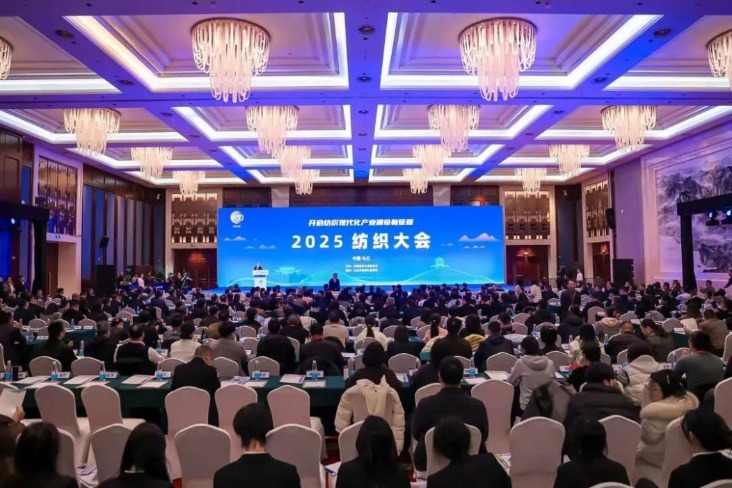
中国纺织工业联合会党委书记、会长孙瑞哲指出,我国纺织行业已整体迈进世界第一方阵,正致力于构 建体现高科技、高价值、高效能、高质量特征的现代化产业体系。 建设现代化纺织产业体系,必须在顶层设计与战略路径上形成共识。如何重塑产业价值叙事,从全球价 值链定位、可持续时尚、科技赋能等多维度,为所有从业者确立在新周期中奋进的新坐标? 在"十四五"收官、"十五五"启航的关键节点,中国纺织行业正站在新的历史起点。 在孙瑞哲看来,面对新发展阶段,行业必须完成几大核心转变:从"规模引领"向"体系优势"跃迁,构筑 现代产业生态;从"要素驱动"向"创新驱动"转型,壮大新质发展动能;从"跟跑并跑"向"主动引领"升 级,抢占全球价值高地;从"产品输出"向"全球配置"拓展,融入全面开放格局。这些转变旨在巩固和提 升我国纺织产业的国际竞争优势。 《中国经营报》记者从中国纺织工业联合会方面获悉,12月5日,"2025纺织大会"在江西九江召开,大 会为构建科技、时尚、绿色、健康的现代化纺织产业体系探索了全景式路线图。 展望"十五五"及未来,孙瑞哲告诉记者,纺织行业需精准把握国际竞合、科技变革、区域调整、人工智 能、绿色转型及消费市场六大发展趋 ...
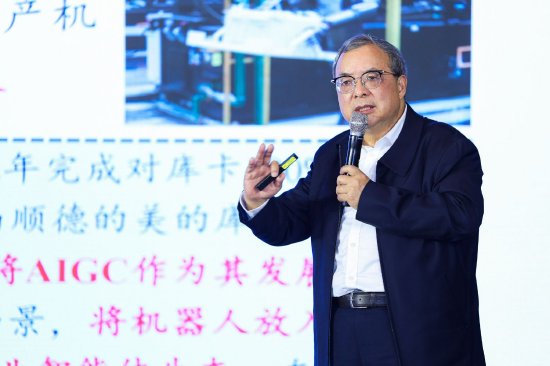
新型智库的时代担当与价值路径
Xin Hua Wang· 2025-12-05 09:47
Core Viewpoint - The concept of "restructuring" has gained unprecedented strategic significance in the context of China's "14th Five-Year Plan," serving as a key driver for high-quality development and the formation of new productive forces in the face of global technological revolutions and industrial transformations [1][2]. Group 1: Strategic Necessity and Urgency of Restructuring - Restructuring is essential for addressing deep-seated developmental contradictions and creating new competitive advantages, as China's previous growth model based on factor input is no longer sustainable [2]. - In 2023, China's R&D expenditure exceeded 3.3 trillion yuan, accounting for 2.64% of GDP, indicating a strong commitment to innovation-driven development, although gaps remain in basic research investment and technology transfer efficiency compared to global leaders [2][3]. Group 2: Cultivating New Productive Forces - New productive forces characterized by high technology, efficiency, and quality are crucial for breaking away from traditional economic growth models, with a focus on significantly enhancing total factor productivity through technological innovation [3]. - Effective restructuring and optimization of new production factors such as knowledge, technology, capital, data, and talent are necessary for the development of future industries and strategic emerging sectors [3]. Group 3: Key Areas for Systematic Restructuring - Restructuring the industrial structure to build a modern, autonomous, and efficient industrial system is the main battlefield, emphasizing high-end, intelligent, and green development [4]. - The focus should be on enhancing strategic emerging industries and establishing a detailed industrial map and technology roadmap, particularly in critical areas like integrated circuits and biomedicine [4]. Group 4: Innovation System and Financial Support - Restructuring the innovation system to facilitate a virtuous cycle between technology, industry, and finance is vital, addressing the long-standing disconnect between academia and industry [5]. - Financial support mechanisms should be improved to encourage investment in hard technology, ensuring that financial resources effectively nurture innovation [5]. Group 5: Regional Economic Layout and Urban-Rural Integration - Restructuring regional economic layouts is essential for promoting urban-rural integration and coordinated regional development, requiring the implementation of various strategic initiatives [6]. - The focus should be on establishing mechanisms for cross-regional cooperation and resource allocation to foster a new pattern of integrated development [6]. Group 6: Role of Think Tanks - Think tanks are crucial for providing strategic insights and solutions for the complex restructuring process, transitioning from mere advisors to active participants in the entire cycle [7][8]. - They should facilitate communication among government, enterprises, academia, and the public to build consensus and support for restructuring initiatives [10].
“五个中心”聚能,谱写现代化大武汉新篇
2 1 Shi Ji Jing Ji Bao Dao· 2025-12-05 07:32
Core Insights - Wuhan is positioned to enhance its economic capabilities and transform into a modern economic and innovation center, focusing on a dual-engine approach of economic and technological innovation [1][2][15] Economic Development - Wuhan's GDP has crossed the 2 trillion yuan mark during the "14th Five-Year Plan" period, maintaining a steady growth rate above the national average, with a GDP growth of 5.6% in the first three quarters of 2025 [4][5] - The city ranks among the top 10 in China for economic output and first among central cities, with significant growth in fixed asset investment, retail sales, and exports [4][5] Industrial Transformation - The "965" modern industrial system is being established to support the transformation and upgrading of traditional industries while fostering emerging and future industries [5][6] - Key sectors such as optical electronics, automotive, and high-tech manufacturing are experiencing rapid growth, with high-tech manufacturing value added increasing by 16.3% [5][12] Technological Innovation - Wuhan has been recognized as the fifth national innovation center, with a focus on building a robust ecosystem for technological innovation, including the establishment of national laboratories and innovation centers [11][12] - The number of high-tech enterprises in Wuhan has surged from 6,259 in 2020 to 16,630 in 2024, indicating a significant increase in innovation capacity [13] Urban Development - The city is transitioning from extensive urban expansion to intensive growth, focusing on urban renewal to drive economic transformation [9][15] - Wuhan's urban area is expected to contribute over 60% to Hubei's economic total by 2024, highlighting its role as a regional economic hub [9] Future Outlook - The integration of economic and technological innovation is set to propel Wuhan towards its goals of becoming a national economic center and a leading innovation hub [2][15] - The city aims to enhance its influence and capabilities, aligning with national strategies for regional economic development [8][9]

电力数据看经济:广州“三驾马车”电力十足“拼经济”
Guang Zhou Ri Bao· 2025-12-05 06:58
Economic Overview - Guangzhou's economy has shown resilience and upward growth in 2023, with significant increases in key sectors such as automotive manufacturing, which saw a 9.9% investment growth, and new energy vehicle production, which grew by 23.7% [1] - The total value of foreign trade imports and exports exceeded 1 trillion yuan for the first time in the first ten months, marking a historical high for the same period [1] Electricity Consumption and Supply - Electricity consumption data indicates a dual trend of overall stable growth and structural surges, with new energy vehicle manufacturing electricity usage increasing by 101.26% year-on-year [1] - The Guangdong Guangzhou Power Supply Bureau has implemented customized power supply services to support economic growth and ensure reliable electricity for key industries [1][4] Investment in Key Projects - Major projects like the Xiaopeng Zhida New Energy Base, with an investment exceeding 7 billion yuan and a power demand of 90,000 kVA, are driving growth in the new energy vehicle sector [2] - The TCL smart manufacturing project is expected to generate an annual output value exceeding 10 billion yuan, with power supply planning executed in sync with project development [3] Consumer Market Growth - Guangzhou's social retail sales reached 909.61 billion yuan in the first ten months, reflecting a year-on-year growth of 3.8% [6] - The Bai'e Tan business district saw a significant electricity consumption increase of 14.96%, indicating robust consumer activity [5][6] Foreign Trade Performance - Guangzhou's foreign trade import and export value reached 1.02 trillion yuan in the first ten months, a year-on-year increase of 12.1%, with exports growing by 20.5% [8] - The establishment of the Jitu Express logistics hub, which is the largest of its kind globally, highlights the city's role in enhancing its logistics capabilities to support foreign trade [7] Power Supply Innovations - The Guangzhou Power Supply Bureau's innovative "full lifecycle customized power supply service" has been recognized as a national benchmark for optimizing the business environment [9] - The city has been awarded for its advancements in clean energy, grid resilience, and digital transformation, positioning itself as a leader in the new energy sector [10]