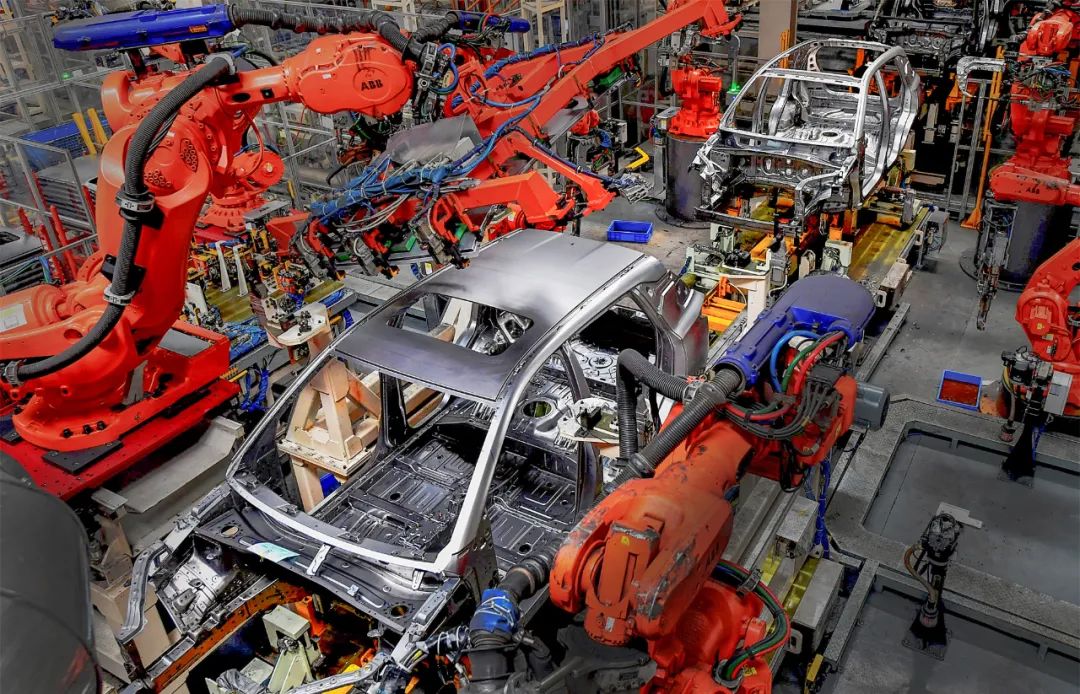
电动化

Search documents
炮轰电动化、年薪19亿!公司利润暴跌,董事长凭啥涨薪20%?
电动车公社· 2025-07-28 15:14
Core Viewpoint - Toyota maintains its position as the top-selling automaker in FY2024, but its operating profit has declined by 10% to 4.8 trillion yen (approximately 232 billion RMB) [1]. Group 1: Financial Performance and Leadership Compensation - Toyota's internal estimates suggest a potential 34.9% drop in net profit by FY2025, reducing it to 3.1 trillion yen [2]. - Despite the declining profits, Chairman Akio Toyoda received a salary of 1.949 billion yen (approximately 94.25 million RMB), marking an increase of over 20% [3]. - In FY2023, Toyoda's salary reached a record high of 1.622 billion yen, with a staggering 62% increase, sparking controversy [5]. Group 2: Leadership and Governance - Akio Toyoda's leadership is characterized by a high approval rating of 97%, raising questions about the value he brings to Toyota [7]. - The governance structure at Toyota has historically involved cross-shareholding, limiting Toyoda's ownership to less than 1% [10]. - Toyoda's rise to power involved a long journey through various roles within the company, showcasing a deep understanding of its operations [13][14]. Group 3: Strategic Direction and Electric Vehicle Transition - Under Toyoda's leadership, Toyota has focused on revitalizing the brand and expanding its product offerings, including sports and luxury vehicles [28]. - The company has engaged in international collaborations, investing in companies like Uber and Didi, while also partnering with competitors like BYD [42]. - Toyoda has been vocal against a rapid shift to electric vehicles, citing concerns over job losses and carbon emissions, while also committing to a 4 trillion yen investment in electrification [46][47]. Group 4: Organizational Changes and Future Outlook - Toyota has begun restructuring its employment practices, moving away from lifetime employment to a performance-based pay system [73]. - Recent strategic moves include the acquisition of its parent company, Toyota Industries, to streamline operations and enhance its transition to new technologies [82]. - The upcoming Lexus localization project aims to establish a manufacturing facility in China, set to begin production in 2027, indicating a significant shift in production strategy [85].



都市车界|三菱走后,日系车在中国还能“卷”吗?
Qi Lu Wan Bao· 2025-07-28 03:28
Core Viewpoint - Mitsubishi Motors has officially terminated its joint venture with Shenyang Aerospace Mitsubishi Motors Engine Manufacturing Co., marking the end of its 40-year presence in the Chinese market, reflecting a significant shift in the Chinese automotive industry from technology catch-up to independent innovation [1] Group 1: Historical Context - Mitsubishi Motors entered the Chinese market in 1973, initially importing trucks, and later became a key player in the automotive industry through partnerships, particularly with Beijing Automotive Industry Company in the 1980s [2] - The establishment of joint ventures like Shenyang Aerospace Mitsubishi and Dong'an Mitsubishi in the 1990s allowed Mitsubishi to supply engines to numerous domestic brands, with over 90% of domestic models using its engines, totaling more than 7 million units [2] Group 2: Peak Performance - In 2012, GAC Mitsubishi was established, achieving a peak sales volume of 144,000 vehicles in 2018, becoming a significant player in the Chinese SUV market [4] - Mitsubishi's strategy of technology output combined with joint production allowed it to transition from a B-end supplier to a C-end brand, showcasing a successful case among Japanese automakers in China [4] Group 3: Decline and Exit - Since 2019, Mitsubishi's sales in China plummeted from 133,000 units to 33,600 units in 2022, with a debt ratio reaching 81%, leading to the cessation of vehicle production in 2023 and the exit from engine business by 2025 [5] - The decline was attributed to the rapid growth of the Chinese electric vehicle market, where competitors like BYD and Tesla capitalized on technological advancements and policy benefits, while Mitsubishi lagged in electric vehicle offerings [5][6] Group 4: Market Reaction and Consumer Sentiment - Consumers expressed mixed feelings about Mitsubishi's exit, with older owners feeling nostalgic but concerned about after-sales service and parts availability, while younger owners focused on the impact on second-hand car values [7][9] - A significant drop in the resale value of Mitsubishi vehicles was noted, with second-hand car dealers reporting a 20% decrease in acquisition prices following the exit announcement [10] Group 5: Industry Implications - Experts indicated that Mitsubishi's exit highlights a dual crisis of exhausted technological advantages and delayed transformation, emphasizing the need for foreign brands to adapt to the fast-paced electric and intelligent vehicle market [11] - The overall market share of Japanese brands in China has declined to a historic low of 11.2% in 2024, with significant drops in sales for major players like Honda and Nissan [13] Group 6: Lessons for Foreign Brands - The exit of Mitsubishi is part of a broader trend where several foreign brands have struggled in the Chinese market, underscoring the necessity for innovation and adaptation to local market dynamics [13] - Toyota has emerged as a counterexample, successfully implementing a "more Chinese" strategy and localizing decision-making processes to enhance its competitiveness in the market [14]
2024年汽车行业人均工资为16.3万元 自主合资薪酬分化加速
Cai Jing Wang· 2025-07-27 04:14
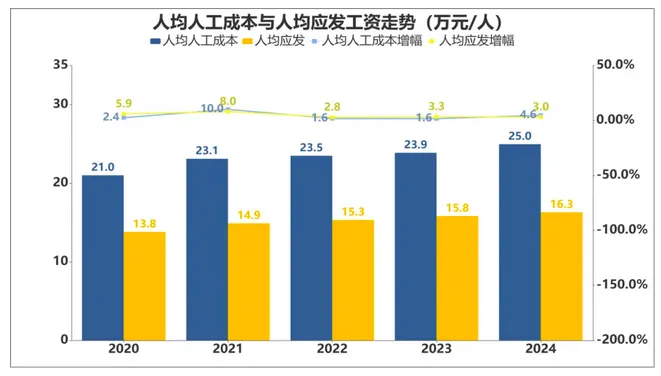
Core Insights - The automotive industry is experiencing negative growth in key metrics such as profit, industrial added value, and sales volume for 2024 compared to 2023, despite a slight increase in average salary per employee [1][9]. Group 1: Employment and Salary Trends - The total workforce in the automotive sector has significantly decreased, with an average salary of 163,000 yuan per person, a slight increase from 158,000 yuan in 2023 and 153,000 yuan in 2022 [1][3]. - The average labor cost per person in the industry is 250,000 yuan, with a year-on-year increase of 4.6% [3]. - The highest salary increases are seen in R&D personnel (+3.2%), marketing personnel (+2.7%), and direct production staff (+1.6%) [3]. Group 2: Differentiation Between Domestic and Joint Venture Brands - In 2024, the labor costs and total wages for the domestic passenger vehicle sector are on the rise, with labor costs increasing by 5.5% and total wages by 6.6%, both exceeding industry averages [5]. - The average salary for domestic passenger vehicle employees is 178,000 yuan, a 7.7% increase, while joint venture brands see a decrease to 174,000 yuan, down 1.0% [7]. - The domestic sector's average labor cost is 253,000 yuan, reflecting a 7.7% increase, while joint ventures have an average of 280,000 yuan, with a 2.7% increase [5]. Group 3: Industry Performance and Talent Mobility - The overall performance of the automotive industry is declining, with profits down by 51.8%, industrial added value down by 33%, and sales volume down by 6.8% compared to 2023 [9][11]. - The domestic passenger vehicle sector shows a slight sales increase of 1.0%, while joint ventures experience a decline in all performance metrics, with profits down by 26.7% [11]. - Talent mobility is evident, with the domestic sector showing a high inflow of talent (entry rate of 21.7% and exit rate of 11.2%), while joint ventures face a higher exit rate (7.9%) and low entry rate (1.9%) [14][16]. Group 4: Future Talent Needs - The talent gap in the new energy vehicle sector is projected to reach 1.03 million by 2025, with a significant shortage of after-sales service personnel [17].
旅行车只是幌子!享界的野心,藏在这台车里!
电动车公社· 2025-07-25 08:46
Core Viewpoint - The article emphasizes the emergence of the Xiangjie S9T as a new generation travel car, highlighting its competitive pricing, spaciousness, and advanced technology, which positions it favorably in the market against traditional luxury vehicles and SUVs [1][27][49]. Group 1: Product Features - The Xiangjie S9T has achieved over 300,000 sales, making it the top-selling new energy sedan [1]. - The vehicle is set to launch in September and is characterized by high aesthetics, spaciousness, excellent handling, long range, and advanced intelligence [3][4]. - It features a length of nearly 5.2 meters and a wheelbase exceeding 3 meters, surpassing models like the Audi A6 Avant and Porsche Panamera [8]. - The S9T is equipped with advanced intelligent driving capabilities, including four laser radars and distributed 4D millimeter-wave radar, enhancing its perception abilities [16][17]. - The vehicle offers both pure electric and range-extended powertrains, with the pure electric version providing a maximum range of 801 km [19][22]. Group 2: Market Positioning - The travel car market in China has historically held a market share of less than 1%, primarily due to high prices and limited options [28]. - The Xiangjie S9T aims to fill the gap in the luxury travel car market with a projected price around 400,000, making it more accessible compared to imported models [38][39]. - The vehicle's design and features cater to the growing outdoor lifestyle trends, enhancing its appeal to a broader audience beyond traditional travel car users [42][47]. Group 3: Industry Trends - The article notes a shift in consumer preferences towards product performance over brand prestige, leading to a decline in luxury brands' market positions [50][51]. - Innovations in the automotive industry are increasingly driven by Chinese brands, which are redefining user experiences and expectations [55][56]. - The Xiangjie S9T represents a broader trend of "demand-driven product" development in the Chinese automotive market, indicating a potential golden age for the industry [60][62].

活力中国调研行丨新能源车新工厂 以智能零碳拿稳绿色“接力棒”
Yang Shi Xin Wen Ke Hu Duan· 2025-07-24 09:46
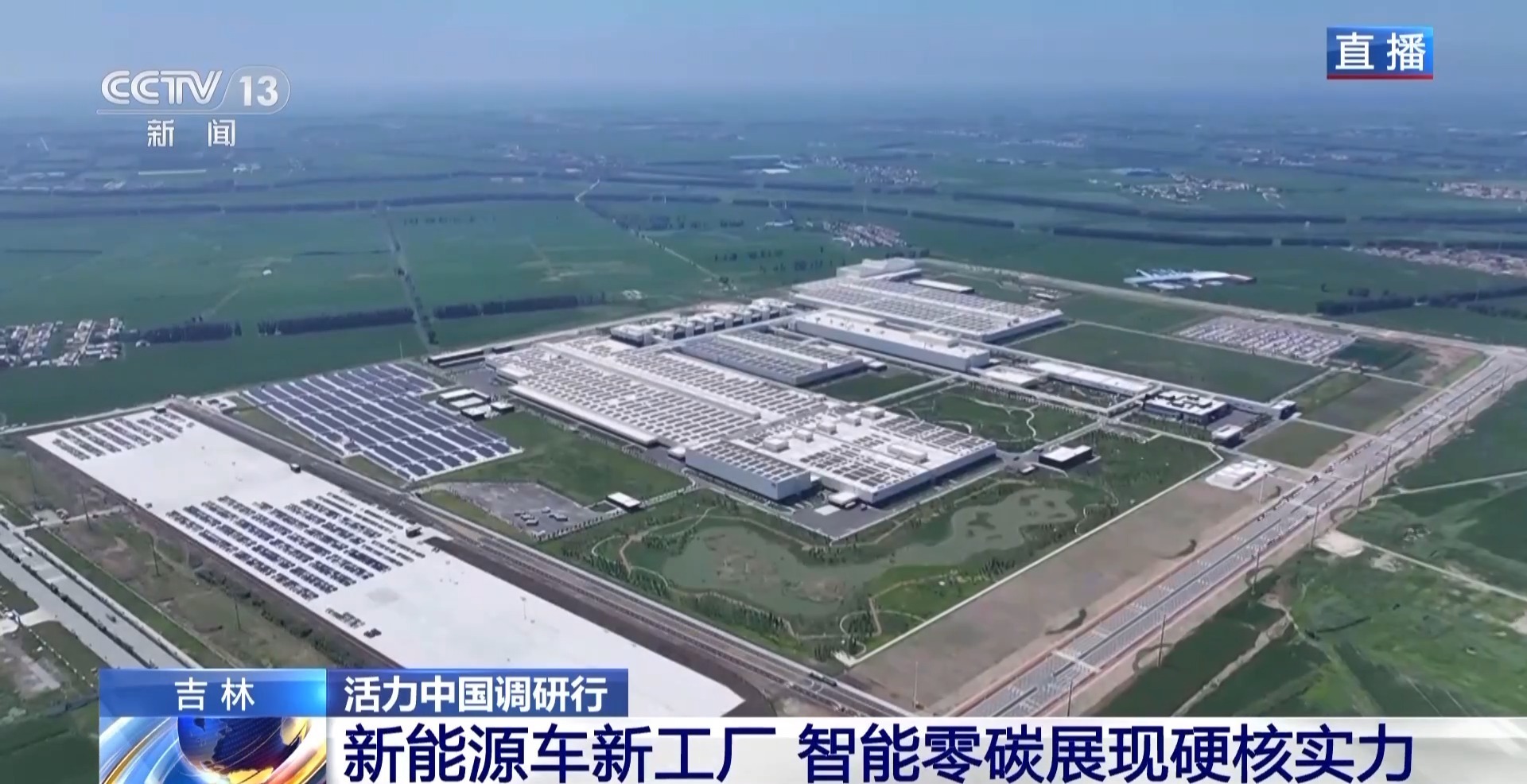
Core Viewpoint - The article highlights the transformation of the automotive industry towards electrification and intelligence, focusing on a zero-carbon "smart factory" in Changchun that has achieved mass production of electric vehicles [1][3]. Group 1: Production Capacity and Technology - The production base has an annual capacity of 150,000 vehicles and covers an area of 1.54 million square meters, consisting of five major workshops: stamping, welding, painting, assembly, and battery [5]. - The assembly workshop spans 120,000 square meters and features hundreds of autonomous transport robots that operate without external QR codes or line markings, relying on spatial judgment for precise material delivery [5][13]. - A key assembly station, referred to as the "wedding assembly station," utilizes 11 robots working in unison with 100% automation, achieving precision within ±0.1 millimeters for critical components [9][11]. Group 2: Environmental Sustainability - The factory operates as a zero-carbon facility, utilizing 100% green electricity sourced from 320,000 square meters of solar photovoltaic panels on its roof [15]. - It has achieved 100% recycling of ecological waste and 100% reuse of production and domestic wastewater [15]. Group 3: Industry Impact and Local Development - The mass production at this facility is expected to drive local industrial localization and accelerate the transformation of surrounding automotive parts suppliers, with 50% of suppliers located within a 30-kilometer radius [17]. - The establishment of an advanced automotive manufacturing cluster is a key goal for the "Changchun Modern Urban Circle," with the FAW New Energy production base serving as a significant example of this initiative [19].
杭叉集团20250722
2025-07-23 14:35
Summary of Hangcha Group Conference Call Company Overview - Hangcha Group is a leading company in the Chinese forklift industry, benefiting from increased market share and enhanced profitability, with a long-term ROE level that is relatively high [2][3] Financial Performance and Projections - Expected net profits for 2025-2027 are projected to be 2.22 billion RMB, 2.56 billion RMB, and 3.01 billion RMB, with a compound annual growth rate (CAGR) of 16% [2][10] - The company's valuation is estimated at 13 times PE for 2025, 11 times for 2026, and 10 times for 2027, indicating potential for strategic revaluation [5][28] - In 2024, the company’s revenue is expected to reach 16.5 billion RMB, with a year-on-year growth of 1% [15] Market Dynamics - In 2023, global forklift sales reached 2.14 million units, with a CAGR of 8%, and China accounted for 36% of global sales [4][17] - The market for unmanned forklifts is experiencing rapid growth, with global sales expected to increase by 46% in 2024, and the Chinese market by 26% [2][20] - Electric forklifts are replacing internal combustion models, with lithium batteries gradually replacing lead-acid batteries, showing a CAGR of 76% from 2019 to 2024 [4][23] Strategic Developments - Hangcha Group has actively entered the unmanned forklift and humanoid robot sectors, with plans to launch humanoid logistics robots in October [2][6] - The acquisition of Zhejiang Guozi Robotics aims to achieve technological and channel synergies, with projected revenues of 330 million RMB and net profits of approximately 66 million RMB in 2024 [2][9] - The company’s core business includes complete machine sales, intelligent logistics system solutions, and aerial work vehicles, with machine sales and parts accounting for 98.5% of revenue in 2024 [11][12] Competitive Landscape - In the global market, Toyota holds a 28% market share, while Hangcha has an 11% share [4][18] - The unmanned forklift market is characterized by low penetration and high growth potential, with only 2% penetration expected in 2024 [20][21] Risks and Considerations - Potential risks include slower-than-expected recovery in domestic manufacturing, overseas trade friction, and underperformance in new business developments [28] Conclusion - Hangcha Group is positioned for growth in the forklift and robotics sectors, with strong financial projections and strategic acquisitions enhancing its market competitiveness. The company is well-placed to capitalize on the trends of electrification and automation within the industry [2][5][28]

日系“黄昏”?继铃木后,又一家在华运营超半个世纪的品牌退出
Di Yi Cai Jing· 2025-07-23 10:19
Group 1 - Mitsubishi Motors has announced its exit from all joint ventures in China, including the engine manufacturing joint venture with Shenyang Aerospace Mitsubishi [2][4] - The company has re-evaluated its strategy in response to the rapid shift towards electric vehicles in the Chinese automotive market, leading to the termination of its joint venture relationships [2][4] - Mitsubishi Motors has been operating in China since the 1970s, initially entering through engine and auto parts manufacturing, but has faced increasing competition from domestic brands and the rise of electric vehicles [3][4] Group 2 - The exit of Mitsubishi Motors reflects broader challenges faced by Japanese automakers in China, with other companies like Suzuki also withdrawing from the market [4] - In 2022 and 2023, Mitsubishi Motors exited several joint ventures, including significant partnerships with Dong'an Mitsubishi and GAC Mitsubishi, indicating a strategic retreat from the Chinese market [3][4] - Japanese automakers are now focusing on electric and smart vehicle transformations to regain market share, with new electric models being introduced to compete in the growing EV segment [5]
汽车行业周报(25年第25周):看好优质新车上市催化板块情绪,建议关注财报行情-20250723
Guoxin Securities· 2025-07-23 06:55
Investment Rating - The report maintains an "Outperform" rating for the automotive industry [1][4][5]. Core Views - The automotive industry is experiencing a significant transformation driven by electrification, intelligence, and connectivity, with a focus on new energy vehicles (NEVs) and smart technologies [12][13]. - The report highlights the strong sales growth in June 2025, with total vehicle sales reaching 2.904 million units, a year-on-year increase of 13.8% [1][21]. - The report emphasizes the potential of domestic brands and the opportunities in incremental components due to the rise of electric and intelligent vehicles [12][24]. Monthly Sales Data - In June 2025, total vehicle sales were 2.904 million units, with NEV sales reaching 1.329 million units, a year-on-year increase of 26.7% [1][21]. - Retail sales of passenger cars in June 2025 were 2.084 million units, showing a year-on-year growth of 18.1% [1][21]. Weekly Data - For the week of July 7-13, 2025, domestic passenger car registrations were 370,200 units, a year-on-year increase of 3.7% [2]. - The automotive sector index increased by 3.22% during the week of July 14-18, 2025, outperforming major indices [2][5]. Key Company Earnings Forecasts and Investment Ratings - Leap Motor (9863.HK) is rated "Outperform" with an estimated EPS of -0.05 for 2025 [4]. - Geely (0175.HK) is rated "Outperform" with an estimated EPS of 1.36 for 2025 [4]. - JAC Motors (600418.SH) is rated "Outperform" with an estimated EPS of 0.11 for 2025 [4]. - Horizon Robotics (9660.HK) is rated "Outperform" with an estimated EPS of -0.14 for 2025 [4]. - Top Group (601689.SH) is rated "Outperform" with an estimated EPS of 2.04 for 2025 [4]. Investment Recommendations - The report recommends focusing on domestic brands and the opportunities in incremental components, particularly in the context of electrification and intelligence [12][24]. - Specific recommendations include: - Vehicle manufacturers: Leap Motor, Geely, JAC Motors [12][24]. - Intelligent components: Kobot, Huayang Group, Junsheng Electronics [12][24]. - Robotics: Top Group, Sanhua Intelligent Control, Shuanghuan Transmission [12][24]. - Domestic alternatives: Xingyu, Fuyao Glass, Jifeng [12][24].

研选行业丨1.2万亿雅江水电开工!工程机械需求或达1500亿,机械龙头戴维斯双击在即。一文读懂>>
第一财经· 2025-07-23 01:54
Core Viewpoint - The article highlights significant investment opportunities in the engineering machinery and environmental sectors, driven by large-scale infrastructure projects and the increasing trend of high-dividend stocks in the market [2][4][6]. Engineering Machinery - The commencement of the 1.2 trillion yuan Yarlung Tsangpo River hydropower project is expected to create a demand for engineering machinery worth approximately 150 billion yuan, with a potential annual profit increase of up to 4 billion yuan [2][8]. - The project involves the construction of five hydropower stations with a total investment of about 1.2 trillion yuan, which is one-ninth of the Three Gorges Project's static investment, and aims for a total installed capacity of 60 GW, generating an estimated annual output of 3,000 billion kWh [8]. - The high-altitude location of the project presents opportunities for electric and unmanned engineering machinery, which could lead to higher equipment value due to the harsh operating conditions [9]. - The overseas market for engineering machinery is showing signs of recovery, with profits from exports expected to exceed 80%, supported by favorable conditions in regions such as Indonesia, South America, Africa, the Middle East, and Europe [10]. Environmental Sector - The article discusses the potential for RWA (Risk-Weighted Assets) in environmental operations, emphasizing the importance of digitalization and data monitoring in enhancing asset value [4][6]. - The industry’s dividend payout ratio has increased by 14 percentage points over the past five years, reaching 48.5%, indicating a strong trend towards high-yield stocks [2][6]. - The expectation of national subsidies in 2025 is anticipated to improve cash flow within the sector, further supporting investment strategies focused on dividend returns [5][6].
从“初心不改,路径要变”看传统车企的突围
Zhong Guo Qi Che Bao Wang· 2025-07-22 14:06
电动化、智能化的发展机遇,造就了汽车行业的新势力,也让汽车的电子消费品特征逐渐显现。而一些传统车企由于难以割舍原有优势等原因呈现出"船 大调头难"的局面。同时,面对汽车消费的新需求、新特征,它们往往也容易落后一拍。于是,面对新的市场竞争态势,主动求变成为传统车企当前的发 展重点。 但笔者认为,在求变的过程中,传统车企也要有所坚持,不能盲目的摒弃优良传统与有益经验,而是要有所坚持、汲取精华,才能在转型中保留"底色"。 就像广汽集团在当前的变革中强调的——"坚持好自己的坚持"。 在这方面,智能化功能的不断提升和丰富是利器。例如,智能座舱的打造,使得用户在出行之际还可以娱乐、工作;汽车也不再仅仅是交通工具,而是了 解用户,能与用户产生共鸣的"伴侣"。传统车企需要认识这种变化,拥抱这种变化,为自己的产品注入这些新的功能价值,为用户创造新的情绪价值,从 而使转型突围水到渠成。 造车是一场"马拉松",一时的销量落后并不可怕,关键是能有所坚持,勇于改变,打造出满足用户情绪价值的高质量产品,才能保持长久发展的竞争力。 笔者希望,"初心不改,路径要变"能成为更多传统车企变革突围的"底色"。 文:王金玉 编辑:庞国霞 版式:齐萌 ...