人工智能(AI)

Search documents
都怪特朗普!美元录得8年来最差年度走势
第一财经· 2025-12-31 08:51
2025.12. 31 本文字数:1767,阅读时长大约3分钟 作者 | 第一财经 后歆桐 机构Pioneer Investments的分析师亚帕哈雅(Paresh Upadhyaya)表示:"我对2026年的展望 是美元熊市将继续,但跌幅可能会小于今年。" 2026年还将继续下跌 2025年末,美元指数即将录得2017年以来最大的年度跌幅。 结合衍生品市场情况,市场预计,明年伴随美联储继续降息、特朗普干预美联储等因素,美元还将继 续走弱。 8年来最差年度走势 今年,衡量美元对一篮子主要货币的美元指数下跌9.5%,即将录得8年来最大年度跌幅。今年4月, 美国总统特朗普所谓的"对等关税"引发了投资者对美国经济和美元霸权地位、避险资产地位的担忧 和质疑。当时,美元指数一度下跌15%。欧元对美元汇率在主要货币中涨幅最大,年度飙升近 14%,至1.17美元以上,上一次欧元达到这一水平还是在2021年。 德意志银行的外汇研究全球主管萨瓦罗斯(George Saravelos)甚至表示:"这是美元与黄金脱 钩、实施自由浮动汇率的半个世纪多以来,美元表现最糟糕的一年。"在4月大幅下跌后,美元一度 收复部分失地,但美联储9月 ...


都怪特朗普!美元录得8年来最差年度走势,2026年会继续走弱?
Di Yi Cai Jing· 2025-12-31 08:00
Core Viewpoint - The erosion of the fundamental basis of the US dollar's dominance, influenced by factors such as Trump's policies and the Federal Reserve's actions, is expected to lead to a prolonged period of dollar weakness, with significant implications for global markets and economies [1][6]. Group 1: Dollar Performance and Market Expectations - The dollar index is set to record its largest annual decline since 2017, with a drop of 9.5% this year, marking the worst performance in eight years [3]. - Following Trump's "reciprocal tariffs" in April, the dollar index experienced a significant drop of 15%, raising concerns about the US economy and the dollar's status as a safe-haven asset [3]. - Traders have begun to short the dollar for the first time since October, with options pricing reflecting a heightened bearish sentiment towards the dollar [3]. Group 2: Future Projections and Central Bank Policies - Analysts predict that the dollar bear market will continue into 2026, albeit with potentially smaller declines compared to this year, as the Federal Reserve is expected to lower interest rates again [4]. - The divergence in monetary policy, with the Fed remaining accommodative while other central banks, like the European Central Bank, may hold rates steady or even increase them, is likely to further pressure the dollar [4][5]. - By the end of 2026, the euro is expected to strengthen to 1.20 USD, while the British pound may rise from 1.33 USD to 1.36 USD [5]. Group 3: Impact on Global Markets and Investor Behavior - The weak dollar has mixed effects; it benefits US exporters but poses challenges for European companies operating in the US market [5]. - Concerns about the potential for a new Fed chair to implement aggressive rate cuts at the behest of the White House could lead to further dollar depreciation [5]. - The ongoing strength of the US economy, as indicated by a 4.3% annualized GDP growth rate in Q3, may counterbalance some of the bearish sentiment towards the dollar, potentially leading to a rebound [7].

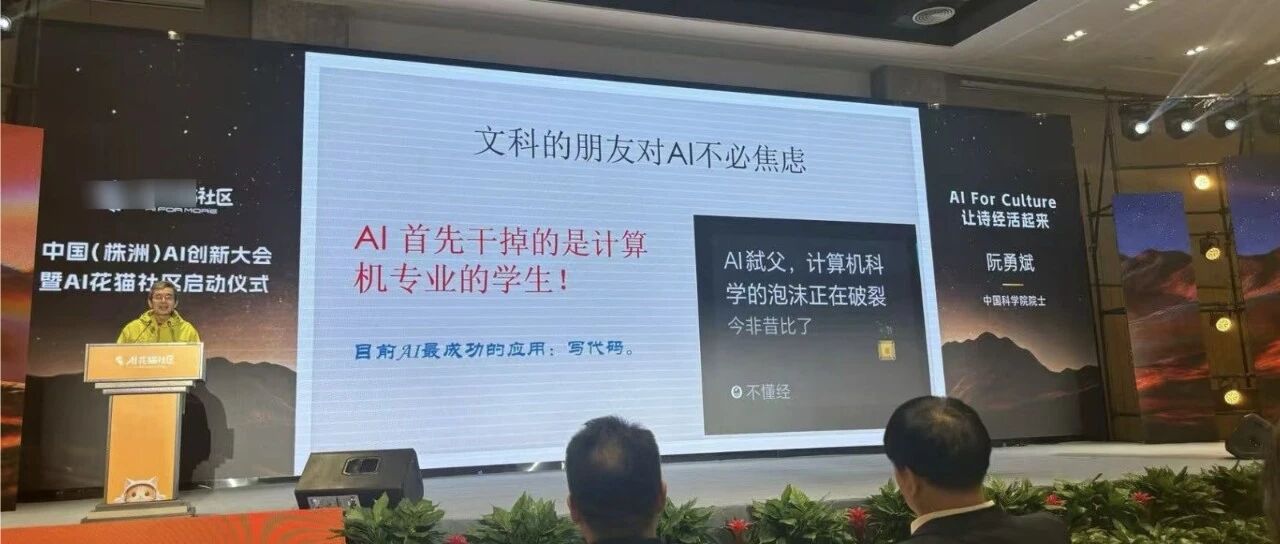
文科生别焦虑,AI 先干掉的是计算机专业的学生!
程序员的那些事· 2025-12-31 07:16
趣图: 程序员合法摸鱼的最佳理由出 新了 文科生不必焦虑,AI 先干掉的是计算机专业的学生! ↓↓↓ 往期趣图 (点击下方图片可跳转阅读) ...
2026年全球经济十大悬念:AI泡沫会破吗?黄金会否冲破5000?泽连斯基会妥协吗?
Hua Er Jie Jian Wen· 2025-12-31 06:56
Group 1: Economic Predictions - Trump's average tariff levels are expected to decrease by the end of the year due to various pressures, including stock market declines and rising consumer prices [2] - Global central banks, excluding Japan, are likely to continue lowering interest rates, with the Federal Reserve potentially leading this trend [5] - The price of gold is predicted to exceed $5,000 per ounce, driven by central bank purchases and as a hedge against fiscal deficits and geopolitical tensions [7] Group 2: Political Landscape - Ukrainian President Zelensky is not expected to be forced to abandon the Donbas region as part of any peace agreement, due to military and political risks [3] - In the U.S., the Democratic Party is predicted to regain control of the House of Representatives in the midterm elections, which would allow them to block Trump's agenda [12] - In the Middle East, the normalization of relations between Saudi Arabia and Israel is unlikely without a clear path to Palestinian statehood, as emphasized by Saudi Crown Prince Mohammed bin Salman [13] Group 3: Technology and Market Trends - The AI bubble is anticipated to burst in 2026, with investors becoming more critical of tech giants, although larger diversified companies may weather the storm better than smaller firms [4] - Quantum computers are not expected to be commercially viable by 2026, but significant progress is being made in the field [8] - Tesla's market share is projected to continue declining in the U.S., EU, and China, as competition increases and Musk focuses on AI investments rather than traditional automotive business [9] Group 4: Financial Sector Insights - An increase in private credit defaults is expected, as higher interest rates challenge companies that borrowed heavily during low-rate periods [6] - The emergence of household robots is anticipated, although their functionality will be limited and they will primarily target affluent early adopters [10]
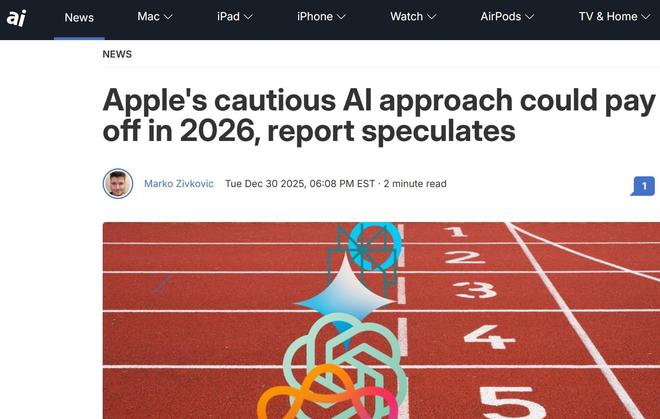
外媒:苹果谨慎布局人工智能,2026或迎AI反超窗口
Huan Qiu Wang Zi Xun· 2025-12-31 04:12
Core Viewpoint - Apple is adopting a cautious approach in the artificial intelligence (AI) sector, which may provide a significant competitive advantage by 2026 [1][3]. Group 1: AI Strategy - Apple has slowed down the release of AI features after initially promising a new context-aware Siri at the 2024 WWDC, focusing instead on user interface innovations for 2025 [3]. - The company has significantly reduced its marketing efforts related to AI technology compared to competitors like Meta and Google, which are investing billions in AI infrastructure [3]. - Apple's conservative spending has allowed it to maintain a cash reserve of approximately $130 billion for future AI investments or acquisitions [3]. Group 2: Collaboration and Development - Apple plans to integrate Google's Gemini technology into its upcoming AI features set to launch in 2026, which reduces R&D risks and preserves resources for potential strategic acquisitions [3][4]. - The internal AI team is exploring the possibility of developing proprietary models, but some executives believe the commercial rationale for long-term investment in self-developed models is diminishing as LLM technology becomes more commoditized [4]. Group 3: Market Position and Future Outlook - The iPhone remains an ideal platform for deploying AI features due to its integrated hardware and software ecosystem, giving Apple a unique advantage in delivering AI functionalities [4]. - Although Apple's current "steady and cautious" strategy may make it appear behind in the short-term AI race, it could achieve a better balance between technological maturity, user experience, and commercial sustainability [4].

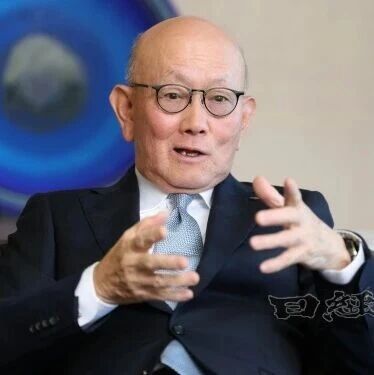
伊藤忠商事会长:中国依然存在机会
日经中文网· 2025-12-31 03:02
Core Viewpoint - The article discusses the current economic situation in China, the challenges faced by Japanese companies in the Chinese market, and the potential opportunities that still exist despite geopolitical tensions [2][3][5]. Group 1: Current Economic Situation in China - The adjustment in China's real estate market is not yet complete, and the economy is expected to face severe challenges until 2026. The potential returns from real estate investments are decreasing, and personal consumption is facing headwinds [3]. - The Chinese government is attempting to increase investments in infrastructure and advanced technologies like AI, but these efforts are insufficient to boost economic growth rates [3]. Group 2: Japanese Companies' Response to China - Japanese companies should cautiously explore opportunities in China while managing risks. There are still potential markets for products and services favored by Chinese consumers, despite the ongoing Japan-China tensions [7]. - Companies that have developed low-cost, high-quality food services in Japan are successfully entering the deflationary Chinese market [7]. Group 3: Opportunities in Chinese Products and Technology - China has a wealth of engineering talent, and its humanoid robots have set Guinness World Records for walking distances. These robots could be useful in Japan, especially in sectors facing labor shortages [8]. - Chinese products, such as BYD's electric vehicles and Huawei's smartwatches, are not only competitively priced but also of high quality. However, there are psychological barriers among Japanese consumers regarding Chinese products that need to be addressed [8]. Group 4: Itochu Corporation's Future Plans - Itochu Corporation aims to achieve the highest consolidated net profit among general trading companies for the fiscal year ending March 2026, with a target of exceeding 900 billion yen [9].
周敏、张云:当AI介入创意,如何守护“真实”
Huan Qiu Wang Zi Xun· 2025-12-30 22:42
Core Viewpoint - The controversy surrounding a photography competition where an AI-generated work allegedly won the top prize highlights the broader impact of AI technology on creative fields, raising questions about existing evaluation, certification, and copyright rules [1] Group 1: Current Issues in Creative Competitions - The photography competition faced scrutiny as the winning piece exhibited signs of AI generation, such as distorted architectural lines and overly perfect details, prompting the organizers to reaffirm their ban on AI submissions and initiate a review process [1] - Previous incidents, such as an AI-generated work winning third place in a different competition before being disqualified, indicate a pattern of challenges in identifying AI-generated content [1] - The lack of technical verification standards in many competitions allows for AI-generated works to bypass scrutiny, as many events focus primarily on artistic evaluation rather than technical authenticity [1] Group 2: Proposed Solutions - Establishing a rigorous work traceability and technical verification mechanism is essential, including requiring supporting materials for key submissions and integrating authoritative AI detection tools into the review process [2] - The creation of parallel competition categories, such as "Traditional Photography" (prohibiting AI) and "Digital Creative Art" (allowing AI), with clear evaluation criteria, can help maintain fairness and clarity in judging [2] Group 3: Ethical Considerations and Industry Dialogue - The fundamental challenge lies in the lack of consensus and ethical boundaries regarding AI's role in creative fields, necessitating industry dialogue to establish new ethical standards and agreements [3] - Stakeholders, including associations, event organizers, creators, and technology experts, should engage in discussions about the use of AI, authorship rights, and definitions of originality to create a contemporary industry charter [3] - Implementing an industry blacklist and credit system for violators, along with administrative oversight, can deter fraudulent activities and enhance the legal framework surrounding copyright infringement [3]
媒体评摄影大赛一等奖作品疑似AI生成:“防AI”是一个时代命题
Xin Lang Cai Jing· 2025-12-30 16:03
近日,福建一摄影大赛公布评选结果,其中,大赛一等奖作品《湖秋雾影》被人质疑是用AI生成的, 引发广泛关注。 在AI技术突飞猛进的当下,无论是评委的技术素养,还是相关的细节审核,都需要跟上变化,把AI识 别纳入常态化流程,用更清晰的标准、更严谨的复核、更透明的评审,来守住比赛的公信力。 《湖秋雾影》。来源:封面新闻 这些案例都在提醒:在AI技术突飞猛进的当下,比赛已经不是发个公告、征集作品、规定"禁止AI"就够 了。无论是评委的技术素养,还是相关的细节审核,都需要跟上变化,把AI识别纳入常态化流程,用 更清晰的标准、更严谨的复核、更透明的评审,来守住比赛的公信力。 也有网友提出,类似比赛近来常有"AI疑云",不如索性打开AI赛道,以避免将摄影、设计大赛变成"AI 找茬大赛,也就是"打不过就加入"。如今,AI的发展已经对各种摄影、绘画等评选比赛构成了"系统性 挑战"。一个有意思的现象是,围观AI作品本身成了一种"乐趣"。一些赛事或许本身的关注度有限,却 因为一幅疑似AI作品的"乱入",迅速成为互联网热点。 如此说来,这或许是一种解决办法。在赛事中留下一个专门面向AI作品的奖项,让参赛者更自由地驰 骋想象,也不失为 ...

2025年预测错了多少?2026年资本风口在哪里?
3 6 Ke· 2025-12-30 11:29
Core Insights - The year 2025 has been characterized by significant market volatility, with the US dollar depreciating and the euro strengthening, while gold prices surged over 70% to reach $4,500 per ounce, indicating a shift towards a more "financialized" order in the market [1][2][5] - Investors are advised to understand the transformation of fear into pricing, which will help them navigate the capital opportunities in 2026 [2][10] - The market has shown resilience despite numerous uncertainties, with a cautious optimism for 2026 as macro conditions align towards a "Goldilocks" scenario [2][10] Market Performance - As of December 28, 2025, silver led the market with a 173.13% increase, followed by gold at 73.91%, and other indices like the S&P 500 rising by 17.26% [3] - Conversely, light crude oil saw the largest decline at 19.63%, with other assets like Brent crude and Ethereum also experiencing significant drops [3] Predictive Discrepancies - The year 2025 exhibited a systematic misalignment between predictions and actual market performance, with many forecasts underestimating the resilience of risk assets [4][5] - Despite predictions of a recession, growth did not significantly falter, and the Federal Reserve adjusted interest rates downwards, contrary to earlier expectations [5][6] Key Variables Influencing the Market - Five main variables have driven market behavior in 2025: 1. Repricing of dollar credit and institutional risk premiums due to uncertainties in fiscal sustainability and central bank independence [7] 2. The rise of real assets, particularly gold, as a hedge against geopolitical and institutional uncertainties [7] 3. The interplay of demand and supply pricing in energy markets, reflecting concerns over inflation [7] 4. Global liquidity mechanisms affecting financing costs and volatility [8] 5. A concentrated narrative around AI, which has become a focal point for investment and valuation [8] 2026 Capital Outlook - The asset pricing logic for 2026 will shift from explaining the world to pricing discount rates, with a focus on maintaining financial conditions that support financing [10] - The emphasis will be on the infrastructure for AI, transitioning from merely acquiring GPUs to establishing sustainable computing factories [11] - Key factors influencing the success of this transition include financial conditions, visibility of returns, supply-side engineering, and regulatory certainty [12]
英伟达挑战HBM极限
半导体芯闻· 2025-12-30 10:24
Core Viewpoint - The explosive growth in AI computing power demand is pushing Nvidia to evaluate the feasibility of delivering 16-layer stacked HBM by Q4 2026, prompting major suppliers like Samsung, SK Hynix, and Micron to accelerate their R&D timelines [1][2]. Group 1: Nvidia's Influence on HBM Development - Nvidia's request for 16-layer stacked HBM has led to a reevaluation of development timelines among suppliers, including yield targets and initial production settings [1]. - The focus remains on the certification and mass production of 12-layer stacked HBM4, expected to enter full commercialization in early 2026, while Nvidia is already inquiring about the next generation [1][2]. Group 2: Technical Challenges and Innovations - Transitioning from 12-layer to 16-layer stacking involves significant advancements in semiconductor packaging technology, with the challenge being greater than the previous transition from 8-layer to 12-layer [2]. - Key challenges include packaging height and wafer thickness, with the industry estimating that 16-layer HBM will require wafer thickness to be reduced from 50 micrometers to around 30 micrometers [3]. Group 3: Competitive Strategies Among Suppliers - Samsung is considering adopting hybrid bonding technology for its 16-layer products to gain a competitive edge, while SK Hynix is focusing on extending the lifespan of its MR-MUF technology [2][3]. - Micron, while less frequently mentioned, is also relying on TCB technology and striving to remain competitive in the race for 16-layer HBM [3]. Group 4: Market Projections - HBM3E is projected to account for 66% of total HBM production in 2026, a decrease from 87% in 2025, but it will still dominate the market [4].