套利交易

Search documents
“抛售美元”交易失宠 机构调整新兴市场资产布局
智通财经网· 2025-08-04 07:24
Group 1 - The core viewpoint is that the recent rebound of the US dollar has led some emerging market investors to believe that the dollar will continue to strengthen in the coming months, with the Bloomberg Dollar Spot Index rising by 2.7% in July, ending a six-month decline, while the MSCI Emerging Markets Currency Index fell by 1.2% [1] - Barclays advises clients to avoid shorting the dollar against Asian currencies and instead recommends going long on the dollar against certain low-yielding currencies in the region, indicating a cautious stance on betting against the dollar during the summer [1] - Barclays prefers to completely avoid relative value trades involving the dollar, such as betting on the Singapore dollar weakening against the renminbi or shorting the Thai baht against the Korean won [1] Group 2 - Fidelity International suggests that the attractiveness of the dollar as a funding currency for arbitrage trades is declining due to the potential for US interest rates to remain high for an extended period, recommending consideration of lower-cost alternative funding currencies [2] - T. Rowe Price Group favors dollar-denominated emerging market bonds over local currency bonds as a tactical trade, noting that last month, emerging market dollar bonds outperformed local currency bonds with a return of 0.9% compared to -0.9% for local currency bonds [2] - T. Rowe Price's fund manager in Hong Kong expresses a preference for holding dollar-denominated emerging market bonds due to their more attractive yields, while indicating that the dollar may enter a consolidation phase over the next three to six months, posing challenges for local currency bond returns [2]
前期套利交易崩盘,铜价短期面临下行风险
Hua Er Jie Jian Wen· 2025-08-01 07:09
Core Viewpoint - The abrupt reversal of Trump's copper tariff policy, from a proposed 50% tariff to almost complete exemption, has led to a significant drop in copper prices, with COMEX copper prices falling over 20% and spot premiums nearing zero [1][3]. Group 1: Tariff Policy Impact - The recent tariff exemption exceeded market expectations, leading to a reversal of the "U.S. copper tariff trade" and creating downward pressure on prices [2][3]. - The cancellation of tariffs is viewed as the most negative scenario for copper prices, as it forces the liquidation of previously established arbitrage positions [2][3]. Group 2: Inventory Concerns - The U.S. holds a significant surplus of copper inventory, estimated at 500,000 to 700,000 tons, which will take 6-12 months to digest, further pressuring copper prices [2][4]. - The U.S. accounts for less than 10% of global copper demand, yet the tariff expectations have distorted global copper trade, leading to increased imports and subsequent overstocking [4]. Group 3: Market Dynamics - The price differential between COMEX and LME copper had previously attracted significant metal inflows into the U.S., but this differential has now collapsed due to the tariff exemption [3][4]. - U.S. refined copper imports surged by approximately 400,000 tons (+130%) year-on-year in the first five months of the year, contributing to the accumulation of excess inventory [4].

铜关税“乌龙”引发套利交易崩溃
第一财经· 2025-08-01 00:33
Core Viewpoint - The U.S. has implemented a 50% tariff on imported copper semi-finished products and high-copper-content derivatives, contrary to market expectations that it would target refined copper itself [1][3]. Group 1: Tariff Implementation - The U.S. government announced a 50% tariff on copper semi-finished products and high-copper-content derivatives starting August 1, 2025, based on the Trade Expansion Act of 1962 [1]. - Refined copper and copper input materials such as copper ore, concentrates, and scrap copper are explicitly excluded from the tariff [1][3]. - The announcement led to a significant drop in CME copper futures prices, which fell over 20% on the day of the announcement [1][3]. Group 2: Market Reactions - Following the tariff announcement, CME warehouse inventories surged to 232,195 tons, the highest level since 2004, due to a rush of refined copper imports before the tariff took effect [2]. - The price premium of CME copper futures over LME prices narrowed significantly, from nearly $1,200 per ton to less than $150 per ton [1][3]. Group 3: Supply Chain and Structural Challenges - The influx of refined copper has created a supply-demand mismatch, raising concerns about whether U.S. smelting and processing capacities can handle the increased resources [5]. - From 2027, a policy mandates that 25% of domestic copper concentrates and recycled copper must be sold in the U.S., increasing to 40% within two years, which may exert structural pressure on the existing system [5]. - Analysts suggest that the physical supply chain will take months to rebalance, with the possibility of copper being re-exported from the U.S. being reassessed [6].


铜关税“乌龙”引发套利交易崩溃,高盛:全球铜流重构或需数月
Di Yi Cai Jing· 2025-08-01 00:07
Core Viewpoint - The U.S. has implemented a 50% tariff on imported copper semi-finished products and high-copper-content derivatives, which diverges significantly from market expectations that anticipated tariffs on refined copper itself [1][2]. Group 1: Tariff Implementation - As of August 1, the U.S. will impose a 50% tariff on copper semi-finished products and high-copper-content derivatives, including copper tubes, wires, rods, and sheets [1][2]. - Refined copper, copper concentrates, and scrap copper are explicitly excluded from the tariff, which was a surprise to the market [1][2]. - The U.S. Commerce Department has suggested delaying tariffs on refined copper until 2027, with a proposed tax rate of 15% increasing to 30% by 2028 [2]. Group 2: Market Reaction - Following the announcement, CME copper futures prices plummeted over 20%, and the price premium of CME copper over LME copper narrowed significantly from nearly $1200 per ton to under $150 per ton [1][3]. - The influx of refined copper into the U.S. prior to the tariff implementation has led to a significant increase in CME warehouse inventories, reaching 232,195 tons, the highest level since 2004 [2]. Group 3: Supply Chain and Structural Challenges - The current U.S. smelting and processing capacity may not be sufficient to handle the increased copper supply, raising concerns about the ability to absorb new resources [4]. - The policy mandates that by 2027, 25% of domestic copper concentrates and recycled copper must be sold in the U.S., increasing to 40% within two years, which may create structural pressures on the existing system [4]. - Rising storage costs and insufficient export demand may force some metals to be re-exported, complicating the supply chain further [5]. Group 4: Future Outlook - Analysts believe that the restructuring of the physical supply chain will take several months, and the possibility of copper flowing out of the U.S. is being reassessed by traders [6]. - It may take months for the supply chain to return to balance, indicating a prolonged adjustment period for the copper market [6].
每日机构分析:7月30日
Xin Hua Cai Jing· 2025-07-30 13:39
高盛:美国公共债务或成主要中长期金融风险 荷兰国际:美欧经济增长数据分化或触发欧元跌破1.15 巴克莱:日本扩张性财政或促使美元兑日元破150 套利交易将重启 【机构分析】 (文章来源:新华财经) 荷兰国际集团分析师指出,如果与美国经济数据显现出有利于美元的增长分化,欧元可能面临新一轮下 跌压力。市场焦点集中于美欧增长数据对比,任何有利于美国的显著分化都可能触发欧元下行,短期内 需警惕跌破1.15的风险。法国第二季度经济增长率为0.3%,虽强于预期,但增幅温和,显示出复苏动能 有限。德国作为欧元区最大经济体,其增长数据将对欧元区整体表现产生重大影响,市场正密切关注。 若美国经济数据明显优于欧元区,欧元兑美元可能跌破1.15关键支撑位。预计欧元将在第三季度走弱, 随后在第四季度回升至1.18美元。 ING分析师指出,如果加拿大央行维持利率不变,但暗示未来可能降息,加元或将承压下跌。市场目前 仅消化了加拿大央行年底前15个基点的降息预期。鉴于这种保守的市场定价以及美加贸易谈判带来的经 济风险,加拿大央行可能会促使市场押注更多降息。 此举将直接对加元构成下行压力。ING持续预 计,本季度美元兑加元将触及1.39的水 ...

看空情绪浓厚!政治风险加剧,日元恐进一步下滑至……
Sou Hu Cai Jing· 2025-07-30 05:43
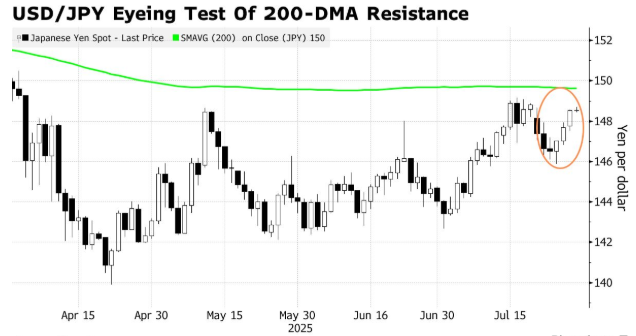
Core Viewpoint - The Japanese yen has performed the worst among major currencies in the past three months, facing further decline due to rising political risks in Japan [1] Group 1: Market Sentiment and Predictions - Strategists are pessimistic about the yen, anticipating that the outcome of the Japanese elections will lead to increased government spending, while the impact of U.S. tariffs may slow down interest rate cuts [1] - The Liberal Democratic Party's loss in the July 20 elections is a key factor affecting the yen, with analysts warning that Prime Minister Kishida may resort to populist fiscal spending to consolidate his weakened ruling coalition [1] - The demand for bullish dollar/yen options reflects market expectations that the Bank of Japan's Governor Ueda will not signal interest rate hikes soon, as short-term growth and inflation risks are skewed to the downside [1][2] Group 2: Currency Performance and Positioning - The yen has depreciated approximately 6% since reaching a seven-month high in April, currently trading around 148.25 against the dollar [2] - Market participants betting on yen depreciation expect Kishida to yield to opposition-driven tax cuts to boost support for the ruling coalition [2] - Barclays strategists suggest that regardless of the political outcome, fiscal policy is likely to become more expansionary, potentially pushing the dollar/yen pair above the 150 level [2] Group 3: Central Bank Policy and Economic Impact - The Bank of Japan is set to announce its policy decision, which will be a key factor influencing the yen's short-term trajectory, with investors closely watching Governor Ueda's comments for indications of future rate hikes [3] - Overnight index swaps currently price in a 74% probability of a rate hike this year, up from 59% prior to the U.S.-Japan tariff agreement [3] - Analysts believe the Bank of Japan will need time to assess the actual impact of the tariffs, suggesting that the yen may depreciate above 150 this year [4]
日元将再跌破150关口?日本政治风险加剧,交易员押注日元贬值
智通财经网· 2025-07-30 03:39
Core Viewpoint - The Japanese yen has underperformed against all major competitors over the past three months, with increasing political risks potentially leading to further depreciation [1] Group 1: Currency Performance and Market Sentiment - Strategists hold a bearish outlook on the yen, anticipating that election results will prompt increased government spending and that U.S. tariff policies may delay interest rate hikes by the Bank of Japan [1] - As of July 22, the yen has depreciated approximately 6% against the dollar since reaching a seven-month high in April, now trading at 148.27 yen per dollar [4] - The ratio of bullish to bearish options for the dollar-yen pair is about 4:1, indicating a strong sentiment for further appreciation of the dollar against the yen [4] Group 2: Political Factors and Economic Implications - The ruling coalition of the Liberal Democratic Party and Komeito faced significant losses in the July 20 Senate elections, raising concerns about potential populist spending measures from Prime Minister Kishida [1] - Analysts suggest that if Kishida were to resign, he might be succeeded by a leader favoring fiscal and monetary stimulus, which could lead to more expansive fiscal policies [4] - Barclays strategists predict that if expansionary fiscal policies are implemented, the dollar-yen exchange rate could exceed 150 due to sensitivity to long-term premium changes [4] Group 3: Future Outlook and Central Bank Actions - The Bank of Japan's upcoming policy decision is expected to influence the yen's near-term performance, with a 74% probability of a rate hike by year-end [7] - Despite potential capital outflows from the proposed U.S. investment fund, some analysts believe the yen could strengthen to levels between 142 and 143 against the dollar if the Federal Reserve lowers interest rates [7] - Market participants are closely monitoring comments from Bank of Japan Governor Ueda regarding the timing of future interest rate hikes, as current conditions do not favor the yen [7]
15%关税协议,终结日本资本的“大航海时代”?
Hua Er Jie Jian Wen· 2025-07-24 07:51
Group 1 - The core point of the news is that the recent trade agreement between the US and Japan, while providing a short-term boost to the Japanese stock market, may signal the end of a significant era of Japanese capital flowing overseas, known as the "Age of Exploration" [1] - The agreement includes a 15% tariff on Japanese goods, including automobiles, which is lower than the previous 25% tariff on global auto imports, leading to a positive market reaction as it exceeded pessimistic expectations [1][2] - Analysts suggest that the long-term impact of the agreement may reduce Japan's demand for US Treasury bonds and other foreign securities, indicating a potential decline in capital inflow into global markets, particularly US assets [1][2][4] Group 2 - The trade agreement is expected to reshape the trade balance between the US and Japan, with the 15% tariff likely compressing Japan's trade surplus with the US, as the US market is crucial for Japanese exports [2] - Over the past 20 years, Japanese investors have purchased foreign securities at a rate nearly three times that of foreign investors buying Japanese securities, highlighting Japan's significant capital outflow [2][3] - Prior to the trade agreement, there was already a noticeable decline in Japan's enthusiasm for US Treasury bonds, suggesting that the trend of capital flowing overseas was slowing down even before the agreement was reached [4]
兴证全球红利混合A:2025年第二季度利润560.9万元 净值增长率5.2%
Sou Hu Cai Jing· 2025-07-22 03:56
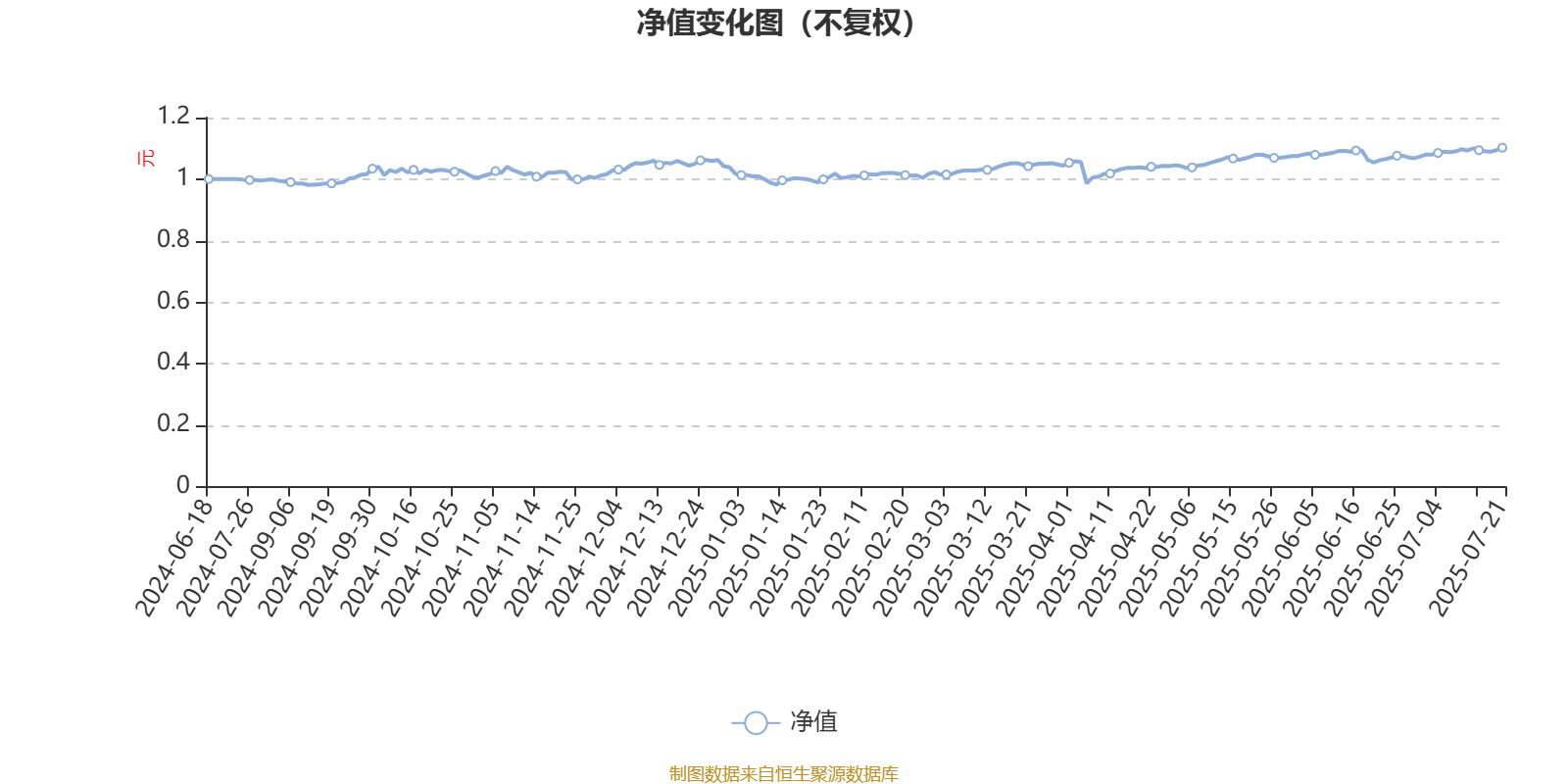
Core Viewpoint - The AI Fund Xingzheng Global Dividend Mixed A (021247) reported a profit of 5.609 million yuan for Q2 2025, with a weighted average profit per fund share of 0.0586 yuan, and a net value growth rate of 5.2% during the reporting period [3] Fund Performance - As of July 21, the fund's unit net value was 1.102 yuan, with a net value growth rate of 9.43% over the past three months, ranking 344 out of 607 comparable funds [4] - The fund's six-month net value growth rate was 13.83%, ranking 181 out of 607, and the one-year growth rate was 16.58%, ranking 381 out of 602 [4] - Since inception, the fund has achieved a Sharpe ratio of 1.4025 [8] - The maximum drawdown since inception was 6.82%, occurring in Q2 2025 [11] Fund Management Strategy - The fund manager, Zhang Xiaofeng, emphasizes a balanced industry approach and value stock selection, maintaining a focus on reasonable valuations and stable fundamentals [3] - The fund's average stock position since inception was 71.31%, compared to the industry average of 85.36%, with a peak stock position of 86.62% at the end of Q1 2025 [14] Fund Size and Holdings - As of the end of Q2 2025, the fund's size was 105 million yuan [16] - The top ten holdings of the fund include China Merchants Jinling, Jiangsu Bank, HSBC Holdings, COSCO Shipping Holdings, Gree Electric Appliances, Sichuan Road and Bridge, Agricultural Bank of China, Bank of Beijing, Industrial and Commercial Bank of China, and China Shenhua Energy [19]
股市融资融券是什么意思?看懂再用不踩坑
Sou Hu Cai Jing· 2025-07-19 11:37
Group 1 - The core concept of stock market financing and securities lending is that financing transactions profit when the underlying stock rises, while securities lending profits when the stock declines [1] - Stocks eligible for financing and securities lending are marked with an "R" in trading software, and stocks without this designation cannot be traded using leverage [2] - A dedicated credit account is required for financing and securities lending, which is separate from regular stock accounts, and funds within this account can only be used for related transactions [3] Group 2 - Financing liabilities can be repaid by selling the financed stocks or using cash, while securities lending liabilities must be repaid by buying back the same number of stocks or using held stocks [4] - There are risks associated with financing transactions, such as the potential for liabilities to exceed assets if the stock price continues to fall, leading to "margin call" risks [5] - The credit limits for financing and securities lending are not fixed and can be adjusted based on the investor's asset scale, trading activity, and risk management [7] Group 3 - An example of interest calculation shows that for a financing of 1 million yuan at an annual interest rate of 7% held for 15 days, the interest payable is approximately 2877 yuan [8] - In a volatile market, financing and securities lending can be used for "arbitrage trading," buying undervalued stocks while short-selling overvalued ones to profit from the price difference [9] - In a bullish market, financing is primarily used to amplify returns, while in a bearish market, securities lending can capture downward opportunities, necessitating strict position and holding time control [9]