
智能网联汽车

Search documents
中国汽车市场一周行业信息快报——2026年1月第4期
Zhong Guo Zhi Liang Xin Wen Wang· 2026-01-26 08:51
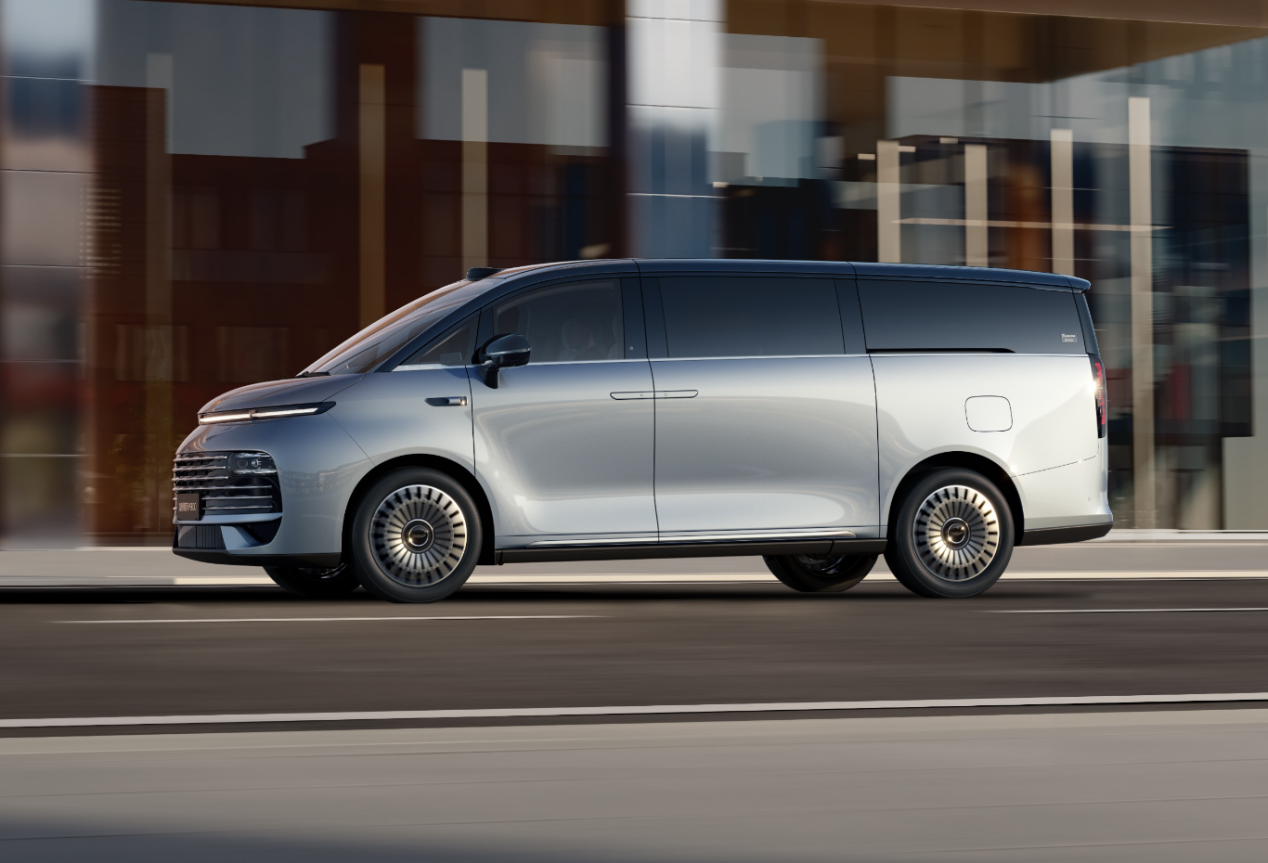
Policy Developments - The Ministry of Industry and Information Technology (MIIT) revised and released the "Access Review Requirements for Road Motor Vehicle Production Enterprises" and "Access Review Requirements for Road Motor Vehicle Products," aiming to further standardize industry access and product quality [1][3] - The revised "Enterprise Review Requirements" includes 163 articles, adjusting clauses based on different vehicle categories and production methods through measures of "enhancing," "supplementing," and "optimizing" [3] - The updated "Product Review Requirements" integrates and optimizes technical and management regulations for product standards and parameters, enhancing evaluation for products using new technologies and materials [3] Market Dynamics - Toyota announced that it expects to sell over 1.78 million vehicles in China in 2025, reflecting positive growth [1] - The sales structure shows stable support from both FAW Toyota and GAC Toyota, with FAW Toyota achieving sales of 805,500 units and GAC Toyota reaching 772,700 units, marking a 0.3% year-on-year increase [1] - The luxury brand Lexus surpassed 180,000 units in annual sales, continuing its positive growth trend [1] Product Launches - Geely launched the Galaxy V900, a large MPV with a starting price of 269,800 yuan, featuring a length of over 5.3 meters and a 1.5T range-extended powertrain [1] - The Galaxy V900 offers a 91.8% usable area rate and various seating configurations, including 6, 7, and 8-seat options [3] - The vehicle is equipped with a dual-motor all-wheel-drive system, delivering a peak power of 340 kW and a peak torque of 523 N·m, along with advanced suspension and braking systems [3] Charging Infrastructure - As of December 2025, China's electric vehicle charging infrastructure reached 20.09 million units, making it the largest charging network globally [4][5] - The growth from 10 million to 20 million charging facilities took only 18 months, indicating rapid expansion [5] - The average charging power for public charging stations reached 46.5 kW, with a 33% year-on-year increase in charging efficiency [5] Upcoming Vehicle Models - BMW announced that the long-wheelbase version of the iX3 will make its global debut at the 2026 Beijing International Auto Show, with plans for a market launch in the second half of the year [6][8] - The new iX3 features an 800V high-voltage architecture and a comprehensive range of over 900 km, with a maximum charging power of 400 kW [8] Autonomous Vehicle Development - GAC Aion and Didi Autonomous Driving officially delivered the new generation Robotaxi R2, which has received road testing licenses in Guangzhou [9] - The R2 is equipped with advanced features including a large interactive screen and a UV disinfection system, optimized for operational scenarios [11] New Model Plans - FAW-Volkswagen announced a strategic plan for 2026, introducing 13 new models, including 6 fuel vehicles and 7 new energy vehicles, marking a shift where new energy vehicles will outnumber fuel vehicles for the first time [1][11] - The new models will cover mainstream and luxury segments across Volkswagen, Audi, and Jetta brands, with notable launches including the new Q5L and A6L from Audi [11]

新职业新风向|智能网联汽车测试员见证“未来已来”
Zhong Guo Qing Nian Bao· 2026-01-26 03:25
Core Insights - The article discusses the introduction of L3 conditional autonomous driving vehicles in China, highlighting the advancements in technology and the regulatory framework that supports their testing and potential commercialization [1][2]. Group 1: L3 Autonomous Driving Technology - The L3 conditional autonomous driving system, known as TJP, allows vehicles to operate autonomously in traffic congestion, with a maximum speed of 50 km/h, and is currently being tested in designated areas of Chongqing and Beijing [1][2]. - The vehicles equipped with L3 systems, such as those from Changan Automobile and BAIC BluePark Magna, have not yet been commercially launched but are part of a critical transition from technology validation to mass production [2]. Group 2: Market Growth and Industry Trends - According to the China Association of Automobile Manufacturers, the production and sales of new energy vehicles in China are projected to reach 16.626 million and 16.49 million units respectively in 2025, marking a year-on-year growth of 29% and 28.2%, with new energy vehicles accounting for 47.9% of total new car sales [2]. - The development of smart connected new energy vehicles is seen as a significant opportunity, with the emergence of new job roles such as smart connected vehicle testers, which are essential for ensuring the safety and functionality of these vehicles [2]. Group 3: Safety and Testing Protocols - The L3 system features enhanced software architecture and safety measures, including redundancy designs to ensure vehicle safety even in the event of component failure [4]. - During the testing phase, Changan Automobile's TJP system has accumulated over 150,000 kilometers of activation without any accidents or violations, demonstrating the system's reliability [5]. Group 4: Future of Autonomous Driving - The article notes that L4 and L5 levels of autonomous driving are on the horizon, with L4 applications focusing on unmanned taxis and logistics vehicles [5]. - The penetration rate of L2 and above autonomous driving in passenger vehicles is expected to reach 55.7% by 2024, indicating a growing demand for skilled personnel in the automotive industry [5].

2025年GDP十强城市预估排名出炉:上海第1,苏州远超成都,南京入围?
Sou Hu Cai Jing· 2026-01-24 17:39
Core Insights - The 2025 GDP forecast for China's top ten cities reveals a competitive landscape, with Shanghai and Beijing maintaining their positions as economic powerhouses, while cities like Shenzhen, Chongqing, and Guangzhou are rapidly advancing [1][3]. Group 1: Shanghai and Beijing - Shanghai's GDP is projected to reach 5.67 trillion yuan, an increase of 278.2 billion yuan from the previous year, with significant contributions from the Zhangjiang Science City and Yangshan Port, which has been the world's busiest container port for 19 consecutive years [1][5]. - Beijing's GDP is expected to surpass 5.2 trillion yuan, growing by 388 billion yuan, driven by a surge in tech startups in Zhongguancun and a digital economy that constitutes over 65% of its GDP [3][5]. Group 2: Emerging Cities - Shenzhen's GDP is forecasted to hit 3.89 trillion yuan, with a growth rate of 5.68%, bolstered by major players like BYD in the electric vehicle market, which holds a 12% global share [5][7]. - Chongqing's GDP is anticipated to reach 3.37 trillion yuan, with a notable contribution from the automotive sector, where companies like Changan and Seres account for 12% of its GDP [7]. - Guangzhou's GDP is projected at 3.23 trillion yuan, supported by investments in AI and digital economy sectors, with local companies contributing significantly to national testing mileage in smart vehicles [7]. Group 3: Other Notable Cities - Suzhou's GDP is expected to be 2.79 trillion yuan, with a strong focus on nanotechnology and a 20% annual growth in patents in biomedicine and integrated circuits [7]. - Chengdu is set to achieve a GDP of 2.5 trillion yuan, with a remarkable growth rate of 6.57%, driven by advancements in electronic information and new energy industries [8]. - Hangzhou's GDP is forecasted at 2.3 trillion yuan, with its digital economy core industries accounting for over 30% of its GDP, showcasing a transition from an e-commerce hub to a smart city [8]. - Wuhan's GDP is projected to reach 2.23 trillion yuan, with significant contributions from the optoelectronic information industry and a resilient economic recovery post-pandemic [8]. - Nanjing's GDP is expected to be 1.93 trillion yuan, with high-tech industries like integrated circuits and new energy vehicles making up over 55% of its GDP [9].

Robotaxi驶入“千辆时代”,广东智驾提速规模商业化
2 1 Shi Ji Jing Ji Bao Dao· 2026-01-24 13:17
Core Insights - The autonomous driving industry in China has reached a significant milestone with the Robotaxi fleets of WeRide and Pony.ai surpassing 1,000 vehicles, marking the entry into the "thousand-vehicle era" [1][4][8] Industry Overview - Guangdong province has emerged as a key player in the autonomous driving sector, with 3.618 million new energy vehicles produced in 2022, accounting for 25% of the national total [2] - The province aims to produce 1.1829 million new energy vehicles by 2025, laying a solid foundation for the development of the intelligent driving industry [2] Company Developments - WeRide's Robotaxi has commenced commercial operations in over 10 major cities globally, including Guangzhou, Beijing, and Abu Dhabi, with a focus on fully autonomous operations [2][6] - WeRide reported a revenue of 171 million yuan in Q3 2025, a year-on-year increase of 144.3%, with a gross profit of 56.3 million yuan, reflecting a gross margin of 32.9% [4][5] - The company has achieved a significant reduction in net losses, narrowing by 70.5% year-on-year, indicating a transition towards scale expansion and profitability improvement [4] Technological Advancements - WeRide launched the HPC 3.0 high-performance computing platform, which provides 2,000 TOPS of AI computing power, reducing the cost of its autonomous driving suite by 50% [5] - The WeRide One platform enables efficient mass deployment of autonomous driving across various urban scenarios, enhancing operational capabilities [5][6] Market Expansion - WeRide has accelerated its international expansion, partnering with Uber to establish the largest commercial Robotaxi fleet in Abu Dhabi, with plans to expand to 15 additional international cities over the next five years [6][8] - The company is positioned to benefit from favorable policies, including the recent approval for L4 autonomous vehicles to operate commercially in several cities [7][8] Competitive Landscape - Guangdong's robust industrial foundation, including a well-developed supply chain for chips and electronic components, supports the growth of the autonomous driving sector [7] - The province's supportive government policies and funding initiatives have created a conducive environment for the development of autonomous driving technologies [7][8]
产业链规模以上企业超3000家,安徽拿下汽车“双料”第一
Xin Lang Cai Jing· 2026-01-24 02:08
Core Insights - Anhui province has become the leading region in China for both total automobile production and new energy vehicle (NEV) production, with projected figures of 3.6865 million and 1.7941 million units respectively by 2025 [1][2] - The province has also achieved a significant milestone by being the first in the country to export over one million vehicles in a year, with an expected export volume of 1.228 million vehicles in 2025, marking a 28.7% increase [1] - The automotive industry has become the first single industry in Anhui to exceed 100 billion yuan in annual export value [1] Production and Export Statistics - From 2025, the statistical method for automobile production will shift from "enterprise legal person location" to "production location," which has contributed to Anhui's rise in production rankings [2] - In 2024, Hefei's NEV production reached 1.376 million units, ranking second nationally, and is projected to become the top city for NEV production in 2025 [4] - Wuhu, home to Chery Group, accounted for 46.2% of Anhui's total automobile production in 2024 and nearly 80% of its automobile exports [4] Industry Ecosystem and Development Strategy - Anhui has established a comprehensive automotive industry chain, with over 3,000 supporting parts manufacturers covering various sectors including power batteries, electric control, and intelligent networking [3] - The province's strategy includes accelerating the transition to smart technology and enhancing international market presence through initiatives like the "Hui Dong Global" campaign [5] - The "14th Five-Year Plan" emphasizes the development of strategic emerging industries such as intelligent connected NEVs, focusing on innovation infrastructure, technology R&D, and product upgrades [4][5]
成都政企对接“面对面” 助力软件产业发展加速跑
Xin Lang Cai Jing· 2026-01-22 13:00
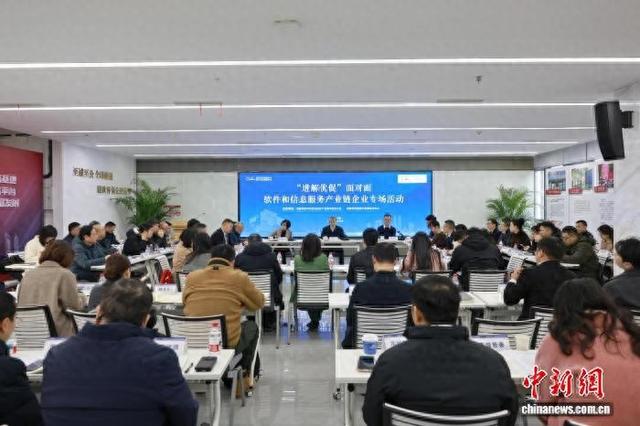
Core Viewpoint - The event "Jin Jie You Cu" focused on the software and information service industry in Chengdu, aimed at addressing operational challenges faced by enterprises through direct communication with government and industry representatives [1] Group 1: Event Overview - The event gathered over 40 key enterprises, universities, and industry associations in Chengdu's software and information service sector, along with representatives from 17 municipal departments and state-owned enterprises [1] - A total of over 30 issues raised by enterprises were collected, covering areas such as technology research and development, scenario implementation, supply-demand matching, and resource assurance [2] Group 2: Responses to Enterprise Needs - 18 of the issues raised received immediate responses during the event, while the remaining were recorded in a service ledger for the software and information service industry, with designated responsible units and deadlines for resolution [2] - Chengdu Dingqiao Communication Technology Co., Ltd. expressed the need for support in digital construction projects and local collaboration, as well as increased funding for technical research [2] Group 3: Support for Innovation and Technology - Chengdu's government officials indicated plans to enhance communication with local railway and transportation groups to facilitate collaboration on domestic systems like the open-source HarmonyOS [2] - Chengdu Softcom Power Information Technology Service Co., Ltd. requested support for testing autonomous vehicles, to which the Chengdu Public Security Traffic Management Bureau responded by working on management measures for low-speed autonomous vehicle testing [3] Group 4: Industry Foundation and Future Plans - Chengdu is recognized as one of the first comprehensive Chinese software cities, ranking 6th in the Ministry of Industry and Information Technology's 2023 evaluation, and is the top city in the central and western regions [5] - The city has over 1,600 software enterprises and has nurtured 16 leading companies, with 6 recognized as key software enterprises by the national government [5] - The Chengdu Economic and Information Bureau plans to continue hosting events to promote high-quality development in the software industry, emphasizing collaboration between government and enterprises [5]
启明信息:公司专注于汽车行业的IT解决方案
Zheng Quan Ri Bao Wang· 2026-01-22 11:16
Group 1 - The company focuses on IT solutions for the automotive industry and aims to seize development opportunities in the sector [1] - The company is committed to contributing to the development of the intelligent connected vehicle industry [1] - Investors are advised to monitor government bidding websites for information on the integrated construction of Changchun's vehicle-road-cloud system [1]

吉视传媒:中标长春智能网联汽车项目未触及披露标准
Jin Rong Jie· 2026-01-22 09:05
Core Viewpoint - The company, Jishi Media, has been questioned by investors regarding the delay in announcing its winning bid for the Changchun Car Road Cloud project, to which the company clarified that the project falls under routine business operations and does not meet the disclosure standards set by the Shanghai Stock Exchange [1] Group 1 - The company has won the bid for the Changchun City Intelligent Connected Vehicle "Car Road Cloud Integration" application pilot construction project [1] - The company stated that the project is related to its daily business operations [1] - The company emphasized that the project does not trigger the disclosure requirements outlined in the Shanghai Stock Exchange's listing rules [1]

摩尔线程发布业绩预告;三部门:创新企业CDR个税优惠延至2027年底……盘前重要消息还有这些
Zheng Quan Shi Bao· 2026-01-22 00:23
Group 1 - The Ministry of Finance and other departments announced a tax exemption for individual investors on capital gains from the transfer of CDRs issued by innovative enterprises from January 1, 2026, to December 31, 2027 [2] - The Guangdong Provincial Government issued policies to promote high-quality development in transportation through artificial intelligence, encouraging the application of smart connected vehicles and the establishment of autonomous driving regulatory platforms [3] - Shanghai Dream Information Technology Co., Ltd. (operating the "Pinduoduo" platform) was fined 100,000 yuan for failing to report tax-related information as required [3] Group 2 - Zhite New Materials may apply for a trading suspension if its stock price continues to rise abnormally [5] - Hunan Silver's future market price for silver products remains uncertain [5] - Moore Threads expects revenue of 1.45 to 1.52 billion yuan in 2025, with a narrowing net loss [5] - Shanghai Yizhong anticipates a net profit growth of 760.18% to 903.54% in 2025 [5] - Jin'an Guoji expects a net profit increase of 655.53% to 871.4% in 2025 [5] - Limin Co. forecasts a net profit growth of 471.55% to 514.57% in 2025 [6] - Baiao Intelligent expects a net profit increase of 228.34% to 337.79% in 2025 [6] - Dajin Heavy Industry anticipates a net profit growth of 121.58% to 153.23% in 2025 [6] - Juhua Co. expects a net profit growth of 80% to 101% in 2025 [6] - Ganli Pharmaceutical anticipates a net profit increase of 78.96% to 95.23% in 2025 [6]
量是压舱石 质是定盘星
Xin Lang Cai Jing· 2026-01-21 20:32
Core Insights - In 2025, China's automotive industry achieved remarkable results, with production and sales both exceeding 34 million units, and nearly half of new car sales being electric vehicles, indicating a significant transformation from quantity to quality [1][4] Group 1: Industry Performance - The automotive industry has maintained its position as the world's largest market for 17 consecutive years, supported by a robust market capacity that facilitates technological advancements and supply chain improvements [1][2] - The growth to 34 million units reflects the collaborative development of related industries and provides substantial employment, reinforcing China's status as a manufacturing powerhouse [1][2] Group 2: Quality and Innovation - The shift from quantity to quality is evident as the industry moves away from the perception of "domestic cars" being low-end, with advancements in core technologies such as materials science and software algorithms [1][2] - The automotive sector is experiencing a comprehensive quality enhancement, transitioning from a focus on mere product availability to prioritizing safety and performance in consumer decision-making [2][4] Group 3: Industry Ecosystem and Standards - China's automotive industry benefits from a complete and responsive supply chain system, with efficient collaborative networks established across various economic regions [2][3] - Recent industry regulations have aimed at curbing harmful practices like price wars and enhancing safety standards, contributing to a more mature industry environment [2][3] Group 4: Future Directions - The "14th Five-Year Plan" emphasizes smart and connected vehicles as a trillion-yuan consumption focus, reflecting higher expectations for industry quality [3][4] - The transition from a manufacturing powerhouse to a strong automotive nation is marked by a commitment to quality and innovation, which is essential for sustainable development and global competitiveness [4][5]