
标准化

Search documents
宗馥莉,放下了
创业家· 2025-10-12 10:07
Core Viewpoint - The article discusses the resignation of Kelly (Zong Fuli) from her positions at Wahaha, highlighting the internal and external challenges she faced during her tenure, including family conflicts and complex ownership structures [6][9][29]. Group 1: Resignation and Leadership Changes - Kelly Zong reformed the organizational structure internally and significantly altered the distributor system externally, dismissing underperforming distributors [5][6]. - Zong's resignation from key positions occurred after a little over a year in leadership, indicating a rapid rise and fall in power [6][10]. - Despite her efforts, Zong's leadership faced significant challenges from family disputes and complex ownership dynamics within Wahaha [9][10]. Group 2: Internal Reforms and Challenges - Zong initiated reforms focusing on standardization, process optimization, and digitalization, aiming to modernize Wahaha's operations [15][17]. - The reforms included new performance standards and financial approval processes, but the rapid implementation led to operational difficulties [17][18]. - Zong's approach to reform was met with resistance from long-standing employees loyal to the previous leadership style, complicating her efforts [16][19]. Group 3: Market Position and Performance - Wahaha experienced a 53% year-on-year increase in beverage sales revenue in 2024, marking the highest growth rate since its inception [9]. - Despite the strong sales performance, Zong's leadership was undermined by internal conflicts and external pressures, leading to her resignation [10][19]. - The competitive landscape for Wahaha remains challenging, with strong rivals like Nongfu Spring and Uni-President, and a lack of new blockbuster products in recent years [22][23]. Group 4: Family Dynamics and Ownership Issues - The ownership structure of Wahaha is complex, with significant stakes held by state-owned enterprises and family members, complicating Zong's authority [9][24]. - Family disputes over asset control and ownership rights have created additional pressure on Zong, impacting her leadership stability [9][24]. - The internal family dynamics and external market pressures contributed to Zong's urgency to prove her capabilities as a leader [20][23]. Group 5: Future Prospects - Following her resignation, Zong's core team, known as the Hongsheng system, is expected to continue operating, potentially launching new brands [26][27]. - The future direction of the Hongsheng system remains uncertain, but it may leverage its existing strengths to establish a new brand [27][28]. - Zong's leadership style and her approach to employee relations have garnered some positive sentiments, indicating her potential for future endeavors [28].


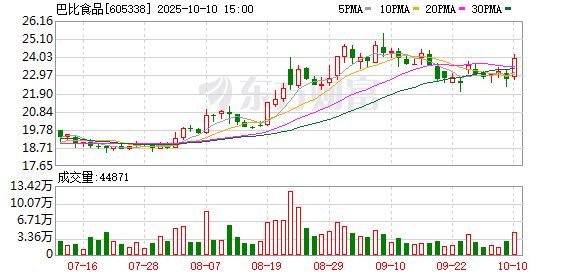
对话巴比食品创始人、董事长刘会平:以标准化破局早餐行业痛点
Zheng Quan Shi Bao Wang· 2025-10-12 06:46
Core Insights - The article highlights the journey of Baba Food from a small shop in Shanghai to a leading breakfast chain with nearly 6,000 stores and a market capitalization exceeding 5 billion yuan, emphasizing the founder's principles of "altruism" and "adaptability" as key drivers of success [2][3]. Company Development - Baba Food was founded in 2003 and went public in October 2020, showcasing its growth and industry value during the "14th Five-Year Plan" period [2]. - The company has maintained a steady expansion strategy, aiming to open 1,000 new stores annually while ensuring quality and supply chain capabilities are in place before launching new locations [4][5]. Business Strategy - The core strategy focuses on "fresh and delicious food," with a commitment to a 24-hour freshness process from ingredient sourcing to in-store preparation [4]. - Future expansion plans include a mix of small stores in first-tier cities and dining establishments in lower-tier markets, with a target of reaching 10,000 stores [5]. Mergers and Acquisitions - Baba Food has engaged in strategic acquisitions of brands like "Zheng Quan Wei," "Qing Lu," and "Hao Li Ke," focusing on supply chain empowerment and brand collaboration rather than merely increasing store numbers [6][7]. - The company aims to enhance the overall efficiency and competitiveness of the breakfast industry by addressing common issues such as food safety and operational efficiency through consolidation [6]. Shareholder Returns - Over the past five years, Baba Food has distributed a total of 476 million yuan in cash dividends and repurchased shares worth 119 million yuan, reflecting a commitment to shareholder value [8]. - The company plans to maintain a stable dividend policy and increase the dividend rate based on operational performance, with a projected dividend of 192 million yuan for 2024 [8]. Future Vision - Baba Food's long-term goal is to become a world-class restaurant and food industrial enterprise, focusing on innovation and digital transformation to enhance production efficiency [9]. - The company aims to act as a "integrator and promoter" within the industry, sharing best practices in food safety and efficiency to elevate the entire breakfast sector [9].

十分钟再谈预制菜出海:从肯德基、麦当劳,到中华美食的世界叙事
2 1 Shi Ji Jing Ji Bao Dao· 2025-10-12 02:50
Core Insights - The article discusses the global expansion of Chinese prepared dishes, likening it to the successful global presence of fast-food chains like McDonald's and KFC, emphasizing the importance of standardization and consumer expectations in this process [1][4][10]. Industry Overview - The Chinese prepared food industry has over 30 years of development, gaining momentum in recent years due to changing consumer demographics and preferences, particularly among younger and older populations [9]. - Companies like Hengxing Group and Guolian Foods are successfully exporting Chinese prepared dishes to markets in Europe, the Middle East, Australia, and New Zealand, showcasing the potential for Chinese cuisine on a global scale [9][10]. Consumer Behavior - The success of fast-food chains in China has shifted consumer expectations towards industrialized food services, where consistency and predictability are prioritized over traditional cooking methods [3][4]. - Consumers expect quick, clean, and nutritious meals from fast-food outlets, which contrasts with their expectations of freshly cooked meals in traditional Chinese restaurants [5][8]. Key Strategies for Global Expansion - The article identifies four key strategies for the global success of Chinese prepared dishes: localization, standardization, supply chain integration, and storytelling [11][12][13][14]. - Localization involves adapting dishes to suit local tastes, while standardization ensures consistent quality across different regions [12][13]. - Establishing local supply chains not only reduces costs but also facilitates cultural integration [14]. - Storytelling enhances the emotional connection consumers have with the food, making it more relatable and memorable [15]. Future Outlook - The article envisions a future where Chinese prepared dishes coexist with fast-food giants, contributing to a diverse global food ecosystem [16]. - It highlights the potential for shared factory models and efficient supply chains to facilitate the internationalization of Chinese cuisine [15][16]. - The cultural significance of food as a medium for soft power is emphasized, suggesting that Chinese prepared dishes can transcend borders and foster cultural understanding [17][18].
宗馥莉辞去娃哈哈集团董事长职务,结束1年多的掌舵期
Xin Lang Zheng Quan· 2025-10-11 09:17
Resignation Confirmation - Zong Fuli officially resigned from her positions as legal representative, director, and chairman of Wahaha Group on September 12, 2025, after serving for 1 year and 14 days [1][2] - The resignation was confirmed by Wahaha Group's public relations department and has been approved by the board of directors [2][3] Resignation Background - During her tenure, Zong Fuli implemented significant reforms, including internal organizational restructuring and external changes to the distributor system, focusing on standardization, process optimization, and digitization [4] - Family complexities, particularly a dispute over a $2.1 billion offshore trust involving Zong Fuli and her siblings, were also cited as influencing factors for her resignation [5] Performance - Zong Fuli's resignation occurred amidst strong company performance, with Wahaha's beverage sales net income increasing by 53% year-on-year in 2024, marking the highest growth rate since the company's inception [6] - As of her resignation, Wahaha maintained the number one market share in its traditional segments of dairy beverages and instant porridge [7] Future Direction - Despite resigning from management roles, Zong Fuli remains a significant shareholder in Wahaha Group, with the ownership structure unchanged [8] - Following her resignation, Zong Fuli plans to focus on her brand "Wawa Xiaozong" and has transferred some resources from Wahaha to her wholly-owned Hongsheng Group [9][10]
湖北省襄阳市襄州区标准引领产业集群提质增效
Zhong Guo Zhi Liang Xin Wen Wang· 2025-10-10 09:01
Group 1 - Hubei Province's Xiangyang City is promoting standardized integration and technological innovation to enhance industrial stability, lead rural revitalization, and upgrade government services, emphasizing the role of standardization in high-quality economic development [1] - Key enterprises in regional pillar industries have actively participated in the formulation and revision of 56 national, industry, and local standards, enhancing their technological innovation capabilities and market competitiveness [1] - Notable companies like Jihua 3542 Textile Co., Ltd. have led the participation in 48 standard revisions, while Xiangyang Guotie Electromechanical and Jiuyang Waterproof Technology have contributed to significant industry standards [1] Group 2 - The "Hundred Cadres Entering Hundred Enterprises" initiative has facilitated the establishment of two provincial local standards for geographical indication products, promoting local industry development and rural revitalization [2] - The district government has provided financial incentives for enterprises participating in standard formulation, with Jihua 3542 Textile Co., Ltd. receiving a reward of 1 million yuan for its involvement in five industry standards [3] - The region has successfully applied for three national-level and four provincial-level standardization pilot projects, enhancing the quality and value of products across various industries [4] Group 3 - The implementation of benchmarking actions has led to significant improvements in product quality and standards, with Jihua 3542 Textile Co., Ltd. achieving international standard compliance and contributing to eight industry standards that fill domestic gaps [5] - Key products from companies like Jiuyang Waterproof, Yingle Sanitary Products, and Guxiangyang Liquor have surpassed national mandatory standards, enhancing overall product quality and market competitiveness [6]
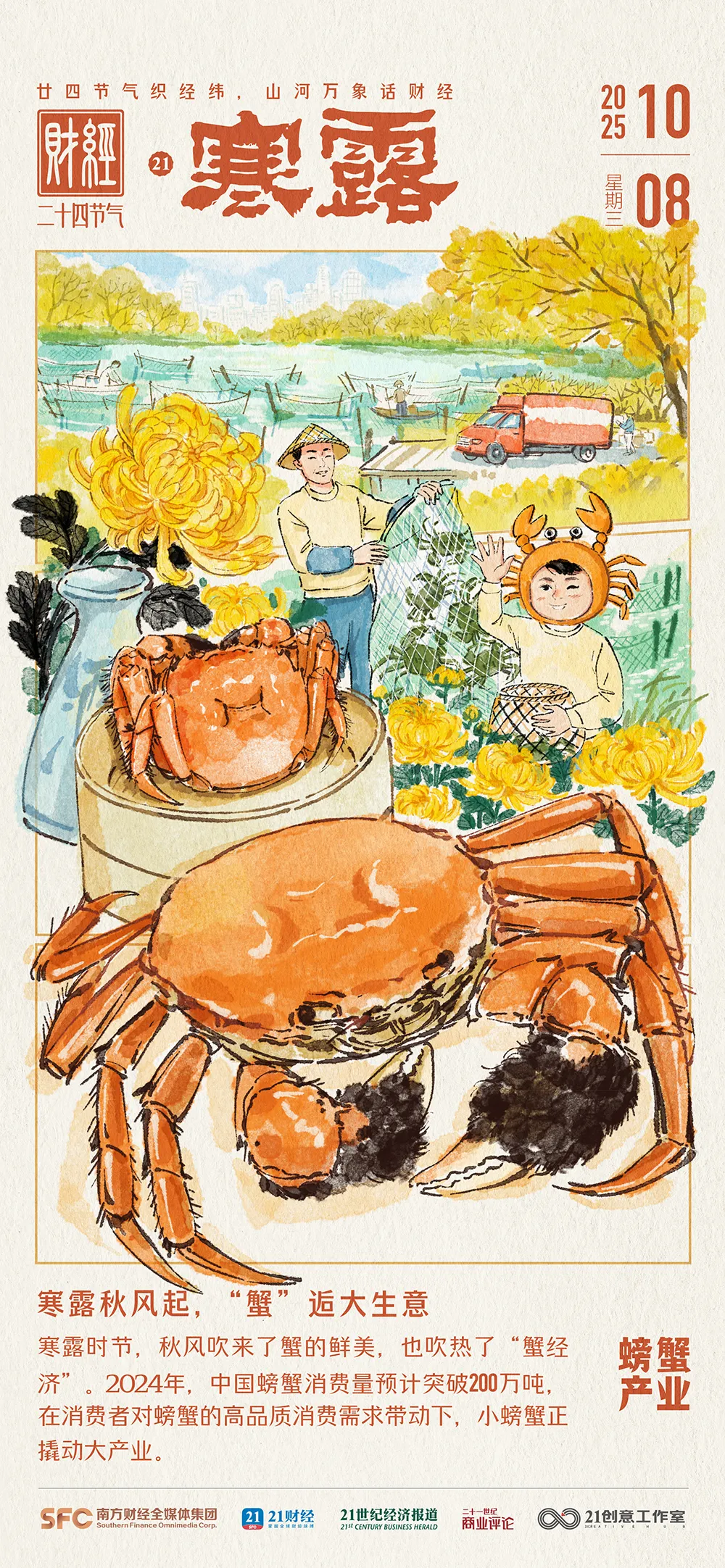
寒露 秋风起,舌尖上的“蟹经济”有多香?
2 1 Shi Ji Jing Ji Bao Dao· 2025-10-08 22:45
Core Viewpoint - The Chinese crab market is experiencing significant growth, driven by increasing consumer demand for quality and standards, with a projected consumption of over 200 million tons and a market size of approximately $17.4 billion in 2024 [3][6]. Group 1: Market Trends - The consumption of crabs in China is expected to exceed 200 million tons in 2024, with a market value of $17.4 billion [3]. - The trend towards brand standardization and high-end products is evident, particularly with the Yangcheng Lake hairy crabs, which have achieved national geographical indication protection and established industry standards [6]. - The sales of hairy crabs are projected to grow by 214% year-on-year in 2024 [6]. Group 2: Import Dynamics - China is not only a major producer of crabs but also a significant importer, with crab imports reaching 133,000 tons valued at $2.1 billion in 2024 [8]. - The import of crabs from Russia has seen substantial growth, with the import value increasing from $430 million in 2020 to $1.23 billion in 2024, reflecting an annual growth rate of 29.8% [8][11]. - Live crabs dominate the import market, accounting for approximately 90% of the total import value, indicating a strong consumer preference for freshness [11]. Group 3: Industry Upgrades - The domestic crab industry is undergoing expansion and modernization, with annual crab catch exceeding 600,000 tons from 2019 to 2023 [12]. - Technological advancements in crab farming, such as the use of drones and IoT for monitoring and controlling farming conditions, are enhancing production efficiency [12]. - Innovative crab farming practices are emerging in non-traditional regions, leveraging local resources to create unique crab brands [12]. Group 4: Logistics and Distribution - Logistics companies are enhancing their capabilities to ensure rapid delivery of crabs to consumers, utilizing temperature-controlled transport and real-time tracking technologies [12].
2025年酒店餐饮标杆企业组织效能报告
Sou Hu Cai Jing· 2025-10-04 09:35
Core Insights - The report highlights the transformation of the hotel and catering industry under new social security regulations, emphasizing the pressure on leading companies and the importance of chain operations and cost reduction [1][5]. Macroeconomic Analysis - Global economic growth is slightly slowing, with a projected GDP growth of 3.9% in 2024 and a continued but decelerated growth in 2025. China's GDP is expected to grow by 4.8% in 2025, but there remains a significant gap in per capita GDP compared to the U.S. [1][19]. - The 2024 salary growth in China is forecasted to be the lowest in 47 years, leading to more rational consumer spending, particularly affecting non-essential goods [1][19]. Industry Scale and Competitive Landscape - The hotel and catering industry is a vital part of the economy, employing 34.35 million people in 2024, which is 4.64% of the total national employment [2]. - The catering market is projected to reach a total revenue of 55,718 billion yuan in 2024, with a year-on-year growth of 5.3%. The Chinese-style dining market is expected to exceed 1.1 trillion yuan by 2025 [2]. - The industry is experiencing a shift from high to low average spending per customer due to oversupply, with 3.574 million new businesses registered in 2024 [2]. Hotel Industry Insights - The domestic travel and total spending significantly increased in 2024, boosting the accommodation sector. By the end of 2024, there were 570,104 accommodation facilities in China, with a total of 19.2776 million rooms [3]. - The hotel industry retail scale reached 457 billion yuan in 2024, showing an 8% year-on-year growth, although average room prices have decreased significantly [3]. Organizational Efficiency - Benchmark companies saw a revenue increase of 6.1% in 2024, but net profits plummeted by 9.7%, indicating a common trend of revenue growth without profit increase due to rigid costs [4]. - The average labor cost ratio is 28.9%, with rising costs impacting profitability across the industry. Six out of ten benchmark companies reported negative growth in gross and net profit margins [4]. Future Development Trends - The industry is expected to see three major trends: increased operational scale and standardization, brand consolidation and optimization, and changes in cost structure through digital tools and flexible labor models [5]. - The report serves as a reference for industry players to understand their operational efficiency and develop strategies for transformation and sustainable growth in a complex economic environment [5].

【宝鸡】标准化咨询库组建成立
Shan Xi Ri Bao· 2025-09-25 23:06
Core Viewpoint - The establishment of the Baoji Standardization Consulting Database aims to enhance the standardization talent pool and support high-quality economic and social development in Baoji City, in line with national standards and quality improvement initiatives [1] Group 1: Establishment and Purpose - The Baoji Standardization Consulting Database has been formed after extensive promotion, qualification review, and public announcement, with an initial group of 55 experts from various fields [1] - The initiative is intended to implement the "National Standardization Development Outline" and the "Quality Strong Nation Construction Outline," emphasizing the foundational and leading role of standardization in modernizing national governance [1] Group 2: Expert Composition and Roles - Members of the consulting database come from industry authorities, research institutions, universities, social organizations, and enterprises, covering multiple sectors including industry, agriculture, and services [1] - Selected experts possess deep professional knowledge, rich practical experience, and significant industry influence, contributing to standard formulation, pilot projects, standard reviews, and the application of scientific achievements [1]
绿岛风发布行业首部酒店客房新风白皮书
Zheng Quan Ri Bao Zhi Sheng· 2025-09-22 10:44
Core Insights - The release of the "White Paper on the Application and Development of Fresh Air Systems in Hotel Rooms" marks a significant milestone in the hotel industry, focusing on improving air quality and addressing traditional ventilation system challenges [1][2] Group 1: Industry Challenges and Opportunities - Traditional ventilation systems in hotels face issues such as high energy consumption and unstable performance, which impact guest experience [1] - Experts discussed the importance of fresh air systems for energy saving and carbon reduction in hotels, highlighting new opportunities for the industry [1] - The integration of fresh air systems into hotel design can enhance aesthetic appeal and pricing potential, as noted by industry leaders [1] Group 2: Practical Applications and Case Studies - A case study on the renovation of the Atour Hotel in Chaoyang Park demonstrated significant improvements in air quality metrics like PM2.5 and CO2 levels, leading to increased guest satisfaction and potential for premium pricing [1] - The company aims to provide replicable experiences for the industry through the insights shared in the white paper [1] Group 3: Company Positioning and Future Directions - The company has transitioned from being a mere equipment supplier to an "air quality solution partner," offering comprehensive services to assist hotels in overcoming fresh air system challenges [2] - The release of the white paper signifies a new phase of systematic and standardized air quality management in the Chinese hotel industry, with a commitment to high-quality development through technology and service collaboration [2]

百元餐饮品牌的悲歌
Hu Xiu· 2025-09-21 06:33
Core Viewpoint - The recent incidents involving Yunhaiyao and Xibei highlight the challenges faced by mid-range dining chains in China, indicating that these brands are at a critical crossroads in their business trajectories [2][30]. Group 1: Company Challenges - Both Yunhaiyao and Xibei have faced significant public relations crises, with Xibei's founder struggling to respond effectively to criticism and Yunhaiyao involved in a serious food safety incident in Singapore [2][3]. - The dining industry has seen a decline in customer traffic, with Xibei experiencing reduced footfall despite remaining open [2][9]. - The profitability of the restaurant sector has sharply declined, with Beijing's large-scale dining industry reporting a profit drop of 88.8% in the first half of 2024, leading to a profit margin of only 0.37% [11][12]. Group 2: Economic Context - The dining sector, particularly mid-range brands, thrived during economic upturns but is now facing a downturn, with consumers tightening their spending [8][30]. - The average consumer now perceives 100 yuan as more valuable than before, leading to higher expectations for value and experience from dining establishments [20][30]. Group 3: Standardization and Central Kitchen - Standardization in Chinese cuisine is challenging, and while central kitchens were initially seen as burdensome, they have become necessary for cost reduction and efficiency as brands scale [4][13]. - Both Yunhaiyao and Xibei have invested in central kitchens to maintain consistency and reduce operational costs, but this has led to a compromise in food quality and customer satisfaction [15][16]. Group 4: Market Position and Future Prospects - The number of operational stores for Yunhaiyao has stagnated, remaining at around 150 over several years, indicating a lack of growth [22][24]. - There are discussions about international expansion as a potential solution for these brands, but past experiences, such as Yunhaiyao's challenges in Singapore, suggest that the risks may outweigh the benefits [25][26][27].