超额收益

Search documents
中泰资管天团 | 胡达:低利率时代,固收投资如何挖掘超额收益?
中泰证券资管· 2025-07-10 08:19
Core Viewpoint - The bond market remains strong, but the low interest rate environment poses challenges for achieving expected returns, making investment increasingly difficult [2][3]. Group 1: Market Trends - The bond market has not yet reached a turning point for long-term low interest rates, with no significant breakthroughs in rates observed as of June 2025 [2]. - The market consensus indicates limited further downward movement in interest rates in the short term, despite fluctuations [2]. - The investment strategies for 2023 focus on credit bonds and city investment bonds, while 2024 will see a shift towards long-duration government bonds [3]. Group 2: Investment Strategies - The primary strategy for the second half of the year is to seek stability in a high-probability, low-odds environment, with limited room for further rate declines [5]. - Risk management is crucial, and strategies such as yield curve compression and bond switching can provide stable returns [5]. - Expanding into "fixed income plus" products, including convertible bonds, is recommended for achieving excess returns [5][6]. Group 3: Asset Performance - The convertible bond market has seen a decrease in total issuance, reflecting both improved credit risk and challenges in attracting new capital [6]. - Other fixed income-like assets, such as REITs and high-dividend stocks, have performed well, with the CSI REITs total return index rising by 14.51% and the CITIC Bank index increasing by 15.03% as of June 2025 [6][7]. - Incorporating quantitative strategies and diversifying income sources can enhance returns in the current low-interest environment [7]. Group 4: Future Outlook - The evolving landscape of the low-interest rate environment requires fixed income managers to adapt and expand their investment strategies to provide stable returns [7]. - The mission for fixed income managers is to continuously broaden their capabilities to meet investor needs in this new era [7].


中证2000增强ETF上半年涨超29%同类第一! 小微盘风格能否持续?
Jin Rong Jie· 2025-07-02 01:30
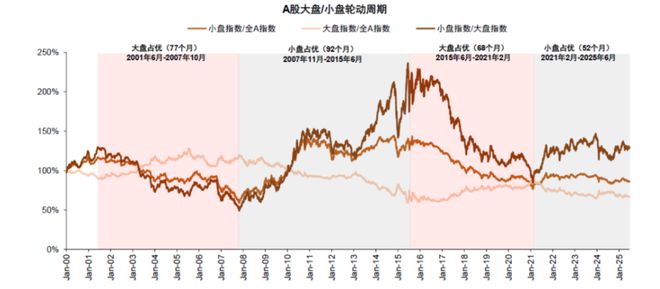
Core Viewpoint - The small-cap style continues to show strength in the market, with the CSI 2000 Enhanced ETF (159552) and the 1000 ETF Enhanced (159680) both reaching new highs since their listing, driven by macroeconomic trends and industry upgrades [1][2][5]. Group 1: Small-Cap Style Performance - The CSI 2000 Enhanced ETF (159552) achieved a net value growth rate of 29.18% in the first half of the year, ranking first among broad-based ETFs, with an excess return of nearly 14% [1]. - The small-cap index turnover rate was 2.1% as of June 27, indicating a relatively high trading congestion level, while the small-cap to large-cap index turnover ratio was approximately 4.1 times, close to historical averages [5]. - The current price-to-earnings (P/E) ratio of the small-cap index to the large-cap index is 2.2 times, positioned at the 72.5% percentile since 2015, suggesting a favorable valuation environment for small-cap stocks [5]. Group 2: Macroeconomic and Industry Trends - The macroeconomic direction and industry upgrade trends are key signals for the rotation between small and large-cap stocks, with small-cap stocks showing relative advantages during periods of technological innovation and policy encouragement [2][4]. - The ongoing favorable environment for small-cap stocks is supported by the thriving sectors of AI and semiconductors, as well as continued policy support for the development of new productive forces [5]. Group 3: Enhanced ETF Performance - The CSI 2000 Enhanced ETF (159552) has consistently delivered excess returns since its establishment on June 29, 2024, with each quarter showing excess returns exceeding 6% in the first two quarters of this year [6]. - The 1000 ETF Enhanced (159680) has also demonstrated significant enhancement effects, achieving a cumulative excess return of 33.10% since its inception on November 18, 2022, with an annualized excess return of 11.88% [9][11]. - Both enhanced ETFs have shown strong adaptability to different market conditions, capturing excess returns during both downward trends and upward surges [8][11].
公募新规下,主动权益基金如何应对?
2025-06-30 01:02
Summary of Conference Call Notes Industry Overview - The conference call discusses the domestic public equity fund industry in China, focusing on the performance and management of actively managed equity funds under new regulatory guidelines [1][4][5]. Key Points and Arguments 1. **Performance Issues of Active Equity Funds** - Active equity funds have high annualized tracking error, with a median range of 10% to 15%, indicating poor stability [1][5]. - As of the end of 2024 and May 2025, the proportion of fund managers underperforming their benchmarks by 10% over three years is 66% and 54%, respectively, leading to significant risks of performance-related pay declines [1][5]. 2. **Mismatch in Investment Style** - The underperformance of active equity funds is attributed to a mismatch between market preferences for dividend value and the growth-oriented focus of active management [1][8]. - Long-term, the differences in excess returns due to style deviations are diminishing [10]. 3. **Need for Benchmark Adjustment** - Fund managers are encouraged to adjust performance benchmarks to better align with fund characteristics, such as changing from the CSI 300 to a growth index, which could significantly reduce portfolio deviation and enhance performance stability [1][11]. 4. **Regulatory Emphasis on Performance Benchmarks** - The China Securities Regulatory Commission (CSRC) emphasizes the importance of performance benchmarks in its action plan for high-quality development of public funds, including guidelines for setting, modifying, and disclosing benchmarks [3]. 5. **Current Benchmarking Practices** - The current benchmarking practices in the domestic public equity fund industry are criticized for being overly concentrated on the CSI 300 and CSI 800 indices, which fails to effectively differentiate product tracks [1][4][7]. 6. **Strategies for Improving Tracking Accuracy** - Two main strategies are proposed to address the poor tracking of benchmarks: adjusting performance benchmarks to reflect actual investment strategies and optimizing portfolio management to better track established benchmarks [6][13]. 7. **Impact of Market Conditions on Performance** - The performance of active equity funds is highly variable, performing well in bull markets but lagging significantly in bear markets [5][8]. - Style deviations may yield short-term excess returns but can lead to increased risks and potential losses in bear markets [9][10]. 8. **Optimizing Fund Management Approaches** - Fund managers can enhance performance by combining active management with index tracking, which has shown better results in terms of excess return probability and annualized returns [2][12][15]. - Specific optimization methods include constraining industry and market capitalization deviations and selecting optimal stock weights [13][15]. Other Important Content - The call highlights the need for a more nuanced understanding of performance benchmarks and their implications for fund management and investor outcomes [4][12]. - The discussion also touches on the importance of aligning fund strategies with market conditions and investor expectations to improve overall fund performance [16].
八成胜率,当被动投资装上主动引擎,指增ETF正在焕发第二春
市值风云· 2025-06-24 10:17
Core Viewpoint - The traditional divide between ETFs and actively managed funds is being disrupted by the emergence of enhanced index ETFs, which combine the advantages of both product types [2][23]. Group 1: Enhanced Index ETFs Overview - Enhanced index ETFs track indices but allow fund managers to adjust the composition and weight of the underlying stocks to achieve outperformance [2]. - Since the launch of the first enhanced index ETF in December 2021, the product has rapidly expanded, with 35 such ETFs in the A-share market by May 2025, totaling a scale of 6.72 billion [2]. - In the U.S., actively managed ETFs reached a size of 857.9 billion, accounting for 8.1% of the total ETF market, indicating significant growth potential for enhanced index ETFs [2]. Group 2: Performance of Enhanced Index ETFs - Among 19 enhanced index ETFs analyzed, 16 have generated excess returns, with the 500 Enhanced ETF leading at 6.1% [4]. - The 500 Enhanced ETF (561550.SH) and the China Securities 500 Enhanced ETF (563030.SH) have both achieved over 5% excess returns this year [4][6]. - The top ten holdings of the China Securities 500 Enhanced ETF have an average increase of 8.3%, with notable performers like Chifeng Jilong Gold Mining rising 73% this year [6][7]. Group 3: Market Trends and Future Prospects - The small-cap enhanced index ETFs, such as the China Securities 2000 Enhanced ETF, have shown explosive growth, with a year-to-date increase of over 20% and a 328.7% rise in scale [9]. - The development of enhanced index ETFs is driven by both policy and technological advancements, with new regulations promoting the growth of index-based investments [10]. - Fund companies are increasingly adopting AI-driven models to enhance investment strategies, moving from traditional multi-factor approaches to machine learning [11]. Group 4: Investment Strategies and Considerations - Investors are advised to adopt a core-satellite strategy, using broad-based enhanced index ETFs as the core of their portfolio while allocating to sector-specific or style-specific ETFs for additional exposure [14]. - The enhanced index ETFs focused on technology, such as the Sci-Tech 50 Enhanced ETF, offer significant policy benefits but require careful consideration of industry cycles [15][19]. - The Sci-Tech index has shown high elasticity, with a beta of 1.18 and a cumulative increase of 17.2% since its base date, indicating its potential for capturing innovation opportunities [16][19].


创金合信基金董梁:指数增强基金获更多关注 看好恒生科技、红利、科创板综合指数的布局机会
Xin Lang Ji Jin· 2025-06-23 07:26
Group 1 - The number of newly established index-enhanced funds has reached 76 this year, surpassing the total for the previous year, indicating a growing trend in index-based investment [1] - The increase in public funds' interest in index-enhanced funds is attributed to three main reasons: disillusionment with star fund managers, attractive new indices launched by index companies, and regulatory encouragement for index-based investments [1][2] - Leading fund sales platforms are focusing on index-enhanced funds due to their potential to outperform benchmark indices, reflecting a shift towards mainstream index-based investment strategies [1][2] Group 2 - Small-cap index-enhanced funds have shown impressive performance this year, with indices like the CSI 1000 and CSI 2000 outperforming large-cap indices such as the CSI 300, making it easier to achieve excess returns [2] - Excess returns from index-enhanced funds primarily come from stock selection models that overweight and underweight index constituents, as well as capturing short-term market styles [2] - Challenges for index-enhanced funds include strategy crowding due to the expansion of these products and frequent market style shifts, which may dilute excess returns [2] Group 3 - Current investment opportunities are seen in the Hang Seng Tech Index, Dividend Index, and the Sci-Tech Innovation Board Composite Index, as Chinese assets are perceived to be undervalued compared to global markets [3] - The Hang Seng Tech Index includes core assets from China's technology and internet sectors, which are significantly undervalued compared to the Nasdaq Index, presenting a potential for substantial gains upon valuation re-rating [3] - The Dividend Index has shown strong long-term performance with an annualized return of around 14% since 2014, benefiting from the current low-interest-rate environment [3] - Investment in the Sci-Tech Innovation Board Composite Index is considered valuable due to its broad coverage and representation in the technology sector, which is expected to be a key investment theme in the coming years [3]
不出手的耐心!姜诚最近交流细剖超额收益的来源……
聪明投资者· 2025-06-23 06:34
Core Viewpoint - The core competency of value investors often lies in patience, particularly the patience to refrain from making impulsive decisions [18][19]. Group 1: Performance and Strategy - The performance of the managed products has been relatively stable, with several funds outperforming the market despite a lackluster overall performance in 2023 [2][3]. - The top holdings remain consistent, primarily in traditional sectors such as banking, chemicals, construction, and real estate, with a significant portion of the portfolio allocated to these industries [2][3]. - The long-term annualized return of the flagship product managed since December 2018 exceeds 16% [4]. Group 2: Investment Philosophy - The source of excess returns is attributed to a combination of establishing a forward-looking advantage in information, deeper analysis, and different perspectives [8]. - The investment approach emphasizes acquiring high-quality assets at low prices, which is more feasible when the majority do not share the same valuation standards [5][6]. - The belief that good stocks and returns are achieved through endurance and patience is a recurring theme [20]. Group 3: Market Insights - The current market environment has seen prolonged low performance in cyclical industries, which has exceeded most investors' expectations [10]. - The concept of "this time is different" is highlighted as a cautionary note, indicating that prolonged low performance can delay cash returns and diminish value over time [11]. - The outlook for the real estate sector suggests that risks may not be fully cleared, with a preference for a cautious approach until 2025 [13]. Group 4: Sector Analysis - In the banking sector, while the long-term contraction of interest margins is not yet over, the current pricing remains acceptable based on long-term perspectives [14][15]. - The construction industry has shown signs of cash flow improvement, aligning with expectations, which reduces concerns [15]. - The chemical sector faces challenges with many companies operating at a loss, yet some are still managing to generate profits through cost-cutting measures [15]. Group 5: Emerging Trends - The development of AI is viewed as an irreversible trend, although its immediate impact may be overestimated [16]. - The investment strategy involves a cautious approach to emerging sectors, emphasizing the need for thorough research and understanding of price dynamics [22].
基金经理请回答 | 对话姜诚:价值投资的超额收益,究竟源自什么?
中泰证券资管· 2025-06-19 10:13
Core Viewpoint - The discussion emphasizes the balance between idealism and realism in investment management, highlighting that achieving ideal outcomes requires addressing real-world challenges [4][5][6]. Group 1: Investment Philosophy - The investment philosophy is rooted in value investing, aiming to help more people achieve financial success through this approach [7]. - The gap between ideal and reality is acknowledged, with the understanding that while ideals may be distant, practical solutions must be found to bridge this gap [5][6]. - The focus is on making ideals a reality rather than allowing them to remain unattainable [6]. Group 2: Performance Evaluation - Performance evaluation is not solely based on quantitative metrics like net asset value growth but also includes client experience and satisfaction [7][10]. - The goal is to increase the proportion of clients who earn money, with ongoing exploration of what constitutes "doing well" in investment management [7][10]. - The anxiety regarding future performance and client trust is acknowledged, emphasizing the need for consistent results to build and maintain trust [9][10]. Group 3: Market Perspective - The discussion includes insights on the banking sector, particularly regarding interest margins, which have been narrowing but may experience short-term recovery due to recent changes in deposit interest rates [31][32]. - The investment strategy for banking stocks is based on a long-term perspective rather than short-term trends, with a focus on acceptable pricing despite ongoing challenges [32][33]. Group 4: Decision-Making Process - The decision-making process for investments is described as an intersection of price and understanding, where both elements must align for a purchase to be justified [26][28]. - The importance of thorough research and understanding of market conditions is emphasized, particularly in relation to emerging sectors like new consumption and innovative pharmaceuticals [26][28]. Group 5: Strategy and Individuality - Investment strategies are not ranked as better or worse; rather, their effectiveness depends on the individual investor's characteristics and goals [17][18]. - The alignment between a fund manager's strategy and their personal attributes is crucial for achieving successful outcomes [19][20].

做显而易见的事,赚不到超额收益!霍华德·马克斯最新谈:投资的反人性智慧
聪明投资者· 2025-06-16 06:54
Core Viewpoint - The essence of successful investing lies in identifying companies with sustainable growth and ensuring that borrowed funds are lent to those capable of repayment [3][53]. Group 1: Investment Philosophy - Howard Marks emphasizes that outstanding investors remain emotionally stable and are not swayed by market noise [4][33]. - He highlights the difficulty of investing, stating that if emotions drive decisions, it becomes even harder to succeed [5][72]. - The current market environment is characterized by high valuations, with the S&P 500's expected P/E ratio around 22, above the historical average of 16 [7][10]. Group 2: Market Conditions - Marks categorizes market states into three: expensive, cheap, and reasonable, suggesting that if valuations are merely reasonable, no action is typically warranted [11][12]. - He warns against excessive trading and emphasizes the importance of staying invested over time rather than attempting to time the market [13][42]. Group 3: Emotional Stability - Successful investors share a common trait of emotional stability, which allows them to make rational decisions during market extremes [33][72]. - Marks advises that the best buying opportunities often arise during economic downturns when fear prevails, yet most investors are reluctant to buy at such times [27][30]. Group 4: Long-term Perspective - Marks argues for a longer investment horizon, suggesting that many investors would benefit from extending their holding periods to ride out market fluctuations [35][42]. - He believes that the key to investment success is to focus on fundamental analysis rather than short-term market movements [51][52]. Group 5: Risk Management - Understanding and accepting risk is crucial for achieving higher returns, as higher potential returns come with increased uncertainty [72][78]. - Marks stresses that risk should be assessed based on thorough understanding and judgment, rather than blind speculation [80][87]. Group 6: Identifying Opportunities - True excess returns are unlikely to come from obvious opportunities; instead, investors should seek undervalued or overlooked assets [91][92]. - Marks emphasizes the importance of independent thinking and the ability to identify when the market consensus is incorrect [98][101].

公募竞逐指数增强赛道 年内新成立产品数量同比增长438%
Zheng Quan Ri Bao· 2025-06-15 16:19
Core Viewpoint - The rapid growth of index-enhanced funds in China is driven by policy support, increased investor demand, and the unique advantages of these funds, with a significant rise in the number of new products and total fundraising amounts in 2023 [1][3]. Group 1: Growth of Index-Enhanced Funds - As of June 15, 2023, 70 new index-enhanced funds were established, marking a year-on-year increase of approximately 438%, with total fundraising exceeding 35.8 billion yuan [1][2]. - The number of index-enhanced funds established in 2023 is the highest in recent years, surpassing previous years' totals [2]. Group 2: Factors Driving Growth - Multiple factors contribute to the rapid development of index-enhanced funds, including policy guidance, regulatory mechanisms, and a structural shift in investor demand towards transparent and excess return products [3]. - Index-enhanced funds are positioned between passive index funds and traditional active funds, with a focus on achieving stable excess returns [3]. Group 3: Market Composition and Trends - There are currently 366 index-enhanced funds in the market, with over 60% focusing on broad-based indices such as the CSI 500 and CSI A500 [3][4]. - The CSI A500 index has seen a significant increase in the number of index-enhanced funds, with 38 out of the 70 new funds established in 2023 being CSI A500 index-enhanced funds [3]. Group 4: Investment Strategies and Future Outlook - Fund managers are increasingly adopting quantitative strategies to achieve stable excess returns, which is seen as a key path for both large and small public fund institutions [5]. - The future of index-enhanced funds is expected to become a crucial business segment for public fund institutions, potentially becoming a decisive factor in their core competitiveness [5][6].
投资大家谈 | 姜诚:用现实主义的方法,实现理想主义的目标
点拾投资· 2025-06-13 04:58
Core Viewpoint - Value investing is applicable in the A-share market, as long as there are transparent prices and assessable values for assets [1][2]. Group 1: Concerns about Value Investing - The anxiety surrounding the application of value investing stems from concerns about its ability to outperform the market and whether investors will trust active management again [2][3]. - It is a misconception that all investors can achieve excess returns; the total returns of all investors equal the market returns minus transaction costs [2]. - The rise of index funds is a result of diminishing excess returns rather than the disappearance of excess returns [2]. Group 2: Opportunities for Excess Returns - The ability to achieve excess returns is influenced by the similarity of investment strategies among investors and the differences in their investment capabilities [3]. - A-share market still presents opportunities for excess returns, as not all investors have the same capabilities [3]. Group 3: Building Trust with Investors - Gaining trust from investors is more challenging than outperforming the market; communication during downturns is crucial [4]. - The key to regaining trust lies in aligning the returns of investors with the net asset value of the fund [3][4]. Group 4: Managing Volatility - Many investors lack the patience for long-term holding and tend to trade too frequently, which harms their returns [5]. - Research indicates that funds with lower volatility tend to have better performance and lower chances of loss for investors [5]. - The challenge is to find ways to reduce volatility without sacrificing returns, which varies for each fund manager [5]. Group 5: Realism in Investment Strategy - Fund managers often exhibit idealistic views that may not align with reality, leading to flawed logic in their investment narratives [6]. - A balanced approach that combines realistic methods with idealistic goals is essential for successful value investing [7].