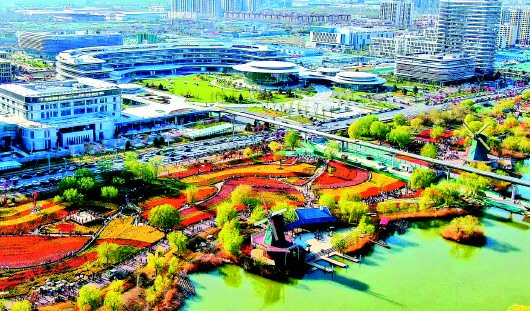
产业升级

Search documents
滨州经济技术开发区绘就 “科创经开” 新图景
Qi Lu Wan Bao· 2025-12-25 23:55
Group 1 - The core viewpoint emphasizes the importance of high-level innovation platforms in driving technological advancements and industrial upgrades in the Binzhou Economic and Technological Development Zone [1][9] - The development zone is focusing on building a comprehensive innovation system that includes high-level talent, integrated production clusters, and a high-quality innovation ecosystem [1] - The zone is actively promoting the construction of five key areas and leveraging existing industrial foundations to attract investments in specialized industries such as new energy vehicle components, aerospace, and biomedicine [1][2] Group 2 - Binzhou has established the largest aluminum industry cluster globally, with the development zone serving as a key area for high-end aluminum and equipment manufacturing [2] - The establishment of the Shandong Province Advanced Manufacturing Laboratory for aluminum industry marks a significant milestone in technological innovation and green development [2] - The zone has also seen the approval of several key laboratories and engineering centers, enhancing its research capabilities in advanced manufacturing [2] Group 3 - The development zone is committed to supporting the growth of technology-based enterprises by facilitating project approvals and funding applications, with over 2 million yuan allocated for various projects [3] - It has initiated a technology and finance service program to alleviate financing challenges for small and medium-sized tech enterprises, with expected loan amounts reaching 64 million yuan [3] - The zone is also focused on building innovation platforms and guiding enterprises in applying for key laboratory constructions [3] Group 4 - The industrial upgrade is seen as a backbone for high-quality development, with a focus on smart manufacturing and technological transformation [4] - The development zone has cultivated a modern industrial system centered on high-end aluminum and automotive components, alongside emerging industries like aerospace and new energy [4] - The success of Dyson Wheel Technology Co., which has implemented numerous smart upgrades, exemplifies the positive impact of technological innovation on production efficiency [4][5] Group 5 - The introduction of advanced robotic systems in manufacturing processes has significantly improved efficiency and product quality while reducing waste and costs [5][6] - The company has developed lightweight aluminum wheels through innovative design and advanced manufacturing techniques, enhancing performance and meeting industry demands [6] - Dyson Wheel Technology has received multiple accolades for its technological advancements and product quality, establishing itself as a leader in the industry [6][7] Group 6 - The development zone is recognized for its exemplary smart manufacturing practices, with several projects and companies being acknowledged as provincial champions [7] - The zone plans to implement numerous technical transformation projects and enhance the integration of artificial intelligence with manufacturing processes [7] - The focus on cultivating high-quality projects and expanding the influence of smart manufacturing is expected to drive further industrial advancements [7] Group 7 - The integration of industry, academia, and research is crucial for transforming technological innovations into productive forces, fostering a cycle of innovation and industrial development [8] - Successful projects in aluminum-based composite materials and semiconductor materials highlight the effectiveness of this collaborative approach [8] - The development zone aims to create a conducive environment for talent development, technology research, and the commercialization of innovations [8] Group 8 - The Binzhou Economic and Technological Development Zone is positioned to continue its growth trajectory by leveraging innovation and industrial integration [9][10] - The zone's achievements in securing funding and project approvals underscore its leadership in technological advancement and industrial transformation [9][10] - Future initiatives will focus on deepening the integration of technological innovation with industrial upgrades to enhance productivity and economic growth [9][10]
电力赋能菌菇飘香“鲜”上市
Xin Lang Cai Jing· 2025-12-25 23:32
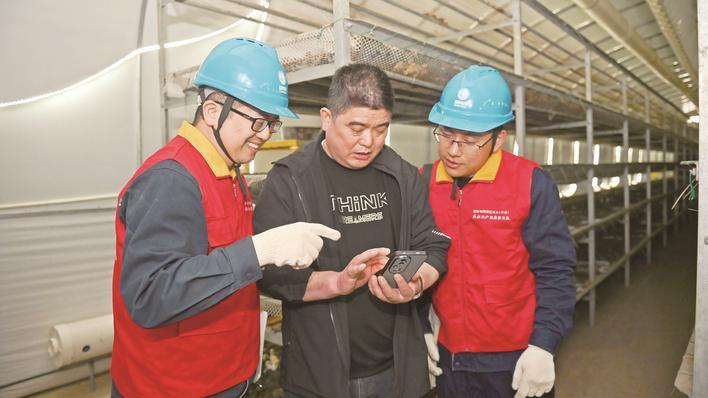
Core Viewpoint - The article highlights the efforts of the State Grid Pinghu City Power Supply Company in ensuring reliable electricity supply for the Jieyun Edible Mushroom Cooperative, which is a model for agricultural industry upgrading in the region [3][4]. Group 1: Company Initiatives - The company conducted a safety inspection of the electricity supply for the cooperative, focusing on irrigation lines, ventilation systems, and lighting equipment to ensure stable power supply [4]. - The company actively engaged with the cooperative to understand their electricity needs and developed feasible plans to support peak electricity demand during mushroom production [4][5]. Group 2: Industry Development - The Jieyun Edible Mushroom Cooperative has transformed traditional mushroom cultivation into an intelligent system, increasing production efficiency and annual output value to 160,000 yuan per 5,000 square meters [3]. - The cooperative's shift to high-end mushroom varieties has led to a significant increase in annual output value from over 1 million yuan in 2019 to 12 million yuan in 2024, benefiting over 20 local farmers [4]. Group 3: Future Plans - The company plans to continue monitoring the electricity needs of local specialty industries and enhance the quality and efficiency of its power supply services to support agricultural development and improve farmers' livelihoods [5].

《鼓励外商投资产业目录(2025年版)》明年2月1日起施行 更大力度吸引和利用外资
Jing Ji Ri Bao· 2025-12-25 23:27
Core Viewpoint - The release of the "Encouragement Directory for Foreign Investment Industries (2025 Edition)" aims to attract and utilize foreign investment more effectively, focusing on advanced manufacturing, modern services, high-tech, and energy-saving sectors, particularly in the central and western regions and Northeast China [1][2]. Group 1: Changes in the Encouragement Directory - The 2025 edition of the Encouragement Directory includes a total of 1,679 entries, an increase of 205 entries and modifications to 303 entries compared to the 2022 edition [1]. - The national directory consists of 619 entries, with 100 new additions and 131 modifications, while the regional directory for central and western areas includes 1,060 entries, with 105 new additions and 172 modifications [1]. Group 2: Focus Areas for Foreign Investment - The new directory emphasizes three main areas for foreign investment: advanced manufacturing, modern services, and investment in the central and western regions, Northeast China, and Hainan Province [2]. - New entries in the manufacturing sector include cutting-edge fields such as nucleic acid drug development, zero-magnetic medical equipment, intelligent detection equipment, underwater robotics, and key components for robots [2]. Group 3: Service Sector Development - The directory highlights the development of productive service industries, adding new categories such as new materials technology platforms, modern high-end shipping services, and virtual power plant operations, while also supporting service consumption in areas like pet services, sports tourism, and internet-based healthcare [2][3]. Group 4: Regional Coordination and Development - The directory aims to promote regional coordinated development by expanding the encouragement scope based on local resources and industry characteristics, with new entries for various provinces, including cruise tourism in Liaoning and ice and snow equipment in Heilongjiang [3]. - Measures to attract foreign investment in the central and western regions include prioritizing land supply for industrial projects and offering tax incentives, which are expected to enhance local economic growth and strengthen the resilience of China's industrial supply chain [3]. Group 5: Implementation and Environment - The National Development and Reform Commission will work with relevant departments to ensure the effective implementation of the policy measures and create a market-oriented, law-based, and international business environment for foreign investors [4].
更大力度吸引和利用外资
Xin Lang Cai Jing· 2025-12-25 22:30
Core Viewpoint - The release of the "Encouragement Directory for Foreign Investment Industries (2025 Edition)" aims to attract and utilize foreign investment more effectively, focusing on advanced manufacturing, modern services, high-tech, and environmental protection sectors, particularly in the central and western regions and Northeast China [1][2]. Group 1: Changes in the Encouragement Directory - The 2025 edition of the Encouragement Directory includes a total of 1,679 entries, an increase of 205 entries and 303 modifications compared to the 2022 edition [1]. - The national directory consists of 619 entries, with 100 new entries and 131 modifications, while the regional directory for central and western areas has 1,060 entries, with 105 new entries and 172 modifications [1]. Group 2: Focus Areas for Foreign Investment - The new directory emphasizes encouraging foreign investment in advanced manufacturing, modern services, and specific regions such as the central and western areas, Northeast China, and Hainan Province [2]. - New entries in the manufacturing sector include cutting-edge fields such as nucleic acid drug development, zero-magnetic medical equipment, intelligent detection equipment, underwater robots, and key components for robots [2]. Group 3: Service Sector Development - The directory highlights the development of productive service industries, adding new categories such as new materials technology platforms, modern high-end shipping services, and virtual power plant operations [2]. - It also supports the enhancement of service consumption by including categories like pet services, sports tourism, property services, and internet-based healthcare services [2]. Group 4: Regional Coordination and Development - The directory aims to promote regional coordinated development by expanding the encouragement scope based on local resources and industry characteristics [3]. - New entries for specific provinces include cruise tourism in Liaoning, ice and snow equipment in Heilongjiang, high-end intelligent lifting machinery in Henan, marine environmental governance in Hainan, computing power hardware in Guizhou, and wind power operations in Qinghai [3]. Group 5: Future Implementation - The National Development and Reform Commission will coordinate with relevant departments to ensure the implementation of policy measures and create a market-oriented, law-based, and international business environment for foreign investors [4].
杭州市知识产权促进会织密协同网络
Mei Ri Shang Bao· 2025-12-25 22:22
Group 1 - The Hangzhou Intellectual Property Promotion Association held its 2025 member conference and second council meeting, focusing on internal management systems, membership additions, annual awards, and the establishment of a professional committee for transformation and application [1] - New member and council unit lists were reviewed, with new council units including Saint-Ao Technology Co., Ltd., Hangzhou High-tech Intellectual Property Operation Co., Ltd., Zhejiang Long Aviation Co., Ltd., Hangzhou Boss Electric Co., Ltd., and Hangzhou Kuaizhi Intellectual Property Service Co., Ltd. [1] - Zhejiang Jindu Zhiyuan Intellectual Property Agency Co., Ltd., Zhejiang Peking University Information Technology Research Institute, and Zhejiang University of Technology were awarded as 2025 excellent council units, while Saint-Ao Technology Co., Ltd., Hangzhou Superfan Intellectual Property Agency Co., Ltd., and Beijing Sanju Sunshine Intellectual Property Agency Hangzhou Branch were recognized as excellent member units [1] Group 2 - The Hangzhou Intellectual Property Promotion Association aims to focus on high-quality development, creating a collaborative network involving government, industry, academia, research, finance, and application, positioning itself as a pioneer in the city's unique intellectual property governance system [2] - The association seeks to export "Hangzhou experience" for institutional innovation, inject "intellectual property momentum" for industrial upgrades, and provide "financial resources" for innovative entities [2]

《鼓励外商投资产业目录(2025年版)》明年2月1日起施行—— 更大力度吸引和利用外资
Jing Ji Ri Bao· 2025-12-25 22:03
Core Viewpoint - The release of the "Encouragement Directory for Foreign Investment Industries (2025 Edition)" aims to attract and utilize foreign investment more effectively, focusing on advanced manufacturing, modern services, high-tech, and environmental protection sectors, particularly in the central and western regions and Northeast China [1][2]. Group 1: Changes in the Encouragement Directory - The 2025 edition of the Encouragement Directory includes a total of 1,679 entries, an increase of 205 entries and 303 modifications compared to the 2022 edition [1]. - The national directory consists of 619 entries, with 100 new additions and 131 modifications, while the regional directory for central and western areas has 1,060 entries, with 105 new additions and 172 modifications [1]. Group 2: Focus Areas for Foreign Investment - The new directory emphasizes three main areas for foreign investment: advanced manufacturing, modern services, and investment in central and western regions, Northeast China, and Hainan Province [2]. - New entries in the manufacturing sector include cutting-edge fields such as nucleic acid drug development, zero-magnetic medical equipment, intelligent detection equipment, underwater robots, and key components for robots [2]. Group 3: Service Sector Development - The directory highlights the development of productive service industries, adding new categories such as common technology platforms for new materials, modern high-end shipping services, and virtual power plant operations [2]. - It also supports the enhancement of service consumption by including categories like pet services, sports tourism, property services, and internet-based healthcare services [2]. Group 4: Regional Coordination and Development - The directory aims to promote regional coordinated development by expanding the encouragement scope based on local resources and industrial characteristics [3]. - New entries for specific provinces include cruise tourism in Liaoning, ice and snow equipment in Heilongjiang, high-end intelligent lifting machinery in Henan, marine environmental governance in Hainan, computing power hardware in Guizhou, and wind power operations in Qinghai [3]. Group 5: Future Implementation - The National Development and Reform Commission will coordinate with relevant departments to ensure the effective implementation of the policy measures [4]. - Efforts will be made to create a market-oriented, law-based, and international business environment to attract more multinational companies to invest in China [4].
今年以来A股市场定增融资超7800亿元
Zhong Guo Zheng Quan Bao· 2025-12-25 21:11
Core Insights - The A-share market has seen significant activity in private placements this year, with 148 companies completing placements, raising a total of 788.9 billion yuan, a year-on-year increase of 455.31% [1][2] Group 1: Market Activity - As of December 24, 2023, 438 companies announced private placement plans, with 148 successfully completed, totaling 1,010.2 million shares issued [1][2] - In comparison to the same period in 2024, the number of companies completing placements increased by 20, and the total amount raised surged from 142.1 billion yuan to 788.9 billion yuan [1][2] Group 2: Sector Focus - The electronics, basic chemicals, and power equipment sectors led the number of companies engaging in private placements, with 23, 17, and 15 companies respectively [3] - The technology sector has been a major focus, with companies seeking funds to address urgent needs for technological upgrades and capacity expansion [3][4] Group 3: Institutional Participation - Major banks such as Bank of China, Postal Savings Bank, and others raised over 1 billion yuan each, primarily for liquidity support, while the majority of other companies raised less than 30 billion yuan for various purposes [2] - The active participation of institutional investors has been driven by favorable policies and the attractive pricing of private placements, enhancing the appeal of investments in the technology sector [4][5] Group 4: Future Outlook - The private placement market is expected to remain active in 2026, with a focus on mergers and acquisitions, and an increasing concentration in sectors like semiconductors, AI, and high-end manufacturing [5][6] - The market is anticipated to evolve towards a more institutionalized and long-term focus, with a potential narrowing of discount rates on popular projects due to high investor enthusiasm [5][6]



人民币时代即将开启,十年内将升值到6.0,背后的四大动力揭秘
Sou Hu Cai Jing· 2025-12-25 20:26
Core Viewpoint - The article discusses the potential appreciation of the Chinese yuan to 6.0 within the next decade, exploring the motivations behind this shift from a historically stable exchange rate to a push for yuan appreciation [1][3]. Group 1: Reasons for Promoting Yuan Appreciation - Promoting a steady rise in the yuan can lower the costs of energy and raw material procurement, as China's industrial structure has evolved from low-end manufacturing to a more competitive mid-to-high-end manufacturing sector [3][4]. - The yuan's appreciation could significantly increase per capita GDP, as the current economic situation in China is undervalued compared to other countries, with a potential 10% appreciation leading to a 10% increase in GDP [4]. - Addressing the trade imbalance is crucial, as China's trade surplus reached $1 trillion, indicating strong competitiveness but also necessitating adjustments in trade structure [4][6]. Group 2: Motivations Behind Yuan Appreciation - The substantial trade surplus and resilient economic growth, even amidst global economic challenges, provide a stable foundation for yuan appreciation [6][8]. - The decline of the US dollar, which has entered a rate-cutting cycle and lost 8% of its value this year, contributes to a growing distrust in the dollar, prompting a shift towards the yuan [6][8]. - The increasing global demand for yuan payments, with China's manufacturing surpassing 30% of global output, supports the ongoing internationalization of the yuan, projected to rise from 5% to 15% market share by 2035 [8].

胶州湾畔资本潮涌 科创青岛破浪前行
Zheng Quan Shi Bao· 2025-12-25 18:48
Group 1 - The core viewpoint highlights the significant growth and development of the Qingdao capital market during the "14th Five-Year Plan" period, establishing itself as a stabilizing force for high-quality regional economic development [1] - The number of listed companies in Qingdao has increased to 65, ranking third among northern cities, with a historical high in the reserve of companies planning to go public [1] - The innovation layer of the New Third Board has seen a 133% increase compared to the end of the "13th Five-Year Plan," and over 3,500 companies have been served by the regional equity market [1] Group 2 - Direct financing in the Qingdao capital market exceeded 600 billion yuan, with technology innovation bonds totaling 13.9 billion yuan and R&D expenditures doubling to 21.7 billion yuan [2] - The issuance of REITs has marked a breakthrough, and the scale of asset-backed securities (ABS) financing has tripled compared to the "13th Five-Year Plan" period [2] - The overseas business revenue of Qingdao listed companies reached 960.6 billion yuan in the first half of this year, a 58% increase compared to the "13th Five-Year Plan" period [2]
滨州经济技术开发区绘就 “科创经开” 新图景
Xin Lang Cai Jing· 2025-12-25 17:24
Core Viewpoint - The article emphasizes the importance of technological innovation and industrial upgrading in driving high-quality development in the Binzhou Economic and Technological Development Zone, highlighting the establishment of high-level innovation platforms and the integration of industry, academia, and research to foster sustainable growth [3][10][12]. Group 1: Technological Innovation - Binzhou Economic and Technological Development Zone is focused on building a "four-in-one" innovation system that includes high-level innovation platforms, talent teams, integrated production clusters, and high-quality innovation ecosystems [3]. - The zone has established the largest aluminum industry cluster globally, with significant advancements in research capabilities, such as the establishment of the first provincial laboratory by a private enterprise in Shandong [4]. - The zone has actively supported technology-driven enterprises, with over 20 million yuan allocated for various technology projects and loans expected to reach 64 million yuan for small and medium-sized enterprises [5]. Group 2: Industrial Upgrading - The development zone is implementing a "5+2" modern industrial system focusing on high-end aluminum, automotive components, aerospace, and new energy industries, promoting smart manufacturing and green transformation [6][7]. - Dyson Wheel Technology Co., Ltd. has achieved significant advancements in smart manufacturing, producing 6 million high-end aluminum alloy wheels annually, showcasing the benefits of automation and precision in production processes [7][8]. - The zone has planned 25 technological transformation projects and 10 key projects for 2025, emphasizing the integration of artificial intelligence with manufacturing to enhance productivity [9]. Group 3: Industry-Academia-Research Integration - The development zone is enhancing the collaboration between industry, academia, and research to accelerate the conversion of technological innovations into productive forces, creating a virtuous cycle of innovation and industrial development [10][11]. - Successful projects, such as the aluminum-based composite materials and the optical photoresist project, demonstrate the effective transformation of research outcomes into competitive industrial capabilities [10]. - The zone aims to cultivate new productive forces through continuous innovation and integration, positioning itself as a leader in the Yellow River Delta's efficient ecological economic zone [12].