
人工智能(AI)

Search documents
苹果AI团队规模悄然扩张,2026年架构重组锁定设备端大模型
Huan Qiu Wang Zi Xun· 2025-12-24 08:15
Group 1 - The core viewpoint is that despite rumors of executive departures and project delays, Apple's AI team is larger than expected and is strengthening its long-term strategy through internal restructuring [1][4]. - Apple is not slowing down its AI development pace; instead, it is set to complete key organizational adjustments by 2025, laying the groundwork for a major upgrade of "Apple Intelligence" with the release of iOS 26.4 in early 2026 [4]. - The departure of John Giannandrea, the former Senior Vice President of AI and Machine Learning, is seen as a planned structural optimization rather than a strategic setback, with his "device-first" philosophy remaining a core direction [4]. Group 2 - In 2025, Apple will implement a systematic reorganization of its AI department, redistributing responsibilities among teams, including transferring robotics technology to hardware engineering and Siri development to the visual and interaction experience team [4]. - Amar Subramanya, the new Vice President of AI, will lead the core foundation model development, reporting directly to Craig Federighi, the Senior Vice President of Software Engineering, positioning AI as an "enhanced software capability" rather than an independent product line [4]. - The AI team is rapidly expanding, with nearly 200 employees listed as authors on approximately 96 pages of public AI research papers, indicating a team size that may reach several hundred, contrasting sharply with external perceptions of team disintegration [5].



麦肯锡AI应用现状调研:普及率极高,但变现率极低
Hua Er Jie Jian Wen· 2025-12-24 06:00
Core Insights - There is a significant gap between market hype around AI and actual business implementation, with most companies still in the "pilot purgatory" phase and unable to scale AI deployment effectively [1][2] - Only 39% of surveyed companies reported a substantial impact of AI on their EBIT, with most contributions being less than 5% [1][6] - High-performing companies, representing only 6% of the surveyed, are not merely purchasing software but are fundamentally restructuring workflows and pursuing growth [1][7] Group 1: AI Adoption and Implementation - 88% of companies report regular use of AI in at least one function, up from 78% the previous year, indicating widespread adoption but shallow implementation [2] - 62% of respondents are testing intelligent agents, but only 23% have initiated scaled applications in at least one function [3] - Companies with revenues over $5 billion are closer to scaling AI, with nearly half having entered this phase, compared to only 29% of companies with revenues under $1 million [5] Group 2: Financial Impact and Performance - Despite 64% of respondents believing AI drives innovation, its actual impact on financial performance is minimal [4] - The majority of companies are still in the investment phase, with over 60% experiencing little to no financial benefit from AI initiatives [6] - High-performing companies invest significantly more in AI, with one-third allocating over 20% of their digital budget to AI, compared to nearly 5% for other companies [10] Group 3: Workforce and Management Dynamics - There is a growing expectation of workforce reductions, with 32% of respondents anticipating a decrease in employee numbers over the next year [10] - High-performing companies are three times more likely to fundamentally reshape workflows compared to their peers [10] - The demand for software and data engineers remains strong, indicating a structural talent shortage in the industry [10]
2026年全球经济展望,渣打银行最新发声!
券商中国· 2025-12-24 05:29
Global Economic Outlook - The global economy is expected to maintain a moderate expansion in 2026, with a growth rate similar to the projected 3.4% for 2025, driven by strong global trade, declining inflation, and supportive monetary policies [2][3] - The growth engine is anticipated to shift towards investment, particularly in high-tech sectors like AI and semiconductors, as the "export rush" effect fades [2] - Major economies, including the US, are expected to see fiscal expansion, which will support growth [2] US Economic Forecast - The US economy is projected to accelerate from a growth rate of 2.0% in 2025 to 2.3% in 2026, fueled by strong business investment and potential tax cuts [3] - However, the labor market may remain weak in the short term, with unemployment rates expected to rise before improving later in the year [3] Federal Reserve's Interest Rate Outlook - The Federal Reserve's capacity for rate cuts in 2026 is expected to be limited, contrary to market expectations of multiple rate cuts, due to persistent inflation pressures [4][6] European Economic Projections - Europe's growth is forecasted to slow from 1.4% in 2025 to 1.1% in 2026, avoiding recession but facing challenges from US tariffs and competition from China [6] - Despite the slowdown, consumer and labor markets in Europe are expected to remain resilient, supported by increased fiscal spending in Germany [6] Risks to Global Economy - The global economy faces multiple risks, including geopolitical tensions, trade policy uncertainties, and potential financial market bubbles, particularly concerning AI investments and cryptocurrencies [6] China Economic Transition - China's economic growth target for 2026 is set between 4.5% and 5%, with a focus on "domestic demand-driven" and "innovation-driven" growth [7] - Exports are expected to maintain high growth but may contribute less to GDP due to diminishing "export rush" effects and potential trade frictions [7] - Investment is projected to increase slightly, with fiscal spending on infrastructure and a recovery in manufacturing investment [7][8] Monetary and Fiscal Policy in China - Macro policies in China are expected to remain supportive but not overly expansive, with a slight reduction in the fiscal deficit ratio [8] - Monetary policy is anticipated to be "moderately accommodative," with limited room for rate cuts [8] Strong Renminbi Policy - A "strong renminbi policy" has been established, focusing on enhancing the international status and credibility of the renminbi rather than merely pursuing currency appreciation [9][10] - Key pillars of this policy include improving productivity through innovation, maintaining macroeconomic stability, and expanding the use of renminbi in international trade and finance [10]

美银调查:基金经理几乎“满仓”跨年!现金水平降至3.3%历史新低
华尔街见闻· 2025-12-24 04:01
投资者正以极度乐观的姿态步入新的一年,尽管心中仍对2026年可能面临的挑战存有顾虑,但当下的做多热情已占据主导地位。 据美国银行(Bank of America)最新的基金经理调查显示, 基金经理们的现金水平已大幅降至资产管理规模的3.3%,创下历史新低 。与此同时,投资者对经 济增长、股票和大宗商品的信心爆棚,这两类通常在经济扩张期表现良好的资产, 其合计敞口已达到2022年2月以来的最高水平 。 12月23日,彭博市场策略师Michael Msika发文称,这种近乎"满仓"的激进仓位反映出, 市场对进一步反弹的预期压倒了对高估值、人工智能(AI)巨额资本 支出以及盈利预期的担忧 。尽管科技股仍是主要驱动力,但 投资者在过去两个月已开始进行板块轮动,随着更有吸引力的投资机会出现,这种轮动正在拓宽 市场的上涨广度。 文章也指出,有策略师们警告称,在这股乐观情绪背后,经济前景并非没有阴云。 通胀的粘性、劳动力市场的动态变化以及美联储微妙的平衡术,仍是投资者 需要警惕的结构性风险。 极度乐观的仓位配置 根据美国银行的基金经理调查数据,随着新年的临近,仓位情况显得相当拥挤。投资者大幅削减现金持有量,转而押注于风险资 ...


高市早苗接受日经专访,谈及中日关系
日经中文网· 2025-12-24 03:26
Core Viewpoint - The Japanese government under Prime Minister Sanna Takashi emphasizes "responsible active fiscal policy" aimed at balancing current and future responsibilities, ensuring fiscal sustainability while addressing immediate economic challenges [2][4][5]. Fiscal and Economic Policy - The government aims to balance strong economic growth with sustainable fiscal practices, controlling government debt growth within the limits of economic growth rates to reduce the debt-to-GDP ratio [4]. - The economic measures and supplementary budget for 2025 are designed to address rising living costs while ensuring a secure and robust economy through "crisis management investment" and growth investments [5][6]. - The government plans to keep the issuance of new government bonds lower than the previous year, reflecting a commitment to fiscal sustainability [5]. Budget and Debt Management - The Prime Minister indicated a willingness to adjust the primary balance surplus target based on the need for fiscal sustainability and market confidence, suggesting a shift towards multi-year assessments rather than annual targets [6]. - The upcoming budget for 2026 is being prepared with a focus on prioritizing essential expenditures and minimizing reliance on supplementary budgets [7][8]. Tax and Social Security Reform - The government is considering options for consumption tax reductions, particularly for food services, but recognizes the challenges in implementing such measures quickly [9]. - A "National Conference" is proposed to address social security reforms, aiming for a sustainable system that balances benefits and burdens across different demographics [10][12]. Economic Growth Strategy - "Crisis management investment" is identified as a core component of the growth strategy, focusing on enhancing food and energy self-sufficiency, healthcare stability, and advancing AI technology [16][17]. - The government aims to leverage Japan's manufacturing strengths to develop competitive AI technologies, particularly in robotics and autonomous systems [17].

集成电路ETF(159546)涨超0.8%,行业复苏与AI需求驱动存储赛道扩张
Mei Ri Jing Ji Xin Wen· 2025-12-24 03:00
风险提示:提及个股仅用于行业事件分析,不构成任何个股推荐或投资建议。指数等短期涨跌仅供参 考,不代表其未来表现,亦不构成对基金业绩的承诺或保证。观点可能随市场环境变化而调整,不构成 投资建议或承诺。提及基金风险收益特征各不相同,敬请投资者仔细阅读基金法律文件,充分了解产品 要素、风险等级及收益分配原则,选择与自身风险承受能力匹配的产品,谨慎投资。 集成电路ETF(159546)跟踪的是集成电路指数(932087),该指数从市场中选取涉及设计、制造、封 装测试及相关材料设备等业务的上市公司证券作为指数样本,以反映集成电路相关上市公司证券的整体 表现。该指数成分股具有高技术含量和成长性特征,是科技领域的重要风向标。 东海证券指出,美光2026财年第一季度业绩超出预期,在AI浪潮持续驱动存储需求激增的背景下,公 司单季营收达到136.4亿美元,同比大幅增长57%,预计下一财季营收将进一步攀升至187(±4)亿美 元,展现其在高端存储市场的持续领先地位与增长动能。当前电子行业需求持续复苏,供给有效出清, 存储价格上涨,我国国产化力度超预期。AI推动存储需求持续激增,市场对高带宽内存(HBM)的需 求持续激增,预计HB ...
美联储主席候选人哈塞特:美国经济复苏正起飞 AI生产力将助力降息
Zhi Tong Cai Jing· 2025-12-24 01:41
在就业方面,今年的月度非农就业人数增幅较去年大幅下降,且这一趋势在第四季度仍在持续。经济学 家认为,这既与特朗普政府加强移民管控导致移民减少有关,也与劳动力需求趋软有关。上周公布的数 据显示,11月非农就业人数增加6.4万人,而10月则减少了10.5万人。 白宫经济顾问凯文.哈塞特表示,周二公布的美国经济增长数据强于预期,这是美国总统特朗普的贸易 政策以及对人工智能(AI)投资的成果,并预示着未来就业增长将加快。 哈塞特在接受采访时表示:"这确实是一个极好的数字,是美国人民的一份很棒的圣诞礼物。""经济复 苏确实在起飞,而且有非常多的人正从观望状态进入劳动力市场……如果我们进入新年时能保持在4% 的GDP增长范围内,我们将看到(月度非农就业人数增幅)回到10万至15万的区间。" 数据显示,2025年第三季度美国国内生产总值(GDP)环比按年率计算增长4.3%,高于第二季度3.8%的增 速和市场预期的3.3%。美国商务部表示,第三季度经济增速加快主要由于消费支出增长提速,以及出 口和政府支出增加。当季占美国经济总量约70%的个人消费支出增长3.5%,政府消费支出和投资增幅为 2.2%,出口增长8.8%。与此同时 ...
字节跳动「国际信贷」业务隐秘布局
3 6 Ke· 2025-12-23 23:48
Core Insights - Domestic internet traffic growth has peaked, leading major internet companies to shift focus towards overseas credit markets as domestic credit regulations tighten [1] - Chinese fintech players are replicating successful digital finance models in emerging markets such as Southeast Asia, Latin America, and Africa [1] - Major internet firms are adopting a more cautious approach, often seeking partnerships with licensed institutions to enter overseas credit markets [1] Group 1: Company Developments - Ant Group is actively recruiting a significant number of credit-related talents to accelerate its overseas credit business expansion [2] - ByteDance has also been rapidly expanding its overseas credit team, with a focus on specific roles related to international credit operations [3][4] - ByteDance is currently hiring for various international credit-related positions, including product managers for Latin America [5] Group 2: Product Focus - The roles being recruited by ByteDance include positions for BNPL (Buy Now Pay Later), personal loans, and merchant financing, indicating a broad scope of credit products [12] - Specific job descriptions highlight the need for localized credit products tailored to the payment habits and user preferences in Brazil and Mexico [7][8] Group 3: Market Strategy - ByteDance's overseas credit business is primarily centered around BNPL, leveraging its large TikTok user base and the growing TikTok Shop ecosystem [12] - The company is currently collaborating with licensed third-party institutions in various countries to offer BNPL services, as it does not yet hold relevant licenses in those markets [16][17] Group 4: Competitive Landscape - The entry of major players like ByteDance into overseas credit markets is expected to enhance local digital financial infrastructure and stimulate market demand [33][35] - However, there are concerns that the presence of such giants will raise compliance standards and customer acquisition costs, posing challenges for smaller players in the market [37]

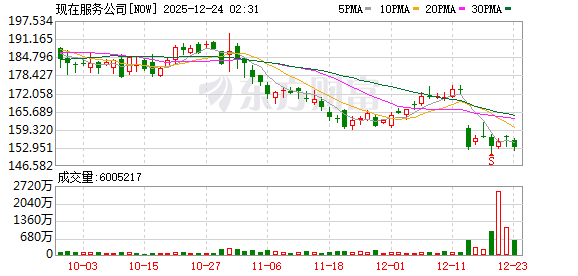
押注AI网络安全 ServiceNow宣布77.5亿美元收购Armis
Hua Er Jie Jian Wen· 2025-12-23 18:30
Core Viewpoint - ServiceNow announced the acquisition of cybersecurity startup Armis for $7.75 billion in cash, marking its largest acquisition to date [2][5]. Group 1: Acquisition Details - The acquisition is expected to be funded through a combination of cash and debt [5]. - The transaction is anticipated to close in the second half of 2026, pending regulatory approval and other closing conditions [5]. - Armis, founded by veterans of the Israeli military cyber intelligence unit, focuses on identifying and tracking security threats across various devices [6]. Group 2: Financial Performance of Armis - Armis reported an annual recurring revenue of $300 million, up from $200 million the previous year [6]. - The company recently completed a funding round, raising $435 million, which valued it at $6.1 billion [6]. Group 3: Strategic Implications for ServiceNow - ServiceNow stated that the acquisition will triple its market opportunities in the security and risk solutions sector [7]. - The integration of Armis' threat protection services into ServiceNow's broader cybersecurity product suite is expected to enhance clients' ability to defend against cyberattacks [7]. - The acquisition aligns with a trend of consolidation in the cybersecurity industry, driven by the increasing application of AI in identifying hacker threats [7].
桥水基金核心持仓:两家科技巨头和两只ETF
Xin Lang Cai Jing· 2025-12-23 16:07
Core Viewpoint - Bridgewater Associates, led by Ray Dalio, is one of the world's top hedge funds managing over $100 billion, making prudent investment decisions despite market uncertainties [1][8] Group 1: Investment Strategy - The fund has made several trades in Q3, reflected in its 13F report, adopting a relatively conservative investment strategy with core holdings in two tech giants and two ETFs [1][8] - The highest allocation is in iShares Core S&P 500 ETF (IVV) at 10.62%, with a 4.83% increase in Q3, holding over 1 million shares since 2010 [2][9] - The second largest holding is SPDR S&P 500 ETF Trust (SPY) at 6.69%, also tracking the S&P 500 index, and has shown a 17.41% increase year-to-date [3][10] Group 2: iShares Core S&P 500 ETF (IVV) - IVV has an asset management size of $733 billion, with a dividend yield of 1.04% and a low fee of 0.03% [2][9] - The ETF has a three-year cumulative return of 94.83% and a five-year return of 114.12%, making it a reliable choice for broad U.S. stock exposure [2][9] - As of 2025, IVV has increased by 17.09%, currently trading at $687.83 [2][9] Group 3: SPDR S&P 500 ETF Trust (SPY) - SPY holds 503 stocks with a fee of 0.09% and a dividend yield of 1.04%, similar to IVV [3][10] - The ETF has a three-year cumulative return of 20.43% and a five-year return of 15.12%, providing a solid foundation for investment portfolios [3][10] - As of 2025, SPY has increased by 17.41%, currently trading at $684.83 [3][10] Group 4: Alphabet (GOOGL) - Alphabet constitutes 2.53% of Bridgewater's portfolio, holding over 3 million shares, despite a gradual reduction in holdings [4][11] - The stock price has surged by 61.89% year-to-date, currently at $308.61, supported by a robust AI ecosystem [4][11] - Recent financial performance includes revenue of $102.3 billion, a 16% year-over-year increase, and a net profit surge of 33% [4][11] Group 5: Microsoft (MSFT) - Microsoft represents 2.23% of the portfolio, with a slight reduction in Q3, yet remains a top holding [6][13] - The stock price has risen by 15.80% year-to-date, currently trading at $484.72, with a dividend yield of 0.75% [6][13] - Recent financial results show revenue of $77.67 billion, an 18% increase, and cloud revenue growth of 28% to $30.9 billion [6][13]

