东数西算

Search documents
AIDC行业专题(一):智算中心加速扩张政策+需求双轮驱动供电系统升级
Yong Xing Zheng Quan· 2025-07-28 07:31
Investment Rating - The report maintains an "Accumulate" rating for the industry, specifically in the power equipment sector [5]. Core Insights - The intelligent computing center industry is experiencing rapid expansion driven by a combination of policy support, local government initiatives, and surging market demand. The investment scale in China's intelligent computing center market reached 87.9 billion yuan in 2023, representing a year-on-year growth of over 90%. It is projected to reach 288.6 billion yuan by 2028 [1][20]. - Local governments and basic telecom operators are the primary participants in the construction of intelligent computing centers, accounting for over 50% of the projects in operation, under construction, or planned as of August 2024. Internet and cloud service providers contribute approximately 17.7% of the projects [20][21]. Summary by Sections 1. Demand Driven Growth in AIDC - The investment scale of intelligent computing centers is significantly increasing due to the resonance of policy support and the demand for large models. The rapid growth in data volume driven by large model applications is pushing the intelligent computing center into an expansion phase [16][17]. - Major telecom operators and internet companies are ramping up their investments in computing power. For instance, China Mobile plans to invest 37.3 billion yuan in computing power, which will constitute 25% of its capital expenditure in 2025 [2][27]. 2. Evolution of Data Center Power Supply Architecture - The current power supply systems in data centers primarily utilize UPS, but there is a gradual shift towards HVDC and Panama power systems. HVDC systems offer significant advantages in reliability, efficiency, and economic viability compared to traditional UPS systems [3][26]. - The Panama power system demonstrates clear advantages in investment costs and operational efficiency, achieving a conversion efficiency of 97% [3][26]. 3. Future Trends in Power Supply Architecture - The transition towards medium and high voltage power supply systems is becoming a trend, with a focus on high-density and energy-efficient solutions in the AIDC era [3][38]. - The report suggests that companies like Kehua Data and Kstar, as well as leaders in HVDC and Panama power systems like Zhongheng Electric, are well-positioned to benefit from the increasing capital expenditures by internet companies [4][38].



华为云、美的、网易…“大厂”为啥把算力“大本营”选在这儿
Jin Rong Shi Bao· 2025-07-26 08:49
Group 1 - The Chinese government emphasizes the continuous promotion of the "Artificial Intelligence +" initiative, integrating digital technology with manufacturing and market advantages to support the widespread application of large models [1] - High-quality datasets are identified as a crucial driving force for AI development, with the National Data Bureau categorizing them into three types: general, industry general, and industry specialized [1] - The National Data Bureau is accelerating the construction and application of high-quality datasets to promote the marketization and valuation of data elements, providing solid data support for cultivating new productive forces [1] Group 2 - The National Data Bureau is conducting a special action for ecological cultivation, which includes collecting and promoting typical cases of high-quality datasets in key sectors such as healthcare, industry, and transportation [2] - Regular technical exchange activities are being held to discuss data annotation, synthesis, and methodologies for building high-quality datasets [2] - Seven cities, including Hefei and Chengdu, are being guided to establish data annotation bases, with 524 datasets constructed and a total scale exceeding 29PB, serving 163 large models as of mid-2023 [2] Group 3 - Guizhou Province has 48 key data centers under construction or in operation, with 28 being large data centers and a storage capacity of 25EB, equivalent to storing 5 billion HD movies [3] - The province's intelligent computing scale has reached 85EFLOPS, with over 98% of the computing power dedicated to intelligent computing, and an outbound bandwidth exceeding 60,000 Gbps [3] - Guizhou is accelerating the construction of data centers and intelligent computing centers, with a focus on optimizing policies to meet the computing power needs of large model training, animation rendering, and esports [3]

青海涌“绿波” 高原唱“新曲”
Ke Ji Ri Bao· 2025-07-25 13:48
Core Insights - Qinghai Province is leveraging its clean energy resources to pursue a path of green and high-quality development, becoming a leader in clean energy production in China [1][3] Group 1: Clean Energy Infrastructure - Qinghai's total installed power capacity reached 75.9 million kilowatts by June 2023, with clean energy and renewable energy accounting for 94.2% and 72.6% of the total, respectively, both ranking first in the country [1] - The province has established the first clean energy and green computing scheduling center, which connects data from 28 power generation companies and 558 renewable energy stations, enabling efficient management of dispersed power generation facilities [2] Group 2: Operational Efficiency - The scheduling center allows for unmanned operation and centralized monitoring, reducing operational personnel costs by over 40% for power generation companies [2] - The center supports real-time monitoring, remote control, and fault handling, ensuring the safe operation of the power grid [2] Group 3: Green Computing Integration - Qinghai is integrating clean energy with green computing, responding to the growing demand for computing power driven by advancements in artificial intelligence [3][4] - The province has developed a big data model for coordinated scheduling of computing power and energy, optimizing energy consumption during periods of abundant renewable energy supply [4] Group 4: Carbon Footprint Management - Green computing is being utilized for carbon footprint tracking and green low-carbon certification for export products, enhancing the international competitiveness of enterprises [5] - The scheduling center has established a carbon footprint database for export-oriented companies, providing proof of green computing usage to help them navigate global green trade barriers [5]
雅下工程令世界惊叹,但它的意义仍被很多人低估了
Guan Cha Zhe Wang· 2025-07-25 11:11
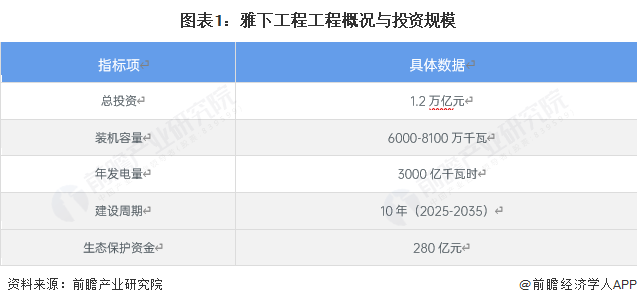
Group 1 - The Yarlung Tsangpo River downstream hydropower project represents a strategic shift in China's infrastructure investment, moving away from traditional models of economic stimulus through large-scale construction projects [1][2][4] - The project involves an investment of 1.2 trillion yuan, aimed at enhancing national energy security, driving new productive forces, and facilitating regional coordinated development [1][4] - Traditional infrastructure investment in China is declining, with local government debt exceeding 50 trillion yuan and a projected 3.3% decrease in narrow infrastructure investment in 2025 [1][8][9] Group 2 - The Yarlung Tsangpo project is expected to generate significant economic returns, particularly in the context of the growing demand for electricity from AI and data center industries [21][23] - The project aligns with China's "East Data West Computing" strategy, which aims to utilize the abundant energy resources in the west to support the digital economy in the east [24] - The hydropower project is projected to have an installed capacity of 60 million kilowatts and an annual generation of 300 billion kilowatt-hours, significantly contributing to China's clean energy supply [24][34] Group 3 - The project is anticipated to transform Tibet's economy by creating a competitive industrial core, moving from reliance on traditional industries to modern, high-value sectors [26][34] - The success of the project could mirror the economic transformation seen in Yichang, where the Three Gorges project led to a shift from resource-based to industry-driven growth [27][30] - The long-term effects of the project include increased urbanization, improved human capital, and the establishment of a sustainable economic model for Tibet [31][34]


从“信号孤岛”到“满格边疆”,实探中国移动网络新基建
2 1 Shi Ji Jing Ji Bao Dao· 2025-07-25 02:38
Core Insights - The article highlights the transformative impact of 5G infrastructure on rural development and economic activities in the Bayannur region, particularly in the Urat Rear Banner, where improved communication has revitalized local industries and attracted young people back to their hometowns [1][2][3]. Group 1: Communication Infrastructure Development - The introduction of 5G technology has bridged the communication gap in remote areas, enabling local businesses, such as restaurants, to thrive through online sales and live streaming [1][2]. - The deployment of advanced communication technologies, including 900M 4G macro stations and 700M 5G ultra-long dual-band, has significantly improved network connectivity for tourism in the Baorihantu area, facilitating a surge in self-driving tourism [2][3]. Group 2: Agricultural and Ecological Advancements - The He Tao irrigation area, one of Asia's largest self-flow irrigation systems, has undergone a technological transformation with the implementation of a "smart irrigation" project, utilizing 5G communication for real-time monitoring and management of water resources [4][5]. - The integration of over 1,000 data collection points for water levels, flow rates, and weather conditions has enhanced the efficiency and accuracy of water management, promoting sustainable agricultural practices [5]. Group 3: Environmental Monitoring and Management - The establishment of a smart network in the Xinhua Forestry Farm has improved fire monitoring capabilities, allowing for real-time surveillance and rapid response to potential fire hazards [6][7]. - The combination of traditional patrol methods with advanced monitoring technology has significantly increased the efficiency of forest management [7]. Group 4: Data Center and Computing Power - The Hohhot Data Center, operated by China Mobile, serves as a critical hub for advanced computing power, supporting the "East Data West Computing" initiative and providing essential services for various regions [8]. - The data center's capabilities include high-performance computing and AI services, catering to diverse market needs, including entertainment and smart home applications [8]. Group 5: Economic Revitalization - The advancements in communication and technology have led to a resurgence in local economies, with traditional products gaining national popularity and the agricultural sector benefiting from modernized practices [9].
雅鲁藏布江水电工程与即将到来的“电力帝国”
3 6 Ke· 2025-07-24 12:03
Core Viewpoint - The article emphasizes the strategic importance and potential benefits of the Yarlung Tsangpo River downstream hydropower project, highlighting its historical context, massive investment, and expected impact on energy security and regional development [1][6][7]. Project Background - The Yarlung Tsangpo downstream hydropower project has been in planning for decades, with initial ideas dating back to the 1970s and preliminary development starting in 2000 [4][6]. - The project is set to officially commence construction in July 2025, with a total planned investment of 1.2 trillion RMB, making it one of the largest single-project investments globally [7][6]. Technical Feasibility - The project is located in a region with significant natural advantages for hydropower generation, including a vertical drop of 2000 meters over a 200-kilometer stretch, which is considered one of the best locations for hydropower globally [11][13]. - The engineering design involves innovative techniques such as "cutting corners" to optimize water flow, which is expected to enhance efficiency and output [13][19]. Economic Impact - The project is anticipated to create substantial employment opportunities, with direct involvement of around 20,000 workers and indirect participation exceeding 100,000, significantly impacting the local economy of Tibet [23][24]. - It is projected to increase the average income of Tibetans by over 30% and generate an additional 20 billion RMB in annual fiscal revenue for the region [24]. Energy Security and Technological Advancement - The Yarlung Tsangpo project will contribute to China's energy security by providing a stable and renewable energy source, reducing reliance on fossil fuels [25][27]. - The project is expected to support the growth of AI and data center industries in China by providing low-cost electricity, which is crucial for high-energy-consuming operations [28][29]. Strategic Considerations - The scale of the investment suggests that the project is not merely a geopolitical maneuver against neighboring countries but rather a long-term strategic initiative aimed at maximizing economic returns [32][35]. - The simultaneous development of various energy projects across China indicates a broader vision for energy independence and technological leadership in the global market [36][37].
一文带你了解中国雅江集团对西藏经济冲击 雅江工程如何重塑西藏产业生态与民生格局
Qian Zhan Wang· 2025-07-24 08:42
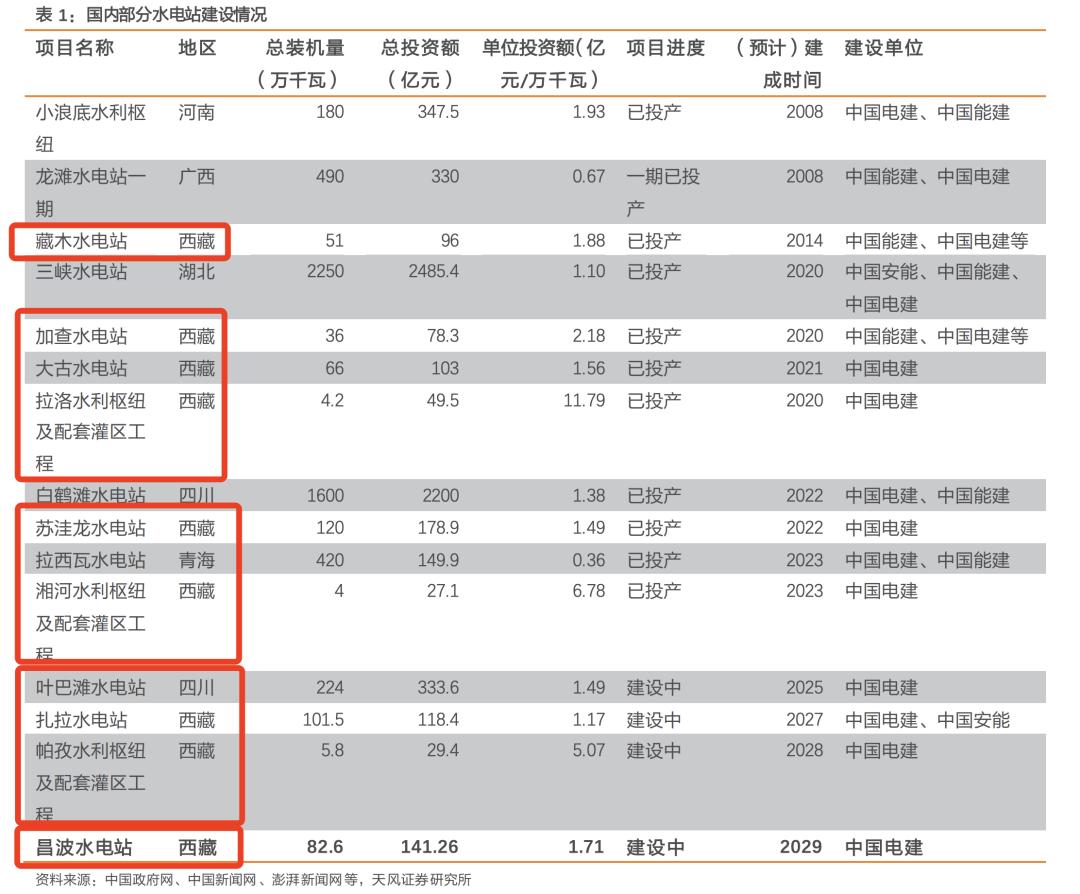
Core Insights - The article highlights the significance of the Yarlung Tsangpo River downstream hydropower project by Yajiang Group in Tibet, which is set to be the largest hydropower project globally, utilizing a unique underground construction method to minimize ecological disruption [1][2][4]. Project Overview - The Yajiang project is a key component of China's "West-to-East Power Transmission" strategy, with a planned total installed capacity of 60-81 million kilowatts and an annual electricity generation of approximately 300 billion kilowatt-hours, sufficient to meet the annual electricity needs of 300 million people [2][4]. - The project involves a total investment of approximately 1.2 trillion yuan, with a construction period expected to last 10-12 years, aiming for phased production between 2035 and 2040 [7]. Economic Impact - The project is projected to significantly boost Tibet's GDP, with an estimated increase of 1.8 percentage points due to the total investment of 1.2 trillion yuan [9]. - During the construction phase, the project is expected to create between 50,000 to 100,000 jobs, with peak employment reaching around 200,000 [13][14]. Employment and Income Growth - The Yajiang project is anticipated to create substantial employment opportunities, with direct job creation during the construction phase and long-term positions in operation and maintenance [16]. - The project is expected to enhance local residents' income, with rural disposable income growth projected to exceed 10% due to direct employment and skills training initiatives [17][19]. Industry Development - The project is expected to drive the growth of the local construction materials industry, with significant demand for aggregates, special cement, and steel during the construction phase [24]. - The establishment of a clean energy system in Tibet, centered around hydropower, is anticipated to support the development of high-energy-consuming industries such as aluminum production and data centers [28][31]. Tourism Integration - The integration of infrastructure projects with tourism initiatives is expected to enhance the development of Tibet's third industry, with innovative models combining engineering and tourism [34][38]. - The anticipated increase in tourism revenue, driven by improved infrastructure and the completion of the hydropower project, is projected to contribute significantly to the local economy [38].
算力的尽头是电力:墨脱水电站,决定AI竞赛胜负的“电力底牌”
Tai Mei Ti A P P· 2025-07-23 04:04
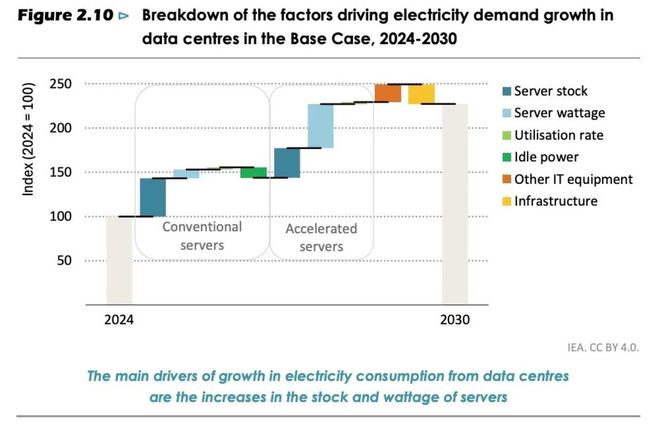
Core Insights - The article emphasizes that electricity is becoming a critical factor in the competition for artificial intelligence (AI) development, overshadowing traditional elements like algorithms and chips [1][5] - The demand for electricity in AI applications is expected to surge dramatically, with projections indicating that global data center electricity consumption will double from 415 TWh in 2024 to 945 TWh by 2030 [2] - The construction of the Mêdog Hydropower Station in China is highlighted as a strategic initiative to secure a stable and abundant energy supply for AI computing power, positioning China favorably in the global AI landscape [6][10] Energy Crisis in AI - The article discusses an ongoing AI electricity crisis, where the energy consumption for training AI models, such as GPT-4, is extraordinarily high, with a single training session consuming over 50 million kWh [1] - Major tech companies like Amazon, Microsoft, and Google are facing challenges in securing sufficient electricity for their data centers, as existing power grids reach their limits [3] Mêdog Hydropower Station - The Mêdog Hydropower Station is projected to have an installed capacity of 60 million kW and an annual generation of nearly 300 billion kWh, which is equivalent to the combined output of three Three Gorges Dams [8] - This hydropower station is expected to provide a stable and low-cost energy source, significantly reducing operational costs for AI computing in China compared to competitors in Silicon Valley [10] Strategic Importance - The Mêdog project is seen as a crucial element in China's long-term strategy for AI dominance, aligning with national initiatives like "East Data, West Computing" and carbon neutrality [11][12] - The unique geographical features of the Yarlung Tsangpo River in Tibet provide an unparalleled opportunity for hydropower generation, making this project feasible only in China [12][13] Conclusion - The Mêdog Hydropower Station represents not just an engineering feat but also a manifestation of China's strategic vision for the future of AI and energy [14] - The article concludes that the ability to harness clean and abundant electricity will define the success of nations in the AI era, positioning China as a formidable player in this new landscape [15]
雅鲁藏布江水电分析
2025-07-22 14:36
Summary of the Yarlung Tsangpo River Hydropower Project Conference Call Industry Overview - The conference call primarily discusses the Yarlung Tsangpo River hydropower project, which is set to be the largest hydropower project globally, with a total investment of approximately 1.2 trillion yuan [1][5][26]. Key Points and Arguments Economic Impact - The project is expected to generate an annual electricity output of around 300 billion kWh, which is three times that of the Three Gorges Dam, potentially creating a production value of 90 billion yuan annually [8][19]. - It is estimated that for every 1 yuan invested in hydropower construction, it can stimulate 2-3 yuan in GDP growth, leading to a total potential output of nearly 4 trillion yuan due to the project's scale [7][21]. - The project will significantly enhance local infrastructure, including engineering, logistics, and trade services, thereby improving the economic landscape of Tibet [7][19]. Energy Strategy - The project aims to meet the electricity needs of 300 million households and contribute to the establishment of an Asian energy community [1][19]. - It will reduce reliance on imported fossil fuels and support the development of high-energy industries such as data centers and aluminum production, with a projected demand increase of 80,000 tons of copper and 50,000 tons of aluminum [1][9][21]. Regional Development - The project will generate over 20 billion yuan in annual fiscal revenue for Tibet, significantly contributing to local employment through construction and related industries [1][5]. - It is expected to create millions of jobs and stimulate growth in sectors such as construction materials, logistics, and tourism [8][21]. Geopolitical Implications - The hydropower station will primarily export electricity, enhancing China's influence in neighboring countries like Bangladesh and Myanmar while potentially diminishing India's geopolitical control in the region [12][13]. - The project has been included in China's 14th Five-Year Plan, indicating its strategic importance amid rising tensions with India [13][22]. Technical Aspects - The project utilizes a tunnel-based hydropower generation method, which is less environmentally invasive and has a lower investment cost compared to traditional dam construction [5][19]. - The engineering challenges are significant, with complex geological conditions and a need for advanced technology to ensure high water utilization rates [24][25]. Additional Important Content - The project is expected to have a long-term economic impact, with benefits extending to nearly 100 related industries, including construction, energy, and materials [8][19]. - The establishment of the China Yajiang Group as a key financing entity for the project highlights the government's commitment to supporting large-scale infrastructure initiatives [14][26]. - The project is anticipated to alleviate economic pressures in China, particularly in light of recent economic slowdowns, by accelerating investment and job creation [22][21]. This comprehensive overview captures the essential aspects of the Yarlung Tsangpo River hydropower project as discussed in the conference call, emphasizing its economic, energy, regional, geopolitical, and technical significance.
贵州:加速“东数西算”进程,全力打造面向全国的算力保障基地
Sou Hu Cai Jing· 2025-07-22 11:20
Core Insights - Guizhou is transitioning from a storage-centric model to an integrated storage and computing model, focusing on intelligent computing as a priority to establish a national computing power support base [1] Group 1: Data Center Development - Guizhou has 48 key data centers under construction or in operation, with 28 being large-scale data centers and a storage capacity of 25EB [3] - The province's intelligent computing scale has reached 85EFLOPS, with intelligent computing accounting for over 98% of the total [3] - Guizhou's outbound bandwidth exceeds 60,000 Gbps, and it has established the world's first 400G computing power channel, connecting to 42 major cities nationwide with a network latency of approximately 16-17 milliseconds to Beijing [3] Group 2: Computing Power Services - Guizhou provides cloud rendering computing power services to over 50 countries and regions, serving more than 200,000 users, with significant contributions to the rendering of domestic films like "Ne Zha 2" [3] - The province aims to expand its computing power services by optimizing the "Guizhou Computing Power Voucher" policy to meet the demands of industries such as large model training, animation rendering, and esports [4] Group 3: Future Plans - By 2025, Guizhou plans to enhance its intelligent computing scale and accelerate the construction of data centers and intelligent computing centers in collaboration with companies like Huawei Cloud, Midea, and NetEase [3] - The focus will be on improving the speed and stability of optical networks and reducing data center electricity costs while increasing the proportion of green energy [3]