
亚洲货币升值

Search documents
黄金观点汇总分析
Sou Hu Cai Jing· 2025-12-13 10:23
Core Viewpoint - Gold prices have significantly increased since entering a bull market in 2019, rising from approximately $1,300 to $4,300 per ounce, with some experts predicting prices could reach $5,000 or even $20,000, while others have already sold at $4,500, indicating a potential price bubble that needs time to digest [1] Group 1: Market Dynamics - Economists and investment experts have expressed concerns about the sustainability of high gold prices, suggesting that the current price levels reflect already priced-in factors such as U.S. dollar depreciation, geopolitical conflicts, and central bank gold purchases [1] - The potential for a significant sell-off of gold by central banks to address fiscal deficits is highlighted, with historical precedents showing that large-scale sales can lead to prolonged bear markets for gold [3] - The role of the Chinese yuan in international reserves may increase, potentially reducing demand for gold as an alternative asset during periods of dollar depreciation [3] Group 2: Currency Impact - The appreciation of Asian currencies, particularly the Chinese yuan and Indian rupee, could suppress gold prices, as local gold prices would decrease when measured in local currencies, leading to reduced demand for gold [5] - Historical data indicates that during periods of Asian currency appreciation, retail gold purchases in Asia decline significantly, which can further weaken international gold price momentum [5] Group 3: Geopolitical and Economic Factors - In scenarios of sudden geopolitical conflicts or economic crises, gold's status as a safe-haven asset may override the negative impact of currency appreciation, leading to increased demand and higher prices [7] - The interplay of multiple global factors can influence gold prices, suggesting that unexpected strong positive factors, such as severe inflation or significant central bank gold purchases, could counteract the suppressive effects of currency appreciation [8]


大佬Gave警告:明年美债或先崩,亚洲货币升值将终结黄金牛市
华尔街见闻· 2025-12-04 09:30
Core Viewpoint - The convergence of the Federal Reserve and the U.S. Treasury is expected to lead to a collapse of the U.S. bond market, with implications for other asset classes [2][4][5]. Group 1: Bond Market and Economic Indicators - The bond market is likely to be the first to collapse, as evidenced by the deteriorating situation in the Japanese bond market, which has been declining throughout the year [4][5]. - The "Turkish scenario" is referenced, where the value of bonds and local currency is sacrificed for nominal GDP growth, leading to a shift towards tangible assets like stocks and precious metals [6][9]. - The current zero-interest-rate environment is driving investors to seek riskier assets, as capital value is eroded [7][8]. Group 2: Gold and Currency Dynamics - Gold and silver are viewed as hedges against zero interest rates rather than inflation, with significant price increases noted (gold up 55%, silver up 100%) [7][8]. - The future of gold is tied to the performance of Asian currencies, particularly the undervalued Japanese yen, which could impact demand for gold if these currencies appreciate [9][10]. - If Asian currencies strengthen, capital may flow back to local assets, potentially reducing the attractiveness of gold investments [9][10]. Group 3: AI Market and IPO Concerns - The preparation for IPOs by AI companies like Anthropic raises concerns about a potential bubble, as the market may be shifting from rewarding spending to rewarding asset divestiture [10][11]. - Historical patterns suggest that capital-intensive bull markets eventually face scrutiny, leading to a reassessment of valuations and investment strategies [10][12]. - The financial metrics surrounding AI investments are daunting, with the need for rapid revenue growth to justify current capital expenditures [12][13].
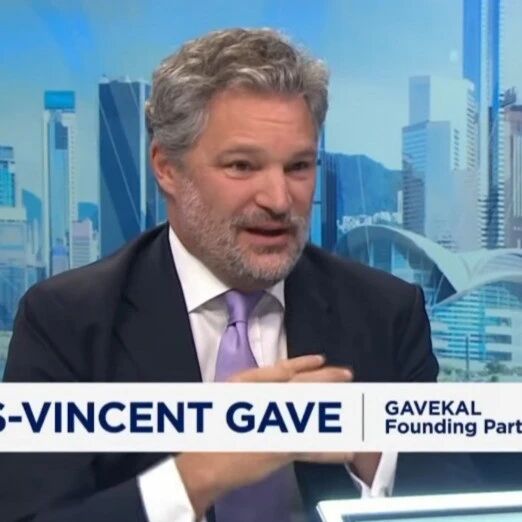
大佬Gave警告:美联储财政部合流大局已定,明年美债或先崩,亚洲货币升值将终结黄金牛市
Hua Er Jie Jian Wen· 2025-12-04 08:27
Core Viewpoint - Louis-Vincent Gave predicts a convergence of the Federal Reserve and the U.S. Treasury, leading to a potential collapse of the U.S. bond market, drawing parallels with Japan's bond market deterioration and a "Turkey scenario" where bond and currency values are sacrificed for nominal GDP growth [1][3][4]. Group 1: U.S. Bond Market and Economic Implications - The bond market is seen as the most vulnerable segment, with Gave suggesting that the U.S. bond market may follow Japan's trajectory of decline [3][4]. - Concerns over the Federal Reserve's tightening policies have led to market sell-offs, indicating a shift in investor sentiment towards risk assets [3][4]. - Gave emphasizes that the long-term effects of the Federal Reserve and Treasury's convergence will manifest in the bond market, potentially leading to significant repercussions for the dollar and stock markets [3][4]. Group 2: Asset Allocation and Investment Strategies - In a zero-interest-rate environment, investors are increasingly seeking tangible assets that generate cash flow, such as stocks and precious metals, as a hedge against capital erosion [1][5][6]. - Gave notes that gold and silver have performed well recently, with silver rising by 100% and gold by 55%, primarily driven by demand from regions with zero interest rates like Japan and Korea [6][7]. - The future of gold is tied to the performance of Asian currencies, particularly the undervalued yen, which could influence capital flows and demand for gold [1][8]. Group 3: AI Market and IPO Concerns - Gave expresses skepticism regarding the upcoming IPOs of AI companies like Anthropic, suggesting that the market may be transitioning from rewarding capital expenditure to rewarding asset divestiture [1][9][10]. - Historical patterns indicate that capital-intensive sectors, such as AI, may face challenges as market sentiment shifts, potentially making it difficult for these companies to achieve favorable IPO valuations [9][10][12]. - The financial metrics surrounding AI investments are daunting, with projections suggesting that AI would need to generate revenues significantly exceeding those of the global advertising industry to justify current valuations [12].
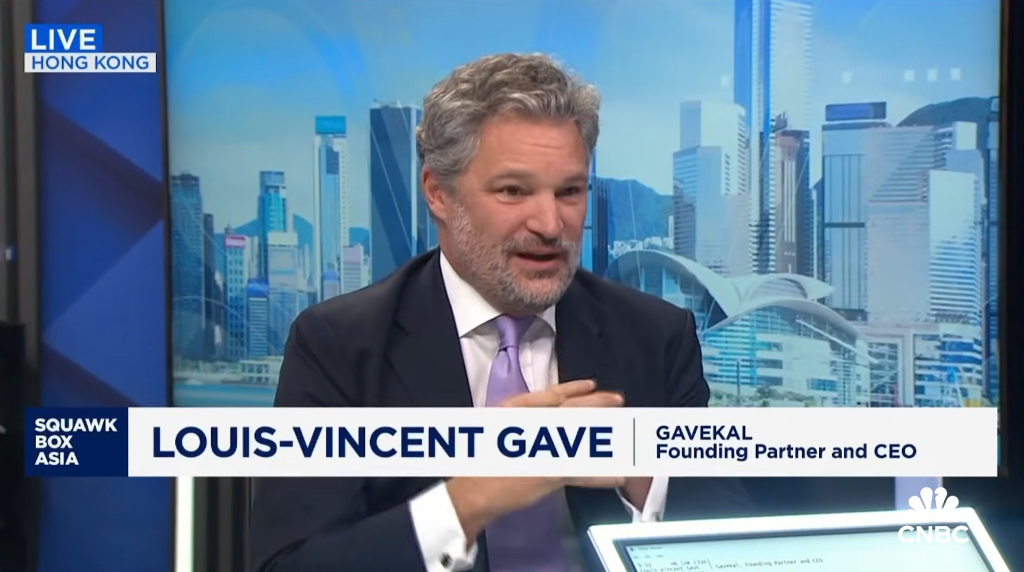
瑞银:预计美联储再降75基点,亚洲货币或升4%
Sou Hu Cai Jing· 2025-09-26 08:47
Core Viewpoint - UBS predicts that the Federal Reserve will further cut interest rates in the coming months, which will boost Asian currencies and U.S. stocks, particularly favoring Chinese technology companies [1] Group 1: Federal Reserve and Market Impact - UBS forecasts a total of 75 basis points in rate cuts by the end of Q1 2026, following the first rate cut of the year last week [1] - The firm expects that the U.S. economy will not enter a recession, with U.S. stocks projected to achieve mid-single-digit percentage gains by mid-2026 [1] Group 2: Chinese Market Outlook - UBS maintains an "overweight" rating on Chinese stocks, anticipating further upward movement in the Chinese stock market as household savings flow into the market [1] - The report indicates that the average appreciation of Asian currencies against the U.S. dollar is expected to be 4% over the next 12 months [1] Group 3: Company Performance and Sector Analysis - Companies included in the MSCI China Index are projected to see a 3% year-on-year increase in earnings by Q2 2025, with stable revenue growth [1] - Non-bank financial, technology, and healthcare sectors are expected to perform well, with internet companies showing double-digit growth in quarterly earnings [1] - Chinese companies are optimistic about their operational conditions, emphasizing cost control and pricing strategies [1]
高盛:下半年亚洲货币还有升值空间,尤其看好韩元和新台币
Hua Er Jie Jian Wen· 2025-07-02 09:31
Core Viewpoint - The depreciation of the US dollar is expected to continue, creating upward pressure on Asian currencies, particularly in the second half of 2025 [1][5]. Group 1: Dollar Weakness and Asian Currency Strength - Goldman Sachs maintains a bearish outlook on the US dollar, predicting a decrease in marginal funds flowing into US assets and a gradual rotation towards non-US assets [1][2][5]. - Asian currencies, including the New Taiwan Dollar, South Korean Won, Singapore Dollar, and Malaysian Ringgit, have appreciated by approximately 5-10% against the US dollar this year, with this trend likely to continue into the summer [1]. Group 2: Specific Currency Insights - The South Korean Won is favored by Goldman Sachs, with expectations of continued strong performance due to recent political stability and government initiatives aimed at boosting market confidence [6]. - The New Taiwan Dollar is also expected to face further appreciation pressure, driven by significant accumulated US dollar deposits and unhedged overseas assets held by Taiwanese insurance companies [9]. - The Chinese Yuan is projected to receive support from resilient economic growth and positive developments in US-China trade negotiations, contributing to a stable exchange rate against the dollar [10]. - In contrast, the Indian Rupee is anticipated to lag behind other Asian currencies due to the Reserve Bank of India's potential actions to mitigate large short forward positions, limiting upward pressure on the currency [11].
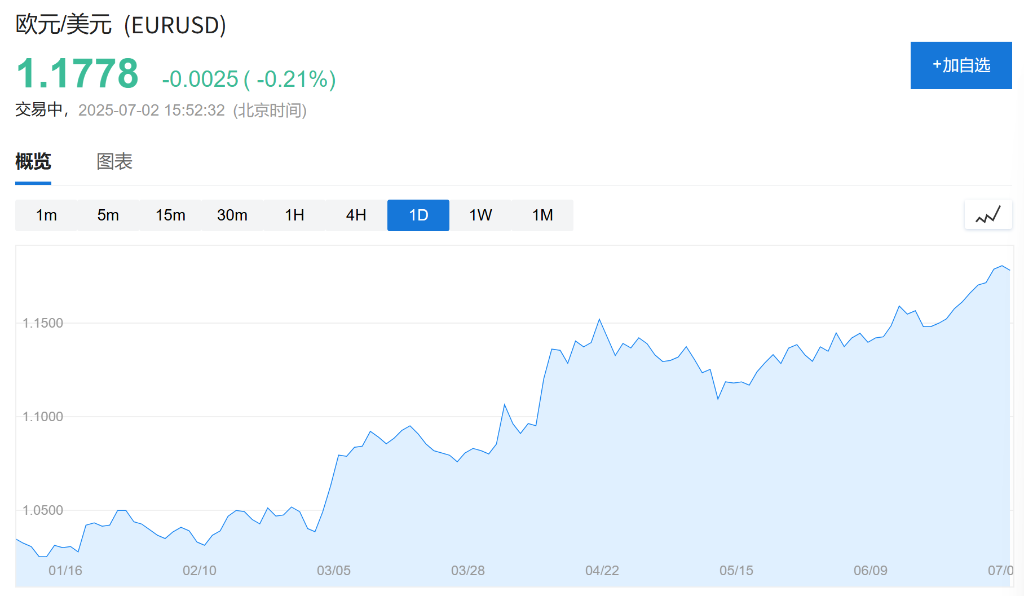
LGT:预期未来12个月美元跌势持续 建议减持美元分散风险
Zhi Tong Cai Jing· 2025-06-12 08:10
Group 1 - The core viewpoint is that LGT Royal Bank (Asia) remains bearish on the US dollar, expecting its decline to continue over the next 12 months due to various factors including the Trump administration's policies [1] - Despite the signing of a trade agreement between the US and China, concerns about the US economic cycle and fiscal situation persist, with the latest budget proposal reinforcing doubts about sustainable fiscal control [1] - The euro is seen as the best alternative to the dollar due to increased fiscal support from the EU, while the Australian dollar benefits from interest rate differentials and Chinese fiscal stimulus [1] Group 2 - LGT advises investors to approach the recent dollar sell-off cautiously, as the process of reducing dollar exposure to diversify risk is expected to be gradual [2] - Gold is highlighted as a long-term asset for risk diversification and inflation hedging, with a preference for buying during price corrections, particularly after trade or tariff tensions ease [2]
韩国央行行长李昌镛:美韩之间举行的外汇会谈最终推动了亚洲货币升值。
news flash· 2025-05-29 02:42
Core Viewpoint - The foreign exchange talks between the U.S. and South Korea have ultimately led to the appreciation of Asian currencies [1] Group 1 - The discussions between the U.S. and South Korea are seen as a significant factor influencing currency movements in the Asian region [1] - The South Korean central bank governor, Lee Chang-yong, emphasized the positive impact of these talks on the valuation of Asian currencies [1]
韩元日元急涨,美元贬值猜测扰动亚洲市场
日经中文网· 2025-05-15 07:32
Core Viewpoint - The article discusses the fluctuations in Asian currencies, particularly the South Korean won and the Japanese yen, against the US dollar, driven by expectations of US pressure on countries with trade deficits to appreciate their currencies [1][3]. Group 1: Currency Fluctuations - On May 14, the South Korean won appreciated by 2% against the US dollar, while the Japanese yen also saw an increase, reaching a level of 145.70 yen per dollar, indicating a significant shift in the currency market [1]. - The South Korean won traded at approximately 1380 won per dollar, reflecting a 2% increase from the previous day, influenced by reports of US-Korea trade discussions that included currency issues [1][3]. Group 2: US Trade Negotiations - The article highlights that the US is expected to exert pressure on Asian countries with trade deficits to appreciate their currencies, a sentiment that has been echoed in previous trade negotiations [3][4]. - The US government's stance, as articulated by economic advisors, suggests that a weaker dollar could enhance the competitiveness of American manufacturing, although there are conflicting reports regarding the actual intent to devalue the dollar [2][3]. Group 3: Market Reactions - The Taiwanese dollar appreciated by approximately 10% against the US dollar during early May, attributed to speculation that the US was pressuring Taiwan to strengthen its currency amid trade talks [3]. - Asian investors have increased their exposure to US assets without hedging against currency risks, leading to heightened volatility in the currency markets [3]. Group 4: Future Expectations - There is a prevailing expectation that currency volatility will increase in the short term, with market analysts suggesting that the US dollar is overvalued based on purchasing power parity [4]. - Discussions at the upcoming G7 meeting regarding currency issues are anticipated to further influence market sentiments and currency valuations [4].
降息降准一揽子金融政策出炉,多部门回应中美经贸高层会谈丨一周热点回顾
Di Yi Cai Jing· 2025-05-10 05:04
Monetary Policy and Economic Measures - The central bank announced a comprehensive reduction in the reserve requirement ratio by 0.5 percentage points, expected to release approximately 1 trillion yuan in long-term liquidity [2] - The policy interest rate was lowered by 0.1 percentage points, with the 7-day reverse repurchase rate decreasing from 1.5% to 1.4%, likely leading to a similar drop in the Loan Prime Rate (LPR) [2] - The measures aim to stabilize market expectations and support the development of the real economy, with the Shanghai Composite Index rising by 0.8% to 3342.67 points on the announcement day [2][3] Public Fund Industry Reform - The China Securities Regulatory Commission (CSRC) introduced an action plan to promote high-quality development in public funds, shifting focus from "scale" to "returns" [4] - Key changes include linking management fees to fund performance, with lower fees for underperforming funds and potential increases for those exceeding benchmarks [4][5] - As of the end of April, public funds managed 32.5 trillion yuan, with over 50% of pension assets under management [4][5] Trade and Export Performance - In April, China's exports grew by 9.3% year-on-year, while imports turned positive with a 0.8% increase [9] - The total value of goods trade for the first four months reached 14.14 trillion yuan, a 2.4% increase compared to the previous year [9] - Exports to the U.S. saw a significant decline of 21.0%, while exports to ASEAN countries increased by 20.8% [9] Automotive Industry Standards - The Ministry of Industry and Information Technology is seeking public input on new safety standards for automotive door handles, focusing on emergency access and safety in accidents [10] - The proposed standards aim to enhance the safety and visibility of hidden door handles, addressing concerns raised by recent traffic incidents [10][11] Private Sector Investment - The National Development and Reform Commission plans to launch approximately 3 trillion yuan in quality projects this year, encouraging private sector participation in major infrastructure projects [13] - The initiative aims to leverage the flexibility and innovation of private enterprises to enhance project execution and create jobs [13] Stock Market and Corporate Actions - Geely Automobile announced plans to acquire all shares of Zeekr Intelligent Technology, leading to its delisting from the NYSE and a focus on consolidating its automotive business [18] - This move reflects Geely's strategy to enhance its competitiveness in the smart electric vehicle sector amid increasing market pressures [18]

新台币领军狂升4% 亚洲货币涨势恐未结束
news flash· 2025-05-05 01:48
Core Viewpoint - The Asian currency rally, led by the New Taiwan Dollar, is likely to continue as investors bet that the worst impact of tariffs has passed, with potential concessions from both negotiating parties in the coming months [1] Currency Performance - The New Taiwan Dollar appreciated by 4% against the US Dollar, reaching 29.79 TWD shortly after the market opened [1] - Other Asian currencies have also seen significant appreciation due to the weak performance of the US Dollar, prompting central banks to intervene to prevent excessive volatility [1] Economic Outlook - Goldman Sachs analysts, led by Kamakshya Trivedi, indicated that the pressure on the US Dollar, combined with rising recession risks in the US, may lead to lower interest rates [1] - This shift in the economic landscape alters the risk and reward structure for Asian exporters holding US Dollar deposits [1] Future Predictions - Goldman Sachs forecasts continued appreciation of Asian currencies, including the Renminbi, New Taiwan Dollar, and Malaysian Ringgit [1]