全球货币政策宽松

Search documents
挪威央行维持4%利率不变,牵动全球能源贸易与资产定价
Sou Hu Cai Jing· 2026-01-22 11:26
Group 1 - The Norwegian central bank maintains the policy interest rate at 4%, effective from January 23, aligning with market expectations [1] - The central bank emphasizes that future interest rate decisions will heavily depend on economic data, with a potential for one or two rate cuts in 2026 [1] - Current inflation in Norway, while significantly lower than before, remains above the 2% target, with core inflation hovering around 3% since autumn 2024 [1] Group 2 - Following a surprise rate cut of 25 basis points to 4.25% in June 2025, the Norwegian central bank's actions align with a global trend towards monetary easing [2] - The central bank's forward guidance indicates potential further cuts to 4.0% in September and 3.75% in December, reinforcing expectations for global liquidity easing [2] - The gradual adjustments by the Norwegian central bank provide a reference for other central banks to balance inflation control and economic growth, helping to mitigate market volatility caused by policy divergence [2] Group 3 - After the June 2025 rate cut, the Norwegian krone depreciated by 1%-1.3% against the US dollar and euro, strengthening the relative position of these currencies [3] - The appreciation of the krone in March 2025, due to a rate hike and increased energy export surplus, negatively impacted the competitiveness of other Nordic currencies [3] - Fluctuations in the krone also affect other energy-exporting currencies, such as the Canadian dollar and Russian ruble, contributing to global currency volatility [3]
华创证券张瑜:大分化背景下,中游背后的宏观景气略胜一筹
Xin Lang Cai Jing· 2026-01-16 06:11
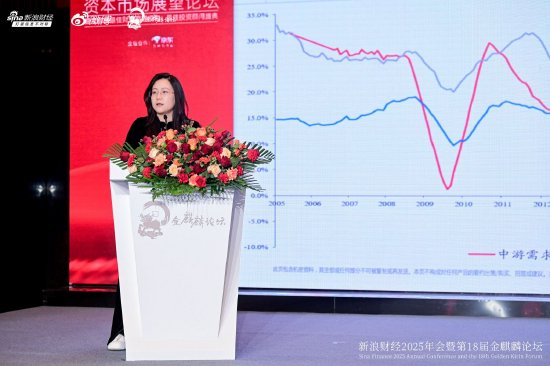
Core Viewpoint - The speech by Zhang Yu, Chief Economist of Huachuang Securities, at the 2026 Global and China Capital Market Outlook Forum, presents a new perspective on the development stage of Chinese manufacturing, emphasizing the resilience of the midstream sector and its potential for recovery [1][7]. Group 1: Midstream Sector Resilience - The four key areas of midstream external demand (electromechanical exports) show resilience, with expectations for other electromechanical sectors to benefit from a mild recovery cycle in industrial production driven by global monetary policy easing [3][9]. - The ICT sector is anticipated to benefit from the ongoing technological revolution and the sustained prosperity of the global semiconductor market [3][9]. - Shipbuilding exports are expected to gain from high growth in existing orders, while automotive exports are projected to benefit from enhanced competitiveness and the ongoing electrification process in global automotive exports [3][9]. Group 2: Return on Equity (ROE) Insights - Focusing on the ROE of midstream listed companies, it is noted that ROE aligns with midstream Producer Price Index (PPI), which in turn correlates with midstream fixed asset turnover rates [5][11]. - Predictions regarding midstream fixed asset growth are based on reduced capital expenditures in 2024-2025, alongside forecasts for midstream demand benefiting from high prosperity in electromechanical exports, suggesting that midstream ROE may continue to rise [5][11].

人民币升值,只是开始
2025-12-26 02:12
Summary of Key Points from the Conference Call Industry Overview - The discussion revolves around the **Chinese Yuan (RMB)** and its appreciation against the US Dollar and other currencies, highlighting macroeconomic factors and seasonal trends affecting the currency's value [1][3][6]. Core Insights and Arguments - **RMB Appreciation**: Since August, the RMB has appreciated by **2.3%**, with the US Dollar's weakness contributing **1.6%** and active appreciation from China contributing **0.7%**. This indicates that both external and internal factors are driving the RMB's rise [1][3]. - **End-of-Year Trends**: Historically, the end of the year is a period when the RMB tends to appreciate due to increased demand for currency exchange as companies prepare for the new fiscal year. This seasonal trend has been observed in previous years, except for 2024 [4][5]. - **Long-term Outlook**: The current appreciation is not merely a short-term seasonal effect but may signal the beginning of a long-term trend. Factors such as improvements in the Chinese macroeconomy and ongoing global monetary easing, particularly in the US, are expected to support the RMB's strength [6][8]. - **Impact on Exports**: The rise in the RMB is not expected to significantly hinder Chinese exports. The trade surplus with major partners does not rely on currency depreciation or deflation, but rather on internal competition among Chinese firms [7]. - **Future Drivers**: In the coming year, several factors could influence the RMB's trajectory, including improvements in the Chinese economy, the breaking of capital outflow cycles, continued US monetary easing, and rising commodity prices. However, potential global economic changes or domestic policy adjustments could also impact this trend [8]. Additional Important Content - **Labor Productivity and Exchange Rate**: There is a historical correlation between labor productivity growth and nominal effective exchange rates. China's labor productivity has outpaced global averages over the past 20 years, but recent internal competition and investment issues have suppressed this relationship. A potential recovery in productivity by 2025 could help restore the nominal effective exchange rate to reasonable levels [2][9].
碳酸锂期货主力合约涨超7%,有色金属ETF(512400)强势涨近2%,供需紧平衡成行情核心驱动,有色商品接力上涨
Xin Lang Cai Jing· 2025-12-17 03:02
Group 1 - The core viewpoint of the articles highlights the strong performance of the non-ferrous metal market, particularly the rise in prices of various metals, driven by supply constraints and increasing demand, with platinum prices nearly doubling in 2025 [1][2] - As of December 17, 2025, the non-ferrous metal ETF (512400) increased by 1.75%, with a trading volume of 247 million yuan, and the index it tracks, the Zhongzheng Shenwan Non-Ferrous Metal Index, rose by 1.85% [1] - The net inflow of funds into the non-ferrous metal ETF reached 149 million yuan, with a total net inflow of 369 million yuan over the last five trading days [1] Group 2 - Global monetary policy is shifting towards a loose cycle, significantly supporting commodity prices, with the proportion of central banks cutting interest rates rising from 13.33% in October 2022 to 85.33% in October 2025 [2] - The non-ferrous metal ETF closely tracks the Zhongzheng Shenwan Non-Ferrous Metal Index, which includes 50 listed companies in the non-ferrous metal and non-metal materials sectors, reflecting the overall performance of the industry [2] - The top ten weighted stocks in the index include Zijin Mining, Luoyang Molybdenum, Northern Rare Earth, and others, indicating a diversified representation of the non-ferrous metal sector [2]
金货期业弘:历史高位受阻,铜价短线震荡
Hong Ye Qi Huo· 2025-11-04 02:35
Report Summary 1) Report Industry Investment Rating No information provided. 2) Core View of the Report - Short - term market sentiment for copper is strong, and copper prices may experience high - level fluctuations. Mid - term macro expectations and spot demand are in conflict, with high uncertainty. [4] 3) Summary by Related Aspects Market Environment - After the Fed's hawkish speech, the market continued to lower the expectation of a Fed rate cut in December, the market's optimistic sentiment declined, and the US dollar rose to a new high since August on Friday. The non - ferrous metals showed a strong trend. [3] - China's October manufacturing PMI was slightly lower than expected, and China issued a large number of opening - up policies, which improved market sentiment. [3] - The US dollar rose slightly, the RMB soared, and the sharp rise in crude oil and energy drove the non - ferrous metals to rise in the afternoon. [3] Copper Market Performance - Shanghai copper and LME copper rose, while domestic spot copper fell. Today, Shanghai copper closed at 87,300, and the spot price was 87,020. The spot was at a discount of - 280 points to the futures. The spot basis was at a discount of - 5 points, and spot trading was poor. [3] - The LME spot discount narrowed to - 14 US dollars this week, and the external spot demand was average. [3] - US copper inventories continued to rise significantly this week, LME copper inventories decreased, and Shanghai copper inventories increased, with general spot demand. [3] - The RMB exchange rate fell sharply this week, the Yangshan copper premium dropped to 34 US dollars, and domestic spot demand was poor. [3] - The LME - Shanghai ratio of copper prices dropped to 7.97, the premium of international copper over Shanghai copper dropped to 535 points, and the external price ratio was higher than the domestic one. [3] Technical and Fundamental Analysis - Technically, LME copper rose slightly and traded around 10,900 US dollars. Shanghai copper rose slightly and closed at 87,300, with a neutral technical pattern. The trading volume and open interest of Shanghai copper both decreased, and the market sentiment was cautious. [4] - Macroscopically, the global trade pattern is gradually stabilizing, the Fed's rate - cut cycle continues, and the global monetary policy tends to be loose, which is a medium - term positive for copper prices. [4] - In terms of supply and demand, the output of mines in Indonesia and other places has decreased, but the short - term spot demand remains weak, inventories are high, and there may be some pressure on the spot end in the future. [4] Future Concerns - Future concerns include when the US government shutdown will end, whether the Fed's rate - cut cycle can continue, and when the current weak spot demand at home and abroad will improve. [4] Copper Market Indicator Monitoring | Date | RMB Exchange Rate | Spot Premium/Discount (yuan/ton) | Yangshan Copper Premium (US dollars/ton) | LME Copper - Futures - Spot Spread | Main Contract LME - Shanghai Ratio | | --- | --- | --- | --- | --- | --- | | Oct 28 | 7.0962 | 1220 | 34.5 | - 24 | 8.03 | | Oct 29 | 7.0968 | - 950 | 34.5 | - 20 | 7.95 | | Oct 30 | 7.1106 | 140 | 35.5 | - 20 | 8.00 | | Oct 31 | 7.1225 | 600 | 35.5 | - 21 | 8.01 | | Nov 3 | 7.1173 | - 280 | 34 | - 14 | 7.97 | [5]
宏观利好刺激,铜价接近新高
Hong Ye Qi Huo· 2025-10-27 11:13
Group 1: Report Industry Investment Rating - Not mentioned in the provided content Group 2: Core View of the Report - The copper price is close to a new high due to macro - positive stimuli. The overall sentiment in the market is optimistic. The copper price may continue to rise in the medium - to - long - term and could potentially break through historical highs following the trend of gold [3][4] Group 3: Summary Based on Related Information Market Performance - Today, the US dollar rose slightly while the RMB soared. Non - ferrous metals remained strong throughout the day. Shanghai copper, London copper, and domestic spot copper all increased. The closing price of Shanghai copper was 88,370, and the spot price was 88,340. The spot was at a discount of - 30 points to the futures. The spot basis turned to a discount of - 45 points, and spot trading was poor. The LME spot discount narrowed slightly to - 26 dollars this week, indicating general foreign spot demand. US copper inventories continued to rise significantly this week, London copper inventories decreased, and Shanghai copper inventories increased, with general spot demand. The RMB exchange rate rose significantly this week, and the Yangshan copper premium dropped to 34.5 dollars, showing weak domestic spot demand. The London - Shanghai ratio of copper prices rose to 8.09, and the premium of international copper over Shanghai copper increased to 595 points, with the foreign price - to - value ratio higher than the domestic one [3] Technical and Fundamental Analysis - Technically, London copper surged today, trading around 11,050 dollars. Shanghai copper also rose sharply, closing at 88,370, hitting a recent high with a strong technical pattern. Both trading volume and open interest of Shanghai copper increased, and market sentiment was optimistic. Macroscopically, the global trade pattern is gradually stabilizing, the Fed's interest - rate cut cycle continues, and global monetary policies are becoming more accommodative, which is a medium - term positive for copper prices. In terms of supply and demand, mine production in places like Indonesia has declined, but short - term spot demand remains weak, inventories are high, and there is growth potential for medium - to - long - term copper demand, presenting a generally neutral situation that requires attention [3][4] Future Events to Watch - In the short - term, important macro events to follow include the results of Sino - US talks, the Fed's interest - rate meeting early Thursday, the APEC meeting at the end of the month where Sino - US leaders may meet, and the end of the US government shutdown. In the medium - term, it is necessary to monitor whether Sino - US relations can continue to improve, whether the Fed's interest - rate cut cycle can persist, when the current weak domestic and foreign spot demand will improve, and whether AI - related demand can materialize [4] Copper Market Indicator Monitoring | Date | RMB Exchange Rate | Spot Premium/Discount (yuan/ton) | Yangshan Copper Premium (dollars/ton) | LME Copper - Futures and Spot Spread | Main Contract London - Shanghai Ratio | | ---- | ---- | ---- | ---- | ---- | ---- | | Oct 21 | 7.1269 | 450 | 35 | - 23 | 8.05 | | Oct 22 | 7.1256 | - 320 | 34 | - 30 | 8.03 | | Oct 23 | 7.1246 | - 520 | 40 | - 6 | 8.05 | | Oct 24 | 7.1259 | - 1170 | 39 | - 12 | 7.97 | | Oct 27 | 7.1136 | - 30 | 34.5 | - 26 | 8.09 | [5]
香港第一金PPLI:黄金突破4000美元大关 多头趋势未改逢低看多
Sou Hu Cai Jing· 2025-10-10 09:09
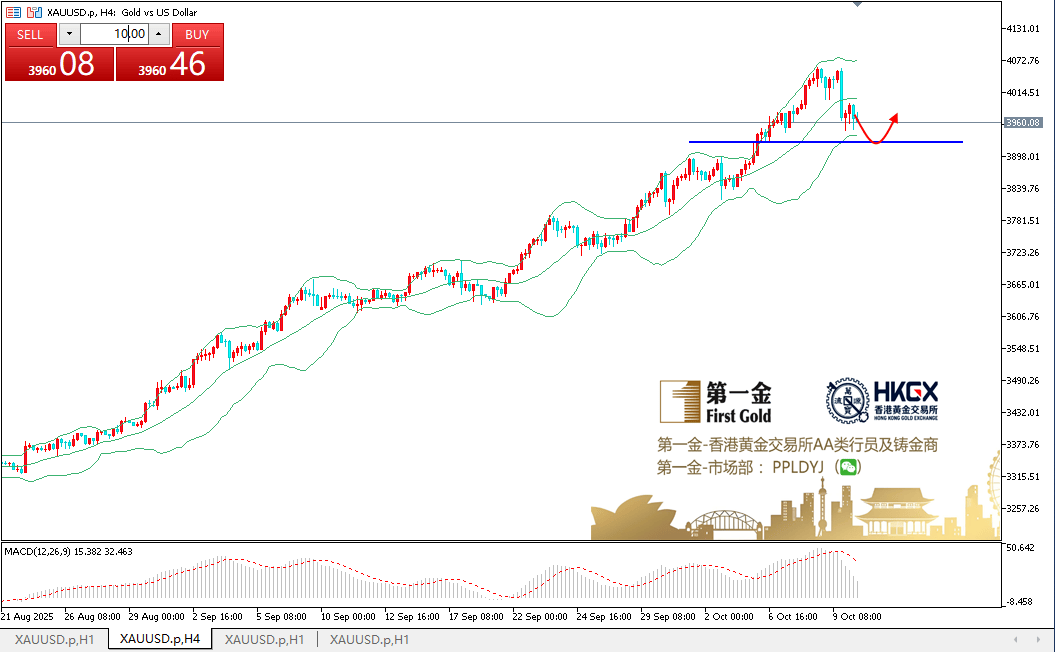
Core Viewpoint - International gold prices have reached a historic high of $4,059 per ounce, marking a significant increase of over 10% since September, the largest monthly gain in 14 years, driven by global monetary policy easing and inflation concerns [1][2]. Group 1: Market Dynamics - The surge in gold prices is attributed to a combination of geopolitical tensions, including the Russia-Ukraine conflict and Middle Eastern issues, alongside a broader loss of confidence in existing currencies [2]. - Central banks, particularly in China, have been increasing their gold reserves, which now exceed 2,300 tons, indicating strong institutional support for gold as a safe-haven asset [1][2]. - The current economic climate, characterized by rising national debt and potential U.S. interest rate cuts, is seen as favorable for gold, with analysts suggesting that significant capital is still being allocated to gold for risk mitigation [2]. Group 2: Technical Analysis - Short-term technical indicators show that gold is experiencing slight corrections, with a resistance level at $4,060 and a support level at $3,900 [4]. - The MACD indicator suggests a strong bullish trend, while the Bollinger Bands indicate potential upward movement if gold maintains above the support levels [4]. - Trading strategies recommend buying on dips, with specific price targets set for aggressive and conservative investors [4].
锌季度报告:内外劈叉亟待修复
Guo Mao Qi Huo· 2025-09-29 07:59
1. Report Industry Investment Rating - Long - term bearish on zinc (ZN) [3] 2. Core Viewpoints of the Report - The Fed restarted the interest - rate cut cycle in Q3 2025, but there are significant differences among officials. The short - term interest - rate cut path is uncertain. In the medium - to - long - term, the global monetary policy is expected to be loose, which will support the non - ferrous metals sector. Meanwhile, China's economic pressure is emerging, and policy support is urgently needed. Attention should be paid to the policy introduction during the 15th Five - Year Plan in Q4 [1][3][110] - The current domestic zinc ingot production is approaching the threshold, with limited incremental output in Q4. Demand is also mediocre. The supply - surplus pattern of zinc fundamentals is expected to continue, suppressing the upside space of zinc prices. However, the downside space of zinc is limited. The Fed's restart of the interest - rate cut cycle and the expected global liquidity loosening support the non - ferrous metals sector, and the waiting - to - be - repaired internal - external price ratio also limits the lower limit of SHFE zinc. It is expected that the center of zinc prices will move down slightly with small fluctuations in Q4 [5][111][113] - Unilateral trading has low cost - effectiveness. Pay attention to short - allocation opportunities within the sector. The contango/backwardation spread maintains the reverse - arbitrage logic, but the space is limited. In addition, for internal - external trading, pay attention to the reverse - arbitrage opportunities when the internal inventory is transferred overseas [2][113] 3. Summary According to Relevant Catalogs 3.1 Market Review - **Price Trend Review**: In Q3 2025, the prices of SHFE zinc and LME zinc showed a divergent trend. SHFE zinc showed an inverted "V" shape, while LME zinc oscillated upwards. The price fluctuations were affected by factors such as the Fed's interest - rate cut expectations, labor strikes at refineries, and inventory trends [6] - **Spread and Premium/Discount Changes**: In June 2025, the zinc social inventory started to accumulate, and the basis was quickly adjusted downwards, turning into a discount at the end of July. As of September 22, the average spot premium/discount in Shanghai dropped to - 60 yuan/ton. The domestic basis is at a low level in recent years, while the LME basis is at a high level. In the future, the domestic spot is likely to maintain a discount pattern. Pay attention to reverse - arbitrage opportunities [12] 3.2 Macro Aspects - **US**: The interest - rate cut cycle restarted, but there are differences among Fed officials, and the interest - rate cut pace may be cautious. In the short - term, the interest - rate cut is in line with market expectations. In the medium - to - long - term, it is expected to promote global liquidity release and support the non - ferrous metals sector. However, the US economic recession probability still exists as the non - farm payroll data was disappointing [18][19][21] - **China**: In Q3, economic data declined significantly. In August, investment, consumption, and production data all declined. Economic pressure is emerging, and policy support is urgently needed. Attention should be paid to the policy introduction during the 15th Five - Year Plan in Q4 [32][34][38] 3.3 Fundamental Overview - **Raw Material End**: - Global zinc ore supply has recovered significantly. In 2025, overseas zinc ore production increased year - on - year, and in Q4, overseas mines may increase production to meet the annual targets. Domestic zinc concentrate production is stable, but northern mines will have seasonal maintenance at the end of Q4. Zinc concentrate imports are at a high level and are expected to continue in Q4 due to winter storage demand [39][41][47] - In Q3 2025, the processing fees of domestic and imported zinc ores showed a divergent trend. The domestic processing fee increase was limited and has reached an inflection point, while the imported processing fee continued to rise. In Q4, the imported processing fee still has room to rise [56][58] - **Smelting End**: - Global refined zinc production decreased in H1 2025, with a significant internal - external divergence. Domestic zinc ingot production increased due to good profits, while overseas refineries had low operating rates due to high costs and low profits [62] - Domestic zinc ingot production is approaching the threshold, with limited incremental output in Q4. Recycled zinc will bring some incremental output, and the key incremental output of primary zinc lies in the Huoshaoyun project, but its production start is slower than expected. Overseas refineries have limited incremental output, and the supply of overseas zinc ingots is expected to remain tight. China's refined zinc imports decreased in 2025, and the zinc ingot export window is almost open [66][69][71] - **Demand End**: - The downstream demand in the initial stage showed no obvious peak - off - peak characteristics, and there are concerns about future demand. The export of galvanized sheets was affected by the anti - dumping tax in Vietnam, and the future export is expected to be weak [73][80][85] - Infrastructure investment growth slowed down in 2025, but infrastructure is still the key support for zinc consumption. The real estate market is still the main drag on zinc consumption, but the demand for zinc may improve slightly in Q4. The home appliance industry is expected to weaken due to the shortage of national subsidies and the "de - stocking" in the overseas market. The automobile industry maintained high growth in production and sales in Q3, and the demand for zinc is expected to be good in the peak season [88][91][100] - **Inventory**: Since June 2025, the domestic zinc ingot social inventory has been accumulating, while the LME zinc inventory has continued to decline rapidly. The internal - external inventory divergence has intensified, and the export window is approaching. If the export window opens, the domestic inventory may be transferred overseas, which will change the inventory divergence trend [104]
沪指行情分析:延续震荡上行态势!
Sou Hu Cai Jing· 2025-08-08 08:42
Core Viewpoint - The A-share market is currently experiencing a correction phase after significant gains in June and July, with the Shanghai Composite Index standing above 3600 points [3]. Group 1: Current Market Adjustment - The current adjustment in the market is characterized as healthy, with anti-involution policies being implemented across various industries, which are expected to optimize the market environment and improve overall industry profitability [4]. - Key economic indicators such as the Producer Price Index (PPI) are anticipated to improve, indicating enhanced profitability for industrial enterprises, which will support the performance growth of related listed companies [4]. Group 2: Mid-term Upward Drivers - The global monetary policy easing cycle is ongoing, with major central banks, including the Federal Reserve, likely to continue interest rate cuts into 2025, providing liquidity support for the market [5]. - China's central bank has already initiated a combination of reserve requirement ratio cuts and interest rate reductions, with further easing expected, which will benefit equity assets and push up risk asset valuations [5]. - The macroeconomic environment is gradually moving towards recovery, supported by proactive fiscal policies and moderate monetary policies, which aim to lower financing costs and enhance policy effectiveness [5]. Group 3: Technology Sector as a Core Investment Line - The technology sector remains a core investment focus for the medium to long term, with significant advancements expected in areas such as artificial intelligence and robotics by 2025 [6]. - Recent policies from the government aim to support technological innovation through various financial measures, encouraging investment in early-stage and hard technology sectors [7]. - The State Council has approved initiatives to promote the large-scale commercialization of artificial intelligence, leveraging China's comprehensive industrial system and market advantages [7].