
原油价格上涨

Search documents
亚洲原油涨价至2.4倍,涨幅远超欧美
日经中文网· 2026-03-23 08:00
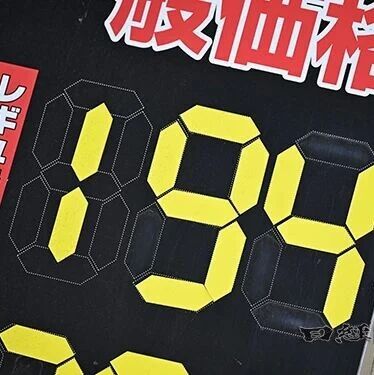
Core Viewpoint - The article discusses the significant increase in oil prices, particularly for Middle Eastern crude oil, due to geopolitical tensions, and highlights the implications for Japan's energy procurement and economic burden [2][4][5]. Group 1: Oil Price Trends - As of March 19, the spot price of Middle Eastern Dubai crude oil reached $169.8 per barrel, a 12% increase from the previous day and 2.4 times higher than the price before the U.S. and Israel's attack on Iran [4][5]. - The price of Dubai crude oil has hit the highest level since 1986, with a price difference of $60 to $70 compared to European and U.S. crude oil [4][5]. Group 2: Japan's Oil Dependency - Japan relies on Middle Eastern crude oil for over 90% of its imports, making it difficult to quickly shift to cheaper U.S. or European oil due to existing infrastructure and long-term contracts [5][9]. - The current oil procurement situation in Japan is severe, with a combined government and private sector oil reserve sufficient for 254 days of domestic consumption [8]. Group 3: Government Response and Economic Impact - The price of regular gasoline in Japan reached a historical high of 190.8 yen per liter as of March 16, with government subsidies being reintroduced to mitigate the impact of rising oil prices [7]. - If the price of Dubai crude reaches $200 per barrel, gasoline prices could rise to 294 yen per liter, leading to daily government subsidies of 37 billion yen, totaling approximately 1.1 trillion yen over a month [7]. Group 4: Future Procurement Strategies - Japan is exploring diversification of oil procurement sources, including potential increases in imports from the U.S. and Central America, as discussed in the recent Japan-U.S. summit [9]. - Japanese companies, such as ENEOS, are considering alternative suppliers outside the Middle East, while South Korea is also looking into importing Russian crude oil [9].

油价上涨对大众品板块影响几何
2026-03-18 02:31
Summary of Conference Call Notes Industry Overview - The conference call discusses the impact of rising crude oil prices on the consumer goods sector, particularly focusing on soft drinks, snacks, frozen baked goods, condiments, beer, and dairy products [1][3][4]. Key Points and Arguments Impact of Rising Crude Oil Prices - **Soft Drinks Sector**: The soft drink sector is most affected, with PET costs accounting for over 20% of expenses. A 20%-30% increase in PET costs could reduce gross margins for companies like Nongfu Spring and Dongpeng Beverage by 2-3 percentage points if prices are not raised [1][4]. - **Snacks and Frozen Baked Goods**: These sectors face intense competition and lack pricing power. Companies like Ganyuan Foods and Lihigh Foods are significantly impacted by rising palm oil costs, making profit recovery more challenging than in other segments [1][4]. - **Condiments Sector**: This sector has strong pricing power. The cost transmission from crude oil to soybean prices takes about six months, with cost pressures expected to reflect in financial statements by Q4 2026. Leading companies like Haitian and Zhongju are likely to pass on costs through price increases [1][5]. - **Beer and Dairy Products**: These sectors are least affected by crude oil price fluctuations. Beer companies can offset costs through product upgrades, while dairy prices are expected to rise moderately by Q3 2026, benefiting companies like Yili and Mengniu [1][5]. Transportation Costs - The impact of rising oil prices on transportation costs is weaker than in previous cycles (2020-2022). The current low level of China's export container freight index limits the cost pressure on companies with high overseas business exposure, such as yeast producers [1][4]. Comparative Analysis of Companies - In the previous cost-up cycle, companies like Nongfu Spring and Dongpeng Beverage managed to grow net profits by optimizing product structures and leveraging scale effects, while competitors like Master Kong and Uni-President faced significant pressure [6][7]. - Current investment insights suggest that companies with strong cost-hedging capabilities, such as Dongpeng Beverage and Nongfu Spring, may present good buying opportunities following recent stock price adjustments [2][7]. Investment Strategies and Focus Areas - **Snacks and Frozen Baked Goods**: Risks are highlighted due to fierce competition and weak cost transfer capabilities. Structural opportunities exist in leading channel distributors [8]. - **Condiments**: Strong pricing power is noted, but the current demand environment is weaker than in previous cycles. Any signs of price increases could present good investment opportunities [8]. - **Beer Sector**: Focus on companies with sustainable premiumization capabilities, as the current demand in the restaurant sector may hinder high-end product growth [8]. - **Dairy Sector**: Monitoring the potential price turning point for raw milk in 2026 is crucial, as a moderate increase could benefit leading companies like Yili and Mengniu by reducing regional price competition [8].
山金期货黑色板块日报-20260316
Shan Jin Qi Huo· 2026-03-16 01:38
1. Report Industry Investment Rating No information provided in the report. 2. Core Viewpoints of the Report - The Middle - East situation shows no sign of easing, with crude oil prices rising strongly. Driven by this, black - series commodity prices are running strongly in the short term. Although the market's supply - demand is recovering with increasing production and demand, inventory is still rising, and the market has relatively weak expectations for this year's demand and a pessimistic view of the fundamentals. The sharp rise in crude oil has pushed up costs, and the "Two Sessions" policies did not exceed market expectations. Technically, the futures price has broken through the resistance of the middle track of the Bollinger Band, and it is likely to maintain a volatile and strong trend in the short term. For trading, it is recommended to go long with a light position on dips and be cautious about chasing up [2]. - The iron ore market is entering the consumption season. Although the daily average hot - metal output decreased last week, it is expected to gradually recover after the "Two Sessions" and with the arrival of the consumption season. The sharp rise in crude oil prices has increased production costs on both the supply and demand sides. Rumors of tightened liquidity in the spot market have led to an accelerated rise in iron ore prices. There are also rumors that BHP's Newman powder has been added to the spot restriction list, which has a short - term impact on market supply. With the improvement of the weather, shipments are gradually rising to a high level, and the port inventory has reached a record high. Technically, the futures price has rebounded rapidly, breaking through the important resistance level above, and the medium - term downward trend may end. It is recommended to try to go long with a light position on dips during the price correction [5]. 3. Summary by Related Catalogs 3.1 Threaded Rods and Hot - Rolled Coils - **Price Changes**: The closing prices of the main contracts of rebar and hot - rolled coils increased by 0.35% and 0.40% respectively compared to the previous day, and 1.43% and 1.77% respectively compared to last week. The spot prices of rebar and hot - rolled coils also showed certain changes, with the rebar spot price in Shanghai down 0.31% from the previous day but up 0.63% from last week, and the hot - rolled coil spot price unchanged from the previous day but up 0.93% from last week [3]. - **Supply and Demand**: The total output of the five major varieties of the 247 sample steel mills increased last week, and the inventory continued to rise. The apparent demand rebounded from the low point of the year. The national building materials steel mill's rebar output increased by 4.97% compared to last week, while the hot - rolled coil output decreased by 2.75%. The social inventory of the five major varieties increased by 8.29%, and the apparent demand increased by 23.68% [2][3]. - **Operation Suggestion**: Go long with a light position on dips and be cautious about chasing up [2]. 3.2 Iron Ore - **Price Changes**: The settlement price of the main DCE iron ore contract increased by 0.45% compared to the previous day and 4.72% compared to last week. The prices of various iron ore powders in ports also showed different degrees of increase [5]. - **Supply and Demand**: The market is entering the consumption season. Although the daily average hot - metal output decreased last week, it is expected to recover. The supply side is affected by rumors, and shipments are gradually rising with the improvement of the weather. The port inventory has reached a record high [5]. - **Operation Suggestion**: Try to go long with a light position on dips during the price correction [5]. 3.3 Industry News - The total inventory of imported iron ore in 45 ports was 17187.52 tons, a week - on - week increase of 69.66 tons; the daily average port clearance volume was 317.90 tons, an increase of 6.82 tons; the number of ships in port was 110, a decrease of 2 [7]. - The blast furnace operating rate of 247 steel mills was 78.34%, a week - on - week increase of 0.63 percentage points and a year - on - year decrease of 2.24 percentage points; the blast furnace iron - making capacity utilization rate was 82.92%, a week - on - week decrease of 2.40 percentage points and a year - on - year decrease of 3.65 percentage points; the daily average hot - metal output was 221.2 tons, a week - on - week decrease of 6.39 tons [7]. - According to China Metallurgical News, the rebound of iron ore prices at the end of February was more of an emotional and technical repair rather than based on the improvement of supply - demand fundamentals, and the upward movement lacks a supporting basis. Under the real pressure of continuous oversupply, the upside space of iron ore prices has been firmly capped [7].
美豆周度报告-20260315
Guo Tai Jun An Qi Huo· 2026-03-15 11:08
1. Report Industry Investment Rating - Not provided in the given content 2. Core View of the Report - The overall view of US soybeans is that there is no basis for a bull market due to a bumper harvest in South America, but the downside is limited as demand is expected to improve. The market will generally fluctuate with a slight upward trend, in the range of 1,050 - 1,250 cents per bushel [6] 3. Summary by Directory 3.1 Market Focus - The market's focus lies in four aspects: the outcome of the Sino - US leaders' mutual visits, the impact of rising crude oil prices on planting, the release rhythm of South American supply pressure, and the EPA's biodiesel policy [2] 3.2 Overall View and Long - Short Logic of US Soybeans - **Overall View**: South American bumper harvest means no bull - market basis; demand improvement limits the downside, with an overall slightly upward - trending fluctuation in the range of 1,050 - 1,250 cents per bushel [6] - **Short Logic**: After China purchases US soybeans, the Trump administration may reduce support for the biodiesel addition policy; Brazil's harvest is accelerating, maintaining a harvest pattern; Argentina is expected to receive rainfall after a brief drought [7] - **Long Logic**: After China purchases 12 million tons of US soybeans, it will add another 8 million tons of soybeans in this crop year; Argentina's early drought may lead to a downgrade in yield; soaring global crude oil prices may trigger inflation [9] 3.3 Spot and Futures Market Prices - As of March 13, 2026, the price of the US soybean futures continuous contract rose 24.5 cents per bushel to 1,225.25 cents per bushel; the US soybean meal futures continuous contract rose $5.5 per short ton to $322.7 per short ton; the US soybean oil futures continuous contract rose 0.86 cents per pound to 67.44 cents per pound [9] - As of March 12, 2026, the spot soybean purchase price in Illinois rose 21.75 cents per bushel to 1,219.5 cents per bushel compared to the previous week; the soybean quotation at the US Gulf port rose 5.5 cents per bushel to 1,295.25 cents per bushel compared to the previous week [9] - As of March 13, 2026, the spot price of soybeans in the inland region of Mato Grosso, Brazil, rose 0.23 reais per bag to 102.67 reais per bag; the spot price at the Paranagua port fell 0.98 reais per bag to 130.2 reais per bag compared to the previous week [10] - As of March 11, 2026, the FOB price of Argentine soybeans for the May shipment rose $1 per ton to $47 per ton; the price for the June shipment rose $2 per ton to $434 per ton [10] 3.4 Weather Conditions in Main Producing Areas - In the next week, precipitation in Brazil will be mainly concentrated in the central - eastern region, with slightly less precipitation in the southern region, but the situation will improve in the second week. In specific major producing states, Mato Grosso will have slightly more precipitation; South Mato Grosso will have normal precipitation in the next week and less in the second week; Paraná will have less precipitation, which is conducive to harvesting; Rio Grande do Sul will have less precipitation in the next week and the precipitation will gradually return in the second week [13] - In the next two weeks, the main producing areas in Argentina will have good precipitation, especially in the Buenos Aires and Cordoba regions, which is conducive to supplementing the previous water shortage and the growth of soybeans [13] 3.5 US Soybean Demand - According to USDA data, as of the week of March 6, 2026, the US soybean export inspection and quarantine volume was 995,000 tons, compared with 1.119 million tons in the previous week; the net sales in this crop year were 456,700 tons, compared with 383,400 tons in the previous week; the net sales in the next crop year were 9,000 tons, compared with 0 tons in the previous week; the shipment to China was 411,400 tons, compared with 734,600 tons in the previous week [33] 3.6 CFTC Positions and Planting Costs - According to CFTC data, as of March 7, 2026, the net long positions of funds in soybean futures and options were 230,000 contracts, an increase of 16,800 contracts compared to the previous week; the net long positions in soybean oil futures and options were 99,700 contracts, an increase of 33,900 contracts compared to the previous week; the net long positions in soybean meal futures and options were 80,600 contracts, an increase of 18,500 contracts compared to the previous week. From the perspective of fund positions, the operation ideas for soybeans, soybean oil, and soybean meal are all to increase long positions [41] - In terms of planting costs, the cost in the US remains high, while the cost in Brazil is lower than that in the US but has also increased compared to the previous year. According to the latest crude oil price increase, the US planting cost is expected to increase by about 50 cents from the original 1,200 - 1,250 cents per bushel, and Brazil is expected to increase by 70 cents from 950 - 1,000 cents per bushel [43]
[3月9日]指数估值数据(油价上涨引发市场波动;《个人养老金投资指南》荣登榜首)
银行螺丝钉· 2026-03-09 14:00
Core Viewpoint - The article discusses the recent fluctuations in global markets, particularly focusing on the impact of rising oil prices due to regional conflicts, which may lead to inflation concerns and affect the Federal Reserve's interest rate decisions. Market Performance - The market opened with significant declines but rebounded in the afternoon, with a decrease of 3.9 stars [1] - All market caps (large, mid, and small) experienced declines [2] - Value style stocks remained relatively strong [3] - Dividend and cash flow stocks saw slight increases [4] - Growth style stocks faced more significant declines [5] - Hong Kong stocks also experienced a downturn, although tech stocks in Hong Kong declined less [6][7] Global Market Trends - Global markets experienced considerable volatility, with Japanese and Korean stocks dropping over 6% at one point, closing down more than 5% [8] - A-shares and Hong Kong stocks, as RMB assets, remained relatively resilient [9] - The volatility in the market is attributed to regional conflicts leading to a sharp rise in oil prices [10] Oil Price Impact - Last week, oil prices saw the largest weekly increase in history [11] - Oil prices continued to rise significantly today [12] - Concerns about rising oil prices potentially leading to increased inflation are prevalent [13] - Higher inflation could hinder the Federal Reserve's ability to lower interest rates, negatively impacting global asset valuations [13] Historical Context - From 2021 to 2022, the U.S. experienced high inflation, prompting the Federal Reserve to raise interest rates significantly [14][15] - The increase in dollar interest rates led to declines in global stocks, bonds, and commodity prices [16] - From 2023 to 2024, inflation rates are gradually decreasing, with the Federal Reserve expected to initiate rate cuts in September 2024 [18][19] - A decrease in dollar interest rates is favorable for global stock, bond, and commodity valuations, leading to a bull market [20][21] Small Asset Performance - The declining interest rate cycle benefits "small assets," with many small countries' stock markets experiencing more significant gains [22][23] - For instance, A-shares' mid-cap indices (CSI 2000, CSI 1000, CSI 500) have outperformed large-cap indices like CSI 300 [25] Current Concerns - Recent regional conflicts have raised fears of short-term oil supply shortages, causing significant oil price increases [26] - Rising oil prices could lead to short-term inflation increases, which would be detrimental to the Federal Reserve's rate-cutting plans [28] - If dollar interest rates do not continue to decline, it could pressure the small countries and small-cap stocks that have seen gains since 2024 [29][30] Value Style Resilience - Rising oil prices are beneficial for certain value styles, particularly those with high energy sector exposure, such as dividend, low volatility, and cash flow indices [31][32] - Recent weeks have seen strength in dividend indices, which are heavily weighted in energy and utility sectors [35] - Year-to-date, dividend indices in A-shares and Hong Kong have become some of the highest-performing assets globally [37]

大越期货原油周报-20260309
Da Yue Qi Huo· 2026-03-09 03:25
Report Industry Investment Rating - Not provided in the content Core Viewpoints - Due to the worsening Middle - East conflicts, the oil price has a large upward space. It is recommended to go long in the 700 - 850 range for short - term operations and stay on the sidelines for long - term operations [7] Summary by Directory 1. Review - Last week, crude oil prices continued to rise due to the deterioration of the Middle - East conflict. The New York Mercantile Exchange's main light crude oil futures closed at $91.27 per barrel, up 35.64% for the week; Brent crude oil futures closed at $93.32 per barrel, up 27.47% for the week; China's crude oil futures SC main contract closed at 753.4 yuan per barrel, up 54.26% for the week [5] - Saudi Aramco's Ras Tanura refinery was shut down after a drone attack. The conflict in the Middle - East has expanded to energy infrastructure, increasing the risk of energy supply disruption and global economic impact. Many shipping insurance companies have cancelled war - risk coverage for relevant vessels [5] - The closure of the Strait of Hormuz has severely hampered exports from the world's most important oil - producing region. Consumption countries are seeking alternative supply sources, and global inflation risks have increased [5] - Kuwait Petroleum Corporation has declared force majeure. Kuwait's production cut started at about 100,000 barrels per day on Saturday and is expected to triple on Sunday. The subsequent production cut will depend on storage levels and the situation in the Strait of Hormuz [6] - The UAE is adjusting its offshore production levels to meet storage needs. Abu Dhabi National Oil Company (Adnoc) has an alternative pipeline, but it cannot fully replace the Strait of Hormuz [6] - Saudi Arabia has diverted some crude oil exports to Yanbu Port on the Red Sea coast to avoid risks in the Strait of Hormuz [6] - The US is considering sending ground troops to Iran, and one option is to send special operations forces to destroy key nuclear facilities in Iran [6] 2. Related Information - Not specifically presented in a separate part, but related information is included in the "Review" section 3. Outlook - The situation in the Middle - East is still deteriorating. It is expected that shipping and energy production problems in the Strait of Hormuz will persist, and oil prices have a large upward space [7] - Short - term operation: go long in the 700 - 850 range; long - term operation: stay on the sidelines [7] 4. Fundamental Data - **Spot Weekly Prices**: The prices of various crude oil varieties have increased. For example, the price of UK Brent Dtd increased from $71.84 to $85.41, with a rise of 18.89%; WTI increased from $65.92 to $78.47, with a rise of 19.04% [10] - **Cushing Inventory**: The inventory has fluctuated. For example, on December 12, it was 20.862 million barrels, with a decrease of 742,000 barrels compared to the previous period [11] - **EIA Inventory**: The inventory has also fluctuated. For example, on December 26, it was 422.888 million barrels, with a decrease of 1.934 million barrels compared to the previous period [12] 5.持仓 Data - **CFTC Fund Net Long Positions**: As of March 3, the net long positions of WTI crude oil decreased by 562 contracts to 172,150 contracts [5][18] - **ICE Fund Net Long Positions**: As of March 3, the net long positions of Brent crude oil decreased by 35,358 contracts to 285,594 contracts [5][19]
卡塔尔警告:原油价格可能在两到三周内飙升至150美元/桶
财联社· 2026-03-06 10:10
Core Viewpoint - The article highlights a significant increase in oil prices due to geopolitical tensions in the Middle East, with predictions of further price surges in the near future [1]. Group 1: Oil Price Movements - WTI crude oil has risen by 4.06%, reaching $84.297 per barrel, marking the highest level since July 2024 [1]. - Brent crude oil has increased by 1.76%, now priced at $86.911 per barrel [1]. Group 2: Geopolitical Impact - Qatar has warned that ongoing conflicts in the Middle East may lead to a halt in energy exports from the Gulf region within weeks [1]. - Qatar's Energy Minister, Saad al-Kaabi, stated that even if the conflict were to end immediately, it would take "weeks to months" to restore normal delivery cycles [1]. Group 3: Future Price Predictions - The Energy Minister anticipates that crude oil prices could soar to $150 per barrel within two to three weeks [1]. - Natural gas prices are expected to rise to $40 per million British thermal units [1].

沥青日报:低开后震荡上行-20260305
Guan Tong Qi Huo· 2026-03-05 11:17
1. Report Industry Investment Rating - No relevant information provided 2. Core View of the Report - The asphalt market shows a situation of weak supply and demand. It is expected that the asphalt price will follow the rise of crude oil price in the near future, and attention should be paid to the progress of the Middle - East situation [1] 3. Summary According to Relevant Catalogs 3.1 Market Analysis - Supply side: Last week, the asphalt operating rate decreased by 0.3 percentage points to 21.4% week - on - week, 4.5 percentage points lower than the same period last year, at a relatively low level in recent years. In March 2026, the domestic asphalt is expected to have a production volume of 2.187 million tons, a month - on - month increase of 251,000 tons (13.0%) and a year - on - year decrease of 43,000 tons (1.9%) [1] - Demand side: After the Spring Festival holiday last week, downstream industries resumed work slowly, and the operating rates of most downstream asphalt industries increased. The operating rate of road asphalt increased by 4 percentage points to 4% week - on - week. The national shipment volume decreased by 0.99% to 130,400 tons week - on - week, at a relatively low level [1] - Inventory: During the Spring Festival holiday, the asphalt factory inventory increased significantly, but the asphalt refinery inventory rate is still at the lowest level in recent years [1] - Price: The asphalt price in Shandong region increased, but the basis is at a relatively low level. The Venezuelan heavy - crude oil flow to domestic refineries is severely restricted, which will affect domestic asphalt production and cost. There are concerns about raw material shortages in domestic refineries in March [1] 3.2 Futures and Spot Market Conditions - Futures: Today, the asphalt futures 2604 contract fell 0.11% to 3,659 yuan/ton, above the 5 - day moving average, with a minimum price of 3,563 yuan/ton, a maximum price of 3,758 yuan/ton, and the open interest decreased by 13,098 to 83,497 lots [2] - Basis: The mainstream market price in Shandong region rose to 3,550 yuan/ton, and the basis of the asphalt 04 contract rose to - 109 yuan/ton, at a relatively low level [3] 3.3 Fundamental Tracking - Supply side: Some major refineries in the South produce intermittently. The asphalt operating rate decreased by 0.3 percentage points to 21.4% week - on - week, 4.5 percentage points lower than the same period last year, at a relatively low level in recent years. The national highway construction investment from January to November increased by - 5.9% year - on - year, and the cumulative year - on - year growth rate increased by 0.1 percentage points compared with that from January to October 2025, but it is still negative. The actual completed fixed - asset investment in road transportation from January to December 2025 increased by - 6.0% year - on - year, continuing to decline compared with - 4.7% from January to November 2025. The completed fixed - asset investment in infrastructure construction (excluding electricity) from January to December 2025 increased by - 2.2% year - on - year, continuing to decline compared with - 1.1% from January to November 2025 [4] - Demand side: As of the week of February 27, after the Spring Festival holiday, downstream industries resumed work slowly, and the operating rates of most downstream asphalt industries increased. The operating rate of road asphalt increased by 4 percentage points to 4% week - on - week [4] - Inventory: As of the week of February 27, the asphalt refinery inventory rate increased by 2.4 percentage points to 16.4% compared with the week of February 13. During the Spring Festival holiday, the asphalt factory inventory increased significantly, but the asphalt refinery inventory rate is still at the lowest level in recent years [4]
沥青日报:大幅震荡上行-20260303
Guan Tong Qi Huo· 2026-03-03 11:12
1. Report Industry Investment Rating - Not provided in the given content 2. Core Viewpoints of the Report - The asphalt market has a weak supply - demand situation. It is expected that the asphalt price will follow the increase of crude oil prices in the near future, and the arbitrage should mainly be reverse arbitrage. Attention should be paid to the progress of the Middle - East situation [1] 3. Summary According to Relevant Catalogs 3.1 Market Analysis - Supply - side: Last week, the asphalt operating rate decreased by 0.3 percentage points to 21.4% week - on - week, 4.5 percentage points lower than the same period last year, at a relatively low level in recent years. In March 2026, the domestic asphalt production is expected to be 218.7 million tons, a month - on - month increase of 25.1 million tons (13.0%) and a year - on - year decrease of 4.3 million tons (1.9%). After the Spring Festival holiday last week, downstream industries gradually resumed work, and the operating rates of most asphalt downstream industries increased, with the road asphalt operating rate rising by 4 percentage points to 4% week - on - week. During the Spring Festival, the supply in Shandong was at a low level, and the shipment volume decreased significantly. The national shipment volume decreased by 0.99% to 130,400 tons, at a relatively low level. The supply of Venezuelan heavy crude oil to domestic refineries is severely restricted, which will affect domestic asphalt production and costs. There is a possibility that domestic refineries will obtain Venezuelan crude oil, but the import volume is still significantly lower than before the US intervention. The attack by the US and Israel on Iran may affect the supply of Iranian raw materials, and there are concerns about a shortage of raw materials for domestic refineries in March. China's imports of Iranian asphalt are small, and imports from the UAE, Iraq and other Middle - East countries account for about 6% of the total asphalt imports [1] - Price and basis: The asphalt price in Shandong increased, but the basis dropped to a relatively low level. The mainstream market price in Shandong rose to 3,510 yuan/ton, and the basis of the asphalt 04 contract dropped to - 129 yuan/ton [1][3] 3.2 Futures and Spot Market Conditions - Futures: Today, the asphalt futures 2604 contract rose 4.69% to 3,639 yuan/ton, above the 5 - day moving average. The lowest price was 3,502 yuan/ton, and the highest was 3,676 yuan/ton. The open interest decreased by 2,198 to 110,860 lots [2] 3.3 Fundamental Tracking - Supply: Some major refineries in the South have intermittent production. The asphalt operating rate decreased by 0.3 percentage points to 21.4% week - on - week, 4.5 percentage points lower than the same period last year, at a relatively low level in recent years. From January to November, the national highway construction investment decreased by 5.9% year - on - year. The cumulative year - on - year growth rate increased by 0.1 percentage points compared with the period from January to October 2025, but it was still negative. In 2025, the fixed - asset investment in road transportation decreased by 6.0% year - on - year, continuing to decline from - 4.7% in January - November 2025. The fixed - asset investment in infrastructure construction (excluding electricity) decreased by 2.2% year - on - year in 2025, continuing to decline from - 1.1% in January - November 2025. As of the week of February 27, the operating rates of most asphalt downstream industries increased after the Spring Festival holiday, with the road asphalt operating rate rising by 4 percentage points to 4% week - on - week [1][4] - Inventory: As of the week of February 27, the asphalt refinery inventory rate increased by 2.4 percentage points to 16.4% compared with the week of February 13. Although the asphalt plant inventory increased significantly during the Spring Festival, the asphalt refinery inventory rate was still at the lowest level in recent years [4]
申万期货品种策略日报-天胶-20260303
Shen Yin Wan Guo Qi Huo· 2026-03-03 04:01
Group 1: Report Industry Investment Rating - No information provided Group 2: Core View of the Report - On Monday, synthetic rubber prices rose significantly, and natural rubber prices followed slightly. Against the backdrop of geopolitical conflicts, the short - term strength of crude oil has driven the chemical products to perform strongly. Synthetic rubber is expected to continue to strengthen, which will drive up the price of natural rubber. Fundamentally, natural rubber is in the seasonal low - production stage. Domestic production areas have stopped tapping, and Thai production areas are also gradually stopping. The low - production season usually lasts until May. The total inventory of natural rubber in Qingdao, China, continues to accumulate, and the short - term supply elasticity is weakened. The raw rubber price is relatively firm. On the demand side, there is support for the resumption of production after the Spring Festival. The start - up of all - steel tires is expected to be stable, and the rubber price is expected to remain strong [2] Group 3: Summary of Market Data Futures Market - RU主力: The previous day's closing price was 17,245, up 90 from the day before yesterday, with a daily increase of 0.52%. The trading volume was 364,042, and the open interest was 170,621, a decrease of 3,594 [2] - NR主力: The previous day's closing price was 13,965, up 105 from the day before yesterday, with a daily increase of 0.76%. The trading volume was 62,794, and the open interest was 59,004, an increase of 4,284 [2] - BR主力: The previous day's closing price was 13,490, up 825 from the day before yesterday, with a daily increase of 6.51%. The trading volume was 126,676, and the open interest was 51,790, an increase of 38 [2] - Spreads: RU - NR was 3,280 (down 15), RU - BR was 3,755 (down 735), and NR - BR was 475 (down 720) [2] - Basis: RU basis was - 195 (compared with - 205 the day before), mixed - RU was - 1,390 (compared with - 1,300 the day before), and smoked sheet - RU was 2,155 (compared with 2,045 the day before) [2] Spot Market - Domestic whole - milk rubber: In Shandong, the price was 16,950 yuan/ton, up 0.59%; in Shanghai, it was 17,050 yuan/ton, up 0.59%; in Kunming, it was 16,900 yuan/ton, up 0.60% [2] - Smoked sheet rubber: In Shandong and Shanghai, the price was 19,400 yuan/ton, up 1.04% [2] - Mixed rubber: In Qingdao, the price was 15,855 yuan/ton, with no change; in Yunnan, it was 16,550 yuan/ton, up 1.07% [2] Downstream Market - Thai smoked sheet: The price was 72.29 baht/kg, up 0.39% [2] - Thai cup lump: The price was 57.87 baht/kg, with no change [2] - Thai latex: The price was 68.8 baht/kg, up 0.73% [2]