国潮风

Search documents
镜观中国丨影像回眸“十四五”——文化强国 繁荣兴盛
Xin Hua She· 2026-02-27 08:08
Core Insights - During the 14th Five-Year Plan period (2021-2025), China's economic and social development has achieved groundbreaking progress, transformative changes, and historic accomplishments, drawing global attention to China's achievements [1] Group 1: Cultural Development - The cultural sector and cultural industries in China have flourished during the "14th Five-Year" period, with a rich variety of spiritual cultural products contributing to cultural prosperity and the construction of a culturally strong nation [1] - Public cultural services have expanded to cover urban and rural grassroots, leading to continuous improvement in the civilizational quality and social civilization level of the populace [4] - The protection and utilization of cultural heritage and relics have been comprehensively strengthened, enhancing international communication effectiveness and increasing national cultural soft power and the influence of Chinese culture [6] Group 2: Cultural Events and Achievements - In 2025, the "National Tide" trend swept across China, with domestic intellectual properties (IPs) rising strongly, blending traditional and modern expressions that invigorate contemporary Chinese cultural landscapes and consumer trends [11] - The National Art Fund has supported over 3,500 projects in creation, performance, exhibitions, and talent development, leading to the emergence of high-quality works such as "The Great Journey," "Justice Must Prevail," and "Only This Green" [13] - By the end of 2024, there were 3,248 public libraries, 7,046 registered museums, and nearly 44,000 grassroots cultural institutions across the country, with significant improvements in the status of cultural relics protection [20] Group 3: Economic Impact of Cultural Industries - In 2025, the revenue of large-scale cultural and related industry enterprises reached 15,213.5 billion yuan, an increase of 1,045.1 billion yuan, representing a growth of 7.4% compared to the previous year [28] - The integration of culture and tourism has been deeply promoted, with the "Cultural + Hundreds of Industries" and "Hundreds of Industries + Cultural" approaches releasing multiplier effects that invigorate commerce, agriculture, sports, and transportation sectors [31] Group 4: International Cultural Exchange - China has engaged in extensive intergovernmental cooperation dialogues with various countries, strengthening exchanges with organizations like UNESCO and the United Nations World Tourism Organization, and expanding overseas Chinese cultural centers and tourism offices to over 70 [33] - The implementation of inbound tourism promotion plans and the optimization of visa, payment, and tax refund policies have made "China Travel" and "China Shopping" new trends among foreign visitors [41][44]


水贝淘金热!“前几天下不去手 现在赶紧来下单”
Zhong Guo Neng Yuan Wang· 2026-02-09 01:38
Core Insights - The upcoming Spring Festival has led to a surge in gold consumption in Shenzhen's Shui Bei market, driven by a strong gold cycle and diverse consumer demands [1][2]. Group 1: Market Activity - The Shui Bei International Jewelry Trading Center is experiencing high foot traffic, with consumers actively purchasing gold jewelry as gifts for the New Year [2]. - Recent fluctuations in gold prices have prompted consumers to buy gold when prices drop, with prices recently falling to around 1250 yuan per gram from a peak of 1400 yuan [2]. - The number of customers and sales revenue at jewelry stores has reached record highs, indicating a robust market environment [2]. Group 2: Consumer Behavior - There is a noticeable increase in younger consumers participating in gold purchases, with motivations ranging from traditional gifting to personal enjoyment and investment [4]. - Consumers are shifting preferences towards lighter, high-craftsmanship gold products, such as 5g gold bracelets and 1-2g pendants, rather than heavier items [4][5]. - The focus on design, craftsmanship, and wearing experience has become more significant in purchasing decisions, moving away from a sole emphasis on weight and investment value [5]. Group 3: Industry Response - Companies are adapting to changing consumer preferences by innovating in product design, channel development, and service experiences [5]. - Sales of investment gold bars and lightweight gold products have increased, reflecting a rise in both investment demand and the appeal of lower-priced, well-designed items [6]. - Companies like Zhou Li Fu are actively developing products that align with current consumer trends, including non-heritage series and leveraging online sales channels for better consumer access [6].
新春走基层丨深圳水贝市场:节前消费者“淘金”忙
Zhong Guo Zheng Quan Bao· 2026-02-09 00:05
Core Insights - The upcoming Spring Festival has led to a surge in consumer activity in the Shenzhen Shui Bei gold market, with increased foot traffic and sales due to rising gold prices [1][2] Group 1: Market Activity - The Shui Bei International Jewelry Trading Center has seen a significant increase in customer volume, with many consumers purchasing gold jewelry as gifts for the holiday season [2] - Recent fluctuations in gold prices have led to a spike in sales, with some consumers taking advantage of price dips to make purchases [2] - The gold price recently dropped to around 1250 yuan per gram, prompting increased buying activity among consumers [2] Group 2: Consumer Trends - There is a noticeable shift in the consumer demographic, with younger individuals becoming a significant part of the gold buying market, driven by diverse motivations such as personal use and investment [4] - Consumers are increasingly favoring lightweight and high-craftsmanship gold products, such as 5g hard gold and intricate designs, rather than heavier items [4] - The focus on design, craftsmanship, and wearing experience has become more important than the traditional emphasis on weight and investment value in gold purchases [5] Group 3: Industry Response - Gold jewelry companies are adapting to changing consumer preferences by innovating in product design, channel development, and service experiences [5] - Companies like Zhou Li Fu are actively developing products that align with current trends, including non-heritage series products and leveraging online sales channels to enhance consumer purchasing experiences [5]
深圳水贝市场:节前消费者“淘金”忙
Zhong Guo Zheng Quan Bao· 2026-02-08 20:22
Core Insights - The Shenzhen Shui Bei gold market is experiencing a surge in consumer traffic as the Spring Festival approaches, driven by rising gold prices and diverse consumer demands [1][2] - The market is witnessing a shift in consumer demographics, with an increasing number of young buyers participating in gold purchases, indicating a change in consumption patterns [3][4] Group 1: Market Dynamics - The recent increase in gold prices has led to a significant rise in customer foot traffic and sales revenue at the Shui Bei International Jewelry Trading Center, with sales reaching new highs [2] - Consumers are becoming more cautious about gold quality and are increasingly sending items for inspection, with the Shenzhen Gem Testing Center reporting an increase in daily inspections to 200-300 items [2][3] Group 2: Changing Consumer Preferences - Younger consumers are now a significant part of the gold buying market, with motivations for purchases shifting from traditional gifting to personal use and investment [3] - There is a growing preference for lightweight, high-craftsmanship gold products, such as 5g hard gold and culturally themed designs, while larger items over 20g are seeing decreased interest [3][4] Group 3: Industry Response - Companies are adapting to the changing consumer landscape by developing new product lines, including non-heritage series products and enhancing online purchasing experiences to meet current trends [4]
老广最爱的饮料,曾是国货顶流,现在又火了
3 6 Ke· 2026-02-05 02:56
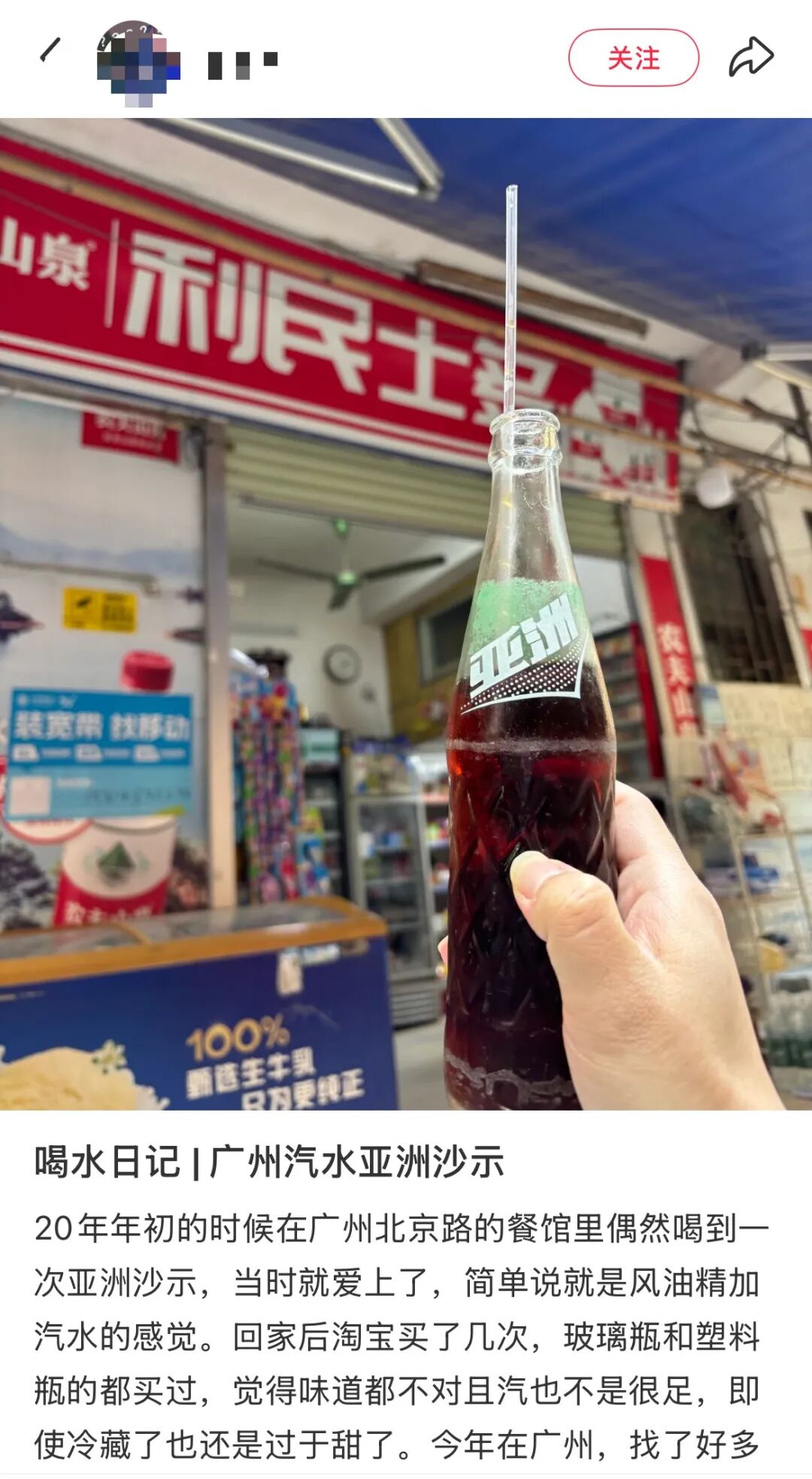
Core Viewpoint - The article highlights the cultural significance and unique flavor of Sarsaparilla soda (沙示) in Guangdong, emphasizing its nostalgic value and health-related perceptions among locals, despite mixed reactions from outsiders [1][4][20]. Group 1: Product Description and Cultural Significance - Sarsaparilla soda, produced by the Asian Soda Factory in Guangzhou, is a beloved beverage that spans generations, known for its unique taste that combines cola-like sweetness with a herbal aftertaste [1][3]. - The drink is often humorously described by newcomers as having an unusual flavor reminiscent of medicinal products, yet it holds a special place in the hearts of locals who consider it an irreplaceable part of their culinary culture [3][4]. - The original recipe of Sarsaparilla soda is derived from the Mexican herb Sarsaparilla, which has health benefits, and it has been adapted using local ingredients like the Mei Ye Dong Qing plant, reinforcing its image as a health-conscious choice [7][8]. Group 2: Historical Context and Market Presence - The Asian Soda Factory began operations in 1946, and by the third year, it had sold over 5 million bottles annually, establishing itself as a leading soda brand in Guangzhou [20]. - The brand faced a significant decline in visibility after a joint venture with Pepsi in 1993, leading to a nearly ten-year absence from the market, which affected the collective memory of a generation [21][23]. - Recently, the brand has experienced a revival, leveraging nostalgia and local culture to attract new customers, including collaborations with other products to appeal to younger consumers [23][25]. Group 3: Consumer Experience and Social Aspects - Sarsaparilla soda is often associated with social gatherings, particularly in local convenience stores (士多), where it serves as a nostalgic comfort drink for many [10][11]. - The beverage is not only consumed for its taste but also for its emotional connection to childhood memories and social interactions, making it a significant part of local identity [25][26]. - The drink's unique flavor has led to creative culinary adaptations, such as Sarsaparilla chicken wings, showcasing its versatility beyond just being a beverage [10][18].
月薪2万-7万,茶颜悦色在北上深密集招人,公司回应“外拓”传闻:常规人员储备
Xin Lang Cai Jing· 2026-01-18 14:14
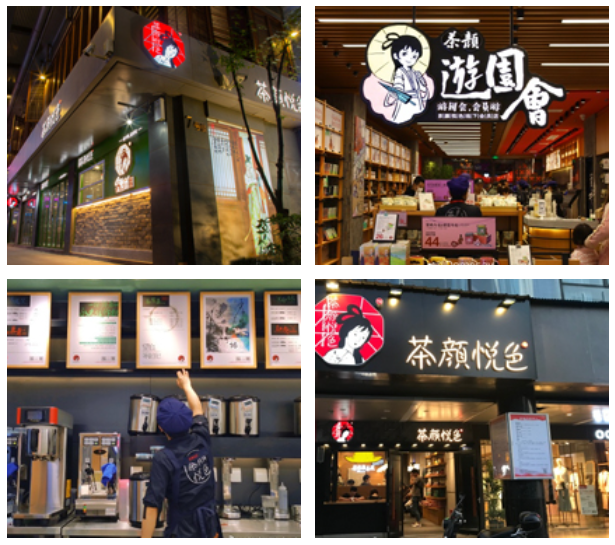
Core Viewpoint - The recent recruitment activities by the parent company of Cha Yan Yue Se in Beijing, Shenzhen, and Shanghai have sparked speculation about potential market expansion into North China, South China, and East China, although the company claims this is part of routine personnel reserves [1][14][16]. Group 1: Recruitment and Market Expansion - Cha Yan Yue Se is hiring for various positions in Beijing, Shenzhen, and Shanghai, with salaries ranging from 15,000 to 75,000 yuan, indicating a focus on brand, content, market, and technical roles [3][6][18]. - The company has stated that any new store opening plans will be communicated through its official channels, emphasizing that current hiring is for routine personnel reserves [1][14][20]. - There is speculation about a new creative studio being established in Shanghai, aimed at attracting professional talent and gathering creative inspiration, rather than immediate store openings [20][22]. Group 2: Company Growth and Competition - Established in 2013, Cha Yan Yue Se has only expanded to four provinces with approximately 758 stores, while competitors like Bawang Tea and Mixue Ice City have rapidly expanded to over 7,000 and 10,000 stores respectively [8][21][24]. - The company has been cautious in its expansion strategy, with a history of slow growth due to its direct sales model and concerns over product quality and supply chain management [9][21][22]. - Recent reports indicate that several investment firms have exited their stakes in Cha Yan Yue Se, returning control to the founding team, which may impact future growth and expansion plans [10][22][24]. Group 3: Industry Landscape - The new tea beverage market has undergone significant changes, with many competitors adopting franchise models for rapid expansion, while Cha Yan Yue Se has maintained a direct sales approach [12][24]. - Major competitors have successfully gone public and leveraged capital for global expansion, contrasting with Cha Yan Yue Se's more cautious approach to growth and potential IPO plans [12][22][24]. - The company is exploring new growth avenues, including retail and product diversification, but these efforts are currently limited to the Changsha area [11][23].
2025年中国书写工具行业发展历程、产业链图谱、销售规模、竞争格局及发展趋势研判:晨光股份龙头优势明显[图]
Chan Ye Xin Xi Wang· 2025-12-09 01:53
Core Viewpoint - The Chinese writing instrument market is driven by a large student population and the deepening of quality education, leading to growth in specialized categories like calligraphy pens and art creation pens. The demand from professionals is shifting from mere functionality to quality and personalization, fueling the mid-to-high-end market. In 2024, the sales revenue of writing instruments in China is projected to reach 24.732 billion yuan, with a year-on-year growth of 1.8% [1][7]. Overview - Writing instruments are tools used for writing, drawing, and marking, categorized into pencils, fountain pens, colored pens, markers, highlighters, and writing aids. Notable products include the Chinese HB pencil, M&G 2B exam pencil, Hero 100 fountain pen, and various types of colored and marking pens [2][4]. Development History - The writing instrument industry in China began in the 1970s with state-owned pen factories focusing on essential categories like fountain pens and pencils. The 1980s and 1990s saw a surge in demand due to economic reforms, leading to the rise of private pen manufacturers and diversification of product categories. Since 2016, environmental sustainability has become a critical requirement, pushing companies to adopt biodegradable materials and eco-friendly practices [4][5]. Industry Chain - The upstream of the writing instrument industry includes suppliers of raw materials like plastics, metals, inks, and production equipment. The midstream involves research, design, and manufacturing, while the downstream consists of various sales channels including supermarkets, specialty stores, and e-commerce platforms [5][6]. Current Development - The student demographic remains the core consumer group for writing instruments in China, accounting for over 50% of the market in 2024. The demand for basic writing tools like gel pens and erasable pens is strong among students. The sales revenue for writing instruments in 2024 is expected to be 24.732 billion yuan, with fountain pens making up 45.8% of the market [7][8]. Competitive Landscape - The writing instrument industry in China exhibits a competitive landscape characterized by a leading player and several strong competitors. In 2024, the top 10 companies (CR10) hold a market share of 53.3%, with M&G leading at 25.8% and Deli at 7.3%. The market share of leading brands has been increasing, indicating a trend where the strong continue to dominate [9][10]. Company Analysis - Shanghai M&G Stationery Co., Ltd. integrates creative value and service advantages, focusing on providing solutions for learning and working environments. In the first half of 2025, M&G's total revenue reached 10.81 billion yuan, with writing instrument sales contributing 1.136 billion yuan [11][12]. - Deli Group, established in 1988, produces a wide range of stationery and office supplies, with its brand recognized as one of China's top stationery brands. Deli has received various certifications and accolades, enhancing its market presence [12][13]. Future Trends - The future of the writing instrument industry is driven by carbon neutrality policies and heightened environmental awareness. Leading companies are building green ecosystems throughout their supply chains, utilizing biodegradable materials and modular designs to extend product lifecycles. Additionally, writing instruments are evolving beyond mere functionality to become cultural and emotional carriers, reflecting a shift towards refined consumer experiences [14][15].


嘉欣丝绸:凯喜雅公司为公司国企改制时的原始股东
Zheng Quan Ri Bao· 2025-11-17 11:07
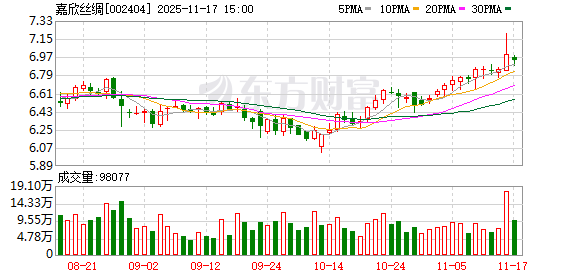
Core Viewpoint - Jiaxin Silk expressed confidence in its future development and investment value through its strategic investor, Kaixiya Company, which is the original shareholder from the company's state-owned enterprise reform [2] Group 1: Company Strategy - Kaixiya Company has increased its shareholding in Jiaxin Silk, indicating strong belief in the company's growth potential [2] - The controlling shareholder's authority over the company will remain unchanged despite the increased shareholding [2] Group 2: Product Development - Jiaxin Silk has developed several new types of warm silk fabrics under its "Jinsanta" brand [2] - The company has launched a series of winter products, the "Guofeng Silk Xiaor" series, which combines traditional Chinese aesthetics with modern design, effectively catering to autumn and winter sales [2] - There are plans to enhance marketing efforts to change consumer perceptions of silk products [2]

第33届励展华博深圳礼品家居展启幕 礼品展“科技加持”亮眼
Shen Zhen Shang Bao· 2025-10-21 23:09
Core Insights - The 33rd China (Shenzhen) International Gifts and Home Products Exhibition has opened with a record exhibition area of 300,000 square meters, featuring 4,500 quality exhibitors, highlighting the vitality and innovation of the Chinese gift industry and consumer market [1][2] Industry Overview - The exhibition covers over 30 consumer categories, including cups, digital products, home goods, food, small appliances, and IP cultural creations, catering to various gift needs such as welfare, business, and marketing gifts [1] - Notable brands like Panasonic, Huawei, and BKT showcased their annual new products, indicating strong brand presence and consumer interest [1] Market Trends - The trend of "Guochao" (national trend) is leading to a rise in high-end gifts that incorporate cultural narratives and quality experiences, with a special exhibition area for intangible cultural heritage products from various regions [1] - The Z generation, as a new consumer force, emphasizes emotional connection and personal expression in gift selection, with products like aromatherapy devices and creative home goods attracting significant attention [2] Technological Innovations - AI technology gifts are prominently featured, with companies presenting AI glasses, companion robots, AI headphones, and wearable products, showcasing the future direction of consumer electronics [2] - Leading brands such as Huawei, Anker, Edifier, and SKG are setting benchmarks for next year's consumer electronics trends with innovative products that focus on efficient charging, immersive audio, and smart personal care [2]
华鑫证券:维持周六福(06168)“买入”评级 线上线下双轮驱动
智通财经网· 2025-10-09 07:49
Core Viewpoint - Huaxin Securities reports that Zhou Shifu (06168), as a leading jewelry enterprise, is continuously optimizing its business model and adjusting product structure according to market demand, while steadily developing the lower-tier market and attempting high-end market strategies, which is expected to drive profit release as brand momentum deepens [1] Industry Overview - The scale of China's jewelry market has increased from 610 billion yuan in 2019 to an estimated 728 billion yuan in 2024, with a CAGR of 3.6%, and is projected to reach 937 billion yuan by 2029, with gold jewelry dominating the market [1] - The industry is experiencing new trends such as "Guochao" (national trend) and IP co-branded products, with companies primarily opening stores to directly face consumers while rapidly expanding online channels [1] - The e-commerce channel for gold jewelry is expected to reach 42.2 billion yuan in 2024, reflecting a 19% year-on-year growth [1] - The current industry concentration remains low, with the CR5 for gold jewelry products at 41%, allowing leading companies to continue gaining market share through brand effects and terminal occupation [1] Company Strategy - The company is located in the core gold jewelry production area of Shuibei, leveraging supply chain advantages at the processing end [2] - The company primarily operates through franchise stores, starting from lower-tier markets and expanding into high-tier cities post-pandemic by opening high-end stores to strengthen brand power [2] - As of the first half of 2025, the company has a total of 3,857 stores, with the number of stores in first and second-tier cities accounting for 50% of the total [2] - The company is effectively capturing traffic from interest e-commerce platforms like Douyin and Xiaohongshu for brand exposure, with online channel revenue reaching 1.63 billion yuan in the first half of 2025, a 34% year-on-year increase [2] - The product strategy includes a full-category and full-scenario coverage approach, launching diverse product series such as Xigu Gold, Yihe Wonderland, and Yixin Yiai, focusing on the core demographic of young women and enhancing the youthful brand image through Guochao IP collaborations [2]