
战争风险溢价

Search documents
原油成品油早报-20260325
Yong An Qi Huo· 2026-03-25 03:03
Group 1: Report Industry Investment Rating - No relevant information provided Group 2: Core Viewpoints of the Report - The news of a potential one - month cease - fire in the Iran war may lead to a short - term reduction in geopolitical risks, causing significant fluctuations in the gold, silver, and oil markets. The decline in oil prices reflects the energy market's high sensitivity to any signs of potential cooling of regional tensions. The sustainability of this trend depends on official confirmation and support from relevant parties [3] - Iran has stated that "non - hostile ships" can pass through the Strait of Hormuz after coordinating with Iranian authorities. The International Maritime Organization is negotiating to establish a humanitarian corridor for ships in the Persian Gulf [4] - The US and regional mediators are discussing the possibility of high - level peace talks with Iran as early as Thursday, but are waiting for a response from Tehran. Israel has concerns about the potential agreement [5] - This week, oil prices continued to rise. The traffic volume in the Strait of Hormuz remained low, and the spread between Brent and WTI reached the highest level in nearly a decade. The US approved a 30 - day authorization to conditionally relax sanctions on Iranian oil products. Global floating storage has significantly reduced inventory. Attention should be paid to whether Trump will have constructive dialogue with Iran regarding the Strait's navigation and geopolitical situation next week [7] Group 3: Summary by Directory 1. Daily News - According to Israeli media, the US may announce a one - month cease - fire in the Iran war, which may reduce short - term geopolitical risks and cause the energy market to re - price. The sustainability of this trend depends on official confirmation and support from relevant parties [3] - Iran has informed the International Maritime Organization that "non - hostile ships" can pass through the Strait of Hormuz after coordinating with Iranian authorities. The International Maritime Organization is negotiating to establish a humanitarian corridor for ships in the Persian Gulf [4] - The US and regional mediators are discussing the possibility of high - level peace talks with Iran as early as Thursday, but are waiting for a response from Tehran. Israel has concerns about the potential agreement [5] 2. Weekly Inventory - For the week ending March 20, the API crude oil inventory in the US was 234.8 million barrels, with an expected - 136.7 million barrels and a previous value of 655.6 million barrels. The API gasoline inventory was 52.8 million barrels, with an expected - 193.3 million barrels and a previous value of - 456 million barrels. The API refined oil inventory was 139.3 million barrels, with an expected - 140 million barrels and a previous value of - 139.4 million barrels [6] 3. Weekly Viewpoints - This week, oil prices continued to rise. The traffic volume in the Strait of Hormuz remained low, and the spread between Brent and WTI reached the highest level in nearly a decade. The US approved a 30 - day authorization to conditionally relax sanctions on Iranian oil products. Global floating storage has significantly reduced inventory. Attention should be paid to whether Trump will have constructive dialogue with Iran regarding the Strait's navigation and geopolitical situation next week [7]
蛋白数据日报-20260310
Guo Mao Qi Huo· 2026-03-10 07:27
Report Summary 1. Report Industry Investment Rating No information provided. 2. Core Viewpoints - The ongoing conflict in the Middle East has raised concerns about the increase in shipping and planting costs. The war risk premium supports the soybean and soybean meal futures. In the short term, it is recommended to monitor international situation dynamics. Given the unpredictability of the war's duration, cautious operation is advised for unilateral trading [11]. 3. Summary by Relevant Catalogs Data Daily - The report provides data on the basis of soybean meal and rapeseed meal on March 9, including the basis of the main soybean meal contract in different regions (Dalian, Tianjin, etc.), the basis of 43% soybean meal spot, and the basis of rapeseed meal spot. It also shows the spreads such as M5 - M9, RM5 - 9, and M5 - RM5 [3]. - The report presents the spot and futures spreads between soybean meal and rapeseed meal in Guangdong, as well as the CNF premium of Brazilian soybeans and the import soybean gross profit on the futures market [4]. Inventory Data - The report shows the inventory data of soybeans in Chinese ports, the inventory of soybeans in major domestic oil mills, the inventory days of soybean meal in feed enterprises, and the inventory of soybean meal in major domestic oil mills [5][7][8]. 开机 and压榨情况 (Operation and Pressing Situation) - The report provides data on the operating rate and soybean pressing volume of major domestic oil mills, as well as the downstream consumption rate and delivery volume [9]. International Situation and Market Analysis - In Brazil, the soybean harvest progress has slowed down due to recent rainy weather. As of February 28, the national soybean harvest was 41.7%, compared with 8.8% in the same period last year. The FOB premium of Brazilian soybeans is under pressure due to the bumper harvest, while the CNF premium remains relatively stable, but there is still a short - term risk of rising shipping costs. - In Argentina, the growth of soybeans has improved. As of March 4, the proportion of soybeans in good condition was 30% (last week's value was 29%, last year's value was 31%), normal was 4% (last week's value was 15%, last year's value was 19%), and fair or poor was 26% (last week's value was 28%, last year's value was 20%). - The sharp rise in crude oil prices is beneficial to the demand for biodiesel, supporting the expectation of US soybean crushing. - In China, the inventories of soybeans and soybean meal in oil mills are still at a high level, and the inventory days of soybean meal in feed enterprises have decreased [11].
蛋白数据日报-20260309
Guo Mao Qi Huo· 2026-03-09 05:25
Report Industry Investment Rating - Not provided in the given content Core Viewpoints - The ongoing Middle East conflict has raised concerns about rising shipping and planting costs, and the war risk premium supports the US soybean and soybean meal futures. In the short term, it is recommended to monitor international situation dynamics. Due to the unpredictability of the war's duration, caution is advised for unilateral operations [11] Summary by Relevant Catalogs Spot Basis Data - On March 6, the 43% soybean meal spot basis in Dalian, Rizhao, and Zhangjiagang was 285, 165, and 155 respectively, with changes of -32, -32, and -42; in Tianjin, it was 235 with a change of -22; in Dongguan, it was 185 with a change of -12; in Zhanjiang and Fangcheng, it was 185 with a change of -32. The rapeseed meal spot basis in Guangdong was -64 with a change of -189, and N2 - d was -88 with a change of 24, RM5 - 9 was -35 with a change of 14 [3] Spread Data - The spot spread of soybean meal - rapeseed meal in Guangdong was 200, and the spread of the main contract was 541 with a change of 16. The Brazilian soybean CNF premium showed a stable - to - weak trend, and the US dollar - to - RMB exchange rate was 6.8597. The Brazilian soybean FOB premium was under pressure due to a bumper harvest, and the short - term shipping cost still had an upward risk [3][4] Inventory Data - The report presents the historical data trends of national major oil mills' soybean inventory, Chinese port soybean inventory, national major oil mills' soybean meal inventory, and feed enterprises' soybean meal inventory days from 2018 - 2026 [5][6][7][8] 开机和压榨情况 - The report shows the historical data trends of national major oil mills' operating rate, soybean crushing volume, and downstream trading volume from 2019 - 2026 [9][10] Origin Situation - In Brazil, recent rainy weather has slowed down the soybean harvest progress. As of February 28, 41.7% of the national soybeans were harvested, compared with 18.4% in the same period last year. In Argentina, the growth situation of soybeans has improved. As of March 4, the proportion of soybeans with good crop conditions was 30% (last week was 29%, 31% in the same period last year), normal was 4% (last week was 45%, 19% in the same period last year), and fair or poor was 26% (last week was 26%, 20% in the same period last year) [11]
农产品日报-20260304
Guang Da Qi Huo· 2026-03-04 03:29
1. Report Industry Investment Ratings - Corn: Bullish with a slight upward trend [1] - Soybean Meal: Sideways [1] - Edible Oils: Sideways [1] - Eggs: Sideways [1] - Pigs: Sideways with a downward trend [2] 2. Core Views of the Report - Corn prices are influenced by the surrounding commodities. Although there is a bullish sentiment in the market, high - price transactions are average. Traders are advised to set dynamic stop - profits and use put options for protection [1]. - Soybean meal prices are affected by the rise in CBOT soybeans, but demand concerns and Brazilian competition limit the increase. Traders can participate in short - term long positions [1]. - Edible oil prices are driven by the rise in crude oil and the expected decline in palm oil inventory. Traders can participate in short - term long positions and 5 - 9 reverse spreads [1]. - Egg prices are in a weak fundamental situation due to sufficient supply and seasonal low demand. Traders are advised to conduct short - term transactions [1]. - Pig prices are mostly in a state of oversupply, but low - price meat may stimulate demand. Traders are advised to conduct short - term transactions [2]. 3. Summary of Each Section 3.1 Market Information - The Chinese government will continue to implement a more proactive fiscal policy and a moderately loose monetary policy [3]. - From March 1, 2026, to December 31, 2026, China will not impose additional tariffs on certain Canadian products [3]. - Iranian Supreme Leader Ali Khamenei passed away on March 1, 2026 [3]. - Trump expects the Iran conflict to last about four weeks [3]. - The Iranian Islamic Revolutionary Guard Corps warned that if its oil and gas facilities are attacked, it will destroy the oil and gas facilities of all countries in the region [3]. - Shipping giant Maersk will divert ships due to the Middle East situation [4]. - India hopes to cut its thermal coal imports by at least 30% this year [4]. - After the Spring Festival, the inventory speed of imported cotton has slowed down slightly, while the downstream procurement has increased [4]. - OPEC+ will resume the plan to gradually cancel the additional voluntary production cuts and increase production by 206,000 barrels per day [4]. - Dozens of cargo ships are gathered in the waters of Iran, Iraq, Kuwait, and the UAE [4]. - The national alumina weekly operating rate has decreased by 1.21 percentage points to 77.17% [5]. - Saudi Arabia may raise the official selling price of crude oil to Asia in April [5]. - Crude oil prices have risen due to the US - Iran tension, with a war risk premium of $8 - $10 [6]. 3.2 Variety Spreads - The report presents various contract spreads and contract basis charts for different agricultural products, including corn, soybean, soybean meal, edible oils, eggs, and pigs [7][16]
航运股普涨 中远海发(02866)涨5.83% 战争风险溢价推高油运、集运运价
Xin Lang Cai Jing· 2026-03-03 05:53
Core Viewpoint - The escalation of the Middle East situation is expected to significantly increase global shipping prices in the short term, benefiting all sub-sectors of the shipping industry [2][3] Group 1: Market Reactions - Shipping stocks have seen a notable increase, with China COSCO Shipping Development (02866) rising by 5.83%, China COSCO Shipping Energy (01138) up by 6.15%, and others also showing gains [1][2] - The market is experiencing heightened concerns over disruptions in global energy and trade supply chains due to ongoing conflicts, leading to a surge in shipping insurance costs [3] Group 2: Price Trends and Influences - The oil shipping market has strengthened significantly, with the average freight rate for VLCC from the Middle East to China increasing by 183% year-on-year from January 1 to February 28 [2][3] - Approximately 16% of global oil tanker vessels are currently under sanctions, a significant increase from 6% in the same period of 2024, contributing to a severe shortage of compliant shipping capacity and driving up freight rates [2][3] - The short-term outlook for container and dry bulk shipping is also positive, with potential for substantial price increases due to risk premiums, while the long-term price trends will depend on the duration of the ongoing disruptions [2][3]

原油成品油早报-20260302
Yong An Qi Huo· 2026-03-02 11:13
1. Report's Industry Investment Rating - No information provided in the text 2. Core Viewpoints of the Report - The recent oil prices are dominated by geopolitical premiums, and attention should be paid to volatility risks. If the situation evolves into a multi - party war in the Middle East and the Strait of Hormuz is actually interrupted, the upside potential of oil prices will rise above $100 per barrel. If the situation evolves towards an unexpected regime change, the oil prices will return to the 60 - 70 central level in the medium - to - long term, but domestic exports are expected to decline [3]. 3. Summary by Relevant Catalogs 3.1 Price Data - From February 13 to February 27, 2026, WTI rose from $62.89 to $67.02, an increase of $1.81; BRENT rose from $67.75 to $72.87, an increase of $2.12; DUBAI rose from $67.05 to $68.40, an increase of $0.06 [2]. - SC rose from 460.70 to 488.40, an increase of 4.80; OMAN rose from $66.47 to $72.07, an increase of $1.63 [2]. - Japanese naphtha CFR rose from $593.88 to $636.63, an increase of $4.13; Singapore fuel oil 380CST decreased from $16.05 to $5.1, a decrease of $0.3 [2]. 3.2 Daily News - Citi Bank expects that in the case of easing US - Iran relations, Brent crude oil prices will fall back to around $70 per barrel, and are expected to fall to $62 per barrel in the second quarter of 2026 [2]. - Citi analyst Max Layton said that in the basic forecast, Brent crude oil prices will remain in the range of $80 - $90 per barrel for at least a week [3]. - Analysts believe that crude oil and freight costs may remain high due to the US - Israel attack on Iran, the possible expansion of the regional war, and the long - term interruption of oil transportation in the Strait of Hormuz [3]. - More than 200 ships are stranded in the Strait of Hormuz, and war insurance rates are expected to increase by 25% - 50% [3]. - US President Trump said that the military action against Iran may last about four weeks [3]. 3.3 Inventory - For the week ending February 20, 2026, API crude oil inventory was 1142.7 million barrels, expected 125 million barrels, previous value - 60.9 million barrels; API gasoline inventory was - 153.5 million barrels, expected - 59.1 million barrels, previous value - 31.2 million barrels; API refined oil inventory was - 277.1 million barrels, expected - 190 million barrels, previous value - 156.7 million barrels [3]. - EIA report shows that on February 20, US crude oil exports decreased by 277,000 barrels per day to 4.313 million barrels per day; domestic crude oil production decreased by 33,000 barrels to 13.702 million barrels per day; commercial crude oil inventory (excluding strategic reserves) increased by 15.989 million barrels to 436 million barrels, an increase of 3.81%; the four - week average supply of US crude oil products was 21.391 million barrels per day, a year - on - year increase of 5.38%; the strategic petroleum reserve (SPR) inventory remained unchanged at 415.4 million barrels; commercial crude oil imports (excluding strategic reserves) were 6.659 million barrels per day, an increase of 135,000 barrels per day compared with the previous week [3].
美伊冲突风险叠加“有人垄断1/3运力”,全球油轮费率飙升创六年新高
Hua Er Jie Jian Wen· 2026-02-26 03:01
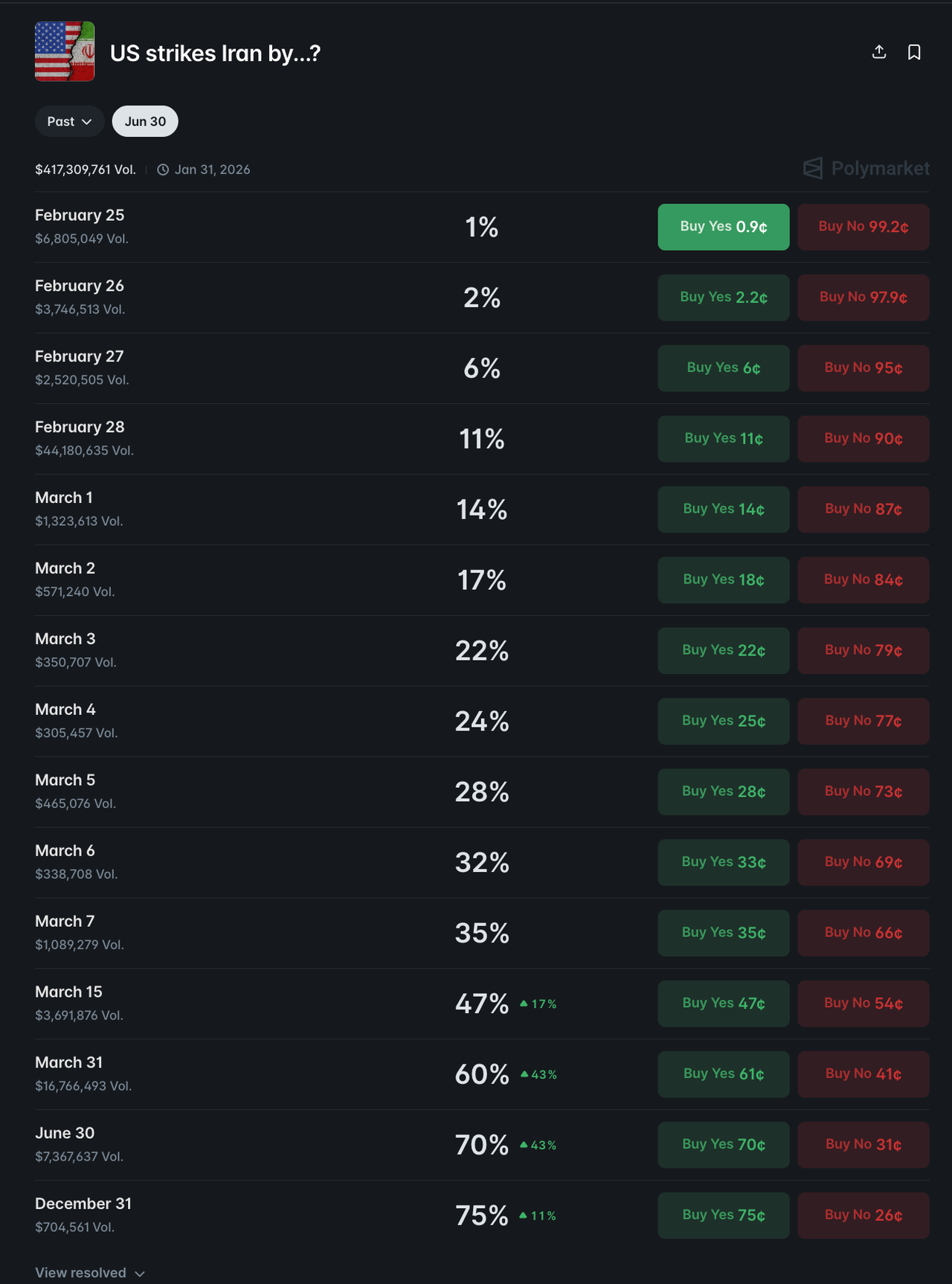
Core Viewpoint - The global Very Large Crude Carrier (VLCC) market is experiencing its most severe rate shock in six years, driven by a combination of war risk premiums and an unprecedented wave of fleet consolidation, pushing freight rates to historical highs and impacting physical crude oil prices and the entire tanker market [1]. Group 1: Freight Rate Surge - Saudi Arabia's national shipping company Bahri recently chartered five VLCCs at a daily rate of $200,000, marking the highest level recorded in six years, with one vessel, DHT Jaguar, achieving a rate of $208,000 per day [1]. - The market is pricing in a 47% probability of the U.S. striking Iran before March 15, reflecting heightened concerns over the risk of closure of the Strait of Hormuz, which is being factored into freight rates and Brent crude futures, currently above $70 per barrel [1][7]. Group 2: Market Concentration - The South Korean Sinokor Group has rapidly acquired or chartered a significant number of vessels, controlling approximately 120 VLCCs, which represents about one-third of the global tradable VLCC fleet [3][9]. - This concentration of control is reshaping the global tanker pricing mechanism, as noted by SFL Corp's CEO, who highlighted that a single entity or group controls a substantial portion of the available VLCC fleet [3]. Group 3: Geopolitical Risks - The Strait of Hormuz has re-emerged as a critical geopolitical risk factor in the global energy market, with the potential for military action by the U.S. against Iran contributing to the war risk premium being incorporated into VLCC rental quotes [4][6]. - The expectation of military action has led to a rapid increase in war risk insurance premiums, which are now reflected in VLCC rental prices [6]. Group 4: Supply and Demand Dynamics - Multiple fundamental drivers are contributing to the rising VLCC freight rates, including the shift of Venezuelan oil from "dark fleet" transport to compliant vessels, increased OPEC+ production, and Indian refineries' demand for Middle Eastern crude over Russian oil [10]. - VLCC benchmark daily earnings have surpassed $120,000, increasing more than fourfold in the past month, marking the strongest start to a year for oil tanker earnings in over 30 years [10].

【环球财经】地缘政治冲突担忧缓和 国际油价16日下跌
Xin Hua Cai Jing· 2025-06-16 22:57
Group 1 - International oil prices experienced a decline due to eased concerns over Iranian oil export disruptions, with light crude oil futures falling by $1.21 to $71.77 per barrel, a decrease of 1.66%, and Brent crude oil futures dropping by $1 to $73.23 per barrel, a decrease of 1.35% [1] - Market analysts noted that despite ongoing Israeli strikes on Iranian targets, Iranian oil facilities remain undamaged, allowing for normal export levels, which has provided temporary relief to the market [2] - The current oil price movements are influenced more by "war risk premium" rather than actual supply disruptions, with geopolitical tensions causing heightened market sensitivity to news updates [2] Group 2 - Analysts suggest that the conflict between Israel and Iran may be short-lived, as further escalation risks could exceed the control of key stakeholders, with oil prices unlikely to surpass $80 per barrel due to U.S. government interests in keeping prices around $50 [2] - A senior Iranian commander indicated that Iran is considering closing the Strait of Hormuz, through which approximately one-fifth of global oil is transported, with estimates suggesting that oil prices could exceed $100 per barrel if the strait is closed [3] - The oil market is currently in a tug-of-war between geopolitical risks and actual supply-demand dynamics, with short-term price volatility expected unless the conflict impacts oil and gas infrastructure [3]
伊以冲突升级 全球航运业拉响警报
智通财经网· 2025-06-13 09:21
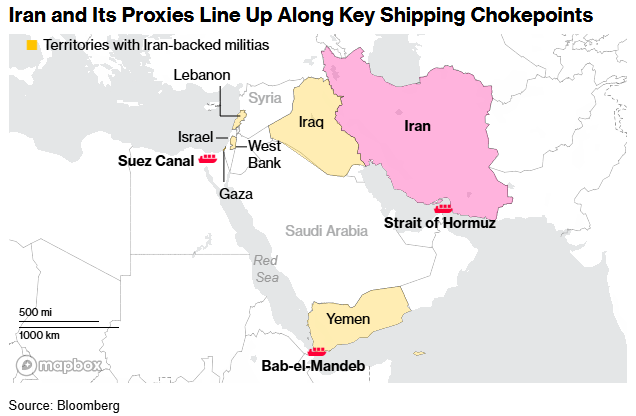
Group 1 - The recent Israeli attacks on Iranian targets have heightened tensions in the Middle East, posing risks to critical maritime routes essential for global oil supply and trade [1] - Major shipping companies, including Nippon Yusen Kabushiki Kaisha, Mitsui O.S.K. Lines, and Kawasaki Kisen Kaisha, have advised vessels to navigate cautiously in the region, anticipating that other companies will follow suit [1] - Shipping stocks, such as COSCO Shipping (00517) and China Merchants Energy Shipping (601872.SH), have seen an uptick as investors expect rising shipping prices to positively impact companies [1] Group 2 - The Strait of Hormuz is a vital waterway, handling about 25% of global oil trade, and is currently a focal point due to Iran's significant influence in the area [4] - At any given time, approximately 10% of the global supertanker fleet (around 90 vessels) is stationed in the Middle East Gulf, with about 20 vessels passing through the Strait of Hormuz daily [4] - The potential for Iran to disrupt oil transportation in the Strait could lead to severe market reactions, with estimates suggesting oil prices could rise by $20 or more [7] Group 3 - Shipping companies are facing increasingly severe conditions, with at least two security risk management firms advising vessels to take extra precautions or avoid the region altogether [8] - Alerts from EOS Risk Group recommend emergency drills for vessels entering the waters around Israel, Iran, Syria, Egypt, Cyprus, or the Suez Canal, emphasizing the need for constant communication with foreign embassies or local military [8] - Maritime security company Ambrey has advised ships to thoroughly check connections with entities related to Israel and to reroute if necessary due to potential Iranian retaliation [8]
中东冲突引爆航运“地雷”,航运危机又要来了?
Jin Shi Shu Ju· 2025-06-13 08:26
Group 1 - The recent Israeli airstrikes on Iran have escalated tensions in the region, posing unprecedented threats to global oil supply and trade routes [1] - Major shipping companies, including Nippon Yusen, Mitsui O.S.K. Lines, and Kawasaki Kisen Kaisha, have raised alerts for their vessels, anticipating a ripple effect across the industry [1] - The Middle East is critical for global shipping, with the Strait of Hormuz accounting for approximately 25% of global oil trade, while the Red Sea is vital for container shipping [1] Group 2 - The benchmark freight rates for supertankers from the Middle East to Asia have dropped to their lowest level since January due to economic weakness and reduced exports from oil-producing countries [2] - At least 10% of the global supertanker fleet, approximately 90 vessels, are actively operating in the Persian Gulf, with about 20 vessels transiting the Strait of Hormuz daily [2] - If Iran were to close the Strait of Hormuz, the market could react catastrophically, with oil prices potentially surging by over $20 [2] Group 3 - The shipping industry is caught off guard by the rapid deterioration of the situation, with security firms advising vessels to take additional precautions or avoid the area altogether [3] - Ships entering waters near Israel, Iran, Syria, Egypt, Cyprus, or the Suez Canal are advised to conduct emergency drills and maintain communication with diplomatic or military entities [3] - Companies are urged to thoroughly check for any associations with Israeli entities and change routes if necessary due to concerns over Iranian retaliation [3]