战略矿产资源

Search documents
钴-镍-战略矿产资源属性凸显-价格中枢有望稳步抬升
2026-03-10 10:17
Summary of Key Points from Conference Call Industry Overview - The conference call focuses on the cobalt and nickel industries, highlighting strategic mineral resources and price trends for both metals. Cobalt Insights - **Supply and Demand Gap**: By 2026, a global cobalt supply-demand gap is expected to reach 20,000-30,000 tons, accounting for 5%-10% of demand, supporting upward price momentum for cobalt [1][12]. - **Price Forecast**: Cobalt prices are projected to rise to approximately 600,000 CNY by the end of the year, nearing historical highs [2]. - **Supply Concentration**: Cobalt supply is highly concentrated in the Democratic Republic of Congo (DRC) and Indonesia, with about 60% sourced from copper-cobalt and nearly 40% from nickel-cobalt by-products [3]. - **Impact of DRC Policies**: The DRC's export restrictions and quota system are significant variables affecting cobalt prices, with a projected production of 310,000 tons in 2025, of which 230,000 tons will come from the DRC [4][5]. - **Quota Implementation Issues**: The DRC's quota system has been slow to implement, leading to lower actual export volumes and supporting price increases [5][6]. - **Domestic Supply Challenges**: Domestic cobalt production is declining, with monthly output around 200-300 tons and social inventory below 10,000 tons, indicating potential for significant price increases in the near term [10]. Nickel Insights - **Supply Reduction**: Indonesia's nickel export quota has been drastically reduced from 379 million tons to approximately 260-270 million tons, creating a rigid supply gap of 30-40 million tons [1][16]. - **Price Projections**: Nickel prices are expected to rise to around $20,000 per ton due to tightening supply conditions [2][22]. - **Resource Concentration**: Indonesia holds about 44.5% of global nickel reserves and 67% of production, making it a critical player in the nickel market [13]. - **Policy Evolution**: Indonesia's nickel policy has evolved through three phases, with recent restrictions aimed at stabilizing prices and addressing fiscal pressures [14][19]. - **Demand Structure**: Nickel demand is primarily driven by stainless steel (70%) and battery applications (20%), with steady growth expected in both sectors [23][24]. Strategic Implications - **Investment Opportunities**: Companies like Huayou Cobalt and Luxshare Precision, which have established nickel and cobalt production capacities in Indonesia, are well-positioned to benefit from rising metal prices [28]. - **Monitoring Quota Adjustments**: The focus should be on Indonesia's nickel quota adjustments and their impact on supply-demand dynamics, as any increase in quotas could significantly influence market prices [18][27]. Conclusion - The cobalt and nickel markets are experiencing significant shifts due to supply constraints and evolving policies in key producing countries. Investors should closely monitor these developments to identify potential opportunities and risks in the sector.
稀土-锡-战略矿产资源属性凸显-价格中枢有望稳步抬升
2026-03-06 02:02
Summary of Key Points from Conference Call Records Industry Overview Rare Earths and Tin - **Rare Earth Supply Constraints**: Starting in 2025, supply indicators will no longer be publicly disclosed, limiting actual growth after excluding imported ores. MP Resources will cease exports of rare earth concentrates to China in April 2025, and by August, China will stop importing from the U.S. [1][2] - **Price Outlook for Rare Earths**: Demand for praseodymium and neodymium oxide is expected to increase by 10%-20% in 2026, while supply will grow by less than 10%, potentially pushing prices back above 1 million yuan/ton [1][11]. - **Tin Supply Disruptions**: The shutdown in Myanmar's Wa region is projected to create a global shortfall of nearly 20,000 tons in 2025. Although there are expectations for resumption in 2026, the increase will be limited to about 20,000 tons, resulting in a shortfall of approximately 5,000 tons [1][12]. - **Indonesian Policy Risks**: Indonesia's tin quota for 2026 will only increase by 7,000 tons, primarily concentrated in state-owned enterprises. There are risks of expanding raw material export bans to tin products [1][17]. Core Insights and Arguments Rare Earths - **U.S. Strategic Importance**: Rare earths are critical for sectors like electric vehicles, consumer electronics, and military applications. The U.S. has limited smelting and separation capacity, prompting significant actions, including a strategic investment in MP Resources and establishing a sales floor price for praseodymium and neodymium [2][8]. - **Industry Structure**: The rare earth industry is characterized by a dual monopoly with two major groups: Northern Rare Earth and China Rare Earth Group. The upstream and midstream sectors account for over 80% of the industry's profits [3][4][7]. Tin - **Price Trends**: The average tin price in 2025 was 274,000 yuan/ton, a 10% increase from 2024. By March 5, 2026, the average price rose to approximately 397,000 yuan/ton, reflecting a 45% increase year-on-year [12][20]. - **Supply Chain Dynamics**: Tin's supply chain is relatively straightforward, with disruptions from Myanmar and Congo affecting global supply. The global tin resource reserves are projected to increase due to data corrections from Indonesia [13][14]. Additional Important Insights - **Future Supply Projections**: Significant new tin supply is expected mainly in 2024 and from 2027 to 2028, with limited new projects in the near term. The largest upcoming project is expected to contribute 10,000 tons of tin [19]. - **Demand Structure**: Tin demand is heavily driven by soldering applications, which account for 53% of total demand. The semiconductor industry significantly influences solder demand, which is expected to continue growing [20]. - **Supply-Demand Gap**: In 2025, the global tin supply-demand gap is expected to reach nearly 20,000 tons, with a projected narrowing to about 5,000 tons in 2026 as Myanmar resumes production [20]. This summary encapsulates the critical insights and projections regarding the rare earth and tin industries, highlighting supply constraints, price trends, and strategic importance in the global market.


磷矿石-硫磺-战略矿产资源属性凸显-价格中枢有望稳步抬升
2026-03-04 14:17
Summary of Key Points from Conference Call Industry Overview: Phosphate Rock and Sulfur Phosphate Rock Supply and Demand - Phosphate rock supply is tight, with prices rising: Domestic production is constrained by environmental policies, leading to a price increase for 30% grade phosphate rock from 400 RMB/ton to over 1,000 RMB/ton [1] - Demand structure is shifting, with new energy becoming a core growth driver: Traditional phosphate fertilizer usage has decreased from 78% to 54%, while demand for lithium iron phosphate and other new energy materials has increased from 7% to 17%, with expected consumption reaching 140 million tons by 2027 [1][5] - Resource endowment pressures are significant, with a trend towards wet process replacing the thermal process: China holds 5% of global phosphate reserves but produces nearly 50% of the output, with an average grade of only 17%, which is significantly lower than the global average [1] Sulfur Market Dynamics - Global sulfur supply-demand gap is widening, with demand growth at 3%-4%: The demand for sulfur is driven by phosphate fertilizer needs and the growth of nickel laterite ore acid leaching and lithium battery materials, outpacing supply growth of 1%-2% [1] - Sulfur prices are supported by geopolitical factors and reduced oil and gas consumption: The price of sulfur in China reached 4,400-4,500 RMB/ton due to the impact of the Russia-Ukraine conflict and declining sulfur content in global crude oil [1][15] Strategic Implications - The strategic importance of phosphorus has been reinforced: The U.S. has classified elemental phosphorus as a critical defense material, benefiting companies with phosphate resources and sulfur iron ore production capacity, such as Sinopec and Rongsheng Petrochemical [2][8] Phosphate Chemical Industry Technology - The core technology routes in the phosphate chemical industry are divided into wet and thermal processes: The wet process is characterized by lower energy consumption but requires higher-grade phosphate rock, while the thermal process can utilize lower-grade phosphate but has higher costs and energy consumption [3] Domestic Phosphate Supply Constraints - Domestic phosphate supply is constrained by resource endowment and policy restrictions: The average grade of domestic phosphate rock is about 17%, significantly lower than the global average of 30%, with production declining from 2017 to 2020 due to stricter environmental regulations [4] Changes in Phosphate Demand Structure - The demand structure for phosphate rock has changed significantly: Traditional agricultural demand is decreasing, while new energy material applications are rapidly increasing, becoming the main driver of marginal demand growth [5][6] Global Phosphate Supply Dynamics - Morocco's phosphate supply is constrained by strategic choices and resource processing limitations: Morocco controls its phosphate output through state-owned OCP, prioritizing high-value processing over raw mineral exports [6][7] Domestic Policy on Phosphate Resource Management - Since 2016, phosphate rock has been classified as a strategic mineral in China, leading to protective mining practices and export management to ensure domestic food security [7] Sulfur Market Applications - Sulfur is primarily used for sulfuric acid production, with 93% of sulfur in China used for this purpose in 2024: The downstream applications include phosphate fertilizers, titanium dioxide, and other chemicals [9] Sulfur Production Methods - Sulfuric acid can be produced through three main methods: sulfur burning, smelting gas by-product, and sulfur iron ore, with the first being the most common due to its lower environmental impact [10] Sulfur Supply and Demand Outlook - Sulfur supply growth is expected to be around 1%-2% due to low growth in oil and gas consumption, while demand growth is driven by phosphate fertilizers and new energy applications, leading to a projected demand growth of 3%-4% [14] Price Trends and Projections - Sulfur prices have risen significantly due to geopolitical tensions affecting supply, with prices expected to remain strong due to ongoing supply-demand imbalances [15][16]
澳洲富豪空中布局加速纷纷入手环球7500与湾流G600 山东黄金控股FML股价过去一年上涨逾14倍 产量增长与现金流推动估值重估
Sou Hu Cai Jing· 2026-02-17 11:35
Group 1: Private Jet Ownership in Australia - The COVID-19 pandemic has shifted perceptions about private jet ownership, making it a symbol of status and a necessity for business in Australia [2] - The Australian Civil Aviation Safety Authority (CASA) reports nearly 200 business jets owned by prominent Australian companies [2] - Notable owners include mining magnate Andrew Forrest and property developer John Gandel, both of whom own Bombardier Global 7500 jets, favored for their long range and comfort [2][3] Group 2: Popular Aircraft Models - The Bombardier Global 7500 is highly regarded for its impressive range of 14,260 kilometers and is chosen by several wealthy Australians [2] - Gina Rinehart, Australia's richest person, owns a Gulfstream G600, which can fly at near-supersonic speeds, significantly reducing travel time [2] - The CEO of the Australian Business Aviation Association notes that ultra-long-range jets are popular among local billionaires due to Australia's geographical isolation [2] Group 3: Market Trends and Future Outlook - Many of the jets were purchased during or after the pandemic, which is seen as a key factor in breaking the taboo around private jet ownership [2] - The trend indicates a growing acceptance and demand for private aviation among Australia's elite, reflecting broader changes in business travel preferences [2]



中国将加强找矿行动陆海统筹,统筹深海资源调查——找矿走向深蓝
Ren Min Ri Bao Hai Wai Ban· 2026-01-03 05:14
Core Viewpoint - The deep sea is rich in polymetallic nodules containing critical metals such as manganese, copper, cobalt, and nickel, which are essential for various industries, particularly the new energy sector [1][4]. Group 1: Demand and Strategic Importance - The global demand for key metals like nickel, cobalt, and copper is surging, making deep-sea mining a new frontier for technological and strategic competition among nations [2]. - China's reliance on foreign sources for certain metals is high, with cobalt dependency reaching nearly 99% and copper at 77%, highlighting the strategic necessity of deep-sea mining for resource security [4]. Group 2: Economic Value and Technological Advancements - The economic potential of deep-sea mining is significant, with the value of metals extracted from seabed nodules estimated to be between 6,000 to 7,000 yuan per ton, compared to much lower values for land-based mining [4]. - Advancements in deep-sea mining technology, such as the "Kaituo No. 2" mining vehicle, have achieved breakthroughs, including a successful sea trial at depths of 4,000 meters, indicating progress in China's deep-sea mining capabilities [7]. Group 3: Challenges in Deep-Sea Mining - The primary challenges in deep-sea mining include technological difficulties, environmental concerns, and high operational costs, with the need for reliable, autonomous operations in extreme underwater conditions [6][8]. - Environmental risks are significant due to limited understanding of deep-sea ecosystems, which may be adversely affected by mining activities [7]. Group 4: Future Development and Strategic Planning - China has outlined a long-term roadmap for deep-sea mining, emphasizing the need for coordinated resource exploration and sustainable practices [9]. - The focus for future development should be on enhancing global cooperation, reducing uncertainties, and establishing responsible supply chain standards for deep-sea minerals [10][11].
券商晨会精华 | 2026年机械行业中科技板块仍具备最大投资机会
智通财经网· 2025-12-08 00:46
Group 1 - The market showed a rebound last Friday, with the Shanghai and Shenzhen stock exchanges recording a transaction volume of 1.73 trillion, an increase of 176.8 billion compared to the previous trading day. The Shanghai Composite Index rose by 0.7%, the Shenzhen Component Index by 1.08%, and the ChiNext Index by 1.36% [1] - Sectors such as insurance, precious metals, Fujian, and commercial aerospace saw significant gains, while banking, traditional Chinese medicine, and film and television sectors experienced declines [1] Group 2 - CITIC Securities highlighted a "super cycle" in resources, emphasizing the investment value of strategic mineral resources amid increasing global macroeconomic and geopolitical uncertainties. The long-term investment logic for copper, aluminum, and gold is clear, driven by supply constraints and green economic demand [2] - China International Capital Corporation (CICC) expressed optimism for the technology sector within the machinery industry in 2026, focusing on domestic demand recovery and high export growth as key structural opportunities [3] - Huatai Securities released an outlook for the electronics industry in 2026, maintaining a positive view on the AI chain and noting the impact of the storage cycle. The report suggests several focus areas, including the potential for sustained price increases in the storage sector driven by AI data centers [4]



倍杰特小洞锑矿项目正式启动 构建战略锑资源全产业链新格局
Zheng Quan Shi Bao Wang· 2025-11-27 03:40
Core Insights - The launch of the Xiaodong Antimony Mine project marks a significant milestone for the company, indicating the commencement of substantial construction and laying a solid foundation for future production [1][3] - The project is a strategic move for the company to expand into the upstream strategic mineral resources sector, enhancing its industrial layout and resource control capabilities [2][3] Company Strategy - The company has successfully established a complete industrial chain from antimony mining to resource recovery through the acquisition of Dahao Mining, addressing raw material supply issues and improving operational efficiency [2] - The project aims to implement a model of "mining, governance, and restoration" to ensure harmonious coexistence between mining activities and the ecological environment, positioning the project as a benchmark for green mining practices [3] Industry Impact - The Xiaodong Antimony Mine project is expected to optimize the domestic antimony resource supply structure and promote collaborative upgrades in related industrial chains, contributing to the security of strategic metal resources in China [4] - The project aligns with national resource security strategies and is anticipated to enhance the country's capacity in critical mineral resources, while also fostering local economic development and job creation [3][4]

继稀土之后,美国发现另一种重要金属,也被中国卡脖子
Sou Hu Cai Jing· 2025-08-15 19:06
Group 1 - Tungsten is a critical industrial metal, often referred to as the "tooth of industry," due to its exceptional hardness, high melting point, and significant density [1][3] - Tungsten alloys are widely used in military applications, including tank armor-piercing projectiles and missile warheads, as well as in aerospace components like rocket engine nozzles and turbine blades [3][5] - China holds over 50% of the world's proven tungsten reserves and accounts for 82% of global production, establishing a dominant position in the tungsten market [7][11] Group 2 - Chinese tungsten companies have shifted from exporting raw materials to producing high-value-added tungsten products, increasing their share in the global high-end market [9][11] - In 2023, tungsten was officially classified as a strategic mineral resource in China, leading to a 15% reduction in annual mining quotas to stabilize production at 140,000 tons [11][15] - The U.S. relies on imports for over 35% of its tungsten resources, with a 100% dependency on foreign sources for high-end tungsten products used in aerospace and military sectors [13][16] Group 3 - The U.S. has faced supply chain disruptions due to a shortage of high-end tungsten alloys, impacting production timelines for military equipment like the F-35 fighter jet and M1A2 tanks [16][18] - Major semiconductor companies, including Intel and TSMC, are experiencing tight supplies of precision tungsten wire, leading to a 40% price increase and production adjustments [18][20] - The U.S. government has initiated a "critical minerals strategy" with a budget of $3.5 billion for exploration and development of tungsten and other essential minerals [20][22] Group 4 - American companies are attempting to circumvent Chinese controls by sourcing tungsten through intermediaries in Vietnam and Mexico, but China's stringent regulatory framework complicates these efforts [24][25] - Data from Vietnamese customs indicates a 67% year-on-year decline in tungsten exports to the U.S. in the first half of 2024, highlighting the effectiveness of China's resource management policies [25][27] - China's strategic management of tungsten resources not only protects its limited resources but also ensures industrial security, presenting a sustainable model for global resource utilization [27]
重要战略矿产资源,新发现→
证券时报· 2025-03-20 04:07
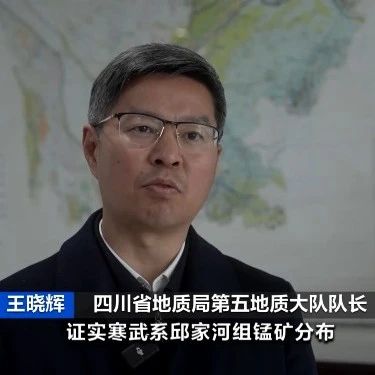
Core Viewpoint - The recent exploration project in Mao Wan Li manganese mine in Sichuan has discovered a significant manganese resource of 606.7 million tons, marking a breakthrough in the region's mining potential [1][2]. Group 1: Manganese Resource Discovery - The Mao Wan Li manganese mine exploration project has confirmed an inferred resource of 462.8 million tons within the surveyed area and an additional 143.9 million tons in the adjacent unclaimed area, totaling 606.7 million tons [1]. - The project has successfully identified over 600 million tons of manganese resources within just 1 square kilometer, indicating a medium-sized ore body and resolving a long-standing issue in the research of manganese resources in Northwest Sichuan [1][2]. Group 2: Geological Insights - The exploration has revealed that the Cambrian Qiu Jia He formation exhibits a multi-layered and interactive rhythm of manganese ore distribution, challenging previous assumptions about the small scale of "stone dam" type manganese ore bodies [2].