
政策预期博弈

Search documents
DLSM外汇:美元指数弱势格局下的政策预期博弈
Sou Hu Cai Jing· 2026-02-04 06:34
Group 1 - The US dollar index recorded a daily decline of 0.12%, closing at 97.42, continuing the overall weak trend observed since 2025, with a total annual drop of 9.4%, marking the largest decline since 2017 [1] - The weak performance of the dollar is closely related to the Federal Reserve's monetary policy adjustments, including interest rate cuts in 2025, which altered the dollar's interest rate advantage [3] - The relative strength of currencies among major economies reflects differences in economic fundamentals and varying market expectations regarding central bank policy rhythms, with the euro and pound appreciating by 13.5% and 7.6% respectively against the dollar in 2025 [3] Group 2 - The upcoming leadership changes at the Federal Reserve have become a focal point for the market, with discussions surrounding potential nominees and their policy inclinations [4] - Historical experience suggests that a smooth transition in central bank leadership helps maintain policy continuity, which is crucial for stabilizing market expectations [4] - The release of US employment data will provide new insights into the labor market, serving as an important reference for monetary policy decisions [4]


预见2026 | 拥抱债市定价新常态 在震荡博弈中把握分化与机遇
Xin Hua Cai Jing· 2025-12-27 01:48
Core Viewpoint - The bond market in China for 2025 is characterized by a "volatile" main line amidst complex internal and external environments, with a typical "top-down" fluctuation pattern observed throughout the year [1] Group 1: Market Dynamics - The 10-year government bond yield fluctuated within a range of approximately 30 basis points, failing to establish a single trend direction [1] - Key variables such as "tariff disturbances," "anti-involution policies," and "central bank bond purchase operations" have segmented the market rhythm [1][2] - The interaction between policy expectations and market dynamics has become increasingly intricate, with frequent shifts testing investors' ability to interpret policy intentions [2] Group 2: Performance of Different Maturities - The performance of various maturities throughout the year reflects the ongoing tug-of-war between bullish and bearish forces, with different dominant logics at each stage [3] - Early-year positive data pushed the yield curve into a "bear flattening," while spring tariff shocks triggered a brief bull market [3] Group 3: Credit Market Evolution - The credit bond market is evolving from a simplistic "identity label" approach to a deeper examination of companies' cash flow and debt repayment capabilities [4] - The pricing logic of credit bonds is shifting towards a focus on the issuer's operational cash flow and debt service capacity, indicating a new normal in credit assessment [4] Group 4: Future Outlook - The bond market is expected to play a dual role in enhancing its infrastructure and understanding new interest rate trends in a complex macroeconomic landscape [5][6] - A "moderately loose" monetary policy is anticipated to continue, with a more flexible and efficient operational focus, leading to potential downward pressure on short-term bond yields [6] Group 5: Investment Strategy - In the face of increasing differentiation and competition, it is recommended to build a stable investment portfolio with high-grade assets in the short to medium term while capturing trading opportunities in long-term rate bonds [7] - The bond market's ongoing volatility is seen as a catalyst for eliminating outdated paradigms and fostering new insights, emphasizing the importance of returning to value fundamentals [7]
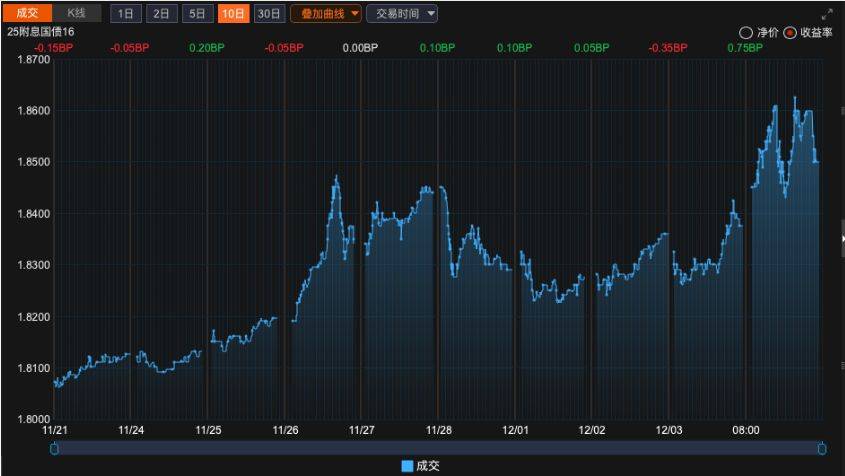
刚进入12月,利率债收益率突现陡峭上行,是何原因?
Sou Hu Cai Jing· 2025-12-04 15:01
Group 1 - The core viewpoint of the article highlights a sudden increase in bond yields, particularly a rise of 3 basis points in the 10-year government bond yield to around 1.85% and over 7 basis points in the 30-year bond yield [1] - The bond market has entered a "sensitive period" regarding news, with upcoming political meetings expected to influence market expectations for future economic policies [2] - The bond market has shown increased sensitivity to negative news, with the 10-year bond yield rising from approximately 1.82% to 1.86% and the 30-year yield from about 2.18% to 2.27% [3] Group 2 - Analysts attribute the weakness in long-term bonds to several factors, including constraints on institutional investors, potential redemption pressures from public funds, and a shift in investment focus towards equities [4] - The market is currently reacting to expectations surrounding central bank bond purchases and policy direction for the upcoming year, with a net purchase of government bonds by the central bank reported at 50 billion yuan [4] - The upcoming political meetings are expected to influence the bond market, with historical trends suggesting that policy announcements often lead to increased bond market activity in December [7][8]
多重因素共振 沪锡创三年半新高【12月4日SHFE市场收盘评论】
Wen Hua Cai Jing· 2025-12-04 07:53
Core Viewpoint - Tin prices have surged significantly, reaching a peak of 323,700 yuan/ton, the highest since April 2022, before retracting slightly. The main contract closed up 2.23% at 316,230 yuan/ton, driven by supply-demand imbalances in the tin market and geopolitical tensions affecting supply chains [1]. Group 1: Supply Dynamics - The core logic supporting the rise in tin prices is the supply-demand imbalance, with the resumption of tin mining in Myanmar's Wa region lagging behind expectations and renewed supply disruptions from the Democratic Republic of Congo (DRC) exacerbating the global tin shortage [1]. - Tin ingot exports from Indonesia have largely returned to normal, with over 6,500 tons exported in November [1]. - Ongoing conflicts in the eastern DRC have heightened concerns about supply chain stability and increased logistics risks [1]. Group 2: Demand Trends - In early November, there was a notable decline in downstream consumption, with photovoltaic demand remaining stable but production expectations for home appliances in December significantly lower than November [2]. - Downstream enterprises reported a marked decrease in order volumes and slower inventory turnover, with many companies adopting a cautious approach to high prices and refraining from large-scale stocking [2]. - Overall consumption this year has slightly decreased compared to previous years, contributing to a weak supply-demand scenario [2]. Group 3: Market Sentiment and Future Outlook - The recent unexpected drop in U.S. ADP data has led investors to believe that the Federal Reserve will likely cut interest rates, causing the U.S. dollar index to fall below 99, which has positively impacted the overall non-ferrous metals market [2]. - The upcoming Central Economic Work Conference in December is expected to shift focus back to policy expectations, influencing market dynamics [2]. - While tensions in the eastern DRC continue to raise supply concerns, the market has already priced in some of these risks, indicating that new catalysts will be needed to further drive prices upward [2].
国新国证期货早报-20251203
Guo Xin Guo Zheng Qi Huo· 2025-12-03 01:26
Group 1: General Market Conditions - On December 2, 2025, A-share's three major indexes collectively declined, with the Shanghai Composite Index down 0.42% to 3897.71 points, the Shenzhen Component Index down 0.68% to 13056.70 points, and the ChiNext Index down 0.69% to 3071.15 points. The trading volume of the two markets was 1593.4 billion yuan, a decrease of 280.5 billion yuan from the previous day [1] - The CSI 300 index adjusted on December 2, closing at 4554.34, down 22.15 [2] Group 2: Coke and Coking Coal - On December 2, the coke weighted index continued to rebound, closing at 1677.7, up 35.6; the coking coal weighted index fluctuated and closed at 1139.3 yuan, up 19.6 [2][3] - Coke supply is increasing, with significant inventory accumulation. Mine clean coal inventory increased by 20.44% in a single week, and coke plant inventory increased by 9.91% [4] - As of the end of October 2025, China's imported coking coal reached 98.869 million tons, a year-on-year decrease of 4.8%. In October, the total import volume was 10.5932 million tons, a month-on-month decrease of 3.02% and a year-on-year increase of 6.39%. From January to October, China's coke export volume was 6.2189 million tons, a year-on-year decrease of 14.05%. In October, coke exports were 727,400 tons, a month-on-month increase of 34% and a year-on-year increase of 49.92% [4] Group 3: Zhengzhou Sugar - Affected by the supply outlook and weak technical indicators, US sugar tumbled on Monday. Under the influence of the decline in US sugar, the short sellers pressured the Zhengzhou Sugar 2605 contract to decline on Tuesday and in the night session [4] - Brazil's central-southern region produced 983,000 tons of sugar in the first half of November, a year-on-year increase of 8.7%. The sugarcane crushing volume reached 18.8 million tons, a year-on-year increase of 14.3%. The proportion of sugarcane used for sugar production dropped to 38.6% [4] Group 4: Rubber - Due to the large decline in the previous trading day, the rubber futures prices rebounded due to bargain hunting. The short sellers pressured the Shanghai Rubber futures to decline slightly in the night session [5] - ANRPC predicted that global natural rubber production in October would increase by 2.7% to 1.496 million tons, and consumption would decrease by 4.2% to 1.26 million tons. In the first 10 months, cumulative production was expected to increase by 2.6% to 11.9 million tons, and cumulative consumption was expected to decrease by 1.8% to 12.684 million tons. In 2025, global natural rubber production was expected to increase by 1.3% to 14.892 million tons, and consumption was expected to increase by 0.8% to 15.565 million tons [5] Group 5: Soybean Meal - On December 2, CBOT soybean futures prices slightly declined. The large expected production of South American soybeans suppressed the speculation of US soybean demand [5] - As of last Thursday, the sown area of Brazilian soybeans reached 89% of the expected area, compared with 91% in the same period last year. StoneX estimated that Brazil's soybean production would be 177.2 million tons. Argentina's soybean sowing was progressing smoothly, with a planting rate of over 20% [5] - On December 1, the M2601 contract closed at 3039 yuan/ton, a decrease of 0.16%. Currently, soybean supply is sufficient, crushing volume has increased, and soybean meal inventory is at a high level. The domestic soybean meal futures market is in a situation of cost support and supply pressure, and the price is expected to fluctuate [5] Group 6: Live Pigs - On December 2, the LH2601 contract closed at 11455 yuan/ton, a decrease of 0.35%. In the short term, as the end of the year approaches, most large-scale pig enterprises are more willing to sell pigs to meet their annual targets, and the number of pigs for sale has increased, putting pressure on prices [5] - The demand for pork has increased marginally due to the drop in temperature, and the traditional bacon-making season has started in the southwest region, but the overall progress is slow, and the demand recovery is gentle. The live pig market is still in a situation of strong supply and weak demand [5] Group 7: Palm Oil - On December 2, the main palm oil contract continued to move positions and rebound. The price briefly opened lower and then quickly rose, closing at 8720, up 0.79%. The expected export volume of Malaysian palm oil from November 1 - 30 was 779,392 tons, a decrease of 39.21% compared with the same period last month [5] Group 8: Shanghai Copper - The main Shanghai Copper 2601 contract showed a weak pattern of opening high and closing low. The linkage between futures and spot and between domestic and foreign markets weakened, and the trading activity decreased. The contract opened at 89410 yuan/ton, reached a high of 89920 yuan/ton, and finally closed at 88920 yuan/ton [6] - The hawkish stance of the Federal Reserve supported the US dollar, suppressing global copper demand and causing funds to flow out of the non-ferrous metal sector. Traditional demand is weak, and the copper consumption in the real estate sector is under pressure. The supply-side positive factors cannot offset these two pressures [6] Group 9: Cotton - On Tuesday night, the main Zhengzhou Cotton contract closed at 13720 yuan/ton. Cotton inventory increased by 96 lots compared with the previous trading day. Xinjiang's cotton purchase is basically over, and it is in the peak processing period. The commercial inventory is growing rapidly and is significantly higher than the same period last year [6] Group 10: Iron Ore - On December 2, the main iron ore 2601 contract fluctuated and closed up 0.5% at 800.5 yuan. The shipping volume increased month-on-month, the arrival volume decreased, and the port inventory increased again. In the off-season, as the steel mill profitability rate continued to decline, the molten iron output continued to decline, and the iron ore price is expected to fluctuate [6] Group 11: Asphalt - On December 2, the main asphalt 2601 contract fluctuated and declined 2.41% to close at 2916 yuan. In December, the domestic refinery asphalt production plan decreased month-on-month, the inventory decreased, the demand entered the off-season, and the downstream procurement was cautious. The asphalt price is expected to fluctuate [6] Group 12: Logs - On December 2, the log 2601 contract opened at 767.5, with a minimum of 767.5, a maximum of 774.5, and closed at 769.5, with a decrease of 1151 lots in positions. The spot price of 3.9-meter medium A radiata pine logs in Shandong was 740 yuan/cubic meter, down 10 yuan/cubic meter from the previous day, and the price in Jiangsu was 750 yuan/cubic meter, unchanged from the previous day [6][7] Group 13: Steel - On December 2, the rb2601 contract closed at 3169 yuan/ton, and the hc2601 contract closed at 3325 yuan/ton. The total new house sales area in ten major cities was 2.1112 million square meters, a month-on-month increase of 10% and a year-on-year decrease of 38%. The real estate market is still at a low level. Due to the rush to complete infrastructure projects in some areas, demand has remained resilient, and steel inventory is expected to continue to decline. Steel prices are expected to fluctuate strongly [7] Group 14: Alumina - On December 2, the ao2601 contract closed at 2670 yuan/ton. The trading logic of alumina supply exceeding demand continues, and the upward pressure remains. Domestic alumina production capacity is high, the import window is open, and the arrival of imported alumina will further exacerbate the imbalance between supply and demand. Demand is weak, and the spot market trading is cold [7][8] Group 15: Shanghai Aluminum - On December 2, the al2601 contract closed at 21910 yuan/ton. The inhibitory effect of high aluminum prices on consumption has gradually eased, and some postponed demand has begun to be released. The operating rates of aluminum profiles, aluminum cables, and primary and secondary aluminum alloy sectors have all improved to varying degrees. Aluminum prices are expected to fluctuate at a high level in the short term [8]
每周高频跟踪 20251129:聚焦政策预期博弈-20251129
Huachuang Securities· 2025-11-29 15:12
Report Industry Investment Rating - Not provided in the given content Core Viewpoints - In the fourth week of November 2025, industrial production continued to decline, accelerating the destocking of some investment products. Combined with the increase in upstream costs, the apparent volume and price improved, but the sustainability of price increases needs to be verified by subsequent demand [3][36] - In terms of inflation, the monthly average of pork prices continued to decline, while vegetable prices rebounded from a decline with a relatively large overall monthly increase. Food prices in November may have accelerated their month - on - month increase [3][36] - For the bond market in December, there are few highlights in the off - season data of the fundamentals. The focus is on the tone of the Politburo meeting and the Central Economic Work Conference. The PMI in November is expected to rise slightly seasonally but may still be below the boom - bust line [3][37] Summary by Directory Inflation - related - Food prices stopped falling and rebounded. From November 23rd to 28th, the average wholesale price of pork in China decreased by 0.26% month - on - month with a narrowing decline, and vegetable prices increased by 1.23% month - on - month. The 200 - index of agricultural product wholesale prices and the wholesale price index of basket products increased by 0.48% and 0.55% respectively [9] Import and Export - related - The CCFI index weakened slightly, and the SCFI stopped falling and rebounded. This week, the CCFI index decreased by 0.1% month - on - month, and the SCFI increased by 0.7% month - on - month. The North American route supply - demand relationship was balanced, with the freight rate on the West Coast route falling by 0.8% and that on the East Coast route rising by 1.8% [12] - From November 17th to 23rd, the container throughput and cargo throughput at ports increased by 5.4% and decreased by 0.6% month - on - month respectively, and increased by 12.8% and 0.7% year - on - year respectively last week. As of this week, the monthly average year - on - year increase was 10% and 4.4% respectively, better than in October [12] - The BDI and CDFI indices continued to rise. This week, the demand for coal shipping increased, and the North American grain cargo supported the market. The available shipping capacity was tight, pushing up the freight rates [12] Industry - related - Coal prices changed from rising to falling. This week, the price of thermal coal (Q5500) at Qinhuangdao Port decreased by 1.44% month - on - month. The terminal enterprises mainly purchased long - term contract coal, and the acceptance of high - price market coal was low. The increase in origin coal prices made imported coal more advantageous, leading to a decline in port coal prices [18] - The increase in rebar prices narrowed. The spot price of rebar (HRB400 20mm) increased by 0.6% month - on - month. Terminal demand further declined, and the inventory of steel mills decreased faster [18] - The asphalt operating rate rebounded slightly. This week, the asphalt plant operating rate increased by 3.0 percentage points month - on - month to 27.8%, remaining at a low level [18] - Copper prices stopped falling and rebounded. This week, the average prices of Yangtze River non - ferrous copper and LME copper increased by 0.8% and 1.3% month - on - month respectively. The rising probability of the Fed's interest rate cut in December and the tight supply supported the high - level shock of copper prices [23] - The glass futures price stopped falling and rebounded. The spot transaction price center of glass moved down, the trading situation improved, and the market inventory decreased slightly, but the overall fundamental demand was still weak, and the glass price was expected to fluctuate within a narrow range [23] Investment - related - The decline in cement prices narrowed. This week, the weekly average of the cement price index decreased by 0.06% month - on - month, with a narrower decline than the previous week. The increase in raw material costs and stable market demand strengthened the price - increasing willingness of cement enterprises [27] - New home sales continued to rise month - on - month. From November 21st to 27th, the transaction area of new homes in 30 cities was 2.127 million square meters, a month - on - month increase of 9.5% and a year - on - year decrease of 32.6%, indicating a brewing end - of - month sprint but with a slightly lower intensity than the same period [28] - Second - hand home sales continued to decline. From last Friday to this Thursday, second - hand home sales decreased by 0.5% month - on - month and 15.2% year - on - year. Affected by the high base effect after the "924" policy last year, the year - on - year decline in November may remain around - 15%, similar to that in October [28] Consumption - related - From November 1st to 23rd, passenger car retail sales decreased year - on - year. The high - base effect after the "old - for - new" policy last year had a large impact on the year - on - year reading, but there was still a positive growth of about 14% compared with the same period in 2023 [30] - Crude oil prices increased slightly. As of November 28th, Brent crude oil and WTI crude oil prices increased by 1.0% and 0.8% month - on - month respectively. The increasing expectation of the Fed's interest rate cut and the weakening expectation of OPEC+ production increase boosted oil prices [30]
DLS MARKETS:美元指数陷于数据与政策拉锯战,市场静待PCE与鲍威尔定调
Sou Hu Cai Jing· 2025-09-23 02:41
Group 1 - The dollar index experienced slight downward pressure after a previous rise due to strong economic data and rising U.S. Treasury yields, with market participants focusing on key events such as Fed Chair Powell's speech and the upcoming core PCE index release [1] - The Federal Reserve's recent interest rate cut did not open the door for a broader easing cycle, as internal cautious voices emerged, indicating limited space for further rate cuts due to ongoing concerns about inflation risks and a still accommodative financial environment [3] - The U.S. Treasury market remained stable, with minor yield changes, as the market awaited clearer data signals, with predictions suggesting that the core PCE data may be weaker than previously feared, potentially providing the Fed with more reasons to remain on hold [4] Group 2 - From a technical analysis perspective, the dollar index is at a sensitive point, showing signs of a bearish reversal pattern as it tests a key resistance level, which could lead to a downward adjustment if confirmed [5] - The recent dollar pullback provided a brief respite for other major currencies, such as the British pound, which saw a slight increase; however, the pound's rebound is constrained by significant domestic fiscal challenges and market pessimism regarding upcoming PMI data [7] - The dollar index is likely to enter a consolidation phase in the short term, with its next directional choice heavily influenced by the upcoming PCE data and Powell's speech, as the market navigates a tug-of-war between economic data and central bank policy expectations [8]

固收专题:债市博弈:美联储降息预期与国内财政工具
KAIYUAN SECURITIES· 2025-08-24 12:12
Report Summary 1. Report Industry Investment Rating No information provided regarding the report industry investment rating. 2. Core Viewpoints - The Fed Chair hinted at a possible rate cut in the September meeting, but emphasized that monetary policy has no preset path [3]. - A 500 - billion - yuan "quasi - fiscal" tool is to be issued, focusing on emerging industries and infrastructure [4]. - In the week from August 18th to August 22nd, the bond market yield continued to rise, and the term spread widened. Next week, factors such as capital availability, the stock - bond seesaw effect, and policy expectation games need to be focused on [5][6][7][8]. 3. Summary by Related Catalogs Policy Dynamics - Fed may cut rates in September: On the evening of August 22nd, the Fed Chair hinted at a possible rate cut in the September meeting at the Jackson Hole meeting [3]. - New policy - based financial tools to be issued: A 500 - billion - yuan "quasi - fiscal" tool is to be issued, targeting emerging industries and infrastructure [4]. Bond Market Conditions - **Primary Supply**: From August 18th to August 22nd, the cumulative issuance of interest - rate bonds was 925.8 billion yuan, a month - on - month increase of 370.1 billion yuan. The issuance scales of treasury bonds, local bonds, and financial bonds were 392.7 billion yuan, 369.2 billion yuan, and 164 billion yuan respectively, with month - on - month increases of 82.4 billion yuan, 277.7 billion yuan, and 10 billion yuan [5]. - **Funding Situation**: The funding situation was relatively loose. The operating range of DR007 was 1.4669 - 1.5680%, a decrease of 1.29BP compared to August 15th. The central bank's net investment this week was 136.52 billion yuan [5]. - **Secondary Market**: In the week from August 18th to August 22nd, the bond market yield rose, and the bond market continued to decline. As of August 22nd, the yields of 1Y, 10Y, and 30Y treasury bonds rose by 0.42BP, 3.53BP, and 3BP respectively, closing at 1.37%, 1.78%, and 2.08%. The yield of the 10 - year treasury bond active bond 250011 increased by 3.6bp in total [6][7]. - **Term Spread**: The yield curve continued the bear - steepening trend. The 10Y - 1Y term spread increased by 3.11BP to 41.1BP, and the 30Y - 10Y term spread decreased by 0.53BP to 29.6BP [7]. Bond Market Strategy Next week, the following factors need to be focused on: - **Funding Situation**: The scale of reverse repurchase maturities next week reaches 2.98 trillion yuan. It is necessary to observe whether the central bank will increase investment to stabilize the funding situation, especially the marginal changes in liquidity after the end of the month [8]. - **Stock - Bond Seesaw Effect**: After the Shanghai Composite Index breaks through 3800 points, if it continues to rise, it may suppress bond market sentiment [8]. - **Policy Expectation Game**: The issuance of 500 - billion - yuan new policy - based financial tools may be a short - term negative for the bond market if it exceeds expectations. The implementation of the Fed's rate - cut expectation may be a short - term positive for the bond market [8].
黄金振幅收窄破位在即!领峰贵金属双倍积分助您抢先布局
Sou Hu Cai Jing· 2025-07-28 03:37
Core Viewpoint - The current gold market is experiencing a tug-of-war between "policy expectation games" and "technical corrections," with short-term pressure from a strong dollar and delayed interest rate cuts, but medium to long-term support from central bank gold purchases and stagflation risks [1] Group 1: Market Dynamics - The gold market is in a dual turning point driven by both technical and fundamental factors, with prices oscillating between $3,260 and $3,420, indicating intense competition between bullish and bearish forces [3] - U.S. inflation pressures are reinforcing the Federal Reserve's delay in interest rate cuts, while escalating trade tensions are weakening safe-haven demand, negatively impacting gold prices [3] Group 2: Key Drivers - A rare policy dispute is unfolding within the Federal Reserve, with hawks warning that tariffs could raise consumer prices, necessitating restrictive policies to curb inflation expectations, while doves argue for two rate cuts by year-end [4] - The division among Fed officials has led to significant volatility in interest rate futures, with a 54% probability of a rate cut in September and a 30% chance of action in July, creating uncertainty that supports gold's safe-haven appeal [4] Group 3: Long-term Value - Despite the 10-year U.S. Treasury yield reaching a monthly high of 4.495%, gold has shown resilience, indicating that the market is positioning for potential gains [5] - Goldman Sachs maintains a target price of $3,700 per ounce for gold by the end of 2025, with the possibility of reaching $3,800 if central bank purchases exceed expectations or if global economic recession deepens [5]

国债期货日报:政策预期博弈下,国债期货全线收涨-20250703
Hua Tai Qi Huo· 2025-07-03 05:57
Report Industry Investment Rating - Not provided in the content Core Viewpoints - The game points of Treasury bond futures are concentrated on the dual disturbances of risk preference and capital. The stock - bond seesaw effect and the rise of long - term interest rates suppress the bond market, while the government bond tax payment peak and cross - month factors cause concerns about capital tightness, further suppressing the long sentiment of Treasury bond futures. The current domestic economic repair momentum is still weak, so the monetary policy maintains a supportive stance and the liquidity environment is generally loose [2] - In the short term, the bond market will continue to fluctuate under the game between loose capital and supply disturbances. The market's focus will gradually shift to the Politburo meeting in July and the evolution of Sino - US trade relations, and future policy tone and external disturbances will dominate the trend direction [3] Summary by Directory 1. Interest Rate Pricing Tracking Indicators - Price indicators: China's CPI monthly环比 is - 0.20% and同比 is - 0.10%; China's PPI monthly环比 is - 0.40% and同比 is - 3.30% [8] - Monthly economic indicators: The social financing scale is 426.16 trillion yuan, with a month - on - month increase of 2.16 trillion yuan and a growth rate of + 0.51%; M2同比 is 7.90%, with a decrease of - 0.10% and a change rate of - 1.25%; the manufacturing PMI is 49.70%, with an increase of + 0.20% and a growth rate of + 0.40% [8] - Daily economic indicators: The US dollar index is 96.78, with an increase of + 0.13 and a growth rate of + 0.13%; the US dollar against the offshore RMB is 7.1640, with an increase of + 0.008 and a growth rate of + 0.11%; SHIBOR 7 - day is 1.50, with a decrease of - 0.03 and a change rate of - 2.16%; DR007 is 1.51, with a decrease of - 0.04 and a change rate of - 2.61%; R007 is 1.64, with a decrease of - 0.12 and a change rate of - 6.66%; the 3 - month inter - bank certificate of deposit (AAA) is 1.54, with a decrease of - 0.03 and a change rate of - 1.94%; the AA - AAA credit spread (1Y) is 0.07, with an increase of + 0.00 and a change rate of - 1.94% [8] 2. Overview of Treasury Bonds and Treasury Bond Futures Market - Relevant charts show the closing price trend, price change rate, maturity yield trend, valuation change, precipitation funds trend, position ratio, net position ratio, long - short position ratio, trading - position ratio, bond lending turnover and total position of Treasury bond futures, as well as the spread between national development bonds and Treasury bonds and the issuance of Treasury bonds [9][13][15][16][19][26][28] 3. Overview of the Money Market Capital Situation - Relevant charts show the interest rate corridor, central bank open - market operations, Shibor interest rate trend, inter - bank certificate of deposit (AAA) maturity yield trend, bank - to - bank pledged repurchase transaction statistics, and local bond issuance [24][29][32] 4. Spread Overview - Relevant charts show the inter - period spread trend of Treasury bond futures and the spread between spot - bond term spread and futures cross - variety spread [36][39][40] 5. Two - Year Treasury Bond Futures - Relevant charts show the implied interest rate and Treasury bond maturity yield, IRR and capital interest rate, and the three - year basis and net basis trends of the TS main contract [42][44][55] 6. Five - Year Treasury Bond Futures - Relevant charts show the implied interest rate and Treasury bond maturity yield, IRR and capital interest rate, and the three - year basis and net basis trends of the TF main contract [51][54][57] 7. Ten - Year Treasury Bond Futures - Relevant charts show the implied interest rate and Treasury bond maturity yield, IRR and capital interest rate, and the three - year basis and net basis trends of the T main contract [62][65] 8. Thirty - Year Treasury Bond Futures - Relevant charts show the implied interest rate and Treasury bond maturity yield, IRR and capital interest rate, and the three - year basis and net basis trends of the TL main contract [70][73][76]