
财富管理

Search documents
年度五大理财关键词,黄金占两席!“黄金血脉觉醒”最热
Nan Fang Du Shi Bao· 2025-12-30 09:21
Core Insights - Ant Wealth and Xiaohongshu launched an annual financial keyword voting, with over 20,000 participants selecting five key terms: "Awakening of Gold Bloodline," "New Three Golds," "Deposit Migration," "A-share Slow Bull," and "AI Narrative Wealth Management" [1][3] Group 1: Gold Investment Trends - The price of gold is expected to continue rising, with a nearly 60% increase projected for 2025. "Awakening of Gold Bloodline" received the highest votes among the keywords [3] - Young investors are increasingly joining the "gold hoarding army," with various forms of gold investment such as gold funds, accumulated gold, and physical gold bars becoming popular choices [3] - As of early October, over 8.9 million users on the Ant Wealth platform have initiated gold ETF fund investments, with those born in the 1990s making up over 40% of this group [3] Group 2: New Investment Strategies - The term "New Three Golds" refers to a modern investment strategy that includes money market funds, bond funds, and gold funds, contrasting with traditional gold jewelry. This approach is gaining traction among young investors for its liquidity, stability, and potential returns [3] - By the end of November 2025, over 21 million users had configured their own "New Three Golds," with nearly half being young investors [3] Group 3: Financial Asset Migration - The migration of deposits to gold, funds, stock markets, and insurance reflects a trend of capital voting with its feet, emphasizing the importance of asset allocation in a low-interest-rate environment [4] - Economic experts suggest that these financial keywords indicate a growing trend of residents shifting from cash savings to financial assets, highlighting an increasing enthusiasm for financial investments and the gradual formation of asset allocation concepts [5]

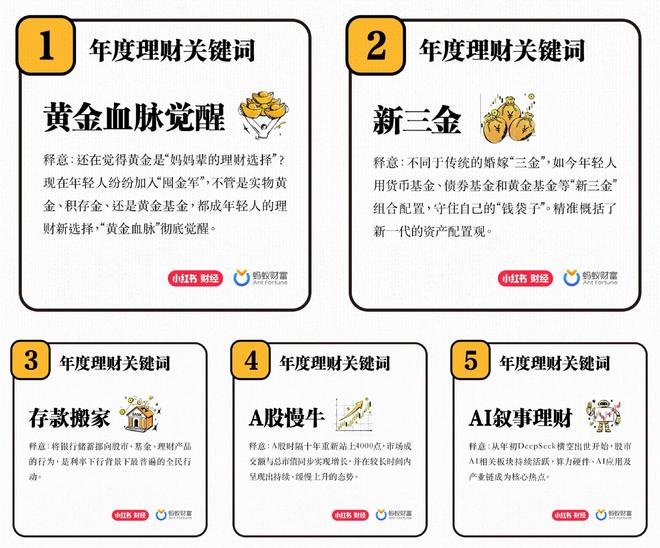
年度理财关键词发布!从“存款搬家”到“新三金”,大众理财转向多元配置
Sou Hu Cai Jing· 2025-12-30 08:53
Core Insights - In 2025, deposit rates are expected to enter the "0% range," while gold prices are reaching new highs, indicating a significant shift in public investment awareness [1] - A joint annual financial keyword voting by Ant Wealth and Xiaohongshu revealed five major keywords: "Awakening of Gold Bloodline," "New Three Golds," "Deposit Migration," "A-share Slow Bull," and "AI Narrative Finance," with gold-related keywords dominating [1] Group 1: Investment Trends - The trend of "deposit migration" to gold, funds, stock markets, and insurance reflects a shift in investment preferences, as individuals are increasingly prioritizing asset allocation in a low-interest environment [3] - The "Awakening of Gold Bloodline" keyword received the highest votes, indicating a growing interest among younger generations in gold investments, including gold funds and physical gold [3][5] - As of early October, over 8.9 million users on the Ant Wealth platform have started investing in gold ETFs, with those born after 1995 accounting for over 40% of the investors [3] Group 2: New Investment Strategies - The "New Three Golds" concept, which includes money market funds, bond funds, and gold funds, has emerged as a popular investment strategy among young people, balancing liquidity, stability, and potential returns [5] - By the end of November 2025, over 21 million users had adopted their own "New Three Golds," with nearly half being young investors [5] - The diversification approach of "New Three Golds" allows investors to adapt their portfolios based on market conditions, with a reported 12.8% increase in returns for those who shifted from bond funds to "fixed income plus" products [6]
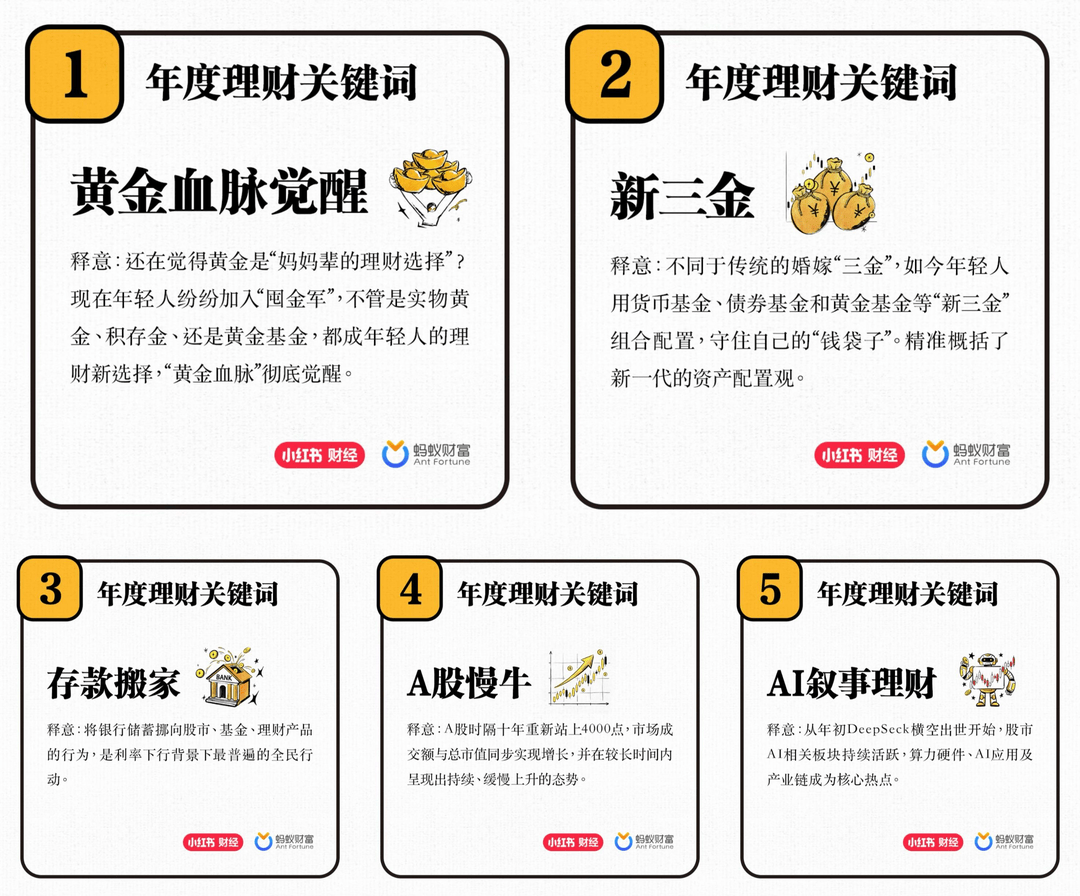
断裂之年:2025全球秩序重估与AI破晓
点拾投资· 2025-12-30 01:05
Core Insights - The year 2025 is characterized as a "year of rupture," highlighting the deepening cracks in the old order and the emergence of a new paradigm in macroeconomic narratives, emphasizing the search for certainty in an uncertain world [1][2]. Group 1: Market Overview - In 2025, both risk and safe-haven assets experienced simultaneous growth, indicating a breakdown of the traditional risk-hedge dichotomy [5]. - The A-share market saw a W-shaped bottoming pattern, with the Shanghai Composite Index rising approximately 15% and the Hang Seng Index increasing by around 30% due to confidence rebuilding and policy support [6][10]. - Active equity funds returned over 28%, outperforming the broader market, suggesting a resurgence of active management strategies [6][7]. Group 2: Asset Class Performance - The A-share market displayed a "barbell" structure, with low-valuation dividend stocks and high-growth tech stocks emerging as winners [7]. - In the U.S. stock market, the S&P 500 index rose by about 17% and the Nasdaq by over 22%, driven by AI advancements, despite initial concerns of a market bubble [10][19]. - Gold prices surged over 60%, marking the largest annual increase since 1979, transitioning from a traditional inflation hedge to a credit hedge amid geopolitical tensions [15][17]. Group 3: Geopolitical Impact - Geopolitical issues became a primary driver of asset prices, with events like Trump's tariff policies causing significant market volatility [23]. - The normalization of geopolitical conflicts necessitates a reevaluation of asset allocation strategies, moving away from traditional globalization frameworks [23][24]. Group 4: Investment Strategies - The concept of "anti-fragile asset allocation" has emerged as a crucial strategy in response to increasing macroeconomic uncertainties, focusing on building resilient portfolios [26]. - The "safety net, basic plate, growth point" framework proposed by Noah Wealth emphasizes a structured approach to asset allocation, aiming to withstand market volatility [30].


从“卖产品”到“做配置”:第八届新财富最佳投顾评委眼中的投顾转型关键三步
新财富· 2025-12-29 08:04
Core Viewpoint - The eighth New Wealth Best Investment Advisor selection has concluded, highlighting the evolution of the investment advisory industry from product sales to asset management and long-term client relationships [1][75]. Group 1: Professional Development and Industry Trends - The investment advisory team is rapidly maturing, showcasing high research standards and a strong client service awareness, which is essential for the high-quality development of the wealth management industry [2]. - The transition from "product sellers" to "asset allocators and companions" is becoming increasingly evident, emphasizing the importance of professional skills, communication, and trust [10][44]. - The industry is moving from "scale expansion" to "deep service," with a focus on understanding clients and navigating market fluctuations [14][67]. Group 2: Client-Centric Approach - Advisors are encouraged to embrace a "buy-side perspective," focusing on long-term client interests and developing cross-cycle asset allocation capabilities [10][62]. - The importance of enhancing client experience and service quality is recognized as a core direction for the asset management industry [24][38]. - Trust and responsibility are highlighted as critical elements for advisors to effectively support clients in wealth growth and risk management [41][46]. Group 3: Future Outlook - The future of the investment advisory industry lies in those who can adapt to market changes and maintain a commitment to client trust and professional integrity [14][75]. - The integration of technology and quantitative tools is expected to enhance the professionalism and replicability of advisory services [46]. - The industry is poised for significant growth, driven by the evolving wealth structure of residents and the deepening reforms in the capital market [75].
科技金融服务如何创新?
Zheng Quan Shi Bao· 2025-12-28 18:05
Core Viewpoint - The article emphasizes the importance of innovation-driven financial services to support technological innovation and the growth of science and technology enterprises in China, highlighting recent achievements and ongoing challenges in the sector [1][2]. Group 1: Financial Support for Technological Innovation - The Central Economic Work Conference has called for strengthening innovation-driven growth and expanding new economic drivers, specifically mentioning "innovative financial services for technology" [1]. - China's financial support system for technological innovation has shown initial success, with loans to technology-based SMEs growing at over 20% year-on-year and accounting for nearly 30% of new loans [1]. - The scale of science and technology bonds has surpassed 1.7 trillion yuan, and the market capitalization of the A-share technology sector exceeds 25% [1]. Group 2: Challenges in Financial Services - Many science and technology enterprises still face difficulties in accessing financial services, particularly in different stages of their lifecycle, where the current financial system does not adequately match their needs [1][2]. - Start-up tech companies often lack operational data and credit history, making it challenging for financial institutions to assess their creditworthiness and repayment capacity [1][2]. Group 3: Innovation in Financial Services - There is a need for continuous innovation in financial services to enhance resource allocation efficiency and stimulate the vitality of tech enterprises [2]. - Financial institutions should optimize loan services for tech companies, focusing on evaluating innovation capabilities and potential for technology transfer rather than just company size [2]. - The promotion of an "innovation credit system" and the development of specialized financial products tailored to the needs of tech enterprises are essential [2]. Group 4: Capital Market Development - The capital market should enhance its inclusivity and adaptability to better support the growth of tech enterprises through improved listing and merger regulations [3]. - The implementation of the "merger six guidelines" has led to a wave of mergers in the A-share market, particularly in the hard tech sector, although some mergers have been terminated, raising investor concerns [3]. - There is a need for strong regulatory oversight to ensure transparency in the reasons behind failed mergers and to encourage companies to pursue innovation [3]. Group 5: Regulatory Framework and Market Stability - The rapid evolution of financial innovation necessitates the establishment of a corresponding regulatory framework to monitor and manage risks effectively [4]. - Strengthening risk monitoring and response mechanisms will enhance the stability and vibrancy of the capital market [4]. - Continuous institutional innovation is expected to drive product and model innovation, reducing financing costs for tech companies and facilitating the market entry of more "hard tech" products [4].
嘉实基金邝霞:财富管理需以“账户思维”为核心进行多元资产配置,海南封关提供重要机遇
Sou Hu Cai Jing· 2025-12-28 15:24
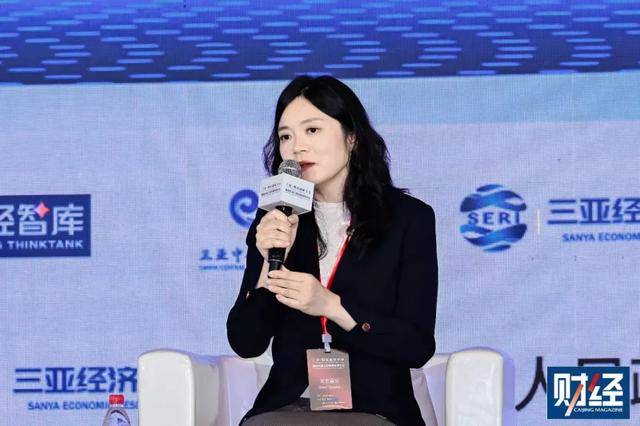
由三亚市人民政府主办,《财经》杂志、财经网、《财经智库》、三亚中央商务区管理局、三亚经济研 究院承办的"三亚·财经国际论坛暨第五届三亚财富管理大会"12月27日在海南三亚举行,主题为"海南自 贸港未来定位及三亚新机遇"。 12月27日,嘉实财富副总经理邝霞在大会上表示,财富管理的出发点是客户需求,同时应立足于"账户 思维"为客户进行多元化和全球化的资产配置。海南封关带来的跨境资管试点等政策红利,为财富机构 汇聚专业力量服务客户需求提供了重要机遇。 邝霞指出,嘉实财富从客户需求出发设立财富管理目标,并通过具有保障、生息、增值功能的产品来构 建客户账户,在持续陪伴中确保客户账户目标实现。 在资产配置层面,她谈到,全球增长放缓的背景下需通过多元资产组合提供收益并穿越周期。具体而 言,债券是账户压舱石,在降息背景下具备配置价值;股票是账户的增长引擎,科创硬科技是重要成长 力量;黄金等商品则能对冲宏观不确定性风险。她强调,核心不是单类产品,而是基于账户做好规划, 以多元资产组合拥抱变化。 针对海南封关的意义,她认为这为全球资产配置提供了便捷通道。她指出,跨境资产管理试点及境内外 资金双向流动便利化是关键,且"双15%" ...
业界热议高水平开放下的财富管理新生态
Zheng Quan Ri Bao· 2025-12-28 14:30
Group 1: Wealth Management Industry Trends - The wealth management industry is transitioning from a focus on single product sales to diversified, solution-oriented services, emphasizing the need for a variety of investment tools tailored to individual life cycles and wealth planning [1][3] - The industry is shifting from a product-centric approach to a client-centric model, highlighting the importance of understanding customer needs and providing diversified global asset allocation [1][3][4] Group 2: Opportunities from Hainan Free Trade Port - The official launch of the Hainan Free Trade Port is expected to create a convenient channel for global asset allocation, with policies facilitating cross-border asset management and the dual 15% tax policy providing tangible benefits [2][3] - Hainan's unique environment and service industry foundation are anticipated to attract a significant number of retirees, leading to emerging demands in retirement finance and wealth planning, thus presenting new growth opportunities for the wealth management sector [3][4] - The policies in Hainan are seen as advantageous for family trusts, enhancing their security, flexibility, and internationalization, which can support the establishment of robust asset isolation and inheritance structures [4] Group 3: Role of Technology in Wealth Management - Financial technology and artificial intelligence are identified as core drivers for the transformation and upgrading of the wealth management industry following the Hainan Free Trade Port's operations, necessitating innovative financial market and infrastructure development [4]
白秋晨:一场主要由新经济支撑的结构性牛市有望延续
Xin Lang Cai Jing· 2025-12-28 09:19
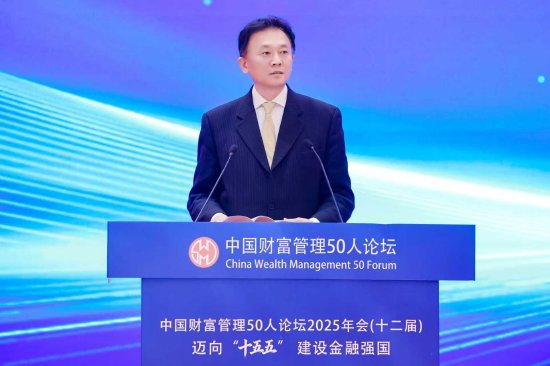
专题:中国财富管理50人论坛2025年会 12月27日金融一线消息,中国财富管理50人论坛2025年会在京召开,本届年会的主题是"迈向'十五 五'建设金融强国"。华泰资产党委书记白秋晨参与"低利率挑战:市场价值重构与机构应对之策"圆桌讨 论。 关于宏观经济,白秋晨认为,2026年经济仍将保持平稳增长,增速可能持平于今年。对于经济关键领 域,白秋晨给出具体判断:消费需求虽仍较弱,但在政策加力下有望保持一定增速;投资方面,制造业 投资供需回归再平衡,基建与地产投资可能继续拖累经济;出口则凭借完整产业链韧性与贸易战缓和态 势,有望保持一定韧性,2025 年 1-11 月我国出口增速达 5.4%,大超市场预期;物价方面,2026 年可 能仍处于通缩环境之中。 关于明年的投资市场,白秋晨表示,一场主要由新经济支撑的结构性牛市有望延续。支持这个判断的理 由主要有五点: 一是宏观经济保持韧性,政策加力内需,为股市提供 "下行有底" 的支撑。上证指数已在 2500-4000 点 区间震荡十年,伴随经济转型方向明朗,股市向上动能可观。 二是短期政策聚焦内需与 "十五五" 规划中期目标结合,将助力经济高质量发展,为企业盈利提供坚 ...
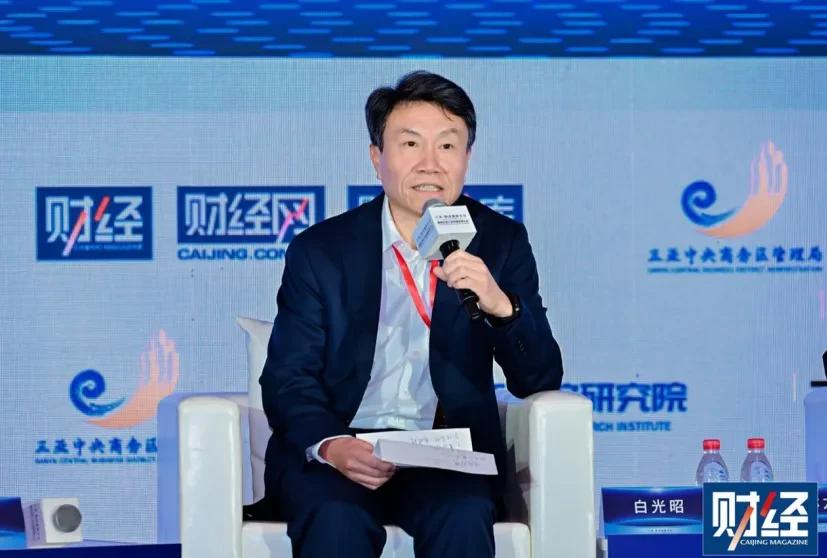
白光昭:发展“家族事务所”集群是海南自贸港建设特色金融聚集区的可行路径
Xin Lang Cai Jing· 2025-12-28 03:55
Core Viewpoint - The "Sanya Financial International Forum and the Fifth Sanya Wealth Management Conference" emphasizes the future positioning of Hainan Free Trade Port and new opportunities in Sanya, suggesting that Sanya can learn from Hong Kong's experience in financial wealth management and consider the practices of Qingdao as a national wealth management financial reform pilot zone [1][6]. Group 1: Development of Family Offices - The concept of "family offices" should extend beyond traditional financial services to encompass a wide range of family needs, including health, tourism, legal, education, and immigration services [3][9]. - Establishing a "family office industrial park" that gathers various professional service institutions can effectively stimulate domestic demand and promote consumption, becoming a significant form of future service industry development [3][10]. - The development of family offices relies on a collaborative approach rather than isolated efforts, suggesting that a concentration of different types of family offices can enhance service offerings and meet diverse client needs [10][11]. Group 2: Advantages of Hainan Free Trade Port - Hainan Free Trade Port benefits from national policy advantages, allowing for innovative models and providing a strong institutional guarantee for development [3][13]. - The region can serve as a "testing ground" for the development of family offices, with successful experiences potentially replicable across the country [3][13]. - Differentiated development strategies should be pursued, leveraging Hainan's unique natural endowments and free trade port policies to avoid homogenized competition with other cities [3][14]. Group 3: Economic Principles of Financial Clusters - The construction of financial clusters follows the economic principle of agglomeration, which can lead to reduced costs and enhanced resource exchange, creating a synergistic effect [7][8]. - The establishment of financial service institutions in clustered environments can lead to significant economic benefits, as the interaction among institutions can generate greater value than their individual contributions [7][8].
戴旻:封关政策有潜力让海南打造一个跨境资产配置的金融平台
Xin Lang Cai Jing· 2025-12-27 16:37
Core Viewpoint - The recent developments in China's cross-border investment tools, driven by regulatory changes, are providing domestic investors with a wider range of options for asset allocation [1] Group 1: Cross-Border Investment Tools - The variety of cross-border investment tools in China has expanded significantly, including traditional QDII funds and a growing number of QDII stock ETFs from various countries and sectors [1] - The introduction of diverse investment tools is deemed necessary for the domestic wealth management industry to adapt to long-term trends in capital markets [1] Group 2: Gold Assets and Capital Preservation - Gold assets are increasingly recognized as a vital component of capital preservation, potentially serving a role similar to fixed income assets in investment portfolios [1] Group 3: Hainan's Financial Platform Potential - The Hainan province's full island closure policy is seen as a potential catalyst for establishing a cross-border asset allocation financial platform [1] - Innovations such as the EF account (multi-functional free trade account) are expected to enhance the flexibility of capital flow and allocation [1] Group 4: Emerging Financial Needs - Hainan's unique natural environment and service industry foundation are attracting a significant number of retirees and pre-retirees, which may lead to new demands in areas like pension finance and wealth planning [1]