半导体

Search documents
“龙虾热”席卷全球之际 黄仁勋携开源模型炸场! 英伟达(NVDA.US)全栈野心托起“AI牛市叙事”
智通财经网· 2026-03-12 08:16
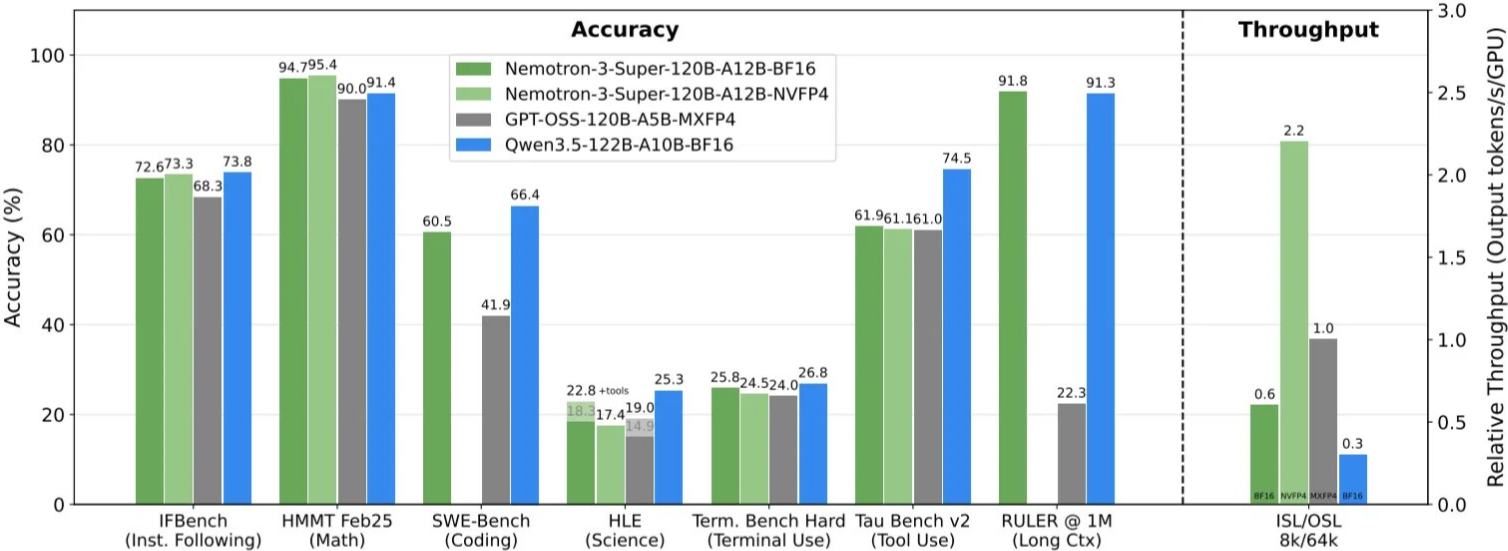
Core Viewpoint - Nvidia aims to transition from a chip supplier to a comprehensive AI infrastructure contractor with the launch of its open-source model "Nemotron 3 Super," designed for large-scale AI agents, enhancing its position in the AI ecosystem [1][10][12]. Group 1: Model Performance and Features - The "Nemotron 3 Super" model features 120 billion parameters and utilizes a mixed expert model (MoE) architecture, achieving over three times the inference performance and up to five times the throughput compared to its predecessor [2][11]. - In benchmark tests, "Nemotron 3 Super" scored 85.6% in the Pinchbench tests and demonstrated high success rates in tasks, closely rivaling proprietary models like Claude Opus 4.6 and GPT-5.4 [1][10]. - The model supports a context window of 1 million tokens, allowing it to maintain complete workflow states and prevent target drift in multi-agent workflows [5][9]. Group 2: Industry Impact and Adoption - Major companies such as Palantir, Amdocs, and Siemens are actively deploying and customizing the "Nemotron 3 Super" model for automation in telecommunications, cybersecurity, and semiconductor design [3][9]. - The model is being integrated into various AI-driven systems, enhancing operational efficiency and accuracy for companies like CodeRabbit and Factory [2][3]. - Nvidia's strategy reflects a broader industry trend towards AI agents, with predictions that 2026 will be a pivotal year for AI agents transforming the digital ecosystem [4][10]. Group 3: Market Outlook and Analyst Sentiment - Analysts have become increasingly bullish on Nvidia's stock, with expectations that the launch of "Nemotron 3 Super" will catalyze a breakthrough in stock price, potentially surpassing previous highs [12]. - The demand for AI computing power is projected to grow significantly, with major tech companies expected to invest around $650 billion in AI-related capital expenditures by 2026 [18]. - Nvidia's advancements in AI infrastructure are seen as a key narrative in the ongoing AI market boom, with implications for related sectors such as power supply and cooling systems [17].


半导体出现“氦气担忧”,中东导致供应链风险
日经中文网· 2026-03-12 07:40
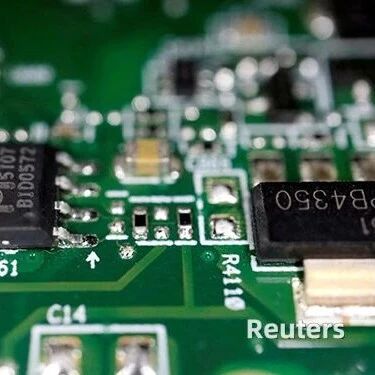
Core Viewpoint - The semiconductor industry is facing supply chain risks due to geopolitical tensions affecting helium supply, which is essential for semiconductor manufacturing. The market's concern over helium procurement disruptions has led to significant stock price declines in related companies [2][4][6]. Group 1: Impact of Geopolitical Events - Following the attacks on Iran, the Nikkei semiconductor stock index dropped by 3% and then 5% in the subsequent days, reflecting investor anxiety about helium supply disruptions [4]. - Stocks related to helium, particularly Iwatani Corporation, saw a 13% decline, indicating a strong correlation between helium prices and stock performance [6]. Group 2: Supply Chain Concerns - Helium is primarily produced in the U.S. and Qatar, and the current geopolitical situation raises concerns about the stability of these supplies. The market is particularly worried about the potential inability to procure helium, which could severely impact the semiconductor industry in Japan within six months [6][7]. - The proportion of helium used for semiconductor applications in Japan is projected to rise to 38% by 2025, up from 18% in 2018 and 26% in 2022, highlighting the increasing dependency on helium for semiconductor manufacturing [7]. Group 3: Stock Performance and Market Sentiment - The stock performance of various semiconductor-related companies has been negatively impacted, with notable declines including Iwatani Corporation (13%), Tokyo Ohka Kogyo (13%), and others [8]. - The market sentiment has shifted from optimism about AI-driven growth in semiconductor manufacturing to concerns over rising oil prices and supply chain vulnerabilities [9]. Group 4: Industry Responses - Companies are taking measures to mitigate the impact of helium supply issues, such as Fujikura's introduction of equipment to recycle helium for fiber optic production [9]. - The situation has exposed the risks associated with Japan's heavy reliance on imported raw materials, prompting discussions on how to address supply chain vulnerabilities to attract foreign investment [9].
韩国股市,想说冷静不容易
远川投资评论· 2026-03-12 07:05
Core Viewpoint - The recent volatility in the South Korean stock market, particularly the KOSPI index, has been marked by extreme fluctuations, with significant drops and recoveries driven by geopolitical tensions and market reactions to external factors [2][6][25]. Market Performance - The KOSPI index experienced a remarkable rise of over 160% from 2025 to February 2026, making it one of the best-performing markets globally [6][10]. - On March 3, 2026, the KOSPI fell over 12% in a single day, marking its largest drop in history, followed by a recovery of 9.63% the next day after a government intervention of 100 trillion KRW (approximately 68 billion USD) [2][10]. - The index's volatility continued, with fluctuations of nearly 6% in a single day, reflecting the market's erratic behavior [2][3]. Investor Behavior - Local retail investors have been net buyers during the recent market turmoil, while foreign investors have been net sellers, reminiscent of patterns observed during the 2020 pandemic [3][18]. - In February 2026, foreign investors sold a record 21.1 trillion KRW (approximately 998 million RMB) worth of stocks, indicating a significant shift in investment sentiment [14]. Economic Context - The KOSPI's rise was fueled by the semiconductor sector, particularly the dominance of Samsung and SK Hynix, which together account for about one-third of the market's value [10][13]. - The demand for high-bandwidth memory (HBM) and DRAM/NAND products surged due to the AI boom, positioning these companies as key players in the market [13][21]. Structural Issues - The South Korean stock market has historically faced a "Korea discount," with a price-to-book ratio hovering around 1, reflecting investor skepticism towards corporate governance and transparency [21][22]. - Recent reforms initiated by President Lee Jae-myung aim to address these governance issues and improve market attractiveness, with a focus on enhancing shareholder rights and corporate accountability [23][24]. Geopolitical Impact - The geopolitical tensions in the Middle East have significantly impacted the South Korean market, shifting investor focus from long-term growth narratives to immediate concerns about inflation and resource availability [25][27]. - The crisis has highlighted the vulnerabilities of South Korea's economy, which is heavily reliant on energy imports, particularly from the Middle East [25].

韩国很着急!中东冲突搅动芯片产业,半导体关键元素供给面临“中断”风险
第一财经· 2026-03-12 06:54
Core Viewpoint - The ongoing conflict in the Middle East raises concerns about its impact on the semiconductor industry and chip manufacturers, particularly regarding the supply of critical materials and rising energy costs, which may hinder AI data center construction and chip demand [2][6]. Group 1: Impact on Semiconductor Supply Chain - The Middle East conflict could disrupt the supply of essential materials like helium and bromine, which are critical for semiconductor manufacturing [4][6]. - Qatar produces over one-third of the world's helium, essential for cooling and lithography in chip production, and any supply disruption could significantly impact the global semiconductor industry [4][6]. - The closure of the Strait of Hormuz could hinder helium transportation, potentially affecting over 25% of global helium supply [5]. Group 2: Energy Costs and AI Data Centers - Rising energy costs due to the conflict may adversely affect the semiconductor industry, particularly as AI data centers consume 3-5 times more electricity than regular data centers [7]. - The volatility in oil prices, with Brent crude fluctuating around $100 per barrel, could increase operational costs for AI data centers, impacting their overall cost of ownership [7][8]. - If the conflict persists, it may lead to reduced capital expenditures on AI infrastructure and lower semiconductor demand [9]. Group 3: Response of Korean Chip Manufacturers - Samsung and SK Hynix, the largest memory chip producers, are under scrutiny for their response to the ongoing conflict, as they are crucial suppliers for AI data centers [8]. - Both companies are expected to start mass production of high-bandwidth memory (HBM) components soon, despite concerns over rising costs and demand fluctuations [8][9]. - The prolonged conflict could delay AI infrastructure development and pressure traditional DRAM products, potentially leading to weaker DRAM prices and lower revenue expectations for these companies [9][10].
中国出口的“HALO”时刻(国金宏观孙永乐)
雪涛宏观笔记· 2026-03-12 06:42
Core Viewpoint - China's AI product exports are experiencing significant growth, supported by the country's industrial chain advantages and the emerging "HALO" trading characteristics, influenced by geopolitical conflicts affecting supply chains [2][15]. Export Data Summary - In January and February, China's exports increased significantly by 21.8% year-on-year, while imports rose by 19.8%. The export growth rates for January and February were 10% and 39.6%, respectively, with the latter exceeding expectations [4]. - The late timing of the Spring Festival and a low base from the previous year contributed to the higher-than-expected export figures. The adjustment after the Spring Festival is estimated to bring February's export growth down to around 10% [4]. - The semiconductor sector led the growth with a 72.6% year-on-year increase in exports, while automatic data processing equipment and its components saw a 20.6% increase, contributing 4.5 percentage points to overall export growth [6]. Price Trends - The demand for AI-related products has led to significant price increases. In January and February, the export price of semiconductors rose by 55.7%, significantly outpacing the 13.7% increase in export volume [6]. - The export price index for electrical machinery and equipment rose from -4% in March 2025 to 5.3% in December 2025, indicating a recovery in pricing [6]. Regional Export Performance - Other East Asian regions also experienced high export growth, with Taiwan, South Korea, and Vietnam seeing increases of 44.5%, 31.3%, and 18.3%, respectively, driven by a high proportion of AI-related products [6][7]. - In contrast, regions with lower AI-related exports, such as India and Australia, reported much lower growth rates of 0.6% and -0.9% in January [7]. Product Category Performance - Various product categories showed significant improvement in export performance, with notable increases in agricultural products (12.1%), finished oil (9.9%), and machinery (27.1%) [8]. - The export of integrated circuits and automatic data processing equipment, both AI-related, saw substantial growth, with integrated circuits alone contributing significantly to Taiwan's and South Korea's export increases [7][8]. Conclusion - The ongoing global AI investment cycle is driving high growth in AI trade, with regions like Taiwan, South Korea, and mainland China benefiting from their high AI trade proportions. China's export growth in semiconductors, new energy, and electronic components reflects its industrial chain advantages and the emerging "HALO" trading characteristics [15].
中观景气跟踪3月第2期:科技景气中枢上移,原油有色价格分化
GUOTAI HAITONG SECURITIES· 2026-03-12 06:09
Group 1: Upstream Resources - The price of crude oil has surged due to escalating geopolitical tensions in the Middle East, with Brent crude oil futures settling at $92.7 per barrel, reflecting a 27.9% increase [7] - The domestic chemical price index rose by 11.9%, while the crude oil transportation index (BDTI) and refined oil transportation index (BCTI) increased by 54.1% and 75.7%, respectively [7] - Gold and copper prices have declined, with COMEX gold down 1.7% and LME copper down 2.8%, while LME aluminum prices increased by 9.7% due to supply disruptions in the Middle East [11] Group 2: Technology & Manufacturing - The semiconductor sales in January 2026 reached $82.54 billion globally and $22.82 billion in China, with year-on-year growth rates of 46.1% and 47.0%, respectively [18] - The average prices for DRAM DDR3, DDR4, and DDR5 showed mixed trends, with DDR3 increasing by 8.0% and DDR4 decreasing by 3.1% [18] - Construction demand has shown signs of marginal decline, with rebar and hot-rolled coil prices reported at 3,170 and 3,270 yuan per ton, reflecting a week-on-week change of -0.9% and +0.6% [22] Group 3: Downstream Consumption - The real estate market has seen a marginal decline in transaction volumes, with the transaction area for commodity housing in 30 major cities down 7.6% year-on-year [35] - High-end liquor prices, such as Moutai, have decreased by 4.9% for original and 3.3% for bulk, indicating a drop in demand post-holiday [39] - The service sector remains strong, with travel-related prices significantly increasing, including a 31.1% rise in airfare and a 15.8% increase in travel agency fees [45] Group 4: Logistics and Passenger Flow - Passenger transport in major cities has shown a year-on-year increase of 2.9%, with the Baidu migration index up 47.5% [47] - Domestic flight operations have increased by 17.5% year-on-year, while international flights have returned to 85.9% of pre-pandemic levels [49] - The SCFI index for shipping prices rose by 11.7%, indicating a strong performance in domestic port throughput, which increased by 6.5% year-on-year [51]
申万期货品种策略日报——股指-20260312
Shen Yin Wan Guo Qi Huo· 2026-03-12 05:21
Report Industry Investment Rating - Not provided in the report Core Viewpoints of the Report - The previous trading day saw the stock index mostly rising, with the coal sector leading the gains and the comprehensive sector leading the losses. The market turnover reached 2.53 trillion yuan. Starting from March, as listed companies gradually disclose their annual and first - quarter reports, industry leaders with strong performance certainty will attract funds, driving the market from "expectation - driven" to "profit - driven". The market will shift from "across - the - board rise" to "selective alpha" stage, where pure concept stocks without performance support and small - and medium - cap stocks may continue to be weak, while policy - beneficiary and performance - improving sectors may have sustainable opportunities. In the long run, the stock index trend will still depend on domestic fundamentals and policies, and it is expected to return to an oscillating upward trend after the geopolitical risks ease [2] Summary by Relevant Catalogs 1. Stock Index Futures Market - **IF Contracts**: The closing prices of IF contracts for the current month, next month, next quarter, and the quarter after next were 4687.00, 4668.00, 4621.20, and 4546.60 respectively. The price increases were 21.80, 20.40, 21.00, and 16.00, with corresponding increases of 0.47, 0.44, 0.46, and 0.35. The trading volumes were 51049.00, 3793.00, 19147.00, and 6823.00, and the open interests were 107580.00, 12759.00, 102302.00, and 44564.00. The changes in open interests were - 6906.00, 275.00, 1775.00, and 203.00 [1] - **IH Contracts**: The closing prices of IH contracts for the current month, next month, next quarter, and the quarter after next were 2983.80, 2983.40, 2977.00, and 2938.20 respectively. The price increases were 1.40, 4.20, 3.00, and 2.20, with corresponding increases of 0.05, 0.14, 0.10, and 0.07. The trading volumes were 19995.00, 2585.00, 8117.00, and 2524.00, and the open interests were 48141.00, 6417.00, 33041.00, and 16683.00. The changes in open interests were - 2450.00, 78.00, 6.00, and 321.00 [1] - **IC Contracts**: The closing prices of IC contracts for the current month, next month, next quarter, and the quarter after next were 8360.00, 8316.80, 8199.40, and 8038.40 respectively. The price decreases were - 25.00, - 26.80, - 28.40, and - 28.20, with corresponding decreases of - 0.30, - 0.32, - 0.35, and - 0.35. The trading volumes were 60985.00, 7743.00, 35019.00, and 13821.00, and the open interests were 97524.00, 17751.00, 116727.00, and 58423.00. The changes in open interests were - 9850.00, 343.00, 2907.00, and 2011.00 [1] - **IM Contracts**: The closing prices of IM contracts for the current month, next month, next quarter, and the quarter after next were 8313.00, 8245.00, 8089.20, and 7886.20 respectively. The price changes were 4.60, - 8.20, - 11.00, and - 13.00, with corresponding changes of 0.06, - 0.10, - 0.14, and - 0.16. The trading volumes were 89616.00, 12166.00, 38657.00, and 15285.00, and the open interests were 133840.00, 27430.00, 129804.00, and 76690.00. The changes in open interests were - 6381.00, 4785.00, 854.00, and 126.00 [1] - **Inter - month Spreads**: The current inter - month spreads of IF next month - IF current month, IH next month - IH current month, IC next month - IC current month, and IM next month - IM current month were - 19.00, - 0.40, - 43.20, and - 68.00 respectively, compared with the previous values of - 17.60, - 1.00, - 38.60, and - 54.00 [1] 2. Stock Index Spot Market - **Major Indexes**: The previous values of the Shanghai and Shenzhen 300 Index, Shanghai 50 Index, China Securities 500 Index, and China Securities 1000 Index were 4704.50, 2985.34, 8403.33, and 8363.53 respectively, with increases of 0.64, 0.12, - 0.08, and 0.16. The trading volumes (in billions of hands) were 270.18, 56.03, 264.49, and 321.74, and the total trading amounts (in billions of yuan) were 5795.64, 1224.47, 4957.52, and 5492.67 [1] - **Industry Indexes**: Among industries, energy, raw materials, industry, and optional consumption had increases of 1.98%, 0.60%, 1.89%, and 1.04% respectively; major consumption, medical and health, real - estate finance, and information technology had increases of 0.19%, - 0.36%, 0.66%, and - 0.52% respectively; telecommunications services and public utilities had increases of 0.09% and 1.44% respectively [1] 3. Futures - Spot Basis - The previous values of IF current month - Shanghai and Shenzhen 300, IF next month - Shanghai and Shenzhen 300, IF next quarter - Shanghai and Shenzhen 300, and IF the quarter after next - Shanghai and Shenzhen 300 were - 17.50, - 36.50, - 83.30, and - 157.90 respectively; the previous values of IH current month - Shanghai 50, IH next month - Shanghai 50, IH next quarter - Shanghai 50, and IH the quarter after next - Shanghai 50 were - 1.54, - 1.94, - 8.34, and - 47.14 respectively; the previous values of IC current month - China Securities 500, IC next month - China Securities 500, IC next quarter - China Securities 500, and IC the quarter after next - China Securities 500 were - 43.33, - 86.53, - 203.93, and - 364.93 respectively; the previous values of IM current month - China Securities 1000, IM next month - China Securities 1000, IM next quarter - China Securities 1000, and IM the quarter after next - China Securities 1000 were - 50.53, - 118.53, - 274.33, and - 477.33 respectively [1] 4. Other Major Domestic and Overseas Indexes - **Domestic Indexes**: The previous values of the Shanghai Composite Index, Shenzhen Component Index, Small and Medium - sized Board Index, and ChiNext Index were 4133.43, 14465.41, 8836.69, and 3349.53 respectively, with increases of 0.25%, 0.78%, 0.73%, and 1.31% [1] - **Overseas Indexes**: The previous values of the Hang Seng Index, Nikkei 225, S&P Index, and DAX Index were 25898.76, 55025.37, 6775.80, and 23640.03 respectively, with changes of - 0.24%, 1.43%, - 0.08%, and - 1.37% [1] 5. Macroeconomic Information - The Fourth Session of the 14th National Committee of the Chinese People's Political Consultative Conference concluded on the morning of March 11th, and the closing meeting of the Fourth Session of the 14th National People's Congress will be held at 3 pm on March 12th, with several resolutions to be voted on [2] - Wind upgraded Alice 27, launching an intelligent financial operating system, allowing financial practitioners to have "multiple roles" and "unlimited clones" [2] - US - Iran military situation: Trump said the US military action against Iran was "about to end", but US and Israeli officials said no internal order to stop the action had been received. The US Central Command warned of possible attacks on Iranian civilian ports, and Iran threatened to retaliate [2] - Energy reserves: The International Energy Agency (IEA) agreed to release 4 billion barrels of strategic oil reserves, the G7 energy ministers supported using reserves to stabilize the energy market, the US would "slightly" cut its reserves, Japan would release about 80 million barrels starting from March 16th, and Germany would release 2.4 million tons of reserves [2] - Security risk of OpenClaw: The Ministry of Industry and Information Technology issued "six do's and six don'ts" suggestions, at least 20 securities firms issued internal compliance reminders, domestic universities warned of risks, and the Suzhou Artificial Intelligence Association issued an initiative for rational use [2] 6. Industry Information - National Supercomputer Internet will distribute 10 million Tokens for free to each OpenClaw user for a limited period of 2 weeks, with a Token renewal price of 0.1 yuan per million Tokens, lower than the market average [2] - The semiconductor market is expected to reach a scale of one trillion US dollars in 2026, and China's share in mainstream semiconductor manufacturing capacity will reach 42% by 2028 [2] - In February, China's automobile sales were 1.805 million, a year - on - year decrease of 15.2%, including new - energy vehicle sales of 765,000, a year - on - year decrease of 14.2%. Automobile exports were 672,000, a year - on - year increase of 52.4% [2] - The Iran war caused international oil prices to fluctuate sharply, leading Asian airlines to raise ticket prices. Qantas raised international ticket prices by about 5%, and several airlines including Air India and Hong Kong Airlines adjusted fuel surcharges [2]
黄仁勋亲测英伟达自动驾驶平台,全程无人工接管
Di Yi Cai Jing Zi Xun· 2026-03-12 04:55
Core Insights - NVIDIA released a 22-minute video showcasing CEO Jensen Huang and Vice President of Automotive Business, Wu Xinzhou, traveling in an autonomous vehicle using NVIDIA's full-stack autonomous driving software platform, DRIVE AV, without any human intervention [1] Group 1 - NVIDIA demonstrated its autonomous driving capabilities through a real-world application in a video [1] - The video highlights the effectiveness of the DRIVE AV platform in managing autonomous driving tasks [1]

金元证券每日晨报-20260312
Jinyuan Securities· 2026-03-12 04:52
Market Overview - A-shares experienced a collective increase, with the Shanghai Composite Index rising by 0.25% to 4,133.43 points, the Shenzhen Component Index increasing by 0.78% to 14,465.41 points, and the ChiNext Index up by 1.31% to 3,349.53 points, with a market turnover of approximately 2.53 trillion yuan [6][12] - In the Asia-Pacific market, the Hong Kong Hang Seng Index fell by 0.24% to 25,898.76 points, while the South Korean Composite Index rose by 1.4% to 5,609.95 points [12] - European markets saw declines, with the UK FTSE 100 down by 0.56% to 10,353.77 points and the German DAX 30 down by 1.37% to 23,640.03 points [12] - In the US market, the Dow Jones fell by 0.61% to 47,417.27 points, while the Nasdaq rose slightly by 0.08% to 22,716.13 points [12] International News - The International Energy Agency (IEA) agreed to release 400 million barrels of strategic oil reserves to address supply disruption risks due to the conflict in Iran, marking the largest coordinated release in the agency's history [14] - US President Trump stated that military actions against Iran are "about to end," although officials have not received any internal orders to cease operations [10][11] Domestic News - The National People's Congress (NPC) and the Chinese People's Political Consultative Conference (CPPCC) held their sessions, with significant discussions on government work reports and the 14th Five-Year Plan [15] - The Ministry of Industry and Information Technology issued recommendations to mitigate security risks associated with the OpenClaw AI system, prompting at least 20 brokerage firms to issue compliance reminders [15][16] Company Announcements - Puxin plans to invest 2.051 billion yuan to establish a negative electrode material production base in Malaysia [18] - Anhui Weimei intends to raise no more than 3 billion yuan through a private placement to its controlling shareholder [18] - Newguo plans to invest 16.2 million yuan to establish a subsidiary focused on AI smart hardware [18]
黄仁勋亲测英伟达自动驾驶平台 全程无人工接管
Di Yi Cai Jing· 2026-03-12 04:45
Group 1 - Nvidia released a 22-minute video showcasing CEO Jensen Huang and VP of Automotive Business Wu Xinzhou traveling in an autonomous vehicle to San Francisco, utilizing Nvidia's full-stack autonomous driving software platform DRIVE AV without any human intervention [1] Group 2 - The demonstration highlights Nvidia's advancements in autonomous driving technology and its potential applications in the automotive industry [1]