新能源

Search documents
山西新能源装机占比首超煤电 新型能源体系建设全面提速
Zhong Guo Xin Wen Wang· 2026-02-02 09:07
Group 1 - The core viewpoint of the news is that Shanxi Province is focusing on energy transformation and industrial upgrading, aiming to establish a new energy system during the "14th Five-Year Plan" period, with significant progress in energy structure optimization and industrial transformation [1][2] - During the "14th Five-Year Plan," Shanxi's GDP is projected to exceed 2.5 trillion yuan, with an average annual growth rate of 5%, while the province has produced a cumulative 6.5 billion tons of raw coal, accounting for nearly 30% of the national total [1] - The province has made key advancements in energy reform, with 400 intelligent coal mines and an advanced coal production capacity ratio of 84%, alongside a total installed power capacity of 164 million kilowatts [1] Group 2 - For the "15th Five-Year Plan," Shanxi aims to deepen the energy revolution and detail the green and low-carbon transformation path, with a goal of stabilizing coal production capacity and promoting the coal industry to higher-end development [2] - Specific actions for energy transition include stabilizing coal production at around 1.3 billion tons, constructing 60 intelligent coal mines, and achieving a renewable energy installation of 30 million kilowatts [2] - By 2030, Shanxi targets a non-conventional natural gas output of 30 billion cubic meters and aims to become a significant hub for energy technology innovation and achievement transformation [2]
学习规划建议每日问答丨为什么要建设能源强国
Xin Hua She· 2026-02-02 08:55
Group 1 - The core viewpoint emphasizes the importance of building an energy powerhouse as a fundamental requirement for modernizing the country and ensuring energy security, especially in the context of global changes and the need for a green low-carbon transition [1][2] - The construction of an energy powerhouse is aligned with the new energy security strategy proposed by the government, which includes promoting energy consumption, supply, technology, and institutional revolutions, as well as enhancing international cooperation [2] - The urgency of enhancing energy security capabilities is highlighted due to increasing geopolitical risks and the politicization of energy issues, necessitating the development of a robust energy supply chain and innovation system [3] Group 2 - The need for green low-carbon development is identified as a strategic priority for enhancing global competitiveness, with a focus on transforming energy production and consumption patterns to achieve carbon neutrality goals [4] - China has made significant progress in energy supply capabilities since the proposal to build an energy powerhouse in 2021, with substantial increases in energy production expected by 2024, including coal, oil, and natural gas [5] - China is recognized as a leader in renewable energy, with the largest installed capacity for wind and solar power globally, and a complete supply chain for clean electricity, although there are challenges related to high dependence on foreign oil and gas [5]
青春作答“十五五” 奋斗绘就新征程
Xin Lang Cai Jing· 2026-02-02 08:44
Group 1: Core Perspectives - The Jilin Provincial Two Sessions have outlined a development blueprint focusing on youth development and industrial upgrades, inspiring young people to contribute to the province's revitalization [1][2] - The initiative "Youth Gather in Jilin" is not just a slogan but a call to action, with over 170,000 college graduates expected to choose employment in Jilin by 2025, indicating a growing confidence in the province's development [2][3] Group 2: Youth Engagement in Key Industries - The Jilin Provincial Two Sessions have identified key sectors such as the ice and snow economy and new energy, providing a broad platform for youth to make contributions [3][4] - Young entrepreneurs are transforming "cold resources" into "hot industries" in the ice and snow sector, while youth craftsmen are focusing on technological breakthroughs in new energy, showcasing their commitment to practical contributions [3][4] Group 3: Innovation and Development - Innovation is highlighted as the primary driving force for development, with Jilin's industrial upgrades requiring the active participation of youth in technological advancements [4][5] - Youth teams from Jilin University have achieved notable success in innovation competitions, applying artificial intelligence in various fields, which reflects the province's commitment to fostering a culture of innovation [4] Group 4: Community Service and Social Responsibility - The Jilin Provincial Two Sessions emphasize the importance of improving people's livelihoods, with youth playing a crucial role in implementing welfare measures and community services [5] - Young volunteers are actively involved in various initiatives, from providing ice and snow experiences for children to assisting in grassroots governance, demonstrating their dedication to enhancing community well-being [5]
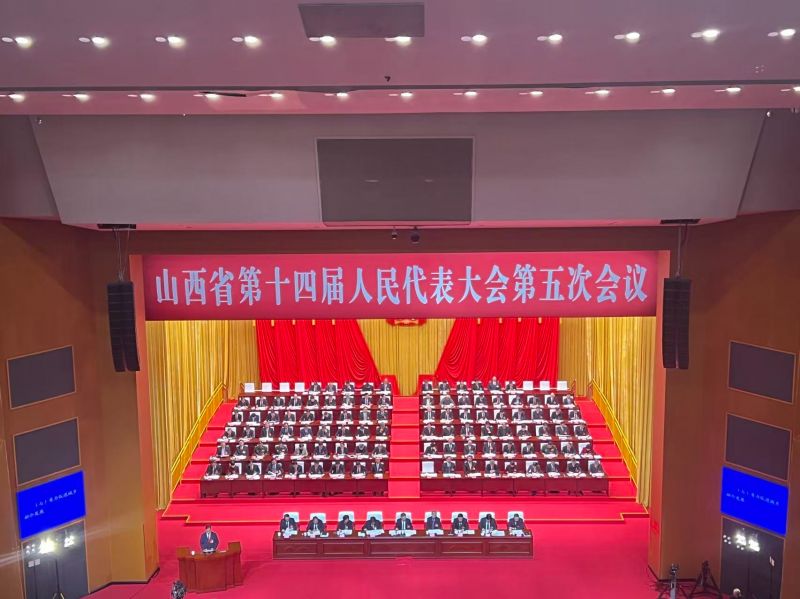
锚定转型深化 聚力民生福祉 ——山西省十四届人大五次会议绘就“十五五”高质量发展新蓝图
Zhong Guo Fa Zhan Wang· 2026-02-02 08:28
Group 1 - The core viewpoint of the article emphasizes the significant achievements of Shanxi Province during the "14th Five-Year Plan" and outlines the strategic direction for the "15th Five-Year Plan" and key tasks for 2026 [1][3][7] Group 2 - During the "14th Five-Year Plan," Shanxi faced multiple challenges, including the COVID-19 pandemic and economic pressures, yet managed to achieve a high-quality development transformation, with over 80% of advanced coal production capacity and a renewable energy installed capacity exceeding 60 million kilowatts [3][4] - The province's manufacturing sector saw a steady increase in value-added output, with emerging industries like new energy vehicles and photovoltaics rapidly developing, leading to a historic optimization of the industrial structure [3][4] - In terms of public welfare, Shanxi created 2.3 million new urban jobs, with per capita disposable income growing annually by 5.6% for urban residents and 7.2% for rural residents, alongside significant improvements in public services and environmental quality [3][4] Group 3 - The "15th Five-Year Plan" aims to establish Shanxi as a national resource-based economic transformation pilot zone, focusing on deepening transformation, enhancing energy levels, improving living standards, and ensuring safety [4][5] - Shanxi plans to promote green and low-carbon transformation in the energy sector, aiming to create the largest clean and efficient coal utilization base and integrate wind, solar, and thermal energy [5] - The province intends to develop 3-5 industrial clusters with a value exceeding 100 billion yuan, targeting a 25% contribution of strategic emerging industries to GDP [5] Group 4 - In 2026, Shanxi will implement ten key actions, including stabilizing coal production capacity above 1.3 billion tons and adding 10 million kilowatts of new energy capacity, to ensure energy security [6] - The province will focus on cultivating emerging industries, with plans to produce over 300,000 new energy vehicles and establish a significant photovoltaic industry base [6] - Initiatives to enhance public welfare will include adding 20,000 preschool places and renovating 1,500 old residential communities, ensuring equitable distribution of development benefits [6]

7大院士加盟共建协同创新体系!国家级零碳园区创建专家指导委员会正式成立
Zheng Quan Ri Bao· 2026-02-02 08:16
Core Viewpoint - The establishment of the National Zero Carbon Park Creation Expert Guidance Committee marks a new phase in the high-quality development of zero carbon park construction in China, emphasizing the integration of think tank leadership and ecological collaboration [1][2]. Group 1: Zero Carbon Park Development - The planning and construction of zero carbon parks are guided by the national "dual carbon" strategy and the urgent need for enterprises to reduce costs through green electricity and upgrade industries, while also addressing international green barriers [2][3]. - During the 14th Five-Year Plan period, China aims to establish approximately 100 national zero carbon parks, which will significantly reshape production methods, energy structures, governance models, and business models, creating substantial social, environmental, and economic value [2][3]. - The current carbon emissions per unit energy consumption in parks are about 2.1 tons per ton of standard coal, with a target to reduce this to 0.2-0.3 tons per ton of standard coal within the next 3-5 years, representing a reduction of up to 90% [2]. Group 2: Expert Committee and Collaborative Innovation - The Expert Guidance Committee, under the guidance of relevant departments, gathers top experts in fields such as new energy, advanced storage, and digital energy to provide comprehensive support for zero carbon parks [2][3]. - The zero carbon park initiative encompasses eight major tasks and numerous core technologies, requiring a highly integrated system involving energy supply, storage regulation, smart management, and circular emission reduction [3][4]. - A new ecosystem must be built that deeply integrates government, industry, academia, research, finance, and service sectors to promote collaborative carbon reduction across regional resources and industrial chains [3][4]. Group 3: Technological and Policy Innovations - The committee aims to leverage the expertise of academicians to efficiently organize systemic innovations and address core challenges in policy implementation, industrial transformation, and technology selection [4]. - A national-level zero carbon park professional committee was established by 18 organizations, including state-owned enterprises and research institutions, to drive technological and business model innovations, creating replicable benchmarks for zero carbon parks [4]. - The goal is to achieve a deep integration of energy transformation and industrial upgrading, contributing to the dual carbon goals and the construction of an energy powerhouse in China [4].
“十五五”能源规划有望上半年出台|碳中和周报(219期)
2 1 Shi Ji Jing Ji Bao Dao· 2026-02-02 08:09
Carbon Neutrality Policy - The National Energy Administration announced that the "14th Five-Year" energy plan is expected to be released in the first half of this year, aiming for a non-fossil energy consumption ratio of 25% and a new energy power generation capacity exceeding 50% by 2030 [3][4] - The "14th Five-Year" energy plan will focus on four key measures: supply diversification, industrial integration, expanding non-electric consumption, and collaborative consumption [3] - By 2025, China's wind and solar power installations are projected to exceed 430 million kilowatts, with a cumulative installed capacity surpassing 1.8 billion kilowatts [4] Green Certificate Trading - By 2025, the cumulative trading volume of green certificates in China is expected to reach 930 million, a year-on-year increase of 120%, with over 111,000 participants in the trading market [5] - The average trading price of green certificates is projected to rise to approximately 4.14 yuan per certificate in the second half of 2025, reflecting a 90% increase from the first half [5][6] - The demand for green certificates is shifting from policy requirements to strong market demand, with high-energy-consuming and export-oriented enterprises becoming the main consumers [6] Ecological Industrial Park Management - The Ministry of Ecology and Environment has revised the management measures for ecological industrial parks, emphasizing pollution reduction and carbon reduction [7][8] - The new management measures include a performance evaluation system and withdrawal mechanisms for parks that do not meet standards, along with incentives for green transformation [8] - The Ministry plans to launch a new batch of ecological industrial parks this year, promoting high-quality development through financial and technological support [8] Beautiful China Initiative - The framework for building a Beautiful China has been established, with 184 exemplary cases published, including 141 beautiful rivers and 43 beautiful bays [9][10] - The initiative aims to improve ecological environment quality and implement pollution prevention strategies, with a focus on solid waste management and new pollutant governance [10] Local Dynamics - Beijing aims to achieve a green electricity import scale of 65 billion kilowatt-hours by 2030, highlighting the need for regional collaboration in energy transition [11][12] - The city plans to enhance its energy structure and implement dual control of carbon emissions, aiming for international advanced levels in energy efficiency and carbon efficiency [11] Corporate Practices - The 21st Century Economic Report has been recognized for its environmental news reporting, reflecting the integration of carbon neutrality into mainstream economic narratives [13][15] - The report highlights the importance of environmental reporting in monitoring policy implementation and providing market references [15] - Envision Group's approach to building zero-carbon parks emphasizes collaboration among park management, enterprises, and service providers, focusing on new energy systems and digital management [16][17]
多家上市公司出资参设具身智能机器人基金;中国人寿拟出资40亿元参与设立长三角科创私募基金丨01.26-02.01
Sou Hu Cai Jing· 2026-02-02 07:01
Group 1: AI and Robotics Investment Funds - Kunshan established a 5 billion RMB AI industry fund, focusing on core hardware, computing infrastructure, and AI+ manufacturing [2] - Luoyang's industrial development fund plans to set up a 2 billion RMB humanoid robot fund, targeting investments in the entire humanoid robot industry chain [2] - A 6.6 billion RMB intelligent robot industry fund was jointly established by UBTECH and the Liuzhou government, focusing on the entire industry chain [12] Group 2: Aerospace and Space Technology Funds - Sichuan Liangshan plans to establish a commercial aerospace special fund of no less than 4 billion RMB, supporting rocket and satellite development [2] - Beijing Yizhuang Star Arrow Technology established a 1 billion RMB aerospace industry fund, focusing on reusable rockets and satellite applications [3] Group 3: Regional and Sector-Specific Funds - Urumqi's Midong District set up a 200 million RMB industrial fund to boost five key industries, including petrochemicals and new energy [3] - Jiangsu's Wuxi Huishan District launched its first S fund with a total scale of 500 million RMB, focusing on private equity secondary markets [8] - The Jiangsu province's guiding fund successfully established a 500 million RMB results transformation fund to promote technology transfer [5] Group 4: Renewable Energy and New Materials Funds - Zhejiang Zhengtai Electric plans to invest 150 million RMB in a 1 billion RMB household photovoltaic investment fund [11] - Hunan Keli Yuan plans to lead a 2 billion RMB energy storage industry fund, focusing on new energy storage projects [17] Group 5: Healthcare and Biomedicine Funds - The first CVC biomedicine sub-fund in Yangzhou was established with a total scale of 500 million RMB, focusing on medical technology [13] - Liaoning He’s Eye Hospital Group plans to invest 80 million RMB in a biomedicine fund, targeting biotechnology and healthcare projects [15] Group 6: Government and Policy Initiatives - Hangzhou Yuhang District released a new investment fund management method to enhance investment efficiency and support emerging industries [18]

陕西宝鸡今年谋划项目3000余个 总投资超2000亿元
Shan Xi Ri Bao· 2026-02-02 05:37
Core Viewpoint - Baoji City is focusing on high-quality project construction as a priority for economic development, planning over 3,000 projects with a total investment exceeding 200 billion yuan in 2023 [1][2] Group 1: Economic Performance - Baoji City's GDP grew by 6% last year, with industrial added value increasing by 10% and fixed asset investment rising by 8.6% [1] - The completion rates for 47 provincial key projects and 419 municipal key projects reached 125.29% and 144.54% respectively, with project commencement and investment completion rates ranking first in the province [1] Group 2: Project Planning and Investment - The city plans to invest over 58.6 billion yuan in 465 municipal key projects this year [1] - Baoji City aims to secure over 4 billion yuan in various policy funds throughout the year [1] Group 3: Infrastructure and Development Initiatives - Baoji City will expand high-level opening-up, with the airport's main project expected to be completed this year and several highways nearing completion [2] - The city is pushing for the inclusion of the Bao-Han high-speed railway in planning and aims to start the reconstruction of the Longhai Railway in the first half of the year [2] - Efforts will be made to improve energy efficiency in key industrial sectors and to advance several renewable energy projects [2]
5.4%增速之外,上海新质生产力藏着怎样的破局密码
Ren Min Ri Bao· 2026-02-02 04:21
Core Insights - Shanghai's GDP for 2025 surpassed 5.67 trillion yuan, with a year-on-year growth of 5.4%, driven by a 6.0% increase in the tertiary sector and a remarkable 9.6% growth in manufacturing [1] - The city's economic transformation is fueled by new productive forces, emphasizing technological breakthroughs in integrated circuits and artificial intelligence, alongside extensive digital infrastructure [1][2] - The industrial structure is shifting from scale-driven to innovation-driven, with strategic emerging industries accounting for 45% of the total industrial output value, an increase of 1.4 percentage points from 2024 [1] Industry Performance - The integrated circuit manufacturing sector saw a 15.1% increase, while artificial intelligence manufacturing grew by 13.6%, and new energy industries expanded by 12.9% [1] - The growth of the three leading industries is attributed to systematic planning and optimization of the "production, education, research, and application" collaborative mechanism [2] Technological Integration - Shanghai is leveraging digital technologies to reconstruct its industrial ecosystem, evidenced by advancements in virtual power plants and smart connected vehicles, which have improved traffic efficiency by 15% [3] - Industrial investment rose by 20.0%, with the information transmission, software, and IT services sector increasing by 15.3%, and the financial sector growing by 9.7%, indicating a positive cycle of new and old energy conversion [3] Societal Impact - New productive forces are enhancing citizens' daily experiences, with blockchain technology providing traceability for local agricultural products and expanding to 28 categories by 2025 [4] - Initiatives like "Jia Shu GO" are creating digital living scenarios, while brain-computer interface technologies are transitioning from labs to practical applications, benefiting public welfare [4] Institutional Innovation - Shanghai's institutional reforms are fostering innovation, allowing universities to participate in research awards and integrating award outcomes into professional evaluations [4] - Policies are being implemented to build industrial ecosystems, including the clustering of over 40 companies in the satellite internet sector and promoting AI applications [4] - The dual drive of "technological innovation + institutional innovation" is addressing systemic barriers in technology development and providing fertile ground for new industries and business models [4]
我国新型能源体系建设基础持续夯实
中国能源报· 2026-02-02 03:38
Core Viewpoint - By 2025, China's energy supply security capacity will be significantly enhanced, with multiple important policy measures being introduced to solidify the foundation for a new energy system, promoting green energy development and high-quality investment opportunities [1]. Investment and Project Completion - National energy investment is expected to maintain rapid growth, with key project investments exceeding 3.5 trillion yuan, marking an 11% year-on-year increase, outpacing infrastructure and manufacturing growth by 12.9 and 10.1 percentage points respectively [3]. - The production of raw coal remains stable, with a 1.2% increase in industrial raw coal output. Oil and gas production will reach historical highs, with industrial crude oil output increasing by 1.5% and natural gas output by 6.2% [3]. Renewable Energy and Market Transactions - New installed capacity for wind and solar energy is projected to exceed 430 million kilowatts, with total installed capacity surpassing 1.8 billion kilowatts, accounting for over 60% of renewable energy generation capacity [3]. - Renewable energy generation is expected to reach approximately 4 trillion kilowatt-hours, exceeding the combined electricity consumption of the EU's 27 countries [3]. - The cumulative electricity trading volume in the national power market is anticipated to reach 6.64 trillion kilowatt-hours, a 7.4% increase year-on-year, with market-based transactions accounting for 64% of total electricity consumption, up 1.3 percentage points [3]. Green Electricity Trading and Certificates - Green electricity trading volume is projected to reach 328.5 billion kilowatt-hours, a 38.3% increase year-on-year, with long-term green electricity agreements totaling 60 billion kilowatt-hours [4]. - The green certificate market is expected to see significant growth, with cumulative transactions reaching 930 million certificates, a 120% increase year-on-year, and the average transaction price rising by 90% in the second half of 2025 [4]. Power Grid Development - China has established the world's largest and most complex AC/DC hybrid power grid, enhancing resource allocation capabilities with 45 ultra-high voltage transmission channels [6]. - The grid supports an annual average of 80 million kilowatts of new power load demand, ensuring reliable electricity supply equivalent to the total consumption of the US, EU, and Japan combined [6]. New Energy Storage Growth - New energy storage capacity is expected to grow by 84% by the end of 2025, reaching 136 million kilowatts/351 million kilowatt-hours, a more than 40-fold increase compared to the end of the 13th Five-Year Plan [10]. - The average storage duration is projected to increase to 2.58 hours, with significant contributions from regions like North China and Northwest China [10][11]. Future Grid Development - The future power system will exhibit high penetration of new energy, high electrification, and increased complexity, necessitating new requirements for grid development [7]. - The upcoming focus will be on constructing a coordinated development framework for main, distribution, and micro grids, enhancing the overall efficiency and reliability of the power supply [8].