化工

Search documents
AI赋能制造业智能化绿色化发展
Xin Hua Ri Bao· 2026-02-12 23:48
Core Viewpoint - The integration of artificial intelligence (AI) and industrial robotics is driving a fundamental transformation in production methods, organizational forms, and business models within the industrial sector, particularly in optimizing production processes and reducing carbon emissions, which aligns with China's dual carbon strategy goals [1] Group 1: Strategic Framework - Optimizing top-level design is essential for constructing an integrated development ecosystem that fosters interaction among technological innovation, industrial application, and market mechanisms [2] - The establishment of special action plans is necessary to clarify key supported industries, core technological breakthroughs, and phased energy efficiency and carbon reduction targets [2] - Encouragement of local initiatives to build "AI + Robotics + Low Carbon" demonstration parks and benchmark smart factories is crucial for promoting advanced solutions [2] Group 2: Technological Focus - Addressing high energy consumption and emissions in industries like metallurgy and chemicals requires collaborative innovation among AI models, algorithms, and robotic systems [3] - Development of hybrid intelligent algorithms that combine physical-chemical mechanisms with data-driven methods is essential for achieving optimal control and precise energy scheduling [3] - The creation of a cloud-coordinated intelligent emission reduction system through real-time data collection and analysis is necessary for comprehensive optimization [3] Group 3: Application and Implementation - Expanding application scenarios based on real industrial needs and emission reduction challenges is vital for advancing AI and robotics from usable to widely adopted technologies [4] - In the automotive sector, implementing intelligent welding parameter optimization and robotic spray path planning can significantly reduce energy consumption and material waste [4] - Industry authorities should select and promote optimal AI industrial carbon reduction cases and solutions to facilitate rapid dissemination across the supply chain [4] Group 4: Talent Development - A large, high-quality interdisciplinary talent pool is essential for the deep integration of AI, robotics, and industrial carbon reduction [6] - Higher education institutions should establish interdisciplinary programs and integrate real-world emission reduction scenarios into their curricula [6] - Companies should implement new job roles focused on green intelligent manufacturing and develop comprehensive training programs to enhance the capabilities of existing engineering teams [6]
新华财经早报:2月13日
Xin Lang Cai Jing· 2026-02-12 23:43
Group 1: Low-altitude Insurance and Automotive Industry Regulations - The National Development and Reform Commission, along with financial regulatory bodies, has issued guidelines to promote the high-quality development of low-altitude insurance, aiming to establish a mandatory liability insurance system for unmanned aerial vehicles by 2027 [3] - The State Administration for Market Regulation has released a compliance guide for pricing behavior in the automotive industry, detailing pricing norms from vehicle production to sales, and emphasizing fair pricing and the regulation of promotional activities [3] Group 2: AI Development and Market Trends - Domestic large models are being launched intensively before the Spring Festival, with companies like ByteDance and iFlytek introducing new AI models, indicating a shift from "technical racing" to "value racing" in AI competition, with 2026 identified as a critical year for commercialization [4] Group 3: Financial and Economic Data - By the end of Q4 2025, the balance of inclusive loans to small and micro enterprises in China's banking sector reached 37 trillion yuan, reflecting a year-on-year growth of 11.0% [3] - The People's Bank of China plans to conduct a 10 trillion yuan reverse repurchase operation on February 13, 2026, with a term of 182 days [3] Group 4: Corporate Announcements and Investments - China Shenhua has received approval from the China Securities Regulatory Commission for a share issuance and cash payment to acquire assets [10] - Huadian Power plans to invest 2.1 billion yuan in the construction of a 120Ah battery production project [10] - Xiamen Airport intends to acquire 100% of Zhaoxiang Technology for approximately 1.193 billion yuan [10] Group 5: Market Indices and Commodity Prices - The Shanghai Composite Index closed at 4134.02, up 0.05%, while the Shenzhen Component Index rose by 0.86% to 14283 [8] - WTI crude oil prices fell by 3.05% to $62.91, and Brent crude oil prices decreased by 2.83% to $67.66 [8]


观点全追踪(2月第6期):晨会精选-20260213
GF SECURITIES· 2026-02-12 23:30
Core Insights - The report indicates that the U.S. labor market shows resilience, as evidenced by non-farm payroll data, unemployment rates, and wage data, which reduces the probability of interest rate cuts in June 2026 to 47.1% from a previous 48.9% [2] - Following the data release, the 2-year U.S. Treasury yield increased by 7 basis points to 3.52%, while the 10-year yield rose by 2 basis points to 4.18% [2] - The U.S. dollar index rebounded to 96.91, and U.S. stock markets experienced slight adjustments, with the Dow Jones Industrial Average down 0.13%, the S&P 500 down 0.01%, and the Nasdaq down 0.16% [2] Industry Performance - Leading sectors included storage/semiconductors, energy, machinery, railroads, industrial metals, chemicals, and department stores [2] - Underperforming sectors encompassed AI software, online brokerages, major central banks, credit cards, home builders, and airlines, with concerns about AI agents reducing demand for traditional SaaS software and seat licenses [2]
广州市红棉智汇科创股份有限公司关于涉及诉讼的进展公告
Shang Hai Zheng Quan Bao· 2026-02-12 19:44
Core Viewpoint - The company, Guangzhou Hongmian Zhihui Science and Technology Innovation Co., Ltd. (formerly known as Guangzhou Langqi Industrial Co., Ltd.), is involved in a legal dispute with Guangzhou Industrial Economic Development Co., Ltd. regarding unpaid debts from a series of chemical raw material procurement contracts totaling approximately RMB 380.24 million, with an outstanding amount of RMB 237.28 million as of the lawsuit date [1][2]. Group 1: Lawsuit Background - The lawsuit originated from a series of procurement contracts signed between November 2019 and July 2020, where the plaintiff supplied a total of 732,498 tons of goods valued at RMB 380,236,843.4, but the defendant only paid RMB 142,956,710.34, leaving an outstanding balance of RMB 237,280,133.06 [1][2]. - The plaintiff claims that the defendant's failure to pay constitutes a breach of contract, thus prompting the lawsuit [2]. Group 2: Court Rulings - The initial ruling by the Guangzhou Intermediate People's Court dismissed the case, citing potential economic crime implications, allowing the plaintiff to pursue legal remedies after the conclusion of any criminal proceedings [5]. - The Guangdong High People's Court later overturned this decision, stating that the facts were unclear and the law was improperly applied, thus ordering a retrial [6][9]. - The retrial by the Guangzhou Intermediate People's Court confirmed the plaintiff's ordinary claim against the defendant for RMB 244,055,469.53, while dismissing other claims [10]. Group 3: Financial Implications - During the company's restructuring, Guangzhou Industrial Economic, as a creditor, has filed a claim with the administrator, who has reserved repayment resources for this claim in the restructuring plan [11]. - The financial impact of this lawsuit on the company's future profits will be determined based on the final audit results [11].

27国外援候命,马克龙通知全球,对华打响第一枪,中方奉陪到底
Sou Hu Cai Jing· 2026-02-12 19:26
Core Viewpoint - The French government think tank has proposed that the EU should impose stricter trade measures against Chinese goods, suggesting a 30% tariff on all Chinese exports to the EU and a potential 30% appreciation of the yuan against the euro to address the perceived unfair trade situation between the EU and China [2][4]. Group 1: Trade Measures - The report indicates that the EU's trade deficit with China is expected to reach €304.5 billion in 2024, highlighting the significant financial outflow to China [4]. - The proposed measures aim to counteract the competitive pressure that Chinese products exert on various European industries, including automotive, chemicals, machine tools, and batteries [4][6]. - The French think tank believes that existing trade defense mechanisms are insufficient to address the challenges posed by China's low-cost products [4][6]. Group 2: Internal EU Disagreements - There is significant opposition within the EU regarding the proposed tariffs, particularly from countries like Germany and the Netherlands, which have strong economic ties with China [8][10]. - The proposal faces challenges due to the lack of consensus among EU member states, as countries with close trade relations with China are unlikely to support such aggressive measures [8][10]. - The internal divisions within the EU may hinder the implementation of the proposed tariffs, as countries like the Netherlands and Spain are also reluctant to adopt such drastic actions [10]. Group 3: China's Response - China has indicated that it will not easily compromise and has threatened to take retaliatory measures against French products, such as wine and luxury goods [10][12]. - The Chinese government has stated that the yuan's exchange rate will be determined internally, rejecting any external pressure [12]. - Despite potential tariffs, China's low-cost products maintain a competitive advantage, being approximately 30%-40% cheaper than similar European products [14][15]. Group 4: Broader Economic Context - The U.S. has shown support for France's stance, with the U.S. Treasury Secretary suggesting that while the U.S. and China are competitors, they should engage in fair competition [12][14]. - The ongoing economic resilience of China suggests that it may effectively counter external pressures, indicating a prolonged economic confrontation between the EU and China [14][15].

同宝煤业、煤化工、纳米公司强劲发力开好局
Xin Lang Cai Jing· 2026-02-12 14:15
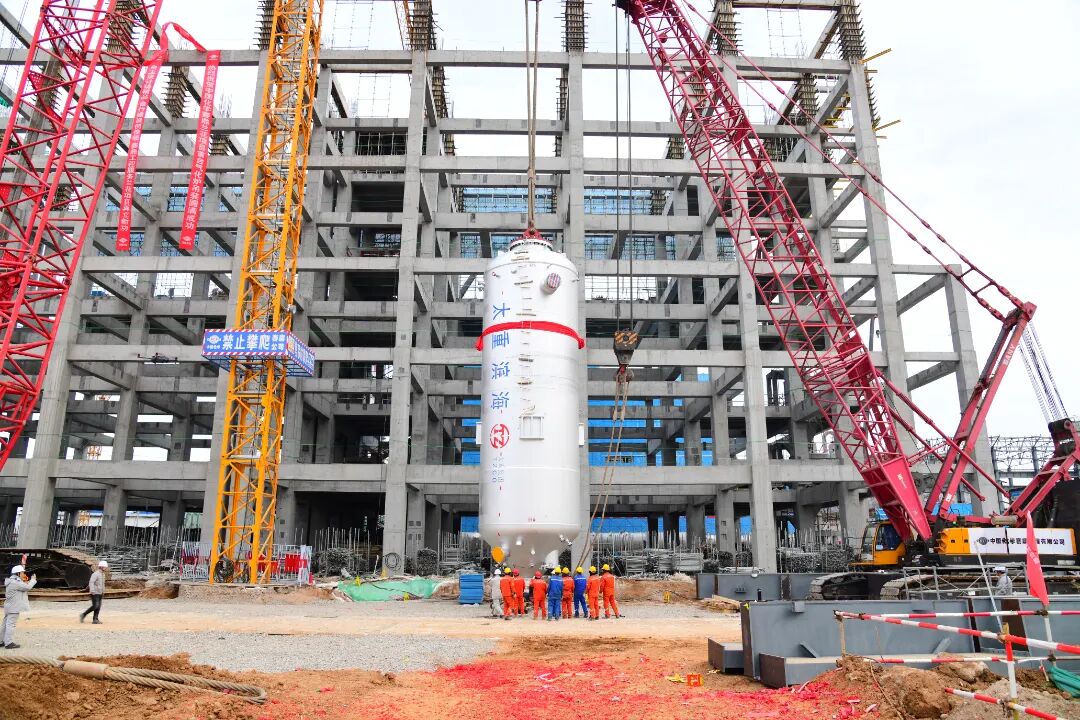
Group 1: Tongbao Coal Industry - In January, Tongbao Coal Industry achieved a successful start with all core indicators such as raw coal output, product sales, and tunneling progress meeting planned targets [1][5] - The company implemented a performance-based evaluation system and established special awards to motivate employees, fostering a competitive atmosphere [1][5] - Management personnel engaged in frontline supervision and conducted comprehensive safety inspections, addressing identified hazards to strengthen safety foundations [1][5] - Cost control measures were enhanced through centralized procurement and optimized evaluation processes, ensuring efficient budget management and resource utilization [1][5] Group 2: Coal Chemical Industry - On February 10, the first JM-S gasifier was successfully installed as part of the energy-saving and environmental upgrade project, marking a new phase in the project [2][6] - The gasifier, developed by Saiding Engineering Co., is designed for local coal resources and features advanced continuous gasification technology, improving raw material adaptability and methane yield [4][8] - The system is expected to enhance coal utilization by over 15% and achieve a carbon conversion rate exceeding 99% [4][9] Group 3: Nano Company - Recently, Nano Company was recognized as the second key chemical monitoring point in Jincheng, indicating its comprehensive capabilities in safety, environmental protection, and compliance [3][9] - This recognition supports the company's compliance development and allows for upgrades and optimization of existing facilities, enhancing its position in the high-end nano calcium carbonate market [3][9] - The status as a key monitoring point will facilitate the company's long-term development and strengthen its brand reputation and industry standing [3][9]
海正生材:中石化资本拟减持2026700股
Zheng Quan Ri Bao Zhi Sheng· 2026-02-12 14:06
Core Viewpoint - Sinopec Capital, a shareholder with a 5.32% stake in Haizheng Materials, plans to reduce its holdings by up to 2,026,700 shares, representing no more than 1% of the company's total equity, between March 17 and June 16, 2026, with the selling price determined by market conditions [1] Group 1 - Sinopec Capital holds a 5.32% stake in Haizheng Materials [1] - The planned reduction of shares is up to 2,026,700 shares [1] - The reduction will occur between March 17 and June 16, 2026 [1] Group 2 - The share reduction represents no more than 1% of the total equity of Haizheng Materials [1] - The selling price will be determined based on market conditions [1]

宏观深度报告:中国外贸的新特点与新趋势
Ping An Securities· 2026-02-12 13:51
Export Trends - In 2025, China's export share remained stable at 13.6%, only down 0.7 percentage points from 2024, demonstrating global competitiveness[3] - The U.S. market accounted for 11.1% of China's exports, a decrease of approximately 3.5 percentage points from 2024, contributing to a 2.9% drag on overall export growth[3] - ASEAN, the EU, and Africa emerged as significant markets, with ASEAN's share rising to 17.6% and the EU's to 14.8%, offsetting declines in U.S. exports[10] Product Structure - The export structure showed a strong influence from overseas AI investments, with electric machinery and components contributing 2.3% to export growth in 2025[33] - The automotive sector, driven by Chinese EV companies, added approximately 0.7% to export growth, while traditional labor-intensive products negatively impacted exports by 0.6%[3] - Exports of intermediate and capital goods, particularly chemicals and machinery, performed well, contributing 1.2% to overall export growth[3] Import Dynamics - China's imports showed signs of recovery starting in Q2 2025, with significant contributions from Hong Kong, Taiwan, Japan, and South Korea[3] - High-tech intermediate goods, non-ferrous metals, and agricultural products were the main drivers of import growth, reflecting a shift towards higher value-added imports[3] - The overall import growth rate was 0.5% in 2025, with a notable decline in traditional energy imports and a focus on high-tech products[3] Future Outlook - For 2026, global trade is expected to continue expanding, albeit at a slower rate, with strong support for China's exports in non-U.S. markets[3] - Domestic demand is anticipated to show a mix of new and old growth drivers, with continued expansion of trade partnerships contributing to import growth[3] - Import prices are projected to rise moderately, leading to a gentle increase in overall import growth rates[3]
仅12天!中国神华千亿级收购火速获批
Shang Hai Zheng Quan Bao· 2026-02-12 13:28
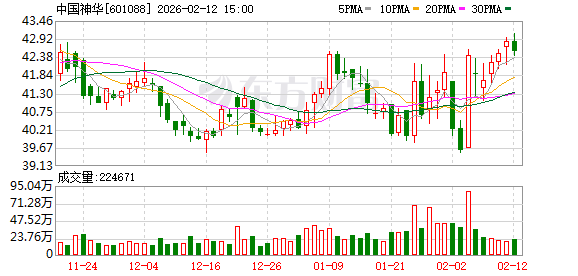
Group 1 - China Shenhua Energy Co., Ltd. has received approval from the China Securities Regulatory Commission for the acquisition of equity in 12 core enterprises under its controlling shareholder, China Energy Group, for a total consideration of 133.598 billion yuan [2] - This transaction is notable as it is the first A-share merger and acquisition project to apply the simplified review process, marking the largest scale issuance of shares for asset purchases in the A-share market [5][6] - The acquisition involves a payment structure of 30% in shares and 70% in cash, with the cash payment amounting to approximately 93.519 billion yuan and the share issuance price set at 29.40 yuan per share [6][7] Group 2 - Post-restructuring, China Shenhua's coal reserves will increase to 68.49 billion tons, with recoverable coal reserves rising to 34.5 billion tons and annual production capacity increasing to 512 million tons [8] - The restructuring will enhance the company's asset scale and profitability, with total assets expected to increase by over 200 billion yuan, and will create a more efficient logistics network to minimize costs and improve supply stability [8][9] - The merger is expected to facilitate a transition towards a greener and smarter coal industry, enhancing the stability of supply and the level of clean conversion in coal mining and related sectors [9]

平均两天换一个“老板”!上市公司控股权变更潮涌
证券时报· 2026-02-12 12:55
Core Viewpoint - The article highlights a significant trend in the A-share market, where there has been a surge in control changes among listed companies, reflecting increased market activity and strategic repositioning by various stakeholders [2][12]. Group 1: Control Changes in Listed Companies - Since 2025, at least 150 listed companies have announced plans for control changes, averaging one company every two days [2][3]. - As of 2026, over 60 companies have reported progress on control changes, indicating a continuation of this trend [2]. - The majority of control changes are occurring in traditional industries such as chemicals, textiles, and consumer goods, with acquirers including individuals, state-owned enterprises, and investment firms [2][5]. Group 2: Industry Distribution of Control Changes - The distribution of control changes shows that traditional industries dominate, with 12.77% of changes in the oil and petrochemical sector, and significant activity in environmental services, construction, and light manufacturing [5][7]. - Other sectors like agriculture, textiles, and real estate also show notable percentages of control changes, indicating a broad impact across various industries [5][7]. Group 3: Market Capitalization of Companies Involved - A significant portion of companies undergoing control changes are small-cap firms, with 169 companies having a market capitalization below 10 billion yuan, accounting for nearly 80% of the total [8][9]. - Companies with a market cap below 5 billion yuan represent 47.44%, while those between 5 billion and 10 billion yuan make up 31.16% [9][10]. Group 4: Motivations Behind Control Changes - The motivations for these control changes include financial distress among original controlling shareholders, strategic shifts in traditional industries, and pressures from debt [12][14]. - The trend is also driven by the need for new capital and resources to enhance company governance and operational efficiency [11][12]. Group 5: Types of Acquirers - The acquirers in these control changes are primarily state-owned enterprises, industrial capital, and limited partnership firms, with state-owned entities frequently taking over to optimize industrial layouts and stabilize the market [14]. - Industrial capital is also a significant player, often seeking to enhance synergies and expand into new business areas [14].