新能源车

Search documents
美股异动 | 新能源车股走低 特斯拉(TSLA.US)跌超1%
智通财经网· 2025-07-30 15:46
Core Viewpoint - The news highlights a decline in the stock prices of several electric vehicle manufacturers, including NIO, Xpeng, Li Auto, and Tesla, amidst a significant procurement agreement between Tesla and LG Energy Solutions for lithium iron phosphate (LFP) batteries valued at $4.3 billion [1] Group 1: Stock Performance - NIO's stock fell over 3% [1] - Xpeng's stock decreased by more than 2% [1] - Li Auto's stock dropped over 3.5% [1] - Tesla's stock declined by more than 1% [1] Group 2: Tesla and LG Energy Solutions Agreement - Tesla signed a $4.3 billion agreement with LG Energy Solutions to procure LFP batteries [1] - This marks the second transaction Tesla has made in South Korea this month [1] - The batteries will be produced at LG Energy Solutions' factory in the United States, but they will not be used in vehicles; instead, they are intended for energy storage systems [1]

解读一下今天的两个会议
表舅是养基大户· 2025-07-30 13:31
Group 1: US-China Trade Negotiations - The third round of US-China trade negotiations in Sweden is significant, especially after the US reached preliminary agreements with multiple countries, leaving China as one of the remaining major trade partners [4][5] - The US is exerting pressure on its remaining trade partners, as evidenced by the announcement of a 25% tariff on India, indicating a strategy to leverage recent agreements with other countries [5][6] - The US aims to reduce supply chain risks in strategic industries such as rare earths, semiconductors, and pharmaceuticals, potentially implementing lower tariffs initially before increasing them later [6][9] - China's expansion of export capacity and improvements in the value chain are seen positively, indicating a strong manufacturing sector that poses challenges to Western economies [7][9] Group 2: Recent Policy Meeting Insights - The core message from the recent policy meeting emphasizes enhancing the attractiveness and inclusivity of the domestic capital market, acknowledging the achievements in stabilizing the market since September of the previous year [12][13] - The monetary policy focus is on maintaining low financing costs across various sectors, including government bonds and corporate loans, rather than explicitly mentioning rate cuts [13] - The meeting highlighted the need to address local government behaviors that contribute to disorderly competition, indicating a structural approach to economic challenges [14] - The real estate sector's focus is on high-quality urban renewal, reflecting a shift towards structural adjustments rather than total volume increases [14][15] Group 3: Market Trends and Observations - The Hong Kong stock market experienced significant declines, particularly in the semiconductor sector, influenced by broader market dynamics and competitive pressures in the electric vehicle market [17][18] - A notable risk in the A-share market is the suspension of trading for a stock due to abnormal fluctuations, signaling potential issues for speculative investments [24] - The bond market has seen considerable volatility recently, marking one of the highest fluctuation periods of the year [25][26]


无人驾驶密集催化、固态电池再度爆发!新能源车龙头ETF(159637)周线三连涨
Xin Lang Cai Jing· 2025-07-30 06:55
Core Insights - The recent World Artificial Intelligence Conference (WAIC) has significantly boosted the performance of the New Energy Vehicle (NEV) leader ETF (159637), with notable gains in constituent stocks such as Funeng Technology and CATL [1][2] Group 1: AI and Smart Driving - The WAIC has led to the issuance of operational licenses for smart connected vehicles in Shanghai, allowing public access to Robotaxi services, which is expected to accelerate the development of the autonomous driving industry [2] - As regulations around autonomous driving evolve, the entire automotive smart technology supply chain is anticipated to benefit from increased R&D and product launches [2] Group 2: Solid-State Batteries - Solid-state batteries are identified as a key technology for humanoid robots, offering high energy density (theoretical density of 400-600 Wh/kg) and enhanced safety features, which are crucial for prolonged operation [3] - The humanoid robot market is projected to exceed 5 million units and 400 billion yuan by 2035, driving demand for solid-state batteries and creating a new market space worth hundreds of billions [3] - Major domestic lithium battery companies, including CATL and EVE Energy, are actively preparing for solid-state battery production, with CATL aiming for small-scale deployment by 2027 [3] Group 3: Market Performance and Outlook - The New Energy Vehicle leader ETF (159637) has shown strong momentum with a year-to-date volatility of 27%, indicating robust market dynamics [4] - The demand for new energy vehicles and energy storage is expected to remain strong, supported by favorable end-user demand [4] - The supply-demand balance in the industry is shifting positively, with material companies likely to recover profitability starting from Q3 2025 [4]

“反内卷”力度不断加强,新能源车ETF(515030)困境反转,回调迎布局机会
Sou Hu Cai Jing· 2025-07-30 06:54
Core Viewpoint - The A-share market experienced a collective decline on July 30, with the electric equipment sector leading the drop, particularly impacting the largest new energy vehicle ETF (515030) which fell by 2% [1] Industry Summary - A meeting held on July 18 by multiple departments focused on regulating the competitive order within the new energy vehicle industry, aiming to establish a long-term mechanism and enhance policy measures to promote the quality upgrade of the automotive industry [1] - The automotive industry is expected to benefit from "anti-involution" policies, which may lead to an improvement in the passenger vehicle market ecosystem. The policies will likely focus on price promotion pre-reporting, dealer inventory checks, control of new domestic production capacity, and strict monitoring of supplier payment terms [1] - The competitive landscape in the passenger vehicle market, which has seen frequent price wars over the past three years, is anticipated to ease, benefiting companies with product advantages and flexible small to medium suppliers [1] Company Summary - The new energy vehicle ETF (515030) is currently the largest themed ETF in the market, tracking the CSI New Energy Vehicle Index (399976) and selecting stocks from companies involved in lithium batteries, charging piles, and new energy vehicles [1] - Battery concept stocks constitute a significant portion of the ETF, accounting for 47.6% of the total holdings in the Shenwan secondary industry classification [1]
科网股及新能源车股多数下跌,恒生科技指数ETF(513180)跌幅收窄
Mei Ri Jing Ji Xin Wen· 2025-07-30 03:35
Group 1 - The Hong Kong stock market indices collectively declined, with technology and new energy vehicle stocks mostly falling, including significant drops in Li Auto and Xpeng Motors [1] - Li Auto's first pure electric SUV, the Li i8, was officially launched with a price range of 321,800 to 369,800 yuan, which is lower than the previously announced pre-sale price of 350,000 to 400,000 yuan [1] - Morgan Stanley's view indicates that the initial price of the Li i8 is slightly above expectations, with market focus on the competitiveness of hardware specifications, particularly for the Pro version [1] Group 2 - As of July 29, the latest valuation of the Hang Seng Technology Index ETF (513180) is 22.16 times, which is below 76% of the time since the index was launched on July 27, 2020, indicating a relative undervaluation [2] - The Hang Seng Technology Index is currently in a historically undervalued range, with characteristics of high elasticity and high growth, suggesting greater upward momentum [2] - Investors without a Hong Kong Stock Connect account can access Chinese AI core assets through the Hang Seng Technology Index ETF (513180) [2]


特斯拉(TSLA):比较优势显著,公司受关税及政策变动负面影响相对有限,阵痛转型期方显其AI战略雄心
Great Wall Securities· 2025-07-29 11:43
Investment Rating - The report maintains a rating of "Buy" for Tesla, indicating an expected stock price increase of over 15% relative to the industry index in the next six months [6]. Core Views - Tesla's significant comparative advantages and limited negative impacts from tariffs and policy changes highlight its resilience during a transitional phase, showcasing its ambitious AI strategy [1]. - The company's revenue for Q2 2025 was reported at $22.496 billion, a year-on-year decrease of 12%, with automotive revenue down 16% and energy revenue down 7%, while service revenue grew by 17% [2][3]. - The decline in operating profit and free cash flow is attributed to reduced carbon credit income, high R&D expenditures, and increased stock-based compensation [2]. - Despite challenges, the average selling price of vehicles increased quarter-on-quarter, reflecting a positive trend amid competitive pricing pressures in the Chinese market [3]. - The IRA Act's impact on Tesla's sales incentives in the U.S. is limited, and the company is expected to withstand potential cancellations of incentives better than newer entrants in the market [4][7]. - Tesla's energy business experienced its first year-on-year revenue decline in nearly a year, with a 7% drop, indicating rising production costs due to the IRA Act [8][14]. - The launch of Robotaxi services and advancements in AI projects, including humanoid robots, are seen as promising developments for Tesla's future growth [15][16][17]. Financial Summary - Tesla's projected revenues for 2025 are $94.37 billion, with a year-on-year growth rate of -3.4%, followed by increases of 13.1% and 18.85% in 2026 and 2027, respectively [1][18]. - The net profit for 2025 is estimated at $6.189 billion, with a significant decline of 12.71% year-on-year, but expected to rise to $8.209 billion by 2027 [1][18]. - The company's P/E ratio is projected to be 169.67 in 2025, decreasing to 127.93 by 2027, indicating a potential improvement in valuation over time [1][18].
电力设备新能源行业周报:“反内卷”加码落地,产业链盈利重构-20250729
Guoyuan Securities· 2025-07-29 05:14
Investment Rating - The report maintains a positive investment rating for the renewable energy sector, particularly highlighting the solar and wind energy segments as having strong growth potential [4][5]. Core Insights - The report emphasizes that the "anti-involution" initiative has reached the highest strategic level in the country, indicating a significant restructuring of profitability within the industry chain. The focus is on capacity integration in the silicon material segment and strengthening price regulation across the industry [4]. - The solar industry is currently at the bottom of its cycle, with future policy strength being a key variable affecting industry trends. The sector is expected to enter a phase of high-quality development, with technological upgrades and market structure optimization becoming core competitive factors [4]. - The wind energy sector is noted for its global competitive advantage, with a relatively reasonable supply-demand structure and strong profitability among companies. The year 2025 is projected to be a significant year for offshore wind energy development in China [4][5]. Weekly Market Review - From July 21 to July 25, 2025, the Shanghai Composite Index rose by 1.67%, while the Shenzhen Component Index and the ChiNext Index increased by 2.33% and 2.76%, respectively. The Shenwan Electric Power Equipment Index outperformed, rising by 3.03% [12]. - The sub-sectors of solar equipment, wind equipment, batteries, and grid equipment experienced varied performance, with solar equipment rising by 3.13% and battery equipment increasing by 3.36% [12][18]. Key Sector Tracking - The Hebei Provincial Development and Reform Commission has solicited opinions on the management implementation rules for distributed photovoltaic power generation, emphasizing self-use ratios for commercial distributed photovoltaic systems [3][21]. - The report highlights significant developments in the solar and wind sectors, including new projects and partnerships that are expected to enhance production capacity and market presence [22][24][26]. Investment Recommendations - For the solar sector, the report suggests focusing on silicon materials, glass, and battery segments that have undergone sufficient corrections and have clear alpha potential. Companies such as Aiko Solar, Flat Glass Group, GCL-Poly Energy, and Junda Technology are recommended for attention [4]. - In the wind energy sector, companies like Goldwind Technology, Dongfang Cable, and Zhongtian Technology are highlighted as key players to watch due to their strong market positions and profitability [4]. - The report also notes the rapid growth of the electric vehicle supply chain in China, recommending companies that benefit from low upstream raw material prices and stable profitability in battery and structural components [5].
南向资金狂买8300亿,涨幅领跑全球,如何“哑铃”式布局港股?
Sou Hu Cai Jing· 2025-07-29 02:36
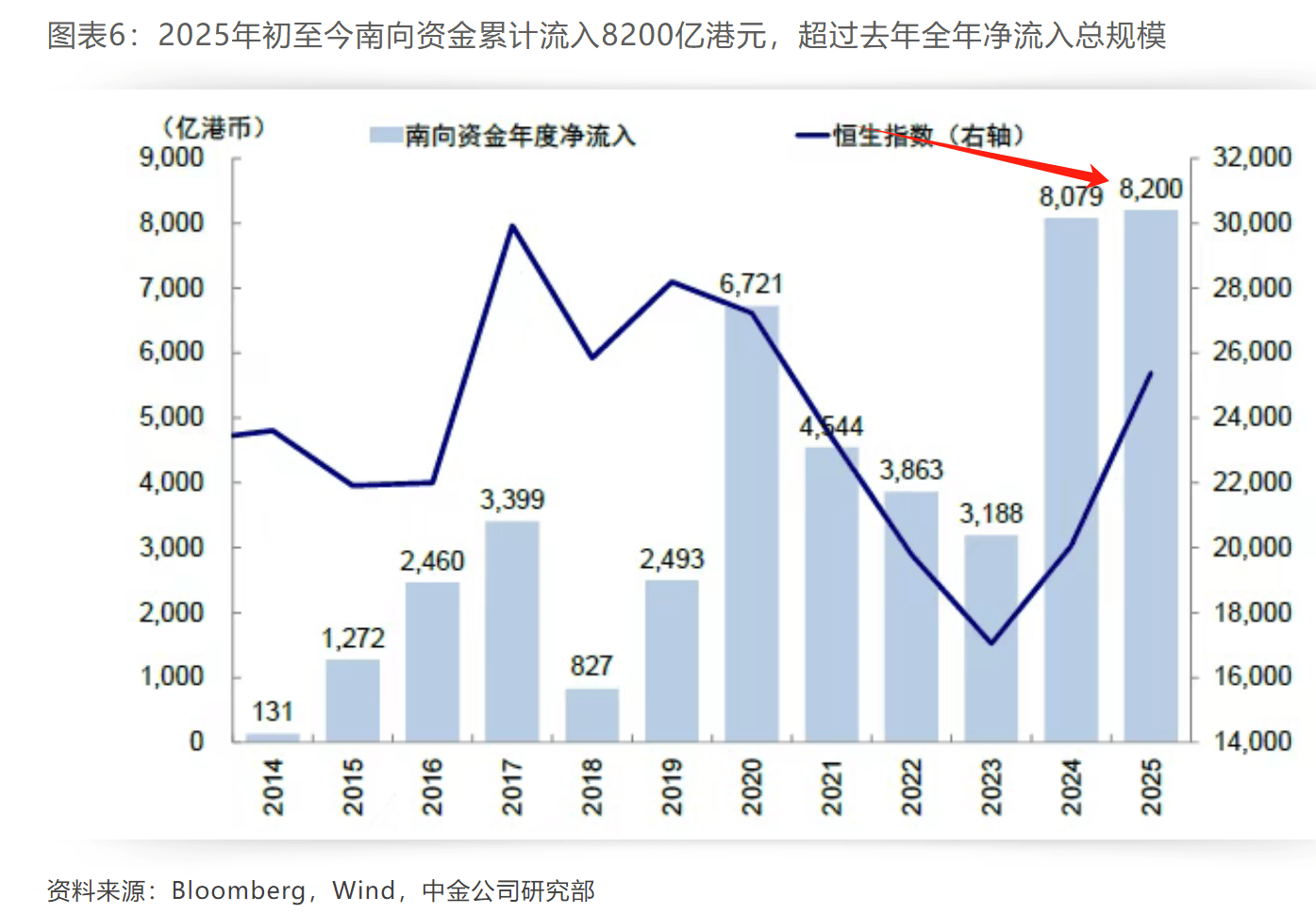
Group 1 - The Hang Seng Index and Hang Seng Tech Index have seen year-to-date gains exceeding 27% and 26% respectively, outperforming major A-share indices and significantly leading the S&P 500 and Nasdaq [1] - Southbound capital has experienced a substantial inflow, with a cumulative net inflow exceeding 820 billion HKD as of last Friday, surpassing the total net inflow for the entire previous year [1] - The Hang Seng High Dividend Low Volatility Index has outperformed most A-share indices and US stocks, indicating strong rebound momentum for high dividend stocks in the Hong Kong market [3] Group 2 - The Hong Kong Tech Index is the only index covering all "China's tech giants," with a weight of 70%, and has shown a year-to-date increase of 36.20% [4] - The Hong Kong Dividend Low Volatility ETF has achieved a year-to-date increase of 25.37% and has seen a 490% growth in scale since its inception in January [5] - The current market environment in Hong Kong is supported by policy expectations, valuation advantages, and continuous inflow of southbound capital, making the "barbell strategy" a balanced investment approach [8]
华夏中证新能源汽车ETF基金投资价值分析:电动车景气延续,新技术加速渗透
GOLDEN SUN SECURITIES· 2025-07-29 01:55
- The report does not contain any quantitative models or factors related to the quantitative theme. The content primarily focuses on the analysis of the electric vehicle industry, the investment value of the CSI New Energy Vehicle Index, and the investment value of the Hua Xia CSI New Energy Vehicle ETF[1][3][4].

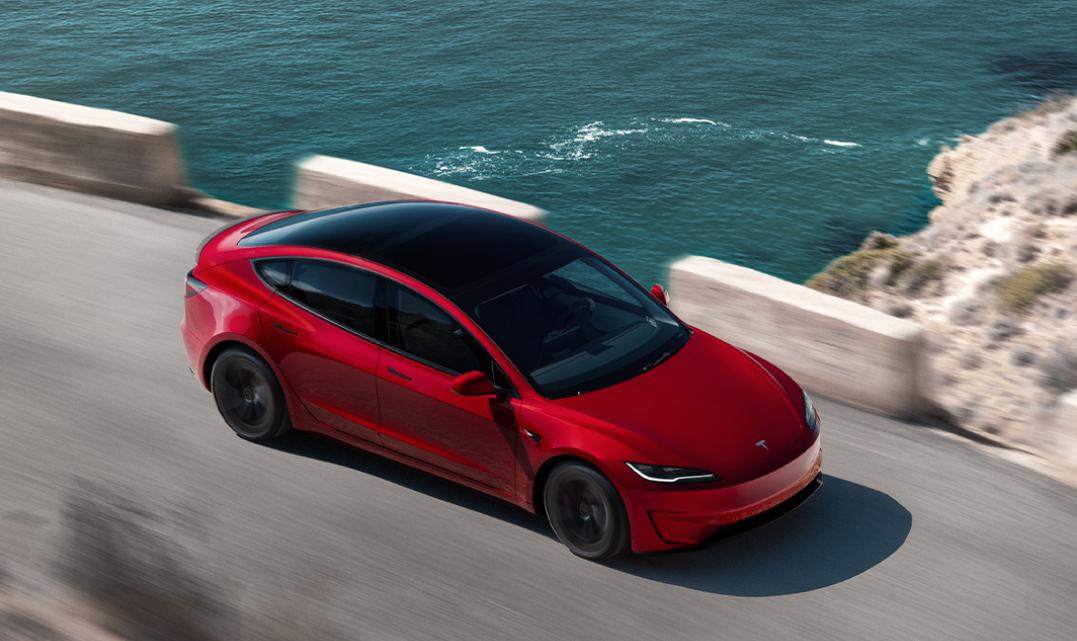
特斯拉紧凑版Model Y最新爆料,这项简装被车主直呼是“增配”
3 6 Ke· 2025-07-28 12:34
Core Insights - Tesla is set to launch a more affordable vehicle, with significant design changes and a potential price reduction of around 20% compared to the Model Y, bringing the estimated price to approximately $36,000 [3][16][30] - The new vehicle, internally referred to as the "E41 project," has been in development since 2020 and is expected to begin production in the first half of this year [4][30] - The vehicle's design resembles a smaller version of the Model Y, with notable changes in exterior and interior features, including a solid roof replacing the glass roof and various simplifications in materials and components [8][12][15] Design Changes - The front fascia and headlight components have been redesigned, with the removal of the continuous light strip [8] - The rear now lacks the central reflective light strip, similar to the new Model 3 [10] - Interior modifications include a central armrest redesign, removal of the rear screen, and reduced storage space [15][16] Cost Reduction Strategies - The new model is expected to achieve cost savings through material changes and the elimination of certain features, similar to the cost-reduced Model 3 launched in Mexico [20][27] - Previous cost-cutting measures included using different materials, reducing the number of speakers, and simplifying the interior lighting [25][27] - The anticipated cost reduction for the compact version compared to the Model Y is around 20% [27] Production and Market Strategy - Tesla plans to ramp up production in the third quarter and officially launch the vehicle in the fourth quarter, despite potential delays due to factory modifications and the expiration of tax incentives [30][33] - The company is facing declining sales and aims to attract new customers with this more affordable model to offset a projected shortfall of 110,000 units in the second half of the year [35][39] - There is speculation that production may also take place at Tesla's Shanghai Gigafactory to meet domestic demand [38] Future Developments - The $25,000 vehicle previously mentioned by Elon Musk may refer to a future model based on a new platform, known as the "Redwood project," which aims to significantly reduce manufacturing costs [39][41]