
生猪养殖

Search documents
养殖ETF(159865)回调,近10日吸金超12亿元,含“猪”量约60%
Sou Hu Cai Jing· 2025-10-15 05:31
Group 1 - The core viewpoint of the news highlights a recent pullback in the Livestock ETF (159865) amidst a backdrop of "anti-involution," with continued capital inflow into the livestock sector, totaling over 1.2 billion yuan in net inflows over the past 10 trading days, bringing the current scale to nearly 7 billion yuan [1][2]. Group 2 - From May to September this year, the government held several meetings regarding pig farming, implementing stricter regulatory policies, with leading pig farming companies required to reduce production by 1 million heads by the end of the year. The Agricultural and Rural Affairs Ministry reported a cumulative decrease of 50,000 breeding sows from July to August [2]. - It is anticipated that the pig farming industry will enter a phase of capacity reduction starting in July 2025, with the ongoing losses in the industry and strict regulatory policies likely accelerating this process [2]. - The Livestock ETF (159865) tracks the China Securities Livestock Breeding Index, with approximately 60% exposure to "pigs," presenting potential investment opportunities for interested investors [2].
牧原股份跌2.05%,成交额10.79亿元,主力资金净流出4226.48万元
Xin Lang Zheng Quan· 2025-10-15 03:29
Core Insights - The stock price of Muyuan Foods Co., Ltd. decreased by 2.05% on October 15, trading at 52.60 CNY per share with a market capitalization of 287.34 billion CNY [1] - The company has seen a year-to-date stock price increase of 38.87%, but a slight decline of 0.75% over the last five trading days and 3.63% over the last twenty days [1] Financial Performance - For the first half of 2025, Muyuan Foods reported a revenue of 76.463 billion CNY, representing a year-on-year growth of 34.46% [2] - The net profit attributable to shareholders for the same period was 10.530 billion CNY, showing a significant year-on-year increase of 1169.77% [2] Shareholder Information - As of June 30, 2025, the number of shareholders for Muyuan Foods was 209,000, a decrease of 25.13% from the previous period [2] - The average number of circulating shares per shareholder increased by 33.57% to 18,236 shares [2] Dividend Distribution - Since its A-share listing, Muyuan Foods has distributed a total of 26.576 billion CNY in dividends, with 16.594 billion CNY distributed over the last three years [3] Institutional Holdings - As of June 30, 2025, Hong Kong Central Clearing Limited was the third-largest circulating shareholder, holding 149 million shares, an increase of 20.4715 million shares from the previous period [3] - Various ETFs, including Huatai-PB CSI 300 ETF and E Fund CSI 300 ETF, have increased their holdings in Muyuan Foods, indicating growing institutional interest [3]

建信期货生猪日报-20251015
Jian Xin Qi Huo· 2025-10-15 02:13
Report Information - Report Title: Pig Daily Report [1] - Date: October 15, 2025 [2] Industry Investment Rating - Not provided in the report Core Viewpoints - The supply of live pigs is expected to increase slightly before the Spring Festival. The 2511 and 2601 contracts will continue to be dragged down by the weak spot market and are likely to fluctuate weakly. Attention should be paid to whether the rhythm and volume of second - round fattening will continue to increase to drive the market under the low - price background. Spot prices are likely to fluctuate weakly due to the relatively large supply growth rate despite the increase in both supply and demand [9]. Summary by Section 1. Market Review and Operation Suggestions - **Futures Market**: On the 14th, the main 2601 contract of live pigs opened slightly higher, fluctuated upward, and closed positive. The highest was 12,435 yuan/ton, the lowest was 12,155 yuan/ton, and the closing price was 12,405 yuan/ton, up 2.1% from the previous day. The total open interest of the index decreased by 6,806 lots to 275,436 lots [8]. - **Spot Market**: On the 14th, the national average price of external ternary pigs was 10.89 yuan/kg, up 0.05 yuan/kg from the previous day [8]. - **Supply Side**: In September, the actual completion rate of supply - side slaughter was only 96.5%, and some slaughter will be postponed to October. The planned slaughter volume of sample enterprises in October increased by 5.14% compared with the actual slaughter volume in September. The slaughter weight increased seasonally. In the long term, the slaughter of live pigs is expected to maintain a slight increase until the first half of next year [9]. - **Demand Side**: Currently, the cost of meat production in second - round fattening is low, and there is some demand for restocking after the decline in barn utilization in some areas. Terminal demand lacks obvious positive support and has slightly declined after the festival. However, as the weather continues to cool, consumer demand may continue to rise. The orders of slaughtering enterprises have slightly increased, and the operating rate and slaughter volume have slightly increased, but the overall increase is limited. On October 14th, the slaughter volume of sample slaughtering enterprises was 159,800 heads, an increase of 500 heads from the previous day, 6,000 heads week - on - week, and 11,100 heads month - on - month [9]. 2. Industry News - Not provided in the report 3. Data Overview - **Breeding Profit**: As of October 9th, the average profit per head of self - breeding and self - raising was - 77 yuan/head, a week - on - week decrease of 23 yuan/head; the average profit per head of purchasing piglets for breeding was - 320 yuan/head, a week - on - week decrease of 13 yuan/head [17]. - **Piglet Price**: In the week of October 9th, the average market sales price of 15 - kg piglets was 281 yuan/head, a decrease of 53 yuan/head from the previous week [17]. - **Price Difference between Fat Pigs and Standard Pigs**: In the week of October 9th, the price difference between 150 - kg fat pigs and standard pigs was 0.26 yuan/jin, a week - on - week increase of 0.1 yuan/jin [17]. - **Average Slaughter Weight**: As of the week of October 9th, the average slaughter weight of national live pigs was 128.48 kg, a decrease of 0.07 kg from the previous week, with a month - on - month decline of 0.05% [17].
农林牧渔行业报告(2025.9.30-2025.10.12):节后猪价宽幅下跌
China Post Securities· 2025-10-14 03:34
Investment Rating - The industry investment rating is "Outperform the Market" and is maintained [2] Core Views - The agricultural sector has shown resilience, with the agricultural index rising by 1.03% recently, ranking 12th among 31 primary industries [5][13] - The pig price has entered a downward trend, reaching a national average of 10.97 yuan/kg, the lowest in recent years, leading to significant industry losses [6][17] - Policies aimed at controlling production capacity and reducing weights in the pig industry are expected to positively impact prices in the second half of next year [7][19] - The white feather chicken sector faces challenges with high chick prices and low meat prices, resulting in losses for farmers [8][28] - The sugar market continues to decline, with prices dropping to 5835 yuan/ton, while soybean prices show slight fluctuations [32][34] Summary by Sections Market Review - The market has experienced significant fluctuations post-holiday, with the agricultural sector outperforming the broader market [5][13] Livestock Industry Tracking - **Pigs**: Prices have sharply declined, with a significant increase in supply post-holiday and a drop in demand from slaughterhouses [6][17] - **White Feather Chicken**: Chick prices remain high at 3.5 yuan/chick, while meat prices are low at 3.37 yuan/jin, leading to losses for farmers [8][28] Planting Industry Tracking - **Sugar**: Prices have decreased by 10 yuan/ton recently [32] - **Soybeans**: Prices have shown minor fluctuations, with Brazilian soybeans at 3900 yuan/ton and American soybeans at 4385 yuan/ton [32][34] - **Corn**: The average price has dropped to 2247 yuan/ton, a decrease of 81 yuan/ton [32][34]
建信期货生猪日报-20251014
Jian Xin Qi Huo· 2025-10-14 01:52
行业 生猪日报 日期 2025 年 10 月 14 日 每日报告 021-60635740 期货从业资格号:F3055047 021-60635732 yulanlan@ccb.ccbfutures.com 期货从业资格号:F0301101 021-60635727 wanghaifeng@ccb.ccbfutures.com 期货从业资格号:F0230741 研究员:洪辰亮 021-60635572 hongchenliang@ccb.ccbfutures.co m 期货从业资格号:F3076808 021-60635570 liuyouran@ccb.ccbfutures.com 期货从业资格号:F03094925 农业产品研究团队 研究员:林贞磊 linzhenlei@ccb.ccbfutures.com 研究员:余兰兰 研究员:王海峰 研究员:刘悠然 请阅读正文后的声明 #summary# 一、行情回顾与操作建议 图1:全国生猪出栏价 元/公斤 图2:样本屠宰场屠宰量 头 数据来源:涌益,建信期货研究中心 数据来源:涌益,建信期货研究中心 生猪行情: 期货方面,13 日生猪主力 2601 合约小幅高开 ...
逆市四连阳!业内首只农牧渔ETF(159275)单日吸金超5200万元
Xin Lang Ji Jin· 2025-10-14 00:47
Core Viewpoint - The agricultural, animal husbandry, and fishery (农牧渔) sector is showing resilience in the A-share market, with the Agricultural and Fishery ETF (159275) experiencing significant net inflows and maintaining a strong performance despite broader market pressures [1][2]. Industry Overview - The agricultural, animal husbandry, and fishery sector has undergone a prolonged correction from February 2021 to September 2024, but has recently rebounded alongside the A-share market, although valuations remain low [2]. - The current price-to-book ratio of the index tracked by the Agricultural and Fishery ETF is 2.64, placing it in the 32.14 percentile over the past decade, indicating a favorable long-term investment opportunity [2]. - The pig farming industry, a core segment of the agricultural sector, is currently at a price low not seen in four years, suggesting limited downside risk. Future trends may include production stabilization and price increases, leading to improved profitability for quality enterprises [2]. Policy and Market Dynamics - Recent government policies have focused on controlling production capacity and optimizing the competitive landscape within the pig farming industry, with expected acceleration in capacity reduction in the fourth quarter [2]. - The seed industry is also receiving significant policy support, with advancements in biotechnology and the potential for accelerated commercialization of genetically modified crops, enhancing the competitive edge of leading companies [3]. - The animal health sector is expected to see increased market share for leading firms, driven by ongoing policy focus [3]. Investment Opportunities - The Agricultural and Fishery ETF (159275) is the first ETF to track the comprehensive agricultural index, covering various segments such as pig farming, aquaculture feed, animal health, and seeds, thus providing broad exposure to the agricultural value chain [4]. - The top ten holdings of the index account for 61.1% of its weight, featuring leading companies in the sector, which enhances the index's representativeness [4]. - Historically, the index has outperformed similar thematic indices and broad market indices, with a cumulative return of 95.45% since December 31, 2013, and a remarkable 145.61% return from January 1, 2019, to March 1, 2021 [4].
养殖端积极出栏 生猪期价再创新低
Qi Huo Ri Bao· 2025-10-14 00:47
Core Viewpoint - After the National Day and Mid-Autumn Festival holiday, live pig futures prices continue to decline, reaching new lows due to the concentrated release of previously held pigs by small and medium-sized farming entities and sales driven by pandemic-related pressures [1][2] Supply Side - The government has emphasized guiding reasonable price recovery, initiating capacity reduction in the pig industry since late May. From June to August, large-scale farming entities significantly increased their slaughter volumes, but prices did not show a notable decline due to winter pandemic impacts and small-scale farmers holding back pigs [2] - Small-scale farmers typically purchase piglets for batch fattening, and the current slaughtered pigs are mainly those replenished in the spring. As inventory decreases, the number of pigs available for slaughter from small-scale farmers will decline [2] Demand Side - Post-holiday, tourism consumption has cooled, and household demand remains weak, leading to an overall decline in demand. Major slaughterhouses have limited new orders, and their operating rates are expected to decrease [2] Policy Measures - In 2023, the government has held multiple meetings to discuss capacity regulation in the pig industry, with a focus on reducing the breeding sows by 1 million by the end of January 2026 among 25 major enterprises. A cross-departmental coordination mechanism will be established to enforce regulations [1] - The Ministry of Ecology and Environment will enhance pollution supervision, while the Financial Regulatory Bureau will restrict credit for capacity expansion. The Ministry of Finance will eliminate subsidies that stimulate capacity growth, marking a shift from guiding measures to rigid enforcement [1] Market Outlook - In the medium term, indicators reflecting piglet supply and demand suggest that pig prices may continue to face pressure in the next three months. The increase in large-scale farming has led to a significant rise in their share in the front-end production, while small-scale farmers focus more on downstream fattening, stabilizing basic production capacity but highlighting production efficiency impacts [4]

猪价跌超22%至年内低位
Xin Lang Cai Jing· 2025-10-13 16:12
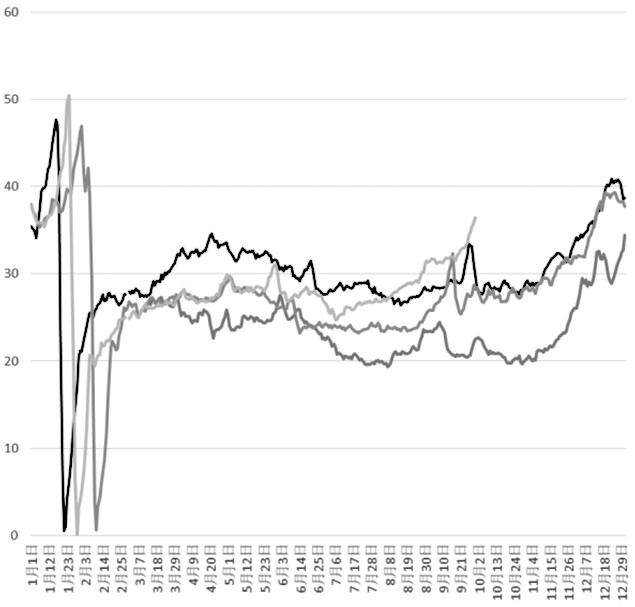
Core Viewpoint - The holiday consumption effect on pork prices is weakening, with a significant decline in prices observed during the recent National Day and Mid-Autumn Festival period, leading to industry losses and a need for capacity adjustments [3][6][10]. Price Trends - The average price of live pigs in the first week of October was 12.90 yuan/kg, down 2.8% from the previous week and 29.5% year-on-year, marking a decline of over 22% compared to the beginning of the year [3][6]. - As of October 13, the average price further decreased to 10.81 yuan/kg, with regional price differences noted, ranging from 9.94 yuan/kg in Guangxi to 11.49 yuan/kg in Fujian [3][6]. Supply and Demand Dynamics - Analysts indicate that the supply of live pigs remains abundant due to previous production capacity releases and ongoing policies aimed at controlling weight and reducing production, which may lead to continued downward pressure on prices [4][7]. - Demand is expected to improve slightly in November with cooler weather and seasonal activities, but overall supply is projected to outpace demand, leading to further price declines [4][8]. Industry Challenges - The industry is facing significant losses, with self-breeding and piglet fattening operations reporting average losses of 206.91 yuan and 409.19 yuan per head, respectively [10][11]. - Smaller producers are under the most pressure due to higher costs, while larger enterprises are better positioned to manage risks but still face accumulating pressures from sustained low prices [10][12]. Capacity Adjustments - The Ministry of Agriculture has emphasized the need for strict capacity control measures, aiming to reduce the breeding sow population by approximately 1 million heads [10][11]. - Some companies, like Muyuan Foods, have begun to implement capacity reduction strategies, including culling low-yield sows and managing slaughter weights [11][12]. Future Outlook - Analysts predict that while there may be a seasonal increase in demand during the upcoming festive periods, the overall supply situation remains robust, limiting the potential for significant price rebounds [8][12]. - The speed of capacity reduction will be crucial in determining future price movements, with expectations that a surplus may persist into 2026 if current trends continue [12].
旺季大跌后,猪周期如何演绎?
2025-10-13 14:56
Summary of Conference Call Notes Industry Overview - The global ETF gold holdings have significantly increased, with a net inflow of 146 tons year-to-date, marking the largest single-month increase since March 2022. The North American market contributed the majority of this increase, reflecting concerns over U.S. economic risks, Federal Reserve policies, and geopolitical tensions [1][2] - The oil market is under pressure due to global risk asset sell-offs, despite OPEC's October meeting aligning with expectations for a slight reduction in production increases. Brent crude oil is expected to find support at around $60 per barrel [1][4] - The copper market is experiencing supply-side risks, particularly due to a Freeport incident leading to a supply-demand imbalance. Long-term fundamentals remain positive, with expectations of a copper shortage from 2025 to 2026 [1][6] Key Points on Specific Markets Gold Market - The rise in gold prices since September is primarily driven by safe-haven demand rather than expectations of interest rate cuts. The increase in ETF holdings in non-U.S. regions, especially Asia, is noteworthy [1][5] Oil Market - OPEC's recent actions included accelerating production cuts from April to September, with Saudi Arabia increasing production by approximately 1 million barrels. However, the market is expected to face downward pressure due to seasonal declines in downstream consumption and rising U.S. inventories [1][3][4] Pork Market - The pork market has seen a significant decline in prices, with a 15% drop in 2025 attributed to increased supply during peak seasons without a corresponding rise in demand. Future developments in the pork cycle will depend on supply-demand balance, policy adjustments, and breeding costs [1][7][8] - For October to November, pork prices are expected to continue declining, with planned slaughter volumes increasing by 5.5% and high slaughter weights maintained [1][9] - The medium-term outlook suggests that pork prices will not rebound significantly from Q4 2025 to H1 2026 due to ongoing supply pressures from increasing piglet numbers and policy measures affecting supply dynamics [1][10] - Long-term projections for H2 2026 indicate a target of 39 million breeding sows, with current losses in breeding profits accelerating the culling process. However, any significant capacity reduction in the near term may provide some price rebound opportunities [1][11] Additional Insights - The copper market is expected to remain in a state of shortage from 2025 to 2026, with favorable long-term fundamentals supporting price increases despite short-term market risk preferences [1][6] - The current futures market shows the 11 contract at a balanced state, indicating some supply pressure has been alleviated, while potential opportunities exist in the 09 contract due to deep losses in the 11 contract [1][12]
长江消费周周谈
2026-01-05 15:42
Summary of Key Points from Conference Call Records Industry or Company Involved - **Pork Industry**: Focus on companies like Muyuan, Dekang, Wens, Shennong, and Juxing Agriculture - **Beauty and Personal Care Industry**: Highlighting brands such as Mao Ge Ping and Shangmei - **Gold and Jewelry Industry**: Recommendations for Changhongqi and Caibai - **Retail Industry**: Emphasis on Xiaoshangpin City and Bubu Gao - **Education and Training Sector**: Focus on K12 education leaders and AI applications - **Restaurant and Beverage Sector**: Recommendations for Mixue and Guming - **Automotive Industry**: Focus on Huawei's smart vehicles and Changan Automobile - **Textile Manufacturing Sector**: Recommendations for companies in the ASEAN region and Nike's supply chain - **Innovative Pharmaceutical Industry**: Focus on companies with high R&D investment Core Points and Arguments - **Pork Industry**: The significant impact of pork prices on CPI, with a noted 8.5% decrease in pork prices leading to a 0.12 percentage point drop in CPI in June 2025. The strategy of capacity control to boost pork prices is crucial to mitigate CPI pressure [2][3][4] - **Beauty and Personal Care**: The industry is in a traditional off-season, but high-end brands like Mao Ge Ping and operationally strong brands like Shangmei are recommended due to low base effects from last year [6] - **Gold and Jewelry**: Despite a 20% drop in gold jewelry consumption in Q2, brands with strong same-store performance like Changhongqi and low-valuation, high-dividend companies like Caibai are recommended [6] - **Retail Sector**: Xiaoshangpin City is highlighted for its strong business certainty, while Bubu Gao is noted for potential investment opportunities post-unlock of shares [7] - **Education Sector**: K12 education leaders and AI applications are emphasized, with companies like Dou Shen and Fen Bi showing strong growth [8] - **Restaurant Sector**: The rise of takeaway services is noted, with companies like Guming and Mixue recommended for their growth potential [8][9] - **Automotive Sector**: Huawei's smart vehicles are performing well, with new models like M7 and M8 expected to launch soon, while Changan's S9 model shows stable delivery [10][11][12] - **Textile Manufacturing**: The sector is expected to see performance and stock price turning points, with a focus on companies benefiting from reduced tariffs in the ASEAN region [13][14][15] - **Innovative Pharmaceutical Industry**: A new cycle of R&D investment is anticipated, with a focus on companies sensitive to domestic demand recovery and those specializing in large molecules and oncology [26][27] Other Important but Possibly Overlooked Content - **Pork Industry**: The adjustment in the pork breeding sector is linked to broader economic conditions and CPI management strategies [3][4][5] - **Retail Sector**: The potential for supermarkets and department stores to experience operational turning points is noted [7] - **Automotive Sector**: The upcoming launch of multiple new models indicates a strategic push for market share [10][11][12] - **Textile Manufacturing**: The impact of tariff changes on the competitive landscape and the potential for recovery in the sector is highlighted [14][15] - **Innovative Pharmaceutical Industry**: The increasing trend of funding sources and the focus on early-stage research are critical for future growth [26][27]