云计算

Search documents
风云突变!伊朗发起“去科技化”反击,英伟达、微软全上打击清单
Xin Lang Cai Jing· 2026-03-14 23:29
Core Viewpoint - Iran has officially targeted major US tech companies, including Nvidia, Microsoft, Google, Palantir, Oracle, and IBM, as part of a strategic move to undermine US technological dominance and retaliate against US sanctions [1][3][5]. Group 1: Targeted Companies - The targeted companies represent the backbone of US technological power, with Nvidia dominating the AI chip market, Microsoft controlling the desktop OS market, and Google being the leading search engine [3][5]. - These companies are crucial for maintaining US global leadership, and attacking them is seen as a way to disrupt the foundation of US technological supremacy [5][10]. Group 2: Strategic Implications - Iran's strategy is not merely about physical attacks but aims to dismantle the overseas assets of these tech giants, which could lead to a significant blow to US interests [5][10]. - The Middle East has become a critical market for these companies, with Nvidia recently securing a $20 billion deal to build an AI super factory in Saudi Arabia, highlighting the region's importance for future growth [7][8]. Group 3: Financial Backing and Market Dynamics - Middle Eastern capital is a significant financial backer of the US AI industry, with funds from countries like the UAE and Saudi Arabia heavily invested in American tech [10][12]. - The saturation of the US and European markets makes the Middle East a vital area for growth, as these countries are willing to invest heavily in AI and digital transformation [12][13]. Group 4: Geopolitical Consequences - The shift in the geopolitical landscape has raised questions about the sustainability of US military and technological dominance, as Iran's actions could lead to a loss of confidence among US allies in the region [15][16]. - If US tech companies cannot secure their assets in the Middle East, it could trigger a broader withdrawal of investment from the US tech sector, potentially leading to a collapse of the AI market bubble [10][15].






国内算力斜率仍在抬升
SINOLINK SECURITIES· 2026-03-14 15:27
Investment Rating - The report does not explicitly state an investment rating for the industry Core Insights - The report highlights a significant increase in demand for computing power driven by advancements in AI and cloud services, with Oracle and Tencent leading the charge in revenue growth and pricing strategies [6][11][17] - The year 2026 is projected to be pivotal for the computing power industry, transitioning from "cloud training" to a dual-driven model of "training + inference," leading to a rapid release of computing power demand [6][19] - The supply side is expected to shift from a state of scarcity to structural balance, with domestic computing power resources effectively meeting the surging demand [6][43] Summary by Sections Oracle's Performance and Tencent's Pricing Strategy - Oracle's FY26Q3 results exceeded expectations, with total revenue reaching $171.90 billion, a year-on-year increase of 21.66%, and cloud business revenue growing by 44% to $89.14 billion [11][12] - Tencent Cloud announced significant price increases for its AI models, with some models seeing price hikes of over 400%, indicating a trend of rising costs in cloud computing services [17][18] Rapid Release of Computing Power Demand - Major internet companies are advancing their AI models, with a focus on high-quality and multi-modal capabilities, which is expected to drive up the demand for computing power [19][20] - The inference side of computing power demand is anticipated to grow steeply, fueled by the rapid adoption of AI applications across various sectors [33][34] Supply Side Improvements and Domestic Production - The approval of NVIDIA's H200 AI chips for the Chinese market is expected to alleviate computing power shortages for major internet companies [43][44] - Domestic computing power chips have reached a point where they are not only usable but also competitive, with significant improvements in performance and ecosystem development [44][45] Full Chain Inflation in Domestic Computing Power - The report predicts a "full chain inflation" cycle in the computing power industry in 2026, with growth expected across various segments including AIDC, cloud services, and supporting infrastructure [50][52] - Major tech companies are projected to increase their capital expenditures significantly, with estimates reaching $650 billion in 2026, further driving the demand for computing power [52][53]






腾讯“龙虾”,全国17个城市免费安装
财联社· 2026-03-14 10:05
Core Viewpoint - Tencent Cloud has launched a nationwide free installation program for its "Lobster" products, aiming to enhance user engagement and adoption across major cities in China [1] Group 1 - The free installation plan will last for 40 days and will cover 17 cities including Shenzhen, Shanghai, Beijing, Guangzhou, Hangzhou, Chengdu, and Wuhan [1] - Technical experts will provide services such as installation, model configuration, skill installation, and uninstallation [1]

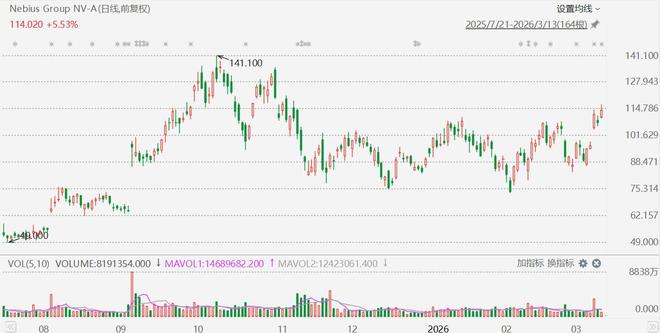
美股异动丨Nebius涨近8%,获英伟达20亿美元投资
Ge Long Hui· 2026-03-13 15:15
Core Viewpoint - Nebius (NBIS.US) experienced a nearly 8% increase in intraday trading, reaching $116.57, following news of a significant investment from NVIDIA [1] Investment and Partnership - NVIDIA will invest $2 billion in Nebius, a Dutch AI cloud computing company, to jointly design, build, and operate AI data centers [1] - The agreement includes plans for Nebius to deploy over 5 gigawatts of NVIDIA systems by the end of 2030, which is sufficient to provide computing power for approximately 3.8 million households at any given time [1]

近540亿美元!美国科技巨头疯狂发债,剑指AI
证券时报· 2026-03-13 10:41
Core Viewpoint - The recent surge in bond issuance by global tech giants, particularly Amazon, is primarily aimed at financing investments in artificial intelligence (AI) infrastructure, reflecting the escalating demand for computational power in the AI arms race [1][2][5]. Group 1: Bond Issuance Details - On March 10, Amazon issued a total of $37 billion in bonds across 11 different maturities in the U.S. bond market [2][4]. - On March 11, Amazon followed up with a €14.5 billion (approximately $16.8 billion) bond issuance in the euro market, marking the largest corporate bond issuance in euro market history [2][4]. - The total bond issuance by Amazon over these two days approached $54 billion, highlighting the scale of financing efforts by tech companies [2][4]. Group 2: AI Infrastructure Investment - The demand for AI infrastructure investment has reached an explosive growth phase, necessitating significant capital to support long-term projects [5][7]. - Major tech companies, including Amazon, Google, Microsoft, and Meta, are projected to collectively spend around $650 billion on capital expenditures by 2026, with Amazon's share estimated at $200 billion [7][10]. - Amazon's capital expenditure plan for 2026 represents a more than 50% increase from approximately $131 billion in 2025 [7]. Group 3: Strategic Financing - The current bond issuance wave is characterized as a "strategic pre-financing" rather than mere financial expansion, as companies aim to lock in long-term debt costs amid a potential shift in global interest rates [8][9]. - High credit ratings allow tech giants to secure substantial long-term funding at low spreads, with Amazon's 50-year bonds issued at a premium of only 1.3% to 1.55% over U.S. Treasuries [5][8]. - The competitive landscape in AI is heavily influenced by the scale of computational power, with early investments determining future pricing power and market dominance [5][9]. Group 4: Market Reactions and Concerns - Despite the aggressive spending, there are concerns among equity investors regarding the rapid pace of expenditures and the uncertainty of return timelines [11][12]. - Bond market demand remains strong, with Amazon's recent bond issuance attracting subscriptions totaling $126 billion, indicating confidence in the tech giants' AI investment strategies [12]. - The success of this strategic debt approach hinges on the speed of monetization of AI investments, with potential risks if returns do not meet expectations [12][13].


微软、英伟达等科技巨头将被军事打击?伊朗通讯社发布“目标清单”
Jing Ji Guan Cha Wang· 2026-03-13 07:21
Core Viewpoint - The conflict in the Middle East has escalated to a point where major U.S. tech companies' data centers and offices are now considered legitimate military targets by Iran, highlighting the strategic importance of digital infrastructure in modern warfare [1][4]. Group 1: Impact on Tech Companies - Iranian media has identified major tech companies such as Amazon, Microsoft, Google, Nvidia, IBM, Oracle, and Palantir as having facilities in the Middle East, claiming that their operations are now within the scope of Iran's military targets [1][2]. - Companies like Amazon and Microsoft have established cloud infrastructure and data centers in locations such as Israel, UAE, and Qatar, which are now viewed as critical assets in the context of regional conflict [1][2]. - Palantir has publicly acknowledged its strategic partnership with Israel, providing advanced technology to support military operations, which has drawn attention to the role of tech companies in warfare [2]. Group 2: Military Actions and Consequences - Iran has already conducted military strikes on Amazon's data centers in the UAE, resulting in significant operational disruptions for local banks, payment platforms, and other services, affecting millions of residents [3]. - The attacks on data centers are unprecedented, marking the first instance of military forces targeting large-scale cloud providers, which raises questions about the security of such infrastructures [3][5]. - The reliance on digital systems for military operations means that attacks on data centers can severely disrupt intelligence and operational capabilities, effectively crippling military decision-making processes [3][4]. Group 3: Future Implications - The conflict signifies a blurring of lines between commercial cloud services and military objectives, with the increasing importance of AI and data centers in warfare [5]. - Future strategies may involve geographic dispersion of data centers, multi-cloud backups, and missile defense systems to protect these critical infrastructures from potential attacks [4][5]. - The evolving nature of warfare suggests that control over data centers will equate to control over intelligence and AI capabilities, making them vital assets in modern conflicts [4].
直播实录 | 田瑀:研究如何逼近真实
中泰证券资管· 2026-03-13 07:02
Core Viewpoint - The essence of research is to understand the business, which applies equally to technology companies and traditional industries [2][4][17]. Group 1: Understanding Business Models - Researching companies requires understanding their business models, which can evolve over time, especially in the tech sector [2][4]. - If a company's original business disappears, it necessitates a reevaluation of previous long-term assumptions about that business [3]. - When a company expands into new business areas, it is crucial to assess whether these new ventures negatively impact existing operations [4][5]. Group 2: Research Methodology - The approach to researching technology companies is fundamentally similar to that of traditional industries; both require a deep understanding of the business [4][5]. - In-depth reading of specialized papers is essential for understanding complex businesses, but it should not lead to an overemphasis on trivial details [5][6]. - Research should focus on understanding the business rather than merely acquiring technical knowledge [8][10]. Group 3: Information Gathering and Validation - Information obtained from industry professionals is not always accurate; thus, research should involve cross-verifying facts from multiple sources [10][11]. - The goal of research is to approach the truth by gathering diverse perspectives, rather than accepting any single viewpoint as definitive [11][12]. - The process of research should include a design that allows for the falsification of assumptions, enhancing the accuracy of conclusions [12][15]. Group 4: Long-term vs Short-term Analysis - While long-term factors are crucial, short-term influences that significantly impact business value should not be ignored [19][20]. - The cyclical nature of certain industries, such as the liquor market, requires careful consideration of how these cycles affect brand value and consumer behavior [20][21]. Group 5: Role of AI in Research - AI can enhance research efficiency by improving information retrieval, but it should not be relied upon for direct conclusions [23][25]. - AI serves as a tool to assist in the research process, allowing for more effective data gathering [25][26]. Group 6: Importance of Critical Thinking - Researchers should avoid preconceived notions and instead focus on understanding the business thoroughly before forming conclusions [21][22]. - Good research questions should be fact-based and designed to elicit detailed responses, avoiding simplistic yes/no inquiries [26].

外卖大战一周年:硝烟和补贴都没了,只剩不够AI的美团
3 6 Ke· 2026-03-13 03:57
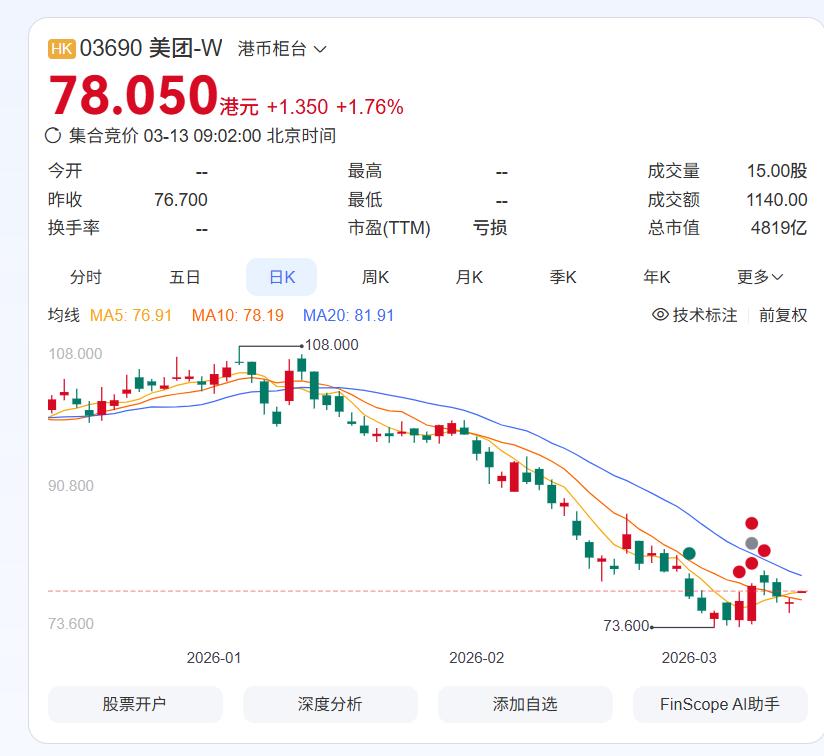
Core Insights - The article discusses the significant changes in the food delivery market in China, particularly the decline in subsidies from major platforms like Meituan and Alibaba, leading to increased prices for consumers [2][3][4] - The competitive landscape has not changed substantially despite the massive subsidies, with Meituan remaining the leader and Alibaba in second place, although the gap has narrowed [3][4] - Both companies have faced substantial financial losses, with Meituan's market value dropping over 600 billion HKD and experiencing a shift from profit to significant losses in its core local business [4][6] Group 1: Market Dynamics - The reduction in subsidies has led to higher prices for consumers, making previously affordable items like coffee and lunch more expensive [1][2] - The intense competition between Meituan and Alibaba, characterized as a "last battle of the internet," has resulted in no clear winner, with both companies suffering financially [3][4] - Meituan's stock price has been on a downward trend since the beginning of the year, reflecting investor concerns over its profitability and market position [6] Group 2: Financial Performance - Meituan's losses for 2025 are projected to be between 25.6 billion to 26.7 billion HKD, a stark contrast to its previous profitability [4][6] - Alibaba's aggressive marketing strategies have led to increased operational costs and a significant drop in operating profits, despite its large scale [6][10] - The financial struggles of both companies highlight the challenges in the food delivery sector, where profitability remains elusive [4][16] Group 3: Strategic Shifts - Alibaba is shifting its focus towards AI and cloud services, indicating a strategic pivot away from the food delivery market [8][10] - Meituan is expanding its instant retail business and investing in AI technologies to enhance operational efficiency and customer service [11][24] - The competition in the food delivery market may evolve into a new phase centered around AI, with both companies needing to adapt to changing consumer behaviors and technological advancements [21][27] Group 4: Future Outlook - The article suggests that the food delivery battle may not resume as expected, with a consensus emerging around more pragmatic approaches to competition [27] - Meituan's future strategies will likely focus on expanding its product offerings and improving AI capabilities to remain competitive [23][24] - The potential for AI to redefine business models in the industry is significant, with implications for how companies engage with consumers and manage operations [21][22]

早报|伊朗最高领袖发表首份声明;被OpenClaw之父指责“抄袭”?腾讯回应;涉事医生回应男子做核磁被忘6小时;多所高校明确“禁虾”
虎嗅APP· 2026-03-13 00:16
Group 1 - Iran's new Supreme Leader, Mojtaba Khamenei, emphasizes the importance of national unity and vows to continue strategic actions, including keeping the Strait of Hormuz closed [2][6] - The U.S. Navy's USS Ford aircraft carrier experienced a fire, which was controlled and not related to ongoing military operations [7] - Microsoft and Meta have significantly increased their data center leasing commitments, pushing the total to over $700 billion, reflecting the growing demand for AI infrastructure [8] Group 2 - Honda Motor Co. forecasts a significant operating loss of 270 billion to 570 billion yen for the fiscal year 2025, a drastic change from an earlier profit expectation of 550 billion yen [19] - The company is also expected to incur a net loss of 420 billion to 690 billion yen, previously anticipating a profit of 300 billion yen, marking its first annual loss since going public [20] - Honda is reevaluating its electrification strategy, which may lead to total costs and losses of up to 2.5 trillion yen [19] Group 3 - The AI startup xAI, founded by Elon Musk, is facing a wave of departures among its co-founders, leaving only two remaining [3][4][5] - The former head of post-training for Alibaba's Qwen model, Yu Bowen, has joined ByteDance, indicating ongoing talent movement within the AI sector [13][14][15] Group 4 - Tencent's SkillHub has launched amid accusations of data scraping from OpenClaw, with Tencent asserting that it supports the original project [22] - The price increase for Tencent's HY2.0 models reflects the accelerating commercialization of AI models and rising computing costs [30][31] Group 5 - The smart glasses industry is compared to the early days of smartphones, with potential for significant growth as a core smart terminal [32]


猛裁1.6万人后,网站再崩6小时、一周4次重大事故!官方“紧急复盘”:跟裁员无关,也不是AI写代码的锅
猿大侠· 2026-03-12 04:12
Core Viewpoint - The recent series of system failures at Amazon highlights the complexities and risks associated with integrating AI into production environments, particularly in code generation and deployment [1][4]. Group 1: Recent Incidents - Amazon has experienced a significant decline in system stability, with four Sev1 level incidents occurring within a week, indicating severe impacts on core systems and functionalities [4][5][6]. - A notable incident involved a nearly 6-hour outage that disrupted the shopping functionality on Amazon's website and app, preventing users from completing transactions and accessing account information [7][8]. - Previous incidents, including a 13-hour service interruption in AWS, were linked to AI programming tools, raising concerns about the role of AI in these failures [9][10]. Group 2: Internal Response and AI Involvement - An internal document indicated that "GenAI tool-assisted code changes" were a contributing factor to the recent accidents, although this mention was later removed from the meeting materials [11][12]. - Amazon has decided to implement new engineering measures requiring senior engineers to approve any AI-assisted code modifications, effectively adding a layer of human oversight to AI-generated changes [12][14]. Group 3: Concerns and Implications - Analysts have expressed concerns that requiring senior engineers to review AI-generated code could negate the efficiency benefits that AI brings to software development [13]. - The potential risks associated with AI include the amplification of errors and reduced time for human intervention, which could lead to larger system failures [13][14]. - Some engineers have speculated that the increase in system failures may also be linked to significant layoffs, which have resulted in reduced team sizes and increased workloads [15].