
大宗商品

Search documents
美联储降息难撼商品基本面
Jin Tou Wang· 2025-09-24 03:55
Core Viewpoint - The recent interest rate cuts by the Federal Reserve have not significantly impacted commodity prices, with underlying market fundamentals appearing weak [1] Group 1: Commodity Market Analysis - Demand growth is slowing, and OPEC+ is increasing supply, which may lead to lower oil prices until the end of 2026 [1] - The potential price support from the Federal Reserve's rate cuts may be offset by other factors, limiting any additional support for commodity prices [1] Group 2: Dollar Index and Technical Analysis - The dollar index is testing key technical levels and may form a bearish closing reversal top pattern [1] - If confirmed, this pattern could trigger a pullback to the 50% support level at 97.021 [1] - Strong resistance is present at the 50-day moving average of 98.070 and the pivot resistance level of 98.238 [1]
美联储如期降息,国内经济弱于预期
Guo Mao Qi Huo· 2025-09-22 05:13
1. Report Industry Investment Rating No information provided in the content. 2. Core View of the Report - This week, the commodity index rose slightly after reaching a high and then falling back, with industrial products rising slightly and agricultural products continuing to weaken. Macro factors are mixed, and fundamentals may dominate the trend. The commodity market may maintain a volatile trend, and subsequent attention should be paid to macro policies, trade negotiations, geopolitical factors, and changes in peak - season demand [3]. - Overseas, the new round of China - US talks reached a basic framework consensus, the Fed cut interest rates, US retail sales grew, and the Eurozone's economic sentiment index increased [3]. - Domestically, due to factors such as slowing export growth, economic downward pressure has increased in August. It is expected that new incremental measures will be introduced in the fourth - quarter macro - policies, focusing on fiscal support, central bank interest rate cuts, and promoting the real estate market to stop falling and stabilize [3]. 3. Summary by Relevant Catalogs PART ONE: Main Views - **Influencing Factors and Main Logic**: This week, the commodity index showed a trend of rising and then falling, with industrial products rising slightly and agricultural products weakening. The first half of the week was stimulated by factors such as progress in China - US trade negotiations and rising Fed interest - rate cut expectations, while the second half was suppressed by the landing of interest - rate cut expectations and the rebound of the US dollar index [3]. - **Overseas Situation**: From September 14th to 15th, China and the US reached a basic framework consensus in Madrid. On September 18th, the Fed cut the federal funds rate to 4.00% - 4.25%. On September 16th, US retail sales in August increased by 0.6% month - on - month, and the Eurozone's ZEW economic sentiment index in September rose [3]. - **Domestic Situation**: In August, due to factors like slowing export growth, economic downward pressure increased. It is expected that in the fourth quarter, new incremental measures will be introduced, with the core being fiscal support, central bank interest - rate cuts, and promoting the real estate market to stabilize. The joint efforts of fiscal and monetary policies will focus on "stabilizing investment" and "promoting consumption" [3]. - **Commodity Views**: Macro factors are mixed. The commodity market may maintain a volatile trend, and subsequent attention should be paid to macro policies, trade negotiations, geopolitical factors, and changes in peak - season demand [3]. PART TWO: Overseas Situation Analysis - The new round of China - US talks reached a basic framework consensus on issues such as resolving the TikTok issue, reducing investment barriers, and promoting economic and trade cooperation [3]. - The Fed cut the federal funds rate to 4.00% - 4.25%, and the "restart of easing" will have an important impact on market liquidity [3]. - US retail sales in August increased by 0.6% month - on - month, exceeding market expectations, and the real retail sales after CPI adjustment increased by 2.1% year - on - year, achieving positive growth for the 11th consecutive month [3]. - The Eurozone's ZEW economic sentiment index in September rose, and the industrial output in July rebounded slightly [3]. PART THREE: Domestic Situation Analysis - In August, due to factors such as slowing export growth, the year - on - year growth rates of industrial production, investment, and consumption continued to decline, and economic downward pressure increased. It is expected that new incremental measures will be introduced in the fourth - quarter macro - policies to ensure the achievement of the annual economic growth target of "around 5.0%" [3]. - The cumulative growth rate of tax revenue turning positive is a positive signal, but the year - on - year decline in the transfer income of state - owned land use rights indicates that local land finance still faces certain pressure [3]. - Nine departments jointly issued policies to expand service consumption, proposing 19 specific measures from five aspects [3]. PART FOUR: High - Frequency Data Tracking - **开工率数据**: The operating rates of the polyester industry chain and blast furnaces are presented in the data, such as the operating rates of terephthalic acid, polyester, and weaving in the polyester industry chain, as well as the national and Tangshan blast furnace operating rates [33]. - **汽车销售数据**: The data shows the year - on - year growth rates of factory wholesale and retail sales, and specific sales data for September [42][45]. - **农产品价格数据**: The data includes the average wholesale prices of 28 key monitored vegetables, pork, and the 200 - index of agricultural product wholesale prices [47].
全球资产观察月报:中国股票领涨,沪指创十年新高
Sou Hu Cai Jing· 2025-09-19 14:41
Market Overview - In August, the overall market risk appetite improved, with Chinese stocks leading the gains at a return of 7.2% [1] - The Shanghai Composite Index surpassed 3800 points, reaching a nearly ten-year high [1] - Daily trading volume in the Shanghai and Shenzhen markets significantly increased to 22,796 billion yuan [1] - The Federal Reserve's interest rate cut expectations rose, contributing to an increase in gold prices [1] - OPEC+ announced a substantial increase in production, leading to a decline in oil prices by 6.53% [1] Asset Performance - The ranking of asset returns for August is as follows: Chinese stocks > Gold > Global stocks > Global bonds > Agricultural products > Cash > Foreign exchange > Domestic bonds > Real estate > Industrial products > Oil [1] Chinese Stock Market - The Chinese stock market continued to perform well, with major indices rising: the Wind China 500R Index increased by 7.2%, the Wind All A Index rose by 10.9%, and the Hong Kong China Enterprises Index gained 3.3% [10] - The average daily trading volume in the Shanghai and Shenzhen markets reached 22,796 billion yuan, up from 16,101 billion yuan the previous month, indicating increased market activity [10] - The technology sector, particularly in AI, computing power, and semiconductors, showed strong performance with a monthly increase of 16.3% [11] Global Stock Market - The global stock market saw most indices rise, with emerging markets outperforming developed markets [5] - Vietnam and Brazil led the gains with returns of 12.0% and 8.9%, respectively, while Saudi Arabia and India lagged with returns of -2.9% and -2.2% [5] - Developed markets, particularly Japan, performed well with a return of 5.9%, while Germany and France had returns below 1% [5] Bond Market - The bond market faced pressure in August, with rising yield expectations due to inflation concerns [12] - Convertible bonds led the performance with a yield of 4.32%, while interest rate bonds showed the weakest performance with a decline of 0.44% [12] - The yield on 10-year government bonds rose by 13.35 basis points to 1.84% [12] Commodity Market - Gold prices reached new highs, closing at $3,516.0 per ounce, a 4.9% increase from the previous month [17] - Oil prices declined by 4% to $67 per barrel due to increased supply and weakened demand [17] - In the agricultural sector, soybeans showed the best performance with a 6.4% increase [18] Real Estate Market - The real estate market in first-tier cities continued to show a downward trend, with investment indices declining [20] - The transaction area of commercial housing in 30 major cities decreased by 1.6% to 1.786 million square meters [22] - The overall market remains under pressure, indicating that recovery in the industry requires further observation of subsequent data [22] Foreign Exchange Market - The US dollar index fell by 2.20% to 97.85, reflecting a weakening trend [24] - The decline in the dollar has put upward pressure on the renminbi exchange rate [24] Cash Market - The money market fund index rose to 1,706.44 points, a slight increase of 0.09% from the previous month [26] - The annualized yield of the Yu'ebao seven-day fund was 1.06%, showing a slight increase [26]


全球宏观资产市场-晴雨气候表
对冲研投· 2025-09-15 08:37
Core Insights - The article presents a comprehensive market monitoring dashboard covering multiple asset classes, including stocks, forex, commodities, and cryptocurrencies, providing traders with indicators for trend, reversal, volatility, and overbought/oversold conditions [1]. Asset Classification - The assets are categorized into four main classes: Equity, FX, Commodities, and Crypto, each with specific indicators for analysis [2]. Key Assets and Recent Changes - Key assets to focus on include: - **Equity**: SP500_US and Nasdaq100_US are highlighted for their significant volatility and potential for trend continuation or reversal [1]. - **China Stocks**: CSI300_China and SSE_China are noted for their low valuations and potential rebound, albeit with high volatility [1]. - **Forex**: USDJPY and USDCNY are emphasized due to significant central bank policy differences, while EURUSD and GBPUSD are suitable for macro hedging [1]. - **Commodities**: Gold and CrudeWTI are driven by safe-haven demand and inflation expectations, while CopperHG and Soybean are sensitive to economic cycles and Chinese demand [1]. - **Cryptocurrency**: BTCUSD and ETHUSD are recognized for their high volatility and suitability for swing trading [1]. Potential Trading Opportunities - Trading opportunities are identified based on specific numerical indicators, such as extreme Sigma values indicating potential rebounds or trend continuations [3]. Suggested Operational Framework - Strategies include: - **Rebound Opportunities**: Identifying assets with low Sigma values and reversal signals for potential rebounds [4]. - **Trend Continuation**: Following assets where EMA20 is above EMA100, indicating an upward trend [4]. - **Volatility Strategies**: Utilizing high VolRank and rising ATR% for options strategies or breakout trades [4]. Risk Considerations - Risks include: - **Overbought Risks**: High Sigma values indicating potential short-term overheating [4]. - **Trend Reversal Risks**: Signals indicating potential reversals, especially with high deviation [4]. - **Liquidity/Volatility Risks**: Extreme market conditions requiring position control [4]. Multi-Asset Comparison and Risk Management - Emphasis on comparing assets within the same category and using multiple indicators for comprehensive analysis [4]. - Risk management is prioritized, with all trades requiring stop-loss measures based on volatility and drawdown metrics [4]. - The technical analysis should be complemented with macroeconomic factors such as central bank policies and geopolitical events [4].

【UNFX周评】一周评述 :宽松预期主导下,风险与避险资产的联袂狂欢
Sou Hu Cai Jing· 2025-09-13 15:09
Group 1: Market Overview - The global financial market experienced a unique rally where both risk and safe-haven assets rose simultaneously, driven by weak labor market data in the US, paving the way for potential interest rate cuts by the Federal Reserve [1] - Major global stock indices saw significant gains, with the S&P 500 rising approximately 1.6% for the week, marking its best weekly performance of the month and reaching historical highs [1][3] - European stock markets also recorded gains, albeit more modestly, influenced by improved global risk sentiment and the European Central Bank's decision to maintain interest rates [1] Group 2: Regional Market Performance - The Nikkei 225 index in Japan reached a new historical high, benefiting from positive global risk sentiment and a weaker yen, which favored export-oriented companies [2] - Semiconductor and AI-related stocks were key drivers of the Nikkei's rise, reflecting strong performance in these sectors [2] Group 3: Commodity Market Dynamics - Gold emerged as a standout performer, breaking historical highs due to expectations of Fed rate cuts, a weaker dollar, and declining real yields, supported by ongoing central bank purchases and geopolitical uncertainties [2] - The oil market exhibited mixed trends, influenced by concerns over economic slowdown and OPEC+ production increases, while a weaker dollar and ongoing geopolitical tensions provided some support [2]
Commodities wrap: Fed rate cuts, geopolitical tensions drive commodity prices
Invezz· 2025-09-10 11:06
Core Insights - Gold and crude oil prices continued to rise on Wednesday, indicating a bullish trend in these commodities [1] - Copper prices remained stable, showing little change from the previous close, suggesting a lack of volatility in this market [1] - Silver prices experienced a significant increase of over 1%, reflecting heightened investor interest in precious metals [1]

博时基金曾豪:平衡好节奏和结构,警惕三大利空因素
Zhong Guo Jing Ji Wang· 2025-09-10 06:19
Group 1 - The market has surpassed 3800 points, reflecting the positive outcomes of China's capital market reforms and the continuous recovery of the economic fundamentals [1] - The market is expected to present a "stable and improving" pattern, driven by ongoing policy benefits, economic resilience, and existing valuation advantages [2] - A "structural slow bull" market characteristic is anticipated, with investment strategies suggesting a "core + satellite" allocation approach [2][3] Group 2 - In an optimistic market environment, it is crucial to balance the rhythm and structure of investments, with a focus on adding positions during market pullbacks to control volatility [3] - Key indicators for assessing fundamental trends include net profit growth rates and return on equity (ROE), which are essential for evaluating long-term stock returns [3] - Investors should remain vigilant about three major downside risks, including structural economic risks, the potential shift from a "slow bull" to a "fast bull" market, and uncertainties in international policies [3][4]
浙江自贸试验区扩区五年进出口总额实现翻番
Zhong Guo Xin Wen Wang· 2025-09-05 09:52
Core Insights - The Zhejiang Free Trade Zone has achieved significant growth in trade and investment, contributing 19.2% of the province's foreign trade, 17.6% of foreign investment, and 8.9% of tax revenue despite occupying less than 1/400 of the province's area [1] Group 1: Trade and Investment Growth - The total import and export volume of the Zhejiang Free Trade Zone increased from approximately 480 billion RMB in 2020 to over 1 trillion RMB in 2024, effectively doubling [1] - The number of registered enterprises in the zone exceeded 170,000, including over 3,000 foreign-funded enterprises [1] Group 2: Institutional Innovations and Projects - The Zhejiang Free Trade Zone has developed 690 notable institutional innovation achievements over the past five years [1] - Major projects in the Zhoushan area include the integration of refining and chemical processes and the establishment of an LNG receiving station, in collaboration with leading international oil and gas companies [1] Group 3: Regional Developments - The Ningbo area is focused on becoming China's first hub for bulk commodity resource allocation and has completed Asia's largest underground propane storage facility [2] - The Hangzhou area has leveraged its digital innovation capabilities, hosting three global digital trade expos with a total investment signing amount of 430 billion RMB [2] - The Jinyi area has utilized the advantages of the Yiwu market, innovating trade models that resulted in a market procurement trade export of 298.4 billion RMB in the first half of the year, a year-on-year increase of 28.2% [2]
83246亿元、13.2万亿元,增长!透过多维数据感知经济内生增长强劲动力
Sou Hu Cai Jing· 2025-09-05 05:22
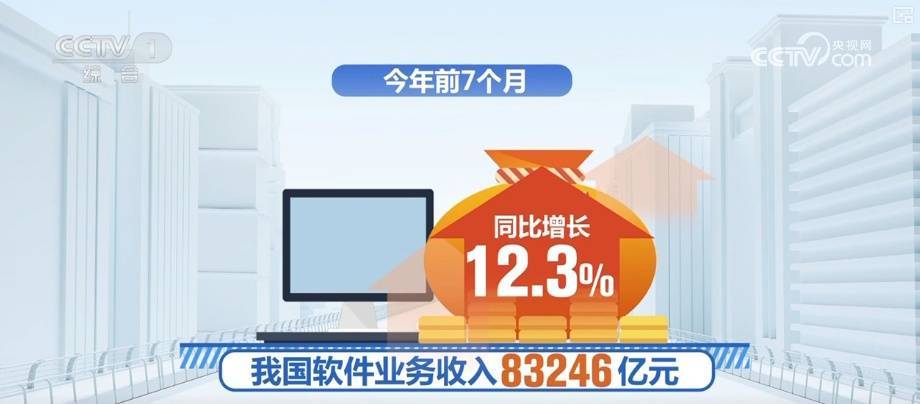
Economic Overview - China's economy shows a stable and positive trend, with various sectors demonstrating growth [1] - The software industry reported a revenue of 83,246 billion yuan, marking a year-on-year increase of 12.3% [4] - The light industry also performed well, achieving a revenue of 13.2 trillion yuan with a year-on-year growth of 6.7% [7] Software Industry - Software product revenue accounted for 21.6% of the total industry revenue, while information technology services made up 68.8% [4] - Cloud computing and big data services experienced a growth of 12.6% [4] - The total profit in the software sector reached 12.4% growth, with exports amounting to 33.98 billion USD, up by 5.2% [4] Light Industry - The light industry maintained robust operations, with production and market scale showing positive trends [7] - The profit in the light industry reached 760.11 billion yuan [7] - Exports in the light industry remained resilient, with significant growth in daily chemical products and light machinery, increasing by 20.8% and 17.1% respectively [10] Commodity Prices - The commodity price index rose for four consecutive months, indicating a stable growth trend in the market [11] - In August, the commodity price index was 111.7 points, with a month-on-month increase of 0.3% [14] - The prices of certain commodities, such as coke and lithium carbonate, saw significant increases of 20.1% and 16.6% respectively [14] Market Demand and Policies - The consumption market showed significant effects from policies, with the production of electric bicycles, washing machines, and air conditioners increasing by 33.2%, 9.4%, and 5.1% respectively [12] - The implementation of policies aimed at expanding domestic demand and countering internal competition is enhancing industry confidence [21] - The upcoming traditional production peak in September and October is expected to further boost market demand [22]
湖北5.8万家工业企业上云 占总数近六成
Zhong Guo Chan Ye Jing Ji Xin Xi Wang· 2025-09-05 01:19
Core Insights - Hubei Province is experiencing a significant digital transformation in its manufacturing sector, with key metrics indicating progress in automation and digital tool adoption [1][2] Group 1: Digital Transformation Metrics - As of June, the CNC rate for key processes in large-scale industrial enterprises in Hubei reached 69.7%, ranking 7th nationally [1] - The penetration rate of digital R&D design tools in large-scale industrial enterprises is 90.7%, placing Hubei 6th in the country [1][2] - The number of industrial enterprises utilizing cloud services has reached 58% of the total, with 58,000 companies adopting cloud technology [1] Group 2: Policy and Strategic Initiatives - Hubei has implemented a series of plans such as the "Manufacturing Digital Transformation Implementation Plan" and "Hubei Digital Economy Promotion Measures" to support industrial digitalization [1] - The province is focusing on a phased approach to digital transformation, moving from "expansion" to "quality improvement" during the 14th Five-Year Plan period [1] Group 3: Sector-Specific Developments - In the primary sector, Hubei is enhancing the digitalization and intelligence of agricultural machinery and facilities, establishing smart farms and demonstration bases [1] - In the secondary sector, Hubei has certified 113 enterprises under the integration management system, ranking 2nd nationally, and has 55 factories listed in the national 5G factory directory [2] - In the tertiary sector, Hubei is building supply chain platforms in key industries, serving over 200,000 SMEs with a transaction volume exceeding 200 billion [2] Group 4: Future Plans - The Hubei Economic and Information Technology Department plans to continue advancing the digital, networked, and intelligent evolution of traditional industries to provide robust support for development [2]