新能源

Search documents
不设存续期,北京怀柔设立一支政府投资引导基金
FOFWEEKLY· 2026-03-20 10:11
Group 1 - The core viewpoint of the article is the establishment of the Huairou District Government Investment Guidance Fund, which aims to leverage fiscal funds to attract social capital and create a comprehensive capital empowerment system covering the entire lifecycle of enterprises [1] - The total scale of the Huairou District Government Investment Guidance Fund is 5 billion yuan, with no set duration [1] - The fund focuses on supporting key areas such as scientific instruments and sensors, new materials, new energy, aerospace technology, medical health, and next-generation information technology, aligning with the "4410" modern industrial system of Huairou District [1]


砸漏了 | 谈股论金
水皮More· 2026-03-20 09:23
Core Viewpoint - The A-share market experienced a mixed performance, with the Shanghai Composite Index falling below the 4000-point mark, while the ChiNext Index reached a new high since December 2021. The overall market sentiment was weak, driven by significant sell-offs in large-cap stocks and a lack of buying support from bulls [2][3]. Market Performance - The Shanghai Composite Index closed down 1.24% at 3957.05 points, while the Shenzhen Component Index fell 0.25% to 13866.20 points. The ChiNext Index, however, rose 1.30% to 3352.10 points. The total trading volume across the Shanghai and Shenzhen markets reached 2.3 trillion yuan, an increase of 175.6 billion yuan from the previous day [2][3]. - The performance of the Shanghai Composite Index was heavily influenced by large-cap stocks, with the SSE 50 Index dropping 1.11%. Major sectors such as banks, insurance, and telecommunications saw significant declines, contributing to the overall market downturn [3][4]. Sector Analysis - Only five sectors saw gains today, primarily focused on energy, including solar power, lithium batteries, oil and gas extraction, and electricity. The rise in these sectors was partly driven by external news, such as Tesla's discussions to purchase Chinese solar products [4]. - The sectors that experienced the largest declines included oilfield engineering, IT services, and communication services, indicating a broader market weakness [4]. Fund Flow and Market Sentiment - The overall market saw a net outflow of 73.9 billion yuan, a decrease of 30 billion yuan from the previous day. This suggests that while there was no overwhelming bearish sentiment, the bulls were lacking in conviction, leading to a failure to support the 4000-point level [5]. - Micro-cap stocks faced a significant drop of 3.73%, following a 2.99% decline the previous day, resulting in a cumulative drop of over 6.6% in two trading days. This decline is characterized as a corrective phase after previous speculative trading [5]. Impact on Hong Kong Market - The weakness in the A-share market negatively impacted the Hong Kong market, particularly after 2:00 PM, leading to declines in the Hang Seng Index and the Hang Seng Tech Index, which fell by 0.88% and 2.48%, respectively [6]. - Major tech companies in Hong Kong, such as Tencent and Alibaba, faced pressure due to disappointing earnings reports. Tencent's profits grew but still saw a drop of over 6% in the previous day, while Alibaba's profits declined, leading to a significant drop of 6.29% today [6].

EPMI新兴产业行业报告202603:节后全线回补信息技术尤为强势
Zhong Guo Ren Min Yin Hang· 2026-03-20 05:15
Investment Rating - The report indicates a strong upward trend in the emerging industries, with the EPMI rising to 57.6, marking the highest value in five years, confirming the upward cycle trend [1]. Core Insights - The emerging industries are experiencing a significant recovery post-holiday, particularly in information technology, which shows robust growth [1]. - The report anticipates a slight decline in the EPMI next month but expects it to remain at a high level, indicating sustained demand and production recovery [2]. - Various sectors, including new generation information technology, new materials, and biotechnology, are showing strong performance, with PMI values indicating expansion [3][4]. Summary by Sections Section 1: Overview of China's Emerging Industry Index - The emerging industries are showing a broad recovery, with all surveyed sectors reporting PMI values above 50, indicating expansion [10]. Section 2: PMI and Sub-indexes 1. **High-end Equipment Manufacturing** - PMI increased to 54.5, driven by post-holiday recovery, with production and new orders showing significant growth [18]. 2. **Energy Conservation and Environmental Protection** - PMI rose to 53.5, with production and new orders also increasing, reflecting a recovery in demand [25]. 3. **Biotechnology** - PMI reached 57.4, with substantial increases in production and new orders, indicating strong seasonal demand [37]. 4. **New Materials** - PMI surged to 59.7, with significant growth in orders and production, driven by seasonal factors [46]. 5. **New Energy** - PMI rose to 59.2, with production and orders reflecting strong demand recovery [56]. 6. **New Energy Vehicles** - PMI increased to 54.7, showing recovery but still below peak levels, indicating ongoing challenges in demand [66]. 7. **New Generation Information Technology** - PMI jumped to 62.2, indicating a strong recovery and expansion in the sector [76]. 8. **Healthcare Services** - PMI fell to 51.8, reflecting a slight decline in demand post-holiday [86]. 9. **Business Consulting Services** - PMI remained high at 75, but new orders are low, indicating a need for demand recovery [93].
每日市场观察-20260320
Caida Securities· 2026-03-20 04:10
Market Overview - On March 19, the three major indices fell over 1%, with the Shanghai Composite Index dropping 1.39% and briefly falling below the 4000-point mark[3] - The total trading volume reached 2.13 trillion yuan, an increase of approximately 70 billion yuan compared to the previous trading day[1] Sector Performance - All sectors except for oil, coal, banking, and utilities experienced declines, with non-ferrous metals, chemicals, and steel leading the losses[1] - The leading stocks in the communication and new energy sectors showed high volatility, while the leading stocks in the non-ferrous and chemical sectors exhibited weaker performance[2] Monetary Policy - The People's Bank of China emphasized the continuation of a moderately loose monetary policy to promote stable economic growth and reasonable price recovery[4] - The central bank aims to maintain liquidity and ensure that the growth of social financing aligns with economic growth and price expectations[4] Industry Dynamics - In February 2026, 75.49% of the green certificates issued were related to renewable energy projects, with a total of 1.98 billion certificates issued[7] - Over 30 production companies have increased the specifications and prices of rebar by 20-50 yuan per ton, with some regions seeing increases of up to 80 yuan per ton[9] Fundraising Trends - On March 18, 11 new funds exceeded 1 billion yuan in size, with active equity funds and FOFs making up 7 of these funds[12] - The total scale of FOFs has surpassed 300 billion yuan for the first time, driven by high demand and rapid sales[12]
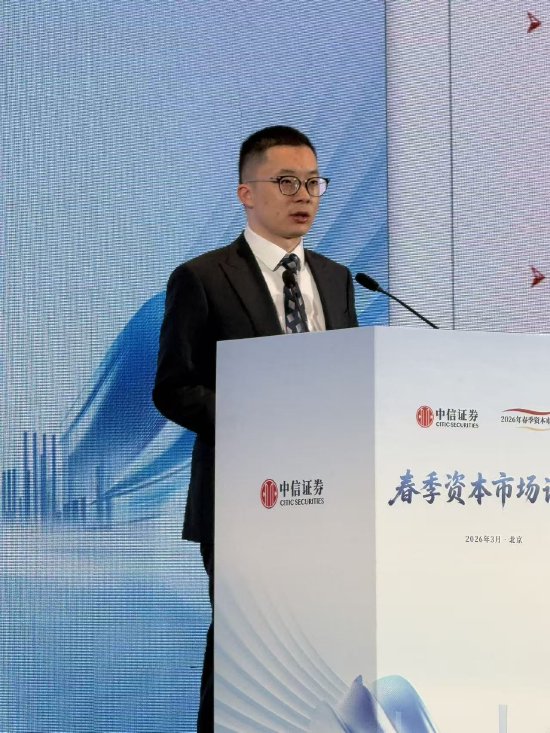
中信证券:坚定围绕中国优势制造定价权重估布局
Xin Lang Cai Jing· 2026-03-20 03:26
Group 1: Market Outlook - The spring season is viewed as a period for rebuilding confidence and making decisive index movements, with low valuations and pricing power being the most critical factors under the backdrop of rising global energy costs and weakening financial conditions [1] - The recovery of corporate profit margins is seen as key to the continuation of the A-share bull market, with disruptions in the global supply chain providing an opportunity to validate China's manufacturing pricing power [1] - The Middle East conflict is identified as a catalyst for style shifts in the market, emphasizing the importance of low valuations and pricing power amid rising global costs and weakening financial conditions [1] Group 2: Sector Recommendations - The recommendation is to focus on re-evaluating investments around China's advantageous manufacturing pricing power, particularly in sectors such as chemicals, non-ferrous metals, power equipment, and new energy, with price increases remaining a core trading theme [1] - There is an emphasis on increasing exposure to undervalued factors in sectors like insurance, brokerage, and electricity [1] Group 3: Economic Policy and Forecast - China's economy is expected to continue its recovery amidst fluctuations in 2026, with fiscal policy remaining proactive and a deficit rate maintained at 4%, alongside an increase in special bonds aimed at project construction [2] - Monetary policy is anticipated to have room for flexible and efficient use of interest rate cuts, with expectations of 1-2 rate cuts and one reserve requirement ratio reduction throughout the year [2] - The global economic landscape is expected to enter a rebalancing phase, with U.S. economic structural issues leading to a cautious pace of interest rate cuts by the Federal Reserve [2] Group 4: Domestic Economic Environment - The current macro and policy landscape is characterized by "reform breakthroughs and industrial upgrades," with a moderate recovery in domestic economic demand and stable government work report targets [3] - Ongoing reforms are aimed at reducing income disparities and expanding the middle-income group, while fiscal reforms are enhancing central coordination capabilities [3] - The focus on energy security and the strategy for becoming a space power is accelerating the construction of a modern industrial system, presenting development opportunities for emerging future industries [3]

两市上涨个股超3600只
第一财经· 2026-03-20 01:51
Group 1 - The ChiNext Index increased by over 2%, while the Shanghai Composite Index rose by 0.13% and the Shenzhen Component Index increased by 1.17%. More than 3600 stocks in the two markets saw gains [3]. - The A-share market opened with mixed results, with the Shanghai Composite Index down by 0.05%, the Shenzhen Component Index up by 0.86%, and the ChiNext Index up by 1.6%. Strong performances were noted in sectors such as CPO, AI computing power, computing hardware, and semiconductors, while oil and gas stocks experienced significant declines [4]. - The central bank conducted a 205 billion yuan reverse repurchase operation with a rate of 1.40%, unchanged from previous operations [5]. Group 2 - The Hang Seng Index opened down by 0.64%, with the Hang Seng Tech Index falling by 0.97%. Notable declines were observed in companies like NetEase, Xiaomi Group, and JD Group, each dropping over 2%, while Li Ning rose nearly 8% and CATL increased by over 3% [6][7].

\十五五\规划发布,如何把握板块投资脉络?
Changjiang Securities· 2026-03-19 23:30
Investment Rating - The investment rating for the public utility sector is "Positive" and is maintained [9] Core Insights - The "14th Five-Year Plan" emphasizes low-carbon requirements, aiming for a 17% reduction in carbon emission intensity during the "15th Five-Year Plan" period and a 25% increase in the share of non-fossil energy consumption by 2030. The focus has shifted from "dual control of energy consumption" to "dual control of carbon emissions," which will facilitate green electricity consumption [2][6] - The report highlights the need for a clean, low-carbon, safe, and efficient new energy system, proposing a ten-year action plan to significantly increase non-fossil energy sources. By 2030, the cumulative installed capacity of offshore wind power is expected to exceed 100 million kilowatts, and nuclear power capacity is projected to reach around 110 million kilowatts [12] - The report suggests that the collaborative "carbon reduction and green increase" planning will enhance the long-term narrative for green electricity and drive valuation recovery. It emphasizes the importance of policy catalysts in the clean power sector [12] Summary by Sections Event Description - The "15th Five-Year Plan" outlines five key indicators focusing on carbon reduction and ecological protection [6] Energy and Power - The plan aims to replace fossil fuels with non-fossil energy sources, promoting a diverse energy mix including wind, solar, hydro, and nuclear power. It also emphasizes the construction of clean energy bases and the efficient use of fossil energy [12] - A new power system will be established to enhance the resilience and efficiency of the electricity grid, with a target of 420 million kilowatts for west-to-east power transmission by 2030 [12] Investment Recommendations - The report recommends focusing on the clean power sector as a "turnaround opportunity" driven by policy support, highlighting companies such as Longyuan Power, New天绿色能源, China Nuclear Power, and others [12]
虽然亏钱,但段子多啊!
Datayes· 2026-03-19 11:53
Core Viewpoint - The article discusses the current volatility in the A-share market, highlighting the impact of geopolitical tensions in the Middle East on oil prices and the subsequent effects on various sectors and stocks [5][7][15]. Group 1: Market Sentiment and Performance - A significant number of retail investors in the A-share market express frustration over their investment experiences, feeling that their accounts have not achieved the expected financial freedom despite efforts in value investing and technical analysis [3]. - The A-share market has seen a collective decline, with the Shanghai Composite Index dropping by 1.39%, the Shenzhen Component by 2.02%, and the ChiNext Index by 1.11% on a day with a trading volume of 21,273 billion yuan, indicating a broad market downturn [15]. Group 2: Geopolitical Impact on Oil Prices - The ongoing conflict in the Middle East has led to a surge in oil prices, with Brent crude reaching $111 per barrel, causing concerns among political leaders [5][7]. - The U.S. is considering increasing military presence in the Middle East as the conflict escalates, which could further influence oil supply and prices [7]. Group 3: Sector Performance and Investment Opportunities - UBS has identified two lists of Chinese stocks based on oil price scenarios: one focusing on energy, chemicals, shipping, and aluminum during high oil prices, and another on airlines, airports, leisure, and renewable energy when oil prices normalize [10]. - Specific stocks such as PetroChina and CNOOC are highlighted as potential outperformers in the oil sector, with market caps of $310 billion and $184.4 billion respectively, and both receiving a "Buy" rating [13]. Group 4: Capital Flows and Investment Trends - There has been a net outflow of 101.5 billion yuan from the market, with the electronic sector experiencing the largest outflow, while sectors like public utilities, oil and petrochemicals, and coal saw net inflows [25]. - The article notes that the current market sentiment suggests a cautious approach to investment, with a focus on controlling positions until geopolitical tensions stabilize [14].

聚焦四大方向,“十五五”时期,这个能源大省准备这么干
中国能源报· 2026-03-19 10:51
Core Viewpoint - Shandong is committed to accelerating the construction of a modern energy province and enhancing energy security through green transformation and the cultivation of new productive forces [3][10]. Group 1: Achievements in Energy Transformation - During the "14th Five-Year Plan" period, Shandong achieved a threefold increase in non-fossil energy installed capacity, generation, and consumption share, with non-fossil energy accounting for 54.2% of installed capacity, surpassing coal power for the first time [4]. - Significant breakthroughs were made in nuclear power, wind energy, clean heating, and green electricity consumption, including the establishment of the world's first fourth-generation nuclear power project and the first zero-carbon heating city using nuclear energy [4]. Group 2: Future Focus Areas - The "15th Five-Year Plan" will focus on four key areas: creating green energy corridors in urban areas, enhancing both quantity and quality of energy production, promoting integrated innovation in technology and industry, and improving the energy supply and storage system [5]. - By 2030, Shandong aims to reach 200 million kilowatts of non-fossil energy installed capacity and 40 million kilowatts of energy storage capacity, while ensuring the acceptance of over 200 billion kilowatt-hours of electricity from outside the province [5]. Group 3: Legal Framework for Green Transition - The introduction of the "Ecological Environment Code" marks a significant advancement in environmental law, providing a stable legal foundation for the green transition in the energy sector [7]. - The "National Development Planning Law" promotes a unified approach to national strategies, ensuring the scientific and forward-looking nature of development planning [7]. Group 4: New Productive Forces - Energy is viewed as a crucial area for developing new productive forces, with Shandong focusing on breakthroughs in key technologies across nuclear, wind, solar, and storage sectors [9]. - The province is actively promoting the integration of renewable energy with biomass power generation and distributed energy systems to enhance resource advantages and competitive strengths [9].

中信证券裘翔:利润率回升是A股接续牛市的关键
Xin Lang Zheng Quan· 2026-03-19 07:50
Group 1 - The core viewpoint is that the second quarter is a critical window for rebuilding confidence in the A-share market, with a focus on the stabilization and recovery of corporate profit margins as a necessary condition for the continuation of the bull market [1] - The Middle East conflict is seen as a catalyst for style switching this year, providing an opportunity to test the pricing power of China's advantageous manufacturing sector amid global supply chain disruptions [1] - Trends in the industry indicate that code inflation and physical scarcity are enhancing the pricing power of advantageous manufacturing in China, accelerated by disruptive innovation in AI and global energy supply chain disturbances [1] Group 2 - The re-evaluation of Chinese assets should not be centered around the HALO concept, as the logic differs from overseas markets; the focus should be on companies with market share and competitive advantages that can actively manage future capital expenditure [2] - The current bottom-line recommendation emphasizes industries in China with share advantages, where the cost of overseas capacity reset is high and supply elasticity is easily influenced by policy, particularly in chemicals, non-ferrous metals, power equipment, and new energy [2]