
咖啡

Search documents
当对手都在做下沉,蜜雪冰城旗下“幸运咖”反向打入一线城市
Di Yi Cai Jing· 2025-07-26 08:03
Group 1 - The Chinese freshly brewed coffee market is experiencing rapid growth, providing significant opportunities for brands like Luckin Coffee [4] - Luckin Coffee is focusing on expanding into first and second-tier cities, aiming for a target of 10,000 stores by early 2025, with nearly 7,000 stores currently covering over 300 cities [1][3] - The brand's product pricing ranges from 6 to 8 yuan, and it has achieved profitability in first-tier cities while continuously refining its store model [1][3] Group 2 - Luckin Coffee has made substantial investments in core raw materials, directly sourcing Arabica coffee beans from regions like Brazil, Ethiopia, and Indonesia [3] - The company benefits from a strong supply chain, allowing for cost control and stable supply, particularly after signing a 4 billion yuan procurement agreement with Brazil [3] - The pricing strategy of Luckin Coffee is seen as a "thin profit, high sales" model, which may face challenges when applied to the more complex competitive landscape of first and second-tier cities [3]


食饮吾见 | 一周消费大事件(7.20-7.25)
Cai Jing Wang· 2025-07-26 01:56
Group 1 - Yanghe Co. elected Gu Yu as the chairman of the board, with the term consistent with the current board's term [1] - FrieslandCampina reported a 6.4% increase in revenue to €6.847 billion, with a net profit of €230 million, driven by a 19.1% rise in milk prices [2] - OATLY's revenue for the first half of the year was $406 million, a 1.1% increase, while the Greater China region saw a 12.5% growth [2] - Yanzhi House expects a net profit of approximately ¥72 million to ¥81 million for the first half of 2025, a year-on-year growth of 20% to 35% [3] - Angel Yeast plans to acquire 55% of Shengtong Sugar Industry for a transaction amount of ¥506 million [4] - Nestlé's sales for the first half of 2025 were CHF 44.2 billion, with a 1.8% decline attributed to currency fluctuations [5][6] Group 2 - Anji Food completed the acquisition of 70% of Dingwei Thai and 100% of Dingyifeng, integrating them into its consolidated financial statements [7] - Coca-Cola reported a net revenue of $12.5 billion for Q2 2025, a 1% year-on-year increase [7] - Yuanji Cloud Dumplings announced the opening of franchises in Singapore, marking its first step in overseas expansion [8] - Starbucks introduced self-study rooms in some Guangdong stores, planning to explore more "interest-oriented" spaces in the future [9] - Cotton Password stated that under normal usage conditions, the residue of thiourea in their sanitary napkins does not pose a health risk [10] - Sam's Club responded to claims of organic soybean quality downgrade, stating the new high-protein soybeans still meet the first-grade standard [11] - Donglai Yu announced that 50% of the production of Jiugui Ziyouai will be allocated to support enterprises, with accelerated development of milk powder and dairy products [12]




反攻一线城市!蜜雪冰城“好兄弟”出手
Zhong Guo Ji Jin Bao· 2025-07-25 16:17
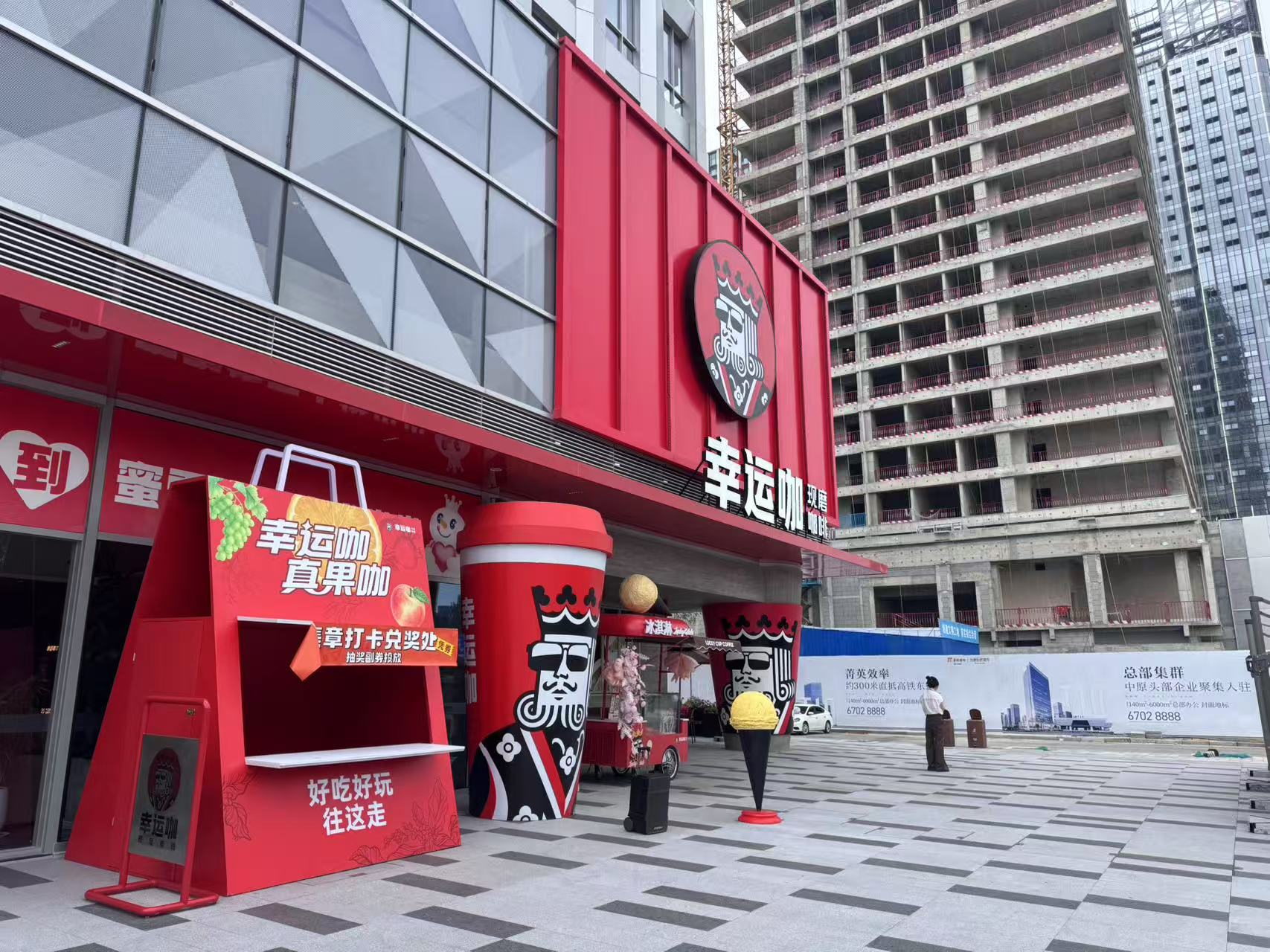
Core Viewpoint - The domestic coffee market is expected to welcome new members to the "10,000 store club," with the brand Lucky Coffee aiming for 10,000 stores by 2025, currently nearing 7,000 stores across over 300 cities [2][4]. Expansion Strategy - Lucky Coffee plans to open approximately 4,500 new stores in 2024, averaging about 357 new stores per month [2]. - The brand's rapid expansion is supported by its parent company, Mixue Group, which has increased resource allocation to Lucky Coffee since 2025 [4]. Market Positioning - Lucky Coffee adopts a "high quality, low price" strategy, with product prices ranging from 6 to 8 yuan [4]. - The brand's new store openings in Q2 2025 saw a year-on-year increase of 164% [4]. Supply Chain and Cost Efficiency - Lucky Coffee benefits from Mixue Group's extensive supply chain, allowing for superior cost control and operational efficiency [4]. - The company sources high-quality Arabica coffee beans directly from Brazil, Ethiopia, and Indonesia, with a procurement price of less than 70 yuan per kilogram compared to the industry average of over 120 yuan [4]. Product Development - Lucky Coffee has significantly increased its product development speed, launching 32 new products in the first half of the year, an 88% increase from the previous year [5]. - The "True Fruit Coffee" series launched in May achieved over 100 million yuan in sales within a month [5]. Market Growth Potential - The Chinese coffee market is projected to reach 313.3 billion yuan in 2024, with an 18.1% year-on-year growth [5]. - Current per capita annual coffee consumption in China is 22.24 cups, with significant room for growth compared to over 300 cups in mature markets like the U.S. and South Korea [5]. Impact of Delivery Services - Recent competition in the delivery service sector has led to a 258% increase in delivery orders for Lucky Coffee, with average daily revenue reaching 5,732 yuan [6][7]. - The delivery service competition has altered consumer price perceptions, benefiting Lucky Coffee's pricing strategy [7]. Targeting Urban Markets - Lucky Coffee is shifting its focus to first- and second-tier cities, offering a two-year fee waiver for franchisees in major cities [9]. - Despite the challenges of high rental and labor costs in first-tier cities, the brand aims to establish a stable profit model beyond just low pricing [9]. Competitive Landscape - As of Q1 2025, Luckin Coffee has over 24,000 stores in China, while Kudidi Coffee has 10,045 stores [9]. - If Lucky Coffee maintains its current growth rate, it is projected to become the third coffee brand to reach 10,000 stores by the end of 2025 [9].
反攻一线城市!蜜雪冰城“好兄弟”出手
中国基金报· 2025-07-25 16:07
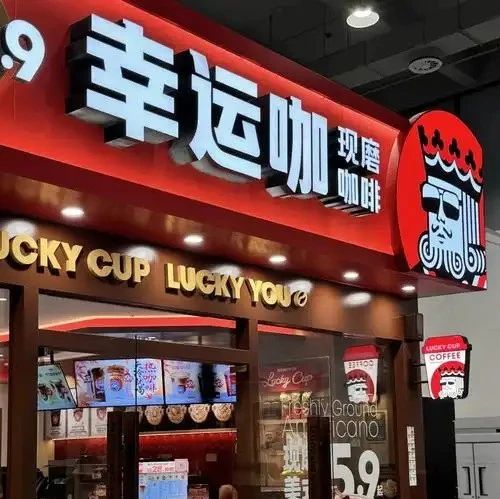
Core Viewpoint - The domestic coffee market is expected to welcome new members to the "10,000 store club," with Luckin Coffee aiming for rapid expansion and a target of 10,000 stores by 2025 [1][3]. Expansion Strategy - Luckin Coffee is set to open approximately 4,500 new stores in 2024, averaging about 357 new stores per month, indicating a significant acceleration in its expansion efforts [1][3]. - The brand's current store count is nearing 7,000, covering over 300 cities nationwide [1]. Pricing and Cost Control - Luckin Coffee follows a "high quality and affordable" strategy, with product prices primarily in the range of 6-8 yuan [3]. - The company benefits from the strong supply chain capabilities of its parent company, Mixue Group, which has 46,000 stores nationwide, allowing for superior cost control and operational efficiency [3][4]. - The cost of coffee beans supplied to franchisees is less than 70 yuan per kilogram, compared to the industry average of over 120 yuan per kilogram, resulting in a gross margin exceeding 50% for a 5.9 yuan Americano [3][4]. Product Development - Luckin Coffee has significantly increased its product launch speed, introducing 32 new products in the first half of the year, an 88% increase year-on-year [4]. - The "True Fruit Coffee" series launched in May achieved over 100 million yuan in sales within a month [4]. Market Potential - The Chinese coffee market is projected to grow, with the industry size expected to reach 313.3 billion yuan in 2024, a year-on-year increase of 18.1% [4]. - Current per capita annual coffee consumption in China is 22.24 cups, with significant room for growth compared to over 300 cups in mature markets like the U.S. and South Korea [4]. Impact of Delivery Wars - Recent delivery service competition has led to a 258% increase in daily order volume, with average store revenue reaching 5,732 yuan on July 12 [5][6]. - The competition has also increased franchise inquiries by 300%, positively influencing consumer price perceptions of coffee [6]. Focus on Urban Expansion - Luckin Coffee is shifting its focus to first and second-tier cities, previously having around 70% of its stores in lower-tier cities [8]. - The company has introduced a support policy for franchisees in major cities, waiving fees totaling 34,000 yuan for two years [8]. Challenges in Urban Markets - Despite the shift, Luckin Coffee faces challenges in penetrating first-tier cities, where its presence is still minimal and often located in suburban areas [9]. - High rental and labor costs in these cities pose a challenge to sustainable profitability, especially when compared to competitors like Luckin Coffee and Kudi Coffee, which have established larger networks [9].
幸运咖反攻一二线城市,今年要破万店
Guan Cha Zhe Wang· 2025-07-25 11:25
Group 1: Lucky Coffee Expansion - Lucky Coffee aims to open over 10,000 stores by 2025, currently nearing 7,000 stores across more than 300 cities, with a 164% year-on-year increase in new store openings in Q2 [1] - Approximately 70% of Lucky Coffee's stores are located in tier-3 cities and below, with only 0.67% in tier-1 cities; the company plans to enter tier-1 and tier-2 markets [1] - To facilitate this expansion, Lucky Coffee has lowered its franchise investment requirements from 350,000 RMB to 250,000 RMB and adjusted the age requirement for franchisees from 25-45 years to 20-40 years [1] - A specific franchise support policy was introduced in six major cities, offering a total reduction of 34,000 RMB for new stores [1] Group 2: A Coffee Brand Expansion - A Coffee has announced a plan to expand to a thousand stores, having been established in 2021 in Chengdu, China, and currently operating in over 100 cities [3] Group 3: Tea Baidao's New Product Launch - Tea Baidao launched its new "Ice Milk" series, which has sold over 12 million cups since its release, becoming one of the most popular products of the summer [4] - The brand is recognized as a pioneer in the "Ice Milk" category, combining real fruit, tea, and milk to create a differentiated product that has gained consumer popularity [4] - Tea Baidao has established a core competitive barrier focused on product innovation, having launched over 40 new products by mid-2025 [4] Group 4: COFE+ Coffee Robot - The COFE+ coffee robot will debut at the 2025 World Artificial Intelligence Conference, showcasing its capabilities as a benchmark for AI in traditional industries [5] - COFE+ has been tested in over 100 cities, producing 2 million drinks and is recognized by various international authorities [6] - The robot can significantly reduce operational costs by 90%, enabling the concept of "unmanned coffee shops" and achieving over 50% profit margins for partners [6]
茶咖日报|连续“挖角”麦当劳?消息称前麦当劳中国高管汤海涛加盟霸王茶姬
Guan Cha Zhe Wang· 2025-07-24 12:14
Group 1 - Former McDonald's China executive Tang Haitao has joined Bawang Chaji as CTO, bringing extensive digital experience to enhance competitiveness in the tea beverage market [1] - Bawang Chaji has also appointed Eugene Lee as Vice President and Chief Marketing Officer for the Asia-Pacific region, who previously served as McDonald's International CMO [1] - Bawang Chaji's CFO, Huang Hongfei, also transitioned from McDonald's China, indicating a trend of talent acquisition from the fast-food giant [1] Group 2 - Ye Ye Bu Pao Cha is projected to achieve a net profit of approximately 70 million yuan in 2024, with expectations to reach 200 million yuan in 2025 while seeking financing [2] - The brand has over 2,500 stores nationwide and aims to expand to 5,000 stores by 2025, showcasing aggressive growth plans [2] - Co-founder Yu Lina's previous experience in leading roles at other tea brands has been pivotal in the company's success [2] Group 3 - The tea brand Xianji has opened its first flagship store in Hangzhou, focusing on creating a differentiated experience with a spacious design and a variety of drink options [3] - The flagship store features 42 drink options with prices ranging from 15 to 32 yuan, and offers promotions to attract customers [3] - The founder emphasizes the importance of a complete offline experience to build brand recognition and consumer connection [3] Group 4 - Heytea has participated in the 2025 Food Safety Publicity Week, sharing its food safety management innovations and being recognized as a "2024 Annual Food Safety Good Case" [4] - The event aims to promote public participation and social governance in food safety, highlighting the industry's commitment to safety standards [4] Group 5 - M Stand is set to open its first overseas store in Kyoto, Japan, strategically located near the famous Blue Bottle Coffee [5] - The new store is designed as a standalone building, allowing for a complete presentation of the M Stand brand and service experience [5] - M Stand currently operates around 570 stores across 38 cities in China, with an average customer spend of 43 yuan [5]

星巴克开起自习室,面馆快餐店却都卖上了咖啡
Qi Lu Wan Bao Wang· 2025-07-24 08:16
Group 1: Core Insights - The article discusses the trend of cross-industry operations in the consumer market, highlighting how traditional dining establishments like Chao Yixing and Liangliang Noodle Shop are venturing into the coffee business, while Starbucks is exploring study room concepts [1][10] - This cross-industry exploration reflects a strategic response to market trends, aiming to capture new growth points and competitive advantages [1][10] Group 2: Company Initiatives - Chao Yixing and Liangliang Noodle Shop are testing coffee offerings to innovate and adapt to changing consumer preferences, with Chao Yixing's coffee priced at 7.9 to 9.9 yuan and Liangliang Noodle Shop's at 8.8 to 9.9 yuan [3][4][5] - Initial market reactions indicate that these coffee ventures have been successful, with Chao Yixing reportedly selling over 210 cups in a day and Liangliang Noodle Shop seeing significant interest from customers [5][6] Group 3: Market Context - The coffee market in China is projected to reach 117.7 billion yuan in 2024, with a year-on-year growth of 15.4%, and is expected to continue growing at a rate of 12.1% in 2025 [6][7] - Starbucks is responding to competitive pressures by introducing "Starbucks Study Rooms," which offer a free and comfortable space for customers, aiming to attract high-frequency visitors like students [7][8] Group 4: Strategic Implications - The cross-industry moves by Chao Yixing and Liangliang Noodle Shop are seen as low-cost experiments to connect traditional dining with new consumer scenarios, while Starbucks aims to counteract declining sales by enhancing customer experience [5][8][10] - The article emphasizes the importance of finding intersections between company capabilities and evolving consumer demands, suggesting that successful brands will be those that can adapt while maintaining their core identity [10][11]
“不强制消费,不限时长”,实探星巴克免费自习室
21世纪经济报道· 2025-07-23 15:00
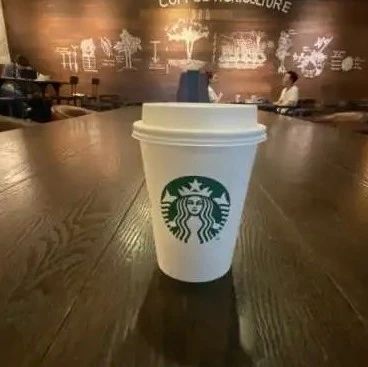
Core Viewpoint - Starbucks is adapting its strategy in response to increasing competition from local brands by introducing new concepts like "study rooms" and lowering prices on non-coffee products to attract more customers and enhance the "third space" experience [1][3]. Group 1: New Initiatives - Starbucks has launched "Starry Study Rooms" in select stores in Guangdong, Guangxi, and Hainan, providing free study space, power outlets, and other amenities without mandatory purchases [1][2]. - The study rooms are designed to create a summer learning environment and will be expanded to more locations in the future [1]. Group 2: Pricing Strategy - In June 2025, Starbucks will reduce prices on several non-coffee products, with average price cuts of around 5 yuan for large sizes, moving many items from the 30-40 yuan range to the 20 yuan range [3]. - This price reduction does not apply to core coffee products, indicating a targeted approach to attract a broader customer base [3]. Group 3: Market Expansion - Starbucks is accelerating its expansion into lower-tier markets, with 40% of new stores located in townships, bringing the total number of stores in China to 7,758 by March 2025 [3]. - The company has closed nearly 20 flagship stores in 2024, primarily in competitive regions like Jiangsu, Zhejiang, and Guangdong, reflecting a strategy of "closing in first-tier cities while opening in county-level markets" [3]. Group 4: Ownership Changes - Starbucks is actively pursuing a plan to sell its stake in the China business, having received multiple acquisition proposals from various investors, including Hillhouse Capital and KKR [4].
自提30个冰淇淋被店员“背刺”,蜜雪冰城回应
Guan Cha Zhe Wang· 2025-07-23 11:41
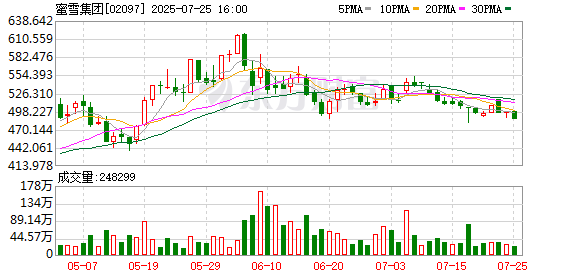
Group 1 - The incident involving a customer at a Mixue Ice Cream store highlights potential service quality issues within the company, as the customer reported negative interactions with staff when attempting to pick up 30 ice creams [1] - The store's response indicates a recognition of the situation, with an apology issued to the customer and a commitment to enhance employee training [1] Group 2 - The coffee market in China is experiencing significant growth, with a 19.54% year-on-year increase in the registration of coffee-related enterprises in the first half of the year, indicating a strong trend towards coffee consumption [2] - Major tea beverage companies, including Mixue Group, are expanding into the fresh coffee sector, leveraging existing resources to reduce operational costs and enhance product offerings [2] - The compound annual growth rate for the fresh coffee market in China is projected to be 19.8% from 2023 to 2028, making it the fastest-growing segment in the ready-to-drink beverage market [2] Group 3 - Five coffee industry projects with a total signed amount of approximately 400 million yuan have been established in Changsha County, focusing on key areas such as coffee equipment research and development, roasting, product processing, and green bean trade [3] - The construction of the largest and most comprehensive coffee industry complex in Central and Southern China is underway in Hunan (Changsha) [3] Group 4 - The first industry standard for the new tea beverage sector has been officially released, addressing quality requirements for raw materials, inspection methods, packaging, transportation, and storage [4] - This standard, effective from January 1, 2026, aims to regulate various components used in the production of fresh tea beverages, including tea leaves, fruits, dairy products, and sweeteners [4]
向“省钱党”妥协,星巴克开放免费自习室
2 1 Shi Ji Jing Ji Bao Dao· 2025-07-23 10:53
Core Viewpoint - Starbucks is introducing "Starry Study Rooms" in select locations in Guangdong, Guangxi, and Hainan, aiming to provide free study spaces for consumers and enhance the "third space" experience [1] Group 1: New Initiatives - The "Starry Study Rooms" feature a shared long table model, offering free seating, power outlets, hot water, and stationery without requiring reservations [1] - Despite the initiative, there has not been a significant increase in foot traffic, with many study seats remaining unoccupied [1] Group 2: Market Strategy - Starbucks has recently lowered prices on non-coffee products, with an average price reduction of around 5 yuan for items like Frappuccinos and iced teas, bringing many products from the 30-40 yuan range down to the 20 yuan range [2] - The company is accelerating its expansion into lower-tier markets, with a total of 7,758 stores in China by March 2025, 40% of which are located in townships [2] - In contrast, Starbucks has closed nearly 20 flagship stores in 2024, primarily in densely branded regions like Jiangsu, Zhejiang, Shanghai, and Guangdong, indicating a strategy of "closing in first-tier cities while opening in county towns" [2] Group 3: Ownership and Acquisition - Starbucks is actively pursuing a plan to sell its stake in the Chinese market, having received multiple acquisition proposals from various investors, including Hillhouse Capital, Carlyle, KKR, and major shareholder of Luckin Coffee, Dazhong Capital [2]