钢铁

Search documents
春节我在岗,为产业向新向优作贡献
Ren Min Ri Bao· 2026-02-24 01:12
Group 1: Steel Industry - Liaoning Benxi Bensteel's hot-rolled production line has successfully broken through design capacity, achieving an annual output of over 6 million tons by 2025 [8] - The production process involves precise control of parameters and material dimensions to produce unconventional steel types, with over 90% of products used in major engineering projects and the new energy vehicle industry [7][8] - The production area is focused on maintaining stable operations through remote control and on-site monitoring to quickly address any issues that arise during the production process [7] Group 2: Renewable Energy - The Qiuzi Substation in Gansu is a key node for national projects like "East Data West Computing," integrating distributed green energy resources for efficient power supply [9][10] - The substation is designed to reduce energy loss during long-distance transmission by increasing voltage, thus supporting both local and provincial power needs [9] - The substation's operations involve rigorous equipment inspections to ensure reliability, especially during critical periods like the Spring Festival [11] Group 3: Robotics Industry - Yushutech's humanoid robots showcased advanced performance during the Spring Festival Gala, demonstrating high-difficulty movements and real-time self-monitoring capabilities [12][13] - The preparation for the performance involved extensive software development and algorithm validation, highlighting the transition from mechanical execution to intelligent adaptive control [13] - The evolution of robotic performances reflects the growing capabilities of China's humanoid robotics industry, marking the beginning of a new phase in technological advancement [13]

一卷汽车板的新春诞生记
Xin Hua Cai Jing· 2026-02-24 01:09
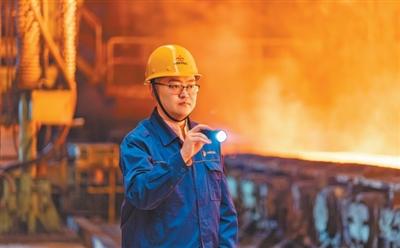
Core Insights - The article highlights the advancements and achievements of Beijing Shougang Cold Rolled Sheet Co., Ltd. in the production of high-end automotive steel sheets, which are now supplied to major automotive manufacturers such as Mercedes-Benz, BYD, Volkswagen, and others [1][2] Group 1: Production and Technology - The company produces approximately 1.5 million tons of automotive sheets annually, showcasing its significant role in the automotive supply chain [1] - Shougang has successfully broken the technological monopoly of international giants in high-end automotive sheet production, achieving self-sufficiency in manufacturing technology [1] - The implementation of an AI scheduling system has led to a 30% reduction in product transition losses and a 20% increase in capacity utilization, while also shortening delivery times by nearly 10% [2] Group 2: Operational Efficiency - The cold rolling process involves complex constraints, with rolling forces exceeding 3,000 tons and strip speeds reaching 1,200 meters per minute, indicating the high precision required in production [1] - The company manages over 1,200 types of personalized orders monthly, with more than 14,000 steel coils running continuously across production lines [1] - The factory has been recognized as a "lighthouse factory" for its digital transformation, utilizing 67 digital use cases to enhance operational efficiency [1] Group 3: Community and Environmental Impact - The company also produces medical oxygen as a byproduct, supplying nearly 60% of Beijing's medical oxygen needs, which is particularly crucial during the Spring Festival [2] - The local government actively supports the integration of innovation within the Shougang ecosystem, fostering collaboration between large enterprises and small to medium-sized businesses [2]
上市公司回购潮是利好吗?关键看这三个信号
Sou Hu Cai Jing· 2026-02-24 01:08
Core Viewpoint - The ongoing trend of share buybacks in the A-share market is gaining momentum, with over 50 companies announcing buyback plans in the first two weeks of January 2026, including major firms like China Metallurgical Group and Yara International. The market's reaction is mixed, with some stocks rising while others experience price corrections post-announcement. The key point of contention is not the buyback itself, but the method of handling the repurchased shares, which can significantly impact company value and shareholder equity [1][10]. Summary by Categories Share Buyback Methods - The method of handling repurchased shares directly influences the impact on company value and shareholder rights. Share cancellation is a "subtractive" approach that reduces total share capital and enhances shareholder returns, while treasury shares are "temporarily stored" and their future use can affect the perceived benefits [3][4]. Share Cancellation - Share cancellation is viewed as a pure benefit, permanently reducing total share capital and increasing earnings per share without changing net profit. This approach signals confidence in the company's future and optimizes resource allocation, especially for companies with excess funds. Data indicates that companies announcing "buyback and cancellation" plans see an average stock price increase of 2.3 percentage points over three months compared to those that only announce buybacks [4]. Treasury Shares - Treasury shares are repurchased shares that are not canceled and do not carry shareholder rights such as dividends or voting. Their benefits are limited to short-term liquidity support, with long-term value dependent on future usage, which could potentially dilute shareholder equity. Common uses include employee stock plans, merger payments, or selling for cash when stock prices rise, which may not sustain long-term stock price increases [5]. Signals to Assess Buyback Quality - Signal One: The source of funds matters; companies using idle or excess funds for buybacks are generally in a stronger financial position and have clearer intentions to boost shareholder confidence, while those using borrowed funds may face cash flow pressures [7]. - Signal Two: The proportion of shares canceled is crucial; buyback plans with a high cancellation ratio indicate stronger benefits, while those with minimal cancellations and high treasury share ratios may pose dilution risks [8]. - Signal Three: The valuation position is important; buybacks at low historical valuations suggest the company recognizes its value, while high valuation buybacks may indicate short-term market manipulation [9]. Investment Strategy - To navigate the buyback trend effectively, companies should prioritize targets with "idle funds + full cancellation + low valuation" characteristics, as these are likely to offer substantial long-term value. Conversely, companies relying on "borrowed funds + high treasury shares + high valuation" should be avoided due to their tendency for short-term speculation. Continuous monitoring of post-buyback actions is essential to assess the true impact on shareholder value [10].
中国银河证券:节后市场如何演绎?
智通财经网· 2026-02-24 00:46
Core Viewpoint - The report from China Galaxy Securities indicates a high probability of market fluctuations upward after the Spring Festival, driven by policy expectations, liquidity support, and industrial trends, while also highlighting the need to monitor overseas uncertainties affecting market sentiment [1] Group 1: Market Dynamics - The A-share market is expected to be driven by policy catalysts around the "Two Sessions," with a focus on policy-oriented industrial themes and opportunities, characterized by "policy hotspot rotation and rapid style switching" [1] - The market logic is anticipated to shift from "policy expectations" to "performance realization" in March, with the 2025 annual reports and subsequent 2026 Q1 reports serving as key anchors for market trends [1] - Companies with performance exceeding expectations may attract significant capital focus [1] Group 2: Investment Opportunities - Key investment themes include: - The "anti-involution" concept driven by improved supply-demand dynamics and industry profit recovery, with a clear investment logic favoring sectors such as non-ferrous metals (precious metals), oil and petrochemicals, basic chemicals, steel, cement, construction materials, and finance [1] - Structural highlights in sectors like robotics and AI models, which gained attention during the Spring Festival, are expected to continue post-holiday [1] - Focus on key areas such as semiconductors, artificial intelligence, new energy, military industry, and aerospace, as the domestic economic logic shifts towards new productive forces [1] Group 3: Policy and Liquidity - Since September 24, 2024, a series of policies aimed at stabilizing expectations and increasing market liquidity have been introduced to support high-quality capital market development and enhance investor confidence [3] - The upcoming "Two Sessions" is expected to emphasize domestic demand, innovation-driven growth, reform, and opening up, further solidifying the long-term stability of the A-share market [3] - Multiple factors, including the relocation of household savings, "fixed income plus" funds entering the market, and wealth management funds, are likely to benefit the A-share market [3] Group 4: Geopolitical Factors - Increased uncertainty in global trade policies and geopolitical conflicts during the Spring Festival may cause short-term disturbances in capital markets, but these do not alter the medium-term trends [3] - Geopolitical tensions are expected to have a positive impulse effect on oil prices, with potential long-term upward pressure if the US-Iran situation escalates [3] - Precious metals are becoming the preferred choice for risk aversion, benefiting related sectors [3]

特朗普拟上调关税至15%:申万期货早间评论-20260224
申银万国期货研究· 2026-02-24 00:44
Group 1: Trade and Tariff Developments - The U.S. Supreme Court ruled that the government's imposition of tariffs under the International Emergency Economic Powers Act was illegal, prompting China to call for the removal of unilateral tariffs and expressing concerns over U.S. trade policies [1] - Following the ruling, President Trump announced an increase in tariffs on global imports from 10% to 15%, raising concerns about U.S. fiscal sustainability and trade policy uncertainty, which supports gold prices [2][19] Group 2: Commodity Market Insights - Gold prices showed a strong upward trend during the Spring Festival, driven by three main factors: changes in U.S. tariff policies affecting dollar credibility, ongoing tensions in Iran boosting safe-haven demand, and rising inflation risks enhancing gold's appeal as an inflation hedge [2][19] - Oil prices increased by over 5% during the holiday period due to geopolitical tensions, particularly between the U.S. and Iran, with potential military actions being considered by the U.S. government [3][13] Group 3: Industry-Specific Developments - The National Energy Administration plans to implement a new energy system and various energy sector plans starting in 2026, focusing on renewable energy projects and advanced technologies [8] - The domestic methanol market is expected to remain strong due to reduced imports and increased demand from downstream sectors, with prices likely to stabilize [14] Group 4: Financial Market Trends - The U.S. 10-year Treasury yield remained stable at 4.037% during the holiday, reflecting economic concerns and inflationary pressures, with expectations for interest rate cuts being pushed back [12] - The A50 futures market showed fluctuations influenced by U.S. stock performance, with potential implications for the A-share market post-holiday [11]

十大券商一周策略:A股将迎“春季躁动”胜率最高阶段,涨价仍是核心配置线索,重视关税税率下降后出口链修复机会
Jin Rong Jie· 2026-02-24 00:10
Group 1 - The core investment theme post-Spring Festival revolves around "price increases" and "revaluation of physical assets," particularly in resource, chemical, and midstream manufacturing sectors, leveraging China's pricing power amid global uncertainties [1][2] - The technology sector, particularly driven by AI, remains a key focus, with sub-sectors like computing power, applications, and robotics expected to remain active due to industrial catalysts [1][2] - The recovery of export chains, non-bank financials, and certain consumer and real estate chains are seen as important supplements to market trends under the backdrop of internal and external demand recovery [1] Group 2 - CITIC Securities emphasizes that price increases are a core configuration clue for Q1, with a focus on sectors like chemicals, non-ferrous metals, power equipment, and new energy, while also increasing exposure to undervalued insurance and brokerage stocks [2] - Historical data indicates that February and the period around the Spring Festival are strong for market movements, with small-cap stocks showing a 100% probability of rising from the Spring Festival to the Two Sessions [3] - Guojin Securities highlights the importance of balancing global physical assets against Chinese assets, recommending commodities like copper, aluminum, and oil, as well as sectors with global comparative advantages like equipment exports and domestic manufacturing [4] Group 3 - Industrial sectors experiencing structural price increases due to supply-demand gaps are primarily in midstream materials and manufacturing, with a focus on chemicals, steel, and high-end manufacturing [5] - The potential for recovery in the export chain is noted, particularly in industries with significant exposure to the U.S. market that will benefit from reduced tariffs [5] - The policy uncertainty surrounding tariffs and trade is expected to favor gold as a risk hedge, with market participants anticipating potential shifts in U.S. trade policy [6] Group 4 - Attention is drawn to the post-holiday inventory replenishment in commodities, with a continued positive outlook on technology applications, particularly in semiconductors and AI [7] - Quantum technology is highlighted as a sector receiving dual catalysts from policy and technological advancements, with significant developments in quantum key distribution networks [8] - The AI industry revolution is identified as a key investment theme, focusing on computing power, storage, and applications, with a strong emphasis on the performance of high-growth sectors [9] Group 5 - Localized opportunities are expected in AI applications linked to overseas trends and robotics associated with the Spring Festival, with a cautious approach to market movements anticipated [10] - The current bull market logic remains intact, with a recommendation for investors to maintain confidence despite short-term volatility, focusing on sectors with high securities ratios [11]
积极因素提振A股开市信心 两大主线配置价值获看好
Zhong Guo Zheng Quan Bao· 2026-02-23 20:18
Group 1 - The A-share market is expected to continue its spring rally in 2026, driven by policy guidance and industry trends, with a focus on technology and resource sectors [1][3] - The market sentiment is currently strong, with limited adjustment pressure, and the potential for a rebound in market indices post-Spring Festival [2][3] - The AI sector is highlighted as a key investment opportunity, with expectations for significant advancements and commercialization in 2026 [3][4] Group 2 - Resource sectors, including chemicals and precious metals, are gaining attention from institutions, particularly due to rising international prices for gold and oil [4][5] - The geopolitical situation may provide a short-term boost to oil prices, while precious metals are seen as a safe haven for investors [5][6] - The upcoming peak season for industrial production and construction in March and April is expected to validate price increases and influence market trends [6]
白宫签下1750亿美元协议,紧接宣布全球加税10%,贸易局势升级
Sou Hu Cai Jing· 2026-02-23 18:25
Core Viewpoint - The article discusses the implications of the WTO ruling against the U.S. regarding tariffs on Chinese steel and aluminum, highlighting the U.S. government's immediate response to impose additional tariffs globally, which escalates trade tensions and disrupts international trade norms [1][4][21]. Group 1: WTO Ruling and U.S. Response - The WTO ruled that the U.S. tariffs on Chinese steel and aluminum, justified under "national security," were unilateral sanctions, requiring the U.S. to refund $175 billion [3][4]. - Following the ruling, the U.S. administration quickly issued a memorandum imposing an additional 10% "defensive tariff" on all imports except for Canada and Mexico, indicating a disregard for international law [4][5]. Group 2: Market Reactions - The announcement of new tariffs led to significant turmoil in global financial markets, with stock markets in Tokyo plummeting and the euro experiencing a sharp decline [5][16]. - The article notes that the situation has escalated beyond typical trade disputes, suggesting a fundamental challenge to established trade rules [5][18]. Group 3: Global Reactions and Countermeasures - In response to the U.S. tariffs, the EU quickly prepared a retaliation list targeting key American products, while Japan and South Korea also considered countermeasures [9][12]. - The article emphasizes that the U.S. approach is not merely about protecting domestic industries but is creating tensions within global supply chains, forcing countries to take sides [9][12]. Group 4: Economic Implications - The U.S. tariffs have led to a significant drop in American agricultural exports to China, with Brazilian soybeans gaining market share [14][21]. - The article highlights that the average tariff rate on Chinese goods entering the U.S. has become excessively high, affecting not only China but also other major exporting countries like Vietnam and the EU [18][21]. Group 5: Strategic Consequences - The U.S. tariffs are seen as a means to fund military expenditures in the Indo-Pacific region, raising concerns about the implications for regional security dynamics [11][12]. - The article concludes that the U.S. strategy of using tariffs as a tool for economic and military advantage may backfire, leading to increased global resistance and a shift towards a multipolar world [21][24].

拱火的来了,“美一众盟友惨了,中国巴西受益最大”
Sou Hu Cai Jing· 2026-02-23 18:15
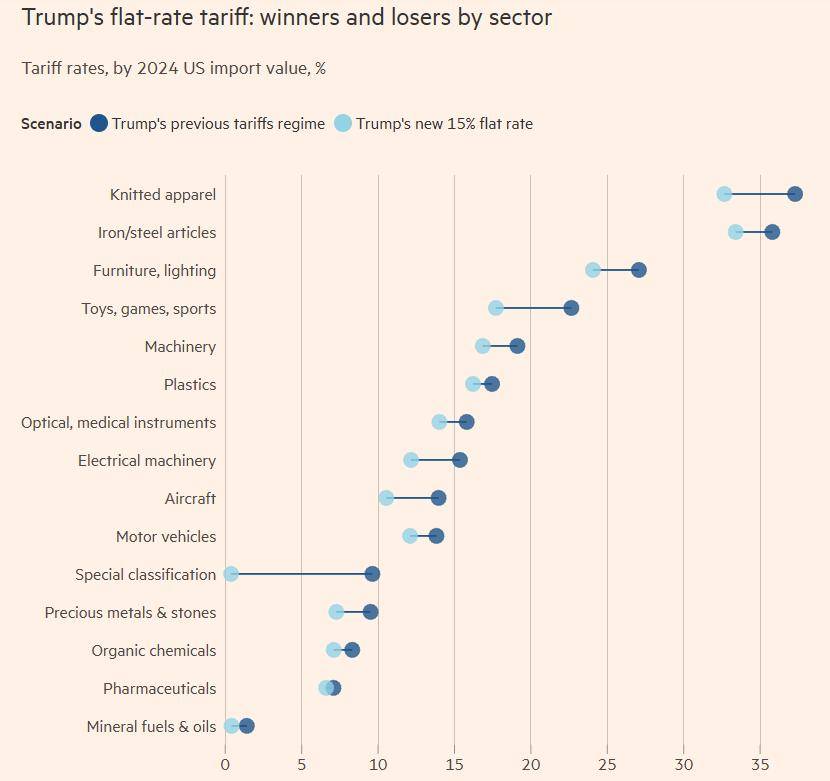
Core Viewpoint - The new 15% global uniform tariff introduced by Trump is expected to benefit countries like China and Brazil, while traditional allies such as the UK, EU, and Japan will face significant losses [1][6]. Group 1: Impact on Countries - Brazil will see the largest average tariff reduction of 13.6 percentage points, followed by China with a 7.1 percentage point decrease [1]. - The new tariff structure will particularly benefit countries previously criticized by the U.S., such as Mexico, Canada, Vietnam, Thailand, and Malaysia, in sectors like apparel, furniture, toys, and plastics [1]. - The UK is projected to be the most adversely affected, with an average tariff increase of 2.1 percentage points, disappointing around 40,000 exporting companies [6]. - The EU will experience an overall average tariff increase of 0.8 percentage points, with Italy and France being the most impacted [6]. Group 2: U.S. Trade Policy and Reactions - The U.S. government has indicated a willingness to utilize legal provisions to impose additional tariffs, signaling a new round of trade negotiations [2]. - U.S. Treasury Secretary and Trade Representative have defended the new tariffs, asserting that all trade partners wish to maintain existing agreements despite the changes [8][10]. - The U.S. Trade Representative plans to initiate investigations into unfair trade practices, particularly concerning overcapacity in Asian countries [10]. Group 3: Future Trade Dynamics - The uncertainty surrounding U.S. tariff policies remains high, with potential for further investigations and tariffs based on the 1974 Trade Act [1][10]. - Trump's upcoming visit to China is aimed at maintaining bilateral stability and encouraging China to fulfill agreements, including purchasing U.S. agricultural products and aircraft [11][12].
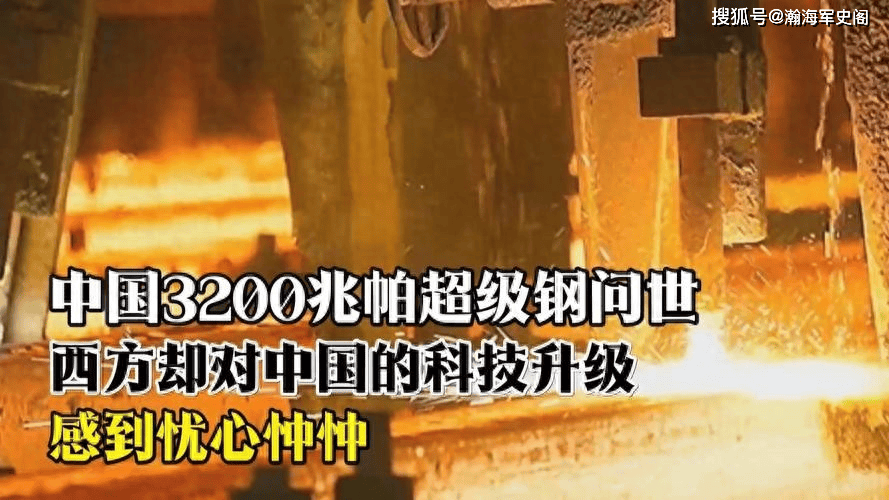
中国3200兆帕超级钢问世,西方却对中国的科技升级感到忧心忡忡!
Sou Hu Cai Jing· 2026-02-23 13:36
Core Viewpoint - The emergence of China's 3200 MPa super steel represents a significant technological breakthrough, showcasing China's ability to overcome previous dependencies on foreign high-end special steel and reshape the global technology landscape [2][4][6]. Group 1: Technological Advancements - The new super steel can withstand a tensile strength of 3200 Newtons per square millimeter, equivalent to lifting three family cars with a steel piece the size of a fingernail [2]. - This steel maintains 30% ductility at -269°C and can endure magnetic fields 400,000 times stronger than Earth's [2]. - The development process involved reducing carbon content to below 0.01% and incorporating trace amounts of vanadium to form nano-level strengthening particles, achieving aerospace-grade purity [4]. Group 2: Market Impact - The production of 3200 MPa super steel has eliminated China's reliance on imported steel, reducing costs by half compared to Western high-end special steel, which previously sold for millions per ton [4]. - The export price of the new steel is 30% lower than similar Western products, leading to a surge in orders from Southeast Asia and Africa, and even attracting interest from German automotive companies [4]. Group 3: Global Reactions - Western nations express concern over the potential disruption of their monopolistic positions in the global supply chain, with the U.S. implementing export controls to limit China's access to related production equipment [6]. - The emergence of China's super steel is seen as a challenge to the established technological dominance of Western countries, prompting the EU to form a "Steel Alliance" to impose restrictions [6]. Group 4: Future Prospects - China aims to advance towards the development of 4000 MPa super steel, continuing to break through high-end material technology barriers [8]. - The rapid development of China's technology is attributed to a collaborative effort across the entire industrial chain, with a significant number of materials engineers being trained annually, surpassing the total in Europe and the U.S. [6][8].