
资产管理

Search documents
【重磅主题论坛】全球视野,多元配置:在资管大海中锚定新航向
Di Yi Cai Jing· 2025-11-25 11:01
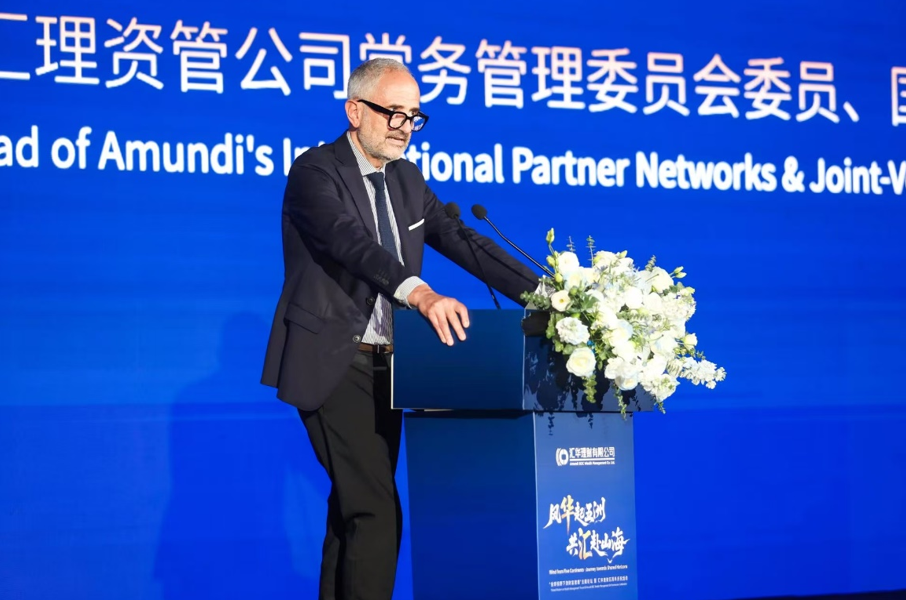
Core Insights - The forum on "Wealth Management from a Global Perspective" highlighted the rapid development of the Chinese market and the opportunities it presents for wealth management firms [1][3] - The importance of establishing resilient investment portfolios was emphasized as a necessary choice for wealth management [10][30] - The need for diversified asset allocation strategies was discussed, particularly in light of the current market volatility and low interest rates [7][30] Group 1: Industry Trends - The Chinese market is seen as a fertile ground for international innovation in wealth management, particularly in Shanghai, which is striving to become an international financial center [3] - The increasing significance of household savings in China presents new growth opportunities for wealth management firms to convert savings into investment potential [3][30] - The shift from traditional asset classes to a more diversified approach, including commodities and alternative assets, is becoming essential for navigating market challenges [33][34] Group 2: Company Strategies - Companies like China Bank are transitioning from a "sell-side" to a "buy-side" advisory model, focusing on global asset allocation and leveraging their extensive networks [10] - Standard Chartered emphasizes its dual role as a connector between Chinese and global markets, offering tailored investment strategies through a comprehensive client engagement framework [18] - Huizhong Wealth Management is focusing on enhancing its cross-border investment capabilities and developing a diverse range of products to meet client needs [30] Group 3: Future Outlook - The forum concluded with a consensus that wealth management should not be viewed as a risky endeavor but rather as a long-term journey based on professionalism and diversification [34] - The integration of technology in wealth management is seen as a key driver for industry transformation, enhancing operational efficiency and risk management [33] - The overall sentiment is optimistic, with expectations for continued growth in sectors like AI, defense, and high-dividend stocks, despite potential geopolitical risks [30]

在浅流动性里寻找真趋势——迈向2026年的多资产思维
Sou Hu Cai Jing· 2025-11-25 10:44
Core Viewpoint - The article discusses the current state of global liquidity, characterized as "shallow liquidity," and its impact on various asset classes, highlighting the volatility and the need for strategic asset allocation in a complex macroeconomic environment [2][7]. Market Trends - In 2025, significant asset price movements were observed, with silver and gold prices increasing by 70% and over 50% respectively, while major stock indices showed mixed performance [3]. - The market is experiencing a "shallow liquidity" scenario where minor adjustments in positions can lead to substantial fluctuations across stocks, bonds, currencies, and commodities [3][7]. Investment Strategies - Goldman Sachs Asset Management predicts that complexity will dominate the market, driven by AI innovations, central bank policy divergence, and geopolitical restructuring, suggesting a need for diversified asset allocation [5][15]. - The report emphasizes the importance of multi-asset, multi-region, and multi-strategy configurations to navigate the evolving investment landscape [15]. Sector Analysis - The A-share market has seen a shift from high-volatility AI hardware and industrial stocks to defensive sectors, indicating a reallocation of funds in response to global deleveraging and interest rate adjustments [4][16]. - The outlook for gold and precious metals remains strong as they serve as a hedge against economic uncertainties and geopolitical risks, suggesting their role in long-term asset allocation [17]. Fixed Income Insights - The fixed income market is transitioning from a uniform duration strategy to a more nuanced approach, focusing on credit differentiation and duration management in response to global inflation and growth disparities [13]. - Analysts recommend a focus on high-grade bonds and emerging market debt to enhance portfolio resilience and yield stability [18].

2025上市公司与金融机构可持续发展典型案例征集
清华金融评论· 2025-11-25 10:42
Core Viewpoint - The article emphasizes the transition of sustainable development from a strategic concept to a critical measure of high-quality economic growth in China, particularly highlighting 2025 as a pivotal year for deepening practical implementation of sustainability initiatives [3]. Group 1: Policy and Regulatory Framework - The Chinese government has introduced several policies, including the "Central Enterprise ESG Special Action Guidelines (2025)" and the "Management Measures for Information Disclosure of Listed Companies," mandating the integration of sustainable development into corporate governance and moving from optional to standardized disclosure of non-financial information [3]. - Financial institutions are evolving from advocates of sustainability to key actors, embedding ESG principles into their strategies and operations, and promoting green finance and responsible investment practices [3]. Group 2: Case Collection Initiative - Tsinghua Financial Review has launched a "2025 Sustainable Development Typical Case Collection" to create a high-level platform for sharing best practices in green finance and sustainability governance, aiming to establish industry benchmarks and facilitate experience sharing [4]. - The collection targets banks, insurance companies, securities firms, asset management institutions, and listed companies, encouraging submissions of innovative and impactful sustainability practices [6]. Group 3: Submission Themes and Requirements - The case collection focuses on three main dimensions: climate change response, social responsibility, and corporate governance, with specific topics including pollution control, waste management, biodiversity protection, and supply chain safety [7]. - Submissions must reflect the positive contributions of financial institutions and listed companies to sustainable development, with a requirement for authenticity and a good reputation [8]. Group 4: Selection and Publication - Selected cases will be reviewed by an expert panel from Tsinghua Financial Review, with outstanding examples published across various media platforms and opportunities for case representatives to share their experiences at hosted events [12].

汇华理财成立五周年:驭变求新 行稳致远
Di Yi Cai Jing· 2025-11-25 10:06
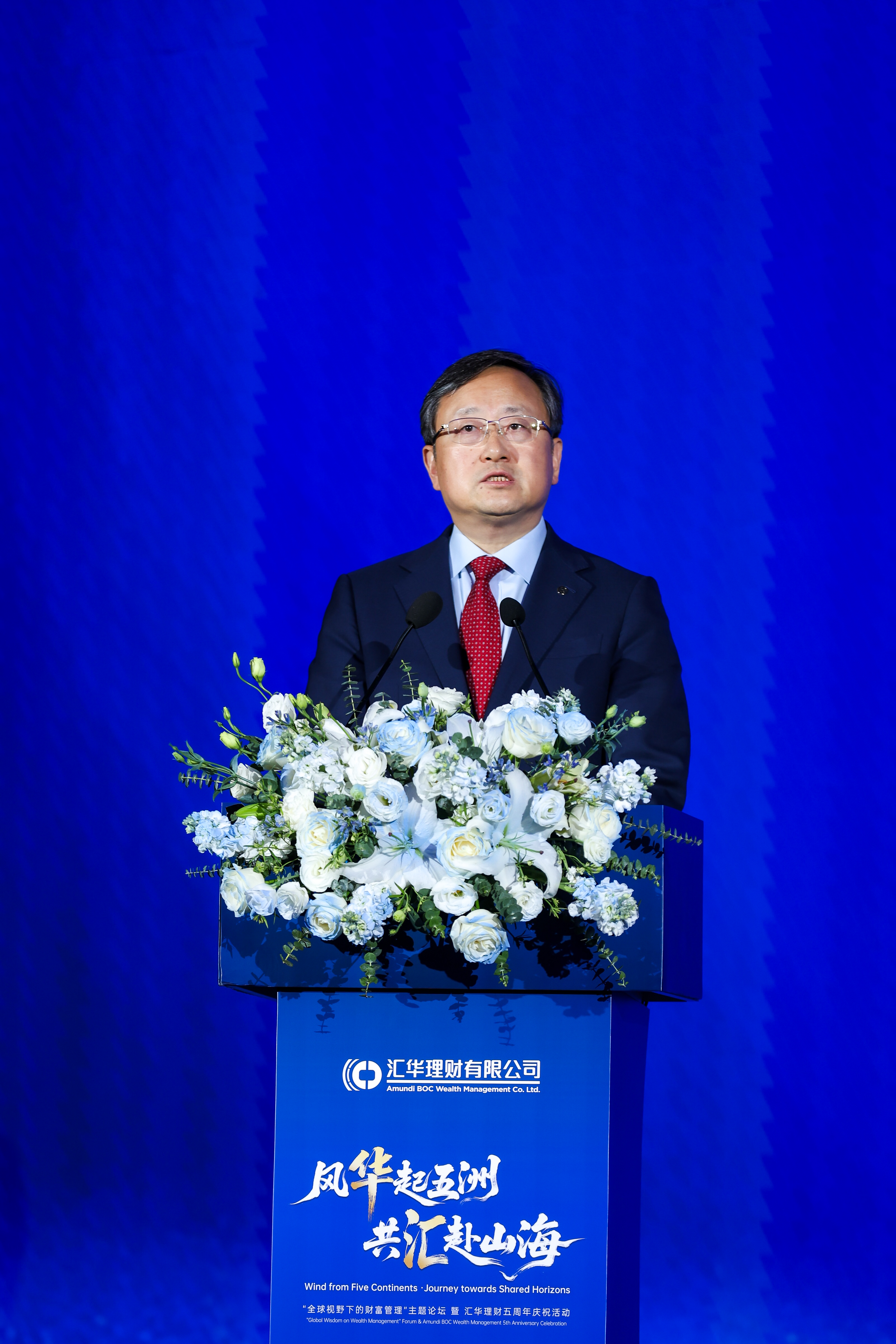
p s Rab p water Ma 东方汇理资管全球首席执行官Valérie Baudson指出,设立汇华理财与东方汇理资管在华长期发展的战略高度契合——我们始终将中国视为全球资产与财富管 理领域最具活力、精细度极高且前景最为广阔的市场之一。东方汇理资管始终并将持续全力以赴地深耕中国市场,并将中国作为集团的核心战略市场。中国 拥有卓越的创新能力,出色的数字化应用水平和强大的财富创造力。中国的中等收入群体不断壮大,投资主体日益成熟,政府坚定发展可持续金融,这些力 量都在塑造着行业的未来。在此背景下,无论是现在还是未来,汇华理财都是我们在华业务的关键支柱。我们将持续投入资源支持其发展,为其注入新的投 资能力、创新产品以及全球最佳实践。此外,东方汇理资管正在将其在跨境投资解决方案、养老金管理以及长期储蓄投资解决方案的全球经验引入中国。 风华起五洲,共汇赴山海。"全球视野下的财富管理"主题论坛暨汇华理财五周年庆祝活动在沪隆重举行。汇华理财有限公司是由总部位于巴黎的欧洲第一大 资管公司东方汇理资管集团和中国银行旗下全资子公司中银理财于五年前合资设立,是中国首家合资理财公司。中国银行行长张辉,东方汇理资管全球首席 执行 ...
东方汇理资管:明年将是经济转型之年 分散投资是最有效防守策略
Sou Hu Cai Jing· 2025-11-25 10:03
智通财经获悉,东方汇理资产管理发布2026年全球投资展望指,2026年将是一个经济转型之年。全球经 济正逐步适应一个"变中有序"的新常态。科技革命正在重塑一个多极化的世界,但同时地缘政治紧张局 势及财政忧虑的持续交织。地缘政治、政策组合及高通胀已由短期扰动转为结构性因素,这些长期变化 并行发展,将深刻影响2026年经济与金融周期的演进。东方汇理资产管理集团首席投资总监Vincent Mortier表示,在股市高度集中、估值偏高的环境下,分散投资仍是最有效的防守策略。投资者需在风 格、行业、企业规模及地区之间重新平衡投资组合,以分散风险并捕捉潜在回报,特别是在新兴市场及 欧洲资产方面。 东方汇理资产管理投资研究院主管Monica Defend表示,全球经济正逐步适应当前"变中有序"的新格 局。科技主导的转型、财政刺激及产业政策为经济活动注入持续动力,造就了一批"新赢家"。与此同 时,通胀已成为结构性课题,投资者在资产配置时必须纳入考虑。 步入2026年,各主要央行预料维持偏鸽取态,加上全球在科技、国防及基建领域的投资持续增强,将为 原本可能放缓的经济周期注入动力。全球经济增长虽逐步放缓,整体表现仍具韧性,主要受 ...
人工智能在资产管理业务的实践探索和应用研究
Zhong Zheng Wang· 2025-11-25 09:40
Core Insights - The article discusses the transformative impact of artificial intelligence (AI) on the asset management industry, highlighting the shift from human-driven decision-making to AI-driven processes [1] - It emphasizes the need for addressing challenges such as model hallucination, funding and talent shortages, and industry-specific limitations in AI adoption [5][6][8] Group 1: Current Development of AI in Asset Management - AI has rapidly penetrated various business segments in asset management due to the industry's rich data, high accessibility, and clear evaluation standards, transitioning from "human brain experience-driven" to "AI-driven" [1] - National policies are guiding the industry, with initiatives like the State Council's 2025 plan promoting AI applications in finance, and local governments providing financial subsidies and tax incentives to support AI integration in asset management [2] - Domestic institutions are significantly increasing investments in AI, with projections indicating that related investments will soar to 41.548 billion by 2027, marking a 111% increase from 2024 [3] Group 2: Applications and Benefits of AI - AI enhances operational efficiency by automating repetitive tasks, reducing operational risks, and providing real-time support for risk management and strategic decision-making [4] - It improves customer experience through personalized services, enabling zero-wait business processing and reducing communication costs, thus broadening the client base [4] - AI boosts research efficiency by processing vast amounts of structured and unstructured data, alleviating information overload, and offering new pathways for quantitative investment strategies [4] Group 3: Challenges in AI Adoption - The industry faces risks of model hallucination and homogenization, where AI models may produce illogical conclusions due to overfitting, particularly in the context of rare events [5] - There is a significant challenge in funding and talent scarcity, as substantial investments are required for computational resources, data governance, and model training, compounded by a lack of professionals with both AI and asset management expertise [6][7] - Industry-specific characteristics limit the depth of AI model deployment, as AI struggles with new business scenarios lacking historical data, leading to hesitance among research personnel to fully embrace AI [8] Group 4: Recommendations and Future Outlook - The article suggests improving model classification management and establishing a robust data governance framework to mitigate risks and enhance regulatory compliance [9] - It advocates for exploring data-sharing mechanisms to improve data utilization efficiency and enhance the training of AI models with high-quality financial knowledge [10] - The industry should focus on multi-channel talent development and collaboration among institutions to build a skilled workforce capable of integrating AI into asset management [11] - A gradual, pilot-based approach to AI implementation is recommended, starting with low-risk scenarios and progressively expanding to core asset management functions [12]
洪灝:中国牛市有基本面支撑,第五浪将涨到你不信
Sou Hu Cai Jing· 2025-11-25 04:19
Group 1 - The current rise in the Chinese stock market is supported by fundamentals, with predictions of entering the "fifth wave" of growth, potentially exceeding general expectations [1][35] - The rapid advancement of the "Yarlung Tsangpo Project" is significant in materializing the concept of "anti-involution," which is expected to alleviate deflationary pressures in the next 3-6 months [1][4] - Industrial profits have shown a notable increase, with a growth rate of approximately 20% in September and October, indicating a recovery in the upstream sector [11][35] Group 2 - The contribution of real estate to GDP has decreased from over 30% to around 10%, while manufacturing now accounts for one-third of global manufacturing value added, highlighting a structural shift in the economy [1][35] - Precious metals like gold and silver have seen significant price increases, with gold rising nearly 70% and silver close to 90% this year, reflecting potential risks in the global credit monetary system [19][22] - The expectation of industrial metals rising is high, as current pricing levels are comparable to those during the 2008 financial crisis, suggesting a potential recovery in this sector [22][35] Group 3 - The Chinese economic cycle operates on a short-term basis of 3-4 years, currently at a relative high point, necessitating supportive economic policies [23][25] - The liquidity environment is improving, which is beneficial for the Chinese stock market, as indicated by the recovery of the M1 money supply from historical lows [29][31] - The long-term economic outlook suggests that as deflationary pressures are managed, the yield curve will steepen, encouraging banks to lend and injecting liquidity into the economy [31][35] Group 4 - The "fifth wave" of the stock market is anticipated to be the most promising, with expectations of significant growth ahead [36][35] - The Chinese market is currently the best-performing globally, with a strong fundamental support for the ongoing bull market [35][36] - The market's upward trend is expected to continue, with the potential for substantial returns as the economic landscape evolves [34][36]
2025年阿布扎比金融周 | 汇聚全球资本领军者 共话“重构资本网络”
Di Yi Cai Jing Zi Xun· 2025-11-25 03:25
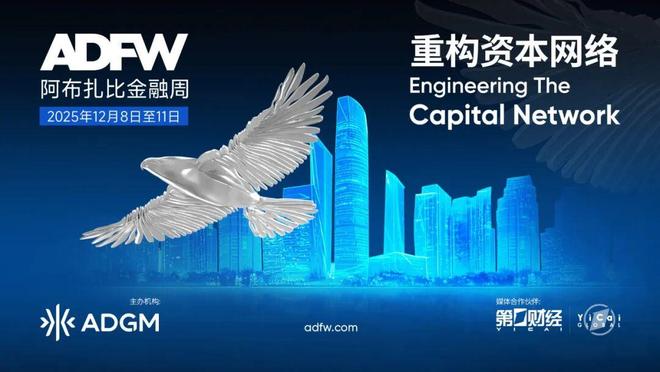
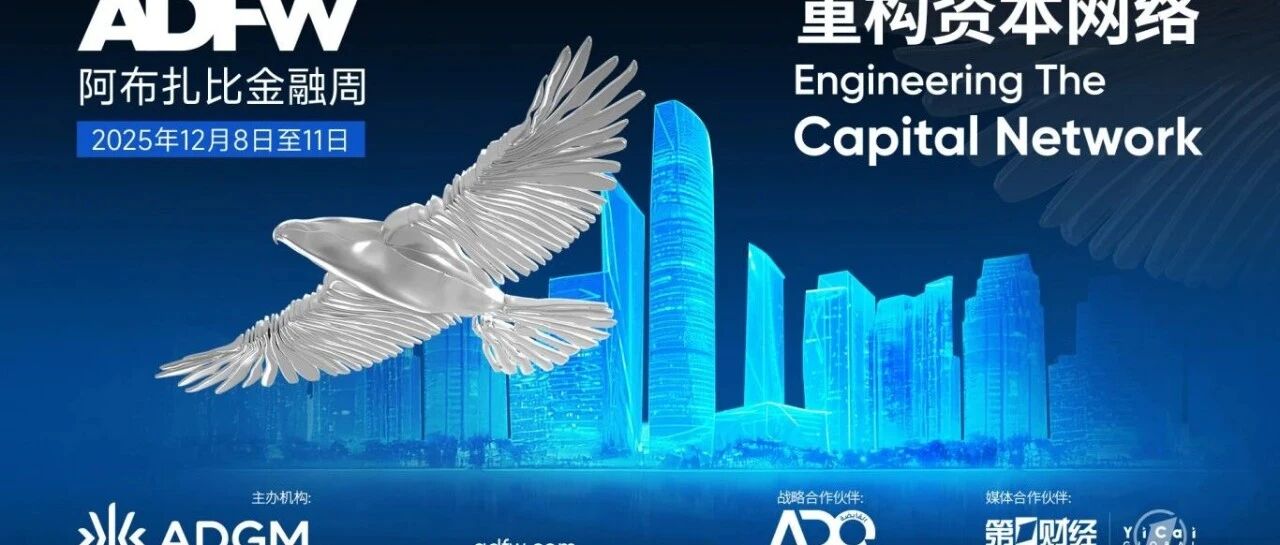
Core Insights - The Abu Dhabi Financial Week (ADFW) in 2025 is expected to attract leaders managing over $62 trillion in assets, representing more than half of the global GDP [1][3] - The event will feature prominent speakers from major global institutions, including Allianz, JPMorgan, Morgan Stanley, UBS, Netflix, World Bank, Prudential, BlackRock, Blackstone, HSBC, and Standard Chartered [1] - The 2025 ADFW will be the largest since its inception, focusing on the future of finance with significant support from Abu Dhabi's leadership [1][3] Event Overview - The ADFW will take place from December 8 to 11, 2025, hosted by the Abu Dhabi Global Market (ADGM) and in partnership with Abu Dhabi Development Holding Company (ADQ) [1] - The agenda includes over 60 major events and more than 300 thematic discussions, with around 750 world-class speakers expected [3] Strategic Importance - The ADFW aims to establish Abu Dhabi as a global financial hub, facilitating connections among policymakers, capital giants, and technology pioneers [3] - ADQ emphasizes the role of capital in accelerating infrastructure development, enhancing economic competitiveness, and promoting sustainable growth [3] Key Themes and Discussions - The official theme "Reconstructing Capital Networks" will guide discussions on the future of global finance, including AI-driven financial innovation, global capital flows, inter-institutional strategic cooperation, regulatory evolution, and building sustainable financial systems [4] - The first day will feature the "Global Markets Summit" and the "CNBC New Energy Finance Forum," focusing on macroeconomic forces reshaping global capital networks [4] Highlighted Activities - The third day will include the "Abu Dhabi International Dispute Resolution Forum," "Abu Dhabi FinTech Conference," and discussions on AI integration in financial services, blockchain, and decentralized finance [5] - The closing day will focus on sustainability and ESG themes, featuring the "Abu Dhabi Sustainable Finance Forum" and the "EU-GCC Financial and Investment Green Transition Forum" [5]
2025年阿布扎比金融周 | 汇聚全球资本领军者 共话“重构资本网络”
第一财经· 2025-11-25 03:17
Core Insights - The Abu Dhabi Financial Week is expected to attract leaders from institutions managing over $62 trillion in assets, representing more than half of the global GDP [1][5] - The event will feature high-profile speakers from major global institutions such as Allianz, JPMorgan, Morgan Stanley, and the World Bank, highlighting its international significance [2][5] - The 2025 Abu Dhabi Financial Week will be the largest since its inception, with over 60 major events and more than 750 world-class speakers scheduled [5][6] Event Highlights - The event will be hosted by the Abu Dhabi Global Market (ADGM) and supported by the Abu Dhabi Development Holding Company (ADQ), aiming to establish Abu Dhabi as a global financial hub [3][6] - Key themes will include the role of capital in accelerating infrastructure development, financial innovation driven by artificial intelligence, and the evolution of regulatory paradigms [6][7] - The agenda includes significant discussions on global wealth distribution, macroeconomic forces, and the impact of geopolitical risks on financial markets [7][8] Specific Sessions - The first day will feature the "Global Markets Summit" and the "CNBC New Energy Finance Forum," focusing on the restructuring of global capital networks and the transition of the energy system [6][7] - The second day will host the "Abu Dhabi Asset Management Conference" and the "Global Financial Regulatory Summit," addressing the reshaping of family offices and investment opportunities [7] - The final day will emphasize sustainability and ESG themes, including the "Abu Dhabi Sustainable Finance Forum" and the "EU-GCC Financial and Investment Green Transition Forum" [8]
海外资管机构月报【国信金工】
量化藏经阁· 2025-11-25 00:08
Group 1: Monthly Performance of US Public Funds - In October 2025, the median performance of US equity funds was stronger than bond funds but weaker than international equity and asset allocation funds, with median returns of 0.56%, 0.89%, 0.51%, and 1.20% respectively [1][7][10] Group 2: Fund Flows and Inflows - In October 2025, active management funds saw a net inflow of $19 billion, while passive funds had a net inflow of $111.8 billion [8][20] - Open-end bond funds had a significant net inflow of $27.5 billion, while equity funds experienced a net outflow of $97 billion [25][23] - Among ETFs, equity and bond ETFs had net inflows of $104.4 billion and $49 billion respectively [25][23] Group 3: New Fund Issuance - A total of 62 new funds were established in October 2025, including 58 ETFs and 4 open-end funds, with 50 being equity funds, 10 bond funds, and 2 asset allocation funds [41][37] Group 4: Insights from Leading Asset Management Firms - Key themes from leading asset management firms included the outlook on US macroeconomic policies and foreign investment perspectives on the stock market [4][44] - The Federal Reserve's recent decision to lower interest rates by 25 basis points reflects a shift towards supporting the labor market amid rising employment risks [47] - Digital assets are expected to see increased institutional participation, with a focus on enhancing their utility beyond passive holding and speculation [47][48]
