券商

Search documents
重上井冈山 | 谈股论金
水皮More· 2025-11-06 09:42
Core Viewpoint - The A-share market shows a strong rebound, with major indices collectively rising, particularly driven by technology stocks and financial sectors, indicating a shift in market dynamics [2][3][4]. Market Performance - The Shanghai Composite Index closed at 4007.76 points, up 0.97%, while the Shenzhen Component Index rose by 1.73%, and the ChiNext Index increased by 1.84%. The STAR Market 50 Index saw the highest gain at 3.34% [2][3]. - The total trading volume in the Shanghai and Shenzhen markets reached 20.55 billion, an increase of 1.83 billion compared to the previous day [2][4]. Sector Analysis - Technology stocks have significantly influenced the indices, with notable gains in semiconductor and electronic component sectors. The financial sector, particularly brokerage firms, also contributed to the index's rise, with CITIC Securities playing a key role [3][4]. - The insurance sector performed strongly, with an increase of 1.78%, while the banking sector saw a slight decline of 0.26%, which did not adversely affect the overall index [3][4]. Individual Stock Performance - In the Shanghai market, stocks like "Jilian Haizhong" and "Hanwha" saw gains around 9%, while in Shenzhen, CPO-related stocks performed well, with "Yizhong Tiansheng" averaging a 4% increase [3][4]. - Despite the overall index gains, individual stock performance was mixed, with 2861 stocks rising and 2200 falling, indicating a divergence between index performance and individual stock movements [4]. Capital Flow - The net inflow of main funds was relatively small at 1.2 billion, with 2.2 billion net inflow in the Shanghai market and a 1.05 billion outflow in the Shenzhen market. Northbound funds contributed a net inflow of 5.9 billion, driving the indices higher [4][5]. - The sectors attracting the most capital inflow included semiconductors, electronic components, and automotive parts, while funds flowed out of previously popular sectors like electric grid equipment and cultural media [4][5]. Regional Market Comparison - The Hong Kong Hang Seng Index experienced a strong rebound, closing up 2.12%, outperforming the A-share market [5]. - In the U.S. market, the semiconductor sector showed a strong rebound, although specific stocks like Nvidia and Palantir faced declines, indicating potential volatility in the tech sector [5].


突然爆发!多股涨停!
Zheng Quan Shi Bao· 2025-11-06 09:13
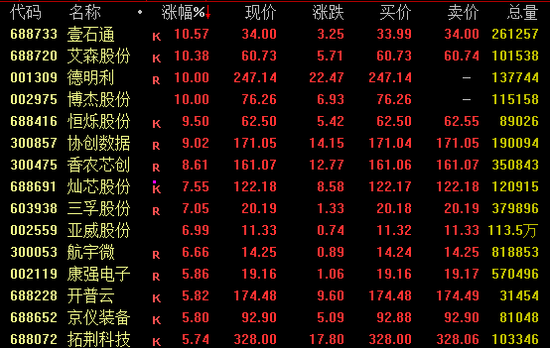
Market Overview - A-shares rebounded on November 6, with the Shanghai Composite Index returning above 4000 points, and the ChiNext Index rising nearly 2% [1] - The total trading volume of the A-share market exceeded 2 trillion yuan, with the Hong Kong market also seeing gains, as the Hang Seng Index rose over 2% [1] Sector Performance - Nearly 2900 stocks in the market were in the green, with the storage chip concept regaining strength, highlighted by stocks like Demingli hitting the daily limit [2] - The phosphorus concept stocks surged, with companies like Qingshuiyuan and Chengxing Co. reaching their daily limit [8] - The semiconductor sector saw significant gains, with stocks like Changguang Huaxin and Hanwha Microelectronics experiencing notable increases [4] Storage Chip Market Dynamics - The global storage chip market is facing unprecedented structural supply-demand imbalances due to surging demand from data centers for DRAM, leading to supply shortages [5][6] - Samsung Electronics has suspended DDR5 contract pricing, prompting other manufacturers like SK Hynix and Micron to follow suit, resulting in a 25% increase in DDR5 spot prices within a week [5][6] - Analysts predict that DDR5 spot prices may rise by 30% to 50% in the upcoming quarter due to these supply constraints [6] Phosphorus Industry Insights - The phosphorus chemical industry is expected to maintain its favorable outlook, driven by the non-renewable nature of phosphorus ore and increasing environmental regulations [10] - The recent price increase in yellow phosphorus is attributed to reduced production and recovering demand for electrolyte raw materials, with the yellow phosphorus spot price reaching 22,200 yuan per ton [9][10] AI Industry Chain Activity - The AI industry chain, particularly CPO concepts, saw renewed activity, with stocks like Yuanjie Technology and Dongtianwei achieving significant gains [11] - The demand for AI data centers is projected to grow rapidly, with strong performance expected in related sectors such as advanced storage and logic expansion [12]



突然爆发!多股涨停!
证券时报· 2025-11-06 09:06
Market Overview - A-shares rebounded on November 6, with the Shanghai Composite Index returning above 4000 points, and the ChiNext Index rising nearly 2% [1] - The total trading volume of the A-share market exceeded 2 trillion yuan, indicating increased market activity [1] Sector Performance - Nearly 2900 stocks in the market were in the green, with the storage chip concept regaining strength, highlighted by stocks like Demingli and Xiangnong Chip achieving significant gains [2][5] - The phosphorus concept stocks surged, with companies like Qingshuiyuan and Chengxing Co. hitting the daily limit [8][9] - The semiconductor sector saw strong performance, with stocks like Changguang Huaxin and Hanwha Microelectronics experiencing notable increases [4][7] Storage Chip Market Dynamics - The global storage chip market is facing unprecedented structural supply-demand imbalances due to surging AI demand, particularly for DRAM in data centers [7] - Major manufacturers like Samsung have paused DDR5 contract pricing, leading to a 25% increase in DDR5 spot prices within a week [7] - Analysts predict that the quarterly price increase for storage chips could reach 30%-50% due to supply chain disruptions and increased demand for domestic semiconductor materials [7] Phosphorus Industry Insights - The phosphorus chemical industry is experiencing a positive outlook, with the yellow phosphorus index rising over 7% in the past two weeks due to production cuts and recovering demand [10] - The price of yellow phosphorus reached 22,200 yuan per ton, reflecting a significant increase [10] - The scarcity of phosphorus resources and environmental regulations are expected to sustain high prices and improve the industry's overall health [10] AI Industry Chain Activity - Stocks related to the AI industry chain, particularly in the CPO concept, saw active trading, with companies like Yuanjie Technology and Dongtianwei achieving substantial gains [12][14] - The demand for AI data centers is projected to grow rapidly, with strong performance expected in related sectors such as advanced storage and logic chips [14]




恒生科技指数高开高走,半导体板块涨幅居前,中芯国际午后涨超5%
Mei Ri Jing Ji Xin Wen· 2025-11-06 05:40
Group 1 - The Hong Kong stock market indices opened high and continued to rise, with the Hang Seng Tech Index up nearly 2% in the afternoon, driven by gains in tech stocks, metals, and semiconductor sectors [1] - Semiconductor stocks led the gains, with SMIC rising over 5% in the afternoon, attributed to the surge in demand for generative AI training and inference, which is accelerating investments in servers and network facilities [1] - The global GPU market is projected to grow from $77.39 billion in 2024 to $472.45 billion by 2030, indicating rapid growth in the AI chip market in China since the launch of DeepSeek [1] Group 2 - As of November 5, the Hang Seng Tech Index ETF (513180) had a latest valuation (PETTM) of 22.52 times, which is in the low valuation range historically, being below 73% of the time since the index was launched [2] - The outlook for the Hong Kong tech sector is positive, benefiting from the current AI-driven industrial trends, potential foreign capital inflow due to expected Fed rate cuts, and continuous accumulation of southbound funds, suggesting a promising fourth quarter for the Hang Seng Tech Index [2] - Investors without a Hong Kong Stock Connect account can consider the Hang Seng Tech Index ETF (513180) for exposure to core Chinese AI assets [2]
国泰海通晨报-20251106
GUOTAI HAITONG SECURITIES· 2025-11-06 05:19
Group 1: Asset Allocation Strategy - The report emphasizes a shift from a barbell strategy to a quality strategy in asset allocation, highlighting opportunities in both technology and non-technology sectors as part of a broad revaluation of the Chinese market [2][9][18] - The report suggests a bullish outlook on Chinese A/H shares, driven by accelerated economic transformation and increased asset management demand due to declining risk-free interest rates [24][25] - It anticipates a moderate recovery in the Eurozone economy in 2026, recommending a benchmark allocation, while suggesting an underweight position for Indian stocks due to uncertainties [24][25] Group 2: Bond Market Insights - The report predicts a slight upward trend in domestic bond yields, influenced by a stable yet slightly easing monetary policy and positive fiscal policy orientation [3][25] - It notes that U.S. Treasury yields may decline moderately due to easing inflation expectations and a resilient economy [3][25] Group 3: Commodity Market Outlook - The report maintains a bullish stance on gold and copper, citing a long-term view on gold's monetary attributes and a structural demand for copper driven by AI infrastructure and grid upgrades [4][26] - It highlights that oil prices are under pressure due to oversupply, while copper prices are supported by supply constraints [4][26] Group 4: Pharmaceutical Industry Analysis - The report indicates a significant increase in the total market value of pharmaceutical stocks held by public funds, rising from 300.9 billion to 409 billion yuan, a 35.9% increase [10][27] - It notes that the proportion of pharmaceutical stocks in public fund holdings has increased to 10.53% as of Q3 2025, reflecting growing confidence in the sector [12][27] - The report identifies chemical preparations, other biological products, and medical devices as the leading segments within the pharmaceutical sector [12][27] Group 5: Gaming Industry Performance - The gaming industry has shown strong growth, with Q3 2025 revenues reaching 30.362 billion yuan, a year-on-year increase of 28.6% [29][30] - The report highlights the positive impact of new product launches and a stable regulatory environment on the gaming sector's performance [29][30] - It emphasizes the importance of high-quality product reserves and overseas expansion for companies in the gaming industry [29][30]
深夜食堂第十三季|对话国泰基金张容赫:“稳”是一种被低估的力量
Zhong Guo Ji Jin Bao· 2025-11-06 05:13
Core Viewpoint - The concept of "stability" is undervalued in volatile markets, as articulated by Zhang Yonghe of Guotai Fund, emphasizing that it is not conservative but rather an active management strategy aimed at optimizing the investment experience and ensuring long-term stability [1][2]. Group 1: Market Conditions - The Shanghai Composite Index successfully broke the 4000-point barrier on October 28, marking the first time since August 18, 2015, but experienced slight fluctuations on the same day, indicating market volatility [4]. - The current market is characterized as a "structural market" rather than a typical bull market, with only 10% to 20% of stocks doubling in value since September 24, 2022, primarily in small-cap and AI-related sectors [5][6]. Group 2: Investment Strategy - The investment strategy focuses on controlling portfolio volatility to achieve stability during market fluctuations, with a neutral overall position that has resulted in significantly lower drawdowns compared to the market average [6][7]. - Zhang Yonghe emphasizes macroeconomic research as a core element of investment decisions, aiming to identify turning points and opportunities based on economic trends, corporate earnings, and liquidity conditions [7][8]. Group 3: Portfolio Management - The investment approach incorporates a strong contrarian mindset, suggesting that opportunities often arise when assets are overlooked by the market [9]. - The strategy involves dynamic portfolio management, adjusting asset allocations based on market conditions and the relative value of assets, ensuring a balance between different investment styles [10][13]. Group 4: Enhancing Investor Experience - The ultimate goal of a stable investment strategy is to enhance the investor's experience by minimizing significant or prolonged losses and maintaining a smooth upward trajectory in returns [15]. - Zhang Yonghe's philosophy aligns with the idea that a positive investment experience is paramount, allowing investors to feel secure in their equity market investments without the stress of timing the market [15].
爆发!多个板块 涨停潮
Zheng Quan Shi Bao· 2025-11-06 04:59
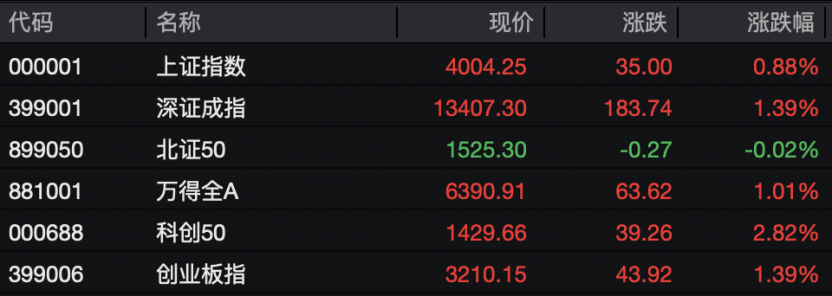
Market Overview - The Shanghai Composite Index has returned above 4000 points, closing at 4004.25 with an increase of 35.00 points or 0.88% [4][3] - The Shenzhen Component Index and the ChiNext Index also performed well, both showing gains of over 1% [3] Sector Performance - The power equipment sector saw significant gains, with the Shenwan Power Equipment Index rising over 2% and reaching a new high for the year [6] - Multiple stocks within the power equipment sector hit the daily limit, including Huasheng Lithium, Zhongneng Electric, and Haike Xinyuan, with increases exceeding 10% [6][7] - The electronics sector also performed strongly, with a rise of over 2%, featuring stocks like Changguang Huaxin and Greenda hitting the daily limit [8] - The non-ferrous metals sector showed robust performance, with gains close to 3%, highlighted by Longda Co. rising over 15% and several other stocks reaching the daily limit [9] Notable Stocks - In the power equipment sector, notable performers included: - Huasheng Lithium: 64.97, up 19.87% [7] - Zhongneng Electric: 10.42, up 13.26% [7] - In the electronics sector, key stocks included: - Changguang Huaxin: 80.27, up 20.00% [8] - Greenda: 31.85, up 10.02% [8] - In the non-ferrous metals sector, significant stocks included: - Longda Co.: 27.84, up 15.04% [9] - China Aluminum: 10.86, up 10.03% [9] Hong Kong Market - The Hang Seng Index has also shown positive movement, returning above 26000 points, closing at 26361.40 with an increase of 425.99 points or 1.64% [12][11] - Key stocks in the Hang Seng Index included China Hongqiao, SMIC, and China Life, which saw notable gains [11] Corporate Actions - Yuejiang announced a placement of new H-shares at a price of 46.80 HKD per share, aiming to raise approximately 771 million HKD to support the development of high-speed collaborative robots and enhance market exposure [14]
铝强势领跑有色板块,行业利润高位再扩张 | 券商晨会
Sou Hu Cai Jing· 2025-11-06 04:48
Group 1 - The long-term price trend of gold is highly correlated with geopolitical and economic conditions, with upward drivers typically stemming from geopolitical turmoil and weak U.S. economic performance [1] - Current downward risks for gold prices include a recovering U.S. economy, hawkish Federal Reserve policies, strong fiscal discipline in the U.S., easing geopolitical tensions, and global central banks selling gold, none of which are currently significant [1] - In the long term, gold is expected to benefit from the expansion of global liquidity and increased preference due to risks associated with de-globalization [1] Group 2 - Listed securities firms and large brokerages reported a year-on-year net profit growth of 62% and 56% respectively for the first nine months of 2025 [2] - Key changes in the third quarter for large brokerages include continued total asset expansion, growth in financial investments and client funds, increased self-operated leverage, significant growth in brokerage services, and a recovery in investment banking [2] - The operating environment for brokerages is improving, with enhanced performance elasticity and sustainability, making the sector's valuation repair opportunities attractive [2] Group 3 - The demand for electrolytic aluminum grew by 3.9% from January to September, exceeding market expectations [3] - The market anticipates a 2.5% growth in domestic electrolytic aluminum consumption by 2025, driven by better-than-expected performance in new energy vehicles and photovoltaics [3] - The profitability of the electrolytic aluminum industry is expanding at high levels, improving the earnings and dividend capabilities of aluminum companies [3]



突然集体爆发!A股这一板块,涨停潮
Zheng Quan Shi Bao· 2025-11-06 04:45
Market Overview - The A-share market opened strongly on November 6, with the Shanghai Composite Index surpassing 4000 points, the Sci-Tech 50 recovering 1400 points, and the ChiNext Index breaking through 3200 points, indicating a positive market sentiment [1] - The overall trading volume showed a moderate increase, reflecting heightened investor activity [1] Sector Performance - The power equipment, semiconductor, defense, and agricultural chemical sectors led the gains, while forestry, broadcasting, Hainan Free Trade Zone, and short drama gaming sectors experienced declines [2] - The power equipment sector continued to strengthen, with the energy storage industry showing significant activity and the sector index reaching a historical high [4] Individual Stock Highlights - Several stocks in the energy storage sector, such as Baobian Electric and Hezhan Energy, opened with a limit-up, while over 20 stocks, including Chongde Technology and Tongye Technology, saw limit-up or gains exceeding 10% [4] - Notable individual stock performances included Tongye Technology with a 14.04% increase, Zhongneng Electric at 13.26%, and Dadi Electric at 10.76% [5] Defense Industry Insights - The defense and military sector opened strongly, with the aviation equipment segment leading the gains, and the sector index rising over 2% [7] - The defense industry reported significant growth in Q3 2025, with total revenue reaching 196.53 billion yuan, a year-on-year increase of 60.3%, and net profit of 10.69 billion yuan, up 88.8% [9] - The military electronics segment experienced the fastest revenue growth, achieving 52.74 billion yuan in Q3, a 142.5% increase year-on-year [9] Future Outlook - The energy storage industry is expected to maintain a strong growth trajectory, with projections indicating that by September 2025, China's new energy storage installed capacity will exceed 100 million kilowatts, representing a more than 30-fold increase compared to the end of the 13th Five-Year Plan [6] - The defense sector is anticipated to enter a new cycle of fundamental recovery, with core military stocks showing significant performance improvements in Q3, indicating a potential for sustained growth [10]
超2700只个股上涨
第一财经· 2025-11-06 03:48
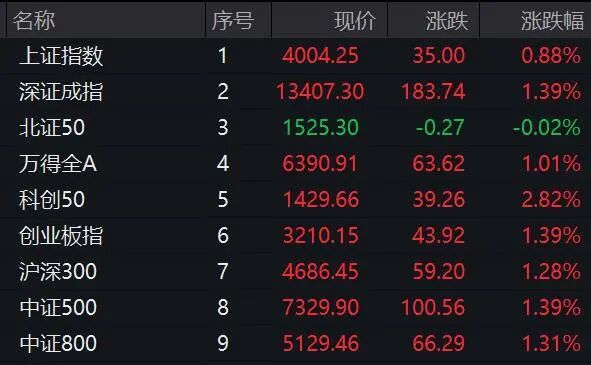
Market Overview - The Shanghai Composite Index rose by 0.88%, returning to the 4000-point level, while the Shenzhen Component Index and the ChiNext Index both increased by 1.39% [3][4]. - The total trading volume in the Shanghai and Shenzhen markets reached 1.32 trillion yuan, an increase of 188 billion yuan compared to the previous trading day, with over 2700 stocks rising [5]. Sector Performance - The semiconductor industry chain experienced significant growth, particularly in computing hardware, which led the market [4]. - Other sectors that performed well included electrical engineering and grid, phosphorus chemical, military industry, and aluminum [4]. - The technology sector saw the Hang Seng Technology Index increase by 2%, with notable gains from companies like SMIC and Hua Hong Semiconductor [6][10]. Notable Stocks - Yangguang Electric Power's stock price hit a historical high, rising over 1% to 204.01 yuan [8]. - The ChiNext Index saw stocks like Haiguang Information and Cambrian Intelligence rise by over 8% and nearly 6%, respectively [7]. - Brokerage stocks strengthened, with Northeast Securities nearing a trading limit increase, and other major brokerages also seeing significant gains [7]. Opening Trends - The A-shares opened collectively higher, with the Shanghai Composite Index up by 0.10%, the Shenzhen Component Index up by 0.37%, and the ChiNext Index up by 0.60% [17][18]. - The Hong Kong market also opened positively, with the Hang Seng Index up by 0.49% and the Hang Seng Technology Index up by 0.63% [19]. Economic Indicators - The People's Bank of China conducted a reverse repurchase operation of 928 billion yuan for 7-day terms at an interest rate of 1.40%, with 342.6 billion yuan of reverse repos maturing today [20]. - The central parity rate of the RMB against the USD was reported at 7.0865, an increase of 36 basis points from the previous trading day [21].