美妆

Search documents
Puig首次设立副CEO
Sou Hu Cai Jing· 2025-09-10 10:01
Group 1 - Puig has appointed Jose Manuel Albesa as the new Deputy CEO to oversee all business units, aiming to implement the group's development vision and strategy across its operations [1] - Marc Puig emphasized the close collaboration with Albesa since 2004, highlighting his passion, understanding of the group's values, and leadership skills as key factors for the group's growth [2] - Albesa has been with Puig for 27 years, leading the brand positioning upgrades for Rabanne, Carolina Herrera, and Jean Paul Gaultier, which have become significant revenue contributors for the company [2] Group 2 - Puig reported a net income of €2.299 billion (approximately ¥191.8 billion) for the first half of the year, reflecting a year-on-year growth of 7.6%, with a net profit of €275 million (approximately ¥22.9 billion), up 78.8% [2] - The fragrance and fashion business achieved a net income of €1.685 billion (approximately ¥140.6 billion), marking an 8.6% year-on-year increase and contributing 73% to the group's total revenue [2]


逸仙电商上海分析实验室获CNAS认证,探索美妆品质新标准
Sou Hu Cai Jing· 2025-09-10 09:06
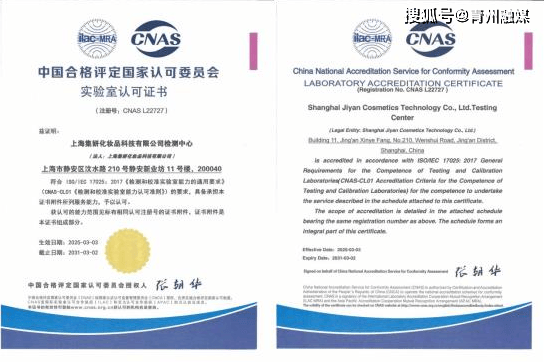
Core Insights - The beauty industry recognizes laboratories as crucial for assessing brand strength, impacting product safety, efficacy, and innovation, thereby building consumer trust [1] - Yatsen E-commerce is increasing its investment in research and development to create high-quality beauty products [1] Group 1 - Yatsen's Shanghai Analytical Laboratory received CNAS certification in April 2025, representing the highest recognition standard in China's testing field and enabling data recognition in over 100 economies globally [1] - The laboratory is equipped with advanced analytical instruments such as high-performance liquid chromatography, gas chromatography-mass spectrometry, and in vitro SPF testing devices, providing precise data support for product efficacy and safety testing [1] - A comprehensive quality assurance system and standardized operating procedures are established in the laboratory, ensuring reliability and consistency in every testing report [1] Group 2 - Yatsen E-commerce plans to integrate global R&D resources to enhance the laboratory's testing and innovation capabilities, accelerating the development and launch of more high-quality beauty products [2] - The company aims to continuously improve brand competitiveness in a steady and pragmatic manner, offering consumers beauty choices that combine safety and experience [2]

市值跌去200亿后,珀莱雅赴港IPO
Sou Hu Cai Jing· 2025-09-10 07:23
Core Viewpoint - The company, Proya, is facing significant challenges as its performance growth slows to a five-year low, prompting a shift towards the Hong Kong stock market for further international expansion and financing opportunities [1][4][29] Group 1: Financial Performance - In the first half of 2025, Proya reported revenue of 5.362 billion yuan, a year-on-year increase of 7.21%, and a net profit of 799 million yuan, up 13.8% [7] - Compared to the previous year, Proya's mid-year performance has significantly slowed, with 2024 showing a revenue growth of 37.9% and a net profit growth of 40.48% [7] - The brand's revenue growth has declined, with a slight decrease of 0.08% in the first half of 2025, marking the first revenue growth decline in five years [7][8] Group 2: Market Strategy and Internationalization - Proya plans to issue H-shares and list on the Hong Kong Stock Exchange to accelerate its international strategy and enhance its financing capabilities [3][4] - The move to Hong Kong aligns with a broader trend in the beauty industry, where approximately 17 beauty companies are expected to pursue IPOs in the first half of 2025 [6] - If successful, Proya will be the only domestic beauty brand listed in both mainland China and Hong Kong [6] Group 3: Management Changes - Since the appointment of the new CEO, Hou Yameng, in 2024, Proya has undergone significant management changes, including the departure of several key executives [12][14][19] - The new management team is focused on internationalization, technology, digitalization, and brand enhancement [18] Group 4: Investment Activities - Proya has made a strategic investment in the makeup brand Huazhihao, acquiring a 38.45% stake, which is seen as a move to strengthen its position in the makeup segment [21][28] - This investment is part of Proya's strategy to address its weaknesses in the makeup category, as its existing makeup brand, Caitang, has not met growth expectations [28]

本土企业主动将战略重心转向自主研发 企业、园区、监管“力往一处使” 抓住国货机遇 上海拿下美妆第一城
Jie Fang Ri Bao· 2025-09-08 02:00
Core Insights - Shanghai has established itself as a leading city in the beauty and cosmetics industry, with 17 brands listed in the "2025 CBE·Hurun China Color Makeup Brand TOP 50" report, significantly outpacing other cities [1] - The retail sales of cosmetics in Shanghai reached 68.5 billion yuan in the first half of the year, accounting for approximately one-third of the national total of 229.1 billion yuan [1] - Over the past decade, Shanghai's cosmetics retail sales have grown from 10% of the national total to a dominant position, reflecting a strategic shift towards domestic product development [1] Industry Challenges - Chinese beauty companies have historically relied on imported raw materials, leading to vulnerabilities in supply chains and pricing [2] - The dependency on foreign technology for core functional ingredients has hindered the competitiveness of domestic brands [2] Strategic Shifts - Local companies in Shanghai are focusing on independent research and development to address industry challenges, with brands like Chando investing in microbial fermentation raw materials since 2013 [3] - Chando has established 20 laboratories and filed 524 patents, showcasing a commitment to innovation and research [3] - New startups like JUDUO and Youshiyan are emerging, leveraging scientific research to carve out niches in the market [3] Academic and Industrial Collaboration - Shanghai's unique resources foster a collaborative environment for research and development, with institutions like Shanghai University of Applied Technology contributing talent to local companies [4][5] - Partnerships with leading hospitals and universities enhance product development, as seen with Chando's collaboration with Huashan Hospital [5] Policy Support - Shanghai has implemented strategic initiatives to accelerate the development of the beauty industry, including the establishment of the "Oriental Beauty Valley" concept [7] - The "Oriental Beauty Valley Cosmetics Element Service Platform" aims to streamline raw material procurement, potentially reducing costs for companies [7] - The platform has already facilitated over 200 tons of raw material transactions, generating sales exceeding 20 million yuan [7] Industry Growth - The Oriental Beauty Valley has become a significant hub for the cosmetics industry, with an estimated scale nearing 100 billion yuan [8] - Shanghai is the largest port for cosmetics imports and exports in China, with a total export value of 25.32 billion yuan in the first five months of the year, representing 35.6% of the national total [8] - Future plans aim for the beauty and health industry in Fengxian New Town to achieve an industrial output value of around 100 billion yuan by 2030 [8]
消研所周报
Xin Lang Cai Jing· 2025-09-08 01:33
Group 1: Company Performance - Proya achieved a revenue of 5.362 billion yuan in the first half of 2025, representing a year-on-year growth of 7.21%, with a net profit of 799 million yuan, up 13.80% [2] - Nongfu Spring reported a revenue of 25.622 billion yuan for the first half of 2025, marking a 15.6% increase year-on-year, with a net profit of 7.622 billion yuan, up 22.1% [5] - Lululemon's Q2 revenue for fiscal year 2025 reached $2.5 billion, with a 7% year-on-year growth, and a 25% increase in revenue from mainland China [3] Group 2: Strategic Initiatives - Proya announced the initiation of its Hong Kong stock listing plan, aiming to enhance its capital strength and competitiveness on an international scale [2] - Lululemon plans to open approximately 15 new stores in the Americas in 2025, with a significant focus on expanding in the Chinese market [3] - Lekker Sports signed an official partnership with the Chinese National Weightlifting Team to enhance its brand image and service quality [4][5] Group 3: Product Launches and Innovations - Zdeer launched the G4 series of bone conduction hearing aids, emphasizing all-day comfort and performance for users [8] - DESCENTE held a 90th-anniversary exhibition showcasing its history and innovations in sports equipment [13] - BIRKENSTOCK introduced the 1774 Becomes Berlin collection, reinterpreting classic shoe designs with modern aesthetics [14]



行业周报:长白山8月客流创新高,美图接入NANOBANANA-20250907
KAIYUAN SECURITIES· 2025-09-07 14:40
Investment Rating - The industry investment rating is "Positive" (maintained) [1] Core Insights - The report highlights a robust growth in domestic travel during the summer of 2025, with a total of 11.9 billion people expected to travel, reflecting a year-on-year increase of 4.3% [5][16] - The report emphasizes the strong performance of Long White Mountain, which received 825,200 visitors in August 2025, marking a 14.9% increase year-on-year, setting a new monthly record [30] - The report discusses the rise of AI-driven creative applications, particularly the success of Meitu's AI features, which have gained significant traction globally [6][32] - The report notes the acceleration of internationalization efforts by Proya, including a strategic investment in Huazhihao, aimed at expanding its global footprint [7][42] Summary by Sections Travel and Tourism - Domestic travel is projected to reach 11.9 billion trips during the summer of 2025, with air travel expected to carry 147 million passengers, a 3.4% increase year-on-year [5][16] - Hotel performance is under pressure, with average room rates declining, particularly in mid-range and economy segments, while luxury hotels remain stable [22][29] - Long White Mountain's visitor numbers in August 2025 reached 825,200, a 14.9% increase from the previous year, with cumulative visitors for the year at 2.67 million, up 11.7% [30] AI and Creative Applications - Meitu's AI features, particularly the Nano Banana, have gained popularity, leading to top rankings in app stores in Thailand and Laos [6][35] - The introduction of the WearWow AI fashion app aims to enhance user experience by integrating shopping capabilities directly into the app [37][39] - As of the first half of 2025, Meitu's paid subscribers in the U.S. surpassed those in Japan, indicating strong growth potential in Western markets [40] Beauty Industry - Proya's investment in Huazhihao aims to leverage the brand's appeal among Gen Z consumers, focusing on high aesthetic and emotional value [7][42] - The report indicates that domestic beauty brands are outperforming international brands on platforms like Douyin, with a notable shift towards higher-priced products [57][59] - The beauty market is witnessing a trend towards premiumization, with a significant increase in the sales proportion of high-priced items [58][60]

毛利率超84%,最贵国货彩妆半年吸金近26亿元
2 1 Shi Ji Jing Ji Bao Dao· 2025-09-07 12:27
Core Viewpoint - 毛戈平化妆品股份有限公司 has reported strong financial performance post-IPO, with a focus on expanding into international markets while maintaining high profit margins and unique business strategies [2][6][17]. Financial Performance - In the first half of 2025, the company achieved revenue of 2.588 billion yuan, a year-on-year increase of 31.3%, and a net profit of 670 million yuan, up 36.1% [2][17]. - The gross margin was 84.2%, slightly down from 84.9% year-on-year, but still high within the industry [2][6]. - The net profit growth rate outpaced revenue growth, indicating strong profitability [6]. Business Segments - The main revenue contributors are makeup, skincare, and makeup artistry training, with the skincare segment showing a growth rate of 33.4%, surpassing the makeup segment's growth of 31.1% [8][9]. - The makeup artistry training segment saw a decline of 5.9% to 67.3 million yuan, attributed to a strategic decision to control enrollment and enhance service quality [8][9]. Sales Channels - 毛戈平 employs a dual-channel strategy, balancing online and offline sales, with offline revenue reaching 1.224 billion yuan (up 26.6%) and online revenue at 1.297 billion yuan (up 39%) [9][8]. - The company has established a significant offline presence with 409 counters and over 2,800 beauty consultants, creating a unique service experience that enhances customer loyalty [9][8]. Market Position and Strategy - 毛戈平 has positioned itself as a high-end brand, successfully competing with international brands by offering products at premium prices, such as a powder priced at 354 yuan and a face mask at 715 yuan [16][17]. - The brand's strategy includes entering international markets with plans for department store counters and online stores, which presents new challenges in diverse cultural and competitive environments [2][17]. Challenges and Future Outlook - Despite strong growth, 毛戈平 faces rising cost pressures, with sales and distribution expenses increasing by 24.8% to 1.169 billion yuan, which is 45.2% of total revenue [9][17]. - The average product price has decreased from 163.8 yuan to 157 yuan, indicating increased market competition [9]. - The new perfume line generated only 11.41 million yuan in revenue, accounting for just 0.4% of total revenue, highlighting the need for new growth drivers [17].
毛利率超84%,最贵国货彩妆半年吸金近26亿元
21世纪经济报道· 2025-09-07 12:14
Core Viewpoint - Mao Geping Cosmetics Co., Ltd. has reported strong financial performance post-IPO, with a revenue of 2.588 billion yuan and a net profit of 670 million yuan for the first half of 2025, indicating a year-on-year growth of 31.3% and 36.1% respectively, while also planning to expand into overseas markets [1][4][12]. Financial Performance - The company achieved a gross margin of 84.2%, slightly down from 84.9% year-on-year, but still remains high within the industry [1]. - Revenue from the core makeup segment was 1.422 billion yuan, accounting for 55% of total revenue, with a year-on-year growth of 31.1% [4]. - The skincare segment outperformed, generating 1.087 billion yuan, representing 42% of total revenue and a year-on-year growth of 33.4% [4]. - The makeup art training business saw a decline of 5.9% to 67.3 million yuan, attributed to a strategic decision to control enrollment and enhance service quality [4][9]. - Online sales reached 1.297 billion yuan, growing by 39%, while offline sales were 1.224 billion yuan, up by 26.6% [5]. Market Position and Strategy - Mao Geping ranked first in the latest Hurun list of China's top 50 makeup brands, surpassing competitors like Carzi Lan and Huaxizi [4]. - The brand's unique "bone structure makeup method" has created a high repurchase barrier and enhanced consumer experience [4]. - The company has established 409 counters across 120 cities, with a significant presence in mid to high-end commercial projects [13]. Challenges and Future Outlook - Despite strong growth, the average product price decreased from 163.8 yuan to 157 yuan, indicating increased market competition [6]. - The company faces rising cost pressures, with sales and distribution expenses increasing by 24.8% to 1.169 billion yuan, accounting for 45.2% of total revenue [5]. - New business segments, particularly the perfume line, generated only 11.41 million yuan, representing 0.4% of total revenue, indicating a need for these segments to scale effectively [14].

转需!2025服贸会“北京礼物”亮点,逛展攻略请查收
Bei Jing Ri Bao Ke Hu Duan· 2025-09-07 06:55
Core Viewpoint - The "Beijing Gifts" exhibition at the 2025 Service Trade Fair will showcase a variety of cultural and creative products, emphasizing Beijing's unique cultural elements and innovative spirit [1][22]. Group 1: Cultural and Creative Brands - The exhibition will feature a diverse range of brands under the "Beijing Gifts" theme, including cultural and creative products, beauty, and trendy items [3]. - Notable brands include "Beijing Era" with enamel products and local art, "Jitu Fang" with traditional rabbit figurines, and "Quantum Song" offering blind box products [4]. - The beauty section will present seven brands, including Tongrentang Health and Zhenran, showcasing products awarded the "Beijing Gifts" title [7]. Group 2: Exhibition Space and Design - The exhibition will utilize a 200 square meter space with a scene-based display to highlight brand development and Beijing's cultural charm [10]. - A recreated courtyard entrance will emphasize traditional Beijing culture, featuring creative couplets and a wall design that reflects the unique characteristics of Beijing's alleys [11]. - The exhibition will also replicate the style of historical commercial streets, showcasing various cultural brands in a vibrant street-like setting [12]. Group 3: Interactive Experiences and Activities - The exhibition will include interactive experiences such as AI photography and personalized fridge magnet machines, enhancing visitor engagement [18]. - Four themed activity days will be organized, focusing on beauty, cultural appreciation, intangible heritage, and creative shopping experiences [20]. - Special interactive characters will be present to engage visitors, along with performances from the "Jixiang Daxiyuan" showcasing traditional opera [20]. Group 4: Visitor Information and Promotions - The exhibition will take place from September 10 to 14, 2025, at the 11th hall of Shougang Park, easily accessible for visitors [22]. - Special promotions will be offered, including discounts for purchases and on-site tax refund services for international guests [22].

RED CHAMBER朱栈:给“纯净彩妆”一个可验证的答案
FBeauty未来迹· 2025-09-06 06:03
Core Viewpoint - The article discusses the evolving landscape of the beauty market, particularly focusing on the concept of "clean beauty" and how the brand RED CHAMBER is addressing the confusion surrounding it through scientific validation and product innovation [5][6][25]. Group 1: Clean Beauty Concept - The term "clean beauty" has become ambiguous, with many brands claiming to be natural without providing substantial evidence [5][6]. - RED CHAMBER's "Green Book" aims to clarify what clean beauty means by establishing a quantifiable and verifiable scientific standard [6][9]. - The brand's clean beauty scientific system is based on skin physiology, toxicological data, green chemistry, and efficacy verification [7][9]. Group 2: Scientific Framework - The "Green Book" consists of five chapters that progressively build a comprehensive framework for evaluating clean beauty [9][10]. - It includes foundational skin science, ingredient safety analysis, scientific research, core research papers, and product application cases [9][10]. - The framework aims to transform the marketing language of "clean" into measurable and regulatory scientific standards [7][13]. Group 3: Product Innovation - The launch of the "Lightweight Essence Foundation" represents the practical application of the clean beauty concept, specifically designed for sensitive skin [15][16]. - The product incorporates high concentrations of Chinese lotus essence for barrier repair and moisture retention, along with innovative technologies for a breathable finish [17][18]. - Clinical tests showed significant improvements in skin hydration and barrier function, supporting the idea that makeup can also provide skincare benefits [21][23]. Group 4: Market Positioning and Growth - RED CHAMBER secured nearly 100 million yuan in funding to enhance its research capabilities and product development in the clean beauty sector [5][30]. - The brand's sales performance indicates a successful strategy, with a 92.79% year-on-year increase in online transactions for 2024 [27]. - The collaboration with a well-known brand ambassador aims to resonate with consumers and promote the clean beauty philosophy [28][30]. Group 5: Industry Standards and Future Outlook - The establishment of the first domestic clean beauty standard in 2024 reflects the brand's commitment to setting industry benchmarks [26]. - The focus on scientific research and local consumer needs positions RED CHAMBER as a leader in the clean beauty market [31]. - The brand's approach emphasizes the importance of sustainability and technological innovation in meeting evolving consumer demands [31].