
生物医药

Search documents
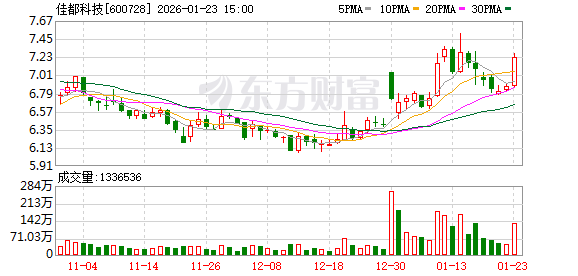
广东省政协常委、佳都科技集团董事长兼执行总裁陈娇:建设具有全球竞争力的“科创特区”
Zheng Quan Ri Bao· 2026-01-25 14:09
Group 1 - The Guangdong Provincial Two Sessions have commenced, with representatives focusing on high-quality development and enhancing public welfare [2] - Chen Jiao, Chairman and CEO of Jiadu Technology Group, presented multiple proposals aimed at fostering innovation and competitiveness in various sectors [2][3] Group 2 - The proposal titled "Innovative Institutional Supply to Activate Industry Ecosystem Construction with Global Competitiveness in Sci-Tech Innovation Special Zones" suggests establishing a Sci-Tech Innovation Special Zone in the Guangdong-Hong Kong-Macao Greater Bay Area, focusing on modern industries like AI and biomedicine [3] - The proposal "Strengthening the Autonomous and Controllable Digital Foundation to Empower Modern Industrial System Construction with Harmony Ecosystem" emphasizes leveraging the Harmony operating system to create a robust digital foundation and promote its application across industries [3][4] - The proposal "Promoting the Global Expansion of the Greater Bay Area Rail Transit Industry" aims to enhance international competitiveness by forming industry alliances and providing comprehensive solutions for rail transit [4] - The proposal "Strategic Layout of Space Computing Infrastructure to Explore New Intelligent Space Tracks" advocates for integrating space computing into new infrastructure planning, focusing on satellite manufacturing and intelligent computing [4]


涨幅不大但趋势向好,大消费/科技等涨幅居前
Ge Long Hui· 2026-01-25 13:19
Group 1 - The Hang Seng Index closed up 0.45% after fluctuating within a narrow range above the midline, with significant gains in the consumer sector [1] - The consumer sector opened strongly and maintained high levels throughout the day, closing up 1.05%, with notable increases from Lao Pu Gold (up 6.78%), Pop Mart (up 6.6%), and Kangfang Biologics (up 3.65%) [3] - The Hang Seng Technology Index experienced a slight pullback after opening but closed up 0.66%, with Xiaomi Group rising 2.84%, Kuaishou up 2.72%, and Alibaba increasing by 2.25% [3] Group 2 - Bank stocks continued to show weakness, opening high but closing down 0.07%, with Industrial and Commercial Bank of China and Chongqing Bank experiencing slight declines [3] - Some banks, including Zhengzhou Bank, Dah Sing Financial, and Zheshang Bank, managed to post small gains despite the overall sector's downturn [3]

北交所定期报告:新股审核及上市提速,关注专精特新小巨人及业绩超预期企业
Guotou Securities· 2026-01-25 11:20
Market Overview - The Shanghai Composite Index increased by 0.52%, while the North Exchange A-share Index rose by 2.33%, outperforming the Shanghai Composite by 1.81 percentage points[1] - The total trading volume for North Exchange A-shares was 132.01 billion yuan, with the North Exchange 50 accounting for 32.4% of this total[1] - The average daily trading volume for North Exchange A-shares was 26.402 billion yuan, down 34.3% week-on-week[1] Valuation Metrics - As of January 23, 2026, the median price-to-earnings (PE) ratio for North Exchange A-shares was 45.61X, compared to 36.5X for the Sci-Tech Innovation Board and 37.2X for the ChiNext Board[1] Individual Stock Performance - The total number of companies listed on the North Exchange reached 290, with notable gainers including Huawi Design and Liancheng CNC, while Kema Materials and Rongyi Precision saw significant declines[2] - From January 1, 2025, to January 23, 2026, 29 companies went public, with the median first-day price change being 271.56% and a median PE ratio of 13.47X[2] Industry Dynamics - The Ministry of Industry and Information Technology plans to accelerate the development of specialized and innovative small and medium-sized enterprises in 2026[3] - A new action plan for the electronic information manufacturing industry aims to foster innovation and growth among specialized enterprises[3] Investment Recommendations - Focus on companies with solid fundamentals and better-than-expected earnings forecasts, particularly in high-tech sectors like renewable energy and artificial intelligence[7] - Attention is also recommended for companies within the North Exchange 50 and specialized indices that have strong fundamentals and attractive valuations[7] Risk Factors - Potential risks include lower-than-expected market demand, intensified industry competition, geopolitical risks, and delays in policy implementation and R&D progress[8]
北京“十五五”目标设置:GDP年均增速4.5%-5%
Xin Lang Cai Jing· 2026-01-25 11:01
Economic Growth and Targets - During the "14th Five-Year Plan" period, Beijing's GDP crossed two trillion yuan milestones, reaching over 4 trillion yuan in 2021 and projected to exceed 5 trillion yuan by 2025, with a growth rate of 5.4% compared to 2024 [1] - The "15th Five-Year Plan" sets an economic growth target of 4.5%-5% for the upcoming period, aiming for better outcomes [2][3] Key Indicators and Sectors - The "15th Five-Year Plan" outlines 29 key indicators across six dimensions, including an average annual GDP growth rate of 4.5%-5%, labor productivity of approximately 580,000 yuan per person, and R&D investment accounting for over 6% of GDP [1][2] - The information service industry, driven by artificial intelligence, is expected to maintain its growth advantage, while the financial sector, including banking and insurance, is projected to continue its stable growth [2][3] Digital Economy and Innovation - The digital economy in Beijing has shown significant growth, with an average annual increase of 10.1% during the "14th Five-Year Plan" period, highlighting the emergence of new digital business models [3] - The "15th Five-Year Plan" aims to establish Beijing as a global benchmark city for the digital economy, focusing on advancements in artificial intelligence and the development of a comprehensive software and hardware ecosystem [4]
险资密集落子私募基金,长线资本抢占产业投资风口
Bei Jing Shang Bao· 2026-01-25 10:25
Core Insights - Insurance capital is increasingly flowing into the primary market, driven by the dual forces of regulatory policies promoting long-term investments and a low-interest-rate environment [1][4] - China Life announced a partnership to establish a private equity fund focusing on artificial intelligence and related applications, with a total investment of 4 billion yuan [3][4] - Since 2025, there has been a surge in insurance capital entering the private equity market, with significant investments in sectors like renewable energy and biomedicine [4][5] Investment Trends - Insurance funds are actively investing in private equity, with a focus on hard technology sectors such as artificial intelligence, integrated circuits, and renewable energy [5][6] - The investment strategy aligns with national strategic directions, emphasizing high growth potential and technological barriers, which are expected to yield stable long-term returns [5][6] - The insurance sector is encouraged to support venture capital through diversified investment tools, enhancing the development of long-term and patient capital [5][6] Future Outlook - Predictions indicate that insurance capital will expand its investment scope to include more hard technology and livelihood-related industries by 2026 [6] - There is an expectation for deeper collaboration models, potentially enhancing direct investment capabilities or linking with industrial capital [6] - Insurance capital is likely to focus more on niche sectors, strengthening research and investment capabilities to navigate uncertainties while adjusting investment rhythms and exit strategies [6]


华兴资本并购与战略投资市场双周报 Vol.146
Xin Lang Cai Jing· 2026-01-25 09:59
Group 1 - Huaxing Capital has established an M&A team since 2009 to provide comprehensive advisory services for innovative economy enterprises in China and globally, amidst a growing demand for M&A in the current uncertain market [1] - China Duty Free Group (601888.SH) plans to acquire DFS's retail business in Greater China for up to $395 million, enhancing its presence in the Hong Kong and Macau tourism retail market and deepening strategic cooperation with LVMH [3] - Jianghuai Microelectronics (603078.SH) announced that its controlling shareholder will transfer 23.96% of shares to Fuxun Technology for a total consideration of 1.848 billion yuan, changing the controlling shareholder to Shanghai Fuxun Technology [4] - Rongsheng Xintai intends to acquire control of Tian Sheng New Materials (300169.SZ) by purchasing 6.29% of shares for approximately 131 million yuan, aiming for a total holding of 18.75% [5] - Honglida (688330.SH) plans to use 341 million yuan of raised funds to acquire 50.93% of Zhongteng Microgrid, enhancing its capabilities in the power sector [6] - WuXi AppTec (2268.HK) has launched a voluntary conditional cash offer for all issued shares of Dongyao Pharmaceutical (1875.HK) at HKD 4.00 per share, with a total consideration of approximately HKD 2.79 billion, aimed at expanding its manufacturing capacity in China [7] - Lianjian Technology (301115.SZ) intends to acquire 55% of Zhongding Testing for 101 million yuan, enhancing its business layout in consumer goods and food testing [8] - JD Logistics (2618.HK) plans to acquire the remaining shares of Debon Holdings (603056.SH) for approximately 3.797 billion yuan and promote its voluntary delisting, aiming to strengthen network integration and operational efficiency [9] - China National Pharmaceutical Group (1177.HK) intends to acquire 100% of Hejiya for 1.2 billion yuan, focusing on innovative drug development in chronic disease areas [10] Group 2 - Baichuan Intelligent has launched the Baichuan-M3 Plus model, achieving a hallucination rate of 2.6%, the lowest globally, enhancing accuracy and reliability in medical scenarios [11] - Lenovo and NVIDIA have announced a collaboration to launch the "Lenovo AI Cloud Super Factory," aiming to transform traditional data centers into efficient AI factories [12] - Meituan has released the open-source "Reconsider" model, which significantly reduces training costs for new tools in complex tasks [13] - Qianwen App has integrated with Alibaba's ecosystem to test AI shopping functionalities, allowing users to order food and purchase items through AI [14] - Google and Apple have reached a multi-year AI collaboration agreement to support Siri with Google's Gemini model and cloud technology [15] - iQIYI announced the resignation of CFO Wang Jun, with Senior Vice President Zeng Ying appointed as interim CFO [16]




如何把握当下市场机会?中欧瑞博吴伟志:看好五大硬资产主线
Sou Hu Cai Jing· 2026-01-25 09:50
Core Viewpoint - The A-share market has entered a strong bullish phase since October 2024, with the Shanghai Composite Index approaching 4200 points and daily trading volume exceeding 4 trillion yuan, indicating a significant market rally [1][2]. Market Cycle Analysis - The current market is characterized as being in the "summer" phase, with active trading, rapid sector rotation, and widespread profit-making, but without signs of extreme exuberance or bubble formation [2][3]. - The market's valuation remains attractive, with the CSI 300's dynamic P/E ratio around 14 times, significantly lower than the S&P 500 and Nasdaq [2][3]. Historical Context and Comparisons - The current market conditions are compared favorably to Japan's historical market performance, highlighting that China's financial system is more stable and its policy responses are more decisive [4][5]. - China's economic transition is supported by strong manufacturing capabilities and the growth of new economic sectors, unlike Japan's experience during its economic downturn [6][7]. Investment Focus for 2026 - The investment strategy for 2026 emphasizes a shift from heavy assets to hard assets, with sectors like rare earths, energy metals, and chemicals gaining pricing power due to global supply constraints [7][8]. - Key structural investment areas include technology innovation, biomedicine, gold and hard assets, revaluation of Chinese manufacturing, and high-dividend assets [8][9][10][11][12].
如何把握当下市场机会?中欧瑞博吴伟志:看好五大硬资产主线
券商中国· 2026-01-25 09:31
Core Viewpoint - The A-share market has entered a new upward cycle since October 2024, with the current phase described as "summer," indicating active trading and sector rotation, but not yet reaching a peak or bubble stage [1][2]. Market Characteristics - The market is currently characterized by high trading volume and broad participation, with the Shanghai Composite Index surpassing 4000 points, signaling the end of debates over bull and bear market transitions [2]. - The dynamic price-to-earnings ratio of the CSI 300 is approximately 14 times, significantly lower than the S&P 500 (about 29 times) and NASDAQ (about 42 times), indicating that the current market rebound is more of a "catch-up" rather than a bubble [2]. Product Cycle Observation - The representative products of the company have only seen a 16%-17% increase since reaching historical highs in June 2025, suggesting that there is still significant upward potential [3]. Economic Comparison - The current fundamental conditions in China are considered stronger than those in Japan during its economic transition, with a more stable financial system and lower policy learning costs [5][6]. - China's manufacturing sector remains globally competitive, with a record trade surplus in 2025, and new economic sectors like renewable energy and digital economy are driving growth [6][7]. Investment Focus for 2026 - The core investment themes for 2026 are shifting from heavy assets to hard assets, with sectors like rare earths, energy metals, and chemical materials gaining importance due to their pricing power in a concentrated global supply environment [8]. - The company emphasizes five structural investment directions: 1. Technological innovation, particularly in AI and commercial aerospace [9] 2. Biopharmaceuticals, with validated global competitiveness [10] 3. Gold and hard assets, which hold value amid global monetary expansion [11] 4. Revaluation of Chinese manufacturing leaders as key supports in a slow bull market [12] 5. High-dividend assets serving as defensive positions [13] Market Dynamics - The current market rally is driven by a combination of policy, valuation, and sentiment bottoms, alongside the early stages of industrial cycles in AI, energy transition, and biotechnology [14].

北京将构建对外开放新高地 扩大服务出口
Zhong Guo Xin Wen Wang· 2026-01-25 05:28
Core Viewpoint - Beijing aims to enhance its foreign trade quality and efficiency, focusing on expanding service exports and supporting key industries such as automotive and biomedicine [1] Group 1: Policy Initiatives - Beijing will build a new high ground for opening up to the outside world, deepening the construction of "two zones" and aligning with international high-standard economic and trade rules [1] - The government plans to implement a 3.0 plan for expanding service industry openness and explore the establishment of free trade pilot zone linked development areas [1] - Actions will be taken to enhance the openness of key parks and promote the differentiated development of comprehensive bonded zones [1] Group 2: Infrastructure and Logistics - The city will expand international flight routes from its aviation hub and strengthen the backbone network of modern logistics [1] - Beijing will leverage various open platforms such as the China International Service Trade Fair and the Zhongguancun Forum to attract high-quality foreign investment projects [1] Group 3: Investment and Cooperation - The report emphasizes the steady expansion of institutional openness and the enhancement of bilateral investment cooperation [1] - Policies will be implemented to encourage foreign enterprises to reinvest domestically, and a full lifecycle service mechanism for foreign-invested enterprises will be established [1] - The city aims to attract more international organizations and multinational corporate regional headquarters [1]
一文速览市政府工作报告!2026年,北京明确这些重点工作
Bei Jing Ri Bao Ke Hu Duan· 2026-01-25 05:26
北京市十六届人大四次会议1月25日开幕。北京市市长殷勇作政府工作报告。 2025年工作回顾 2025年北京市地区生产总值5.2万亿元 报告提出,2025年,我们坚持以习近平新时代中国特色社会主义思想为指导,全面贯彻党的二十大和二 十届历次全会精神,深入贯彻习近平总书记对北京重要讲话精神,加强"四个中心"功能建设、提高"四 个服务"水平,深化"五子"联动服务和融入新发展格局,坚持统筹发展和安全,经济顶压前行、向新向 优发展,社会大局保持稳定,较好完成了市十六届人大三次会议确定的目标任务。全市地区生产总值 5.2万亿元、增长5.4%、高于全国0.4个百分点,一般公共预算收入增长4.8%,城镇调查失业率4.1%,居 民人均可支配收入实际增长4.4%,居民消费价格总体平稳,人均地区生产总值、全员劳动生产率和万 元地区生产总值能耗、水耗、碳排放等多项指标保持全国省级地区最优水平。 308个便民事项实现京津冀跨省自助办 在回顾2025年工作时,报告提出,北京深化京津冀重点领域协同发展,扎实推进通州区与北三县一体化 高质量发展示范区建设,白庙南北检查站完成改造;京津合作示范区加快建设,天津滨海—中关村科技 园新增注册企业6 ...