
餐饮

Search documents
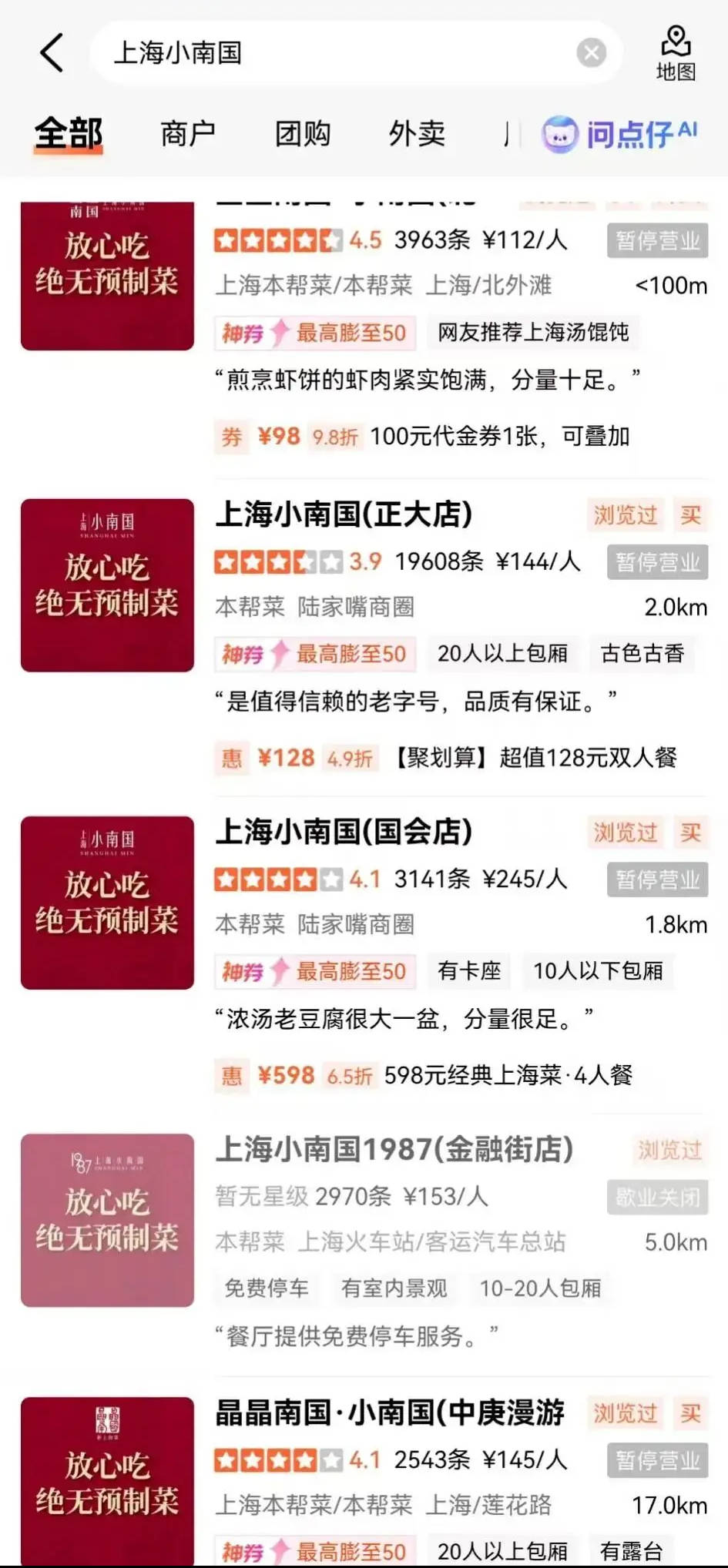
上海小南国近20家门店集体闭店,年夜饭订金与储值卡余额无人处理
Sou Hu Cai Jing· 2026-02-10 05:16
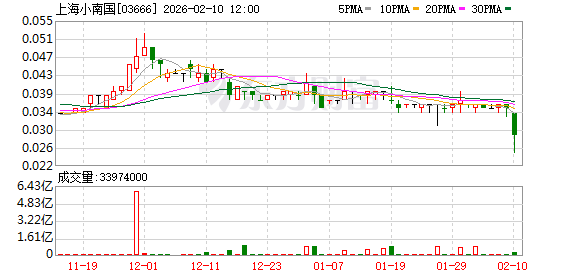
Group 1 - Shanghai Xiaonan Guo has closed nearly 20 stores in Shanghai without formal notification to customers or employees, leading to unresolved issues regarding deposits and stored value cards [1][4] - All Shanghai Xiaonan Guo locations are listed as "closed" or "temporarily closed" on the Dazhong Dianping platform, with reports of unpaid employee wages and a chef strike at one location [1][4] - The company's financial data shows a continuous decline in revenue from 2023 to mid-2025, with cumulative losses exceeding 150 million yuan, and a revenue of only 102 million yuan in mid-2025, resulting in a loss of 18.25 million yuan [4] Group 2 - On January 8, Shanghai Xiaonan Guo attempted to sell its core business segment, Xiaonan Guo (Hong Kong) Catering Group, for 100,000 USD, but the deal did not improve the situation, and the related stores remain closed [6] - The closure of Shanghai Xiaonan Guo has not affected its franchise locations in other cities, such as Wuxi and Zhuhai, which continue to operate normally [6] - As of February 9, the stock price of Shanghai Xiaonan Guo was reported at 0.035 HKD per share, a decline of approximately 98% from its historical peak [6]

新疆消费提质 持续释放活力
Sou Hu Cai Jing· 2026-02-10 04:40
Core Viewpoint - Consumption is the main engine of economic growth and a barometer of people's well-being, with Xinjiang's retail sales of consumer goods reaching 410.78 billion yuan in 2025, marking a 3.6% year-on-year increase and breaking the 400 billion yuan threshold for the first time [1] Group 1: Policy Impact - The "old-for-new" subsidy policy has been fully implemented in Xinjiang, significantly stimulating consumer spending, with 2.373 million products subsidized, leading to a consumption increase of 26.16 billion yuan [2] - The policy's effectiveness is evident as it has reduced consumer costs and boosted demand for major appliances, automobiles, and digital products [2] Group 2: Market Performance - In 2025, Xinjiang's total retail sales of consumer goods grew by 3.6%, with retail sales of above-limit units increasing by 3%, indicating strong market resilience [3] - Retail sales of goods rose by 3.7%, while dining revenue increased by 3.1%, reflecting a recovery in consumer scenarios and a diversified market [3] Group 3: Structural Upgrades - Xinjiang is innovating consumption scenarios, focusing on holiday, nighttime, and convenience consumption, enhancing consumer experience and driving a shift from quantity to quality in consumption [4] - The retail sales of new energy vehicles reached 26.778 billion yuan, up 27.8%, while smart home appliances and wearable devices saw significant growth, indicating a trend towards high-quality and intelligent living [4] Group 4: New Consumption Trends - Online retail sales of physical goods grew by 18.9%, with above-limit units achieving a 54.5% increase in online sales, highlighting the shift towards online consumption [5] - The demand for upgraded products is accelerating, with cosmetics and magazines seeing year-on-year growth of 2.6% and 6.7%, respectively, reflecting a transition towards quality and spiritual enjoyment in consumer behavior [5][6] Group 5: Income Growth - The steady increase in residents' income is a fundamental driver of consumption growth, with per capita disposable income reaching 32,881 yuan, a 6.4% increase [7] - The income gap between urban and rural residents has narrowed, supporting rural consumption and contributing to overall consumption growth [7] Group 6: Service Consumption - There is a notable shift towards balanced spending on goods and services, with per capita service consumption expenditure growing by 7.5%, indicating rising demand in education, healthcare, and tourism [8] - The focus on enhancing consumer experience and optimizing the consumption environment is expected to further stimulate market growth and support high-quality economic development in Xinjiang [8]
江西省新余市市场监管局全力守护市场安全底线
Xin Lang Cai Jing· 2026-02-10 04:36
Group 1 - The Jiangxi Province's Xinyu City Market Supervision Administration is focusing on maintaining fair trade and ensuring public safety through targeted special rectification actions to effectively regulate market order [1] - A crackdown on "unfair clauses" is being implemented, particularly in seven key industries closely related to public life, including extracurricular training for students, catering, housekeeping, property services, utilities, cultural tourism, and e-commerce [1] - A total of 169 business entities were inspected, resulting in 27 rectification notices issued and 17 cases of illegal format clauses being investigated, which has significantly enhanced compliance awareness among operators and improved the market consumption environment [1] Group 2 - Efforts are being made to create orderly agricultural markets, focusing on key areas such as fresh seafood, poultry, and bulk food sales, with strict checks on food purchase records, shelf life, and compliance with documentation requirements [2] - Illegal activities such as selling expired food, unregistered products, and price gouging are being rigorously addressed, with 108 business entities inspected and 6 safety hazards rectified [2] - Enforcement personnel are distributing food safety and consumer rights materials to both operators and consumers to promote relevant laws and consumer knowledge, encouraging lawful business practices and raising public awareness [2]
“小南国”上海所有门店集体停业:员工称数月未见老板露面,上市公司去年上半年末资产负债率已超250%
Mei Ri Jing Ji Xin Wen· 2026-02-10 04:00
Core Viewpoint - The well-known Shanghai local cuisine brand, Shanghai Xiao Nan Guo, has suddenly closed multiple stores in Shanghai without prior notice to employees, leading to confusion and financial distress among staff and suppliers [2][7][8]. Group 1: Company Operations - Shanghai Xiao Nan Guo has been facing operational issues, including unpaid wages for employees, with some workers owed salaries for over three months [8][9]. - The company has been involved in numerous legal disputes with suppliers over unpaid debts, with over a hundred lawsuits filed against its subsidiary for payment issues since 2024 [8][9][15]. - The company’s headquarters has significantly reduced its office space and staff, with only a few employees remaining as of early February 2025 [12][13]. Group 2: Financial Performance - The company, which once boasted over 80 stores and annual revenues of 2 billion yuan, has seen its asset-liability ratio rise sharply from nearly 80% in 2018 to over 250% by mid-2025, indicating severe financial distress [5][15]. - Revenue has plummeted to approximately 300 million yuan, with the Shanghai Xiao Nan Guo brand accounting for nearly 75% of this revenue [14][15]. - The stock price of the company has dropped significantly, closing at 0.035 HKD per share, with a market capitalization of less than 100 million HKD as of February 9, 2025 [14]. Group 3: Strategic Missteps - Analysts attribute the company's decline to poor strategic decisions, including a confusing brand positioning between high-end and affordable dining, and an outdated business model with high fixed costs [15][16]. - The company expanded aggressively after its 2012 IPO, adopting a multi-brand strategy that included acquiring foreign dining brands, which ultimately contributed to its financial troubles [16][17]. - Despite previous interest from potential buyers in 2020, the founder's high valuation expectations have hindered any acquisition attempts, leading to a decline in brand value [16].
富阳四乡镇联动激活新春文旅消费
Hang Zhou Ri Bao· 2026-02-10 03:43
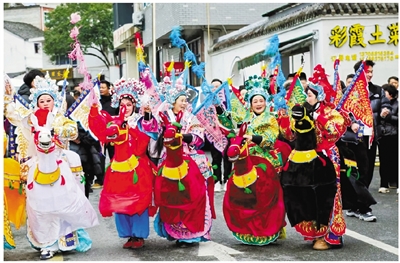
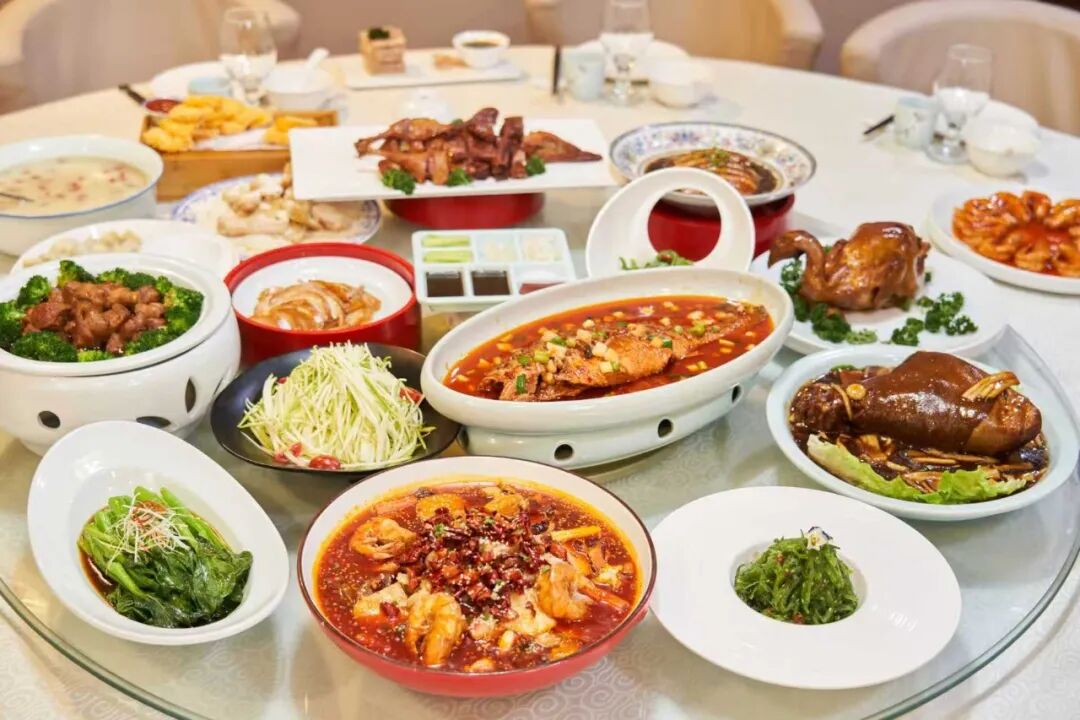
Core Viewpoint - The event "Huyuan Good 'Xi' New Year - 2026 Huyuan Township Folk Experience and Spring Festival Cultural Tourism Consumption Season" aims to revive traditional customs and boost local tourism and consumption during the New Year period [2][6] Group 1: Event Highlights - The event took place from February 7 to 9, featuring traditional customs that attracted many visitors, evoking nostalgic memories of the New Year [2] - Local teams, such as the "Fuyang Team" from the grassroots basketball league, participated in the festivities, showcasing community pride and engagement [2] - A variety of local delicacies were served during communal meals, with prices set at 588 yuan for an 8-person table and 688 yuan for a 10-person table, emphasizing local ingredients and traditional cooking methods [3] Group 2: Cultural Activities - The event included a "Mountain Town New Year Goods Street" with over 20 stalls offering local specialties, such as Huyuan dragon whiskers noodles and various preserved meats, enhancing the festive atmosphere [3] - Traditional performances, including Yue opera and acrobatics, were held throughout the day, contributing to a lively cultural experience [5] - The integration of traditional and modern elements was evident, with activities like tea brewing and showcasing intangible cultural heritage products [4] Group 3: Community Engagement - The event fostered a sense of community, with villagers, tourists, and local athletes gathering to celebrate together, creating a warm and inviting environment [3][5] - The overall experience was described as genuine and heartfelt, with participants expressing joy and nostalgia, reinforcing the cultural significance of the New Year celebrations [6]
包厢靠抢,套餐变小,年轻人把马年年夜饭吃出新花样
3 6 Ke· 2026-02-10 03:35
Core Insights - The market for New Year's Eve dinners is shifting towards refined value competition, with a notable increase in reservations for smaller, more intimate dining experiences as families opt for smaller gatherings [1][5][26] Group 1: Market Trends - The demand for New Year's Eve dinners has surged, with many high-end restaurants and traditional establishments fully booked months in advance [1][4] - Major brands like Quanjude and Haidilao have reported significant increases in reservations, with Quanjude seeing a 16% year-on-year growth in bookings [3][4] - The trend of smaller dining packages (3-6 people) has become popular, reflecting a shift towards lighter, more manageable dining experiences [5][8] Group 2: Consumer Preferences - There is a growing preference for innovative and aesthetically pleasing dishes that align with the "beautiful meal" trend, with restaurants introducing themed menus and unique presentations [11][14] - The rise of pre-packaged meal kits and home dining options has been significant, with a reported 180% increase in sales of pre-prepared dishes for New Year's Eve [20][24] - The emotional value of dining experiences is becoming increasingly important, with consumers willing to pay a premium for meaningful family gatherings [25][26] Group 3: Restaurant Strategies - Restaurants are adapting by offering diverse dining solutions, moving from traditional large banquet styles to more personalized and varied options [26][28] - Many establishments are focusing on local flavors and seasonal ingredients to enhance the dining experience, catering to regional tastes [15][17] - The competition is shifting from price-based to value-based, emphasizing quality, service, and emotional connection in dining experiences [26][29]
明天起,在北京消费开发票可抽奖,特等奖800元
Xin Lang Cai Jing· 2026-02-10 03:33
Group 1 - The core initiative is a prize invoice activity launched in Beijing before the Spring Festival, encouraging consumers to request compliant invoices and enhancing consumer rights [1][2] - The activity will run from February 11 to the end of July, targeting all citizens and visitors in Beijing, with no additional registration required [1] - Consumers can participate by requesting electronic invoices for purchases over 100 yuan and uploading the invoice information to a designated platform for a chance to win cash prizes [1] Group 2 - The prize structure includes five categories: a grand prize of 800 yuan, first prize of 200 yuan, second prize of 100 yuan, third prize of 50 yuan, and encouragement prize of 10 yuan [1] - The initiative aims to stimulate consumer spending during the Spring Festival and summer seasons, enhancing market activity through an engaging and widely beneficial format [2]
百胜中国20260205
2026-02-10 03:24
Summary of YUM China Conference Call Company Overview - **Company**: YUM China - **Key Brands**: KFC, Pizza Hut - **Market Position**: Leading market share in the domestic chain restaurant sector, approximately 8% market share [7] Financial Performance - **2025 Revenue**: $11.797 billion, adjusted net profit of $929 million, with year-on-year growth of 4% and 2% respectively [2][13] - **CAGR (2019-2025)**: Revenue CAGR of approximately 6%, net profit CAGR of about 4% [2][13] - **KFC Contribution**: 75% of total revenue, Pizza Hut contributes 20% [2][13] Future Projections - **2026-2028 Expectations**: Same-store sales growth of 0-2%, system sales growth in the high single digits, operating profit growth in the high single digits, and double-digit EPS growth [2][16][31] - **Store Expansion Goal**: Targeting over 30,000 stores by 2030, with plans to increase store count from approximately 18,100 in 2025 [2][17][32] Brand Performance KFC - **Store Count**: Approximately 13,000 stores in China by the end of 2025 [2][20] - **Sales Growth**: System sales and total revenue growth of approximately 5% and 4% respectively, with a restaurant profit margin of 17.4% [2][20] - **Expansion Plans**: New store formats like K Pro, K Coffee, and mini-stores, aiming for 17,000 stores by 2028 [2][21] Pizza Hut - **Store Count**: Approximately 4,200 stores in China by the end of 2025 [2][22] - **Delivery Share**: 48% of sales from delivery, with membership numbers reaching 590 million [2][22] - **Future Goals**: Maintain high single-digit CAGR for system sales and double-digit growth for operating profit, aiming for over 6,000 stores by 2028 [2][22] Industry Insights - **Restaurant Industry Recovery**: Positive trends in the restaurant industry for Q1 2026, with improved same-store sales and customer spending [3] - **Market Size**: The chain restaurant market in China is approximately ¥1.26 trillion, with significant growth potential, especially in lower-tier cities [5][19] - **Urbanization Impact**: Urbanization rate increasing from 61% in 2019 to 67% in 2024, driving market opportunities in lower-tier cities [19] Operational Efficiency - **AI Implementation**: Enhanced operational efficiency with a 55% increase in marketing effectiveness and a 170 basis point reduction in rent costs as a percentage of sales [3][30] - **Capital Expenditure Reduction**: KFC and Pizza Hut reduced capital expenditures by 35% and 50% respectively [3][30] Franchise Model - **Franchise Expansion**: Plans to increase franchise stores to over 5,000 by 2030, representing more than 20% of total stores [3][18] Consumer Trends - **Single Dining Market Growth**: Significant growth in the single dining market, prompting adjustments in menu pricing and offerings [23] - **New Store Formats**: Introduction of satellite stores and dual-brand stores (KFC and Pizza Hut) to cater to evolving consumer preferences [28] Conclusion YUM China is positioned for growth with a strong market presence, innovative expansion strategies, and a focus on operational efficiency. The company aims to leverage its leading brands, KFC and Pizza Hut, to capitalize on the recovering restaurant industry and urbanization trends in China.
达势股份20260209
2026-02-10 03:24
Summary of Conference Call on Dashi Co., Ltd. (Domino's Pizza) Company Overview - **Company Name**: Dashi Co., Ltd. (Domino's Pizza in Mainland China, Hong Kong, and Macau) - **Key Management Change**: In May 2017, CEO Wang Yi joined the company, initiating significant internal reforms, including local management hiring and menu optimization [3][24]. Industry Insights - **Restaurant Sector Performance**: The restaurant industry is expected to improve in 2026, with risks from previous years largely mitigated. The chain restaurant sector, particularly mid-to-high-end dining, is anticipated to benefit from consumer confidence recovery and stimulus policies [2]. - **Pizza Market Growth**: The global pizza market is projected to reach $21.5 billion in 2024, with a CAGR of approximately 3% from 2010 to 2024. In China, the pizza industry has a CAGR of 12% during the same period, indicating strong growth potential [10][13]. Company Performance Metrics - **Store Expansion**: As of the end of 2024, Dashi Co. had expanded to 1,008 stores across 39 cities, with plans to reach 1,300 stores in 60 cities by the end of 2025. The company exceeded its target by opening 307 new stores in 2025 [4][25]. - **Revenue Growth**: From 2020 to 2024, the company's revenue CAGR was approximately 41%. Same-store sales have shown positive growth for 30 consecutive quarters [4][26]. - **Future Projections**: Revenue growth is expected to be between 20% and 25% from 2025 to 2027, with profit growth projected at 161%, 58%, and 31% for the same years [9][10]. Competitive Position - **Market Share**: Dashi Co. holds a 5.3% market share in China, ranking second after Pizza Hut, which has a 35% share. The company has been steadily increasing its market share since 2017 [15][16]. - **Global Position**: Domino's Pizza is the global leader in the pizza market with a 33% market share, significantly ahead of competitors like Little Caesars (11%) and Pizza Hut (10%) [15]. Key Growth Drivers - **Store Expansion Strategy**: The company is in a unique position to capitalize on the store expansion phase, with plans to open 300 to 350 new stores annually through 2027. The focus is on both urban and lower-tier markets [5][34]. - **Consumer Demand**: The demand for pizza in both high-tier cities (for convenience) and lower-tier cities (for celebratory occasions) supports the company's growth strategy [12][36]. Financial Insights - **Profitability**: The company has seen improvements in operating profit margins, with a projected EBITDA increase from 3.9% to 11.5% from 2021 to 2024. The operating profit reached approximately 624 million RMB by the end of 2024 [30]. - **Franchise Fees**: The franchise fee structure is deemed reasonable, with a one-time fee of approximately 1.32 billion RMB already paid by the end of 2021. Ongoing fees are around 3% of total sales, comparable to industry standards [30][31]. Challenges and Risks - **Average Order Value**: The average order value has seen a decline of 7% in 2023 and 5% in 2024, attributed to the high demand for new stores and the prioritization of dine-in services over delivery [6][37]. - **Delivery Model**: The company maintains a self-built delivery network, which is crucial for ensuring timely service. However, the delivery ratio is expected to fluctuate as new stores stabilize [19][21]. Conclusion Dashi Co., Ltd. is positioned for significant growth in the Chinese pizza market, driven by strategic store expansion, a strong brand presence, and a focus on both high-tier and lower-tier markets. The company's financial health appears robust, with positive revenue and profit projections, although challenges related to average order value and delivery logistics remain.
覆盖八大行业消费 最高800元 北京有奖发票即将启幕
Bei Jing Shang Bao· 2026-02-10 03:11
Core Viewpoint - Beijing is launching a prize invoice activity before the Spring Festival to stimulate consumer spending, allowing individuals to participate in a lottery by submitting invoices from various sectors [1] Group 1: Activity Details - The prize invoice activity will start on February 11 and run until the end of July [1] - Consumers can participate by submitting invoices of 100 yuan or more from eight industries, including retail, dining, accommodation, cultural arts, entertainment, tourism, sports, and residential services [1] - The activity offers five prize categories: grand prize of 800 yuan, first prize of 200 yuan, second prize of 100 yuan, third prize of 50 yuan, and encouragement prize of 10 yuan [1] Group 2: Participation Process - Participants can upload or enter invoice information through various payment platforms such as UnionPay, Alipay, WeChat Pay, JD Pay, and Douyin Pay [1] - Once an invoice is submitted, it enters a prize pool, and participants receive instant feedback on potential winnings [1] - Prizes will be distributed in the form of electronic red envelopes within 10 working days to the participants' payment accounts [1]