
军事

Search documents
最后通牒!美国逼各国交出“关税方案”,否则美国经济就要崩盘
Sou Hu Cai Jing· 2025-06-04 17:25
Group 1 - The U.S. government is pushing for a "reciprocal tariff" policy, with a 90-day grace period ending soon, demanding trade partners submit proposals by June 4 or face punitive measures [1][3] - The urgency for tariff proposals stems from the U.S. facing significant debt pressure, with national debt exceeding $36 trillion, leading to attempts to increase fiscal revenue through tariffs [3][11] - Countries like China have shown a firm stance against U.S. tariff pressures, emphasizing the importance of equality and mutual benefit in international trade [5][15] Group 2 - Japan, having previously suffered from U.S. tariffs in the 1980s, is adopting a guerrilla strategy and has not easily compromised under U.S. pressure [7] - European nations and ASEAN countries are also resisting U.S. tariff demands, focusing on their own economic strategies and regional stability [7][15] - The U.S. is experiencing a sense of urgency as its key industries, such as automotive and aerospace, are heavily reliant on Chinese rare earth materials, which are crucial for their operations [11][15] Group 3 - The U.S. "reciprocal tariff" policy is characterized as a self-centered unilateral action that may protect some domestic industries but could lead to higher consumer prices and provoke retaliatory measures from other countries [13][15] - The political implications of U.S. tariff policies have drawn international discontent, undermining the principles of the World Trade Organization and potentially isolating the U.S. on the global stage [13][15] - The global economic landscape is shifting towards multipolarity, with emerging economies like China, Europe, and Japan gaining more influence, challenging U.S. economic hegemony [15][17] Group 4 - If the U.S. continues its unilateral and protectionist trade policies, its economic challenges may worsen, while other countries collaborate to promote a fairer global economy [17] - The U.S. must recognize that cooperation and mutual benefit are essential in a globalized world, rather than relying on tariffs to resolve issues [17]

特朗普迎来噩耗,美国本土或遭致命打击,五角大楼开始急了
Sou Hu Cai Jing· 2025-06-02 11:41
Group 1 - The current geopolitical situation indicates that the U.S. is facing significant threats, including potential attacks on its homeland, driven by global unrest and anti-American sentiments [1][2][4] - The Sahel region in Africa has emerged as a center for extremist activities, posing a growing threat to U.S. security, with groups potentially capable of launching attacks on U.S. soil [2][4] - The resurgence of ISIS in Syria highlights the ongoing challenges the U.S. faces in combating extremist organizations, which view the U.S. as a target for retaliation [6][8] Group 2 - Russia and Iran are identified as two nations with the capability to threaten the U.S., with Russia possessing a significant nuclear arsenal and Iran having advanced missile technology [8] - The U.S. is increasingly aware of the risks posed by these nations, particularly in light of their willingness to retaliate against perceived American aggression [8] - The article suggests that the era of U.S. dominance in global affairs is waning, with other nations unwilling to support U.S. interests, indicating a shift in the geopolitical landscape [8]

香格里拉对话|印巴代表团“刻意避开彼此”,隔空喊话
Xin Lang Cai Jing· 2025-06-01 11:47
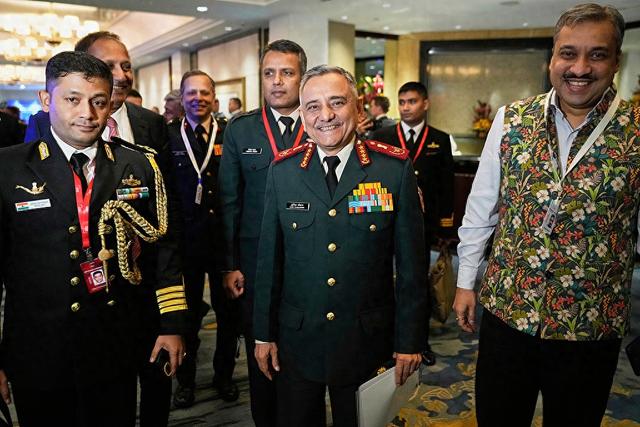
Group 1 - The 22nd Shangri-La Dialogue was held in Singapore from May 30 to June 1, with over 550 representatives from defense and security agencies from more than 40 countries attending [1] - Indian Army Chief Anil Chauhan and Pakistan's Chairman of the Joint Chiefs of Staff Committee Sahir Shamshad Mirza led their respective delegations, deliberately avoiding each other during the event [1][3] - The organizers arranged for the Indian and Pakistani representatives to speak at the same time but in different sessions to prevent direct interaction [1] Group 2 - During the dialogue, Chauhan emphasized India's strong stance on terrorism, stating that India has redefined its "red lines" regarding terrorism and hopes recent military actions will serve as a warning to adversaries [3] - Mirza criticized India for allegedly violating the UN Charter through airstrikes and missile attacks, warning that any attempts to disrupt Pakistan's water resources would be considered acts of war [3] - Reports indicated that both countries have begun to reduce military deployments, returning to pre-April 22 levels [3][4] Group 3 - Chauhan acknowledged the loss of Indian aircraft during recent conflicts but refrained from disclosing the exact number, countering Pakistan's claim of having shot down six Indian jets [3] - He highlighted the importance of learning from tactical errors and mentioned the effective use of indigenous defense systems like the Akash missile system in countering threats [4] - The Chinese defense spokesperson expressed a desire for both India and Pakistan to maintain calm and restraint to avoid further complications in the region [4]
军事溃败:美国霸权体系的“阿喀琉斯之踵”
Sou Hu Cai Jing· 2025-06-01 11:41
Group 1: Economic Implications - The U.S. defense budget for fiscal year 2025 is projected to be $895.2 billion, accounting for 40% of global military spending, which underpins the U.S. military presence in over 800 bases worldwide [2] - The stability of U.S. Treasury bonds is closely tied to the military's ability to maintain global order, with $9.2 trillion in U.S. debt maturing in 2025, raising concerns about potential market reactions to military failures [3] - A significant sell-off of U.S. debt due to military failures could lead to soaring interest rates, directly impacting U.S. fiscal sustainability [3] Group 2: Technological Competitiveness - The U.S. military's leading position in military technology is crucial for maintaining competitiveness, with historical examples like ARPANET showcasing military-driven technological advancements [4] - Recent setbacks in key areas such as hypersonic weapons have exposed vulnerabilities in U.S. military technology, potentially undermining global trust in U.S. technological superiority [4] - Non-traditional warfare tactics employed by smaller nations could challenge U.S. military dominance, as demonstrated by attacks on U.S. naval assets [5] Group 3: Geopolitical Consequences - Military failures could lead to a rapid decline in U.S. influence, with allies potentially seeking partnerships with countries like China and Russia, undermining U.S. strategic initiatives [6] - The potential for a liquidity crisis in the U.S. debt market could arise if Asian countries accelerate the sale of U.S. bonds in response to military setbacks, threatening the global financial system [6] - The collapse of U.S. military hegemony could trigger a shift towards a multipolar world, challenging the existing global order [7]
特朗普说一套做一套?美欧联合演练对俄闪电防御
Jin Shi Shu Ju· 2025-05-27 09:09
Group 1 - The U.S. military is increasing its deployment in Northern Europe, sending a clear message to Russia despite concerns about NATO's effectiveness under the Trump administration [1][2] - The Nordic and Baltic regions have become central to U.S. war planning due to their strategic importance in controlling shipping routes, territory, and energy reserves [1] - The recent military exercises involving U.S. and U.K. forces alongside Nordic and Baltic nations aim to deter Russian aggression and strengthen alliances, particularly with new NATO members Finland and Sweden [2][3] Group 2 - Local officials emphasize that deepening U.S. relations should not undermine NATO cohesion, aiming to strengthen collective defense rather than create exclusive clubs [3] - Gotland Island is identified as a strategically significant location for deploying sensors and long-range weapon systems to control Baltic Sea operations [3][4] - The U.S. military's rapid deployment capabilities, demonstrated through recent exercises, highlight the importance of coordination among NATO allies in complex military operations [4][5]
连损三架“超级大黄蜂” “杜鲁门”号航母离开红海
Xin Hua She· 2025-05-20 06:49
Group 1 - The USS Harry S. Truman aircraft carrier has completed its mission in the Middle East and is currently in the Mediterranean Sea, with no clear timeline for its return to Norfolk, Virginia [1] - During its deployment, the carrier lost three F/A-18 Super Hornet aircraft due to incidents, including a suspected friendly fire incident and a collision with a commercial ship [1][2] - The carrier was involved in operations against the Houthi forces in Yemen and participated in naval exercises in the Mediterranean [1][2] Group 2 - The Houthi forces have been targeting vessels associated with Israel in the Red Sea, coinciding with the recent escalation of the Israel-Palestine conflict [3] - A ceasefire agreement between the U.S. and Houthi forces was reached, which was independent of Israel's ongoing military actions against the Houthis [3]
赶在特朗普出国前,日本警告白宫:要求0关税!没有拒绝的权利?
Sou Hu Cai Jing· 2025-05-19 15:44
Group 1 - Japan's Prime Minister Shigeru Ishiba stated that Japan will not accept any temporary trade agreement with the U.S. that does not include auto tariff provisions, emphasizing that auto tariffs must be a core issue in negotiations [1] - Japan's Economic Revitalization Minister Akira Amari reiterated that Japan will continue to demand the removal of all tariff measures from the U.S. [1] - Japan has proposed a comprehensive plan to the U.S. regarding the automotive industry, which includes expanding investment in the U.S. automotive sector and strengthening cooperation in shipbuilding [1] Group 2 - Japan's firm stance against U.S. tariff policies has been consistent, with Ishiba stating that Japan will not sacrifice its agricultural market to protect the automotive sector [1] - Recent economic data shows a concerning trend, with a reported 8.7% year-on-year increase in corporate bankruptcies in Japan, totaling 826 companies, marking the longest recession period in over three years [1] - The Bank of Japan has halved its annual GDP growth forecast to 0.5%, with the 25% punitive tariffs imposed by the U.S. on Japanese automobiles being a significant burden on the Japanese economy [1]

新旧动能转换 普通投资者如何守护"钱袋子"?
Zhong Guo Jing Ying Bao· 2025-05-17 09:36
Core Viewpoint - The article discusses the current state of the Chinese economy, highlighting the government's efforts to stabilize growth, promote reforms, and mitigate risks through various economic policies. It emphasizes the importance of consumer spending and innovation for future growth while addressing the challenges posed by a cautious investment environment and external economic pressures [1][3]. Economic Overview - The current economic landscape is characterized by strong production capabilities but weak consumption, with policies aimed at stabilizing short-term consumption and fostering long-term innovation [3][4]. - China's manufacturing sector accounts for over 30% of global value added, surpassing the combined output of the US, Japan, Germany, South Korea, and India, indicating a robust production system [3]. - Investment growth in manufacturing is at 9%, but real estate and infrastructure investments are limited, leading to a challenging environment for expanding demand [3][4]. Policy Measures - The Chinese government has implemented a series of counter-cyclical policies over the past four years, focusing on balancing short-term support and long-term transformation [4][6]. - Policies include structural interest rate cuts, real estate market stabilization, and the introduction of innovative financial instruments to support consumption and investment [1][4]. Investment Strategies - Experts suggest a diversified asset allocation strategy that includes insurance, cash reserves, and a mix of stocks, bonds, commodities, and gold to mitigate risks and enhance returns [5][6]. - The concept of "cash is king" is debated, with experts acknowledging its benefits in uncertain times while cautioning against excessive conservatism that may lead to missed investment opportunities [5][6]. Future Outlook - The Chinese economy is expected to remain resilient despite current adjustments, with potential for growth compared to other major economies [6]. - Investors are encouraged to stay informed about policy changes and professional investment advice while maintaining a balanced approach to asset allocation [6].
AI军事应用将重塑现代战争体系
Di Yi Cai Jing· 2025-05-12 11:50
Core Insights - AI is transforming modern warfare, evolving from a supportive tool to the central brain of intelligent battlefields [1] - The disparity in AI technology development among countries is likely to exacerbate international competition and power imbalances [3] Group 1: AI in Military Applications - The U.S. Department of Defense signed a contract with Scale AI in March 2025 to integrate AI into military planning and operations, emphasizing the need for the U.S. to lead in AI for military applications [1] - South Korea plans to establish around 90 AI combat pilot units by 2028 and 16 training grounds equipped with AI simulation devices by 2032, driven by its manpower shortages and tensions with North Korea [2] - Russia has made advancements in military AI, exemplified by the S-350 "Warrior" air defense missile system, which achieved target engagement under AI control [2] Group 2: Global AI Governance Challenges - There is a significant gap in AI technology, funding, talent, and infrastructure between developed and developing countries, leading to potential power imbalances in global governance [3] - The EU's proposed AI Act aims to set a global regulatory benchmark for AI, reflecting European interests and highlighting the need for inclusive governance in AI [3] Group 3: Recommendations for International Cooperation - Establishing effective international regulatory mechanisms is crucial to prevent a new arms race driven by military AI applications, as current regulations are insufficient [4] - Data protection and risk prevention are essential, as data serves as the raw material for AI; countries must prioritize the security of data flows to safeguard national security [4] - Multilateral cooperation and inclusive governance are necessary to balance innovation and risk in AI development, ensuring its benefits for humanity [5]
整理:印巴冲突最新局势跟踪(5月9日)
news flash· 2025-05-09 11:31
金十数据整理:印巴冲突最新局势跟踪(5月9日) 2. 巴基斯坦:印度无人机持续侵入巴基斯坦境内,巴方击落了29架印度无人机,巴基斯坦克什米尔地区 有5名平民遇难,至少29人受伤;巴方未采取任何针对印控克什米尔地区或国际边界以外地区的进攻行 动。 其他情况: 1. 交易员:印度央行可能抛售美元以支撑面临压力的卢比。 2. 印度方面:24个机场暂停民用飞行运营;提高所有港口、码头和造船厂的安全等级。 冲突进展: 1. 印度:"朱砂行动"目前仍在进行中。巴方使用无人机和导弹袭击印北部和西部的多个军事目标,均被 印方防空系统挫败;拉贾斯坦邦杰伊瑟尔梅尔(Jaisalmer)传出爆炸声。随后,印控克什米尔所有地区 和拉贾斯坦邦西部地区停电。 3. 巴基斯坦方面:经济事务部X账户已被黑客入侵;向国际合作伙伴请求更多贷款;缓和局势的责任在 于印度。印度和巴基斯坦之间已经在国家安全委员会层面进行了接触;巴基斯坦升级局势的说法"完全 荒谬";巴方每天都在与沙特阿拉伯、卡塔尔就缓解与印度的危机进行沟通。 4. 英国方面:与印度外交部长通话,讨论内容集中在"打击恐怖主义,必须零容忍"问题上。 5. 中国方面:提醒中国公民密切关注局 ...