
服务贸易

Search documents
明年全球贸易前景不容乐观
Jing Ji Ri Bao· 2025-10-22 22:10
Core Insights - The World Trade Organization's latest report indicates that while global trade showed strong performance in the first half of the year, the outlook for the second half and into 2026 is pessimistic due to rising tariffs and increased trade policy uncertainty [1] Group 1: Global Trade Performance - Global merchandise trade volume is projected to grow by 2.4% in 2025, but the growth rate is expected to drop to 0.5% in 2026, primarily due to trade policy uncertainty [2] - In the first quarter of 2025, U.S. imports surged beyond expectations as companies stockpiled goods in anticipation of future tariff increases, leading to a 4.9% year-on-year increase in global merchandise trade volume [2] Group 2: Artificial Intelligence Trade Growth - Trade in artificial intelligence-related goods grew by over 20% year-on-year in the first half of 2025, significantly outpacing other goods and becoming a key driver of trade growth [3] - The growth in AI-related trade is attributed to investments in digital infrastructure and includes contributions from both developed and emerging markets, with East Asia remaining a major supply chain hub [3] Group 3: Service Trade Trends - Global service trade grew by 5% year-on-year in the first half of 2025, a slowdown compared to previous years, with expectations of continued deceleration in 2025 and 2026 due to economic slowdown and geopolitical tensions [4] - Despite the current slowdown, there is optimism for long-term growth in service trade, particularly driven by the development of the digital economy and increasing demand from emerging markets [4] Group 4: Trade Policy Uncertainty - Trade policy uncertainty impacts global trade by affecting business investment, consumer spending, supply chain stability, and trade costs, leading to a more cautious approach from companies [4] Group 5: Recommendations for Trade Development - To address the challenges facing global trade, measures such as enhancing trade policy transparency, improving policy coordination, and supporting developing countries' trade competitiveness are recommended [5] - Promoting digital economy development and green trade initiatives are also suggested to facilitate trade and ensure sustainable growth [5]
1—8月乌兹别克斯坦外贸总额达514亿美元
Shang Wu Bu Wang Zhan· 2025-10-22 17:36
Core Insights - Uzbekistan's foreign trade volume reached $51.4 billion from January to August 2025, an increase of $8.489 billion compared to the same period in 2024, representing a growth rate of 19.8% [1] Trade Overview - Exports amounted to $22.982 billion, showing a year-on-year growth of 31.3% [1] - Imports totaled $28.454 billion, with a year-on-year increase of 11.8% [1] - The trade deficit stood at $5.472 billion [1] Major Trade Partners - China remains Uzbekistan's largest trading partner, accounting for 18.9% of total foreign trade [1] - Other significant partners include Russia (16.1%), Kazakhstan (5.9%), Turkey (3.7%), and South Korea (2.2%) [1] Export Composition - In the first half of the year, goods exports were $17.282 billion, making up 75.2% of total exports, while services exports were $5.708 billion, accounting for 24.8% [1] - The top three categories for goods exports were industrial products (11.1%), food (7.8%), and chemicals (5.9%) [1] - For services, the leading sectors were tourism (53.6%), transportation (32.0%), and telecommunications, computer, and information services (7.9%) [1] Import Composition - Goods imports reached $25.529 billion, representing 89.7% of total imports, while services imports were $2.925 billion, making up 10.3% [2] - The primary categories for goods imports were machinery and transport equipment (33.8%), industrial products (16.1%), and chemicals (12.6%) [2] - In services, the main sectors were tourism (56.8%), transportation (18.0%), and telecommunications and information services (9.7%) [2]
“十五五”规划研究系列之四:“四中”前瞻:新“五年”的新期待
Shenwan Hongyuan Securities· 2025-10-20 10:41
Group 1: Key Signals from the September Politburo Meeting - The meeting emphasized "people" and "fairness," indicating a focus on equitable development and high-level openness[1] - Core directives include "effective market and proactive government" and "strengthening bottom-line thinking" to ensure economic stability[1] - The meeting highlighted the importance of "tailored development" to address local conditions and avoid redundant construction[1] Group 2: Main Lines of the 15th Five-Year Plan - High-quality development, institutional reform, and industrial upgrading are identified as the three main lines of the new plan[3] - The 15th Five-Year Plan serves as a critical midpoint for assessing progress towards the 2035 modernization goals[3] - To achieve the 2035 goals, an average annual economic growth rate of approximately 4.4% is required during the 15th and 16th Five-Year Plan periods[3][25] Group 3: Focus Areas for Industrial Development - The plan will likely continue to support "emerging pillar industries" and "new quality productivity" as key areas for growth[5][39] - Specific industries mentioned include artificial intelligence, marine economy, and low-altitude economy, which are expected to receive significant attention[6][5] - The emphasis on service consumption and technology consumption indicates a shift towards more sustainable economic drivers[5][42]
贸易强国:从逆势增长到“强筋健骨”
Jing Ji Ri Bao· 2025-10-16 22:14
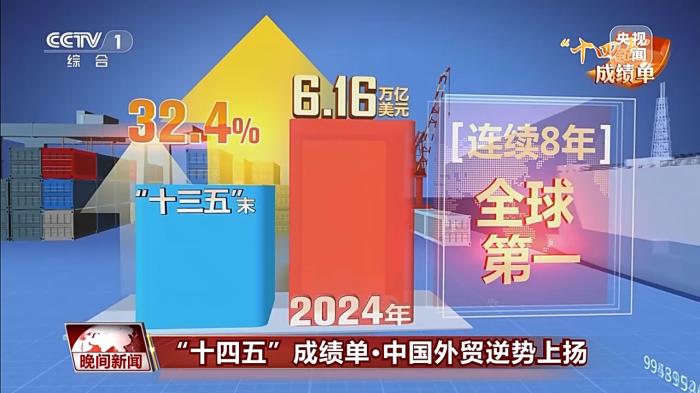
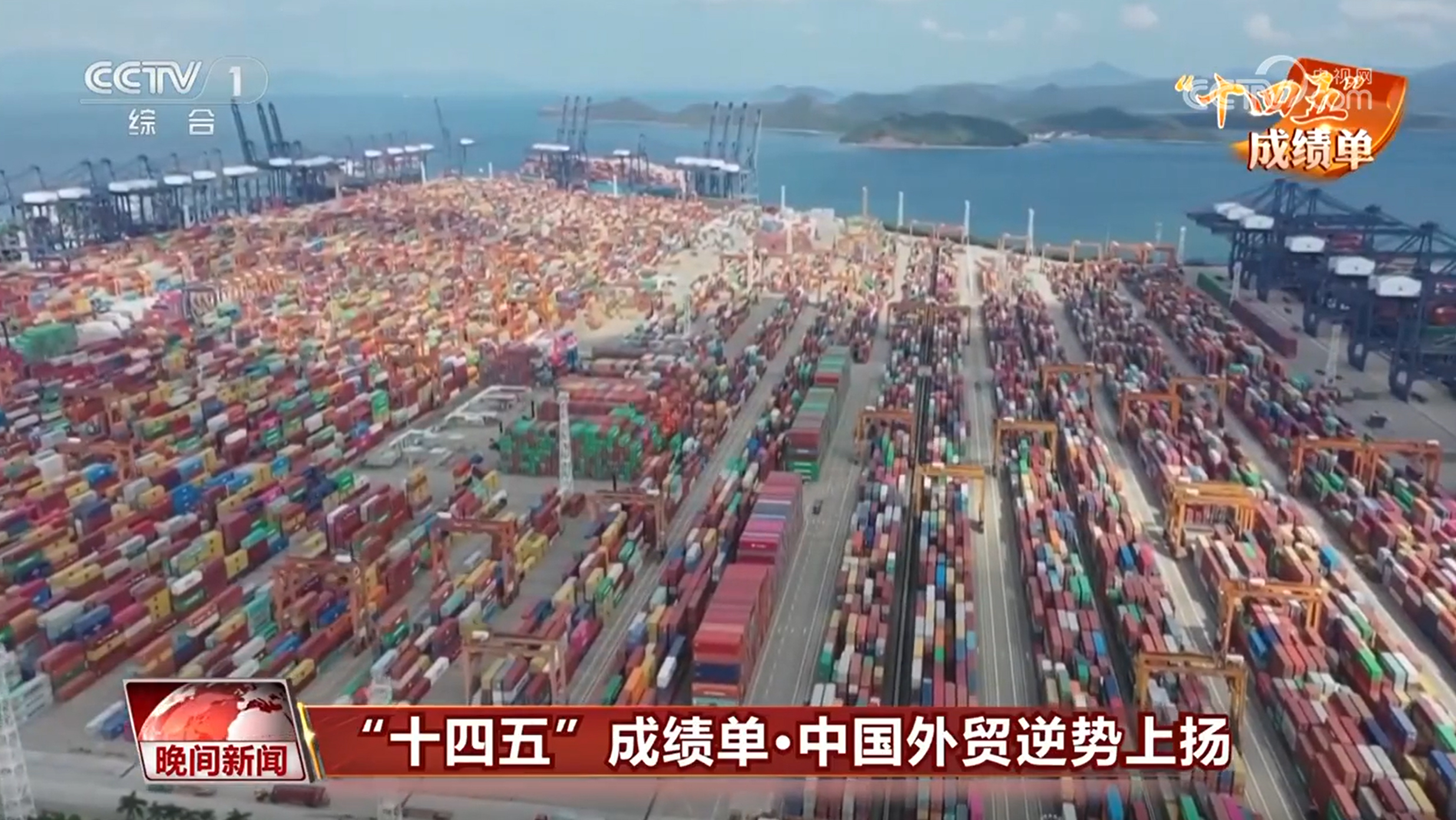
Core Insights - China's foreign trade has shown resilience, achieving significant growth despite external pressures, with a focus on high-quality development and innovation during the "14th Five-Year Plan" period [2][3][4] Trade Scale and Growth - In 2024, China's goods trade volume reached $6.16 trillion, a 32.4% increase from the end of the "13th Five-Year Plan" in 2020, maintaining its position as the world's largest trader for eight consecutive years [3] - Service trade also saw a milestone, surpassing $1 trillion for the first time, positioning China as the second-largest service trader globally [3] Import and Export Dynamics - China's imports are projected to grow by 2.3% in 2024, marking a historical high and maintaining its status as the world's second-largest importer for 16 years [3] - The country has implemented zero tariffs on 100% of products for all least developed countries with which it has diplomatic relations, and has signed agreements for zero tariffs with 53 African nations [3] Trade Structure and Quality - The proportion of electromechanical products in exports rose to 59.4% in 2024, with automobile exports exceeding 6 million units for the first time [4] - Cross-border e-commerce imports and exports are expected to reach approximately 2.7 trillion yuan in 2024, a 67% increase from 2020 [4] Digital and Service Trade Innovations - China has introduced a negative list management system for cross-border service trade, with knowledge-intensive service trade growing by 38% compared to 2020 [4] - The export value of digitally deliverable services is projected to increase by nearly 40% from 2020 [4] Trade System and Global Cooperation - China is committed to maintaining a multilateral trade system and expanding its high-standard free trade zone network, actively participating in WTO reforms and promoting international economic cooperation [9][10] - The Regional Comprehensive Economic Partnership (RCEP) has been signed and is now the largest free trade area globally, with China applying to join high-standard agreements like CPTPP and DEPA [10] Belt and Road Initiative - Trade with Belt and Road Initiative countries increased from $2.7 trillion in 2021 to $3.1 trillion in 2024, with an average annual growth rate of 4.7% [12]
聚焦出口,提升服务贸易国际竞争力
Ren Min Ri Bao Hai Wai Ban· 2025-10-14 07:38
Core Insights - The global service trade is increasingly significant, with a projected service export value of $88,521.7 million in 2024, representing a year-on-year growth of 9.9%, outpacing goods export growth by 7.6 percentage points [1] - China's service trade is expanding, with a total service import and export value of $10,564.6 million in 2024, marking a 13.2% increase and surpassing the $1 trillion mark for the first time, ranking second globally after the United States [1] - The Chinese government has introduced comprehensive policy measures to enhance service exports, focusing on improving international competitiveness and supporting high-quality foreign trade development [1][3] Group 1: Service Trade Growth - Service trade is a crucial support for stabilizing foreign trade and building a strong trade nation, with an average annual growth rate of 12.4% from 2020 to 2024, exceeding the growth rate of goods trade [1] - In 2024, service trade's contribution to foreign trade growth has significantly increased, becoming an important engine for stabilizing foreign trade [2] Group 2: Policy Measures - The new policy measures include 13 specific initiatives across four main areas: fiscal and tax policies, financial support, facilitation, and international market expansion [4] - The fiscal policy focuses on clarifying key areas and projects for service exports, while financial policies aim to enhance financial services for small and micro enterprises [4] - Facilitation policies are designed to promote the free flow of capital, personnel, technology, and data, supporting the development of new service export models [4] Group 3: Export Potential - The policy measures are expected to significantly boost knowledge-intensive service exports by leveraging existing funding channels to support sectors like digital services, high-end design, and intellectual property [5] - Traditional service exports, particularly in travel services, are targeted for growth, with measures to expand visa facilitation and enhance inbound tourism services [5] - The focus on enhancing service exports is anticipated to strengthen China's international competitiveness in service trade, contributing to high-quality economic development [5]
透视关键词看外贸做大体量、做强结构、锻造韧性
Yang Shi Wang· 2025-10-14 07:09
Core Insights - During the "14th Five-Year Plan" period, China's foreign trade has shown resilience and growth despite global challenges, with a focus on enhancing both domestic and international markets [1] Group 1: Trade Volume and Growth - The scale of China's goods trade has continuously expanded, surpassing $5 trillion and $6 trillion, projected to reach $6.16 trillion in 2024, a 32.4% increase from the end of the "13th Five-Year Plan" [1] - China has maintained its position as the world's largest trader for eight consecutive years [1] Group 2: Trade Structure and Quality - The export proportion of high-tech products in goods trade reached 18.2%, with exports of electric vehicles, lithium batteries, and photovoltaic products increasing by 2.6 times compared to 2020 [2] - Knowledge-intensive service trade is expected to grow by 38% compared to 2020, with digital delivery services seeing nearly a 40% increase [2] Group 3: Trade Partnerships and Diversification - ASEAN has been China's largest trading partner for five consecutive years, with China becoming a top three trading partner for over 150 countries and regions [2] - Trade with Belt and Road Initiative countries has exceeded 50% of China's total trade [2] Group 4: Supply Chain and Economic Support - China's foreign trade has seen improved flexibility in its industrial and supply chains, with events like the China International Import Expo serving as bridges for international economic cooperation [2] - China's foreign trade remains a significant contributor to global trade growth, supporting the recovery of the world economy [2]
“含金量”“含新量”持续攀升 中国外贸逆势上扬
Yang Shi Xin Wen Ke Hu Duan· 2025-10-13 22:20
Core Insights - During the "14th Five-Year Plan" period, China's foreign trade has shown resilience and growth despite global challenges, with significant improvements in both scale and structure [1][3][9] Group 1: Trade Scale - The scale of goods trade has continuously expanded, surpassing $5 trillion and $6 trillion, projected to reach $6.16 trillion in 2024, a 32.4% increase compared to the end of the "13th Five-Year Plan" [3] - Service trade is expected to exceed $1 trillion for the first time in 2024, ranking second globally [3] Group 2: Trade Structure - The export proportion of high-tech products in goods trade reached 18.2%, with exports of electric vehicles, lithium batteries, and photovoltaic products increasing by 2.6 times compared to 2020 [5] - Knowledge-intensive service trade is projected to grow by 38% compared to 2020, with digital delivery services seeing nearly a 40% increase in import and export value [5] Group 3: Trade Resilience and Diversification - China's trade partnerships have diversified, with ASEAN being the largest trading partner for five consecutive years, and China being among the top three trading partners for over 150 countries [7] - Trade with Belt and Road Initiative countries has surpassed 50% of total trade, and the China-Europe Railway Express has exceeded 110,000 trips, reaching 229 cities in Europe [7] Group 4: Economic Contribution - China's foreign trade has contributed significantly to global trade growth, and the country remains a key support for the recovery of the world economy [9]

“十四五”成绩单丨“含金量”“含新量”持续攀升 中国外贸逆势上扬
Yang Shi Wang· 2025-10-13 15:07
Core Insights - During the "14th Five-Year Plan" period, China's foreign trade has shown resilience and growth amidst global changes, achieving significant milestones in trade volume and structure [1][3]. Trade Volume Expansion - The scale of goods trade has consistently surpassed $5 trillion and $6 trillion, projected to reach $6.16 trillion in 2024, marking a 32.4% increase compared to the end of the "13th Five-Year Plan" [3]. - Service trade is expected to exceed $1 trillion for the first time in 2024, ranking second globally [3]. Structural Optimization - The export proportion of high-tech products in goods trade reached 18.2% [4]. - Exports of "new three items" such as electric vehicles, lithium batteries, and photovoltaic products have increased by 2.6 times compared to 2020 [4]. - Knowledge-intensive service trade volume is projected to grow by 38% compared to 2020, with digital delivery services seeing nearly a 40% increase [4]. Resilience and Diversification - ASEAN has been China's largest trading partner for five consecutive years, with China becoming a top three trading partner for over 150 countries and regions [6]. - Trade with Belt and Road Initiative countries is expected to exceed 50% in 2024 [6]. - The China-Europe Railway Express has surpassed 110,000 trips, reaching 229 cities in Europe [6]. Supply Chain and Economic Support - The industrial and supply chains in China's foreign trade have become more complete and flexible, with events like the China International Import Expo serving as bridges for international economic cooperation [8]. - China's foreign trade continues to be a significant contributor to global trade growth, supporting the recovery of the world economy [8].
货物贸易、服务贸易、数字贸易“三大支柱”不断夯实
Yang Shi Wang· 2025-10-13 02:45
专家认为,未来5年,我国的外贸环境仍然面临着很多不确定性,我们要持续推进高水平的制度型开放,打造一流的营商环境,与世界各国实现互利共 赢。我国要继续发挥超大规模市场优势,充分释放消费和吸引外资的双重潜力。 "十四五"期间,我国高水平对外开放步伐加快,自贸试验区总数达到22个,制度型开放格局不断完善。我国在上海等有条件的自贸试验区以及海南自由 贸易港,主动对接《全面与进步跨太平洋伙伴关系协定》和《数字经济伙伴关系协定》这些高标准经贸规则,累计推出了两批共110余项试点措施,涉及贸 易、投资、知识产权、政府采购、环境保护等重点领域。 对外经贸大学中国开放经济理论研究院院长 桑百川:自贸试验区和自贸港是中国特殊的开放平台,以此为抓手它不仅仅是吸收外资、扩大对外贸易的 一个重要的平台,它已经成为国内重要的经济发展极,而且它们在创造可复制、可推广的经验方面,也走在了前列,引领着整个中国对外开放的高水平发 展。 央视网消息:"十四五"期间,我国贸易强国建设不断迈上新台阶,对外开放取得累累硕果。下一个五年,如何继续扩大高水平对外开放,促进高质量发 展?来看专家的解读。 专家表示,"十四五"期间,我国货物贸易、服务贸易、数字 ...
发展服务贸易如何“补短锻长”
Jing Ji Ri Bao· 2025-10-11 02:08
Core Insights - China's service trade is entering a new development stage characterized by continuous expansion, structural optimization, and accelerated transformation of momentum. The total service trade volume is expected to exceed $1 trillion for the first time in 2024, marking a historical high [1] Group 1: Growth and Structure - The service trade's total import and export volume exceeded $737 billion in the first eight months of this year, indicating robust growth that contributes to global economic certainty [1] - Knowledge-intensive services are becoming a new growth engine, with exports in telecommunications, computer, and information services increasing. Digital cultural products like online literature and games are gaining traction internationally [2] - Travel services are experiencing a strong recovery, with the expansion of visa-free policies significantly enhancing the attractiveness of China as a travel destination, transforming travel services from a major source of trade deficit to a key factor in narrowing it [2] Group 2: Challenges and Opportunities - Despite the growth, traditional service sectors like logistics and construction still dominate, while high-value services such as finance and legal services have a high import dependency of 60% [3] - The eastern region contributes nearly 80% to the national service trade, while the central and western regions, despite rapid growth, remain small in scale. There is a lack of sufficient voice in global rule-making for service trade [3] - Recent policies from the Ministry of Commerce and other departments aim to promote service exports through 13 specific measures, focusing on digital and green services as key support areas [4] Group 3: Policy and Strategic Alignment - The development of high-quality service trade should align closely with the strategy to expand domestic demand, as service consumption has become a crucial driver for domestic demand growth [4] - Encouragement of scenario innovation and business model integration is essential to increase the supply of quality services, leveraging China's large market and potential to attract global resources [4]