
集运

Search documents
中信期货晨报:国内商品期货涨多跌少,沪银领涨期市-20251113
Zhong Xin Qi Huo· 2025-11-13 07:59
1. Report Industry Investment Rating No relevant content provided. 2. Core Viewpoints of the Report - The global macro situation this week focuses on changes in US dollar liquidity. Although there is short - term tightness, it won't have a significant impact on major asset prices. There are two factors for improvement: marginal easing of monetary policy and normal release of funds in the TGA account when the US government resumes work [7]. - In October, China's export growth was weaker than expected, but there were more positive signs in inflation data, and consumer data may slightly exceed expectations [7]. - In November, the macro environment enters a vacuum period, and major assets may enter a short - term shock period. However, the overall allocation idea in the fourth quarter remains unchanged, and the macro environment is still favorable for risk assets. It is recommended to allocate major assets evenly in the fourth quarter, hold long positions in stock indices, non - ferrous metals (copper, lithium carbonate, aluminum, tin), and precious metals, and increase positions appropriately if there is a correction [7]. 3. Summary by Directory 3.1 Macro Highlights - **Overseas Macro**: The short - term tightness of US dollar liquidity won't have a large impact on major asset prices. Monetary policy is marginally easing, and the release of TGA account funds after the US government resumes work can relieve the short - term pressure [7]. - **Domestic Macro**: October's export growth was weaker than expected, but there were positive signs in inflation data, and consumer data may slightly exceed expectations [7]. - **Asset Views**: In November, major assets may enter a shock period. The overall allocation idea in the fourth quarter remains unchanged, and it is recommended to evenly allocate major assets, hold long positions in stock indices, non - ferrous metals, and precious metals, and increase positions if there is a correction [7]. 3.2 Viewpoint Highlights 3.2.1 Financial Sector - **Stock Index Futures**: Catalyzed by technology events, the growth style is active. There is a risk of overcrowding in small - cap funds, and the short - term trend is expected to be a volatile upward [8]. - **Stock Index Options**: The overall trading volume has slightly declined, and the short - term trend is expected to be volatile [8]. - **Treasury Bond Futures**: The bond market continues to be weak. The short - term trend is expected to be volatile, affected by policy, fundamental repair, and tariff factors [8]. 3.2.2 Precious Metals - **Gold/Silver**: Due to the easing of geopolitical and economic and trade situations, precious metals are in a phased adjustment. The short - term trend is expected to be volatile, affected by the US fundamentals, Fed's monetary policy, and global equity market trends [8]. 3.2.3 Shipping - **Container Shipping to Europe**: The peak season in the third quarter has passed, and there is a lack of upward momentum. The short - term trend is expected to be volatile, and attention should be paid to the rate of freight decline in September [8]. 3.2.4 Steel and Iron Ore - **Steel**: In the off - season, the fundamentals are under pressure, and the short - term trend is expected to be volatile, affected by the issuance of special bonds, steel exports, and iron - water production [8]. - **Iron Ore**: The short - term fundamentals are stable, and the short - term trend is expected to be volatile, affected by overseas mine production and shipment, domestic iron - water production, weather, port inventory, and policy [8]. 3.2.5 Black Building Materials - **Coke**: The game between coking and steel enterprises continues, and the short - term trend is expected to be volatile, affected by steel mill production, coking costs, and macro sentiment [8]. - **Coking Coal**: The market sentiment is weak, but the spot price is rising. The short - term trend is expected to be volatile, affected by steel mill production, coal mine safety inspections, and macro sentiment [8]. - **Silicon Iron**: The supply - demand driving force is limited, and it follows the valuation fluctuations of coal. The short - term trend is expected to be volatile, affected by raw material costs and steel procurement [8]. - **Manganese Silicon**: After the first - round steel procurement inquiry is announced, the price follows the decline of coking coal. The short - term trend is expected to be volatile, affected by cost prices and overseas quotes [8]. - **Glass**: Prices have been lowered in various regions, and downstream purchasing sentiment is weak. The short - term trend is expected to be volatile, affected by spot sales [8]. - **Soda Ash**: Supply exceeds demand, and cost - driven upward movement is limited. The short - term trend is expected to be volatile, affected by soda ash inventory [8]. - **Aluminum Oxide**: The fundamentals are still in an oversupply situation, and the price is under pressure. The short - term trend is expected to be volatile, affected by ore复产 and electrolytic aluminum复产 [8]. - **Aluminum**: The stock - futures linkage leads to an upward - volatile price. The short - term trend is expected to be a volatile upward, affected by macro risks, supply disruptions, and demand [8]. - **Zinc**: The export window is open, and the price is fluctuating at a high level. The short - term trend is expected to be volatile, affected by macro risks and zinc ore supply [8]. - **Lead**: Social inventory is slightly increasing, and the price is fluctuating. The short - term trend is expected to be volatile, affected by supply disruptions and battery exports [8]. - **Nickel**: Market sentiment is improving, and the price is fluctuating. The short - term trend is expected to be volatile, affected by macro and geopolitical changes, and Indonesian policies [8]. - **Stainless Steel**: Warehouse receipts are decreasing, and the price is fluctuating. The short - term trend is expected to be volatile, affected by Indonesian policies and demand growth [8]. - **Tin**: The inventory of Shanghai tin continues to decrease, and the price is fluctuating. The short - term trend is expected to be volatile, affected by the resumption of production in Wa State and demand improvement [8]. - **Industrial Silicon**: The supply in the southwest is rapidly decreasing, and the price is fluctuating. The short - term trend is expected to be volatile, affected by supply - side production cuts and photovoltaic installations [8]. - **Lithium Carbonate**: The resumption of production expectation is fluctuating, and the price may fluctuate significantly. The short - term trend is expected to be volatile, affected by demand, supply disruptions, and technological breakthroughs [8]. 3.2.6 Energy and Chemicals - **Crude Oil**: There is a lack of short - term driving forces, and the price is expected to be volatile, affected by OPEC+ production policies and the Middle East geopolitical situation [10]. - **LPG**: Refinery output has decreased, and import costs are under pressure. The short - term trend is expected to be volatile, affected by cost factors such as crude oil and overseas propane [10]. - **Asphalt**: The spot price in Shandong has stabilized, and the futures price is expected to be volatile, affected by sanctions and supply disruptions [10]. - **High - Sulfur Fuel Oil**: The futures price is volatile, and attention should be paid to the Russia - Ukraine conflict. The short - term trend is expected to be volatile, affected by geopolitics and crude oil prices [10]. - **Low - Sulfur Fuel Oil**: The refined oil market is strong, and the price may be on a volatile upward trend, affected by crude oil prices [10]. - **Methanol**: High inventory suppresses the price, and overseas disturbances are not significant. The short - term trend is expected to be volatile, affected by the macro - energy situation and overseas developments [10]. - **Urea**: Export information boosts the spot market, and the futures price is expected to be volatile in the short term, affected by export quotas and coal prices [10]. - **Ethylene Glycol**: The spot market is loose, and there is little hope of reversing the downward trend in the short term. The short - term trend is expected to be a volatile downward, affected by coal and oil prices, port inventory, and Sino - US trade friction [10]. - **PX**: The market sentiment is rational, and the processing fee is strongly supported by strong supply and demand. The short - term trend is expected to be volatile, affected by crude oil fluctuations and macro changes [10]. - **PTA**: The market sentiment is flat, and the basis is under pressure. The short - term trend is expected to be volatile, affected by crude oil fluctuations and macro changes [10]. - **Short - Fiber**: Consumers tend to buy on dips, and attention should be paid to the off - peak and peak season conversion. The short - term trend is expected to be volatile, affected by downstream yarn mill purchasing and peak - season demand [10]. - **Bottle Chips**: The market performance is flat, and it follows the cost passively. The short - term trend is expected to be volatile, affected by bottle - chip enterprise production cuts and new device commissioning [10]. - **Propylene**: Inventory needs time to be digested, and the price is expected to be on a volatile downward trend, affected by oil prices and the domestic macro situation [10]. - **PP**: Maintenance support is limited, and the price is expected to be on a volatile downward trend, affected by oil prices and domestic and overseas macro situations [10]. - **Plastic**: Downstream transactions have increased, but maintenance support is limited. The price is expected to be on a volatile downward trend, affected by oil prices and domestic and overseas macro situations [10]. - **Styrene**: There are still concerns about over - inventory, and the price is expected to be on a volatile downward trend, affected by oil prices, macro policies, and device operations [10]. - **PVC**: The weak reality suppresses the price, and it is expected to be volatile, affected by expectations, costs, and supply [10]. - **Caustic Soda**: With low valuation and weak expectations, the price is expected to be volatile, affected by market sentiment, production, and demand [10]. 3.2.7 Agriculture - **Oils and Fats**: Rapeseed oil is relatively strong, and attention should be paid to the effectiveness of upper - level technical resistance. The short - term trend is expected to be a volatile upward, affected by US soybean weather and Malaysian palm oil production and demand data [10]. - **Protein Meal**: US soybeans are testing the upper - level resistance, and it is recommended to hold reverse spreads on Dalian soybean meal. The short - term trend is expected to be volatile, affected by weather, domestic demand, macro factors, and Sino - US and Sino - Canadian trade wars [10]. - **Corn/Starch**: The market is in a short - term tight situation, and the price is expected to be volatile at a high level, affected by demand, macro factors, and weather [10]. - **Pigs**: Supply and demand are loose, and the price is weak. The short - term trend is expected to be a volatile downward, affected by breeding sentiment, epidemics, and policies [10]. - **Natural Rubber**: With the approaching expiration of the November contract, there may be a pulse - like upward movement. The short - term trend is expected to be volatile, affected by production - area weather, raw material prices, and macro changes [10]. - **Synthetic Rubber**: The short - term trend is expected to be volatile, affected by crude oil fluctuations [10]. - **Cotton**: The price has slightly declined, and the short - term trend is expected to be volatile, affected by demand and inventory [10]. - **Sugar**: The price is fluctuating within a narrow range, and the short - term trend is expected to be a volatile downward, affected by imports and Brazilian production [10]. - **Pulp**: The market is dominated by funds, and the long - position advantage remains. The short - term trend is expected to be volatile, affected by macro - economic changes and US dollar - denominated quotes [10]. - **Double - Glued Paper**: In the tendering peak season, the price is expected to stabilize in November and be volatile, affected by production and sales, education policies, and paper - mill operations [10]. - **Logs**: In the de - inventory cycle, the price is expected to be volatile, affected by special port fees, shipment volume, and dispatch volume [10].
建信期货集运指数日报-20251113
Jian Xin Qi Huo· 2025-11-13 02:27
1. Report Information - Report Type: Daily Report on Freight Index for Container Shipping to Europe [1] - Date: November 13, 2025 [2] - Researcher: He Zhuoqiao (Macro Precious Metals), Huang Wenxin (Treasury Bonds and Container Shipping), Nie Jiayi (Stock Index Futures) [3] 2. Industry Investment Rating - Not provided 3. Core Viewpoints - This week, the SCFIS index rose 24.5% week-on-week to 1504.8, better than expected. Although the actual demand may not support a large increase in freight rates, the market is likely to form a bottoming-out and recovery trend, and the bottom of freight rates within the year may have appeared. However, with the December contract in a premium state, the market is starting to consider the potential for rate increases and the likelihood of them materializing. The February contract incorporates strong expectations of a pre - Spring Festival shipping rush, which drives up the prices of far - month contracts. It is recommended to consider shorting the off - season April contract [8]. 4. Summary by Directory 4.1 Market Review and Operation Suggestions - The SCFIS index rose 24.5% week - on - week to 1504.8 this week. The price increase in the first half of November was well - implemented, but the attempt to raise prices in the second half fell short. Shipping companies have lowered their quoted price increases for November and December. For example, the Premier Alliance aggressively reduced the first - half November quote for the Shanghai - Rotterdam route to $1806 - 1935 per forty - foot equivalent unit (FEU), and maintained the second - half quote at $2535 per FEU. The OCEAN Alliance also slightly lowered the first - half November quote to $2150 - 2520 per FEU, and most maintained the second - half quote at $2800 - 3000, except for CMA CGM, whose quote for the second half of November to the first half of December was $3170 - 3920, but lower than the previous quote. It is recommended to pay attention to shorting the off - season April contract [8]. 4.2 Industry News - From November 3 to November 7, the overall China export container shipping market was stable, with freight rates on different routes diverging due to supply - demand fundamentals. The composite index declined slightly. In October, China's exports decreased by 1.1% year - on - year in US dollars, with the growth rate slowing compared to September. In the first 10 months of 2025, China's exports showed a stable growth trend. On November 7, the Shanghai Export Containerized Freight Index (SCFI) was 1495.10 points, down 3.6% from the previous period. - In the European route, the eurozone's composite PMI in October reached 52.5, better than expected. Germany's service industry recovered strongly, while France's economy was weak. Freight demand remained stable this week, and freight rates fell after continuous increases. On November 7, the freight rate from Shanghai Port to basic European ports was $1323 per twenty - foot equivalent unit (TEU), down 1.6% from the previous period. - In the Mediterranean route, the market situation was similar to that of the European route, with slightly better supply - demand fundamentals and a slight increase in spot booking prices. On November 7, the freight rate from Shanghai Port to basic Mediterranean ports was $2029 per TEU, up 2.3% from the previous period. - In the North American route, the US government shutdown has lasted for 36 days, which may cause greater economic damage. The labor demand in the US job market is slowing, and wage growth has stagnated. Freight demand was relatively stable this week, and spot booking prices fell from high levels. On November 7, the freight rates from Shanghai Port to basic ports in the US West and East were $2212 per FEU and $2848 per FEU respectively, down 16.4% and 17.2% from the previous period. - The situation in northern Israel is tense. The Israeli Defense Forces carried out large - scale air strikes on Hezbollah military targets in southern Lebanon, and both sides are on high alert. Egypt proposed a new plan, asking Hamas to provide information on tunnels to be destroyed in exchange for allowing 200 Hamas militants in the Rafah tunnels to return to the Hamas - controlled area with weapons. Israel has not responded to this plan [9][10]. 4.3 Data Overview 4.3.1 Spot Freight Rates for Container Shipping - The SCFIS for the European route (basic ports) on November 10, 2025, was 1504.8, up 24.5% from 1208.71 on November 3. The SCFIS for the US West route (basic ports) was 1329.71, up 4.9% from 1267.15 on November 3 [12]. 4.3.2 Futures Market of Container Shipping Index (European Route) - The trading data of container shipping futures to Europe on November 12 shows that different contracts had different price changes, trading volumes, and open interest changes. For example, the EC2512 contract had a previous settlement price of 1811.3, a closing price of 1749.4, a decline of 61.9, and a decline rate of 3.42%. The trading volume was 22,970, and the open interest decreased by 4,048 [6]. 4.3.3 Shipping - Related Data Charts - The report provides multiple data charts, including those on container shipping spot prices, futures trends, container ship capacity in Europe, global container ship orders, and freight rates between Shanghai and European ports [13][19][22]
集运早报-20251113
Yong An Qi Huo· 2025-11-13 01:13
Report Overview - The report focuses on the freight futures market, mainly analyzing the prices, trends, and influencing factors of European line freight futures contracts, as well as recent news and market conditions [2]. 1. Futures Contract Price and Change 1.1 Futures Contract Prices and Fluctuations - EC2512: The price was 1749.4, with a change of 0.119%, and the trading volume was 22970, and the open interest decreased by 4048 to 21157 [2]. - EC2602: The price was 1636.6, a decrease of 3.19%, the trading volume was 27879, and the open interest increased by 3551 to 32901 [2]. - EC2604: The price was 1172.0, a decrease of 1.33%, the trading volume was 5188, and the open interest increased by 73 to 15483 [2]. - EC2606: The price was 1364.7, a decrease of 4.16%, the trading volume was 532, and the open interest increased by 144 to 1567 [2]. - EC2608: The price was 1472.1, a decrease of 4.712%, the trading volume was 336, and the open interest decreased by 5 to 1208 [2]. - EC2610: The price was 1129.9, a decrease of 0.67%, the trading volume was 609, and the open interest increased by 225 to 1833 [2]. 1.2 Month - to - Month Spread - EC2512 - 2504: The spread was 577.4, with a daily increase of 19.1 and a weekly decrease of 142.5 [2]. - EC2512 - 2602: The spread was 112.8, with a daily increase of 57.2 and a weekly decrease of 203.4 [2]. - EC2502 - 2604: The spread was 464.6, with a daily decrease of 38.1 and a weekly increase of 60.9 [2]. 2. Index Data 2.1 Index Values and Changes - Data Index: Updated weekly on Mondays. As of 2025/11/10, it was 1504.80 points, an increase of 24.50% from the previous period and a decrease of 7.92% expected in the next period [2]. - SCFI (European Line): Updated weekly on Wednesdays. As of 2025/11/7, it was 1323 dollars/TEU, a decrease of 1.56% from the previous period [2]. - CCFI: Updated weekly on Wednesdays. As of 2025/11/7, it was 1366.85 points, an increase of 3.25% from the previous period and an expected increase of 2.37% in the next period [2]. - NCFI: Updated weekly on Wednesdays. As of 2025/11/7, it was 911.73 points, a decrease of 5.8% from the previous period and an expected increase of 17.43% in the next period [2]. 3. Market Analysis and Outlook 3.1 Market Movement on Wednesday - In the morning, the market oscillated, and in the afternoon, it dropped across the board due to the news that the Houthi rebels officially announced to stop attacking merchant ships in the Red Sea [2]. 3.2 Outlook for Different Contracts - EC2512: Its valuation is neutral and will gradually follow the delivery logic. The freight rate in late November will determine the implementation degree of the price - holding in December. It is expected to mainly follow the changes in spot prices and the rhythm of shipping companies' price announcements in the future [2]. - EC2602: Its valuation is more difficult to anchor. In the short term, it is expected to mainly follow the trend of EC2512. If the peak - season cargo - booking situation is gradually realized in the future, it may have more room for growth. The peak freight rate usually occurs 4 - 5 weeks before the Spring Festival (mid - January next year) [3]. - EC2604: It is a off - season contract. In the short term, it will maintain a narrow - range oscillation in the peak - season logic. Considering the expected greater supply pressure next year and the off - season in April, a short - selling strategy on rallies is recommended [3]. 4. Recent European Line Quotation Situation 4.1 Cargo - Booking Situation - In week 45, the cargo - booking situation was good; in week 46, the PA cargo - receiving improved slightly, but the shipping capacity in this week was extremely low. The pressure increased in the second half of November. Among them, PA improved, while MSK faced increased cargo - receiving pressure, and the pressure on OA decreased due to sailings suspension compared with the first half of the month [4]. 4.2 Price Levels - In week 46, the average landed price was 2000 dollars (equivalent to 1400 points on the futures). Shipping companies announced a price increase to 2365 - 2950 dollars for the second half of November, but MSK opened the booking at 2250 dollars (a 50 - dollar increase from the previous period). It is expected that the quotes of other shipping companies will be gradually lowered this week, and they may also announce a price increase for December [4]. - In week 47, the offline PA price was around 2000 dollars, OA was 2200 - 2400 dollars, and MSK was 2000 dollars. OOCL lowered the online price for November by 300 dollars to 2600 dollars [4]. - On Tuesday, MSK opened the booking for week 48 at 1900 - 2000 dollars, equivalent to 1340 - 1400 dollars on the futures [4]. 5. Related News - On 11/12, the Houthi rebels issued a statement saying that they would end their targeted actions against maritime interests related to Israel and stop armed attacks on merchant ships passing through the Red Sea. However, they warned that if the enemy continued to invade Gaza, they would resume military operations and the navigation ban on Israeli ships [5]. - On 11/12, Hamas stated that it had completed the first phase of the cease - fire agreement. A senior Hamas member said that the previous cease - fire agreement was only a "preliminary agreement" and not a final comprehensive one. The first - phase implementation of the Gaza cease - fire agreement had been in place for a month, but the second - phase negotiation had not started yet. Israeli Prime Minister Netanyahu said that Israel was determined to enforce the cease - fire agreement with a "heavy hand" in Gaza and Lebanon [5].
央行释放新信号 :申万期货早间评论-20251112
申银万国期货研究· 2025-11-12 01:04
Core Viewpoint - The central bank of China has released new signals regarding monetary policy, emphasizing the need to strengthen the foundation for economic recovery and to implement a moderately loose monetary policy while enhancing the monetary policy framework [1][6]. Group 1: Monetary Policy and Economic Outlook - The central bank's report indicates that the domestic economic recovery requires further support and consolidation [1]. - The report highlights the importance of maintaining relatively loose social financing conditions and improving the execution and transmission of monetary policy [6]. - The central bank aims to deepen financial reforms and enhance high-level opening-up to build a robust monetary policy system [1][6]. Group 2: Commodity Market Insights - In the oil market, SC futures rose by 2.11% due to concerns over winter fuel supply amid sanctions on Russia, while Saudi Arabia has lowered its official selling price for December [2][10]. - The dual焦 (coking coal and coke) market showed narrow fluctuations, with demand weakening as steel mill profitability dropped below 40% [2][18]. - The European container shipping index (EC) fell by 1.87%, driven by Maersk's price adjustments, indicating weaker-than-expected pricing momentum for the peak season [3][23]. Group 3: Industry News - In October, China's new energy vehicle sales exceeded 50% of total vehicle sales for the first time, reaching 51.6%, with significant year-on-year growth [7]. - The U.S. announced a suspension of export control rules for a year, which may impact related companies and their operations [5]. Group 4: Financial Market Performance - The U.S. stock market showed mixed results, with the S&P 500 index increasing by 0.21% [8][9]. - The 10-year government bond yield fell to 1.804%, reflecting a cautious market environment amid ongoing economic uncertainties [9]. Group 5: Agricultural and Commodity Trends - The soybean meal market is expected to remain weak due to a lack of supply adjustments, while the corn market shows slight upward movement [19][20]. - The cotton market is experiencing a range-bound trend as new crop supplies increase, but demand is weakening [22]. Group 6: Shipping and Logistics - The shipping market is facing pressure with an oversupply of capacity expected in the coming months, limiting the potential for price increases [3][23].


国泰海通 · 晨报1111|食品饮料、石化、海运、汽车、建筑
国泰海通证券研究· 2025-11-10 15:07
Group 1: Core Views - The article emphasizes that the food and beverage industry is approaching a turning point with supply and demand clearing, particularly in the liquor sector where inventory is being rapidly reduced and demand is being stimulated by falling prices [3][4]. - It suggests a focus on growth opportunities in various segments, including liquor, beverages, snacks, and food raw materials, while highlighting the resilience of mass-market products [3][5]. Group 2: Liquor Market Insights - The liquor market is experiencing accelerated clearing, with a notable decline in inventory and sales, indicating that the market has reached its bottom [4]. - The current adjustment cycle is characterized as U-shaped, with a significant quarterly decline that surpasses previous lows, suggesting a potential for recovery as the market stabilizes [4]. Group 3: Beer and Beverage Sector - The beer market is stable, with consistent pricing and sales, while the beverage sector shows strong structural growth driven by leading brands [5]. - The article recommends focusing on regional beer leaders with competitive advantages and emphasizes the long-term value potential of traditional beverage companies [5]. Group 4: Mass-Market Products - The mass-market segment is stabilizing, with certain industries like food raw materials and health products still in a growth phase [6]. - There is a notable divergence within the sector, with strong performance in condiments and dairy products, while the snack segment is experiencing a slight decline [6]. Group 5: Investment Recommendations - The article advises increasing holdings in liquor stocks that are showing growth and clearing trends, while also considering undervalued beverage stocks with high dividends [3][5]. - It highlights the importance of innovation and channel expansion for companies in the snack sector to maintain competitiveness [6].

建信期货集运指数日报-20251107
Jian Xin Qi Huo· 2025-11-07 06:18
Report Information - Report Name: "集运指数日报" [1] - Date: November 7, 2025 [2] - Research Team: Macro Financial Team [4] - Researchers: He Zhuoqiao, Huang Wenxin, Nie Jiayi [3] Report Summary - **Industry Investment Rating**: Not provided - **Core View**: Although actual demand may not support a large price increase, the bottom of container shipping rates within the year may have appeared, and it is recommended to maintain the idea of buying on dips for the December contract. The conflict in the Middle East is expected to be difficult to resolve within the year, and the Red Sea may still be difficult to resume shipping in the short term [8] Section Summaries 1. Market Review and Operation Suggestions - **Market Situation**: As the year - end peak season and long - term contract season approach, shipping companies continue to raise quotes for November and December, but the increase is lower than before. The SCFIS index has declined again, and it is difficult for price increases to fully materialize. The actual demand may not support large price increases, but the bottom of container shipping rates within the year may have appeared. The conflict in the Middle East is frequent and difficult to resolve, and the Red Sea may not resume shipping in the short term [8] - **Operation Suggestions**: Continue to maintain the idea of buying on dips for the December contract [8] 2. Industry News - **Market Conditions in Late October**: From October 27 to 31, the China export container shipping market was good, with stable overall transport demand. Most route market freight rates continued to rise, driving the comprehensive index up. The Shanghai Export Containerized Freight Index on October 31 was 1550.70 points, up 10.5% from the previous period [9] - **European Routes**: In October, the eurozone's composite PMI rose to 52.2, better than market expectations. The market freight rate continued to rise, and on October 31, the freight rate from Shanghai Port to European basic ports was 1344 US dollars/TEU, up 7.9% from the previous period [9] - **Mediterranean Routes**: The market situation was basically the same as that of European routes, and the spot booking price continued to rise. On October 31, the freight rate from Shanghai Port to Mediterranean basic ports was 1983 US dollars/TEU, up 12.4% from the previous period [9] - **Military News in the Middle East**: Israel carried out military operations in Lebanon and Gaza, and the situation in the region remained tense [10] - **Sino - US Trade Consensus**: After the talks between Chinese and US leaders in Busan, South Korea, the two sides reached a new trade consensus. China will suspend additional export controls on rare earths and other key minerals, terminate antitrust and anti - dumping investigations against US semiconductor supply chain - related enterprises, and the US will take corresponding measures [10][11] 3. Data Overview 3.1 Container Shipping Spot Prices | Route | Price on 2025/11/3 | Price on 2025/10/27 | Change | Month - on - Month (%) | | --- | --- | --- | --- | --- | | SCFIS: European Routes (Basic Ports) | 1208.71 | 1312.71 | - 104 | - 7.9% | | SCFIS: US West Routes (Basic Ports) | 1267.15 | 1107.32 | 159.83 | 14.4% | [13] 3.2 Container Shipping Index (European Routes) Futures Quotes | Contract | Previous Settlement Price | Opening Price | Closing Price | Settlement Price | Change | Change (%) | Trading Volume | Open Interest | Open Interest Change | | --- | --- | --- | --- | --- | --- | --- | --- | --- | --- | | EC2512 | 1,923.4 | 1,899.0 | 1,848.2 | 1,845.1 | - 75.2 | - 3.91 | 35518 | 28412 | - 5660 | | EC2602 | 1,631.4 | 1,622.0 | 1,601.0 | 1,597.1 | - 30.4 | - 1.86 | 9591 | 22625 | 273 | | EC2604 | 1,195.8 | 1,194.0 | 1,178.0 | 1,176.4 | - 17.8 | - 1.49 | 2051 | 14208 | - 329 | | EC2606 | 1,419.8 | 1,428.8 | 1,414.2 | 1,404.7 | - 5.6 | - 0.39 | 132 | 1455 | - 9 | | EC2608 | 1,498.1 | 1,490.1 | 1,484.0 | 1,497.0 | - 14.1 | - 0.94 | 120 | 1306 | - 31 | | EC2610 | 1,140.0 | 1,140.0 | 1,140.0 | 1,138.6 | 0.0 | 0.00 | 269 | 1432 | 156 | [6] 3.3 Shipping - Related Data Charts - The report also provides multiple charts, including the Shanghai Export Containerized Freight Index, container shipping index (European routes) futures trends, European container ship capacity, global container ship order backlog, Shanghai - European basic port freight rates, and Shanghai - Rotterdam spot freight rates, with data sources from Wind and the Research and Development Department of Jianxin Futures [13][17][19]
国信证券晨会纪要-20251107
Guoxin Securities· 2025-11-07 01:15
Macro and Strategy - The macroeconomic environment shows a recovery in upstream sectors, while midstream sectors exhibit a mixed recovery, with the coal industry maintaining stability and the petrochemical sector continuing to face challenges [9] - The manufacturing sector, particularly in the new energy chain, is showing improvement, with demand for machinery and automotive sectors gradually recovering [9] - Consumer sectors are experiencing a divergence, with home appliances and food and beverage sectors showing positive trends, while the pharmaceutical sector faces increasing price pressures [9] Industry and Company Analysis Textile and Apparel Industry - Adidas reported a 12% increase in revenue for Q3 2025, with management raising the full-year guidance due to strong brand momentum and better-than-expected performance [10][11] - The company achieved a net profit of €485 million in Q3, with all regions and channels showing double-digit growth, except for North America, which was impacted by a decline in accessory sales [10][11] - The management has adjusted the full-year revenue growth expectation to approximately 9%, with an operating profit target raised to about €2 billion [10][11] Agricultural Chemicals Industry - The potassium fertilizer market is experiencing a tight supply-demand balance, with domestic production expected to decrease by 2.7% in 2024, while imports are projected to increase by 9.1% [12][13] - The average price of potassium chloride in October was reported at ¥3228 per ton, reflecting a year-on-year increase of 28.3% [12] - The demand for lithium iron phosphate is rising, with production capacity reaching 5.92 million tons per year, and prices increasing by 7% in October [13] Livestock and Agriculture - The investment strategy for November 2025 recommends focusing on Hong Kong-listed dairy farming stocks, with expectations for beef prices to accelerate [17] - The report highlights a potential turning point in the domestic beef cycle, with optimism for both domestic and international markets [17] - The prices of live pigs and poultry are showing upward trends, with live pig prices increasing by 6% month-on-month [18] Medical Devices - Mindray Medical's international business is growing steadily, with Q3 revenue expected to accelerate compared to Q2 [26] - The company reported a revenue of ¥258.34 billion for the first three quarters of 2025, with a net profit of ¥75.70 billion, despite facing price pressures in the domestic market [26][27] - The company is focusing on enhancing its global supply chain and local production capabilities, with international revenue accounting for over 50% of total revenue [26] Pharmaceutical Industry - The report on Baicheng Pharmaceutical indicates a significant decline in revenue and net profit for the first three quarters of 2025, attributed to intensified competition in the generic drug market [28][29] - The company is transitioning towards innovative drug development, with over 15 projects in the pipeline, focusing on neurology, autoimmune diseases, and oncology [29] - The production capacity utilization is expected to improve as the company secures contracts for multiple drug varieties [29] Orthopedic Devices - Weigao Orthopedics reported a 10% increase in revenue for Q3 2025, driven by sales model integration and refined management practices [31] - The company is focusing on optimizing its sales structure and enhancing clinical service levels, which has led to increased revenue and volume across multiple product lines [31][32] - The net profit margin has improved significantly, reflecting effective cost control and operational efficiency [32]
中信期货晨报:国内商品期货多数上涨,黑色系涨幅居前-20251107
Zhong Xin Qi Huo· 2025-11-07 00:54
1. Report Industry Investment Rating No relevant content provided. 2. Core Views of the Report - Overseas macro: The Fed cut interest rates by 25 basis points to 3.75%–4.00% in October and announced to end balance - sheet reduction and fully renew Treasury bonds and agency MBS from December, transitioning the liquidity environment from contraction to stability. - Domestic macro: Domestic policy support has been strengthened, and economic resilience has been maintained. The manufacturing industry slowed down in October, but the construction and service industries remained in expansion. Policy - based financial instruments and special bonds are being implemented faster, and investment recovery is accelerating. - Asset views: With the Fed's actions, Sino - US summit results, and policy announcements, market sentiment has improved. It is recommended to maintain a balanced allocation strategy. Non - ferrous metals perform relatively well, black commodities have rebound opportunities, bonds are in a slightly stronger oscillation pattern, and precious metals have medium - to - long - term allocation value [6]. 3. Summary by Relevant Catalogs 3.1 Macro Highlights - Overseas: The Fed's actions aim to manage risks during the economic data vacuum period, balancing growth and liquidity stability. - Domestic: Policy emphasis on "science and technology self - reliance, anti - involution, and expanding domestic demand" has strengthened the focus on economic construction. The economy continues to stabilize. - Asset Allocation: Adopt a "balanced allocation, structural offensive" strategy, with different asset classes having different performance characteristics and investment opportunities [6]. 3.2 View Highlights 3.2.1 Financial - Stock index futures: Driven by technology events, the growth style is active, but there is a risk of overcrowding in small - cap stocks. Expected to oscillate and rise. - Stock index options: Market turnover has slightly declined, and the option market liquidity may be lower than expected. Expected to oscillate. - Treasury bond futures: The bond market remains weak, affected by policy, fundamental, and tariff factors. Expected to oscillate [7]. 3.2.2 Precious Metals - Gold/silver: Due to the easing of geopolitical and trade tensions, precious metals are in a phased adjustment. Expected to oscillate, affected by US fundamentals, Fed policy, and global equity market trends [7]. 3.2.3 Shipping - Container shipping to Europe: The peak season in the third quarter has passed, and there is a lack of upward momentum. Expected to oscillate, with attention on the rate of freight decline in September [7]. 3.2.4 Black Building Materials - Steel products: The market is weak, and attention should be paid to cost support. Expected to oscillate, affected by special bond issuance, steel exports, and iron - water production. - Iron ore: Market sentiment is weak, and attention should be paid to demand changes. Expected to oscillate, affected by overseas mine production, domestic iron - water production, and other factors. - Other products in this sector, such as coke, coking coal, etc., are also expected to oscillate, each affected by different factors [7]. 3.2.5 Non - ferrous Metals and New Materials - Most non - ferrous metals are expected to oscillate, with different influencing factors for each metal. For example, copper is affected by trade frictions, and aluminum is affected by inventory changes [7]. 3.2.6 Energy and Chemicals - Most products in this sector are in a situation of weak supply - demand and are expected to oscillate. Some products, such as ethylene glycol and styrene, are expected to oscillate and decline, affected by factors such as supply - demand, cost, and trade [9]. 3.2.7 Agriculture - The agricultural sector shows a differentiated trend. Some products, such as protein meal, are expected to oscillate and rise, while others, such as natural rubber and sugar, are expected to oscillate and decline, affected by factors such as weather, supply - demand, and policies [9].
商品日报(11月6日):PX午盘拉涨超3%创两个月新高 沥青触及逾一年新低日线“六连阴”
Xin Hua Cai Jing· 2025-11-06 10:26
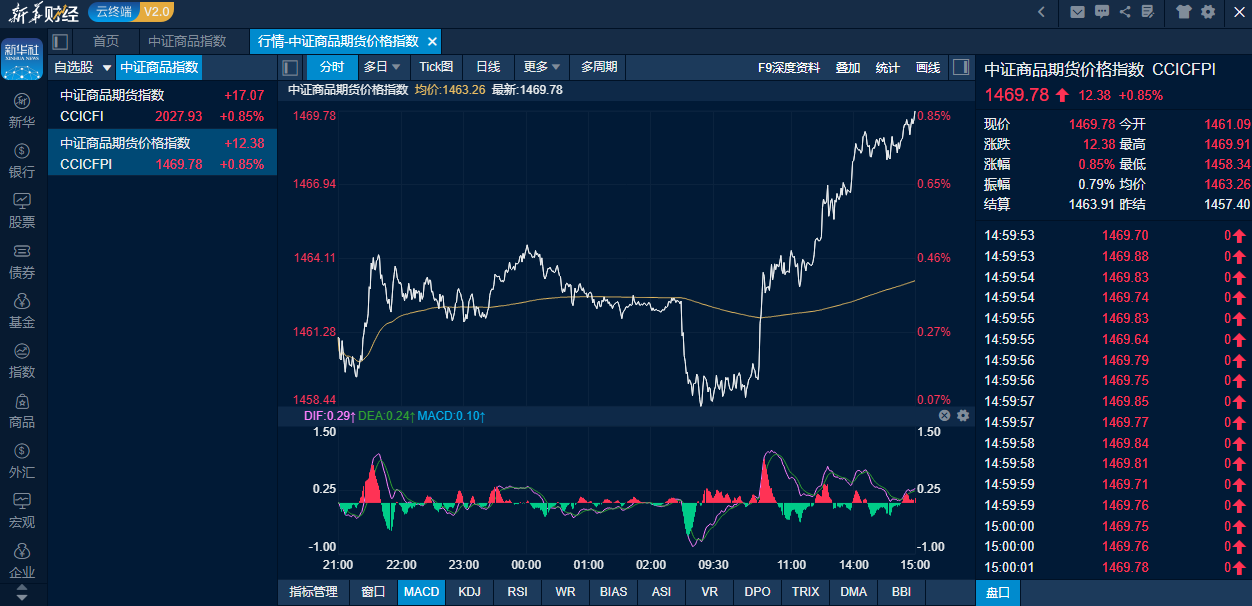
Group 1: Market Overview - The domestic commodity futures market stabilized on November 6, with most varieties rebounding. The China Securities Commodity Futures Price Index closed at 1469.78 points, up 12.38 points or 0.85% from the previous trading day [1] - The China Securities Commodity Futures Index closed at 2027.93 points, also up 17.07 points or 0.85% from the previous trading day [1] Group 2: Chemical Sector - The chemical sector showed significant rebound signs, with paraxylene (PX) leading the market with a 3.05% increase, reaching a two-month high. Improved supply-demand expectations were the main drivers for PX's price increase [2] - The demand for PX is supported by a recovery in new orders from weaving enterprises and a reduction in inventory levels for weaving and polyester products [2] Group 3: Coking Coal and Coke - Coking coal and coke futures rose, with coking coal and coke main contracts recording increases of 2.38% and 2.07%, respectively. The tightening supply is a major bullish factor for the coking market [3] - As of November 6, the capacity utilization rate of coking coal mines was 83.8%, down 1 percentage point week-on-week, indicating a reduction in supply [3] Group 4: Shipping Index - The shipping index for Europe experienced a significant decline of nearly 4%, with a drop of 3.91% at the close. This was attributed to market adjustments following previous price increases and high capacity levels [4] - The main contract for the shipping index saw a reduction of 5660 contracts, with a net outflow of over 200 million yuan, indicating a retreat of bullish sentiment [4] Group 5: Asphalt and Other Chemical Products - The asphalt market continued to show weakness, hitting a new low not seen since September of the previous year, with a 2.05% decline. The drop was influenced by falling oil prices and seasonal demand reductions [5] - Other chemical products like polyethylene continued to show weakness, although the decline in prices moderated towards the end of the trading day [5]
广发早知道:汇总版-20251106
Guang Fa Qi Huo· 2025-11-06 05:36
Report Industry Investment Rating No relevant information provided. Core Viewpoints of the Report The report comprehensively analyzes various financial derivatives and commodity futures, including stock index futures, Treasury bond futures, precious metals, shipping index futures, and multiple metal and agricultural product futures. It provides market conditions, influencing factors, and operation suggestions for each category, highlighting market trends and potential investment opportunities and risks in different sectors. Summary by Directory Financial Derivatives - Financial Futures Stock Index Futures - Market condition: A-shares showed resilience, with major indices rebounding after an early decline. Most major contracts of the four stock index futures closed higher, and the basis discount of the main contracts widened. Power resource-related industries performed well, while technology sectors corrected [2][3]. - News: The State Council Tariff Commission adjusted tariff measures on US imports. Overseas, the Bank of Japan's meeting minutes indicated potential interest rate hikes [3][4]. - Capital: On November 5, the trading volume in the A-share market decreased slightly. The central bank conducted reverse repurchase operations, resulting in a net withdrawal of funds [4]. - Operation suggestion: With unclear market directions and cold trading sentiment, it is recommended to wait and see [4]. Treasury Bond Futures - Market performance: Most Treasury bond futures closed lower, with minor changes in the yields of major interest rate bonds in the interbank market [5]. - Capital: The central bank conducted reverse repurchase operations, resulting in a net withdrawal of funds. The interbank liquidity was loose, and the overnight repurchase rate remained stable [5][6]. - Operation suggestion: The upward trend of Treasury bond futures driven by the central bank's bond purchases has paused. It is recommended to buy on dips for the 10-year Treasury bond active bond 250016.IB and consider positive arbitrage strategies [6]. Financial Derivatives - Precious Metals - Market review: The US Supreme Court debated the legality of Trump's large-scale tariffs. US employment data improved slightly, and the government shutdown affected market liquidity [7][8]. - Market situation: Precious metals stopped falling and rebounded. Gold closed at $3,978.75 per ounce, up 1.21%, and silver closed above $48 per ounce, up 1.79% [9]. - Outlook: In the medium to long term, precious metals are expected to enter a bull market, but there may be a 2 - 3 month consolidation period after reaching new highs. Short-term gold is expected to trade between $3,900 - $4,030, and silver between $47 - $49 [9][10]. - Operation suggestion: Hold long positions at low levels and buy on dips [32]. Financial Derivatives - Shipping Index (European Route) - Spot price: As of November 4, the freight quotes for Shanghai - Europe routes varied among different shipping companies [11]. - Shipping index: As of November 3, the SCFIS European route index decreased, while the US West route index increased. As of October 31, the SCFI composite index increased [11]. - Fundamentals: As of November 4, the global container shipping capacity increased year-on-year. The eurozone's October composite PMI was 52.2, and the US October manufacturing PMI was 48.7 [11]. - Logic: The futures market oscillated upward, and the main contract is expected to fluctuate between 1,800 - 2,000 points [12]. - Operation suggestion: Buy on dips for the December contract in the short term [12]. Commodity Futures - Non-ferrous Metals Copper - Spot: As of November 5, the average price of electrolytic copper decreased, and the premium/discount showed mixed changes. Market sentiment was still cautious [12]. - Macro: The US dollar index strengthened, suppressing copper prices. The US October ISM manufacturing PMI was lower than expected, and the Trump tariff case was under review [13]. - Supply: The spot TC of copper concentrate remained low. In October, the production of electrolytic copper decreased, and it is expected to decline slightly in November [13]. - Demand: The downstream demand for copper showed strong resilience, with more purchase orders released after price corrections [14]. - Inventory: LME, COMEX, and domestic social inventories of copper increased [15]. - Logic: The short - term rise in copper prices may suppress demand, but the long - term supply - demand contradiction supports the upward movement of the price bottom. - Operation suggestion: Pay attention to the support at 84,000 and the resistance at 86,500 [16]. Aluminum Oxide - Spot: On November 5, the spot prices of aluminum oxide in different regions showed mixed trends, with a generally loose supply pattern and a weakening price [16]. - Supply: In October, the production of metallurgical - grade aluminum oxide increased year - on - year. The operating capacity decreased slightly, and it is expected to remain in a supply - surplus situation in November [17]. - Inventory: In October, the inventories of aluminum oxide at ports, factories, and electrolytic aluminum plants increased [17]. - Logic: The price of aluminum oxide is expected to remain weakly volatile, with the main contract trading between 2,750 - 2,900 yuan/ton [18]. - Operation suggestion: The main contract is expected to operate between 2,750 - 2,900 yuan/ton [18][19]. Aluminum - Spot: On November 5, the average price of A00 aluminum decreased, and the premium/discount also declined, with limited actual transactions [20]. - Supply: In October, domestic electrolytic aluminum production increased slightly year - on - year and month - on - month. The aluminum - water ratio increased, and the operating capacity remained stable. It is expected that the daily output of aluminum ingots may decline slightly in November [20]. - Demand: In the traditional peak season, the weekly operating rates of downstream aluminum processing products declined [20]. - Inventory: Domestic social inventories of aluminum ingots increased, while LME inventories decreased [21]. - Logic: The short - term price of aluminum will fluctuate between event - driven factors and weak fundamentals. Pay attention to the resistance at 21,500 yuan/ton [22]. - Operation suggestion: The main contract is expected to operate between 20,800 - 21,600 yuan/ton [23]. Aluminum Alloy - Spot: On November 5, the average price of aluminum alloy ADC12 decreased, with weak spot trading [23]. - Supply: In September, the production of recycled aluminum alloy ingots increased, and the operating rate rose. It is expected that the operating rate will remain stable in October [23]. - Demand: In October, demand showed a mild recovery, but the transmission of terminal demand was not smooth, and high prices suppressed purchasing willingness [24]. - Inventory: In October, the social inventory of aluminum alloy increased slightly, and the registered warehouse receipts increased [24]. - Logic: The price of ADC12 is expected to remain strongly volatile, with the main contract trading between 20,400 - 21,000 yuan/ton [25][26]. - Operation suggestion: The main contract is expected to operate between 20,400 - 21,000 yuan/ton. Consider arbitrage strategies [26]. Zinc - Spot: On November 5, the average price of zinc ingots decreased, and downstream procurement was mainly for rigid demand [26]. - Supply: The processing fees of domestic and imported zinc concentrates decreased. From January to October, the cumulative production of refined zinc increased. It is expected that the processing fees will continue to decline in November [27]. - Demand: The operating rates of primary zinc processing industries were generally stable, and overall demand showed no significant improvement [28]. - Inventory: Domestic social inventories of zinc decreased, while LME inventories remained stable [28]. - Logic: Zinc prices are expected to be volatile and strong in the short term, but the fundamentals may limit further upward movement. It may continue to trade within a range [29]. - Operation suggestion: The main contract is expected to operate between 22,300 - 23,000 yuan/ton [29]. Tin - Spot: On November 5, the price of tin decreased, and the spot premium remained unchanged. The market transaction improved slightly [29]. - Supply: In September, domestic tin ore imports decreased, and tin ingot imports also declined. The supply from Myanmar showed signs of improvement [30]. - Demand: The demand for tin remained weak, with a decline in orders in the solder industry. Although some new fields drove tin consumption, it was not enough to make up for the shortfall [31][32]. - Inventory: LME inventories increased, while domestic social inventories decreased [31]. - Logic: Considering the strong fundamentals, it is recommended to hold long positions at low levels and buy on dips. Pay attention to the supply recovery in Myanmar [32]. - Operation suggestion: Hold long positions at low levels and buy on dips [32]. Nickel - Spot: As of November 5, the average price of electrolytic nickel decreased, and the import price also declined [32]. - Supply: In the capacity expansion cycle, the production of refined nickel decreased slightly in October but remained at a high level [33]. - Demand: The demand from electroplating and alloy industries was stable, while the demand from stainless steel was average. The demand for nickel sulfate showed signs of improvement in the short term but faced challenges in the medium term [33]. - Inventory: LME inventories remained high, while domestic social inventories decreased slightly, and bonded area inventories declined [33]. - Logic: The nickel market is expected to remain weakly volatile, with the main contract trading between 118,000 - 124,000 yuan/ton. Pay attention to macro - level changes and Indonesian policies [34]. - Operation suggestion: The main contract is expected to operate between 118,000 - 124,000 yuan/ton [34][35]. Stainless Steel - Spot: As of November 5, the prices of 304 cold - rolled stainless steel in Wuxi and Foshan showed different trends, and the basis increased [36]. - Raw materials: The price of nickel ore remained firm, while the price of nickel iron decreased. The chromium iron market was weak, and the cost support declined [36]. - Supply: In September and October, the production of stainless steel increased. The production of the 300 - series remained at a high level [37]. - Inventory: Social inventories decreased slightly, and the number of warehouse receipts declined [37]. - Logic: The stainless steel market is expected to remain weakly volatile, with the main contract trading between 12,500 - 13,000 yuan/ton. Pay attention to macro - level changes and steel mill supply [38]. - Operation suggestion: The main contract is expected to operate between 12,500 - 13,000 yuan/ton [38][39]. Lithium Carbonate - Spot: As of November 5, the prices of battery - grade and industrial - grade lithium carbonate decreased, and the trading volume was weak [39]. - Supply: In October, the production of lithium carbonate increased. Recently, the output of lithium carbonate from spodumene decreased slightly, while that from mica remained stable [40][42]. - Demand: The overall demand was optimistic, with an increase in production schedules in the iron - lithium and ternary sectors. Pay attention to the demand after November [40][42]. - Inventory: The overall inventory decreased, with a reduction in smelter and downstream inventories [41]. - Logic: The short - term fundamentals support the price, but the trading logic has shifted. The price is expected to fluctuate between 78,000 - 82,000 yuan/ton [42]. - Operation suggestion: The main contract is expected to operate between 78,000 - 82,000 yuan/ton [42][43]. Commodity Futures - Black Metals Steel - Spot: The spot price of steel was weak, and the basis strengthened [43]. - Cost and profit: The cost of iron elements had weak support, while the cost of carbon elements had support. Profits from high to low were billet > hot - rolled coil > rebar > cold - rolled coil [43]. - Supply: From January to September, the production of iron elements increased. In October, the growth rate slowed down, and the output of the five major steel products increased slightly [43]. - Demand: Domestic demand expectations were weak, while exports remained high. The apparent demand for steel increased [44]. - Inventory: The inventory of the five major steel products decreased, and it is expected that the inventory center will increase year - on - year but decrease month - on - month [44]. - Viewpoint: The 1 - month contract has a loose supply of iron elements. It is recommended to hold the strategy of going long on coking coal and short on hot - rolled coils [44]. Iron Ore - Spot: As of November 5, the prices of mainstream iron ore powders decreased [46]. - Futures: The main contract of iron ore increased slightly, while the far - month contract decreased. The 1 - 5 spread widened [47]. - Basis: The basis of different iron ore varieties was positive [48]. - Demand: The daily consumption of imported iron ore decreased, and the profitability of steel mills declined [49]. - Supply: Global iron ore shipments decreased, while the arrivals at 45 ports increased significantly [50]. - Inventory: Port inventories increased, the daily port clearance volume increased, and steel mill inventories decreased [51]. - Viewpoint: The iron ore market is expected to be weakly volatile. It is recommended to wait and see on a single - side basis and consider the strategy of going long on coking coal and short on iron ore [52]. Coking Coal - Spot and futures: As of November 5, coking coal futures rebounded, and the prices of Shanxi and Mongolian coking coal were strong [53]. - Supply: The production of coking coal increased slightly, and the inventory decreased [54]. - Demand: The production of coke increased slightly, while the iron - making output decreased significantly. The demand for coking coal from steel mills weakened [55]. - Inventory: The overall inventory of coking coal decreased slightly, with inventory reductions in mines, ports, and washing plants, and inventory increases in coking plants and steel mills [55]. - Viewpoint: It is recommended to go long on coking coal 2601 on dips and consider the strategy of going long on coking coal and short on coke [55]. Coke - Spot and futures: As of November 5, coke futures rebounded, and the third round of price increases by mainstream coke enterprises was implemented [56]. - Profit: The average profit per ton of coke for independent coking plants was negative, but the loss narrowed after the price increase [56]. - Supply: The price of coking coal increased, providing cost support for coke. The production of coke increased slightly [57]. - Demand: Due to environmental restrictions, the iron - making output decreased, and the demand for coke from steel mills was suppressed [57]. - Inventory: The overall inventory of coke increased slightly, with inventory increases in coking plants and ports and inventory decreases in steel mills [57]. - Viewpoint: It is recommended to go long on coke 2601 on dips and consider the strategy of going long on coking coal and short on coke [58]. Commodity Futures - Agricultural Products Meal - Spot market: On November 5, the prices of domestic soybean meal and rapeseed meal increased, and the trading volume of soybean meal increased [59]. - Fundamentals: The State Council adjusted tariff measures on US imports. Bangladesh agreed to purchase US soybeans, and the estimated soybean yield in the US was adjusted [59][60]. - Market outlook: The adjustment of tariffs on US imports boosted the prices of US soybeans and domestic futures. The cost support for domestic soybean meal has increased [60][61]. Live Pigs - Spot: The spot price of live pigs was weak, with a decline in prices in various regions [62]. - Market data: The profit of live pig breeding decreased, and the average slaughter weight decreased slightly [62]. - Market outlook: The market supply is loose, and the pig price is expected to be weakly volatile. It is recommended to hold the 3 - 7 reverse spread and operate with caution [63]. Corn - Spot price: On November 5, the prices of corn in Northeast China and North China showed different trends, with light market transactions [64]. - Fundamentals: The grain inventory in Guangzhou Port decreased slightly, while the corn inventory increased [64]. - Market outlook: The supply pressure remains, and the upward movement of the corn price is limited [64].