航天

Search documents
SpaceX启动华尔街投行竞标,为潜在IPO甄选承销商
Ge Long Hui A P P· 2025-12-14 22:28
此前报道称,SpaceX 已于周五告知员工,公司正筹备明年可能进行的公开上市。首席财务官布雷特・ 约翰逊在发给员工的信息中称:"我们的设想是,若公司能出色执行计划且市场条件配合,此次公开上 市有望筹集巨额资金。"约翰逊同时写道,IPO 是否成行、具体何时推进,目前仍 "存在高度不确定 性"。 格隆汇12月15日|据华尔街日报,知情人士透露,SpaceX 高管已启动华尔街投行甄选程序,为公司首 次公开募股(IPO)提供顾问服务。知情人士表示,多家投行定于本周进行首轮提案,这一过程被称为 "竞标角逐"(bake-off),是这家火箭制造商朝着可能成为 "重磅 IPO" 迈出的最具体步骤。 ...
五位专家和企业家谈——如何发挥新型举国体制优势(科技视点·大家谈)
Ren Min Ri Bao· 2025-12-14 22:06
Group 1 - The core idea of the article emphasizes the importance of improving the new type of national system to achieve decisive breakthroughs in key core technologies across various fields such as integrated circuits, high-end equipment, and biotechnology [1][4] - The new type of national system is seen as a crucial method for accelerating the establishment of a technology powerhouse in China, combining government leadership with market mechanisms [2][12] - The article highlights the need for a systematic approach to strengthen the national strategic technology force, ensuring a full-process breakthrough from scientific discovery to talent cultivation [3][10] Group 2 - The article discusses the successful implementation of the "Hualong One" nuclear power project, showcasing how private enterprises can participate in national technology initiatives under the new type of national system [6][8] - It illustrates the collaborative efforts between private companies, research institutions, and government bodies in overcoming technical challenges, emphasizing the importance of a coordinated approach [7][8] - The article points out that the new type of national system provides unprecedented strategic opportunities and institutional guarantees for private enterprises to engage in major national technology projects [8][12] Group 3 - The article stresses the need for a combination of effective markets and proactive government roles in advancing China's aerospace capabilities, highlighting the historical achievements of the country in this field [9][10] - It calls for a new innovation development model that integrates national guidance, local initiatives, and market leadership to enhance the aerospace industry [10][12] - The article emphasizes the importance of aligning scientific research with national needs to ensure that breakthroughs in core technologies are effectively translated into productive capabilities [11][13] Group 4 - The article discusses the role of technology finance in supporting high-level technological self-reliance, advocating for a shift towards knowledge value investment to attract financial capital to critical areas [15][16] - It highlights the importance of integrating various financial resources to support strategic emerging industries and facilitate breakthroughs in technology [16][17] - The article suggests that a well-developed technology finance system is essential for promoting innovation and ensuring that financial capital can effectively contribute to technological advancements [16][17]
SpaceX要上市,估值8000亿美金!马斯克冲击首个万亿美元身家
Sou Hu Cai Jing· 2025-12-14 15:24
当马斯克在社交媒体上一个神秘的暗示,遇到公司内部一份确凿的备忘录,全球资本市场瞬间炸开了锅。 没错,那个发射火箭像放烟花、用星链编织全球网络的SpaceX,真的在认真考虑IPO了!而且,这可能将是一次史无前例的巨无霸上市。 然而,时代变了。综合多家外媒的深度分析,推动这一战略转折的核心力量,很可能来自另一个同样炙手可热的赛道——人工智能(AI)。 马斯克不仅是特斯拉和SpaceX的掌舵人,也是AI公司xAI的创立者。他深信,未来航天、人工智能、机器人等技术将深度融合,深刻重塑人类文明。 而要"赢得"这场关乎未来的AI竞赛,需要海量资金和资源。让SpaceX这家"现金牛"上市,无疑是筹集巨额资本、支撑其宏大AI与科技融合蓝图的最强引擎。 有评论就调侃道,这可能是马斯克为了给AI大战筹备"军费",不惜搬出自己最硬的"家底"。 SpaceX的底气来自其日益坚实的基本面。尽管作为私营公司不披露详尽的财报,但马斯克本人透露公司已连续多年实现正自由现金流。 更引人注目的是其收入结构的变化:预计今年总收入约155亿美元,其中来自NASA的合同收入约为11亿美元;而明年,仅太空商业收入一项,就有望超过 NASA的全年预算。 ...

晚报 | 12月15日主题前瞻
Xuan Gu Bao· 2025-12-14 14:38
Film Industry - As of December 13, 2025, China's box office has surpassed 50 billion yuan, an increase of nearly 7.5 billion yuan compared to the entire year of 2024, with 1.194 billion moviegoers, an increase of approximately 184 million compared to 2024 [1] - The animated film "Nezha: Birth of the Demon Child" leads the box office with 15.446 billion yuan [1] - Analysts believe that the high reputation and high screening rate of the imported animated film "Zootopia 2" may help its box office exceed expectations, while the upcoming "Avatar 3: The Way of Fire" is expected to further boost box office performance [1] Brain Science - Brain Tiger Technology announced the completion of the first clinical trial of its fully implanted, wireless brain-computer interface product, which allows a patient with complete paralysis to browse the web and play games [2] - The global brain-computer interface market is projected to reach approximately $2.62 billion in 2024 and $2.94 billion in 2025, with a compound annual growth rate of 17.35% expected to reach $12.4 billion by 2034 [2] Metaverse - The Ministry of Industry and Information Technology is soliciting opinions on the "Metaverse Industry Comprehensive Standardization System Construction Guide (2026 Edition)," aiming to establish over 20 national and industry standards by 2028 [3] - The metaverse is characterized by immersive interconnectivity between digital and physical worlds, with significant growth potential in areas such as XR, AIGC, and blockchain technologies [3] Rural Revitalization - The Ministry of Commerce and other financial authorities issued a notice to enhance collaboration between commerce and finance to boost consumption, particularly in rural areas [4] - The retail sales of consumer goods in rural areas are projected to reach 6.6729 trillion yuan in 2024, growing at a rate of 4.3%, which is faster than urban areas [4] Cannabis - Former President Trump is reportedly pushing for a historic plan to lower the federal regulation level of cannabis to that of common prescription painkillers, marking a significant shift in U.S. federal drug policy [5] Commercial Space - SpaceX is preparing for a potential IPO in 2026, with a target valuation of approximately $1.5 trillion, comparable to Saudi Aramco's record valuation [6] - The rapid expansion of SpaceX's Starlink satellite internet service and ongoing projects like the Starship lunar and Mars missions are key factors driving the IPO [6] Smart Healthcare - The National Medical Insurance Administration plans to advance smart healthcare initiatives by promoting AI development in the medical insurance sector and hosting competitions for AI-assisted diagnosis [7] - The integration of AI in healthcare is expected to accelerate, with significant investments from leading companies in the sector [7]
中信建投:牛市底层逻辑仍在 跨年有望迎来新一波行情
Zheng Quan Shi Bao Wang· 2025-12-14 12:46
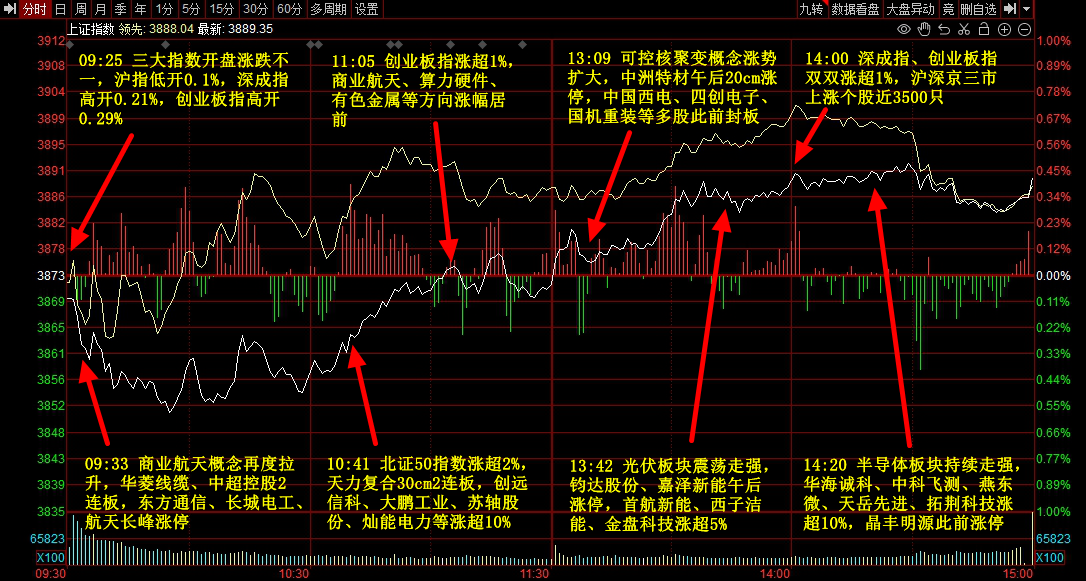
Core Viewpoint - The report from CITIC Securities indicates that the A-share and H-share markets have undergone a prolonged adjustment period from early September to early December, with investor sentiment becoming cautious. However, recent key events and data releases have met or slightly exceeded market expectations, suggesting that the underlying logic for a bull market remains intact, driven by structural trends and capital market reform policies [1] Market Adjustment and Outlook - The market has largely completed its adjustment phase, and with fund rankings being finalized, there is potential for a new wave of market activity as the year-end approaches [1] Sector Focus - Mid-term industry allocation should focus on sectors with certain growth catalysts, particularly non-ferrous metals and AI computing power. Thematic investments should prioritize commercial aerospace, with additional attention to controllable nuclear fusion and humanoid robots [1] Investment Opportunities - The Hong Kong stock market also presents investment opportunities, with potential hot sectors including internet giants and innovative pharmaceuticals. Key areas of focus include non-ferrous metals, commercial aerospace, AI, humanoid robots, controllable nuclear fusion, innovative pharmaceuticals, and non-bank financials [1]

史上最大IPO将至!估值8000亿美元只是起点,碾压OpenAI!SpaceX只谈“天文数字”!
雪球· 2025-12-14 07:08
Group 1 - The core viewpoint of the article is that SpaceX is preparing for an IPO in 2026 with a target valuation of $1.5 trillion, significantly higher than its current valuation of $800 billion [2][5][6]. - SpaceX's stock price has surged to $421 per share, doubling from $212 in July, and has surpassed OpenAI's valuation, reclaiming its title as the world's most valuable unicorn [7][8]. - The anticipated IPO could raise $30 billion, potentially setting a record for the largest IPO in history, surpassing Saudi Aramco's $29.4 billion [7]. Group 2 - The urgency for the IPO is driven by the need for substantial funding for ambitious projects, including Mars colonization, lunar base construction, and a space-based AI data center [10][12]. - Analysts express concerns that the IPO may lead to the integration of Tesla and SpaceX, raising risks of related party transactions [12][13]. - Despite the potential for significant returns, there are worries about investor patience, as SpaceX remains a capital-intensive company focused on long-term projects [13][14].

快舟十一号遥八运载火箭发射成功;全球首台船用中压直流混合式断路器研制成功丨智能制造日报
创业邦· 2025-12-14 03:16
Group 1 - The successful launch of the Kuaizhou-11 Yao-8 rocket marks its fourth flight, successfully sending the Di'er-5 space experiment device and the Hope-5 Phase II satellite into orbit [2] - The world's first shipboard medium-voltage direct current hybrid circuit breaker has been developed, achieving a significant technological breakthrough in the ship power equipment sector, with a voltage level of 10 kV, which is 45 times that of standard residential electricity [2] - Four high-end five-axis CNC machine tools have been delivered in Shenyang, developed through a collaboration between China General Technology Group and Dongfang Electric Group, breaking the "disconnection between research and application" in the industry [2] Group 2 - The successful launch of the Di'er-5 China Science and Technology City spacecraft by private aerospace company Ziwei Technology signifies a new phase in China's commercial spaceflight, laying the foundation for broader space scientific research and cargo transportation [2]

科技周报|京东提供15万套小哥之家;国补政策持续
Di Yi Cai Jing· 2025-12-14 02:11
Group 1: JD's Housing Initiative - JD announced the provision of 15,000 "Little Brother Homes" for delivery personnel over the next five years, investing 22 billion yuan through various support methods [1] - The initiative aims to improve living conditions for delivery workers, which is crucial for maintaining service quality and market competitiveness [1] - This move reflects a strategic choice to stabilize core human resources and enhance fulfillment capabilities amid intense competition [1] Group 2: National Subsidy Policy - The Central Economic Work Conference confirmed the continuation of national subsidies next year, focusing on optimizing the "two new" policies [2] - There is a call for improved subsidy application processes to alleviate the financial burden on offline retailers [2] - Suggestions include allowing consumers to claim subsidies directly through government platforms to streamline the process [2] Group 3: Air Conditioning Industry Standards - Major air conditioning companies are pushing for the implementation of "aluminum instead of copper" standards due to rising copper prices [3] - New group standards for aluminum heat exchangers have been published, with additional standards in development [3] - The initiative aims to enhance consumer trust and address technical challenges related to aluminum heat exchangers [3] Group 4: SpaceX IPO Confirmation - Elon Musk indirectly confirmed SpaceX's plans for an IPO next year, citing the need for funding to support rising AI-related expenses [4] - SpaceX's projected revenue for next year is between 22 billion to 24 billion USD, indicating strong financial performance [4] - The IPO could invigorate the global aerospace industry's capital narrative and set a precedent for other high-investment tech companies [4] Group 5: Xiaohongshu's "Little Red Card" Suspension - Xiaohongshu announced the suspension of its "Little Red Card" service starting January 1, 2026, due to insufficient user satisfaction [6] - The service, launched in September, faced challenges in competing with established players in the local lifestyle market [6] - Users will receive full refunds without needing to take any action, reflecting the company's commitment to customer service [6] Group 6: Cloud Deep Technology Financing - Cloud Deep Technology completed over 500 million yuan in C-round financing, with participation from various financial institutions and strategic investors [7] - The funding indicates a shift in the robotics industry from exploration to practical application [7] - The involvement of industry capital may support Cloud Deep's future market strategies and capital movements [7] Group 7: Successful Launch of CubeSat by Sun Yat-sen University - A student team from Sun Yat-sen University successfully launched the "Yixian-A" CubeSat, marking a significant achievement in satellite technology [8] - The satellite will conduct various scientific experiments and technology validations during its six-month mission [8] - This project highlights the university's contributions to new engineering education and talent development [8] Group 8: Whirlpool's Acquisition of Galanz Washing Machine Assets - Whirlpool announced plans to acquire washing machine assets from its controlling shareholder Galanz for 74.6193 million yuan [9] - The acquisition aims to resolve competition issues between Whirlpool and Galanz in the washing machine sector [9] - Galanz's washing machine products have a production capacity of 2 million units annually and are sold in over 200 countries [9]


中美又站在新的竞争领域,马斯克率先亮剑,中国如何接招?
Xin Lang Cai Jing· 2025-12-13 17:34
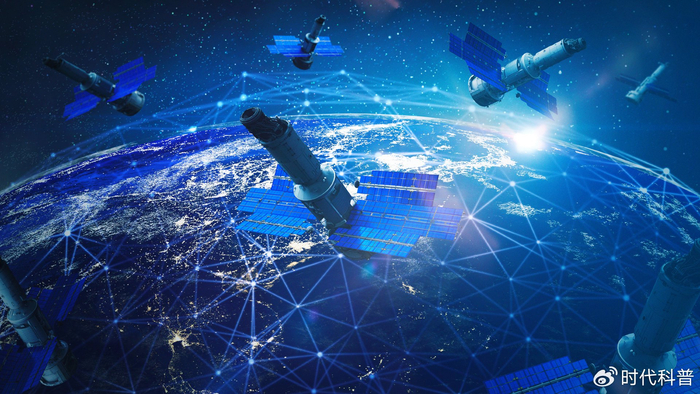
数据中心,可以理解为数字化时代的"发电厂",它通过集中放置的大量计算机(服务器),专门负责处 理、存储和传输我们在手机上、电脑上产生的各种数据,为各类在线服务提供稳定可靠的算力支撑。 在我们的生活中,不论是网络购物、在线支付、娱乐社交,还是社交媒体、在线办公、交通出行,都离 不开数据中心的支撑。可以说,咱们生活的方方面面,几乎都有数据中心的影子,而且未来的联系也会 越来越紧密。 对普通人来说,数据中心可以提供生活的便利。对于一个国家来说,数据中心更是直接影响经济发展。 有研究报告指出,当一个国家的计算力指数达到40分时,那么其指数每增加1点,其对GDP的拉动就能 比原来提高一半;如果计算力指数达到60分,那么每提高1分,其对GDP的拉动效果将提升到2.9倍! 作为世界上最强大的两个国家,中国和美国注定在未来的多个领域都将以竞争对手的身份相见。最近, 又有一个领域,有可能见证中美的巅峰对决——太空算力。 所谓的太空算力,就是在部署在太空中的算力系统,或者说是太空中的数据中心。目前,数据中心确实 是世界各国竞争的制高点,但这玩意要送上太空,到底是图个啥呢? 而且,目前世界各国大力发展的人工智能等技术,也都离不开海 ...
最新估值约为8000亿美元,SpaceX为IPO敲定股票交易计划
Sou Hu Cai Jing· 2025-12-13 15:37
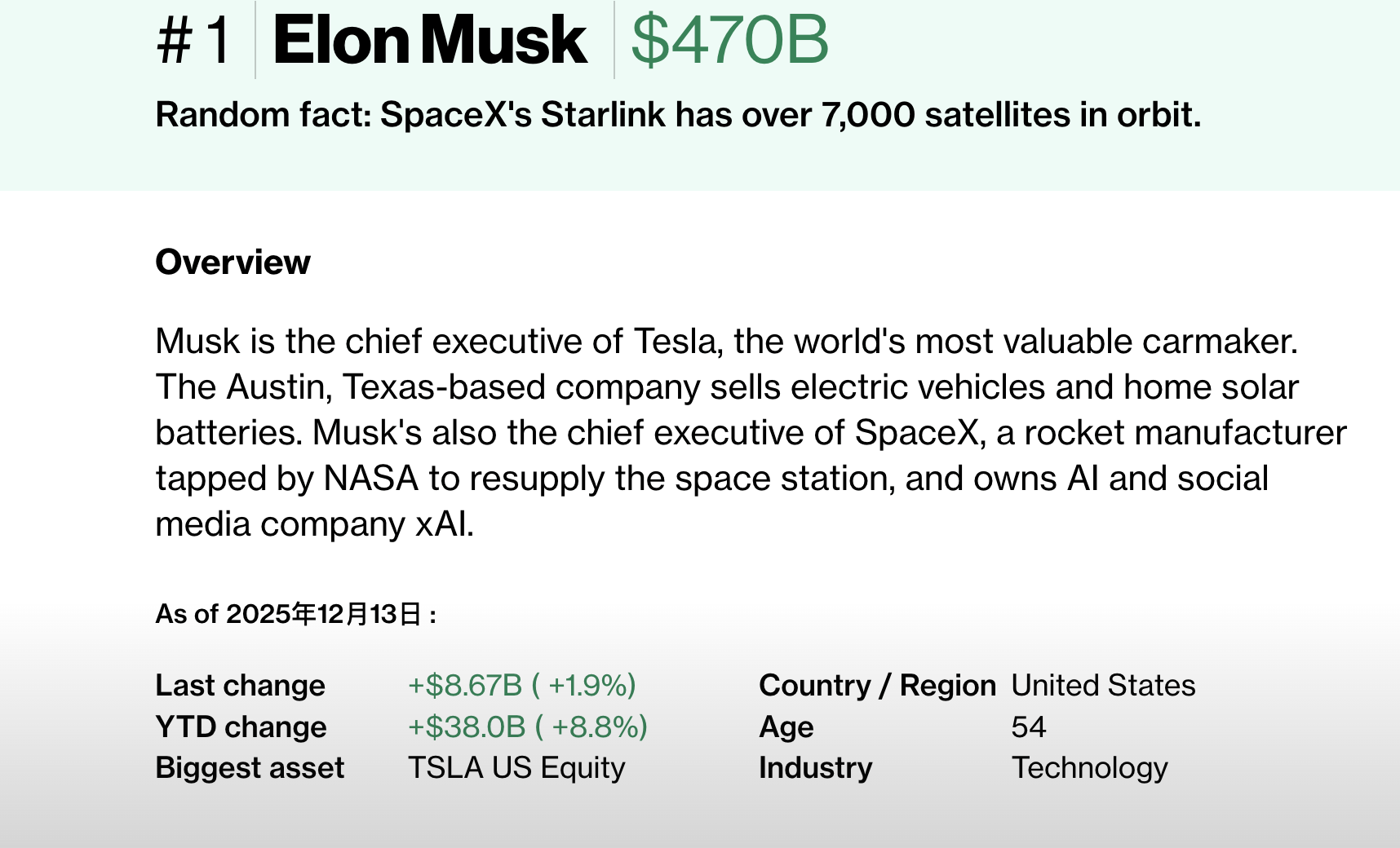
Core Insights - SpaceX is accelerating its IPO process, aiming for a valuation of approximately $1.5 trillion by 2025, driven by its Starlink and Starship projects [1][2] - The company has recently approved an internal employee stock sale at $421 per share, raising its valuation to about $800 billion, nearly doubling since July [1] - SpaceX's core business includes three main segments: rocket launches, Starlink, and the Starship program, with significant achievements in satellite deployment and human spaceflight [1] Financial Projections - SpaceX expects to generate $15 billion in revenue by 2025, primarily from its Starlink and Starship services [2] - The company plans to raise over $25 billion through its upcoming IPO [2] Leadership and Ownership - Elon Musk, the sole founder and CEO of SpaceX, holds 42% of the company's shares [1] - Musk's wealth has significantly increased, reaching approximately $470 billion, largely due to the rise in Tesla's stock price [2]