天然气

Search documents
各地能源保供能力提升 让温暖直达千家万户
Ren Min Wang· 2025-12-03 05:49
Core Viewpoint - The article emphasizes the importance of ensuring stable energy supply during winter, as increased energy demand due to lower temperatures affects both household heating and economic stability [1]. Group 1: Energy Supply and Demand - The demand for energy has surged due to colder temperatures, necessitating enhanced energy supply measures to ensure warmth for households and support economic growth [1]. - The National Energy Administration has called for improved communication between various departments and energy companies to monitor weather conditions and optimize resource allocation for energy supply [1]. Group 2: Coal and Natural Gas Supply - Coal and natural gas are identified as foundational elements for ensuring energy supply during the winter peak demand period [1]. - Automation and smart technologies are being utilized in coal production and transportation to enhance efficiency, such as remote control systems in coal mines and optimized logistics at ports [2]. Group 3: Renewable Energy Contribution - The share of renewable energy sources like wind, solar, and hydropower in China's energy mix is increasing, providing additional support for winter energy supply [2]. - As of the end of October, the total installed power generation capacity in China reached 3.75 billion kilowatts, a year-on-year increase of 17.3%, with solar power capacity growing by 43.8% and wind power capacity by 21.4% [2]. Group 4: Challenges and Solutions - The variability of renewable energy sources poses challenges for maintaining a balanced power supply, especially during extreme weather conditions [3]. - Various regions are implementing advanced monitoring and maintenance strategies for power infrastructure to ensure reliable electricity supply during winter [3]. Group 5: Digital Technology Integration - The integration of digital technologies such as AI, big data, and IoT is playing a crucial role in supporting winter energy supply efforts [4]. - Recommendations include using AI for demand forecasting and risk assessment, creating intelligent dispatch platforms, and employing digital tools for load management and emergency response [4].
行进的海岸线|黄海之滨崛起国家级能源岛
Yang Guang Wang· 2025-12-03 05:38
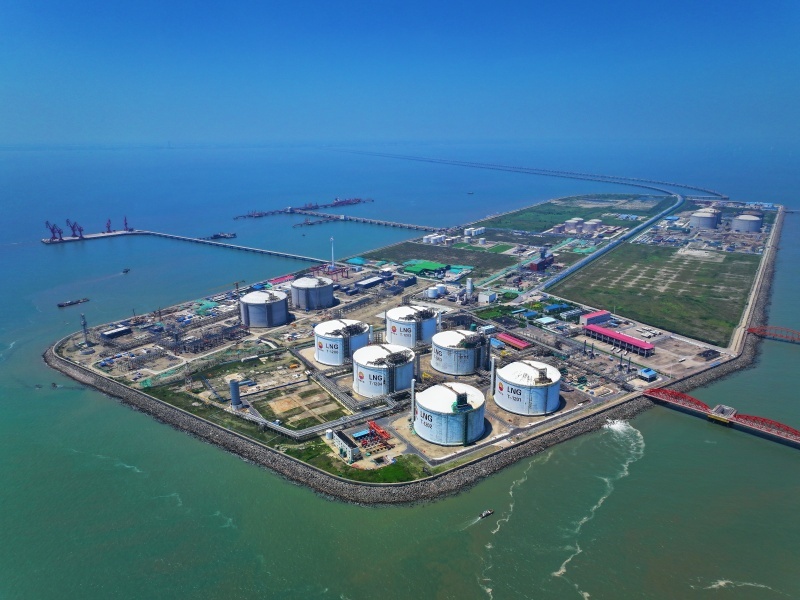
央广网南通12月2日消息(记者杨梦奎 顾炀威)冬日的早晨,沿着连接陆岛两端的黄海大桥驱车驶向海洋腹地, 一个3平方公里的现代化工业岛逐渐清晰——江苏如东洋口港的阳光岛。十几年前,这里还是黄海之滨的一片小沙 洲,如今已崛起为全国能源版图上的重要坐标。 据了解,如东虽坐拥全省最长海岸线,却因地质条件曾被视作"建港禁区"。转机出现在20世纪80年代,一次海洋 调查意外发现了埋藏于潮汐下的古长江深水水道。历经十余载论证,"修建人工岛、建设离岸式码头"的蓝图终于 落地,一座沙洲的命运从此改写。 海风带着咸湿的气息,吹拂着阳光岛的码头。11月28日上午,在记者的视线里,全长298米的"武当"号LNG运输船 正缓缓靠泊。它从加拿大卡提玛特港出发,历经15天航行,将7.6万吨液化天然气送达这里。 "这是今年阳光岛接卸的第76艘LNG船。这船LNG折合成气态天然气约1亿立方米,能满足2100万个家庭一个月的 用气量。"江苏液化天然气有限公司生产运营中心副经理齐绩站在码头上介绍。 如东洋口港阳光岛(央广网发 中石油江苏液化天然气有限公司供图) 齐绩是这座小岛变迁的见证者。"2010年我刚来时,岛上只有我们一家企业,到处是黄沙。" ...

开盘涨停!这家公司实控人或变更
Zheng Quan Ri Bao Zhi Sheng· 2025-12-03 03:41
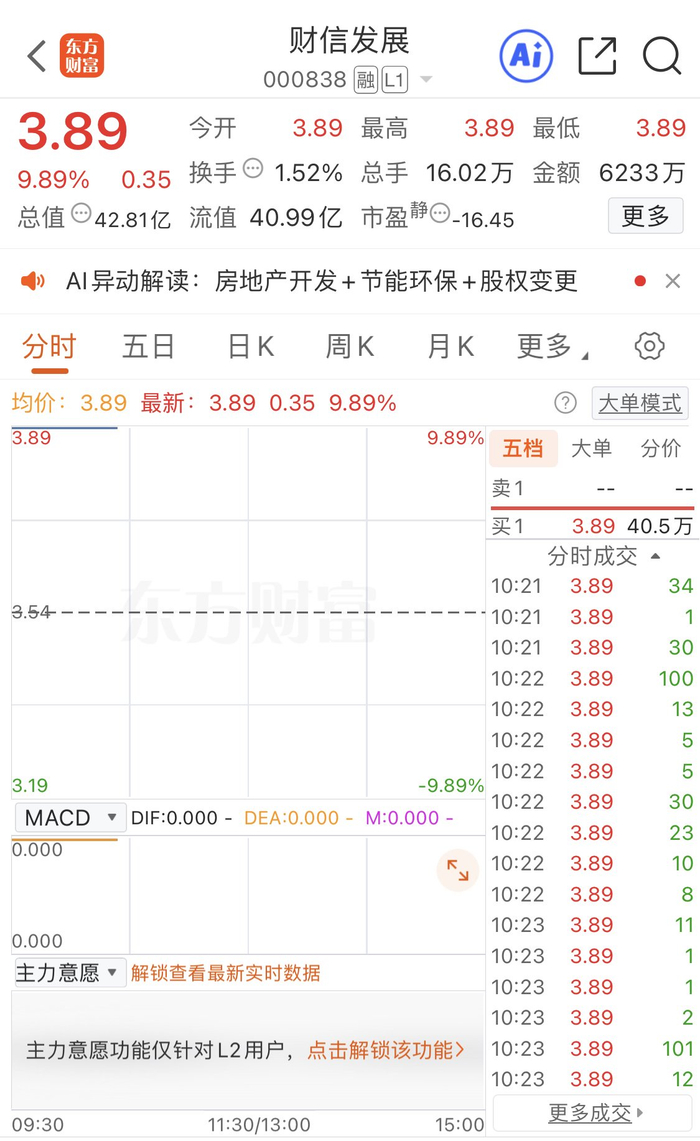
Core Viewpoint - The acquisition of a stake in Caixin Development by Jiangxi Zhongjiu Natural Gas Group is a strategic move aimed at diversifying the company's operations and improving its financial situation amid ongoing challenges in the real estate sector [3][4][5]. Group 1: Company Overview - Caixin Development's latest stock price is 3.89 yuan per share, with a market capitalization of 4.281 billion yuan [1][2]. - The company has faced significant financial difficulties, reporting a 71.4% year-on-year decline in revenue for the first three quarters, totaling 21.4 million yuan, and a net loss of 18.65 million yuan [4][5]. - As of September 30, the total assets of Caixin Development were 2.494 billion yuan, down 12.8% from the previous year [4]. Group 2: Acquisition Details - Jiangxi Zhongjiu plans to acquire between 20% to 29.99% of Caixin Development's shares, which corresponds to approximately 220 million to 330 million shares [3][4]. - The acquisition will result in a change of control, with Jiangxi Zhongjiu's actual controller, Yong Zhijun, becoming the new actual controller of Caixin Development [3][4]. Group 3: Strategic Implications - The acquisition is seen as a way for Jiangxi Zhongjiu to diversify its operations and leverage its stable cash flow from the natural gas sector to support Caixin Development [4][6]. - Analysts suggest that the new ownership could enhance Caixin Development's financial health and open up new business opportunities, particularly in the energy sector [5][6]. - The transition may require adjustments in the company's governance structure and strategic direction to align with the new controlling entity [5][6].

原油成品油早报-20251203
Yong An Qi Huo· 2025-12-03 02:30
原油成品油早报 二、库存 ·美国至11月28日当周API原油库存 248万桶,前值-185.9万桶。 ·美国至11月28日当周API汽油库存 313.6万桶,前值53.9万桶。 研究中心能化团队 2025/12/03 | 日期 | WTI | BRENT | DUBAI | diff FOB dated bre | BRENT 1- | WTI-BREN | DUBAI-B | NYMEX RB | RBOB-BR | NYMEX | HO-BRT | | --- | --- | --- | --- | --- | --- | --- | --- | --- | --- | --- | --- | | | | | | | 2月差 | T | RT(EFS | OB | T | HO | | | | | | | nt | | | | | | | | | 2025/11/26 | 58.65 | 63.13 | 64.41 | 0.77 | 0.59 | -4.48 | 0.20 | 188.90 | 16.21 | 232.55 | 34.54 | | 2025/11/27 | - | 63.34 | - | ...
陕天然气:参股公司建设的山西吉县—陕西延长输气管道项目(一期工程)已具备投运条件
Mei Ri Jing Ji Xin Wen· 2025-12-03 01:28
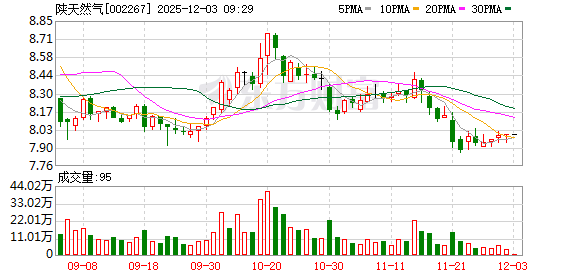
(文章来源:每日经济新闻) 陕天然气(002267.SZ)12月3日在投资者互动平台表示,公司参股公司建设的山西吉县—陕西延长输气 管道项目(一期工程)已具备投运条件,实现了晋陕管道互联互通。 每经AI快讯,有投资者在投资者互动平台提问:跨省管道何时能投运?目前有无潜在输送委托客户? 业务量预期如何? ...

000838,控制权将生变
Zheng Quan Shi Bao· 2025-12-02 23:57
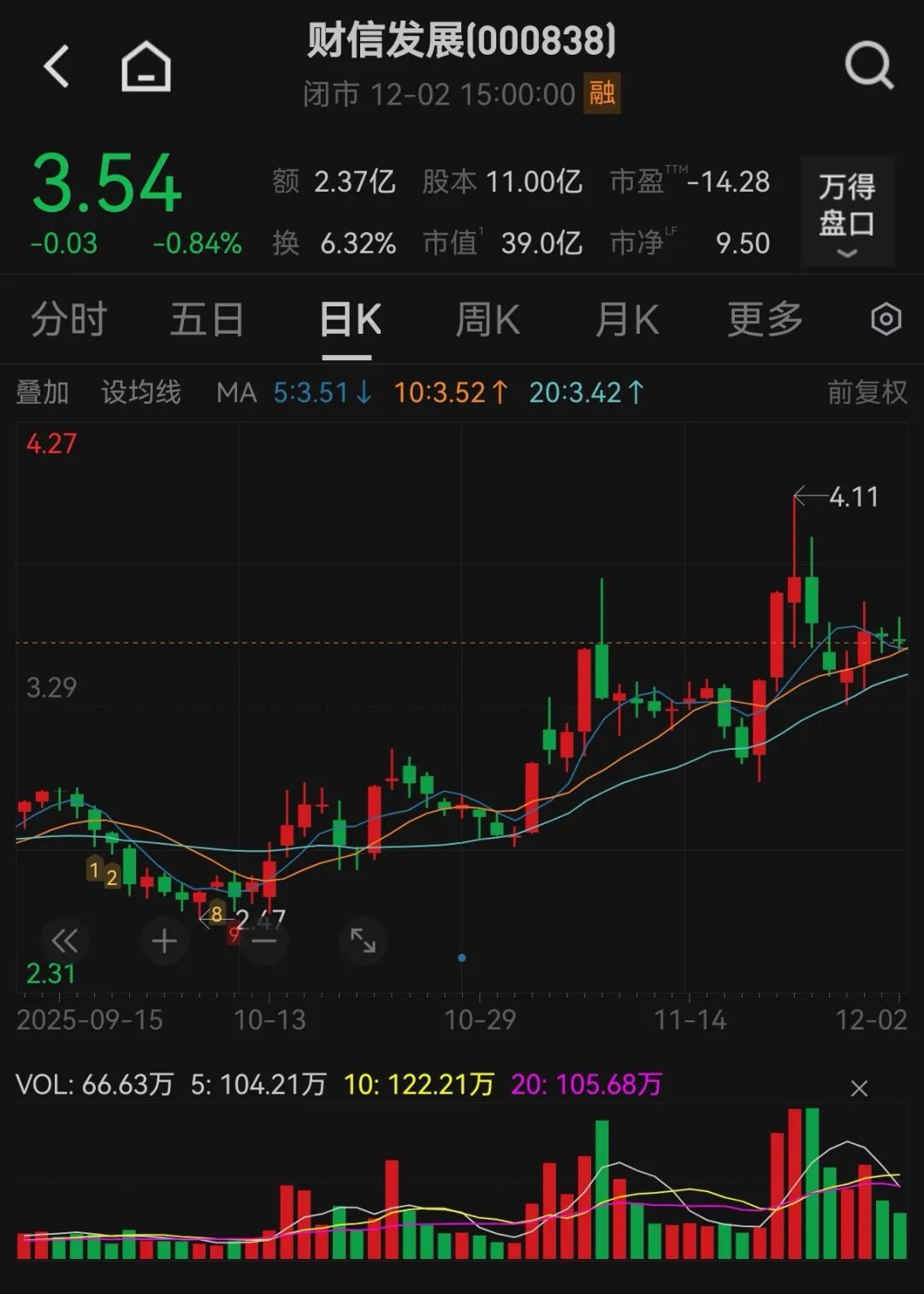
Group 1 - The core point of the article is that Caixin Development (000838) announced a significant change in its ownership structure, with Jiangxi Zhongjiu Natural Gas Group intending to acquire 20% to 29.99% of its shares, which will result in a change of the controlling shareholder and actual controller of the company [1][2] - The acquisition is part of Caixin Group's restructuring process, which began in June 2023, with Jiangxi Zhongjiu emerging as the selected investor [2] - Caixin Development's main business includes real estate development and environmental protection, reporting a revenue of 828 million yuan and a net loss of 260 million yuan for 2024, with significant ongoing financial pressures [3] Group 2 - As of September 2025, Caixin Development's total assets were 2.494 billion yuan, with liabilities of 2.051 billion yuan, indicating continued profitability challenges [3] - The company has made several business adjustments in recent years, including abandoning the acquisition of Caixin Environment due to insufficient profitability [3] - Jiangxi Zhongjiu, established in 2014 with a registered capital of 260 million yuan, focuses on urban gas, industrial supply, and LNG logistics, raising concerns about its experience in managing real estate and environmental sectors [3][4] Group 3 - Jiangxi Zhongjiu has previously invested 638 million yuan to acquire Xinjiang Torch, marking its second major capital market move in 2023 [4] - There are uncertainties regarding the business synergy between Jiangxi Zhongjiu's energy focus and Caixin Development's real estate and environmental operations [4] - The announcement did not specify the exact transaction price, payment method, or future business integration plans, leading to market speculation about Jiangxi Zhongjiu's financial capacity to complete the acquisition [4]

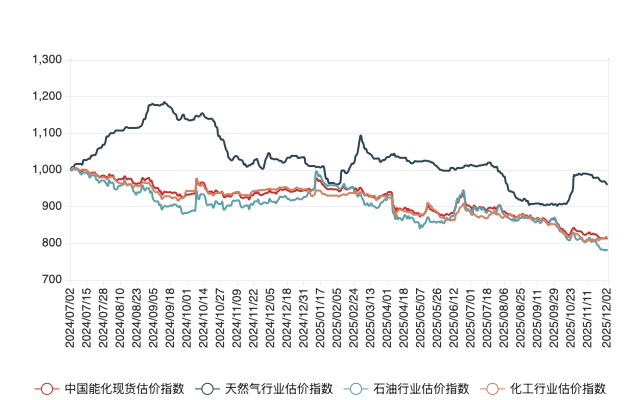
12月2日中国能化现货估价指数(CECSAI)较前一工作日上涨0.24%
Sou Hu Cai Jing· 2025-12-02 18:29
Core Insights - The China Energy and Chemical Spot Price Index rose to 815.19 points as of December 2, 2025, marking an increase of 1.94 points or 0.24% from the previous day, but a decrease of 184.81 points or 18.48% from the base period of July 2, 2024 [1] - The oil industry index reached 784.09 points, up 4.03 points or 0.52% from the previous day [1] - The natural gas industry index fell to 959.21 points, down 4.91 points or 0.51% from the previous day [2] - The chemical industry index increased to 818.07 points, rising by 1.04 points or 0.13% from the previous day [3] Industry Performance - The domestic energy and chemical spot price index has rebounded, with the oil sector leading the market due to international crude oil price increases and positive market sentiment driven by downstream replenishment [6] - The price of methanol surged due to strong auction results influenced by futures market gains, leading to an upward adjustment in market prices [6] Price Monitoring Data - The current prices for various oil products include: - Crude oil at 3391 CNY per ton, up 50 CNY or 1.50% from the previous period [7] - Gasoline prices in different regions remained stable or saw slight increases, with the highest being 7230 CNY per ton in East China [7][8] - Diesel prices also showed minor increases in certain regions [7][8] - Natural gas prices, particularly LNG, experienced declines, with prices in Inner Mongolia dropping to 4100 CNY per ton [8] - Chemical product prices varied, with some products like methanol seeing increases while others like ethylene glycol experienced slight declines [8][9] Index Methodology - The China Energy and Chemical Spot Price Index is developed by the Xinhua Index Research Institute, Jinlianchuang Network Technology Co., Ltd., and the Data Price Professional Committee of the China Price Association, monitoring 17 typical products across the oil and chemical industries [9] - The index aims to provide a comprehensive reflection of market price changes and industry development trends, utilizing a dataset that combines market inquiries, quotes, and transaction data [9]
第二家!“80后”江西能源大佬,将入主000838
Zhong Guo Ji Jin Bao· 2025-12-02 15:39
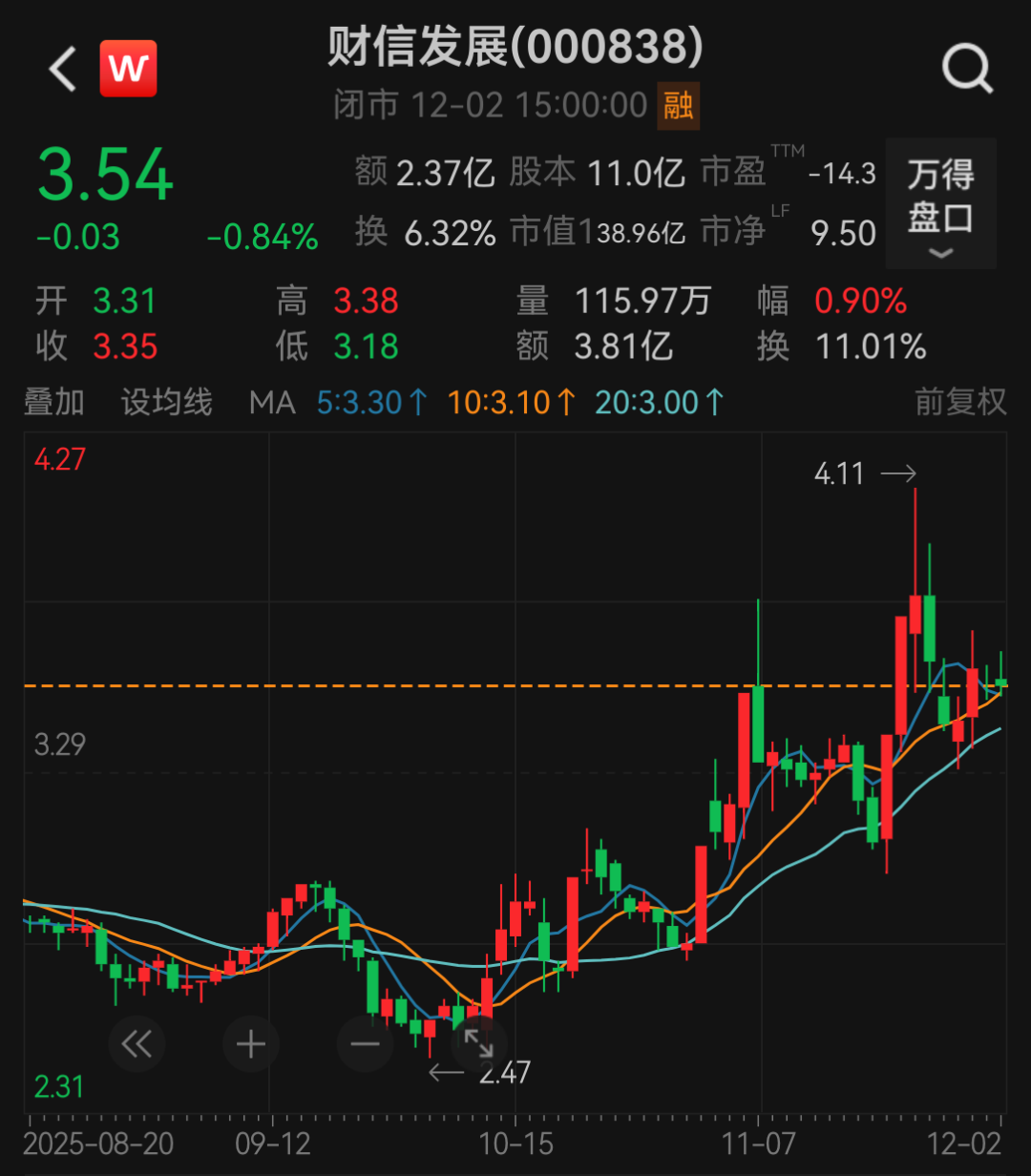
Group 1 - The core point of the article is that Yong Zhijun, a low-profile entrepreneur from Jiangxi, is set to become the controlling shareholder of Caixin Development through the acquisition of 20% to 29.99% of its shares by Jiangxi Zhongjiu Natural Gas Group [3][4] - Caixin Development's stock closed at 3.54 yuan per share on December 2, with a market capitalization of 3.896 billion yuan [2] - The acquisition will make Jiangxi Zhongjiu the controlling shareholder of Caixin Development, with Yong Zhijun as the actual controller [3] Group 2 - Jiangxi Zhongjiu was selected as the investor in the bankruptcy restructuring of Caixin Development and its related companies [4] - Yong Zhijun holds 90% of Jiangxi Zhongjiu, which has previously acquired a significant stake in Xinjiang Torch, becoming its new controlling shareholder [5] - Other potential investors, including major asset management companies, had previously expressed interest in the restructuring but were ultimately outbid by Jiangxi Zhongjiu [6]
第二家!“80后”江西能源大佬,将入主000838
中国基金报· 2025-12-02 15:30
中国基金报记者 卢鸰 继新疆火炬之后,低调的 "80 后 " 江西能源大佬雍芝君,又将入主另一家 A 股上市公司 —— 财信发展。 12 月 2 日,财信发展股价以 3.54 元 / 股收盘,最新市值为 38.96 亿元。 【导读】雍芝君有望入主财信发展 雍芝君有望入主财信发展 财信发展 12 月 2 日晚公告,江西中久天然气集团有限公司(以下简称江西中久)拟通过持 股平台公司收购财信发展 20% 至 29.99% 的股份,最终江西中久实际收购的股权比例根据 法院裁定批准的重整计划及相应债权人做出的选择确定。 本次投资完成后,江西中久将成为财信发展控股股东,其实际控制人雍芝君将成为财信发展 的实际控制人。 2025 年 10 月 16 日,财信发展接到管理人通知,管理人已完成公司控股股东财信地产及间 接控股股东财信集团等 13 家公司破产重整投资人招募遴选工作,江西中久被确定为中选投资 人。 东方资产等此前出局 公开资料显示,江西中久由雍芝君、卢一帆夫妇分别持有 90% 、 10% 的股份。雍芝君是四 川南充人, 2006 年毕业于南昌理工学院机电工程学院,今年 42 岁,是长江商学院 CEO17 期学员。 ...

全面崩塌!巨婴的黄昏:欧洲如何亲手埋葬乌克兰?
Sou Hu Cai Jing· 2025-12-02 13:44
说起欧洲和乌克兰这事儿,我得先吐槽一句:欧洲这帮国家,本来有机会帮乌克兰站稳脚跟,结果一步 步把自己搞成个大麻烦,还把乌克兰往火坑里推。 你知道吗,从2014年开始,欧洲就没少犯糊涂,到现在2025年底了,还在为自己的短视买单。 咱们一步步来聊聊,这到底是怎么回事儿,别急,我不是在编故事,全是基于公开资料和数据来说的。 先从头说起。2014年,乌克兰亲欧盟示威搞得轰轰烈烈,结果亲俄政府倒台,俄罗斯直接吞并克里米 亚,还支持东部分离势力。 欧洲国家当时啥反应?德国和法国带头搞了个明斯克协议,2014年9月签的,里面写着停火、撤军啥 的。听起来不错吧?可现实呢,协议签了等于没签,俄罗斯那边继续搞事儿,欧洲就派观察员去边境转 悠,记录记录违规,就完了。 没啥强制措施,俄罗斯军队和支持的武装照样在顿巴斯挖战壕、运武器。 2015年2月又签了个明斯克二协议,加了政治对话和选举条款,可还是老样子,战斗没停。 俄罗斯切断供应后,欧洲转向挪威和美国液化气,可成本高啊,德国企业主直呼受不了。 数据显示,2022年以来欧盟从俄罗斯买的能源花了2130亿欧元,比给乌克兰的援助多得多。 2024年欧盟俄罗斯天然气进口降到19%,可还 ...