
新能源

Search documents
大连经济高质量发展结硕果 地区生产总值突破万亿元
Zhong Guo Fa Zhan Wang· 2026-01-28 05:29
Economic Performance - Dalian's GDP reached 1000.21 billion yuan in 2025, with a year-on-year growth of 5.7%, indicating a significant milestone in the city's high-quality development [1] - The quarterly GDP growth rates were 6.2%, 6%, 6%, and 5.7%, surpassing the national average and exceeding expectations [1] Industrial Growth - The added value of key industries such as railway, shipbuilding, pharmaceuticals, and automotive manufacturing grew by 57.5%, 30.9%, and 19.5% respectively, with high-tech manufacturing increasing by 13.9% [1] - Major projects like the electric vehicle battery project and wind power, hydrogen energy industrial parks are under rapid development, contributing to the new energy sector [1] Project Development - Dalian secured 36.86 billion yuan in central project funding, a 50.1% increase, and initiated 1,369 projects worth over 100 million yuan, a growth of 14.1% [2] - Key projects such as the international airport and cross-sea bridge are accelerating construction, while major projects like the nuclear power plant are advancing [2] Technological Advancements - The city is focusing on high-end technology, achieving significant domestic production in critical components like wind turbine gearboxes and delivering large-scale vessels [3] - Dalian established 5 national-level smart factories and 74 advanced smart factories, enhancing its industrial internet capabilities [3] Green Development - The city added 23 provincial-level green factories and 9 green supply chain management enterprises, showcasing significant progress in green development [3] - Dalian aims to achieve a clean energy generation capacity ratio of 64% and a generation volume ratio of 75% [1]
真被拜登说中了?让特朗普干完这4年,美国或成为世界老二?
Sou Hu Cai Jing· 2026-01-28 05:28
Group 1 - The article discusses the shifting global dynamics with the rise of China and the potential decline of the U.S. as a global leader under Trump's policies [1][7] - Biden's warnings about the risks of the technology industrial complex and the need for the U.S. to maintain its technological edge are highlighted, emphasizing the importance of continuous investment in technology [3][5] - The U.S. trade deficit remains significant despite tariff increases, with a notable drop in economic growth forecasts from 2.8% to 1.7% by the Federal Reserve [5][7] Group 2 - In 2025, China's trade surplus exceeded $1 trillion, with advanced technology products making up over 90% of this surplus, indicating China's strong position in the global market [5] - The U.S. saw a rise in unemployment to 4.4% and a loss of 70,000 manufacturing jobs, attributed to increased tariffs and economic policies under Trump [5][9] - The article notes that while the U.S. maintains significant resources, including the dollar's status and military strength, the erosion of alliances and reduced investment in research could jeopardize its global standing [9]


和展能源:公司未从事太空新能源产业方面的技术研发
Mei Ri Jing Ji Xin Wen· 2026-01-28 05:13
Group 1 - The company has been asked by investors about its involvement in the space renewable energy sector [2] - The company responded that it is currently not engaged in any technology development related to space renewable energy [2]

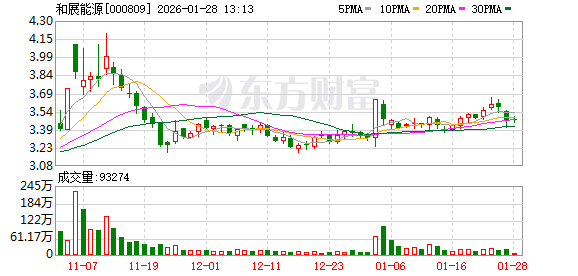
敖鸿:工业“挑大梁”作用日益增强 “十五五”全力构建“6+3”现代化产业体系
Sou Hu Cai Jing· 2026-01-28 04:51
"'十四五'以来,工业对全省经济增长贡献率从2020年的17.1%提升至2025年的35.1%,工业投资占固定 资产投资比重从17.9%提升至35.5%,工业税收占全部税收比重从34.6%提升至49%,工业真正挑起了贵 州经济增长的'大梁'!"2026年贵州两会期间,贵州省工业和信息化厅党组书记、厅长敖鸿走进"两会会客 厅",围绕"大力实施强化比较优势战略,实现优势更优、强势更强",回顾了"十四五"时期贵州新型工 业化取得的显著成就,并展望了"十五五"时期的发展蓝图。 市、县三级深化落实重大项目建设"5+3"工作机制,华为云、毕节磷煤化工一体化、宁德时代等一大批 具有新质生产力特征的重大项目落地,填补了产业链空白。 资金支持体系更加完善。新型工业化基金、新动能基金、中小企业信贷通累计撬动近3500亿元社会资本 和金融资金投入工业领域。企业高端化、智能化、绿色化发展成效显著:工业战略性新兴产业总产值占 规上工业总产值比重达22%,发布国内首个电解铝复杂电解质体系下工艺指标动态优化预测大模型,涌 现全国轮胎行业首个入选全球"灯塔工厂"企业,数据资产入表融资成为全省首单突破、国内领先案例, 两化融合发展水平、规模以 ...
AI、机器人、无人驾驶、商业航天、脑机接口、新能源:马年看“马”
ZHESHANG SECURITIES· 2026-01-28 04:50
Core Insights - Elon Musk's technology landscape encompasses six key disruptive technology sectors: AI, robotics, autonomous driving, commercial space, brain-machine interfaces, and new energy, representing significant investment opportunities for the next decade [2][3] - The report scores Musk's thematic investment concept at 95 out of 100, indicating strong potential across various dimensions, with an excess return of 127.44% compared to the Wind All A index from early 2025 to January 23, 2026 [8][14] Group 1: Musk's Investment Sector Layout - Musk has systematically positioned his companies, including Tesla, xAI, SpaceX, and Neuralink, across six critical technology areas that are interconnected and complementary, aiming to elevate human civilization [3][14] - The year 2026 is identified as a pivotal point for the commercialization of Musk's technology landscape, with several core projects expected to transition from development to market realization [3][14] Group 2: Investment Opportunities by Sector 1. **Robotics**: The anticipated success of the Optimus robot will drive demand across the entire robotics supply chain, presenting significant investment opportunities in upstream core components and midstream assembly [4][19] 2. **AI**: Musk's dual approach of self-developed computing power and software aims to establish a comprehensive AI ecosystem, with investment opportunities expected to focus on computing infrastructure and software applications by 2026 [25][26] 3. **Commercial Space**: The deployment of Starlink satellites and the operationalization of the Starship are set to revolutionize low Earth orbit communications, creating investment opportunities in upstream components, midstream launch services, and downstream applications [34][36] 4. **Brain-Machine Interfaces**: Neuralink's advancements in brain-machine interface technology are expected to lead to significant investment opportunities in upstream electrodes and chips, as well as midstream system integration and clinical services [43][48] 5. **Autonomous Driving**: The launch of Tesla's Robotaxi service in 2026 will validate the commercial model for autonomous driving, with investment opportunities in core computing power, algorithms, and manufacturers capable of L3+ production [56][59] 6. **New Energy**: Tesla's energy business is projected to experience explosive growth, particularly in energy storage systems, with investment opportunities in system integration, core component supply, and virtual power plant operations [62][66] Group 3: Thematic Evaluation and Stock Pool - The thematic evaluation of Musk's concept is based on eight dimensions, scoring particularly high in market capacity, policy effectiveness, and future growth potential, while the valuation level received a lower score [79][81] - A stock pool has been constructed based on six sectors: robotics, commercial space, AI, brain-machine interfaces, autonomous driving, and new energy, serving as a reference for investors [82]

一名“回购顾问”的自白丨入局
暗涌Waves· 2026-01-28 04:05
Core Viewpoint - The article discusses the emerging challenges in the investment landscape, particularly focusing on the implications of buyback agreements in the context of hard technology companies and the evolving role of legal advisors in navigating these complexities [4][10][18]. Group 1: Buyback Agreements and Market Dynamics - As the capital market shows signs of recovery in 2025, the looming threat of buybacks remains a significant concern for many founders, indicating that the underlying issues related to buybacks have not dissipated [4][10]. - The period from 2017 to 2019 marked a significant shift towards hard technology investments, leading to a critical point where many companies are expected to face buyback obligations as they approach their exit windows in 2025-2027 [10][11]. - The article highlights that over 80% of founders are personally liable for buybacks, which transforms business failures into potential personal financial crises, indicating a shift towards a "quasi-debt" environment in equity investments [5][11]. Group 2: Legal and Advisory Role Transformation - The traditional role of lawyers in enforcing buyback agreements has led to a deadlock, where the majority of founders lack the financial means to fulfill these obligations, resulting in systemic waste and negative outcomes for both parties [6][9]. - The emergence of the "buyback advisor" role aims to facilitate communication between founders and investors, providing structured solutions rather than resorting to litigation [12][13]. - Customized strategies are proposed, such as partial cash repayments and valuation adjustments, to create a more manageable exit strategy for founders while maintaining investor accountability [14][15]. Group 3: Long-term Implications and Market Health - The article argues for a "dignified exit" approach, emphasizing the need to manage failures in a way that preserves the reputation and future opportunities of entrepreneurs, rather than leading to total financial ruin [17][18]. - It stresses the importance of reshaping market perceptions of failure as a part of innovation, advocating for a collective understanding that failure should not be severely punished but rather managed within acceptable limits [17][19]. - The ongoing activation of buybacks raises questions about whether existing market rules are equipped to handle widespread failures, highlighting a critical gap in the current investment framework [18].

加拿大之后,欧洲终于明白:平等的朋友,美国给不了
Xin Lang Cai Jing· 2026-01-28 03:25
Core Viewpoint - The increasing friction between Europe and the United States in the technology sector indicates a potential shift towards technological independence for Europe, driven by long-standing grievances and a desire for self-sufficiency [1] Group 1: Current State of Dependence - Europe's reliance on American technology is evident, with U.S. companies like Amazon, Microsoft, and Google holding over two-thirds of the cloud computing market in Europe, while local suppliers account for only about 15% [3] - The search engine market is dominated by Google, which holds a 90% market share, and Amazon leads in the e-commerce sector [3] Group 2: Regulatory Responses - In response to this dependence, the EU has enacted regulations such as the Digital Services Act and the Digital Markets Act to counter the violations of U.S. tech giants, resulting in significant fines, including €29.5 billion for Google and €1.2 billion for X platform [5] - The U.S. government's reaction to these fines has escalated tensions, with political figures labeling them as "malicious fines" and implementing visa restrictions on European officials [5] Group 3: Broader Industry Conflicts - The conflict extends beyond digital technology to critical industries like renewable energy and semiconductors, where U.S. subsidies under the Inflation Reduction Act have diverted investments away from Europe [7] - The EU's efforts to boost its semiconductor industry through the Chips Act face significant challenges, with an EU audit indicating that achieving a 20% global market share by 2030 is "extremely unlikely" [7] Group 4: Future Initiatives for Autonomy - The EU plans to launch an "AI Super Factory" project by 2026 and aims to triple data center capacity in the next 5 to 7 years through the Cloud and AI Development Act [9] - However, achieving technological autonomy is hindered by funding and time constraints, with estimates suggesting a need for €300 billion and potentially up to €5 trillion in total costs [9] Group 5: Long-term Outlook - Despite the challenges, the trend towards technological independence in Europe is irreversible, as the region seeks to move away from being a follower of U.S. technology [11] - Successful navigation of this path will require collaboration among European nations and sustained investment, with the potential to reshape the global technology landscape over time [11]
2026,德州聚焦八个方面精准攻坚
Da Zhong Ri Bao· 2026-01-28 03:17
Core Viewpoint - The government of Dezhou City aims to strengthen its industrial economy and implement various strategic initiatives to enhance economic growth, improve living standards, and ensure social stability while addressing key risks [1]. Group 1: Economic Development Initiatives - The government plans to expand investment by accelerating 735 key projects with a total investment of 120 billion yuan [2]. - A special action to boost consumption will be implemented, focusing on retail innovation and policies for trade-in programs [2]. - The strategy includes enhancing modern service industries through targeted actions for each sector [2]. Group 2: Industrial and Infrastructure Enhancement - The focus will be on consolidating and expanding the foundation of the real economy, nurturing quality projects, and strengthening pillar industries [2]. - The government aims to promote traditional industry upgrades, the growth of emerging industries, and future industry planning [2]. - A plan for the growth of quality industrial enterprises will be implemented, along with improvements to public service systems [2]. Group 3: Urban and Rural Development - Urban renewal will be prioritized with a total investment of 20.9 billion yuan for 123 key urban construction projects [3]. - The government will enhance rural revitalization by expanding high-standard farmland and increasing the number of agricultural processing enterprises [3]. - A new model for real estate development will be promoted to improve housing quality [3]. Group 4: Green and Low-Carbon Transition - The government will lead initiatives for carbon reduction and pollution control, aiming for over 11 million kilowatts of installed renewable energy capacity [3]. - Environmental pollution prevention measures will be implemented, including the replacement of volatile organic compounds and the promotion of old vehicle updates [3]. - Efforts will be made to enhance ecosystem management and promote national water budget management [3]. Group 5: Social Welfare and Safety - The government will implement over 150 employment projects and provide vocational training for more than 12,000 individuals [4]. - Educational resources will be optimized, supporting the establishment of high-level universities and vocational education [4]. - A comprehensive social security network will be developed, including long-term care insurance and home modifications for the elderly [4].
邱慈观专栏 | “新能源+储能+产业场景化”趋势下,金融如何赋能?
Xin Lang Cai Jing· 2026-01-28 03:06
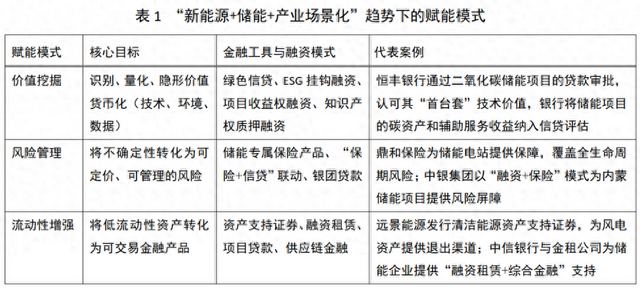
Core Viewpoint - The energy revolution in China has transitioned from a land-grabbing development model to a systematic reform phase, emphasizing the importance of scenario integration in the renewable energy sector [1] Group 1: Industry Development - The renewable energy industry is currently tasked with ensuring supply, stabilizing the foundation, transitioning, and tackling challenges, with scenario integration being a key focus [1] - The integration of renewable energy, storage, and industrial scenarios is essential for maximizing value through intelligent interaction among sources, networks, loads, and storage [1] - The shift from policy-driven to market-driven dynamics necessitates the use of diversified and creative financial tools to adapt to changing scenarios [1] Group 2: Financing Stages - The financing development of the renewable energy industry can be divided into two stages: 1.0, which relies on subsidy-driven debt financing, and 2.0, which utilizes diversified financial tools for innovative growth [2] - In the 1.0 stage, reliance on subsidies helped lower funding barriers, but the withdrawal of subsidies has led to increased financing costs and project terminations, as seen in the case of Ørsted's offshore wind projects in the U.S. [2] - The 2.0 stage requires financial institutions to become proactive value enablers, utilizing innovative tools like equity-debt linkage to support the scaling of renewable energy projects [2] Group 3: Value Extraction - Project value now extends beyond tangible assets and electricity revenue to include technological advancement, environmental services, and data management [5][6] - Financial institutions must recognize and price the potential of emerging technologies, as demonstrated by the credit approval for a carbon molten salt storage project [5] - The value of environmental services and data management must be identified and leveraged to enhance financing advantages, with examples of successful integration of these values into project assessments [6] Group 4: Risk Management - Financial institutions should address risks related to technology, revenue volatility, and operational safety by transforming uncertainties into manageable financial products [7] - Insurance models can mitigate technology-related risks, with examples of comprehensive insurance products tailored for the renewable energy sector [7][8] - Collaborative risk assessment approaches, such as the "iron triangle" service team model, can enhance project viability by considering technology, market, and industry chain value [8] Group 5: Liquidity Enhancement - The large investment scale and long payback periods in renewable energy necessitate financial institutions to enhance liquidity and facilitate a cycle of investment and reinvestment [10] - Asset securitization is a common method to convert stable future revenue rights into tradable financial products, providing liquidity for operational renewable energy projects [10] - Financing leasing models can offer flexible funding solutions for projects in the construction phase, alleviating short-term financial pressures [10] Group 6: Ecosystem Approach - Financial institutions should shift their evaluation focus from individual enterprises to the entire industrial chain, assessing the stability of trade relationships and receivables [11] - Financing models centered around leading enterprises can extend creditworthiness throughout the supply chain, ensuring financial support for smaller firms [11] - Examples of successful financing collaborations highlight the importance of integrating core enterprises' stability and credit into broader financing strategies [11] Conclusion - In the context of "renewable energy + storage + industrial scenario integration," financial institutions must evolve from mere fund providers to ecosystem builders, leveraging technology, market insights, and data to better serve the real economy [12] - By employing value extraction, risk management, and liquidity enhancement strategies, the financial system can activate the value of multi-dimensional assets and address industry risks [12] - The future of renewable energy finance will depend on the ability to optimize resource allocation and risk-sharing among stakeholders, positioning financial institutions as key players in the energy transition [12]
储能-新业态和特高压发挥新能源消纳核心作用
2026-01-28 03:01
储能、新业态和特高压发挥新能源消纳核心作用 20260127 摘要 中国为实现碳中和目标需新增 60-80 亿千瓦装机容量,发电侧降碳关键 在于提升新能源占比,通过储能、跨区消纳和就近消纳促进发展,但当 前新能源消纳是主要挑战,需电力体制改革支撑。 电力体制改革是解决新能源消纳的关键,全国统一电力市场为灵活性资 源提供商业模式,推动新能源全面入市,促进绿电直连和就近消纳,提 高系统对新能源的吸收能力。 十四五期间,光伏装机规模显著增长,但储能发展相对滞后,利用率不 足 50%,与快速发展的新能源不匹配,储能发展亟待提速。 2025 年 1 月国家发改委能源局的通知推动新能源上网电价全面市场化, 建立可持续发展价格结算机制,保障存量项目收益率稳定,通过竞价机 制保障增量项目收益预期,利好可再生能源发展。 全国统一电力市场初步形成"管住中间、放开两头"的架构,将深刻影 响新能源汽车销量,通过灵活透明的价格机制,提高系统效率并促进可 再生能源更好地融入市场。 Q&A 新能源消纳问题的根本原因是什么? 新能源消纳问题的根本原因在于用电量的增长速度。随着我国经济进入高质量 发展阶段,全社会用电量增速不会像过去那样迅猛, ...