银行业

Search documents
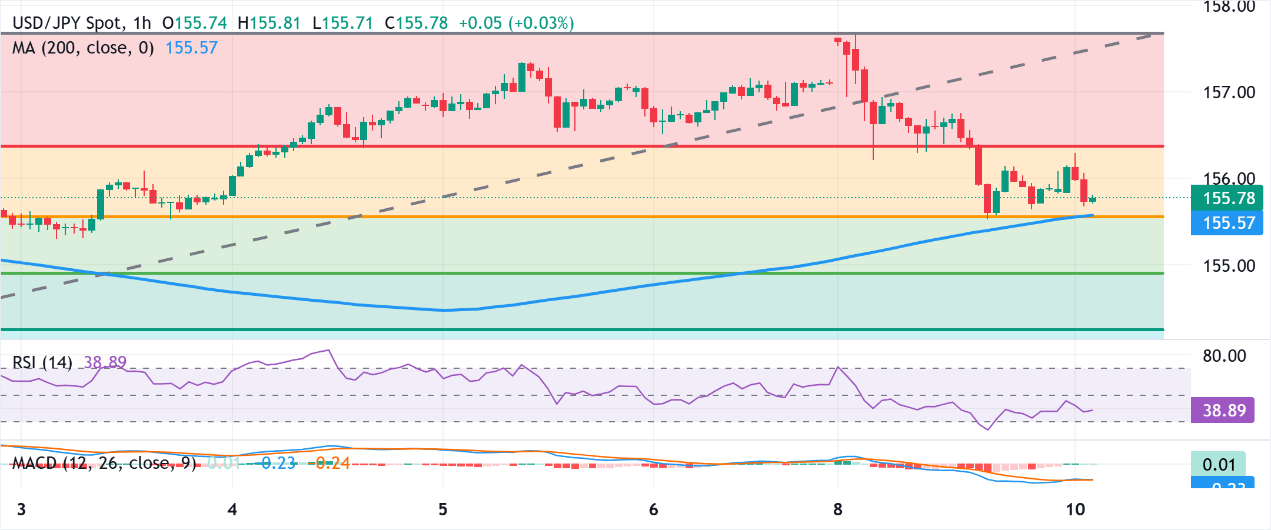
IC Markets:日元对美元汇率短期回升,后续受政策与数据影响
Sou Hu Cai Jing· 2026-02-10 06:01
Group 1 - The Japanese yen is experiencing a rebound against the US dollar, supported by expectations of potential intervention by Japanese authorities and bets on the Bank of Japan's policy normalization path [1][3] - The ruling party's recent majority in the House of Representatives raises concerns about public finance pressure while supporting fiscal policy initiatives [2][3] - Proposed fiscal expansion policies may exacerbate Japan's already strained public finances, potentially constraining the yen's performance [3] Group 2 - Global market sentiment is shifting, with reduced tensions in the Middle East leading to increased interest in high-risk assets, causing some funds to flow out of safe-haven assets like the yen [3][4] - The Japanese authorities have indicated they will closely monitor the currency market and retain the right to intervene in cases of significant deviations from fundamental exchange rates, reinforcing market intervention expectations [3] - The current technical analysis shows the USD/JPY exchange rate has broken below key support levels, indicating potential weakness, while moving averages suggest a possible recovery if support is maintained [3] Group 3 - Market sentiment indicates that yen bulls maintain some control under intervention expectations, while bets on Bank of Japan rate hikes also support the yen [4] - However, public finance pressures from fiscal expansion and the attractiveness of risk assets may limit the yen's appreciation potential, suggesting a short-term oscillating recovery pattern [4] - Future exchange rate movements will depend on US economic data, Japan's policy direction, and market intervention expectations [4]

A股三大指数齐涨,全球风险情绪改善
Hua Tai Qi Huo· 2026-02-10 04:54
Report Industry Investment Rating No relevant content provided. Core Viewpoints of the Report - The recent sharp decline in the market does not change the global inflation narrative, with the core driver of overseas markets being Trump's policies [1] - Domestic policies clearly aim to boost inflation, and globally, geopolitical tensions continue to drive the competition for mineral and energy resources [2] - In the short - term, be vigilant about market volatility, while in the long - term, inflation trends remain unchanged unless there is an economic recession or strong interest - rate hike expectations [2] Summary by Related Catalogs Market Analysis - On January 30, Trump announced the nomination of Kevin Warsh as the next Fed Chair. Warsh's policy of "rate cuts + balance - sheet reduction" led to a significant decline in silver and gold prices, and put pressure on Bitcoin, precious metals, and US stocks. On February 10, Warsh may make his first public speech as a Fed candidate [1] - Hasset believes that employment data may slow down, but it does not hinder strong economic growth [1] - The central economic work conference emphasized consumption promotion and price stability. The central bank cut interest rates on January 15, and the Ministry of Finance issued five important policy documents on January 20 [2] - The US manufacturing activity unexpectedly expanded in January, with the ADP employment increase of 22,000 people, lower than the expected 45,000. The US and India reached a trade agreement framework, and Trump confirmed India's commitment to stop importing Russian oil [2] - The ruling coalition in Japan won a majority in the House of Representatives election. Prime Minister Kaoi Sanae announced plans to discuss food tax cuts and promote private - public investment [2][4] - Due to the political turmoil of UK Prime Minister Starmer, the UK's stock, bond, and foreign - exchange markets all declined [2][4] Commodity Analysis - In the non - ferrous sector, long - term supply constraints remain unresolved, and precious metals have regained allocation value after the adjustment. In the energy sector, OPEC+ will keep oil production stable in March. The US plans to "sell on behalf" of Venezuelan oil, and Trump hopes to lower oil prices to $50 per barrel [2] - In the chemical sector, products like methanol and PTA are relatively resistant to decline under the "anti - involution" and stock - commodity linkage. For agricultural products, weather and short - term pig diseases need attention, and for the black metal sector, domestic policy expectations and low - valuation repair potential are key points [2] Strategy - For commodities and stock index futures, consider buying precious metals on dips [3] Important News - Hasset expects a slight decline in employment data, consistent with high GDP growth [4] - Kaoi Sanae will promote food tax - cut discussions in Japan, not issue deficit bonds, and seek to raise funds through non - tax revenues and subsidy reviews. She hopes to visit the US next month [4] - The ruling coalition in Japan won a majority in the House of Representatives election [4] - Two key officials of UK Prime Minister Starmer resigned [4] - Zelensky said the US hopes to end the Russia - Ukraine conflict by summer, and a new round of tripartite talks may be held this week [2][4]
华尔街如何看美联储新主席
2026-02-10 03:24
Summary of Key Points from the Conference Call Company/Industry Involved - The discussion primarily revolves around the Federal Reserve and its new chairman nominee, Kevin Walsh, along with the implications for various financial markets and sectors. Core Insights and Arguments 1. **Market Reactions to Walsh's Nomination**: - The nomination of Kevin Walsh has led to significant volatility in precious metals markets, with gold volatility reaching a near 50-year high. This is attributed to his opposition to quantitative easing (QE) and advocacy for balance sheet reduction, which contrasts with current market expectations of dollar depreciation [1][8]. 2. **Walsh's Policy Stance**: - Walsh's monetary policy approach is rooted in monetarism, advocating for reduced intervention by the Federal Reserve in market and fiscal policies. This is expected to strengthen the dollar and steepen the U.S. Treasury yield curve, benefiting bank stocks [1][2]. - He has criticized the Fed's reliance on economic data and forward guidance, suggesting a return to core responsibilities and a reduction in the Fed's power and asset size [1][4]. 3. **Proposed Reforms**: - Walsh has proposed several reforms, including limiting data dependency, reducing the balance sheet size, promoting financial liberalization, supporting digital currency development, and enhancing coordination between fiscal and monetary policies [1][5][10]. 4. **Inflation and Interest Rate Outlook**: - Walsh has expressed concerns over uncontrolled inflation and the Fed's failure to maintain financial stability, particularly highlighted during recent bank failures. He suggests that interest rates may need to be lowered soon due to current negative CPI data indicating high rates [2][11]. 5. **Impact on Financial Markets**: - The anticipated policies under Walsh could lead to a steepening of the yield curve, a stronger dollar, and a rise in bank stocks due to his stance on financial liberalization and potential reduction in capital requirements for banks [8][9]. 6. **AI's Role in Economic Productivity**: - AI investments are noted to significantly enhance U.S. productivity, although job growth remains lagging. Walsh's familiarity with AI technology may bring fresh perspectives to the Fed, potentially improving productivity further [3][12]. 7. **Challenges Facing the Fed**: - The Fed is currently facing internal divisions and challenges related to data accuracy and macroeconomic forecasting, which complicate the decision-making process. Walsh's leadership may address these issues by emphasizing accountability and clearer communication with the public [4][6]. 8. **Global Asset Allocation Trends**: - There is an increasing interest in Chinese assets among Wall Street investors, driven by improved U.S.-China relations and the performance of emerging markets. This shift may lead to capital inflows into China, particularly if Indian markets underperform [3][18]. Other Important but Possibly Overlooked Content 1. **Long-term Economic Outlook**: - The U.S. economy is currently performing well on a macro level, but micro-level adjustments are necessary due to the disruptive impact of AI on various industries. The transition to an AI-driven economy is expected to continue reshaping traditional sectors [13]. 2. **Future of Inflation and Interest Rates**: - The outlook for inflation suggests a potential long-term deflationary trend, with the Fed likely to focus on service sector prices when determining future interest rate strategies [16]. 3. **Dollar and Yuan Exchange Rate Dynamics**: - The strong dollar policy may be reinforced under Walsh, but the yuan's stability will be more influenced by U.S.-China political relations rather than solely economic factors [17]. 4. **Investment Sentiment in Commodities**: - While gold is expected to remain a strong investment in the medium to long term, the outlook for other commodities like oil is less favorable due to oversupply and pressures from the energy transition [19]. 5. **AI Stock Investment Caution**: - Despite recent declines in AI-related stocks, the demand for AI infrastructure remains robust, indicating a need for cautious investment strategies that balance opportunity with risk management [20].
大摩闭门会-市场巨震之后
2026-02-10 03:24
Summary of Conference Call Notes Company/Industry Involved - Focus on the Chinese economy, particularly fiscal and real estate policies, and their implications for various sectors including telecommunications, gaming, internet, and finance [1][2][3][4][5][6][7][8][9][10][11][12][13][14][15][16][17][18][19][20][21][22][23][24][25][26][27][28][29][30][31][32][33][34][35][36][37][38][39][40] Core Points and Arguments 1. **Contradictory Market Expectations**: There are conflicting expectations regarding China's fiscal and real estate policies, with concerns about potential tax increases versus hopes for significant real estate policy interventions [2][8][9][10][11][12][13][14][15][16][17][18][19][20][21][22][23][24][25][26][27][28][29][30][31][32][33][34][35][36][37][38][39][40] 2. **Fiscal Policy Outlook**: The fiscal policy for the year is expected to be moderate, with no significant tax increases anticipated for private enterprises, particularly in the gaming and internet sectors [3][4][5][6][7][8][9][10][11][12][13][14][15][16][17][18][19][20][21][22][23][24][25][26][27][28][29][30][31][32][33][34][35][36][37][38][39][40] 3. **Economic Growth and Deflation**: The current economic environment is characterized by weak domestic demand and deflationary pressures, which complicate fiscal policy decisions [5][6][7][8][9][10][11][12][13][14][15][16][17][18][19][20][21][22][23][24][25][26][27][28][29][30][31][32][33][34][35][36][37][38][39][40] 4. **Infrastructure Investment**: There is an expectation for increased infrastructure investment in the first half of the year, but overall fiscal stimulus may remain limited unless economic conditions worsen [5][6][7][8][9][10][11][12][13][14][15][16][17][18][19][20][21][22][23][24][25][26][27][28][29][30][31][32][33][34][35][36][37][38][39][40] 5. **Real Estate Policy**: Any potential real estate policy changes are likely to be marginal rather than aggressive, focusing on specific cities rather than broad measures [7][8][9][10][11][12][13][14][15][16][17][18][19][20][21][22][23][24][25][26][27][28][29][30][31][32][33][34][35][36][37][38][39][40] 6. **Global Economic Influences**: The recent appointment of Kevin Warsh to the Federal Reserve is expected to influence U.S. monetary policy, which may have implications for global liquidity and investment strategies [10][11][12][13][14][15][16][17][18][19][20][21][22][23][24][25][26][27][28][29][30][31][32][33][34][35][36][37][38][39][40] 7. **AI's Impact on Employment**: The rise of AI is anticipated to disrupt employment patterns, with varying effects across different sectors in the U.S. and China [11][12][13][14][15][16][17][18][19][20][21][22][23][24][25][26][27][28][29][30][31][32][33][34][35][36][37][38][39][40] 8. **Japan's Political Landscape**: The recent election results in Japan are expected to lead to more stable fiscal policies and increased government spending, particularly in defense and strategic industries [14][15][16][17][18][19][20][21][22][23][24][25][26][27][28][29][30][31][32][33][34][35][36][37][38][39][40] Other Important but Possibly Overlooked Content 1. **Market Sentiment**: Investor sentiment is currently cautious, reflecting concerns over fiscal tightening and potential tax increases, which could negatively impact private sector confidence [4][5][6][7][8][9][10][11][12][13][14][15][16][17][18][19][20][21][22][23][24][25][26][27][28][29][30][31][32][33][34][35][36][37][38][39][40] 2. **Long-term Investment Trends**: There is a growing trend of global investment funds reallocating towards Chinese assets, indicating a potential long-term positive outlook despite short-term volatility [17][18][19][20][21][22][23][24][25][26][27][28][29][30][31][32][33][34][35][36][37][38][39][40] 3. **Sector-Specific Adjustments**: Specific sectors such as telecommunications and renewable energy are experiencing tax adjustments that may not reflect broader fiscal policy trends [36][37][38][39][40]
沃什鹰鸽属性或无关紧要,市场才是终极裁判!
Jin Shi Shu Ju· 2026-02-10 03:03
Group 1 - The core issue for investors is whether Kevin Warsh, nominated by President Trump as the Federal Reserve Chair, is fundamentally a hawk or a dovish figure [1] - The market often has the final say, as seen in March 2020 when ECB President Lagarde's comments led to market turmoil that forced the ECB to intervene [2] - Warsh has a history of hawkish views, focusing on inflation over unemployment during his tenure at the Fed from 2006 to 2011, and he resigned due to disagreements over the scale and duration of post-crisis monetary stimulus [3] Group 2 - Despite potential similarities in interest rate decisions, Warsh's approach to policy execution is noteworthy, with expectations of changes in communication and reassessment of post-global financial crisis policy tools [4] - Warsh and Treasury Secretary Mnuchin agree that the Fed's role has expanded beyond setting interest rates, indicating a marginal institutional change rather than a significant policy shift [5] - The relationship between interest rates and the balance sheet is complex, and attempts to offset rate cuts with balance sheet reductions could send mixed signals to the market [5] Group 3 - Warsh argues that productivity gains driven by artificial intelligence could justify lower interest rates, but this does not necessarily mean that low rates should be maintained [6] - The nomination of Warsh does not fundamentally alter the risk balance for investors, and maintaining patience rather than adjusting positions is deemed appropriate [7] - In an environment where inflation shocks may be more severe and frequent, incorporating tangible assets like commodities and inflation-protected bonds into long-term portfolios remains a crucial risk diversification strategy [7]
农民工工资支付迎创新保障 数字人民币智能合约场景落地成都
2 1 Shi Ji Jing Ji Bao Dao· 2026-02-10 03:02
Core Insights - The first digital RMB smart contract for wage payment to migrant workers has been successfully implemented in Chengdu, Sichuan, under the guidance of the People's Bank of China, marking a new model for digital finance and inclusive finance [1] Group 1: Digital RMB Smart Contract Implementation - The digital RMB smart contract utilizes a digital ecosystem service platform to automate and enforce wage payments, eliminating human intervention and supporting cross-institutional interoperability [1] - As of January 2026, the digital RMB smart contract has been piloted in areas such as prepaid fund management, supply chain finance, corporate group financial management, and subsidy distribution, with a total of 486,400 contracts signed and a cumulative transaction amount of 316 million yuan [1] Group 2: Future Developments - The Digital RMB Operations Management Center plans to continuously enhance system services and promote existing models while collaborating with member banks to innovate applications of digital RMB smart contracts [2] - The initiative aims to provide more intelligent services for industry development and social governance, supporting the construction of the financial "five major articles" [2]

广东汕头 现金服务迎新春
Jin Rong Shi Bao· 2026-02-10 02:05
Core Viewpoint - The People's Bank of China Shantou Branch is enhancing cash management and services to meet the increasing demand for cash during the New Year season, focusing on precision, convenience, and customer satisfaction in cash supply [1][2][3] Group 1: Cash Supply Precision - The Shantou Branch is conducting targeted cash demand surveys across key business areas such as supermarkets and markets to ensure accurate cash supply predictions [1] - Real-time tracking of cash distribution is implemented to ensure sufficient cash availability at bank counters and self-service machines [1] - The branch is considering local customs and cash needs, such as "lucky money," to ensure a full supply of new banknotes and efficient cash allocation across different regions [1] Group 2: Cash Service Convenience - The branch focuses on enhancing cash service convenience, particularly in rural areas, by providing easy access to cash exchange services at 62 rural cash service points [2] - Since December 2025, the branch has conducted over 200 cash exchange services for rural residents and organized more than 50 outreach services benefiting over 1,000 people [2] - Special services for the elderly and vulnerable groups have been established, including nearly 50 green channels and 70 priority windows for seniors [2] Group 3: Customer Satisfaction in Cash Circulation - The branch has improved the cleanliness of circulating cash by organizing special activities for the recovery of damaged banknotes, conducting three recovery events since December 2025 [3] - A total of 745 counterfeit banknotes, amounting to 66,600 yuan, have been confiscated since December 2025 as part of anti-counterfeiting efforts [3] - The establishment of a comprehensive currency authenticity verification system has been achieved, ensuring that residents can use cash confidently and conveniently [3]
冬日暖意 添“金”聚力
Jin Rong Shi Bao· 2026-02-10 02:05
Core Insights - Dehong Prefecture in Yunnan Province is leveraging its favorable climate to drive economic development through financial initiatives and the promotion of local industries [1] Group 1: Agricultural Development - Dehong is recognized as the "hometown of winter fresh corn" in China, with local farmers benefiting from a credit model that allows them to obtain loans without collateral, thus enhancing their agricultural productivity [2] - By the end of 2025, Dehong aims to have 179,300 credit users, 308 credit villages, and 39 credit towns, with 115,700 borrowing farmers and a loan balance of 15.937 billion yuan [2] - Financial products tailored to local agricultural needs, such as "Dendrobium loans" and "nut loans," are emerging to support the growth of highland specialty crops [2] Group 2: Tourism and Hospitality - The "Warm Winter Residence" brand is attracting more tourists and seasonal residents to Dehong, with innovative financial solutions enhancing the local hospitality sector [3] - A remote personal housing loan system has been introduced to facilitate property purchases for non-local residents, making it easier for them to settle in Dehong [3] - By November 2025, Dehong is expected to receive nearly 40 million domestic tourists, with a year-on-year increase of over 40% in the number of seasonal residents [3] Group 3: Renewable Energy - Dehong is developing a "water-light complementary" green energy base that can supply approximately 800 million kilowatt-hours of green electricity annually [4] - The financial system has provided 360 million yuan in funding for the construction and smart upgrades of renewable energy projects, significantly reducing financing costs through carbon reduction support tools [4] - By the end of November 2025, the financial system in Dehong has supported seven photovoltaic projects with loans totaling 759 million yuan and a carbon reduction support tool loan balance of 115 million yuan [4]
激活“体育+” 赋能产业链
Jin Rong Shi Bao· 2026-02-10 02:03
Core Viewpoint - The city of Deyang in Sichuan Province aims to become an "Outdoor Leisure Sports City," integrating culture, ecology, and sports, with strong financial support for the development of the sports and cultural tourism industries [1] Financial Support and Mechanisms - The People's Bank of China Deyang Branch is shifting from traditional financing to "endogenous empowerment," focusing on innovative mechanisms, products, and services to boost the high-quality development of the sports industry and cultural tourism [1] - By the end of 2025, the loan balance for culture, sports, and entertainment in Deyang is expected to reach 1.37 billion yuan, with a year-on-year growth of 25.7%, outpacing the overall loan growth rate by 15 percentage points [1] Project Financing and Collaboration - A financing demand list for key projects in the sports and cultural tourism sectors has been established to facilitate precise matching between banks and enterprises [2] - Longcheng Huaxi Bank provided a loan of 124 million yuan to the "Longmen Peak" hotel project, supporting outdoor sports infrastructure [2] - The "Tianfu Sports Loan" and other special products have been introduced to enhance credit for light asset operators through risk-sharing mechanisms [2] Tailored Financial Solutions - Financial institutions are guided to provide solutions based on the different stages and scenarios of the sports industry, including long-term project loans secured by operational rights during heavy asset construction phases [3] - Innovative products like "Homestay Loans" and "Farmhouse Credit Loans" have been introduced, with a total of 12.11 million yuan loaned to 20 homestays, promoting "sports + rural tourism" [3] - A total of 8.96 billion yuan in loans has been provided for projects related to major events like the "Sanxingdui Marathon" [3] Consumption Cycle Activation - Financial services are being integrated into the consumer ecosystem by providing on-site financial services at local events, transforming sponsorship expenses into customer acquisition [4] - Local merchants are collaborating to offer digital RMB consumption red envelopes and discounts during events, converting event traffic into spending across food, accommodation, travel, and shopping [4]
问答|小规模纳税人可以自行办理一般纳税人登记吗?生效之日如何确定?如何办理申报?
蓝色柳林财税室· 2026-02-10 01:46
Core Viewpoint - The article discusses the new regulations issued by the State Taxation Administration regarding the registration management of general VAT taxpayers, emphasizing the conditions under which small-scale taxpayers can register as general taxpayers and the effective date of such registrations [3][5][11]. Group 1: Registration Conditions - Small-scale taxpayers with sound accounting and the ability to provide accurate tax information can apply for general taxpayer registration if their annual VAT sales do not exceed the specified threshold [5][11]. - The effective date for small-scale taxpayers who register as general taxpayers is the first day of the month in which the registration is completed [5][14]. Group 2: Examples of Registration - Example 1: A retail taxpayer (A) with annual VAT sales under 5 million yuan applies for general taxpayer registration on May 10, 2026. The effective date is retroactively set to May 1, 2026, allowing for adjustments in invoicing [5][11]. - Example 2: A banking taxpayer (B) also applies for registration on May 10, 2026, but chooses a quarterly tax period, making the effective date April 1, 2026 [5][11]. Group 3: Adjustments and Compliance - Taxpayers who adjust their sales figures due to self-correction or audits must register as general taxpayers within 10 working days from the adjustment date, with the effective date being the first day of the month in which the sales exceed the threshold [14][18]. - If a taxpayer fails to register within the stipulated time, the tax authority will automatically include them in the general taxpayer management, maintaining the effective date as per the original adjustment [18].