咖啡

Search documents
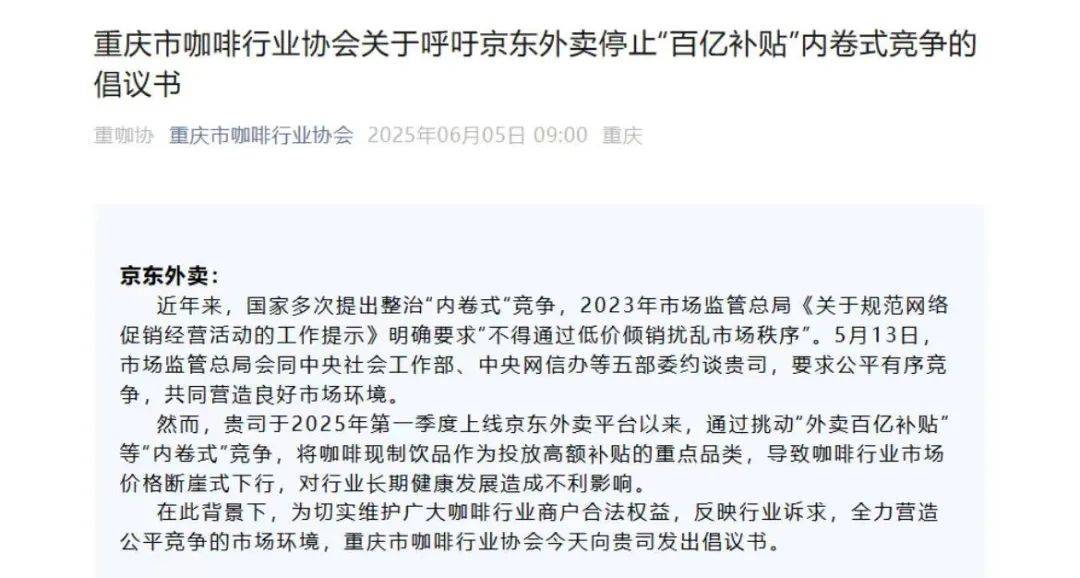
外卖“百亿补贴”内卷,咖啡先受不住了
Hu Xiu· 2025-06-06 00:40
Core Viewpoint - The coffee industry is facing a significant price war driven by aggressive subsidies from delivery platforms, leading to unsustainable pricing and potential long-term damage to local coffee brands [3][6][32]. Group 1: Price War Dynamics - The coffee price war has resulted in prices dropping below 6 yuan per cup, with extreme cases as low as 2 yuan, making coffee cheaper than bottled water [2][15]. - The average cost of a cup of coffee for major brands like Luckin and Kudi is approximately 10.16 yuan and 9.55 yuan respectively, indicating that current prices are well below cost [17]. - The market share of national chain coffee brands has increased from nearly 80% to over 90% from early April to late May 2025, significantly impacting local brands [19]. Group 2: Impact on Local Brands - Local coffee brands are struggling under the pressure of the price war, with many unable to sustain operations, leading to calls for an end to irrational subsidies [3][5]. - The Chongqing Coffee Association has highlighted that the ongoing price competition is harming local brands' market share and innovation capabilities, with a reported 12% decline in online transaction amounts year-on-year [3][5]. - If the current situation persists, it is expected to adversely affect the livelihoods of more industry workers and the long-term health of the coffee sector [5][6]. Group 3: Consumer Behavior and Market Trends - The aggressive pricing strategies have altered consumer perceptions, with a heightened sensitivity to coffee prices, making it unlikely for consumers to support higher-priced local brands [20][28]. - The coffee market in China has seen a shift towards a more mature consumer base, with an average consumption of 300 cups per year in major cities, indicating potential for growth if pricing strategies stabilize [34]. - The focus on low prices has led to concerns about product quality and sustainability, with reports of diluted flavors and inconsistent product offerings [37][38]. Group 4: Future Outlook - The current price war is viewed as a short-term strategy that may not be sustainable, as it undermines the profitability and operational viability of coffee businesses [21][23]. - There is a growing recognition that the industry must shift from price competition to quality and service differentiation to foster a healthier market environment [36][42]. - Regulatory bodies are beginning to address the issues arising from the price war, indicating a potential shift towards more sustainable competitive practices in the future [38].

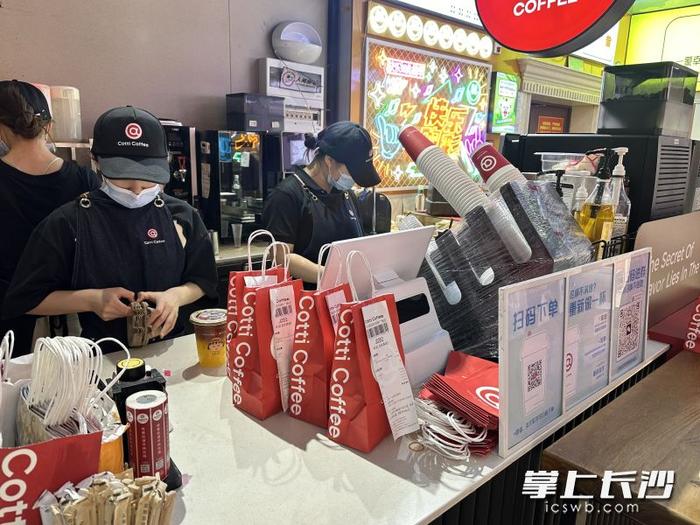
外卖咖啡低至1.68元!“百亿补贴”再次掀起咖啡价格战
Chang Sha Wan Bao· 2025-06-05 18:53
Core Viewpoint - The coffee market is experiencing a price war driven by significant subsidies from delivery platforms, leading to prices lower than bottled water, which has attracted a large number of consumers [1][2][6]. Group 1: Market Dynamics - Major platforms like JD.com and Taobao are offering substantial discounts, with prices for various coffee products dropping to as low as 1.68 yuan from original prices around 15.99 yuan [2][5]. - The "100 billion subsidy" initiative has resulted in a surge in orders, with Kudi Coffee reaching over 10 million orders in a single day, and some regions seeing a 200% increase in milk tea delivery compared to the previous year [2][4]. Group 2: Company Strategies - Kudi Coffee has reported a significant increase in sales, with daily orders reaching 400 cups, attributed to the ongoing subsidy campaigns [4]. - Luckin Coffee has also responded to the price war by offering limited-time coupons, reducing prices from 9.9 yuan to 6.9 yuan, which has led to increased sales both for delivery and in-store orders [5]. Group 3: Cost Management - Leading coffee brands are focusing on cost control from the supply side to maintain profitability despite lower prices. For instance, Luckin Coffee has built its own roasting factories, reducing roasting costs by 20%, while Kudi Coffee has partnered directly with coffee bean producers to lower costs by 25% [6]. - The current price reductions are primarily due to external subsidies rather than self-imposed price cuts by brands, indicating that quality is likely to remain stable [6].

光子跃迁获融资;林清轩冲击港股;Valextra或被出售
Sou Hu Cai Jing· 2025-06-05 12:47
Financing and Investment - Shenzhen Photon Leap Technology Co., Ltd. has completed several hundred million yuan in angel round financing, with funds primarily allocated for AI imaging algorithm development, global expansion, and smart hardware product mass production preparation [1][3] - Shanghai Lin Qingxuan Biotechnology Co., Ltd. has submitted a listing application to the Hong Kong Stock Exchange, with a revenue growth from 691 million yuan in 2022 to 1.21 billion yuan in 2024, representing a compound annual growth rate of 32.3% [5] Mergers and Acquisitions - Anta Group has announced the completion of the acquisition of German outdoor brand Jack Wolfskin, enhancing its competitiveness in the professional outdoor sports sector [8] - Neo Investment Partners is exploring potential investors for the luxury leather brand Valextra, considering an exit from its investment since holding approximately 60% of the brand since 2013 [11] Product Launches and Brand Strategies - Luckin Coffee has launched a new product, the Feather Light Fruit and Vegetable Tea, priced at 9.9 yuan per large cup, aiming to align with the growing health-conscious consumer demand [13] - Antonia has opened two new flagship stores in China, marking a significant milestone in its Asian market strategy [16] Data Security and Brand Reputation - Cartier has confirmed a data breach affecting customer information globally, highlighting the need for luxury brands to enhance their data protection mechanisms [18] Executive Appointments - Nike has appointed former McDonald's executive Michael Gonda as the new Chief Communications Officer, effective July 7, as part of a significant executive committee overhaul [20] - Kizik has appointed Gareth Hosford, a former Nike executive, as its new CEO, aiming to lead the brand into a new phase of omnichannel expansion [23] - Dr. Martens has appointed Paul Zadoff as President of the Americas market, bringing over 30 years of leadership experience to drive growth and profitability [25][26]


茶咖日报|茶颜悦色将江苏两城连开,河南多地蜜雪冰城乡镇门店推出“麦田配送”
Guan Cha Zhe Wang· 2025-06-05 12:28
Group 1: New Store Openings and Market Expansion - The new tea brand Cha Yan Yue Se has opened multiple stores in Jiangsu, with over 80 locations now established, marking it as a key market after Hunan and Hubei [1] - The new tea brand Tian La La has opened 10 new stores in North Sumatra, Indonesia, bringing the total to 127 stores in the country, indicating rapid market expansion in Southeast Asia [2] - Tully's Coffee plans to increase its store count in Japan to 1,000 by 2029, aiming for a growth of approximately 20% to compete with Starbucks [3] Group 2: Innovative Marketing Strategies - Cha Yan Yue Se combines traditional tea culture with modern aesthetics, appealing to young consumers with unique products [1] - Tian La La's brand manager emphasized the importance of innovation in products and services to enhance the brand's influence in Southeast Asia and beyond [2] - Honey Snow Ice City has introduced a delivery service to rural areas in Henan, promoting their products directly to consumers in the fields during the harvest season [4] Group 3: Corporate Developments - Hainan Baolingbao has established a new biotechnology subsidiary with a registered capital of 100 million yuan, focusing on import/export and food sales [5] - Jiahe Food announced that a shareholder plans to reduce their stake by up to 520,800 shares, representing 1.15% of the company's total equity [6]
中国消费更重视性价比,通缩前兆?
日经中文网· 2025-06-05 03:01
Core Viewpoint - Chinese consumers are increasingly prioritizing cost-effectiveness, leading to a decline in high-end retail and dining while benefiting budget-friendly businesses like coffee shops and chain hotels [1][2][4]. Group 1: Consumer Behavior Trends - There is a notable shift in consumer preferences towards affordable and value-for-money options, impacting high-end restaurants and luxury goods negatively [1][2]. - The first quarter of 2025 saw a 4.6% year-on-year increase in retail sales, down from around 10%, indicating a slowdown in consumer spending [1]. - High-end dining establishments, such as Quanjude, reported a 7% decline in revenue, attributed to reduced banquet demand and economic downturns [1]. Group 2: Impact on Specific Companies - Chow Tai Fook, a major jewelry retailer, experienced a 12% drop in sales, with its mainland China stores seeing five consecutive quarters of decline [2]. - Shanghai Jin Jiang International Hotel reported a 43% occupancy rate for high-end hotels, lower than the 56% for budget hotels, with an 8% decline in sales and an 81% drop in net profit [2]. - Luckin Coffee, the largest chain in the coffee sector, saw a 41% increase in sales, significantly outperforming Starbucks' 5% growth in China [2]. Group 3: Broader Economic Implications - The economic downturn is prompting a rise in budget-oriented businesses, reminiscent of trends seen in Japan during its economic struggles [4]. - The Chinese government is focusing on boosting personal consumption, which accounts for about 40% of GDP, with measures like "trade-in subsidies" set to launch in 2024 [3]. - Despite some positive indicators, concerns about high youth unemployment and an aging population continue to cast doubt on a full recovery in consumer spending [3].
星巴克亚太区门店设计与开发负责人祈思高离任 高层频变动
Xi Niu Cai Jing· 2025-06-05 02:19
Core Insights - Starbucks is undergoing significant management changes in its Asia-Pacific region, with the recent departure of Scott Keller, Senior Vice President of Store Development and Design [2] - This follows earlier departures of key executives, including Samuel Fung and Erin Silvoy, indicating a trend of leadership restructuring under new CEO Brian Niccol [2][3] - The company aims to expand its presence in China, targeting 9,000 stores by 2025, amidst increasing competition from local brands [2] Management Changes - Scott Keller, a pivotal figure in Starbucks' Asia-Pacific expansion, has left the company after over 20 years in the retail industry [2] - Keller was instrumental in localizing the "third space" strategy, which included unique store concepts in cities like Suzhou and Wuhan [2] - The recent executive turnover is part of a broader strategy by CEO Brian Niccol to streamline decision-making and enhance operational efficiency in response to competitive pressures [2] Market Challenges - Starbucks is facing a slowdown in growth in the Chinese market, with a notable decline in same-store sales reported for fiscal year 2024 [3] - Competitors are leveraging low-price strategies and digital operations to capture market share, posing challenges for Starbucks [3] - The company has not yet announced a successor for Keller, but there are indications that it may prioritize candidates with local market experience to maintain strategic continuity [3]

菜市场跑出爆款咖啡?90后把咖啡豆卖成“高级炒货”
3 6 Ke· 2025-06-05 01:53
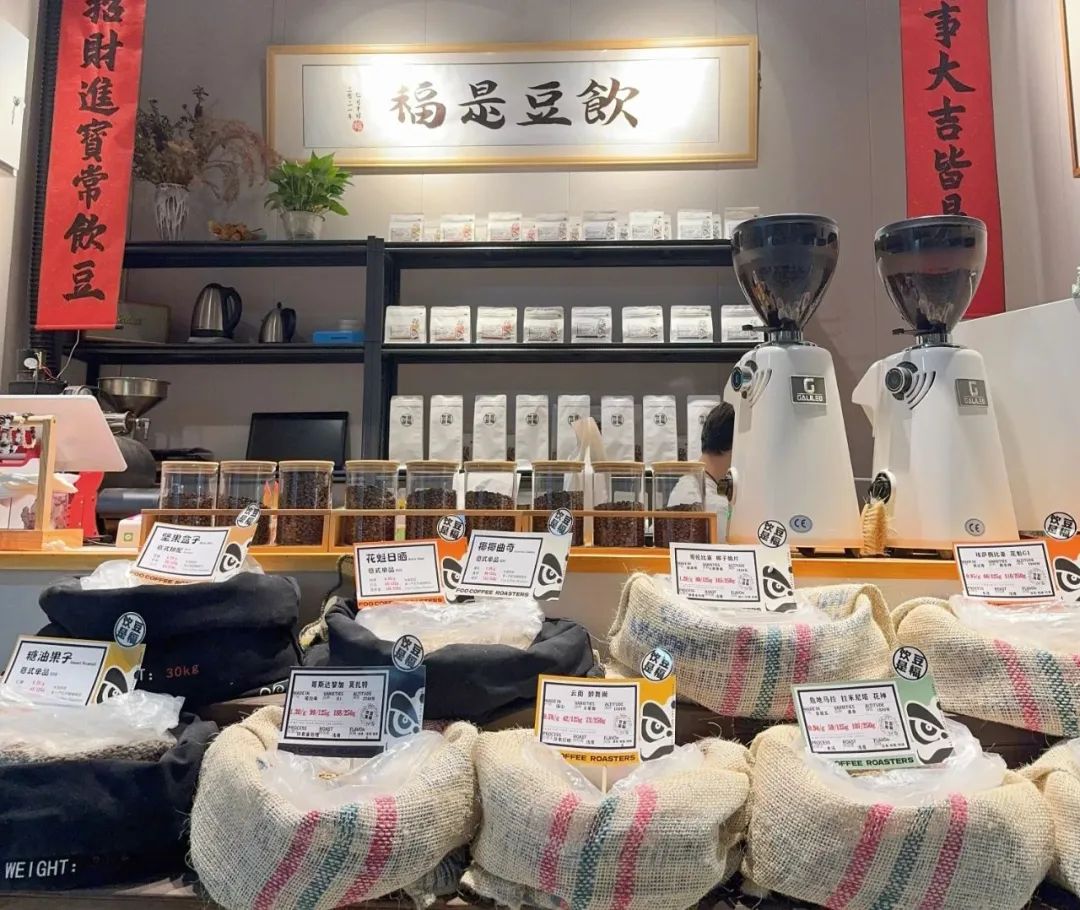
Core Viewpoint - The rise of "market coffee" in China, particularly in Chengdu, is creating a new trend where coffee shops are opening in traditional markets, attracting significant consumer interest and engagement [1][3][9]. Group 1: Market Overview - A 10㎡ coffee shop named "Yin Dou Shi Fu · Coffee Roasting Shop" in Chengdu has gained popularity, selling over 100 cups daily and generating significant social media buzz with over 30,000 related posts on Xiaohongshu [3][7]. - The shop's pricing strategy ranges from 8 to 30 yuan per cup, with a unique pricing model based on the weight of coffee beans, which appeals to cost-conscious consumers [5][7]. - The concept of "market coffee" is spreading across various cities in China, including Beijing, Wuhan, and Hangzhou, with established brands like Luckin and Kudi also exploring this market [2][9]. Group 2: Business Model and Strategy - The coffee shop operates in a low-rent environment, with monthly rent at approximately 1,000 yuan, significantly lower than traditional coffee shops, which can exceed 6,000 yuan [7][12]. - The owner emphasizes the "commodity nature" of coffee, positioning it alongside other market goods like peanuts and sunflower seeds, which helps to reduce the perceived disconnect between coffee and the market setting [11][12]. - The shop's operational model includes a focus on community integration, with natural foot traffic from local shoppers and a diverse customer base, including older residents [14][15]. Group 3: Product Differentiation - Innovative product offerings, such as "market specials" that incorporate local ingredients, are being developed to enhance customer experience and differentiate from traditional coffee shops [17]. - The shop's approach to coffee preparation is simplified to cater to the market environment, which may limit the complexity of coffee-making techniques but appeals to a broader audience [23]. Group 4: Challenges and Considerations - The success of market coffee shops is contingent on their location, with "trendy markets" being more suitable for this concept, while older markets may not attract the same consumer interest [20][22]. - Operating hours and lower profit margins compared to traditional coffee shops pose challenges, as peak shopping times do not align with typical coffee consumption patterns [23]. - Environmental factors in markets, such as noise and odors, can impact the quality of coffee and customer experience, raising concerns about maintaining product standards [24][26].
星巴克再现人事变动,亚太区门店开发负责人离职
Guan Cha Zhe Wang· 2025-06-04 13:27
Group 1: Starbucks - Scott Keller, Senior Vice President of Store Development and Design for Starbucks Asia Pacific, has announced his departure after nearly nine years, during which the number of stores in the region doubled, averaging one new store opening per day [1] - Keller was responsible for leading the development strategy and design of Starbucks stores across major cities including Seoul, Bangkok, and Singapore [1] Group 2: Luckin Coffee - Luckin Coffee has expanded its self-operated stores in Hong Kong to 12 since entering the market in December 2024, with plans to further expand into core commercial areas like Central [2] - The company is also enhancing brand collaborations, with a SpongeBob-themed concept store opening from May 31 to June 29, featuring new co-branded beverages and a photo area [2] Group 3: Coffee Industry Growth - In April, 1,220 new coffee stores were opened across 27 tracked chain brands, representing a month-on-month increase of 3.74% and a year-on-year increase of 6.64%, bringing the total number of stores in the industry to 60,795 [3] - Luckin Coffee experienced a net decrease of 206 stores in April, indicating a network optimization strategy despite holding a 39.3% market share [3] - Starbucks opened 20 new stores in April, marking an 81.82% year-on-year increase, indicating a recovery trend [3] Group 4: Bawang Chaji - Bawang Chaji reported a net profit of 677 million yuan for Q1 2025, with a total GMV of 8.23 billion yuan, reflecting a year-on-year growth of 38% [4] - The company disclosed its overseas market performance for the first time, with overseas GMV reaching 178 million yuan, a year-on-year increase of 85.3% [4] - The total number of Bawang Chaji stores globally reached 6,681 by the end of Q1 2025 [4]

“价格战”再度打响?部分饮品降价3元 瑞幸咖啡回应
Xi Niu Cai Jing· 2025-06-04 11:37
Core Viewpoint - Luckin Coffee's recent price reduction strategy has sparked widespread discussion and is seen as a response to competitive pressures from rivals like Kudi Coffee [2][4][9] Pricing Strategy - Multiple products from Luckin Coffee have seen a price drop of 3 yuan, entering the "6.9 yuan era" [4] - However, some consumers reported that prices on the Luckin app still show 9.9 yuan, indicating inconsistency in pricing across platforms [4] - Luckin Coffee's official customer service stated that actual discounts depend on the ordering platform and that the recent promotions are part of holiday offers rather than a price cut [7] Competitive Landscape - Kudi Coffee has been aggressively lowering prices, with some products priced as low as 3.9 yuan and 4.9 yuan, leading to a significant increase in their sales volume [9] - Luckin Coffee's promotional activities during the holidays are likely a strategic move to counter Kudi's low pricing and maintain market share [9] Historical Pricing Trends - Luckin Coffee initially gained market share through a "subsidy for scale" strategy, but has recently increased prices on several products, with American coffee rising from 23 yuan to 26 yuan and lattes from 26 yuan to 29 yuan [9] - The company has a history of price adjustments, having raised prices by 2 to 3 yuan across its product line in 2020 [9] Financial Performance - In Q1 2025, Luckin Coffee reported total net revenue of 8.865 billion yuan, a year-on-year increase of 41.2%, with a GAAP operating profit of 737 million yuan and an operating profit margin of 8.3% [9] - The company opened 1,757 new stores in Q1 2025, bringing the total number of global stores to 24,097, with a significant increase in the Chinese market [10] Market Conditions - The CEO of Luckin Coffee highlighted the challenges posed by rising coffee bean prices, which are at historical highs, potentially impacting profit margins in the second half of the year [10]
2025年全球餐馆品牌25强
Sou Hu Cai Jing· 2025-06-04 01:27
今天分享的是:2025年全球餐馆品牌25强 报告共计:35页 全球餐饮品牌大变局:麦当劳重登王座,区域黑马崛起,健康科技重塑行业 Brand Finance最新发布的《2025年全球最具价值餐饮品牌25强》报告揭示了一场深刻的行业洗牌。全球前25大餐饮品牌总价值 达到1749亿美元,但竞争格局已发生显著变化:传统巨头遭遇挑战,区域品牌强势突围,而消费者偏好的转变正推动整个行业 加速变革。 一、王座易主:麦当劳的逆袭与星巴克的困局 体验失衡: 过度依赖APP订餐,牺牲了传统的咖啡馆社交体验,引发核心顾客不满。 中国受挫: 在中国市场,其"声誉"与"推荐度"指标下滑,被本土品牌瑞幸咖啡(品牌价值增长17%至17亿美元)以迅猛的开店 速度(仅2024年第三季度就新开1382家)和产品创新反超。 声誉风波与领导动荡: 国际市场的声誉受到地缘事件影响,两年内更换四位CEO,关键职位(如北美CEO)空缺,全球首席营 销官职位的取消也引发品牌战略连贯性质疑。 二、增长新势力:区域黑马与品类专家的崛起 "最快增长"冠军:福乐鸡的专注之道: 美国品牌福乐鸡(Chick-fil-A)成为最大黑马,品牌价值飙升43%,达57亿美元 ...