
玩具

Search documents
张平:在海外呆了8、9年,现在觉得中国制造真的是YYDS,太牛了
Feng Huang Wang Cai Jing· 2025-06-29 07:57
Group 1 - The "2025 China Enterprises Going Global Summit" was held in Shenzhen, focusing on providing a high-end platform for Chinese companies to address challenges in going global amidst the restructuring of global industrial chains [1] - The summit aimed to facilitate resource connections, rule dialogues, and idea exchanges among Chinese enterprises [1] Group 2 - Zhang Ping, founder and CEO of Shanhaitu, shared insights on preferred Southeast Asian countries for Chinese enterprises based on industry types, recommending Vietnam for textiles and toys, Indonesia for resource industries, Thailand for tourism and e-commerce, and Malaysia for mid-to-high-end manufacturing like semiconductors [3] - Zhang Ping highlighted the challenges faced by Chinese manufacturing companies abroad, citing an example of a Chinese firm that took years to establish a smelting plant in Indonesia, emphasizing the perseverance required to transfer Chinese technology [3]


Ai+潮玩,能跑出下一个Labubu吗?
经济观察报· 2025-06-29 03:51
Core Viewpoint - The article discusses the parallel development of AI toys and traditional trendy toys, highlighting the competitive landscape where companies are either focusing on IP creation or integrating AI technology to enhance product capabilities [1][8]. Group 1: AI Toy Market Dynamics - The rise of LABUBU as a social currency is inspiring numerous AI toy startups to innovate and create interactive products [2]. - Many entrepreneurs in the AI toy sector come from established tech companies, indicating a trend of talent migration into this emerging market [3]. - As of 2024, 27 AI toy startups in China have secured funding, with six companies raising over 100 million yuan, attracting investments from major firms like IDG Capital and Sequoia China [4]. Group 2: Product Development and Consumer Engagement - New AI toy products are emerging, such as FoloToy and BubblePal, with significant sales figures indicating strong market interest [5]. - Manufacturers are quick to respond to market trends, with some factories ready to mass-produce AI toys upon sensing demand [6]. - The article notes that while AI toys are gaining traction, established players like Pop Mart are taking a cautious approach, adhering to a philosophy that emphasizes the emotional value of toys over functional attributes [7][41]. Group 3: Product Features and Consumer Preferences - AI toys typically combine traditional toy aesthetics with advanced AI components, allowing for interactive experiences [10]. - Different types of AI toys are categorized based on their interaction capabilities, with some focusing on verbal communication and others on emotional expression through actions and visuals [14][15]. - The design and emotional engagement of AI toys are crucial for attracting consumers, particularly targeting specific demographics such as urban women aged 20-45 [21][19]. Group 4: Market Challenges and Competitive Landscape - The rapid development of AI toys has led to increased competition, with suppliers and manufacturers quickly adapting to meet demand [36]. - There is a concern among smaller companies that larger suppliers may enter the market directly, creating intense competition [37]. - The pricing and subscription models for AI toys are evolving, with some products facing backlash from consumers regarding ongoing costs [30][32]. Group 5: Future Outlook and Strategic Considerations - The AI toy industry is perceived to be on an upward trajectory, but companies must ensure their products maintain user engagement beyond initial interest [40]. - Pop Mart's reluctance to integrate AI into its product line reflects a strategic decision to preserve its brand identity and emotional connection with consumers [42][43].


比亚迪叫停价格战,全国范围将取消限时一口价政策;罗马仕整个充电宝业务已暂停;索尼回应相机电池能否上飞机丨邦早报
创业邦· 2025-06-29 00:45
Group 1 - BYD will stop its "price war" and cancel the limited-time "one-price" policy nationwide starting July 1 [2] - Roma's power bank business has been completely suspended following regulatory inquiries and product recalls, leading to an estimated monthly revenue loss of 100-200 million yuan [4][5] - Pop Mart has apologized for delayed shipments due to a surge in orders, affecting multiple product lines, and is working to expedite deliveries within approximately seven days [7][8] Group 2 - Duoyi Network announced its headquarters relocation from Guangzhou and plans to lay off over 1,000 employees due to recent court rulings that hinder its management [12] - Xiaomi's YU7 model has seen a significant increase in orders, with over 240,000 units locked within 18 hours, leading to resale prices on platforms like Xianyu reaching up to 17,000 yuan [19][24] - The UK automotive industry faced a significant decline in production, with May's output dropping 32.8% year-on-year, marking the lowest level in over 70 years [35][36] Group 3 - China's clean energy investment is projected to reach $625 billion in 2024, accounting for one-third of global investment, with solar and wind power capacity leading the world for ten consecutive years [35] - The rental prices for graphics cards have halved compared to the peak earlier this year, indicating a downturn in the computing power rental market [30][31] - The first fully independently developed humanoid robot by a university in Shenzhen has been unveiled, showcasing advanced AI capabilities [31]



Ai+潮玩,能跑出下一个Labubu吗?
Jing Ji Guan Cha Bao· 2025-06-28 07:35
Core Insights - The rise of AI toys, particularly the LABUBU concept, is driving ambitions among numerous AI toy startups, leveraging lower technical and financial barriers in the industry [2][3] - A total of 27 AI toy startups in China have secured funding in 2024, with 6 companies raising over 100 million yuan, attracting investments from major firms like IDG Capital and Sequoia China [2] - The market is witnessing a split between traditional toy companies and new entrants focusing on AI integration, with established brands like Pop Mart taking a cautious approach [3][15] Industry Overview - AI toys are primarily defined as traditional toys enhanced with AI capabilities, integrating components like microphones, speakers, and connectivity modules to interact with users [4] - Different forms of AI toys exist, including interactive dolls and AI modules that can be attached to existing toys, creating a hierarchy based on functionality and target demographics [5][9] - The market is seeing a surge in AI voice box products, but many lack longevity in user engagement, prompting companies to focus on emotional connections and interactive experiences [9][12] Market Dynamics - The rapid response and production capabilities of manufacturers in Huaqiangbei are creating pressure on AI toy startups, as they can quickly replicate successful designs [13][14] - Companies are exploring new business models, including subscription services for software updates and additional features, which diverges from traditional one-time purchase models [12][15] - The emotional and aesthetic appeal of AI toys is crucial for attracting consumers, with companies like Mochi focusing on creating a strong emotional bond through design and interaction [7][11] Competitive Landscape - Established brands like Pop Mart are hesitant to enter the AI toy market, prioritizing their brand identity and emotional value over technological integration [15] - New entrants are experimenting with various pricing strategies and product placements to capture market share, with some targeting specific demographics like young consumers [14][15] - The industry is characterized by a mix of innovation and caution, as companies navigate the balance between technology and emotional engagement in their products [3][15]

中国制造如何重返美国市场?| 出海峰会
吴晓波频道· 2025-06-28 01:21
Core Viewpoint - The article discusses the new opportunities and challenges faced by Chinese companies in the context of global supply chain shifts and international trade dynamics, particularly in relation to the U.S. and neighboring countries like Vietnam and Mexico [2][3][5]. Group 1: Current State and Challenges of Chinese Companies Going Global - Since 2018, China's share of U.S. imports has decreased from approximately 21% to 13%, with neighboring countries like Mexico and Vietnam benefiting from this shift [3]. - The traditional re-export trade model is facing difficulties, as new regulations in Vietnam are making it unsustainable for Chinese companies to simply relabel products for export to the U.S. [10][11]. - Chinese factories are adapting by relocating production to countries like Vietnam and Malaysia, as seen in the significant drop in Chinese cabinet exports to the U.S. [12]. Group 2: Supply Chain Restructuring - The phenomenon of "mobile factories" is emerging, where Chinese manufacturers are relocating their production capabilities to different regions, leading to a rapid reassembly of supply chains [14][15]. - The dependency of the U.S. on Chinese supply chains varies by industry, with some sectors like children's products remaining difficult to replace [15][16]. - Companies need to analyze their products at a granular level (SKU) to enhance resilience against supply chain changes [18]. Group 3: Strategies for Chinese Companies Going Global - Establishing a cognitive management system is crucial to overcome cognitive blind spots that hinder effective communication and collaboration among companies [24][26]. - A deep understanding of local markets and compliance is essential for successful international operations, as evidenced by the challenges faced by companies like Samsung in India [30][32]. - Companies should optimize their geographical layout by establishing multiple factories to mitigate tariff impacts and enhance operational efficiency [36][38]. Group 4: Organizational and Talent Development - Companies must break through traditional equity structures to avoid risks associated with over-concentration in local markets [41][43]. - Enhancing user insight and understanding local consumer needs is vital for product success in foreign markets [46][48]. - Developing localized management capabilities is necessary, as overseas operations often require different strategies than those used domestically [49][53][57].
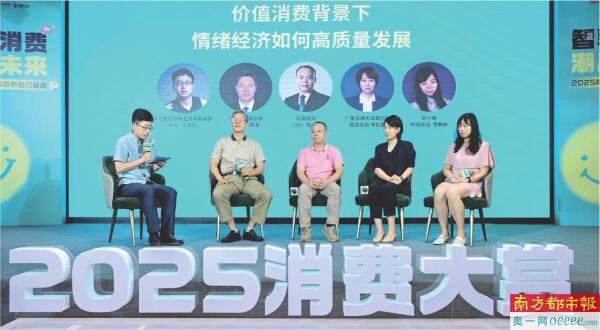
潮玩产业的核心是创意 建议将岭南文化、国潮元素融入IP设计
Nan Fang Du Shi Bao· 2025-06-27 23:08
Group 1 - The event "Intelligent Consumption, Trendsetting Future" focused on the emotional economy and its high-quality development, gathering industry experts, corporate representatives, and scholars to discuss trends and insights [4][9] - The emotional economy, represented by products like LABUBU, is gaining popularity, with a projected market size exceeding 100 billion yuan by 2025 [10][20] - The government is prioritizing consumer spending, with a 52% increase in the mention of "consumption" in this year's work report, reflecting its importance in economic recovery [7][8] Group 2 - Emotional consumption is primarily driven by the Z generation, single individuals, and the elderly, who seek emotional value and unique experiences in their purchases [10][11] - The emotional economy includes sectors like trendy toys and pet products, with a significant focus on emotional resonance and consumer engagement [12][14] - The market for emotional consumption is expected to grow, with AI and technology playing a crucial role in enhancing consumer experiences [17] Group 3 - Guangdong's immersive consumption scene has a coverage rate of 30%, indicating substantial growth potential in service consumption [8] - The toy industry in Guangdong is transitioning from manufacturing to creative design, emphasizing the need for innovative talent to drive emotional engagement [12][13] - The pet economy is expanding rapidly, with consumers increasingly viewing pets as family members, leading to a rise in pet-related services and products [15][16] Group 4 - The rise of "light health" products, such as traditional health drinks, is meeting the demands of young consumers, with the market expected to grow significantly [19][20] - The cosplay market is thriving, particularly among the Z generation, highlighting the emotional needs for recognition and belonging [21] - The interest consumption sector for the elderly is growing, with a call for more standardized and professional services to meet their needs [22]
内卷的解药不是涨价
海豚投研· 2025-06-27 11:59
Core Viewpoint - The article discusses the evolution of competition in the business landscape from price-cutting strategies to concerns about "low-price internal competition," highlighting the complexities of pricing, quality, and value addition in manufacturing and consumer goods [1][2]. Group 1: Pricing Dynamics - The article argues that the decline in prices is often linked to increased market scale and fragmented market structures, where larger consumer bases lead to heightened price sensitivity [5][6]. - It emphasizes that price reductions are not necessarily indicative of lower quality but can result from economies of scale and advancements in production technology [4][5]. - The case of air purifiers illustrates that while average prices fell by 34% since 2016, production volume increased by 53%, indicating a growing market demand [5][6]. Group 2: Value Addition and Quality - The article questions where the added value comes from when prices rise, suggesting that without improvements in product attributes or production processes, price increases may not lead to sustainable benefits for supply chains or employee wages [14][15]. - It highlights that true consumption upgrades occur when previously unaffordable products become accessible to a broader audience, rather than merely shifting consumer preferences to higher-priced items [15][16]. - The concept of "white label" products and alternatives arises from the competition based on cost rather than genuine value addition, which can lead to a race to the bottom in pricing [15][16]. Group 3: Market Structure and Competition - The article notes that as market structures stabilize and consolidate, price competition diminishes, leading to a more sustainable pricing environment among major players [9][10]. - It points out that in a mature market, companies may find themselves in a "consumption war," where the focus shifts from aggressive pricing to maintaining market share and profitability [9][10]. - The narrative suggests that the characteristics of entrepreneurs are often shaped by the industry dynamics they operate within, particularly in stable or stagnating markets [11][12]. Group 4: Labor and Productivity - The article argues that the solution to low-price internal competition is not to eliminate low-priced goods but to enhance labor productivity, drawing parallels to historical examples like Ford's assembly line innovations [23][24]. - It emphasizes that the value created in manufacturing comes from human knowledge and skills rather than just raw materials and production processes [19][21]. - The discussion includes the importance of recognizing and rewarding the intellectual contributions of workers, which can lead to higher market valuations for products and services [28][29].


BubblePal不到一年卖出1个亿,AI玩具的风吹到哪了?
3 6 Ke· 2025-06-27 00:49
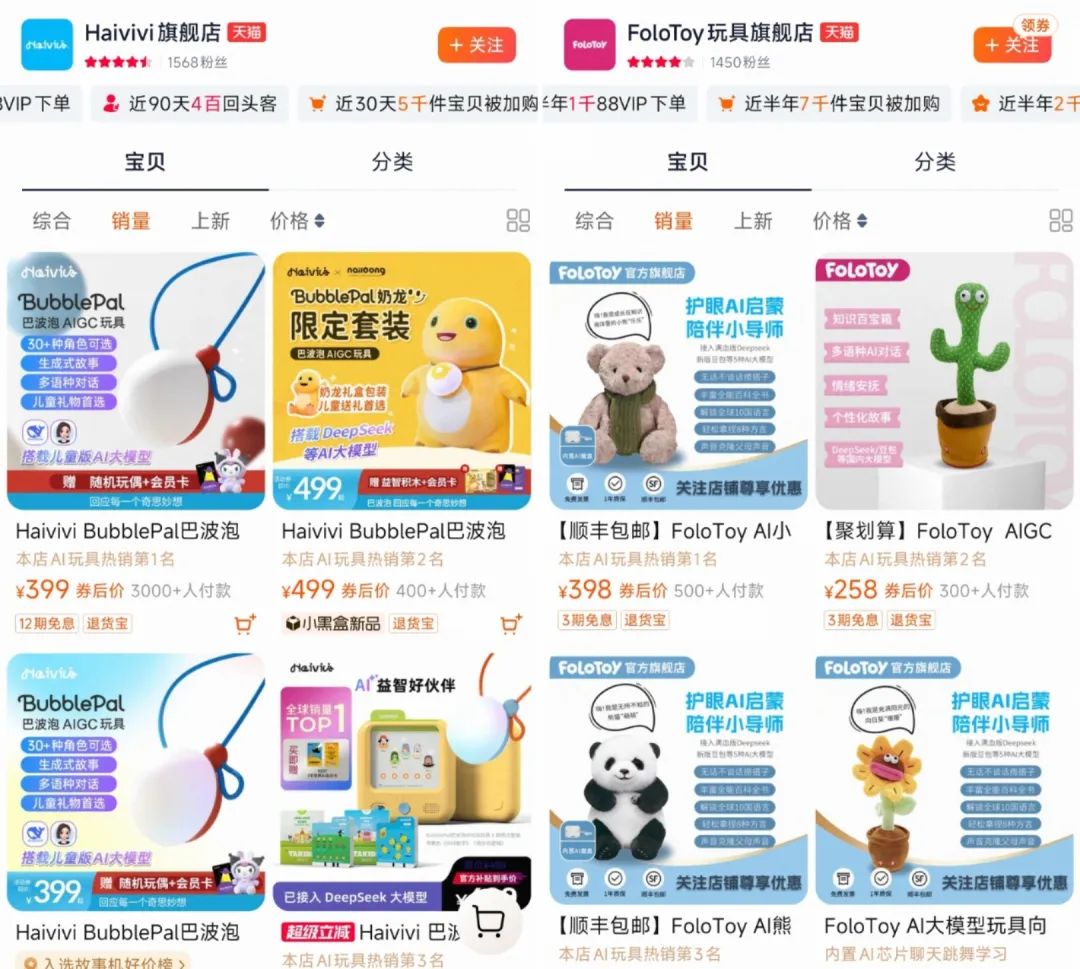
Core Insights - The AI toy market is experiencing significant growth, with companies like Haivivi and FoloToy reporting impressive sales figures, indicating a shift from skepticism to acceptance of AI toys as a legitimate market segment [1][4][5] - The industry is witnessing a surge in investment, with at least 27 financing events recorded in 2024, including several multi-million dollar rounds, highlighting the increasing interest from investors [3][4] - AI toys are characterized by their ability to provide personalized interactions through advanced technologies such as multi-modal interaction and emotional analysis, setting them apart from traditional toys [5][6] Company Highlights - Haivivi's BubblePal has sold over 250,000 units since its launch, generating sales exceeding 100 million yuan [1] - FoloToy aims to sell 300,000 units this year, significantly increasing its sales target compared to the previous year [1] - Companies like Lobo Intelligent and Bepei Technology have also secured significant funding, indicating a robust investment landscape in the AI toy sector [2][3] Market Dynamics - The AI toy market is categorized into various segments, including smart pendants, interactive dolls, and robotic toys, each offering unique features and price points [5][10] - The price range for AI toys varies widely, with simpler models priced under 500 yuan and advanced robotic toys reaching several thousand yuan [10][11] - The market is primarily driven by children's products, but there is growing potential in emotional companionship toys targeting adults and seniors [11][14] Investment Trends - The AI toy sector has seen a mix of traditional toy manufacturers and tech startups entering the market, with established companies leveraging their IP to create AI-enhanced products [6][16] - Notable investments include Haivivi's partnerships with various venture capital firms and the strategic collaborations between traditional toy companies and tech firms [4][6][16] - The trend of integrating popular IPs into AI toys is gaining traction, with companies like FoloToy and Haivivi exploring collaborations with well-known brands to enhance market appeal [15][16] Future Outlook - The development of AI toys is expected to accelerate as technology costs decrease, allowing for more innovative products that can engage users on a deeper emotional level [14][21] - The potential for creating new IPs within the AI toy space is significant, with companies exploring unique designs and narratives to attract consumers [18][21] - As the market matures, the emergence of iconic brands similar to LABUBU is anticipated, driven by the intersection of technology and creative product design [21]






华尔街见闻早餐FM-Radio | 2025年6月27日
Hua Er Jie Jian Wen· 2025-06-26 23:06
周四,标普500指数收盘接近历史新高,科技股领涨纳指,英伟达收盘续创历史新高。Meta涨近2.5%,领涨科技七巨头。小米一度涨近12%,雷军称小米 YU7大定超预期。 美国经济数据强化了市场对美联储今年至少降息两次的预期。美债收益率全线下行,2年期美债收益率跌超6个基点。美元指数四连跌、至三年来的最低点。 在岸、离岸人民币对美元汇率升破7.16,创逾七个月新高。 大宗商品金属普涨,不过黄金价格震荡收平。铂金涨超4.9%,COMEX铜期货一度大涨3.3%。美油盘中上涨近2%,随后涨幅回吐。 华见早安之声 请各位听众升级为见闻最新版APP,以便成功收听以下音频。 市场概述 市场收报 美联储高官密集发声:尚未准备在7月会议上支持降息!白宫:特朗普近期不会就下任美联储主席人选做出决定。 白宫称7月9日谈判截止期"不重要"、可能推迟,标普逼近纪录高位。欧盟被爆考虑降低一系列对美关税,以期迅速达成贸易协议。大限临近陷僵 局,印美贸易谈判遭遇障碍。 和美国唱反调,欧洲官员称伊朗铀库存完好无损,原油走高。 美国一季度GDP终值下修至-0.5%,个人消费创疫情以来最弱表现。美国上周续请失业金人数跃升至2021年11月以来最高。 ...

携程银发旅游旗舰店落地上海核心商圈;2025年暑期档电影票房破15亿元|消费早参
Mei Ri Jing Ji Xin Wen· 2025-06-26 22:20
Group 1: Ctrip's Senior Travel Initiative - Ctrip has opened its first "Old Friends Club" flagship store in Shanghai, targeting individuals aged 50 and above with one-stop travel services [1] - The senior population in China is projected to exceed 100 million by 2025, with the silver travel market expected to reach trillions in revenue [1] - Ctrip's "Old Friends Club" has accumulated over 3 million members and plans to expand its presence in major cities and resource-rich second and third-tier cities [1] Group 2: Summer Box Office Performance - The summer box office for 2025 has surpassed 1.5 billion yuan, indicating a resurgence in the cultural and entertainment market [2] - Major films such as "Mission: Impossible 8," "Sauce Garden Case," and "How to Train Your Dragon" are leading the box office [2] - Future growth in box office revenue will depend on word-of-mouth and the quality of content released during the summer [2] Group 3: Amazon and Pop Mart Anti-Counterfeiting Collaboration - Amazon's global anti-counterfeiting team has partnered with Pop Mart to combat counterfeit products, seizing over 700 fake LABUBU keychains [3] - This collaboration highlights the international trend of IP protection and enhances brand credibility for Pop Mart in overseas markets [3] - The partnership serves as a model for Chinese original brands aiming to expand globally [3] Group 4: Domestic Flight Booking Trends - Domestic flight bookings for July are nearing 17.9 million, reflecting a year-on-year growth of approximately 5% [4] - International flight bookings have exceeded 7.74 million, with a year-on-year increase of about 14% [4] - The growth in flight bookings indicates a recovery in travel confidence, particularly in the international tourism market [4]
