
券商

Search documents
国信证券荀玉根:“买好的”看科技主线 “买得好”关注地产、券商、白酒消费
Zhi Tong Cai Jing· 2025-10-28 11:47
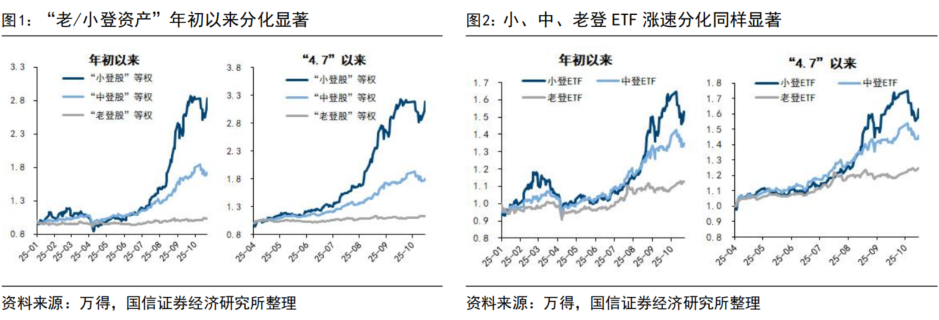
Core Viewpoint - The report by Guosen Securities highlights an extreme divergence between "old" and "new" assets in the market, emphasizing that high growth does not necessarily equate to high investment returns, and that finding fundamentally sound valuation opportunities can lead to significant returns [1][2]. Group 1: Performance Divergence - Since 2025, "small new stocks" have significantly outperformed "old stocks," with the "small new stock" portfolio rising by 183.8% compared to just 3.9% for "old stocks" [2]. - From April 7, 2025, "small new stocks" surged over 200%, while "old stocks" only increased by 13.6% [2]. - The "small new ETF" has risen by 53.1% since 2025, while the "old ETF" has only seen a 13.1% increase [2]. Group 2: Valuation and Market Activity - As of October 24, the PE ratio for "small new" sectors like electronics and computing is at the 99th percentile since 2019, while "old" sectors like real estate and liquor are at the 56th percentile [8]. - The trading volume for "small new" sectors has increased to 33%, while "old" sectors have dropped to below 2.8%, indicating a significant divergence in market activity [8]. Group 3: Investment Strategy - The report stresses the importance of not only selecting high-quality stocks ("buy good") but also ensuring they are purchased at favorable valuations ("buy well") to achieve high returns [11]. - Historical examples illustrate that higher growth does not guarantee better returns, as seen in the comparison between IBM and New Jersey Standard Oil from 1950 to 2003 [11][12]. - The banking sector has shown resilience, with a decline of only 3.9% compared to a 31.1% drop in the overall market, highlighting the potential for finding undervalued stocks with solid fundamentals [15]. Group 4: Market Trends and Seasonal Effects - The current market is characterized by a "small new stock" era, but there are seasonal opportunities for "old stocks," particularly in real estate, liquor, and brokerage sectors [20][29]. - Historical bull markets have shown that each cycle has a leading sector that aligns with prevailing economic trends, with AI and technology being the current focus [21]. - Seasonal effects suggest that value sectors may outperform in the fourth quarter, with historical data indicating a 64% success rate for value over growth during this period [23].


“牛市旗手”,重仓股曝光
Zhong Guo Ji Jin Bao· 2025-10-28 11:02
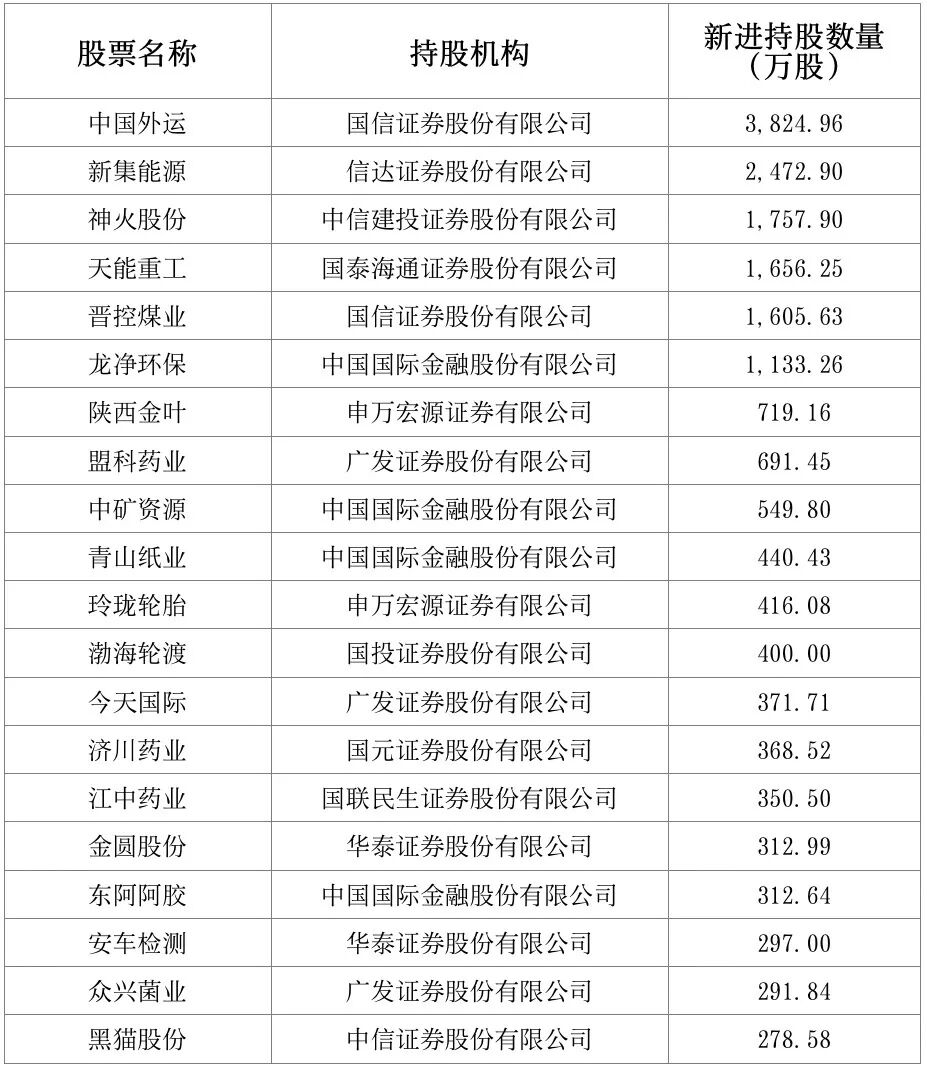
Core Insights - The latest disclosure of brokerage heavyweights shows that 140 listed companies have brokerages among their top ten circulating shareholders, with a total holding of 1.128 billion shares [1] Group 1: Brokerage Activity - Brokerages actively purchased stocks in the secondary market during Q3, with 58 new stocks added to their heavy holdings, particularly in the non-ferrous metals, resources, and non-bank financial sectors [2][6] - Among the new heavy holdings, China National Freight's new shares topped the list, with Guosen Securities acquiring 38.25 million shares, making it the sixth largest circulating shareholder [3] Group 2: Stock Performance - China National Freight reported a revenue of 75.038 billion yuan for the first three quarters, a year-on-year decrease of 12.62%, and a net profit of 2.679 billion yuan, down 5.17% year-on-year, yet Guosen Securities chose to increase its stake [3] - Other notable new heavy holdings include Xinjie Energy, Shenhuo Co., TianNeng Holdings, and Jinkong Coal, each with over 10 million shares acquired [4] Group 3: Increased Holdings - The most significant increase in holdings was seen in Zhaojin Mining, where CITIC Securities added 7.7415 million shares, bringing its total to 10.1679 million shares [7] - Zhaojin Mining achieved a revenue of 340 million yuan in the first three quarters, a year-on-year increase of 119.51%, and a net profit of 82.1605 million yuan, up 191.20% year-on-year [7] Group 4: Brokerage Holdings - Among the top brokerages, Shenwan Hongyuan had the highest holding market value at 2.364 billion yuan, followed by CITIC Securities at 1.939 billion yuan [9] - The largest holding market value was in Cangge Mining, with Shenwan Hongyuan and招商证券 holding 15.9071 million shares and 15.8192 million shares, respectively, with a combined market value of 1.851 billion yuan [9] Group 5: Investment Performance - CITIC Securities reported a significant increase in investment income, reaching 32.838 billion yuan, a 190.1% increase from 11.321 billion yuan in the same period last year [10] - The growth in investment income is attributed to a focus on fundamental analysis and the development of various fixed-income products in the FICC sector [10]

“牛市旗手”,重仓股曝光
中国基金报· 2025-10-28 10:52
Group 1 - The article highlights that brokerages have actively adjusted their stock holdings, with 140 listed companies having brokerages among their top ten shareholders, totaling 1.128 billion shares held [2][4] - In the third quarter, brokerages initiated positions in 58 new stocks, with high interest in sectors such as non-ferrous metals, resources, and non-bank financials [2][4] - China National Foreign Trade Transportation Group (China Foreign Trade) saw the largest new shareholding, with Guosen Securities acquiring 38.25 million shares, making it the sixth largest shareholder [4][5] Group 2 - The article lists several stocks where brokerages increased their holdings significantly, with the most notable being Zhaojin Mining, where CITIC Securities increased its stake by 7.74 million shares [7][9] - Zhaojin Mining reported a revenue of 340 million yuan in the first three quarters, a year-on-year increase of 119.51%, and a net profit of 82.16 million yuan, up 191.20% from the previous year [8][9] - The top brokerage by proprietary trading holdings is Shenwan Hongyuan, with a market value of 2.364 billion yuan, followed by CITIC Securities at 1.939 billion yuan [10][12] Group 3 - The article notes that major brokerages have reported significant recovery in overall performance, with CITIC Securities achieving a substantial increase in investment income, rising to 32.838 billion yuan, a 190.1% increase year-on-year [12] - Huatai Securities emphasized that CITIC Securities' investment business revenue growth is a core driver of its performance, focusing on fundamental analysis and long-term cash flow generation [12]

沪指盘中突破4000点,福建板块掀涨停潮!市场缩量是何信号?
Mei Ri Jing Ji Xin Wen· 2025-10-28 10:38
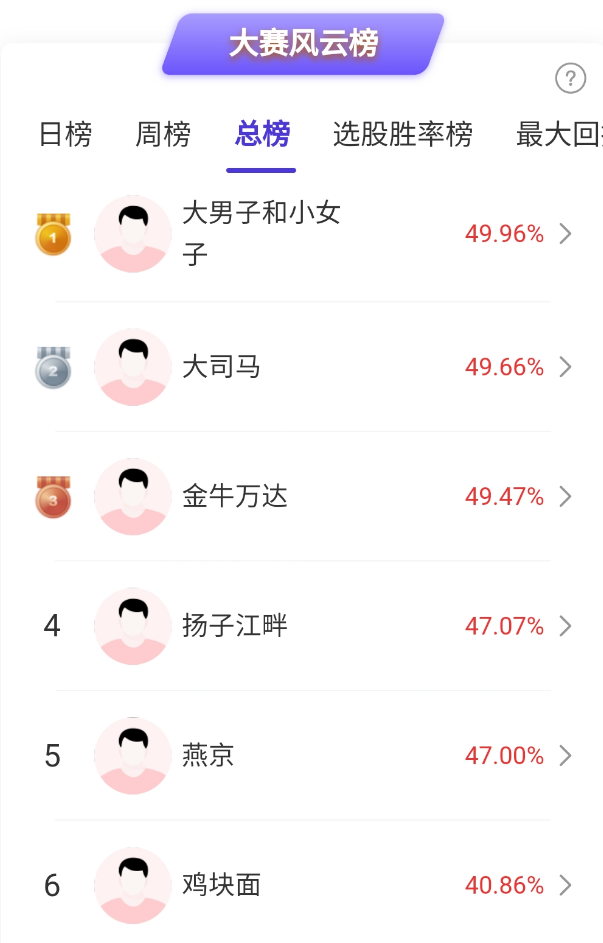
Market Overview - The Shanghai Composite Index broke through the 4000-point mark for the third time in history on October 28, marking its first return to this level in a decade, although it later retreated to close at 3988 points [1] - The trading volume in the Shanghai and Shenzhen markets reached 21,479 billion yuan, a decrease of 1,923 billion yuan compared to the previous Monday [1] Competition Insights - The 76th session of the simulated stock trading competition, hosted by the Daily Economic News App, began on October 20, with some participants achieving returns exceeding 40% [1] - The competition allows participants to simulate trading with a capital of 500,000 yuan, running from October 20 to October 31, with registration open until October 31 [1] Rewards Structure - Cash rewards for the competition include 688 yuan for the first place, 188 yuan for the second to fourth places, and 88 yuan for the fifth to tenth places, with additional distribution of 500 yuan among other profitable participants [3] - Monthly leaderboard rewards include 888 yuan for the top position, with decreasing amounts for subsequent ranks, ensuring a broad distribution of incentives [3] Market Sentiment - Experts participating in the competition noted a cautious market sentiment, as the index broke through the critical resistance level of 3950 points with declining trading volume, indicating increased market observation ahead of the Federal Reserve's interest rate decision and the APEC meeting [3] - Promising sectors identified by participants include brokerage firms, transformer exports, logistics robots, and rare metals [3] Trading Tools and Resources - Participants have reported success in leveraging the Daily Economic News App's "Fire Line Quick Review" feature, which has highlighted opportunities in the silver sector multiple times this year [4] - Registration for the competition grants access to six days of free reading of the "Fire Line Quick Review," with additional rewards for top performers [4]
第十九届HED中国峰会·深圳即将启幕
Xin Lang Ji Jin· 2025-10-28 10:03
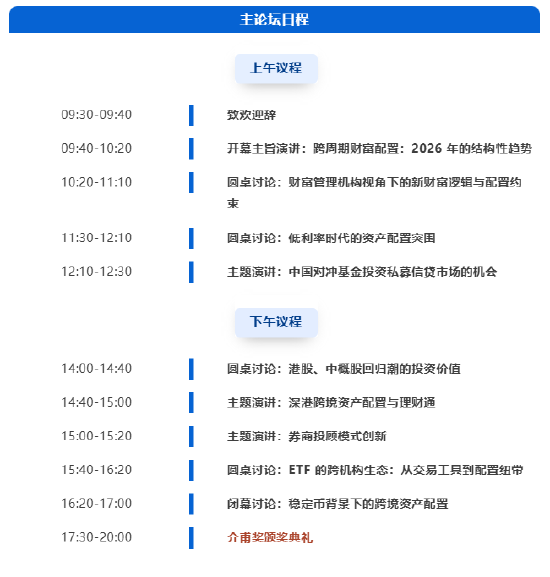
Core Insights - The 19th HED China Summit will be held in Shenzhen on January 15, 2026, focusing on the integration of private equity and wealth management [1] - The event will gather over 400 decision-makers from private equity funds, brokerages, banks, trusts, family offices, and wealth platforms to facilitate high-quality development in the asset management industry [1] Agenda Highlights - The morning session includes a welcome speech, keynote addresses on wealth allocation trends for 2026, and discussions on new wealth logic and asset allocation strategies in a low-interest-rate environment [2] - Afternoon sessions will cover topics such as investment value in Hong Kong and mainland stocks, cross-border asset allocation, and innovations in brokerage advisory services [2] - The event will conclude with discussions on the ecosystem of ETFs and cross-border asset allocation in the context of stablecoins [2] Additional Sessions - The agenda features discussions on innovative stock strategies, the application of AI in quantitative stock strategies, and the evolution of investment strategies in a low-interest-rate environment [4][5] - Keynote speeches will address the investment opportunities arising from the global interest rate decline and the challenges and opportunities for investment funds [5]
突破4000点后A股怎么走?
雪球· 2025-10-28 08:38
Core Viewpoint - The article discusses the historical context and implications of the A-share market breaking through the 4000-point mark, analyzing past bull markets in 2007 and 2015 to draw insights for the current market situation [2][4][9]. Historical Analysis - In the history of A-shares, there have been 16 instances of breaking through 4000 points, with seven instances based on closing prices, notably five times in 2007 and two times in 2015 [2][3]. - The maximum increase after breaking 4000 points in 2007 was 51.8%, taking 160 days, while in 2015, the maximum increase was 28.06%, occurring in just 63 days [4][6]. 2007 Bull Market - The 2007 bull market was driven by resource and financial real estate sectors, with significant gains in non-ferrous metals (250%), coal (220%), and financial sectors (190%) [6]. - Macroeconomic indicators supported this bull market, including a GDP growth rate of 11.4%, fixed asset investment growth of 24.8%, and a trade surplus of $262.2 billion [6]. 2015 Bull Market - The 2015 bull market was characterized by the "Internet+" policy and the rise of new industries, with notable stock performances from companies like Dongfang Finance (600% increase) and China CNR (500% increase) [7][8]. - However, this market was marked by excessive leverage and regulatory shortcomings, leading to a peak in margin financing of 2.27 trillion yuan in June 2015 [8]. Current Market Context - The current A-share market exhibits characteristics of a "water bull," with structural features in both the economy and capital markets, indicating a shift towards high-end manufacturing [9]. - Despite economic challenges, there is a noticeable change in fiscal spending towards long-term projects, suggesting a more sustainable growth trajectory compared to previous bull markets [9].

野村(NMR.US)第二财季净利润下滑6% 股票交易营收创新高
智通财经网· 2025-10-28 08:32
Core Viewpoint - Nomura, Japan's largest brokerage and investment bank, reported a surprising 6% decline in net profit for the second fiscal quarter ending in September, with a net profit of 92.1 billion yen (approximately 610.82 million USD), down from 98.4 billion yen in the same period last year. Despite this decline, analysts believe that the new economic stimulus policy being prepared by Japan's Prime Minister, which exceeds last year's scale of 13.9 trillion yen, could serve as a significant catalyst for the Japanese stock market, potentially leading to a new phase of performance and valuation expansion for Nomura [1]. Group 1: Financial Performance - Nomura's wholesale business showed the strongest performance, achieving a substantial year-on-year growth of 43% in the first half of the fiscal year, primarily driven by record revenues from stock trading, coinciding with a significant recovery in global stock market activities and IPO financing. The Nikkei 225 index has surpassed the 50,000 mark, with a year-to-date increase of 25%, outperforming the S&P 500 and Nasdaq 100 indices [2]. - Despite the record total assets under management reaching 101.2 trillion yen, the pre-tax profit from Nomura's investment management division declined by 4% year-on-year, contributing to the overall net profit decrease [2]. - The latest performance highlights a strong recovery in Nomura's wholesale business, which had been negatively impacted by market volatility in previous years but has shown more consistent profits in recent quarters due to a robust bull market in global stocks [2]. Group 2: Business Segments - Nomura's wholesale business consists of two main segments: Global Markets, which provides market-making, sales, and trading services related to fixed income and equity markets, and Investment Banking, which offers M&A advisory, equity financing, debt financing, and various risk/solution services to corporate, financial, and public sector clients [3]. - Following the end of the "investor wait-and-see period" triggered by U.S. President Trump's tariff announcements, the impact that previously suppressed large M&A transactions and IPO activities has significantly diminished, leading to a rise in advisory fees for Nomura's investment banking business as transaction activities rebound [3]. Group 3: Market Outlook - The economic stimulus policies led by Prime Minister Kishi are expected to be significantly beneficial for the Japanese stock market and particularly favorable for brokerage, asset management, and investment banking sectors, where Nomura is the largest player. The ongoing "super bull market" in Japanese stocks, driven by these policies, is anticipated to lead to substantial growth in brokerage and investment banking performance and transaction volumes, with continued recovery in equity financing and M&A activities [4]. - The recent "Sanae trade" phenomenon reflects market expectations for the revival of "Abenomics," characterized by strong fiscal stimulus, industrial support, and a cautious stance on tightening monetary policy, leading to significant volatility in stock, bond, and currency markets [5].

时隔十年,A股盘中突破4000点,3只新股暴涨,中一签最高赚3万
3 6 Ke· 2025-10-28 08:05
Core Points - The Shanghai Composite Index (SSE) has surpassed the 4000-point mark for the first time in nearly a decade, reaching a high of 4010.73 points on October 28, 2023, with the last occurrence being on August 18, 2015 [1][2] - The recent surge is attributed to a combination of policy support and increased market activity, with daily trading volumes exceeding 2 trillion yuan since mid-August [2][5] - The current market environment is characterized by a shift towards technology-driven growth, with sectors such as TMT (Technology, Media, and Telecommunications) leading the charge [5][6] Market Performance - On October 28, the SSE opened strong, briefly crossing 4000 points, but closed at 3988.22 points, down 0.22% for the day. The Shenzhen Component Index and the ChiNext Index also experienced slight declines [2] - The trading volume for the day reached 2.17 trillion yuan, with 2366 stocks rising [2] Historical Context - This marks the third time the SSE has crossed the 4000-point threshold, with previous instances occurring in May 2007 and April 2015. The current TTM (Trailing Twelve Months) P/E ratio remains above 20, similar to the 2015 level, but significantly lower than the 40+ ratio seen in 2007 [3][5] Sector Analysis - The current rally is driven by technology sectors, particularly semiconductors, AI, and renewable energy, contrasting with the previous reliance on financial and real estate sectors during past rallies [5][6] - Notable stock performances include N Yicai-U, N Heyuan-U, and N Bibet-U, which saw increases of 198.72%, 213.49%, and 74.41% respectively on their debut [9] Policy Developments - The China Securities Regulatory Commission (CSRC) announced reforms aimed at enhancing investor protection and promoting the growth of the capital market, including the launch of a new framework for the ChiNext board [7][8] - The CSRC's recent measures include 23 initiatives focused on protecting small and medium investors, indicating a commitment to improving market stability and investor confidence [8]
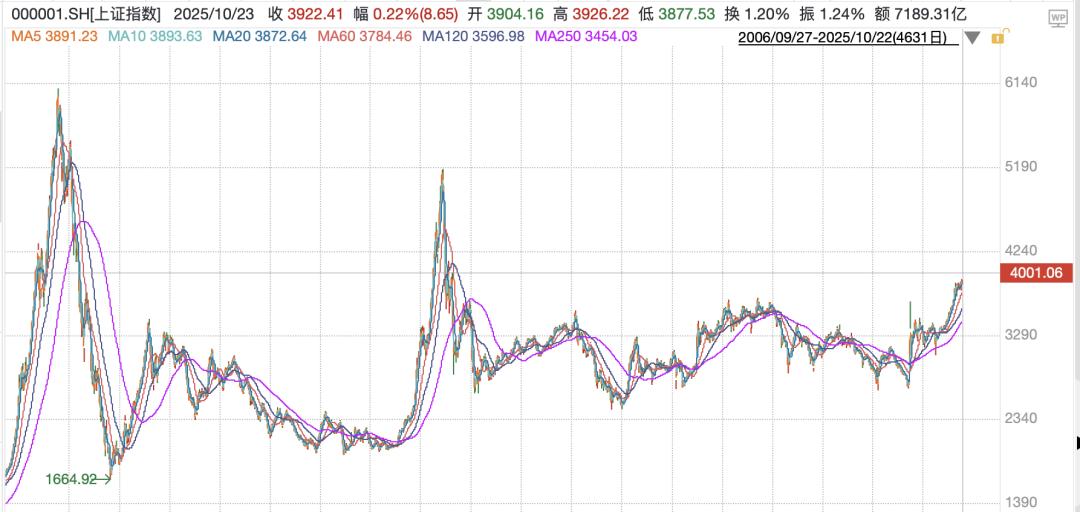
收评:沪指跌0.22%,4000点得而复失,券商等板块走低
Sou Hu Cai Jing· 2025-10-28 07:55
Market Overview - The stock indices experienced a pullback after an initial rise, with the Shanghai Composite Index falling below 4000 points, closing down 0.22% at 3988.22 points, the Shenzhen Component down 0.44% at 13430.1 points, and the ChiNext Index down 0.15% at 3229.58 points [1] - The total trading volume in the Shanghai and Shenzhen markets reached 21,656 billion yuan [1] Sector Performance - Sectors such as non-ferrous metals, brokerage, steel, gas, and electricity saw declines, while military, automotive, pharmaceuticals, and semiconductors experienced gains [1] - Active concepts included military trade, storage chips, and solid-state batteries [1] Market Outlook - HuLong Securities indicated that the market is likely to continue being driven by positive factors, including progress in China-US economic negotiations and a potential rebound in risk appetite following adjustments in growth sectors [1] - Key areas for industry and thematic allocation include: - Growth sectors like technology and advanced manufacturing, benefiting from positive fundamental data and policy catalysts, with a focus on AI+, self-controllable technologies, humanoid robots, low-altitude economy, and national defense [1] - Sectors benefiting from the "anti-involution" policy, with positive feedback from data, including power equipment and basic chemicals [1] - Industries benefiting from domestic demand policies, such as machinery, home appliances, automobiles, consumer electronics, and service consumption [1]
东海证券晨会纪要-20251028
Donghai Securities· 2025-10-28 05:08
Group 1: Key Recommendations - The "14th Five-Year Plan" emphasizes technological self-reliance and focuses on the independent industrial chain of new materials, indicating a significant market opportunity in the chemical new materials industry, particularly in semiconductor materials and high-end engineering plastics [6][10] - The chemical new materials industry is expected to benefit from accelerated domestic substitution, with key players in various segments likely to gain from this trend [6][10] Group 2: Non-Banking Financial Sector Insights - The non-banking financial index rose by 2% last week, with brokerages and insurance indices showing synchronized increases of 2.1% and 1.8% respectively, indicating a recovery in market sentiment [12][13] - Major brokerages reported significant profit growth in Q3 2025, driven by improved market conditions, with average daily A-share trading volume reaching 2.1 trillion yuan, a year-on-year increase of 211% [13][14] Group 3: Industrial Profit Trends - In September 2025, industrial profits for large enterprises increased by 3.2% year-on-year, reflecting a positive trend influenced by low base effects and improved production growth [16][17] - The profit margin for industrial enterprises was reported at 5.5%, with a notable increase in revenue growth driven by both volume and price factors [17][18] Group 4: Electronics Sector Developments - The storage chip market is experiencing significant price increases, with major suppliers like Samsung and SK Hynix planning to raise DRAM and NAND prices by up to 30% in Q4 2025, driven by strong demand and reduced supply [20][21] - The partnership between AI company Anthropic and Google for a multi-billion dollar computing resource deal highlights the ongoing demand for AI-related computing power, further boosting the electronics sector [22][24]